Buying Ex-Demo Golf Clubs: Wear, Warranty and Specifications
A good ex-demo deal starts with the exact club in the box, then the saving that remains after the checks.
AI illustration of a generic fitting bay, not a photograph of a retailer’s stock.
Buying ex-demo golf clubs can make sense when the shop’s former demonstration club is the one you would have chosen anyway. The trouble starts when the saving persuades you to overlook an unsuitable shaft, an unexplained mark or a vague promise about the warranty.
The useful comparison is between two complete purchases. One includes this particular used club, its exact specification and its written aftercare. The other is the genuinely suitable alternative you could buy today. A launch price crossed out on a label tells you little about that decision.
This research-led guide combines an original inspection and cost checklist with published manufacturer and retailer information, checked on 24 November 2026. The prices in the worked example are illustrative, and the images show generic situations rather than named products or an inspection conducted by Karen.
Ad – includes affiliate links. Taylor’s Trailblazing Golf may earn a commission if you buy through these links, at no extra cost to you.
Confirm head, shaft, length, settings and set makeup before treating two clubs as equivalent.
Add genuinely needed work and missing accessories; leave unresolved damage out of a bargain calculation.
Record who provides it, when it starts and what the particular ex-demo purchase includes.
Buying ex-demo golf clubs starts with a specific history
Treat “ex-demo” as the start of the description. Ask what was demonstrated, where it was used and whether the photographs show the actual item. A club used for fittings, a shop-display club and a privately owned club can all look tidy while having different histories.
Do not impose a universal definition on a retailer’s stock label. Read that seller’s description and ask it to resolve the details that matter to you. A grade such as “good” is useful only when you know what the grade allows.
Swipe within the table to see all columns.
| Listing label | Ask the seller | Decision it helps you make |
|---|---|---|
| Ex-demo | Was it used for customer fittings or other demonstrations? Is the history known, and has the final club been inspected? | Whether the wear and the seller’s account make sense together. |
| Ex-display | Was it only displayed, or was it also hit? Which handling marks are present? | Whether you are paying for a mostly cosmetic compromise or actual playing wear. |
| Refurbished or reconditioned | Exactly what was replaced, repaired, adjusted or refinished, and by whom? | Whether the current build and cover differ from the original product. |
| Used or pre-owned | What is known about its ownership, modifications and condition? | Whether the item is comparable with the demo club you are considering. |
A useful answer is specific: “This is the club photographed, the grip is worn, and no headcover is included.” An unhelpful answer is simply “It is only a demo.” You do not need a perfect history, but you do need enough detail to assess the club being offered.
Write down the exact build before comparing the price
Ask the seller to confirm the following in the listing, invoice or a saved message. If it cannot answer an important point, leave that point unresolved rather than assuming the catalogue specification applies.
- Full head model and generation, handedness and the exact clubs included in an iron set.
- Marked loft and, where relevant, the current adjustable-hosel setting.
- Shaft maker, complete model, stated flex and weight designation.
- Actual playing length and how it was measured, especially if it is described as shorter or longer than standard.
- Known loft or lie adjustments, reshafting, shaft extensions or other changes.
- Grip model, size and any known build-up; whether replacement is included in the price.
- Headcover, adjustment tool and other accessories included, with their condition.
- Any fitting-only components, replacement adaptors or non-original parts, and confirmation of the final playable assembly.
An adjustable head needs more detail than the loft printed on its sole. For example, Titleist’s SureFit guide describes distinct loft and lie settings and model-specific compatibility. That is a reason to record the actual configuration and use the correct maker’s guide, not a reason to assume every adjustable club shares one system.[1]
Keep a distinction between a shaft’s printed weight designation and a measurement of the complete club. Likewise, “standard length” needs a reference model. If an alteration matters to whether you would buy it, ask a qualified fitter or technician to measure and confirm it.
If you tried a demonstration club, make sure the club offered for sale is that exact build or a documented equivalent. A matching head name alone does not settle the shaft, length or settings. For help choosing a useful appointment, see our guide to what a club-fitting fee should include.
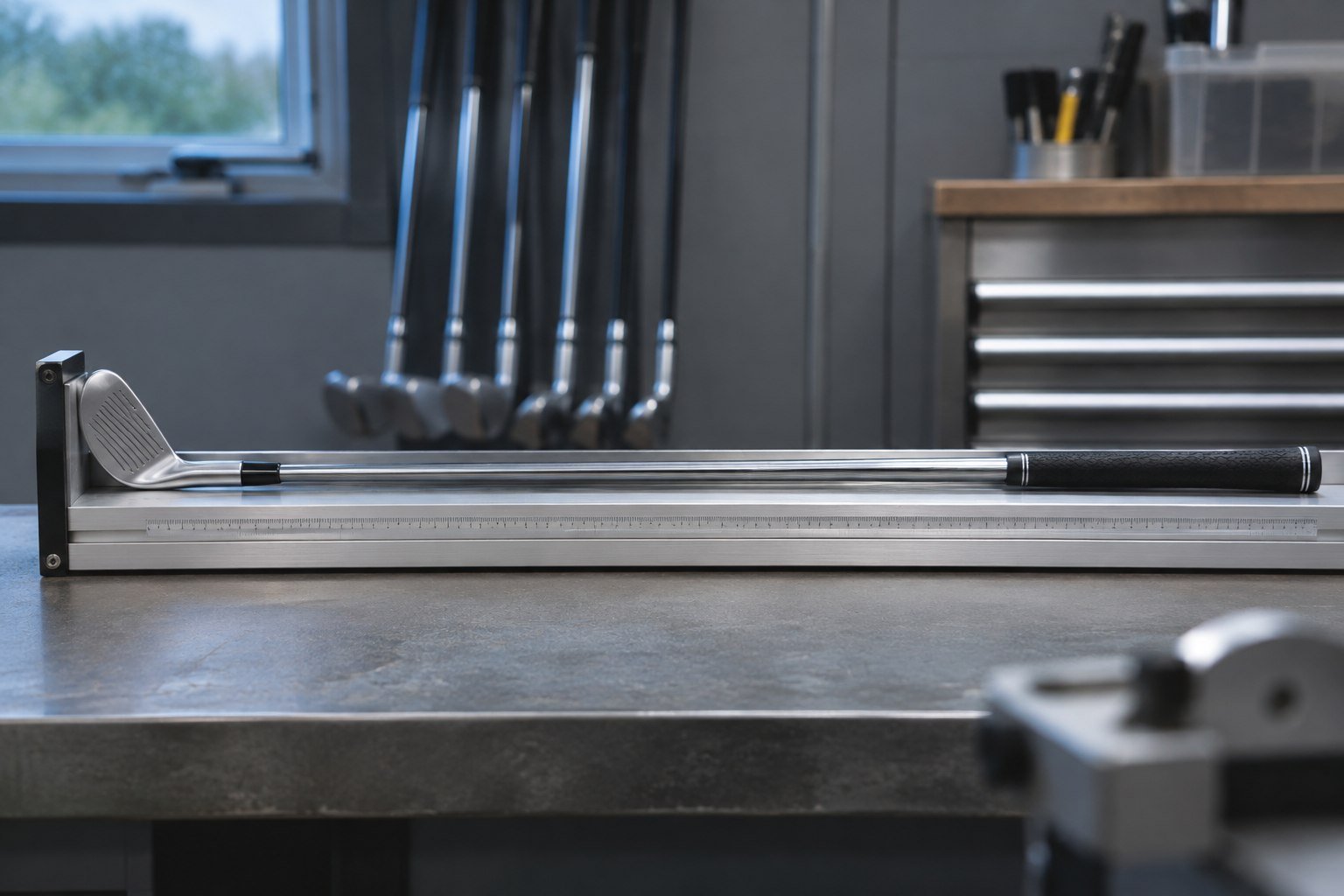
Inspect wear without trying to diagnose hidden damage
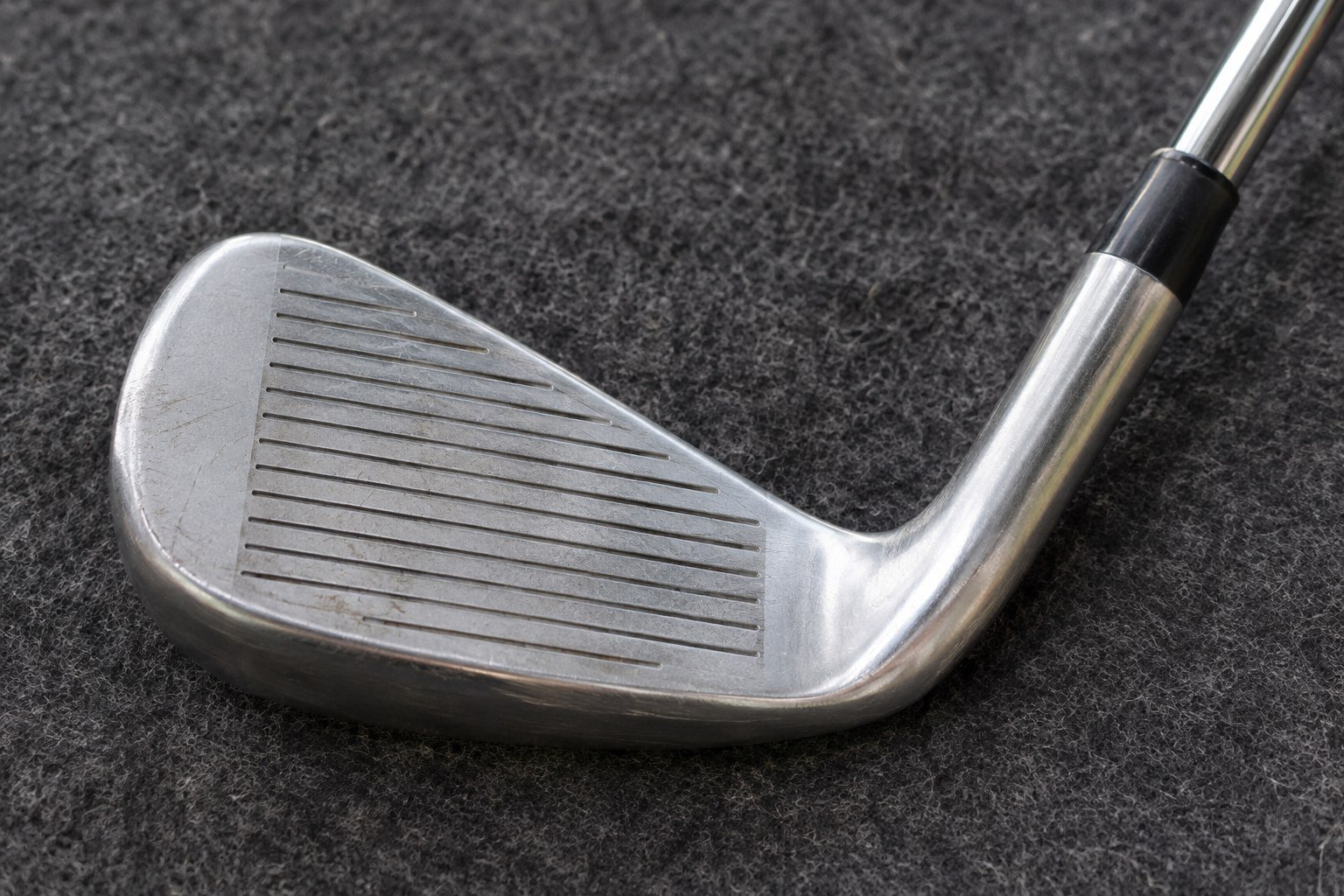
Look at the actual club in good light, or request detailed photographs before ordering. The table is an observation checklist, not a way to certify structural safety. If a mark might be a crack, separation or damaged shaft, stop and ask the seller or an appropriate professional to assess it.
Swipe within the table to see all columns.
| Area | Record the visible condition | Useful response |
|---|---|---|
| Face and sole | Ball marks, abrasion, dents, unusual lines or damage around inserts and joints. | Compare with the description; unresolved cracking, distortion or separation needs assessment before use. |
| Crown, back and finish | Paint chips, scratches, refinishing and marks you would notice at address. | Decide which disclosed cosmetic marks you can live with; do not treat appearance as a structural guarantee. |
| Shaft and hosel | Visible splits, dents, deep scoring, exposed fibres or an unexplained gap or movement. | Do not flex or dismantle it to investigate. Ask for professional assessment or choose another club. |
| Grip | Slick or damaged areas, tearing, wear at the end and the fit of the grip for you. | Ask for a fitted replacement quote if needed and include it in the comparison. |
| Adjustable parts | Correct stated adaptor, screw, weights and the condition of accessible fittings. | Have uncertain compatibility or damage checked; follow the exact manufacturer instructions for any permitted adjustment. |
| Iron-set consistency | Every club number, shaft label, grip and any visible difference in build or wear. | Resolve mixed or missing components rather than judging the whole set from its cleanest iron. |
An honest cosmetic mark may be a reasonable trade for a lower price. An unresolved structural concern is different: do not make it acceptable by allocating a small repair allowance. This publication cannot inspect the club remotely, and an ordinary visual check cannot promise that all hidden faults have been excluded.
Keep photographs of the supplied condition. They are useful if the club arrives with additional damage or if a later disagreement concerns a mark that was already present. Do not regrip, refinish or otherwise alter it until you have checked that it matches the purchase.
Back to top ↑Find out whose warranty you are actually receiving
Ask for the cover on this item, in writing. Record the provider, start date, duration, claim route, excluded wear or disclosed damage, and whether a repair or replacement is promised. A statement that the brand normally gives a warranty is not an answer about this particular ex-demo sale.
Swipe within the table to see all columns.
| Example checked 24 November 2026 | What the published page says | Question to ask before buying |
|---|---|---|
| Affordable Golf ex-demo range | The retailer states a 12-month guarantee for website orders, including ex-demo and second-hand clubs.[2] | Does that apply to this exact item, and where are the full claim conditions? |
| GolfOnline used and ex-display terms | The retailer specifies six months of its own cover from dispatch, rather than manufacturer cover, for the used/ex-display categories described in its terms.[3] | How is this item classified, and what does its condition report already disclose? |
These are examples of different published arrangements, not a ranking of the shops or a promise that every demonstration club receives either period. Check the current item description and full terms before purchase.
Keep the guarantee separate from your legal rights against a trader. The legal standard takes account of the description and relevant circumstances, including price. Disclosed wear does not make the purchase identical to a new club, but “ex-demo” is not a blanket escape from the obligation to supply what was described.[4]
The useful result is a short record you can find later: who sold it, what the club was, what marks were disclosed, when you bought it and who handles a fault. Save the product page as well as the receipt.

Separate a return right from a permission to play
For an ordinary online consumer purchase from a UK trader, there is normally a 14-day period to notify cancellation after receiving the goods, followed by 14 days to return them. Exceptions exist, including some genuinely personalised or custom-made goods. Handling beyond what is needed to establish the item’s nature, characteristics and functioning can affect the refund. Buying in a shop does not generally give an automatic change-of-mind refund.[5]
That does not make every ex-demo purchase a free on-course trial. Ask what, if any, play-testing the seller permits and whether extra marks, a different grip or missing accessories affect its voluntary return offer. Get the answer before hitting balls, rather than assuming a club that is already used can accumulate more wear without consequence.
Faults or a description mismatch are a separate issue from simply deciding the club does not suit you. Tell the seller what is wrong promptly and keep the supplied condition documented. Where terms are unclear, ask for clarification or obtain consumer advice before treating a “sale item” label as the end of the matter.
Back to top ↑Calculate the saving that survives the extras
Compare against a suitable alternative available to you, not just the original launch price. Include only costs you would actually incur, and obtain a quote before relying on a paid adjustment or inspection. The following numbers are illustrative planning inputs, not retailer prices or a standard charge for these services.
Swipe within the table to see all columns.
| Cost item | Ex-demo purchase | Suitable new alternative |
|---|---|---|
| Club price | £220 | £315 |
| Delivery | £12 | Included in this example |
| Grip replacement, fitted | £18 | Not needed in this example |
| Professional specification check | £25 | Not needed in this example |
| Missing headcover | £20 | Included in this example |
| Total for this comparison | £295 | £315 |
| Remaining saving | £20 | — |
The headline difference is £95, but the usable saving is £20 after the £75 of additional costs. At that point the new alternative may be preferable, depending on fit, condition and the actual terms. If the grip and headcover already suit you, remove those costs; do not add expenses just to make one option lose.
You can also work backwards. If the alternative costs £315 delivered, the demo needs £75 of extras, and you want £40 left in return for accepting its condition, your maximum club price is £200: £315 − £75 − £40. The £40 is your chosen margin, not a rule about what used equipment should save.
To find a real comparison, browse the equipment range at Clubhouse Golf or, when the club is a Callaway, check Callaway’s UK club range. Match the model and build where possible and compare the checkout total. These links are general ranges, not promises of stock or the lowest price.
If no suitable alternative is available at the assumed price, change the comparison. A hypothetical bargain elsewhere is no more useful than an exaggerated crossed-out price on the demo listing.
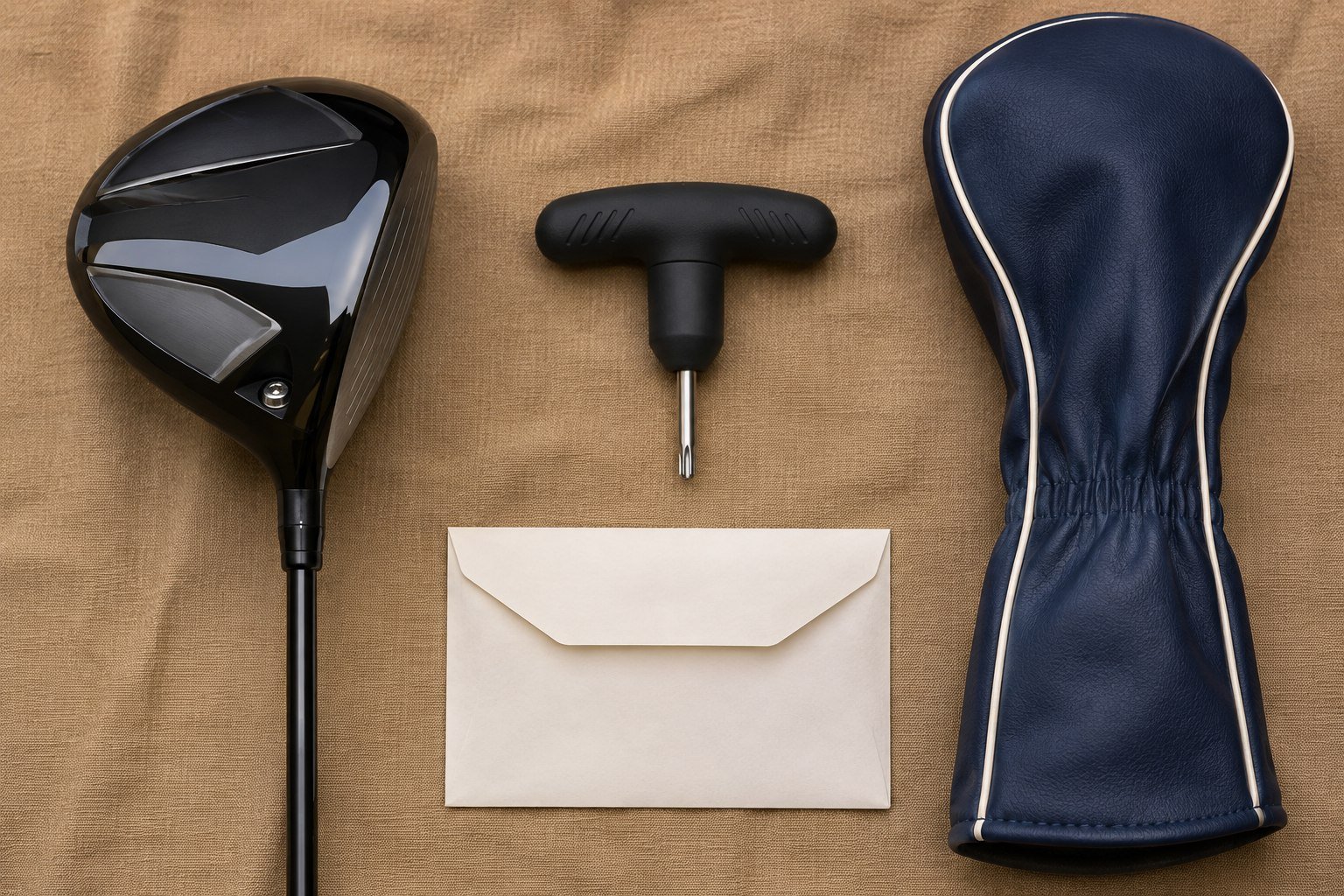
Make the final decision before the first round
A sensible ex-demo purchase passes three separate checks: the build is suitable, the condition is acceptable and the complete purchase makes financial sense. A large saving cannot answer the first two questions for you.
Before paying
- Save the exact specification, actual-item photographs and disclosed wear.
- Confirm what is included and price any genuinely necessary work.
- Record who provides the cover and what returns or trial terms apply.
- Compare a realistic alternative and decide what saving makes the compromise worthwhile to you.
When it arrives
- Match the club and accessories to the saved description before using or changing them.
- Photograph any difference or transport damage and tell the seller promptly.
- Ask for appropriate assessment if you find a possible structural problem or unexplained fitting component.
- Retain the receipt, condition evidence and written cover together.
Buy when those checks give a clear answer and the club is a sensible match for your needs. Pause when an essential specification, condition issue or term is still unclear. Pass when the deal needs several unpriced changes, a risky repair or a hopeful assumption to work.
There is no need to reject a well-documented demo club for a harmless scuff. There is equally no need to accept the wrong club because it carries a reduced-price sticker. The aim is useful equipment at a fair complete cost.
Back to top ↑More questions
Does an older model year tell me how much a demo club was used?
No. The model’s age does not establish the history of this particular item. Ask what the seller knows about its demonstration use and look at the documented condition. Do not convert a launch date into an estimate of how many balls it has hit.
Is a claimed number of demonstration shots enough to judge remaining life?
Treat it as one piece of the seller’s account, not a lifespan prediction. Ask how the number was recorded and what inspection has been performed. A general buying guide cannot calculate a safe remaining life from a shot count.
Should I pay extra for an immaculate finish?
Only if its appearance matters enough to you. Compare the actual club, build, accessories and terms first. A cleaner-looking option can still be the less suitable purchase; a disclosed cosmetic mark can be acceptable when the rest of the evidence and price make sense.
Sources and checks
Manufacturer and retailer guidance informs these checks. The cost comparison uses illustrative figures, not retailer quotations.
- Titleist — SureFit Performance Guide
Checked 24 November 2026. - Affordable Golf — Ex-demo golf clubs
Checked 24 November 2026. - GolfOnline — Terms and conditions, sections 9 and 13
Checked 24 November 2026. - Business Companion — Selling and supplying goods
Checked 24 November 2026. - GOV.UK — Accepting returns and giving refunds
Checked 24 November 2026.
Illustrations in this article were created for Taylor’s Trailblazing Golf. Third-party photographs, where used, are credited beside the image or in the source list.