Buying Used Golf Clubs Online: A Seller Verification Checklist
A convincing listing is only a starting point. Build a short record of who is selling, what the club actually is, what has changed and what happens if the delivered item differs.
AI illustration. Build a record of the seller, the exact club and the agreed terms before paying.
This guide contains affiliate links. If you buy through them, Taylor’s Trailblazing Golf may receive a commission at no extra cost to you.
Buying used golf clubs online means assessing both the item and the transaction. Gather evidence about the exact clubs, establish who is selling them and record the payment, delivery and return terms before deciding whether the saving is worthwhile.
Research-led guidance for UK golfers. Read how we assess golf equipment for the distinction between documented features and hands-on testing.
Separate the marketplace’s name from the person or business that is selling the club.
A model name alone does not establish shaft, length, alterations or complete set contents.
Save the listing, replies, terms and payment record before the advert disappears.
Identify who is actually selling the club
Start with the seller’s name, contact route and stated status. A marketplace may host a private owner, a golf shop and a regular commercial seller on similar-looking pages. The platform’s branding does not tell you which one is your contracting seller.
For a business, record its trading details, contact information and return address. For a private sale, keep the seller’s account details and written messages within the transaction record. Ask directly if the status is unclear. Under the Consumer Contracts Regulations, a trader is defined by acting for business purposes, not simply by the label chosen for an account.[1]
Read feedback for relevant patterns: whether buyers received the described item, whether photographs matched, and how problems were handled. A high score for unrelated low-value sales does not answer those questions about an expensive iron set. Equally, a newer seller is not automatically dishonest; it means you have less history to assess.
Check whether the seller can answer ordinary questions about the item. A plausible account of ownership helps you decide what to investigate, but it is not proof on its own. Avoid turning one reassuring feature—an old account, a shop-like name or a friendly message—into approval of the whole purchase.
Back to the start ↑Get the exact club and its alteration history in writing
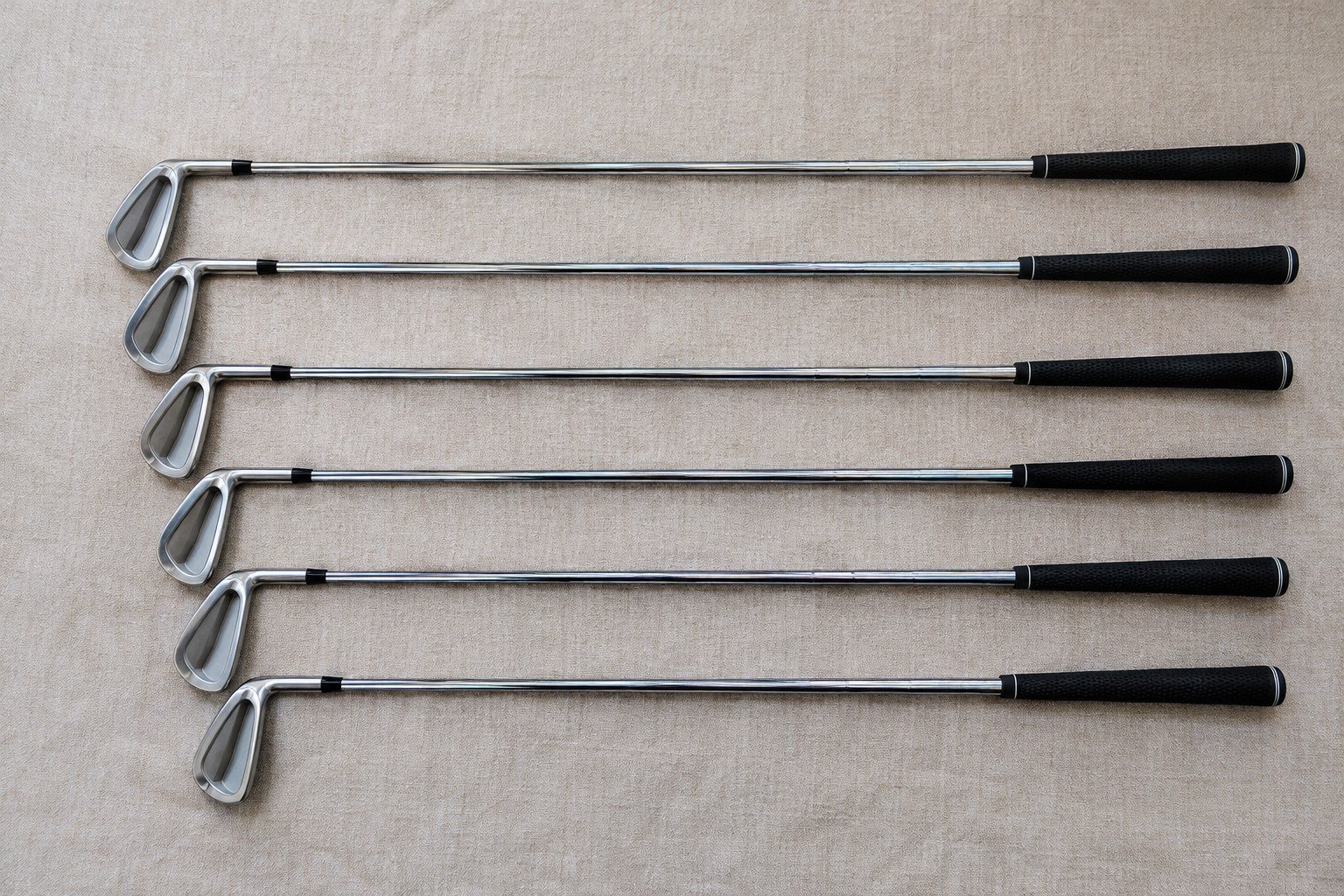
Record the brand, full model and generation, handedness, marked loft or club number, shaft model and flex label, grip, and any included headcover or adjustment tool. For a set, list every club individually. “Seven irons” and “5–PW plus a gap wedge” should describe the same contents before you pay.
Ask whether the shaft or grip has been replaced, the club shortened or extended, or loft and lie adjusted. Request any available build or repair record. The Office for Product Safety and Standards warns that wear and modifications in second-hand goods may not be obvious, and recommends asking about alterations.[2]
Distinguish what the seller knows from what they assume. “Standard length” may mean original factory specification, an estimate or simply that the current owner has not changed it. If length is essential, ask how it was established. Do not treat a photograph beside an unspecified ruler as a professional build measurement.
Check the manufacturer’s information for the exact generation to understand the original offering, then compare it with the advertised club. Factory specifications cannot establish what is fitted now. A labelled shaft also does not tell you whether the club suits your swing; resolve that through a suitable trial or fitting, using our guide to useful golf-club fitting sessions if needed.
Back to the start ↑Request photographs that answer specific questions
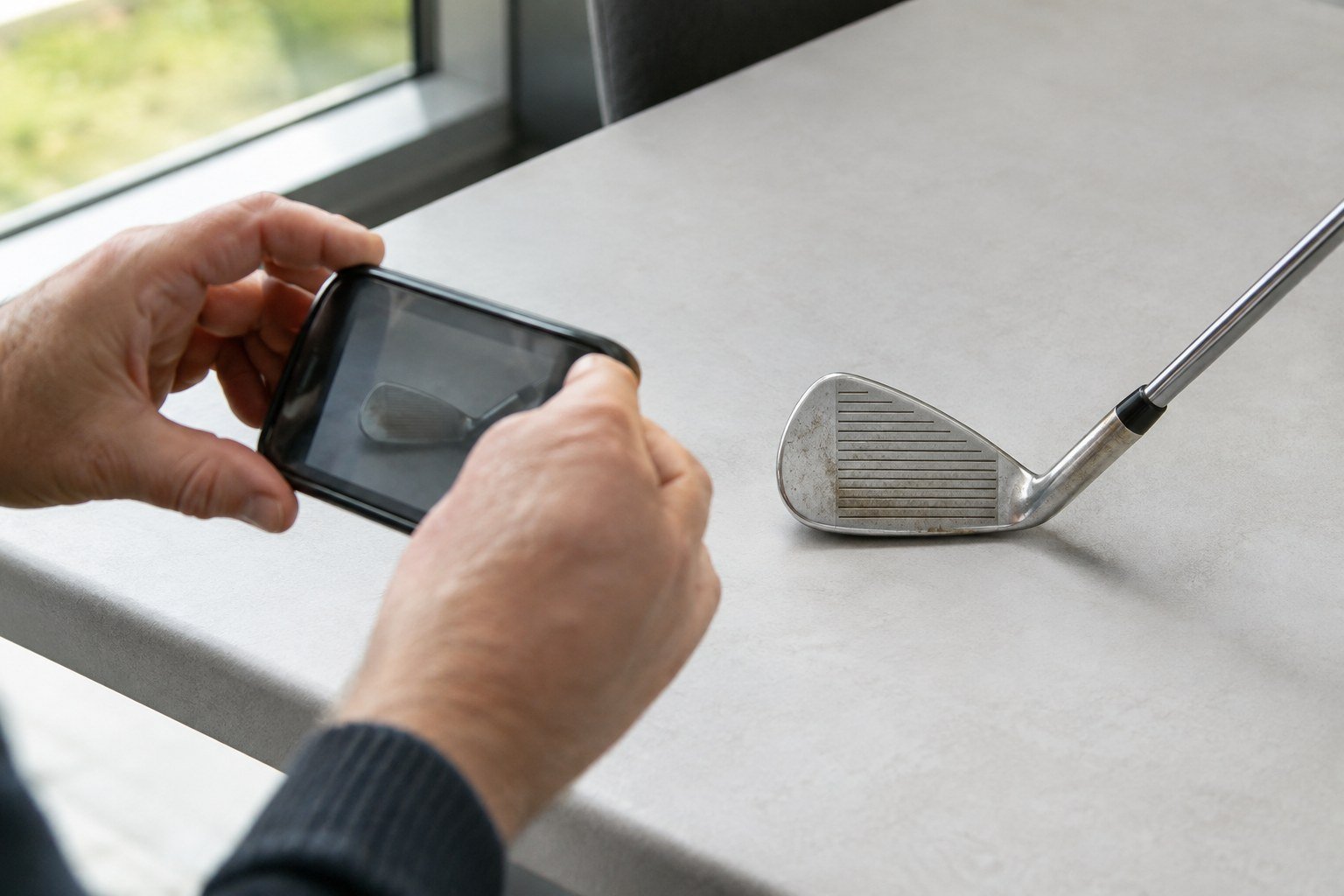
Ask for clear, current images of the actual club in ordinary light. Start with a whole-club view, then request only the details you need. An attractive manufacturer photograph establishes neither the item’s present condition nor what the seller has in hand.
On a small screen, swipe inside the table to read every column.
| Photograph | Question it helps answer | What remains unproven |
|---|---|---|
| Whole club, grip to head | Does the complete item match the description? | Exact measurements, internal condition and suitability. |
| Face and sole | What visible marks and wear are present? | Remaining performance or a hidden defect. |
| Crown or back of the head | Are there chips, dents or marks outside the main selling view? | Whether an unclear mark is cosmetic or structural. |
| Shaft label, grip and visible shaft sections | Do the advertised components and visible condition agree? | Original assembly, unseen extensions or authenticity. |
| Hosel or adjustable connection | Can you see the fitted connection and any disclosed repair? | Internal bonding, correct assembly or safe use. |
| All clubs and included accessories together | What exactly is included in the price? | That every club has the same undisclosed history. |
If a mark is blurred, ask for another angle and a plain-language description. Do not diagnose a crack, bend or repair from an uncertain image. Where structural condition is in doubt, arrange a qualified inspection before purchase or choose another item.
A serial number is useful identification information, but successful registration is not authentication. PING expressly says its online registration tool does not verify authenticity.[3] Ask the relevant manufacturer what assistance it can provide; do not assume it will certify every used item from photographs.
Separate private-sale terms from business-sale rights
For an ordinary UK consumer distance purchase from a business, the usual change-of-mind process gives you 14 days starting the day after receipt to notify cancellation, then 14 days after notifying the seller to return the goods. Exceptions include goods made to your specifications or clearly personalised.[4] The Consumer Contracts Regulations set out the trader-to-consumer framework and exceptions.[1]
A purchase from a private individual does not have that automatic cooling-off right; Citizens Advice makes this distinction in its guidance.[5] Private goods sold by description must still correspond with that description under section 13 of the Sale of Goods Act 1979.[6] “Private sale” does not make an inaccurate description irrelevant.
On a small screen, swipe inside the table to read every column.
| Purchase route | Ask before payment | Avoid assuming |
|---|---|---|
| Business seller | Cancellation instructions, return address, postage responsibility and any customisation terms. | That every return is free or includes an on-course trial. |
| Private seller | Any agreed inspection or return arrangement, recorded in the messages. | That a change of mind creates a return right. |
| Marketplace purchase | The actual seller’s terms and the platform’s separate dispute process. | That the platform itself sold or inspected the club. |
Faults or misdescription are a different issue from simply changing your mind. A seller’s “no returns” wording cannot remove applicable statutory rights.[4] Keep the exact listing and terms so any later complaint can identify the mismatch. Overseas purchases and unclear seller status warrant particular care; get relevant consumer advice if you need a legal interpretation of a specific transaction.
Back to the start ↑Use a written checklist for the seller
Copy these prompts into your notes and fill them with the seller’s actual answers. Mark each answer as confirmed, unclear or unacceptable for your purpose. Record where each answer came from, and resolve any essential unknown before paying.
- Who is selling, and is this a business or private transaction?
- What exact model, handedness, shaft, stated length and set contents am I buying?
- Are the photographs of this item now, and do they show the areas I asked about?
- What repairs, replacements or specification changes are known?
- Is there a purchase or build record, and what can be shared with personal information removed?
- What damage or wear is being disclosed, including anything not clear in the photographs?
- Which headcovers, tools or other accessories are included?
- What is the complete delivered price, dispatch plan and agreed return process?
- Which payment route will I use, and what are its applicable protection terms and deadlines?
For example, an otherwise attractive set may contain a replacement 7-iron with a different shaft. That need not make the seller unreliable. It creates a specific buying question: does that mixed build suit your requirements, and can any necessary work be assessed and priced before you commit?
A seller who says “I do not know” has left an uncertainty, not necessarily made a false claim. Decide whether you can resolve it or accept it. If the answer affects safe use, the specification you require or your ability to return a mismatch, do not let a low asking price answer it for you.
Agree payment and dispatch without losing the record
Use the genuine website or app rather than a replacement checkout sent in a message. The National Cyber Security Centre warns about copied shopping sites and suspicious links, advises against direct bank-transfer payment, and recommends checking payment services’ protection terms.[7]
Before paying, read the actual marketplace and payment-provider rules for your transaction. Note eligible purchases, excluded payment types, the reporting deadline and the evidence required. A logo or the word “protected” does not guarantee that a later claim will succeed.
Keep the agreed specification and price in the normal message record. Be wary of pressure to abandon that route for a private payment or to pay immediately before the questions are answered. If collecting, agree the opportunity to inspect and what happens if the club does not match before travelling; do not assume collection gives you a particular platform protection.
Confirm dispatch timing, delivery address and tracking arrangements. Ask how the clubs will be packed, especially a loose driver or mixed set. Save the advert, photographs, replies, terms and payment confirmation in one place before the listing is removed.

Compare the complete used price with your alternatives
Use a simple total: asking price plus delivery plus work you have actually confirmed is needed. Keep unknown repair costs as an unresolved question, not an optimistic allowance. A low-priced club that needs an uncertain rebuild is a different purchase from one that meets your specification already.
As an illustrative example, a £220 set with £15 delivery and a confirmed £72 regripping quote would cost £307. Those are example figures, not a retailer offer. Compare that total with another suitable used set and an equivalent new option, including their specification and return terms.
Clubhouse Golf states that it does not sell second-hand clubs; its sale range is new stock.[8] Its current category can therefore provide a new-club comparison, rather than a used-seller recommendation: Compare new clubs in the Clubhouse Golf sale range.[9] Check the actual model, handedness, shaft and set makeup before treating a price as comparable.
Keeping your present clubs may also be the better choice. If replacement is prompted mainly by appearance, our guide to iron wear, gapping and repair options helps frame that decision. Buy the used item when the evidence, specification and full cost make sense together.
Back to the start ↑Inspect the arrival against what was agreed
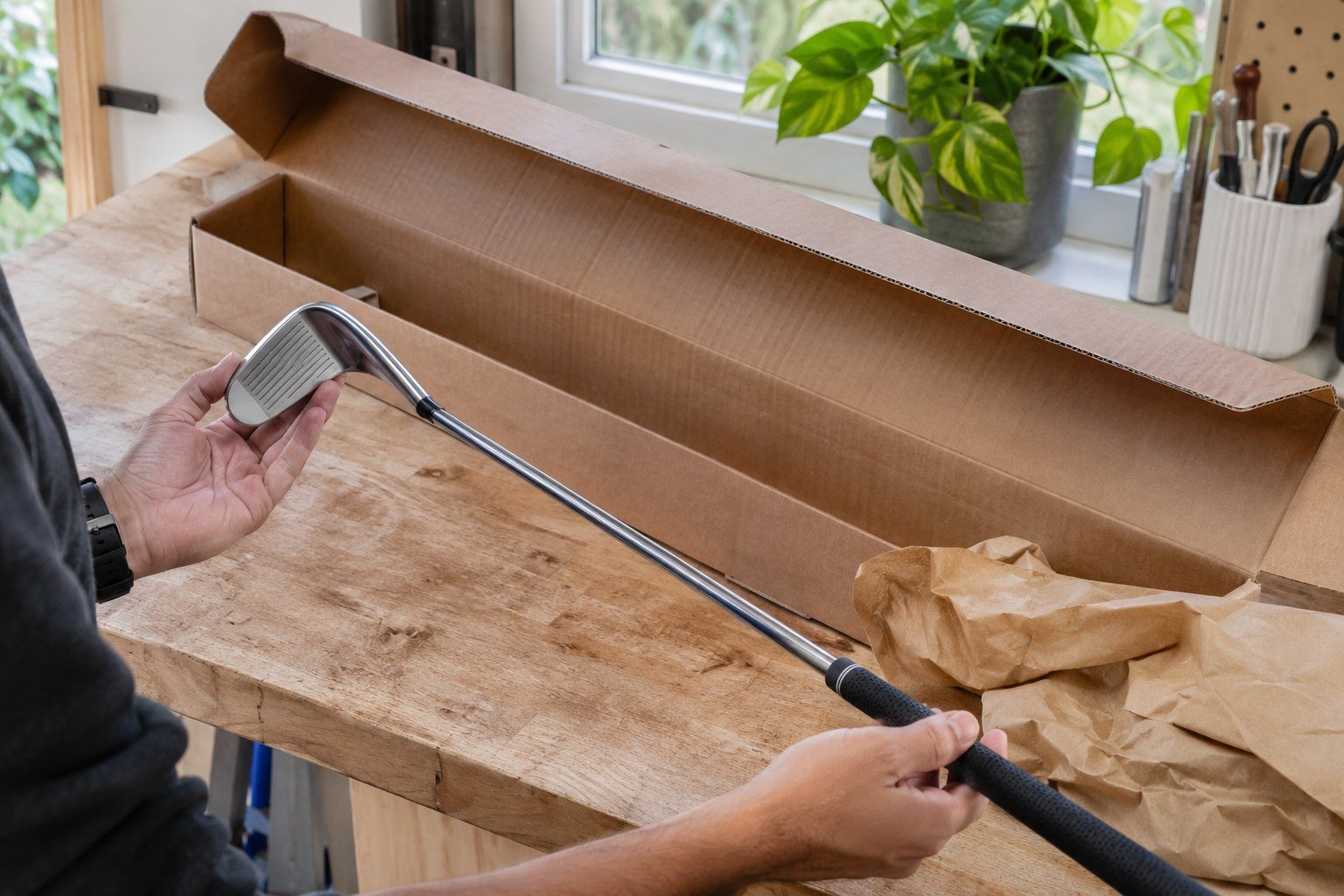
Keep the packaging and inspect the clubs before playing, cleaning aggressively or making alterations. Photograph the parcel’s condition and compare the actual contents with the saved listing: club count, handedness, labels, accessories and disclosed marks.
If anything differs, record the specific discrepancy and contact the seller promptly through the appropriate channel. Follow the marketplace or payment process within its deadlines where relevant. Ask for return instructions before sending the item away, and keep records of correspondence and dispatch.
Do not attempt a repair to find out whether a suspected defect matters. Put the club aside and seek an appropriate assessment. A successful delivery confirms that a parcel arrived; the final buying check is whether the actual item corresponds with the agreement and is suitable to put into use.
Questions before you decide
Should I ask the seller for personal identity documents?
Start with information relevant to the sale, the platform’s normal verification process and business details where applicable. An unsolicited image of a passport or driving licence does not establish that the sender owns the club. Avoid collecting unnecessary sensitive documents as a substitute for checking the item and transaction.
What if the seller uses a condition grade such as “good”?
Ask for that seller’s definition and the actual-item photographs. Record the disclosed marks and defects in ordinary words. A grade is useful only when you know what it includes; it should not replace your questions about the specification or history.
Sources and editorial checks
Manufacturer guidance, published service information and other primary sources inform this guide. The comparisons and checklists are editorial decision aids, not results of hands-on product testing.
- UK legislation — Consumer Contracts Regulations 2013Trader definition and distance-cancellation framework. Checked 24 November 2026.
- OPSS — Buying second-hand goodsHidden wear and modification questions. Checked 24 November 2026.
- PING Europe — Counterfeit clubsRegistration does not authenticate a club. Checked 24 November 2026.
- GOV.UK — Accepting returns and giving refundsBusiness-sales cancellation and statutory-rights summary. Checked 24 November 2026.
- Citizens Advice — Changing your mindEngland guidance distinguishes private sales. Checked 24 November 2026.
- UK legislation — Sale of Goods Act 1979, section 13Sale by description. Checked 24 November 2026.
- NCSC — Shopping and paying safely onlineGenuine sites, payment and protection-term checks. Checked 24 November 2026.
- Clubhouse Golf — Golf clubsMerchant states it sells new rather than second-hand clubs. Checked 24 November 2026.
- Clubhouse Golf — Clubs sale rangeNew-club comparison destination. Checked 24 November 2026.
Illustrations in this article were created for Taylor’s Trailblazing Golf. Third-party photographs, where used, are credited beside the image or in the source list.