Golf Glove Durability: When to Replace Rather Than Repair
Keep a marked glove that still works. Retire one whose material, fit or fastening no longer does.
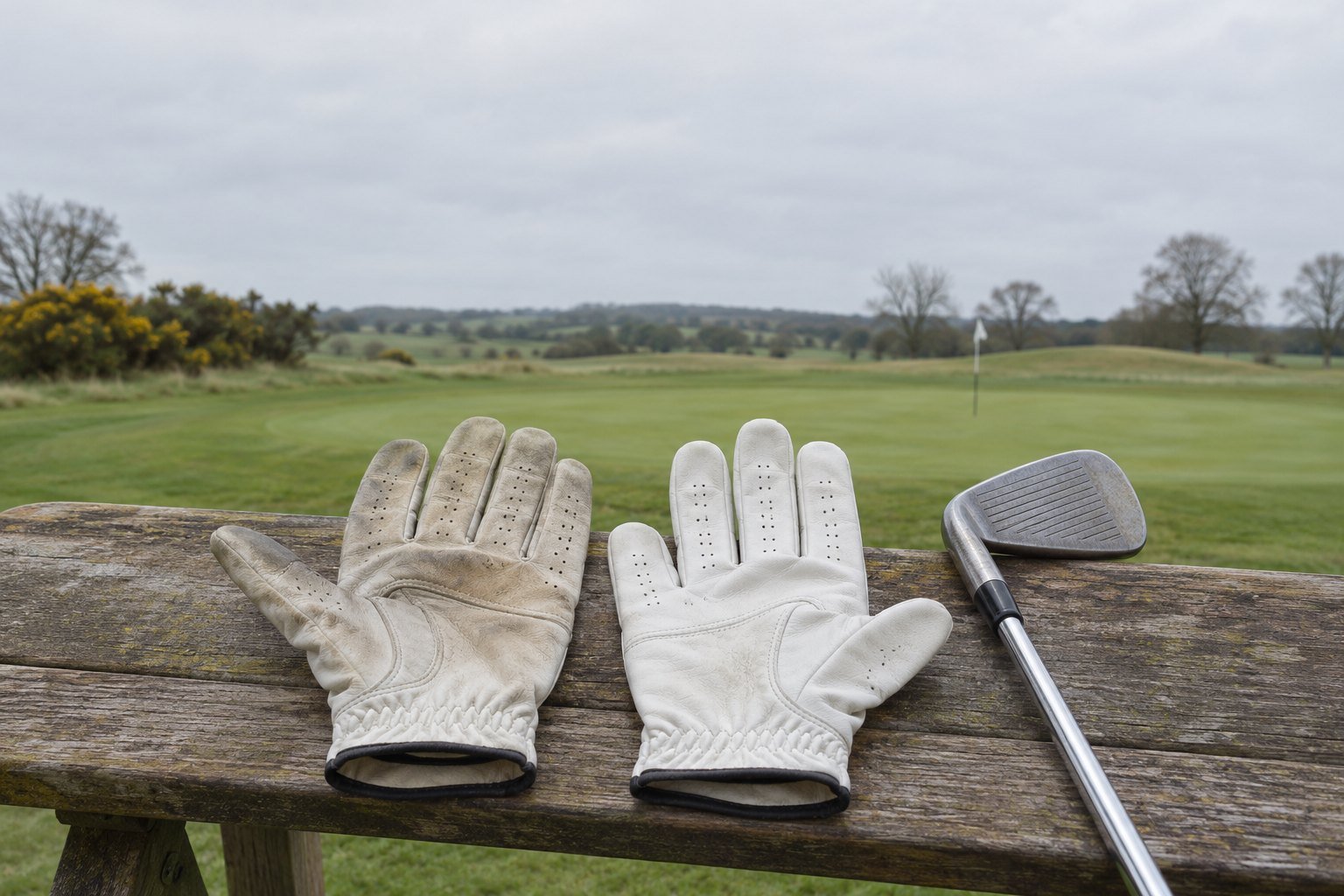
AI illustration of two generic gloves in different condition; appearance alone does not establish remaining life.
Golf glove durability is best judged by what the glove can still do. A grey palm can be perfectly serviceable; a clean-looking glove can have a failing closure or enough loose material to move around your hand. Neither the purchase date nor a target number of rounds settles the decision.
This research-led guide uses manufacturer guidance to separate care from replacement, then adds a practical inspection and cost record. It does not report a wear trial or promise a lifespan for any model.
Ad – includes affiliate links. If you buy through these links, Taylor’s Trailblazing Golf may earn a commission. Recommendations are based on the equipment decision and the available evidence.
Separate discolouration from an actual hole, split seam or change in how the glove holds.
Inspect the club grip as well as the glove before blaming one for slipping.
Covering a damaged area does not demonstrate that a playing glove is restored.
Record rounds and practice separately; a cost calculation cannot predict the next glove’s life.
Check golf glove durability before replacing
Take the glove off, open the closure and look at the palm, thumb, finger sides, seams and fastening in good light. Compare a suspicious area with an unworn part of the same glove. Do not pull a thin patch apart to see how much strength remains.
The matrix below is an editorial decision aid, not a manufacturer’s pass/fail test. Bionic’s replacement advice supports retiring holed or persistently stiff gloves; the additional checks help distinguish damage from appearance. [1]
On a phone, swipe within the table to see all columns.
| What you find | What to check next | Practical decision |
|---|---|---|
| Surface marks or colour change | Material remains continuous; seams, closure and fit are unchanged. | Keep using it if the ordinary hold remains comfortable and secure. A cosmetic mark alone is not a replacement trigger. |
| Dampness or temporary limpness | No hole or seam failure; follow the model’s drying instructions and reassess. | Pause use. Do not diagnose permanent wear from a freshly soaked glove. |
| A thin, shiny contact patch | Look for missing material, cracking or persistent slipping after permitted care. | Monitor an intact patch. Replace if it no longer gives a dependable contact surface. |
| A hole or opening seam | Distinguish intentional ventilation holes from new damage, especially around the palm and thumb. | Take it out of playing use. A stitched or glued cover is not a verified restoration. |
| Closure releases or material bunches | Check whether the fastening is obstructed, worn or being used to compensate for poor fit. | Replace if it cannot stay securely fastened or the glove has permanently lost its fit. |
| Hardness, cracking or shrinkage | Check the exact care instructions; never force the glove onto your hand. | Retire it if normal flexibility and comfortable fit do not return after permitted care. |
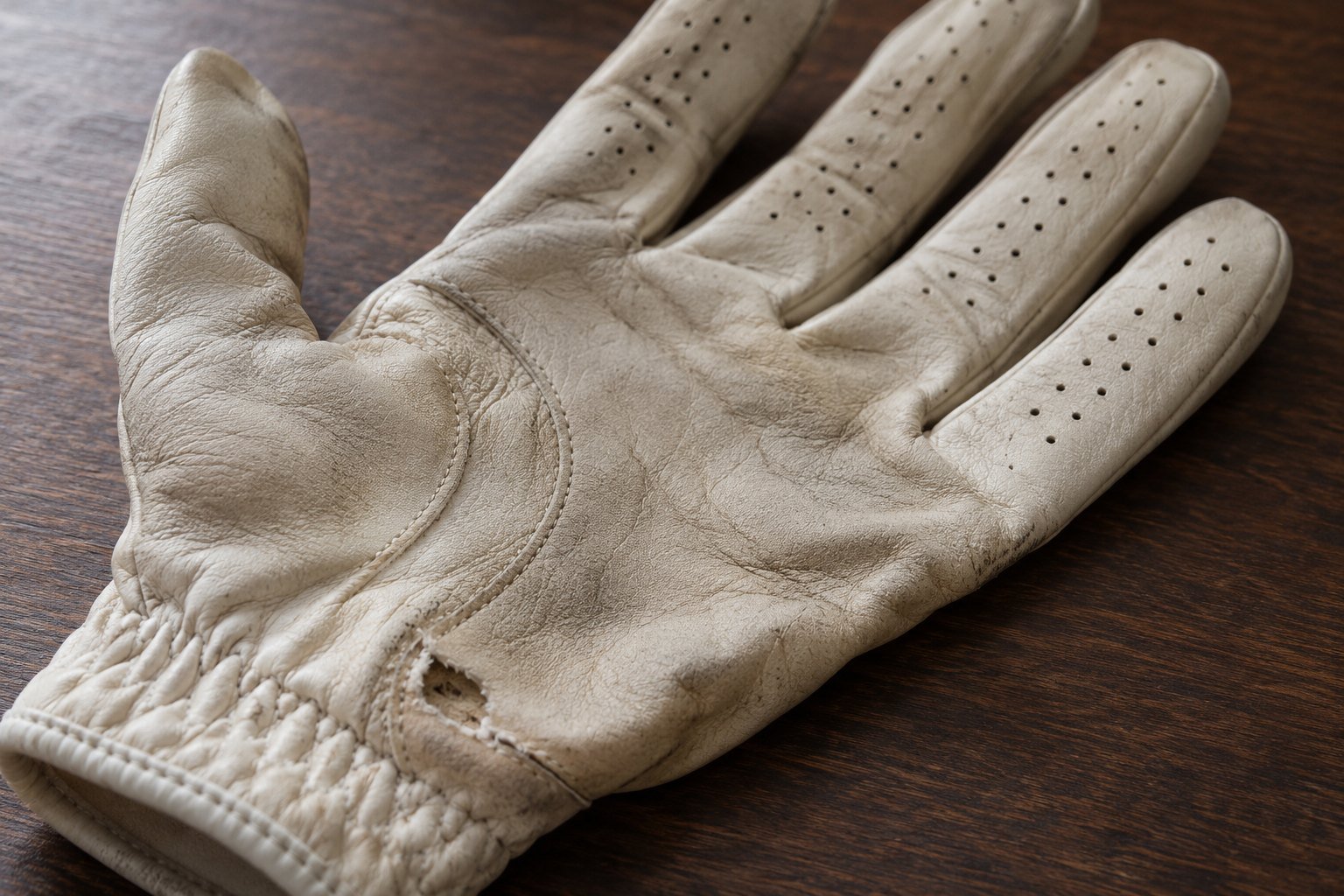
If you cannot hold the club normally without uncertainty or extra squeezing, stop using that glove while you investigate. A stationary hold can reveal an obvious problem; it cannot certify that a damaged glove will behave properly during a swing.
Back to top ↑Look at fit and the club grip before buying again
A replacement can repeat the same wear pattern if its fit or the club’s grip is part of the problem. FootJoy says a glove should sit closely across the palm and fingers without loose material. Its fitting guide treats palm, heel and thumb wear as possible clues to how a player holds or moves the club, rather than proof of one cause. [2]
Use that distinction carefully. A hole near the heel of your hand does not diagnose a swing fault. Note the location, check the glove’s fit and ask a qualified golf professional to look at recurring wear if you cannot explain it. Avoid changing your technique solely to make a glove last longer.
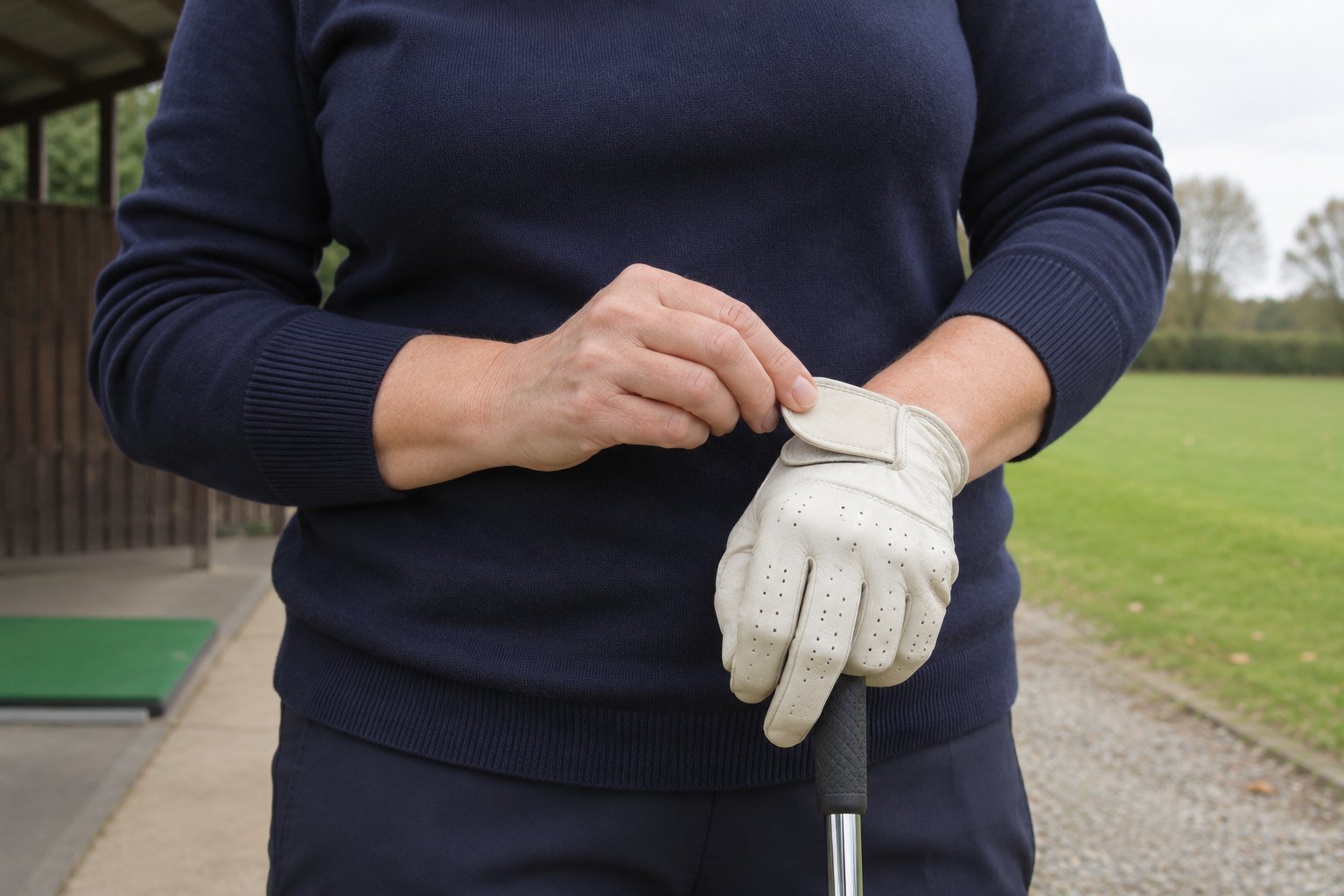
Inspect the club grip too. Golf Pride identifies a slick, glossy surface and crumbling rubber or cord as signs of grip wear. A fresh glove is not a substitute for dealing with a worn club grip. [3] If the problem appears on one club much more than the others, record that detail rather than assuming the glove alone is responsible.
For a replacement that bunches immediately or leaves excess fingertip material, use the glove size and hand measurement guide before ordering several in the same size. A size label copied from an old, stretched glove is a starting point, not a completed fit check.
Back to top ↑Where care ends and an unsupported repair begins
Care preserves material that is still present. Repair asks a damaged part to perform again. That difference matters when the part sits between your hand and the club.
My recommendation is to replace a worn-through playing glove rather than add glue, tape, a sewn patch or another layer across the contact area. Covering a hole does not demonstrate that the original flexibility, fit or grip has returned. The manufacturer care sources consulted here do not provide an approved procedure for those repairs. [1] [4]
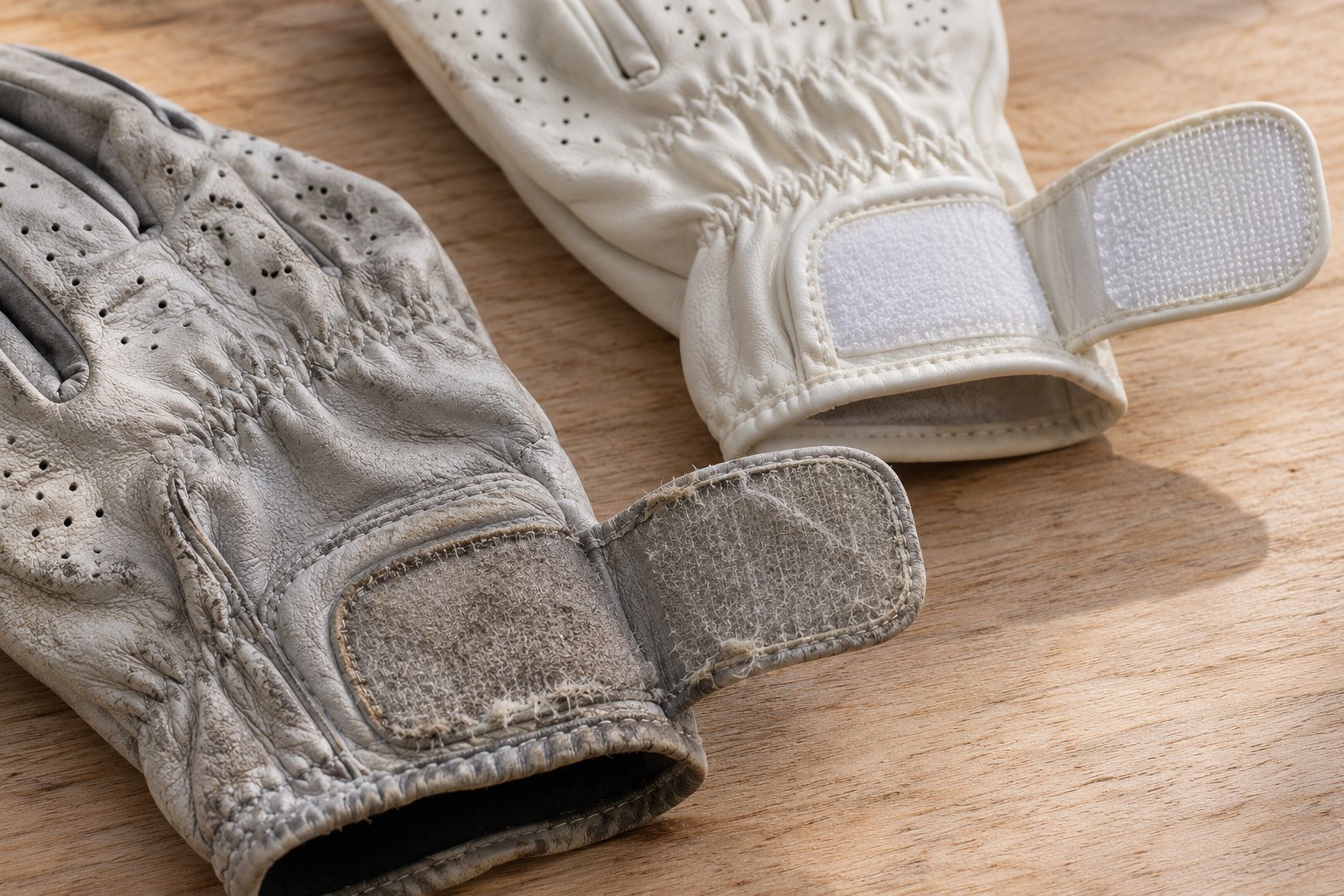
A closure obstructed by loose fluff is different from fastening material that has worn flat. With the glove off, check whether there is an obvious removable obstruction without picking at the fabric or cutting stitching. If it still releases during an ordinary fit check, replace it. Do not compensate by wrapping tape around the cuff.
For an unexpectedly early seam failure, photograph the whole glove, the damaged area and the label, and keep the receipt. Ask the retailer or manufacturer to assess it before altering it. This is a request for assessment, not a promise that wear will be covered or that a replacement will be offered.
“Practice only” is not a useful destination for a glove that cannot hold securely: practice still involves holding and swinging a club. A spare should pass the same basic condition and fit checks as the glove you normally play in.
Record what changed, then decide on the evidence
A brief note helps when you are unsure whether a mark is progressing. Record the model and size, where the change appears, whether the glove was damp, the care actually used and what happened after it dried. A clear photograph is more useful than trying to remember whether a pale patch looked larger last week.
On a phone, swipe within the table to see all columns.
| Record point | Observation | Decision |
|---|---|---|
| After 12 recorded rounds | Unnamed glove A has a dark palm mark. Material is intact, closure holds and fit is unchanged. | Keep. Save a photograph and inspect before the next use. |
| After a wet practice session | Glove feels limp. No new tear is visible. | Rest it and follow its maker’s drying directions. Recheck only once dry. |
| After 16 recorded rounds and six range visits | A new hole is visible at the heel of the palm. | Retire it from playing use. Record the location and check fit and grip condition before choosing the next one. |
The numbers describe this invented record only. They are neither a typical lifespan nor a suggested inspection interval. Check whenever you notice a change, and before relying on a stored spare.
Back to top ↑Calculate cost per round retrospectively
Cost per round is useful for comparing your own completed experience, provided the denominator is honest. Use the amount actually paid for the glove, including any postage you assign to it, divided by the rounds you recorded while using it.
Illustrative arithmetic: glove A cost £18 delivered and completed 16 full 18-hole rounds before retirement. £18 ÷ 16 = £1.125, or £1.13 per recorded round after rounding. It also had six range visits, recorded separately. These are invented inputs, not a retail price or a durability result.
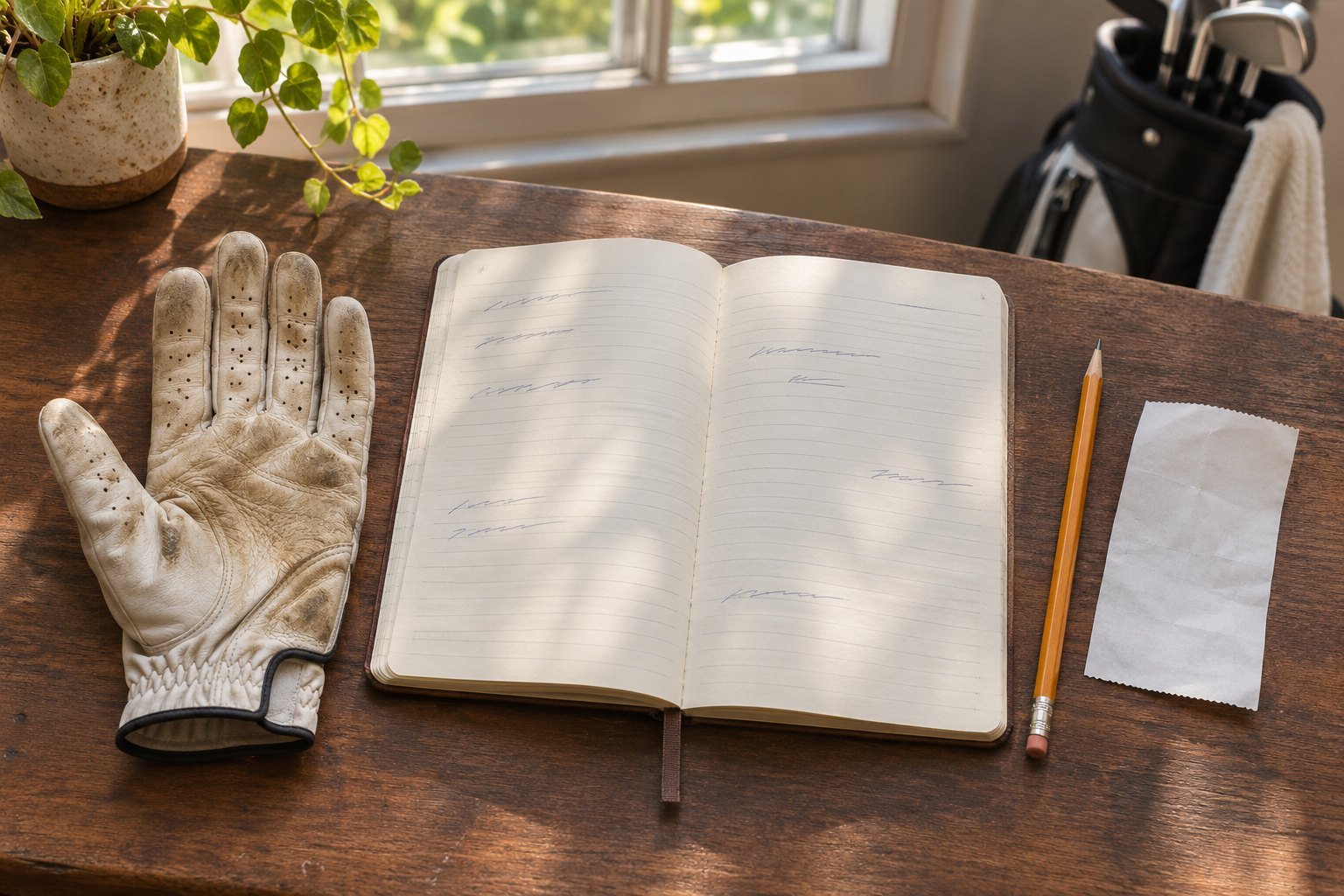
Keeping the practice visits visible prevents a heavily practised glove from looking directly comparable with one worn only on the course. Similarly, record nine-hole rounds as nine-hole rounds. You can choose a consistent holes-played calculation for your own records, but do not quietly count every outing as an equivalent full round.
For a multipack, allocate the amount paid across the gloves, then track each glove’s use. If you rotate two gloves within a round, note that sharing. Adding each glove’s “rounds worn” together can count the same round twice; a pair-level cost should use the number of rounds the pair actually served.
A low figure does not justify another round in a failed glove. Equally, one early failure is weak evidence that a whole model is poor value. Record the reason for retirement and the conditions alongside the cost. That gives the next purchase a more useful comparison than an unsupported claim that a glove should last twenty, thirty or forty rounds.
Back to top ↑Replace for the problem you actually have
If the current glove is intact, fits and still gives a comfortable hold, keeping it is the sensible purchase decision. FootJoy recommends rotating gloves to allow more drying time, but that does not establish a fixed increase in lifespan or make a damaged glove serviceable. [2] Use a spare you already own if it fits and remains sound.
When replacement is warranted, compare fit and the material at the part that failed. FootJoy’s current StaSof description specifies Advanced Performance Leather; Callaway’s Weather Spann combines FUSETECH synthetic with leather at the palm and thumb. Those construction descriptions do not establish which will last longer for you. [5] [7]
- For a leather-led replacement, view the white FootJoy StaSof listing at Clubhouse Golf. The linked listing is for wear on the left hand by a right-handed golfer. Confirm the supplied version, size and fit; its description does not identify a manufacture year. [6]
- To compare a synthetic-and-leather construction, check Weather Spann at Callaway UK. Select the correct hand and size, and check current availability. “All-weather” wording is not permission to put it in a washing machine. [7]
Buy one suitable replacement before committing to a large pack of an unfamiliar fit. Keep the receipt and the maker’s care information with your wear record. The aim is a glove you can use properly until its condition changes, with enough evidence to make the next decision better.
Back to top ↑Sources and checks
Research and specifications checked on 24 November 2026. Manufacturer descriptions are identified in the text; practical checklists and worked examples are editorial guidance, not product testing.
- Bionic — How to Clean Golf Gloves, including when to replace — checked 24 November 2026
- FootJoy UK — Glove fitting and what wear can indicate — checked 24 November 2026
- Golf Pride UK — Grip wear — checked 24 November 2026
- FootJoy UK — Men’s glove care FAQ — checked 24 November 2026
- FootJoy UK — StaSof, style 66770E-301 — checked 24 November 2026
- Clubhouse Golf — FootJoy StaSof, white, right-handed golfer — checked 24 November 2026
- Callaway UK — Weather Spann Men’s Golf Glove — checked 24 November 2026
Illustrations in this article were created for Taylor’s Trailblazing Golf. Third-party photographs, where used, are credited beside the image or in the source list.