Golf Rain Gloves: Why Pairs Differ From Single Gloves
Choose the number of hands you want covered, then check the wet-weather construction and fit. A useful rain-glove purchase starts with what the pack contains.
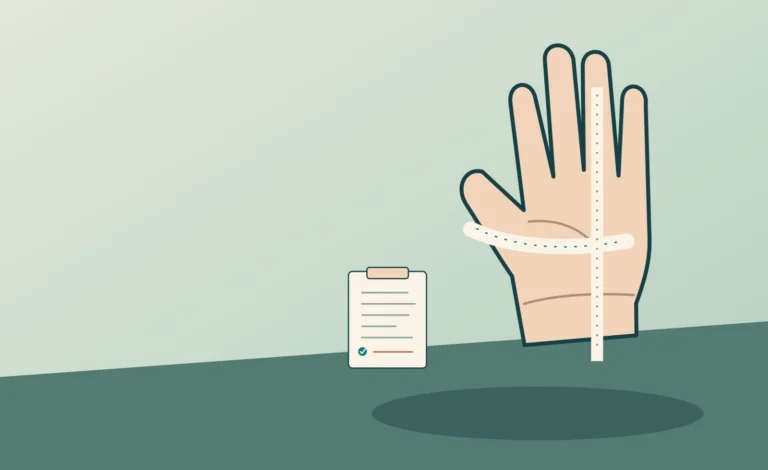
Choose the hands you want covered before comparing rain-glove packs. Generic AI illustration; not a product-test photograph.
Golf rain gloves can look like a simple two-for-one purchase. The more useful question is whether you want a glove on each hand when the weather turns, or a replacement for the single glove you normally wear.
This research-led guide separates package contents, manufacturer wet-grip claims and practical buying choices. The product examples and dated UK prices explain those choices; they are not rankings from hands-on grip testing.
This is a research-led guide. How we assess golf equipment explains the evidence behind our recommendations.
This guide contains affiliate links. If you buy through them, Taylor’s Trailblazing Golf may earn a commission at no extra cost to you.
A pair normally covers left and right. Confirm what any two-pack actually supplies.
Accept the paired size only when both gloves fit comfortably.
Wet-weather grip, waterproofing and warmth answer different questions.
Compare the complete combination you will wear, including delivery.
Golf rain gloves: count the hands before the gloves
FootJoy’s UK catalogue makes the distinction clear. RainGrip Pair is sold as a pair; the separate RainGrip listing offers left- and right-hand selections. Dedicated rain construction therefore does not automatically mean you must buy or wear two gloves.[1][2]
| Listing wording | What to confirm | Buying implication |
|---|---|---|
| Single glove | One glove, for a specified hand | Choose the hand you actually want covered. |
| Left-and-right pair | One glove for each hand | Provides one complete set for wearing two gloves. |
| Two-pack or multipack | Quantity plus the hand of every glove supplied | Do not assume it contains one left and one right. |
If you normally wear one glove, using a pair adds material between the club and your usually bare hand. Check that change in feel before the first wet round. Buying a pair and wearing only one also leaves an opposite-hand glove, rather than a direct replacement when your usual glove wears out.
Retailers may describe the player’s handedness instead of the hand wearing the glove. Clubhouse’s RainGrip listing for a right-handed golfer is worn on the left hand; its left-handed-golfer listing is worn on the right. Read the explicit wearing-hand statement before ordering.[6][7]

What the wet-grip claim does—and does not—establish
FootJoy describes RainGrip’s water-absorbent Autosuede palm as designed to improve grip in rainy conditions, with quick-drying material on the backs of the fingers. Those are manufacturer claims for that construction, rather than a guarantee for every glove or grip.[1]
Srixon similarly specifies a microfibre-suede palm for its Rain Gloves, describing grip in wet or humid conditions and a quick-drying back. That supports a product-specific wet-weather purpose, not a universal rule that every glove improves as it gets wetter.[4]
MacWet explicitly says its gloves are not waterproof. Wet-use grip does not promise dry hands.[3]
Read the exact product instructions before deliberately wetting a glove. A moisture-related palm claim is not, by itself, a direction to soak the complete glove, the cuff or your club grip. Avoid transferring advice from a different brand merely because both products are sold as rain gloves.
Also separate the glove from the rest of the arrangement. Keep the grip clean according to its own maker’s care advice, protect clubs and spares from avoidable soaking, and reassess your hold when conditions change. If you cannot hold the club securely and comfortably, pause play; squeezing harder is not a useful substitute for addressing the problem.
Back to top ↑Fit the pair as two individual gloves
Try on both gloves before keeping a pair. A comfortable left glove does not establish that the right glove is acceptable, and tightening the closure cannot settle every finger or palm mismatch.
Use the chosen brand’s measurement method. MacWet, for example, directs you to measure across the palm just below the fingers in centimetres. That is a width measurement, not a circumference measurement to substitute from another chart.[3]
For a fuller measuring routine, use our golf glove size and hand-measurement guide. For this purchase, add a simple left/right record:
| Check | Left hand and right hand | If one side fails |
|---|---|---|
| Fingers and thumb | Note empty tips, pulling seams or restricted bending. | Compare another size or cut. |
| Palm | Hold a stationary club and notice folds or unwanted movement. | Recheck the whole fit, not only the closure. |
| Cuff and closure | Fasten normally, then flex the wrist comfortably. | Try a different cuff or glove shape. |
| Both gloves together | Take your ordinary hold without making a swing. | Decide whether the second glove suits your preferred feel. |
If a paired size works on only one hand, ask about a different cut or separately available singles. Buying two different sizes can be sensible when it produces a better fitting set. Confirm the exact left and right options and their availability first; a letter such as M should not be treated as interchangeable between brands.

Match the conditions, including the dry-weather trade-off
Start with the difficulty you want to solve. Repeated rain reaching both hands presents a different purchase question from keeping one spare glove for an occasional shower.
| Your situation | Useful starting point | Trade-off to check |
|---|---|---|
| You want wet-weather coverage on both hands | A correctly fitting rain pair | The extra glove changes contact with the club. |
| You prefer one gloved hand | A dedicated rain single in the correct hand | The other hand remains uncovered. |
| Most rounds are dry and your present glove works | Keep it; add rain kit only for an identified need | A rarely used pair still needs checking and care. |
| Rain arrives with cold wind | Compare wet-grip construction and back-of-hand protection separately | Check warmth, bulk and movement together. |
MacWet says its range also works when dry, so its gloves are not restricted to use in rain.[3]
MacWet also separates its warmer-weather Mesh back from the windproof, fleece-lined back of Climatec. Both use its Aquatec palm. This illustrates why the palm’s wet-weather purpose and the glove’s warmth should be assessed separately.[3]
For dry days, compare comfort and club contact with the glove you already like. For cold days, examine the insulation and movement you actually need. The words “rain” and “winter” alone cannot tell you how a particular pair will feel, and a thicker glove is not automatically the right choice for you.
Back to top ↑Compare the cost of the set you will actually use
These examples answer three different buying jobs: one hand, both hands, and a pair with a fleece-backed construction. They are not a tested ranking. Prices below were checked on 23 November 2026 and exclude delivery; confirm the selected size, hand and final basket price.
| Exact listing | Contents and listed price | When to consider it |
|---|---|---|
| FootJoy Rain Grip Black pair | Left-and-right pair: £19.99.[5] | You want both hands covered and the paired size fits both. |
| FootJoy Rain Grip Black single: left glove | One glove for the left hand: £12.99.[6] | You need only the left glove, or are building a set from singles. |
| FootJoy Rain Grip Black single: right glove | One glove for the right hand: £12.99.[7] | You need only the right glove, or a different size on that hand. |
| MacWet Climatec Black pair | Left-and-right pair: £24.99.[8] | You want to compare the Climatec fleece-backed option described above. |
The useful price calculation
At these listed prices, one RainGrip left glove plus one right glove costs £12.99 + £12.99 = £25.98. The £19.99 pair is £5.99 less before delivery. Buying just one single costs £7 less than the pair. These are calculations from the observed prices, not a claim that any option is the cheapest available.[5][6][7]
The pair offers the lower starting cost for two-hand coverage if both gloves fit. Paying £5.99 more for two singles can make sense when you need a different size on each hand. If only one glove needs replacing, a single costs £7 less than the pair. Recheck those differences if prices change.
A “cost per glove” figure can hide the actual decision. If you will only wear the left glove, the unused right glove is not a second left-hand replacement. Equally, one pair gives you one complete two-hand set; it does not provide a spare complete set. Buy spare capacity because you need it, rather than because the arithmetic looks attractive.
Back to top ↑Make the pair easy to reach and use in rain
The practical benefit of buying rain gloves depends partly on having the correct gloves available when you need them. A simple routine is more useful than carrying several unlabelled pairs at the bottom of a pocket.
- Before leaving, find both gloves and check the fingers, palm, seams and closures. Confirm that you have a left and a right, rather than two spares for the same hand.
- Keep the intended rain set together in an accessible place. Protect clean, dry spare gloves separately from wet towels and used gloves; check the actual rain protection of the pocket or pouch.
- Put the gloves on where you can seat the fingers and fasten the closures without rushing. Recheck the feel with a stationary club before continuing.
- If you remove one or both gloves between uses, give them a definite place so that neither disappears into another pocket. Avoid trapping them under a soaked towel.
- At the end of the round, take every used glove out of the bag and start the care routine. Do not let “rain glove” become a reason to leave it wet until next week.
You do not need to buy a special pouch if an existing suitable compartment already does the job. The useful distinction is between ready-to-use spares and gloves awaiting drying, not the number of accessories attached to the bag.

Dry and clean the exact glove you own
Keep the care label or save the manufacturer’s instructions when you buy. Similar-looking synthetic gloves can have different permitted cleaning methods; the word “rain” is not a washing specification.
MacWet permits a gentle machine wash up to 40°C with mild detergent, followed by reshaping while damp and natural drying. It says not to tumble-dry its gloves or use direct heat. Apply that instruction to MacWet gloves, rather than extending it to every brand.[3]
After the round, separate the gloves, straighten the fingers gently and use the drying method their maker specifies. Give each glove space rather than leaving the pair folded into a wet ball. Check the palm, fingers and cuff before putting them away for longer storage; the outside feeling dry does not answer every part of that check.
Our guide to glove holders and drying clips explains how to assess a holder and its position. A clip may give a glove a convenient home, but it does not establish that the glove is dry or that the chosen location is sheltered from rain.
When cleaning or drying fails to restore a usable fit, or the palm, seams or closure are damaged, reassess replacement. Do not stretch the glove aggressively or improvise a heat treatment to rescue it.

Choose the smallest useful rain-glove purchase
Choose a pair when you want a wet-weather glove on both hands and both gloves fit. Choose a correctly handed single when one glove answers the problem. Consider separate singles when they let you build a better fitting set, even if the initial cost is higher.
Before paying, write down five things: the exact model, the hand or hands supplied, the size for each hand, the total delivered price and the care instructions. If any of those are unclear, resolve them before ordering.
If your current arrangement already works for the conditions you play in, keep using it. A dedicated pair earns its place by meeting an identified wet-weather need, not simply by putting two gloves in the packet.
Back to top ↑Frequently asked questions
Can a rain pair replace my normal glove permanently?
It can be an option if you prefer its fit and feel across your usual conditions. Make that decision from the exact glove and your own use, rather than assuming that a wet-weather label proves it is the best choice for every round. Keep a serviceable everyday glove until you know whether the change suits you.
Can I order different sizes for my left and right hands?
Where the model is sold as individual hands, that may be possible: FootJoy’s UK RainGrip single page offers left and right selections. Confirm the size available for each hand and the contents of both order lines. A normal paired-size selector should not be assumed to create a mixed-size pair.[2]
Does a two-pack mean one left glove and one right glove?
Not necessarily. Read the hand designation as well as the quantity. A photograph of two gloves or the words “two-pack” do not settle which hand each glove fits. Ask the retailer to confirm the contents if the listing is unclear.
Should I keep both gloves on for putting?
Choose according to the feel you prefer; you do not need to mirror your full-swing routine automatically. If you remove a glove, put it somewhere deliberate and protected rather than dropping it into a wet pocket. Check that changing gloves does not leave your next shot rushed.
Sources and checks
Sources consulted on 23 November 2026. Manufacturer and retailer descriptions are attributed claims; illustrations do not show tested products. Recheck current product details, sizing and care instructions before use or purchase.
- FootJoy UK — RainGrip Pair, style 66083E
- FootJoy UK — RainGrip single, style 66105E
- MacWet — official gloves FAQ and buying guide
- Srixon — Rain Gloves, MSQD
- Clubhouse Golf — FootJoy Rain Grip Black pair, GLFOO110
- Clubhouse Golf — FootJoy Rain Grip Black single for the left hand, GLFOO108
- Clubhouse Golf — FootJoy Rain Grip Black single for the right hand, GLFOO109
- Clubhouse Golf — MacWet Climatec Black pair, GLMAC001
Illustrations in this article were created for Taylor’s Trailblazing Golf. Third-party photographs, where used, are credited beside the image or in the source list.