Hollow-Body Irons: Understanding Construction and Distance Claims
Read the construction claim, find the comparator and test whether the extra distance earns a place in your bag.
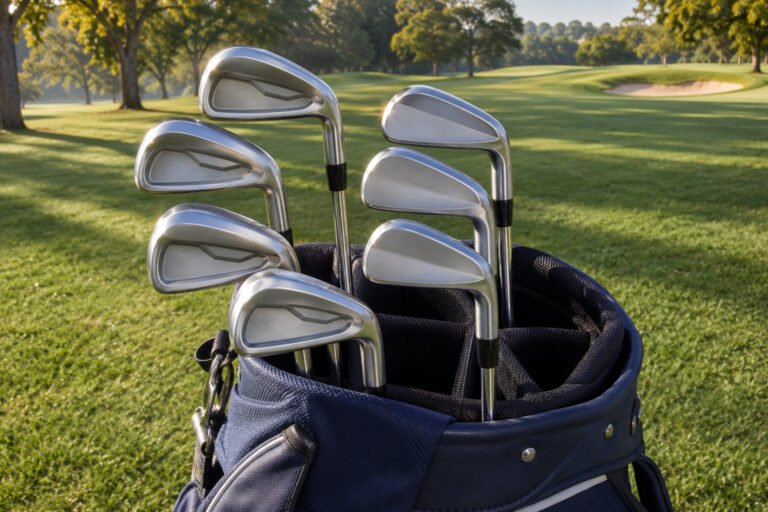
AI illustration: an exterior view cannot establish which filling or components are inside a real iron.
A smooth-backed iron can hide a complicated interior. It can also invite a simple sales story: more technology, more distance, better golf. Those are three different propositions. Before paying for a hollow design, establish what is inside the specific head, what the advertised improvement measures and whether the finished club solves a problem in your bag.
This guide uses published manufacturer descriptions and an original buying worksheet. The examples explain how to question a claim; they are not results from our own equipment testing.
Ad – includes affiliate links. If you buy through these links, Taylor’s Trailblazing Golf may earn a commission at no extra cost to you.
Shortlist
You can identify the exact construction and the approach-shot problem you want the new club to solve.
Retest
The attractive result comes from a different ball, a single best shot or a build you cannot actually order.
Keep your set
The trial adds no useful distance or consistency, or the full replacement cost exceeds the benefit you can demonstrate.
What hollow-body irons actually tell you
Start with two questions: does the head have an enclosed cavity, and what occupies that space? A filling is compatible with hollow construction. The term describes the head’s arrangement; it is not a promise that the interior is empty. Nor does it tell you the loft, playing length or performance of every club in the set.
| Exact example | What the manufacturer states | What to record |
|---|---|---|
| 2025 TaylorMade P790 | SpeedFoam Air fills its hollow body. [1] | Hollow construction; named foam filling. |
| Callaway Apex Ai200, 2024 model | A forged hollow body and forged 455 face. The UK description does not specify a filler. [2] | Hollow construction; filling not stated in that description. |
Filled, unfilled and not stated are separate answers. Record unfilled only when the manufacturer confirms it. An omission from a product page is not evidence of an empty cavity; even an unfilled cavity need not be free of weights or supports. Ask for clarification if that feature matters to your purchase.
An exterior photograph cannot establish internal wall thickness, filling or weight placement. Use the exact model’s technical description or a manufacturer-labelled cutaway. A generic illustration is useful for recognising a buying situation, not for proving what a real model contains. There is no need to dismantle a club to complete this check.

Attach every headline to its metric and comparator
TaylorMade’s February 2025 release shows why the small print matters. Its claims refer to different measurements. [1]
| Claim in the release | Stated comparison | Buying interpretation |
|---|---|---|
| 20% stronger face material | 4340M; reference material not named in the release. | A material claim, not 20% more ball speed or distance. |
| Up to 24% larger sweet spot | 2025 P790 versus the 2023 P790 7-iron. | The manufacturer’s sweet-spot metric; the release does not define its measurement threshold or procedure. |
| More ball speed and carry distance | Separate player testing against 2023 P790. | No fixed extra yardage for an individual buyer is stated. |
The 24% figure is therefore not a distance percentage. Keep the qualification up to, and do not turn an undefined sweet-spot measurement into a universal area or forgiveness test. [1]
For any brand, write down the baseline beside the headline. Was it the previous generation, a particular numbered iron, an earlier material or a different test setting? Then ask which conditions were held constant. If the public information cannot answer, the useful next step is a specific question to the manufacturer or fitter, rather than inventing a missing test method.
Callaway’s Ai200 page also makes claims about ball-speed, spin and dispersion consistency. Treat those as prompts to inspect your own shot pattern, not as measured improvements already established for you. [2]
Decide which distance would actually help
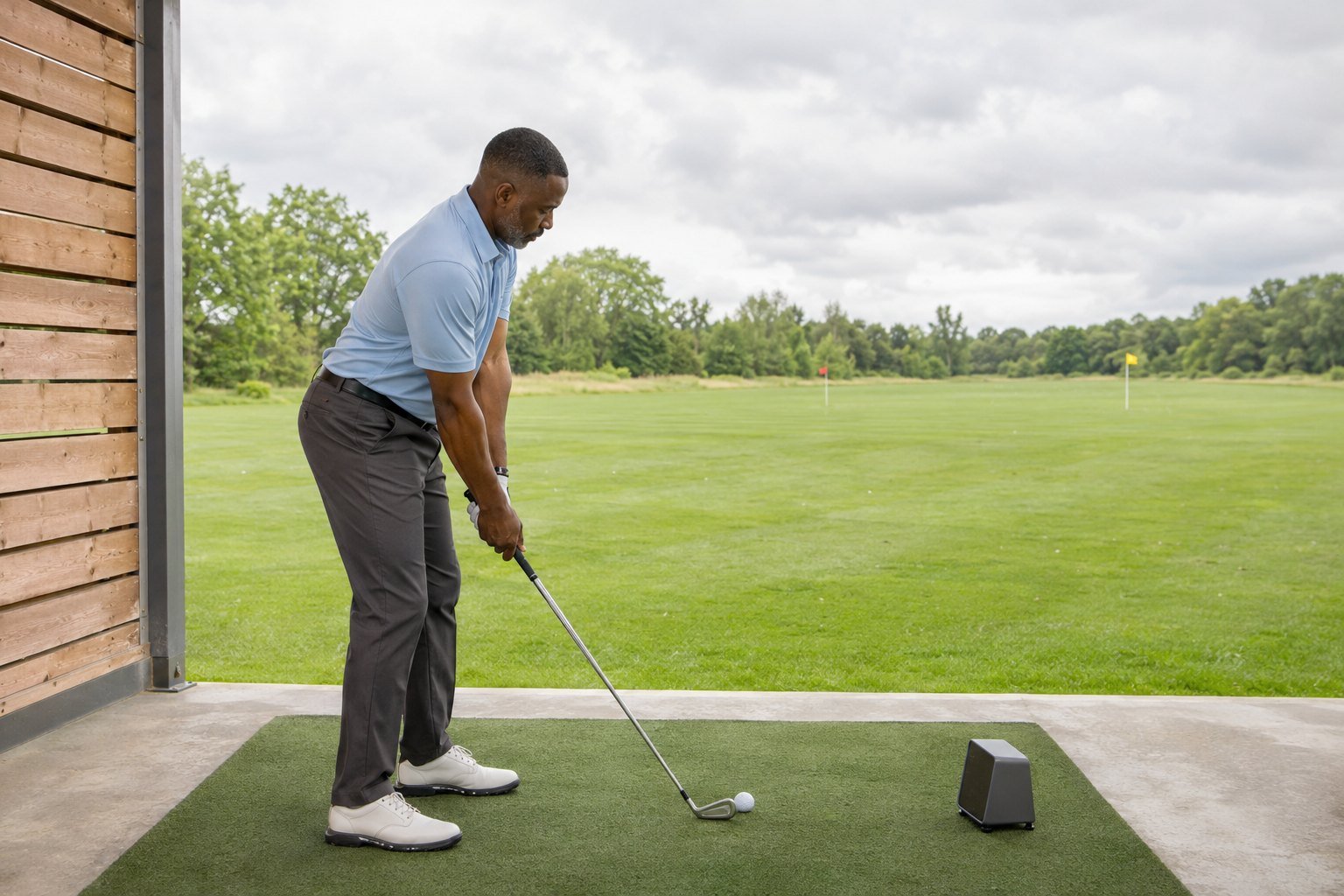
Begin with a task: perhaps an approach you regularly leave short, an iron that overlaps the next club, or a long iron whose ordinary strikes are difficult to predict. Write that task down before seeing any launch-monitor numbers. Otherwise, the largest number can quietly become the goal.
Keep carry and total separate. TrackMan defines carry using where the flight returns to the launch elevation; its total is a calculated resting distance, using assumptions about surface conditions. Its own explanation cautions that a flatter approach flight with extra total distance may not be helpful. [3] [4]
For a simple invented example, a typical carry rising from 140 to 147 yards is a 5% increase: 7 ÷ 140 × 100. That is a distance calculation for that comparison. It has no mathematical conversion from a sweet-spot percentage.
Now ask whether those seven yards solve the task. Did left-to-right spread widen? Did the shortest ordinary strikes improve, or did only the longest ones change? Does the ball arrive in a way that suits the intended approach, and is the next shorter club still sensibly separated? A fitter can interpret flight and landing together; avoid choosing a universal spin or landing-angle target from an unrelated golfer.
A different loft or shaft does not make a trial worthless. It changes what you can conclude. You may establish that one complete club works better for you without proving that hollow construction caused the difference. Write down that narrower conclusion and judge the build you would actually buy.
Back to top ↑Use a repeatable whole-club trial
Take your current equivalent club to the fitting, including its normal grip and shaft. Ask for the candidate’s actual loft, playing length and shaft specification, rather than relying on the number stamped on its sole. Record the ball and whether the display uses measured flight, normalised conditions or calculated results. Ask the fitter to explain any setting you do not recognise.
After warming up, compare short groups of shots with both clubs and return to the baseline. Use the same ball type, target and hitting surface where practical. Keep ordinary mishits in the record; if a shot is excluded because of a clear measurement failure or interruption, note the reason. Continue only while the swings remain representative, rather than collecting flattering results as you tire.
Use one distance unit and record attempted and retained shot counts. Define “typical” the same way for both clubs: for example, median carry, the middle value after sorting the results, averaging the two middle values for an even count.
| Record | Current club | Candidate | Question before deciding |
|---|---|---|---|
| Exact build | Model, year, club number, loft, lie, shaft, length, grip | The same details, including any custom changes | Is this the build on the quote? |
| Conditions | Ball, surface, target and monitor settings | Same conditions or written differences | Could a changed condition explain the result? |
| Ordinary carry | Typical value and short-to-long spread | Typical value and short-to-long spread | Does the change solve the original approach task? |
| Misses and flight | Direction, strike pattern and landing observations | The same observations, including mishits | What did the extra distance cost elsewhere? |
| Neighbouring clubs | What sits above and below this club? | Trial representative longer and shorter irons | Will the intended set leave an overlap or a hole? |
Ask for a saved summary containing the actual build and the shot-selection method. A photograph of one excellent shot is a weak record of a buying decision. If only one demo iron is available, treat the rest of the set as an unanswered question and arrange the most relevant follow-up before ordering.
Listen to the sound and notice whether you like the feel, but record that preference separately from carry and dispersion. Enjoying a club is a valid consideration; it is not a substitute for checking the shot you need.

Turn the marketing claim into a question you can answer
Use this short claim-verification sheet alongside the trial record. It works for a product page, a fitting recommendation or a retailer’s comparison, and prevents a vague claim from becoming your purchase criterion.
- Copy the exact claim. Preserve qualifications such as “up to”, the model year and any footnote. Save the source and the date you read it.
- Name the metric and baseline. Write “unknown” where either is absent. Do not substitute carry for total, or compare a material property with a player’s result.
- Choose the relevant question. For extra carry, ask about your ordinary carry and the clubs either side. For consistency, inspect the spread and mishits. For preferred sound, compare your reaction during an ordinary trial.
- Separate what is documented from what you observed. A construction statement belongs in the first column of your notes; a fitting result belongs in the second. Neither automatically proves the other.
- Write the remaining uncertainty and next action. That might be a missing technical definition, another shaft to try, a longer iron to test or simply keeping your current set.
A useful completed sentence is: “This quoted build helped with my stated approach task under these trial conditions; this part of the set still needs checking.” That gives you a defensible reason to continue without pretending the fitting isolated every engineering variable.
Back to top ↑Price the set that passed the trial
Match the quote to the tested specification: exact generation, handedness, club numbers, shaft, length and grip. Include any separately needed iron or wedge, fitting charge, custom-build charge and delivery. Compare equivalent completed purchases rather than a headline set price against a different club count. Agree the relevant order and change terms before authorising custom work.
If the named examples remain on your shortlist, view the 2025 P790 steel-shaft listing at Clubhouse Golf or check the Apex Ai200 configuration at Callaway UK. These are routes to inspect an exact model and build, not a ranking or a promise that your preferred configuration is available. [5] [2]
Before paying for the session itself, use our guide to golf club fitting fees to plan the questions about what you receive. Ask for the specification and result summary even if you decide against a purchase.
Buy when the tested build solves the identified problem, its limitations are acceptable and the complete cost makes sense to you. Retest when the promising result depends on an unexplained setting or an untested part of the set. Keep your current clubs when the improvement is unclear. A construction label alone is not a reason to replace a set you can use effectively.

What to do next
A worthwhile hollow-body iron is a complete club that earns its place in your game. Confirm the construction, preserve the claim’s true comparison and give useful carry and ordinary misses as much attention as the longest shot. Leave the fitting with a written build, a clear remaining question and a costed decision. If that evidence does not support a change, keeping your current set is a sound outcome.
Sources and further reading
Sources checked on 22 November 2026. Product descriptions and terms can change; confirm the details for the exact item before buying.
- TaylorMade — 2025 P790 launch release, construction and separate comparison footnotes
- Callaway UK — Apex Ai200 (2024): construction and configuration
- TrackMan Help Center — Carry: definition and launch-elevation condition
- TrackMan Help Center — Total: calculated distance and surface assumptions
- Clubhouse Golf UK — TaylorMade P790 steel-shaft listing, identified as 2025
Illustrations in this article were created for Taylor’s Trailblazing Golf. Third-party photographs, where used, are credited beside the image or in the source list.