Buying Used Wedges: Groove Condition and Authenticity Checks
Buy the right wedge, with enough evidence to trust the deal.
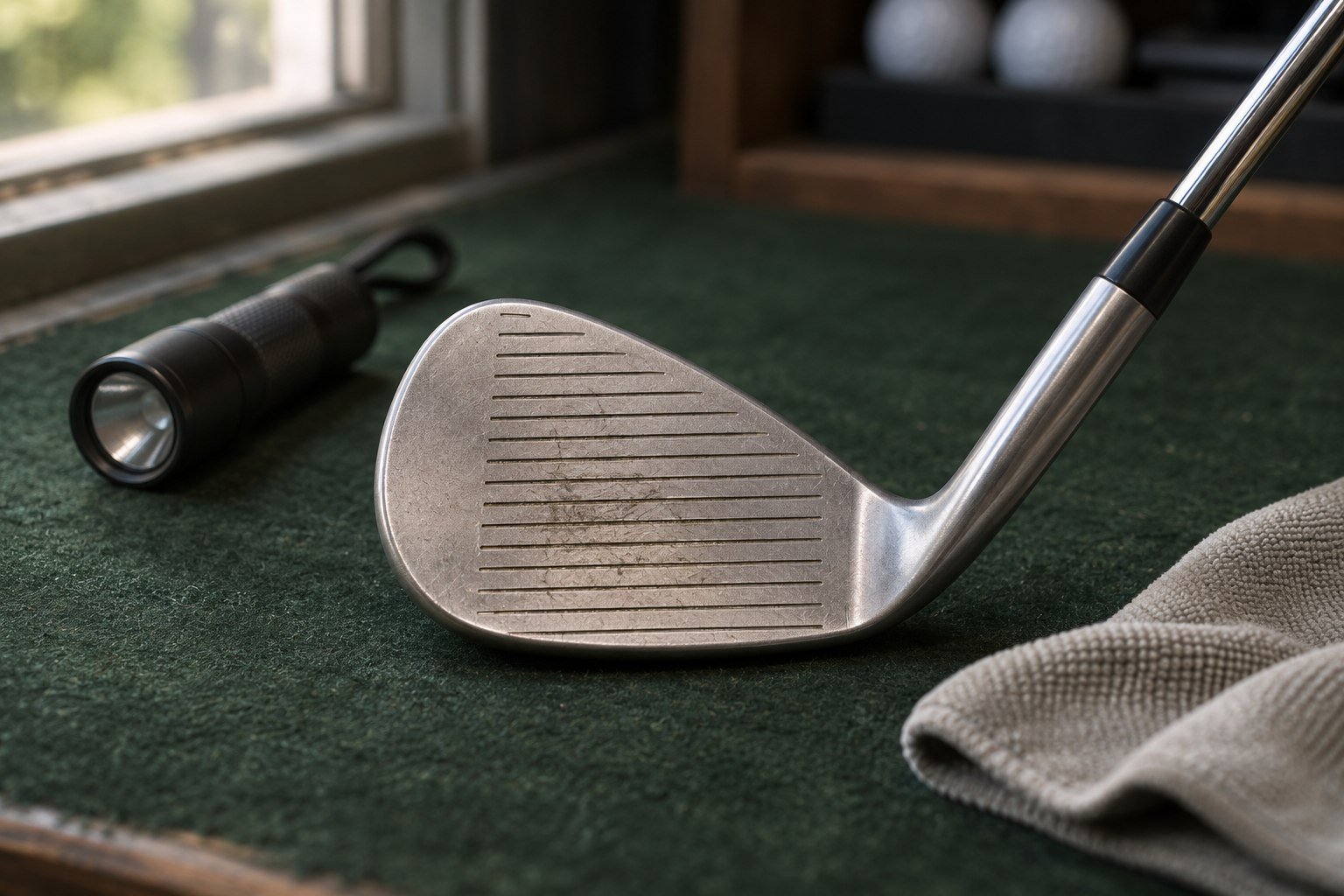
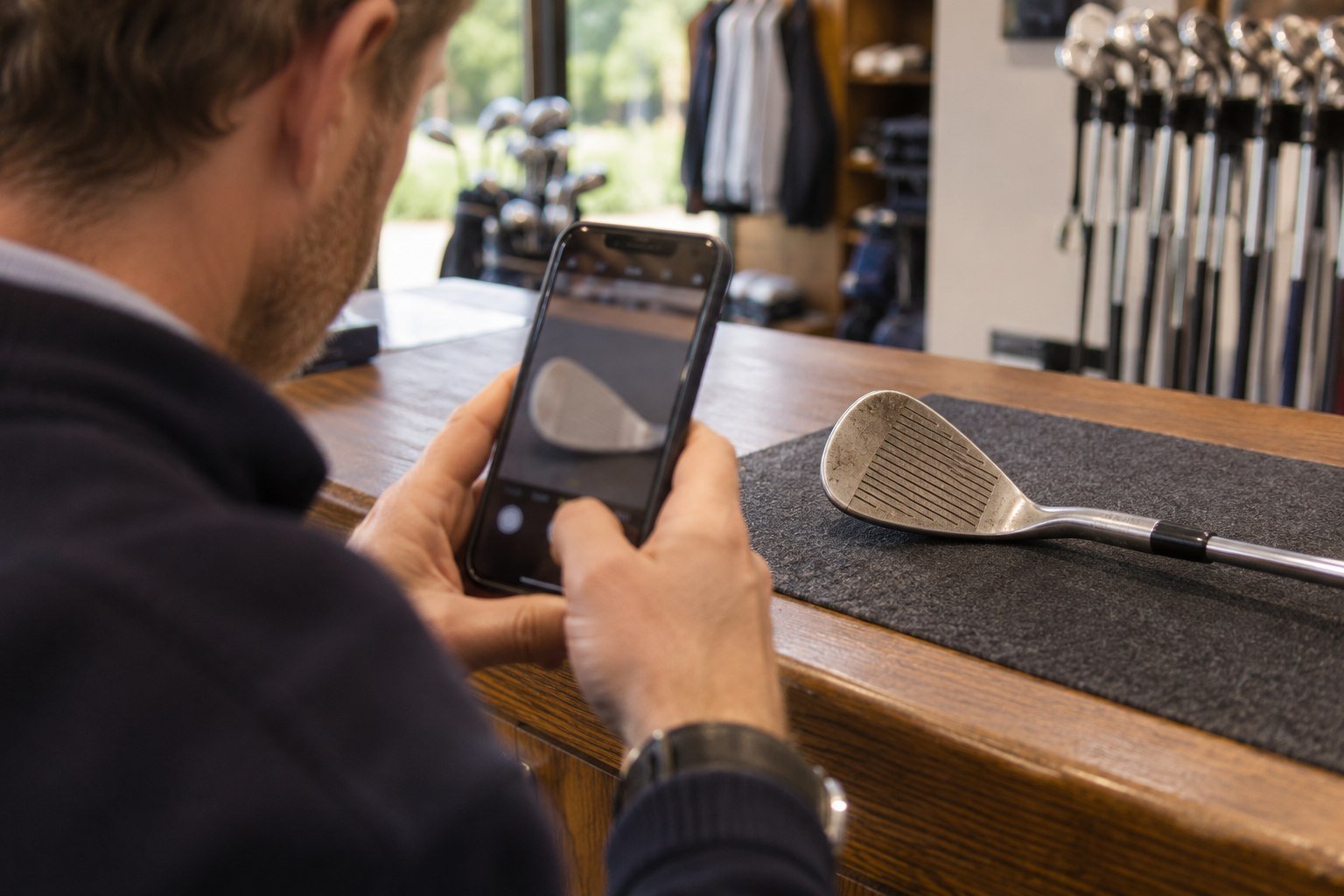
AI illustration of a generic wedge inspection; not evidence of a particular seller’s club.
Buying used wedges can be good value, but a tidy back and a familiar logo tell you very little about the part that meets the ball. The useful question is whether this particular club suits your shots and whether its condition justifies the saving.
This research-led guide is for assessing a listing before you buy. The inspection order below keeps three decisions separate: correct specification, acceptable condition and a purchase you can trace. Passing one does not settle the others.
This guide contains affiliate links. If you buy through them, Taylor’s Trailblazing Golf may receive a commission at no extra cost to you.
Match the model, loft, bounce, grind and build before judging the price.
Ask for a clean, dry face in more than one lighting angle.
Use seller history and manufacturer help; a serial number alone is insufficient.
Compare the usable total cost with a suitable new alternative.
Buying used wedges: three decisions before you pay
Use this as a buying screen. It is an editorial checklist, not a condition grade or an authentication certificate. Any unanswered question stays unanswered even when the price is tempting.
On a small screen, scroll sideways inside this table.
| What you have found | Sensible next step | What still needs checking |
|---|---|---|
| Exact build identified, clear face photos and a traceable seller | Shortlist it and compare the complete cost. | Condition on arrival, suitability and agreed return arrangements. |
| Attractive price, but a blurred or dirty face | Request better photographs before making an offer. | Do not turn a missing view into a favourable assumption. |
| Broad face wear, unexplained grinding or a seller claiming “restored grooves” | Pause for a qualified inspection or choose another listing. | Actual condition, alteration history and conformity. |
| Suspected cracking, a bent shaft or movement at the head | Do not buy it as ready-to-play equipment. | A qualified technician must assess whether it can be safely repaired. |
The best used purchase is often the one requiring the fewest optimistic assumptions. A small saving rarely compensates for having to solve several unknowns after delivery.
Identify the wedge, not just the loft
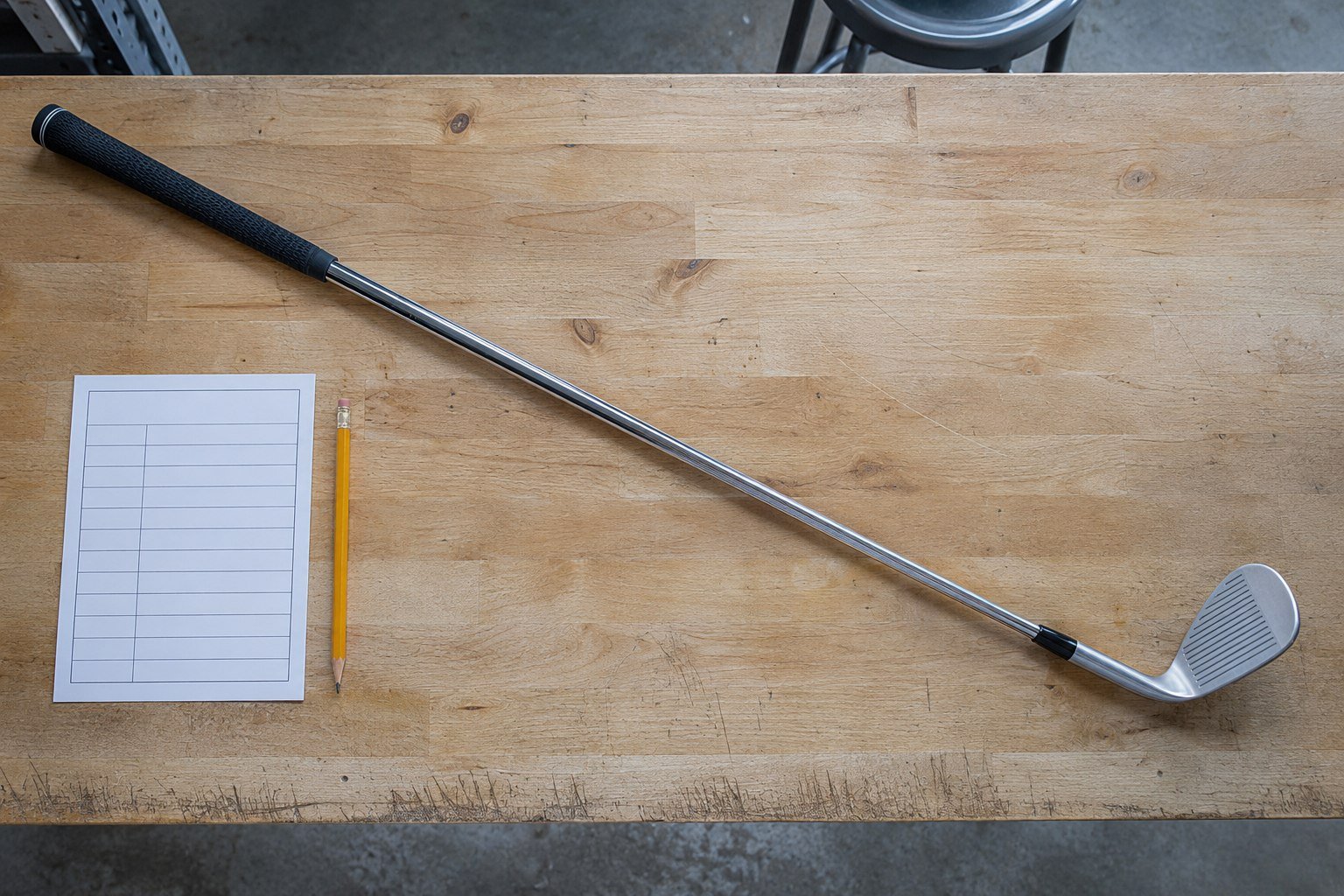
Write down the manufacturer, model generation, handedness, loft, stated bounce, sole grind, shaft and grip. Ask whether the loft or lie has been bent, the shaft replaced or shortened, or an extension fitted. A model name on the head does not establish its present build.
Loft, bounce and grind describe different aspects of a wedge. Vokey’s explanation distinguishes the face angle, how the sole presents to the ground and the shaping of that sole. They work together, so two wedges with the same loft need not suit the same shots. [1]
- Use the manufacturer’s page or archived specifications for that exact generation, rather than the current replacement model.
- Compare the club’s markings with those specifications. Treat a mismatch as a question to resolve, not an automatic accusation.
- Ask for the measured playing length and the measuring method. If exact length or lie is important to your fit, budget for a club-builder check.
- Confirm what job the wedge fills: a distance gap, your main bunker club, or a particular greenside shot.
A useful seller answer is specific: what was changed, by whom and whether there is an invoice. “Standard” is less helpful if nobody knows whether an earlier owner altered it. Do not buy an unsuitable sole merely because it is a familiar brand.
If the sole markings are unfamiliar, our guide to reading wedge grind labels explains what to establish within the exact manufacturer’s range before comparing options.
Ask for these six photographs
Request photographs of the actual club in the listing. A catalogue image can help identify a model, but cannot show the condition of the item being sold. Ask the seller to clean and dry the head gently, avoid filters and include both a straight-on view and angled light.
The whole face, straight on
Include the leading edge, toe and heel. The central strike area must be in focus; a bright reflection across it defeats the purpose.
The face under light from the side
A second lighting angle can make surface marks easier to see. It should show the same club rather than a different, more flattering photograph.
The sole and leading edge
Ask for the loft, bounce and grind markings, together with any significant dents or reshaping.
The back, hosel and identifying marks
Include the serial number where that model has one, plus the shaft-to-head area. Retain these images with your purchase record.
The complete shaft and shaft label
Ask about corrosion, visible bending and replacement work. A label helps identify the claimed shaft; it is not proof of the entire build.
The grip and butt end
Look for wear and ask whether its size suits you. Include the likely cost of replacing an unwanted grip in your comparison.
If the seller cannot produce a useful face photograph, consider an in-person inspection with a reputable shop or move on. Extra photographs reduce uncertainty; they do not turn a remote purchase into a professional examination.
Read the face without guessing the spin
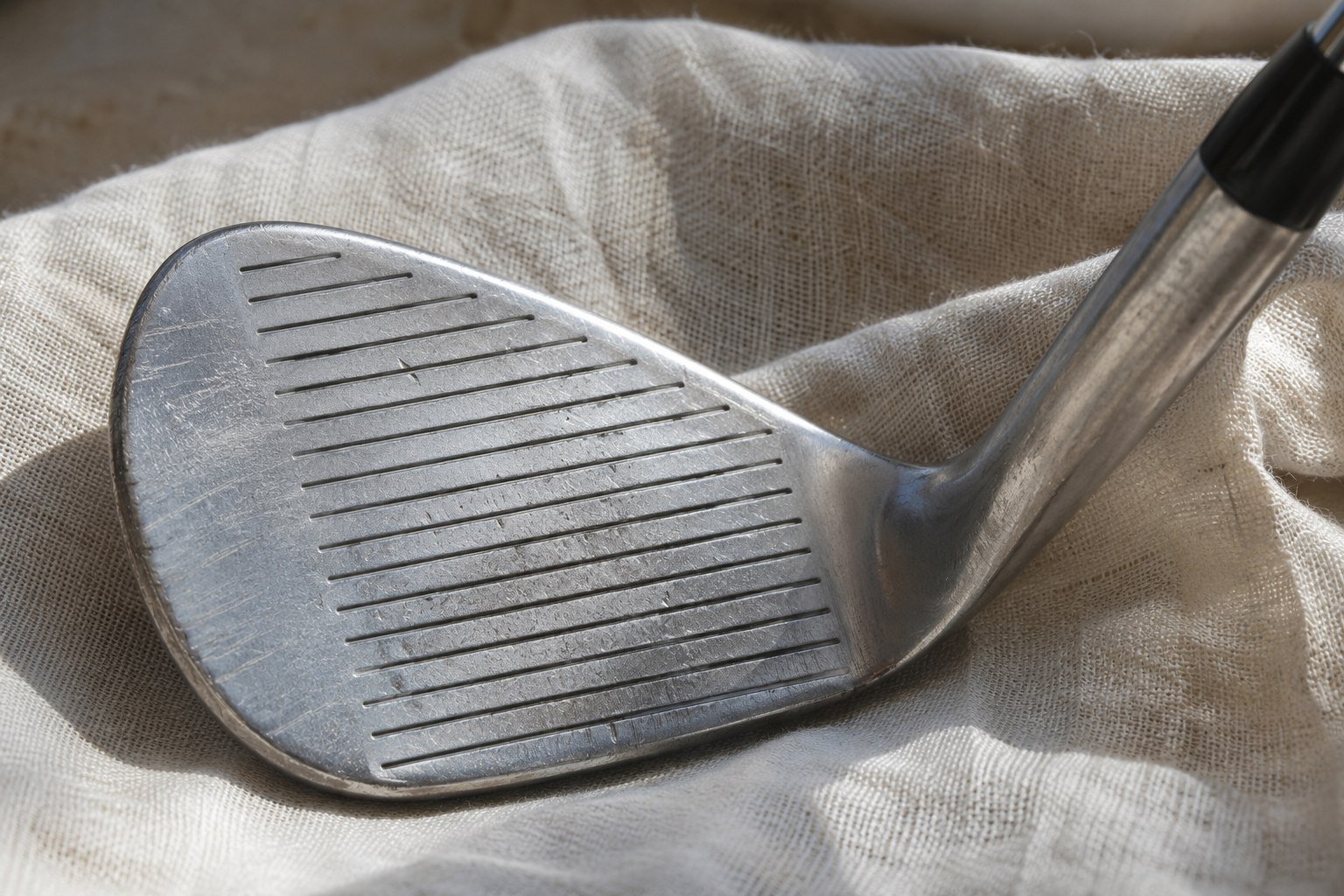
Start with a clean face so that you are looking at the metal and finish rather than a layer of dirt. In a 2017 care note, Titleist’s Vokey specialist recommends gentle cleaning and dry storage, while warning that some finishes are intentionally unplated and may rust. Follow the care instructions for the exact model. [3]
On a small screen, scroll sideways inside this table.
| Visible feature | What to ask | What it cannot establish |
|---|---|---|
| Dirt filling the grooves | Can the seller provide clean, dry photographs? | The underlying groove condition. |
| A conspicuous wear patch through the strike area | How heavily was this club practised with? Can it be inspected before purchase? | An RPM loss or a number of rounds remaining. |
| Rust or a worn dark finish | Is this the manufacturer’s intended finish, and are there deeper pits or damage? | That the club is automatically worn out, or automatically desirable. |
| A deep nick, raised-looking edge or unexplained groove work | What happened, and has a competent technician assessed it? | Safe use or rule conformity from appearance alone. |
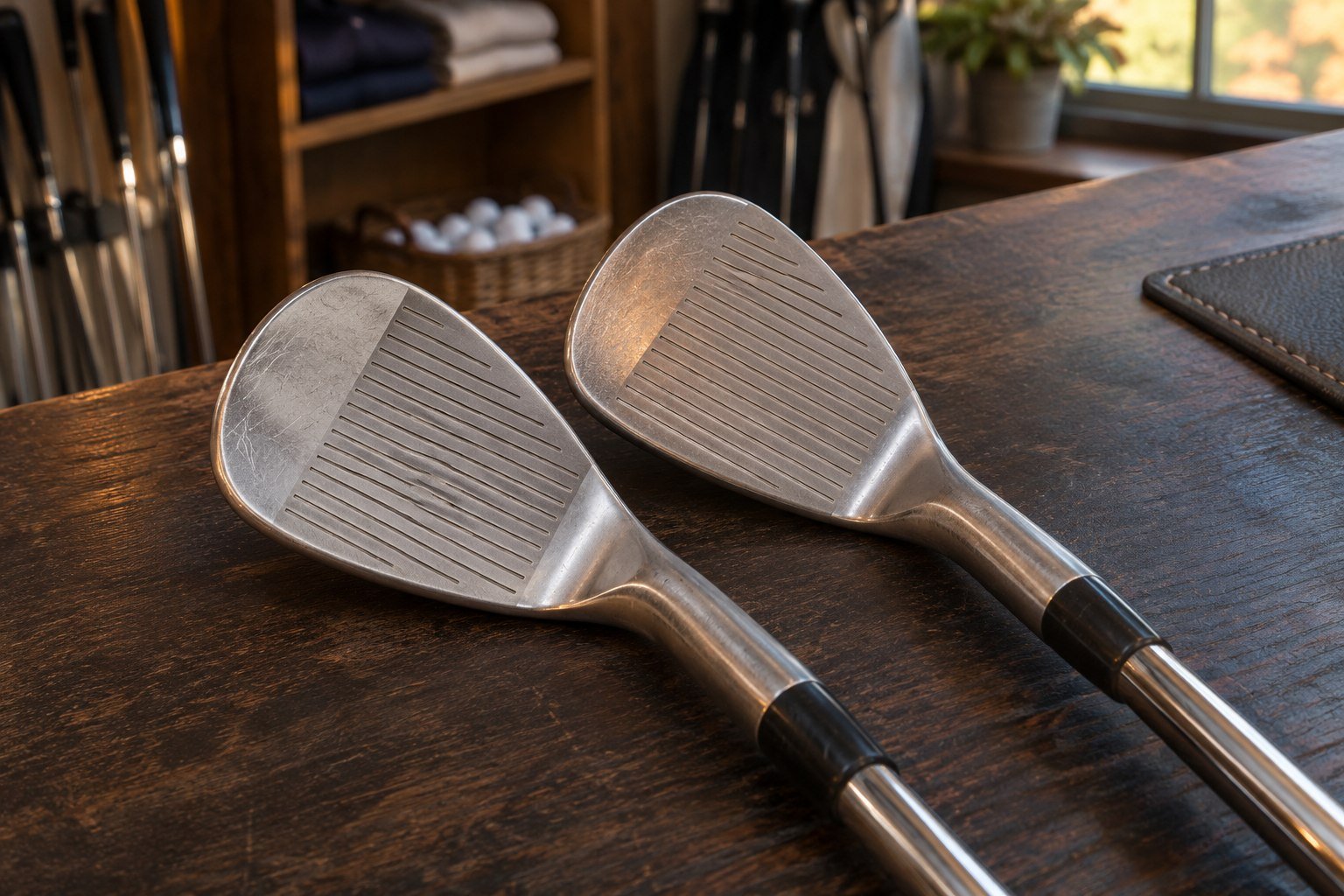
Titleist identifies practice, bunker exposure and abrasive debris among the causes of groove wear. That is why “only one season old” tells you less than the seller may suggest. [2] Ask about use, but treat the answer as background rather than a guarantee.
Do not assign a “spin percentage” by counting visible grooves or dragging a fingernail across them. If the purchase depends on fine differences in face condition, choose a seller offering a meaningful inspection route. A clean, flattering photo is not a measurement.
Build a chain of evidence for authenticity
Ask where the wedge came from, whether there is an original receipt and how the seller acquired it. Match any paperwork to the exact model and build as far as possible. Check the seller’s trading history and keep the listing, messages, photographs and payment record together.
Callaway recommends authorised sources and contacting its support team when authenticity is uncertain. Its warning also makes clear that the manufacturer cannot reimburse or repair counterfeit products. Use the manufacturer’s official contact route, rather than a number supplied only by the seller. [4]
A serial number is supporting evidence
Titleist’s Club Concierge explained in a 2011 support reply that counterfeiters copy legitimate serial numbers, so a number by itself cannot authenticate a club. [5] Photograph it, but do not treat a matching format or successful product registration as a certificate.
Compare the precise generation’s finish, markings and available specifications with official material. Poor lettering or an unusual combination can justify more questions, but cosmetic differences alone may reflect age, customisation or photography. A remote checklist cannot conclusively separate every genuine club from every fake.
Know your stopping point
If the story changes, the photographs conflict, or the seller pressures you to pay before resolving a concern, leave the transaction. If manufacturer support cannot confirm what you need, that uncertainty remains. Paying less does not resolve it.
Ask about alterations and competition requirements
Ask explicitly whether the face has been re-grooved, sharpened, heavily polished, sandblasted or refinished. “Refurbished” is too broad to settle this. Request the work description and whoever carried it out.
The R&A’s Equipment Rules apply updated groove requirements to face markings that have been deliberately altered, including by re-grooving. Many conformity checks need specialist equipment. Do not accept a seller’s promise of “extra sharp grooves” as an upgrade or proof that the wedge remains conforming. [7]
Ordinary wear is different: Rule 4.1a(1) says a conforming club remains conforming when its characteristics change through normal use. [8] That rule does not tell you whether the club is still a worthwhile purchase or physically sound.
Older wedges need a separate competition check. The R&A’s current guidance allows certain pre-2010 clubs conforming under the 2009 rules to remain in use except where the relevant Local Rule requires the newer groove specifications. [6] Ask the committee which requirements apply to the event you intend to play, and identify the exact model before buying.
A model entry or reassuring internet discussion should never override an unresolved alteration on the particular club in front of you. If you cannot establish what happened to the face, another listing is the simpler choice.
Compare the complete cost with a suitable new wedge
Use the price of the club you can actually use, rather than the seller’s headline figure. A grip you would replace immediately and delivery are part of that cost. Any inspection or repair should be quoted before you commit.
On a small screen, scroll sideways inside this table.
| Cost | Used example | New alternative |
|---|---|---|
| Club | £65 | £110 |
| Delivery | £6 | £0 in this example |
| Necessary grip and fitting | £14 | £0 if already suitable |
| Total before any further work | £85 | £110 |
The saving is £25. If the used club still needs an inspection, include its quoted cost too. You can then decide whether that saving fairly reflects the condition, purchase terms and uncertainty. Replace every amount with the actual options available to you.
For a new-club reference, you can compare the wedge range at Clubhouse Golf, or browse Callaway’s UK wedges if that brand is already on your shortlist. Both links open wedge ranges, so check the exact handedness, loft, grind, shaft, delivery and return terms yourself. [9] [10]
Do not compare an unsuitable discounted club with a used wedge that fits, or assume a new head in the wrong build is better value. Equally, a used wedge that costs nearly as much after necessary work needs a convincing reason to buy it.
Before adding a new grip to the cost, use our grip-size and regripping guide to identify the finished feel you actually want, rather than ordering a size label alone.
Check the purchase before taking it onto the course
Before paying, establish what inspection or return arrangements the seller actually offers. Ask whether hitting balls changes those arrangements, how an item that differs from the listing is handled and who pays the relevant delivery costs. Save the answer; do not assume every private seller and retailer offers the same terms.
On arrival, compare the club with the saved photographs and description. Check the model, handedness, markings, shaft and grip first, then photograph anything different before cleaning or using it. Keep the packaging while resolving any discrepancy.
- If the club differs materially from the listing, contact the seller promptly through the transaction’s recorded channel.
- If you notice suspected cracking, significant shaft damage or head movement, do not test it by hitting balls. Arrange a qualified inspection.
- If authenticity remains doubtful, keep the evidence and ask the manufacturer how to proceed. Do not alter the club to investigate.
- If the specification and condition match, use any agreed trial opportunity to assess whether the wedge suits the shots you bought it for.
A new grip can be priced. An unknown history cannot be repaired with a more optimistic description. Make the final decision on the club received, not the deal you hoped you had found.
A good used wedge is a clear purchase
Shortlist a used wedge when its exact build suits your needs, the actual face can be inspected and the seller provides a coherent history with workable purchase terms. Prefer ordinary cosmetic wear you understand to impressive-looking refinishing you cannot explain.
Walk away when the face is hidden, damage needs guessing about, authenticity remains unresolved or necessary work removes the saving. The point of buying used is to obtain suitable equipment for less money, with a level of uncertainty you are comfortable accepting.
Other useful questions
Should I buy a matching set of used wedges?
Assess each wedge separately. A set price can conceal a heavily used favourite alongside a much less-used club. Request a full face and build check for every wedge, then decide whether each one fills a useful place in your bag.
Does an unusually low price prove the wedge is counterfeit?
No. A low price is a reason to investigate, not proof. The important question is whether the condition, exact specification, seller history and purchase arrangements provide enough confidence to proceed.
Sources and checks
Manufacturer specifications and rules were checked on 23 November 2026. Product ranges and buying terms can change. The practical worksheets are editorial suggestions for your own comparison.
- Understanding Wedge Loft, Bounce, and GrindVokey · Checked 23 November 2026
- Groove Wear and Spin PerformanceTitleist · Checked 23 November 2026
- Club Care 101 — Vokey product specialist’s guidance (2017)Titleist · Checked 23 November 2026
- Counterfeit Club WarningCallaway Golf Europe · Checked 23 November 2026
- Club registration — Titleist Club Concierge reply, 9 May 2011Titleist · Checked 23 November 2026
- Equipment Information for Players — Groove and Punch Mark SpecificationsThe R&A · Checked 23 November 2026
- Equipment Rules, Part 2, section 5 — Club FaceThe R&A · Checked 23 November 2026
- Rules of Golf, Rule 4.1a — Clubs Allowed in Making a StrokeThe R&A · Checked 23 November 2026
- Golf Wedges — UK rangeClubhouse Golf · Checked 23 November 2026
- Golf Wedges — UK rangeCallaway Golf Europe · Checked 23 November 2026
Illustrations in this article were created for Taylor’s Trailblazing Golf. Third-party photographs, where used, are credited beside the image or in the source list.