When to Replace a Golf Bag: Repairs Worth Trying First
Start with the fault, confirm the repair, then compare the whole bill with a replacement that actually suits you.
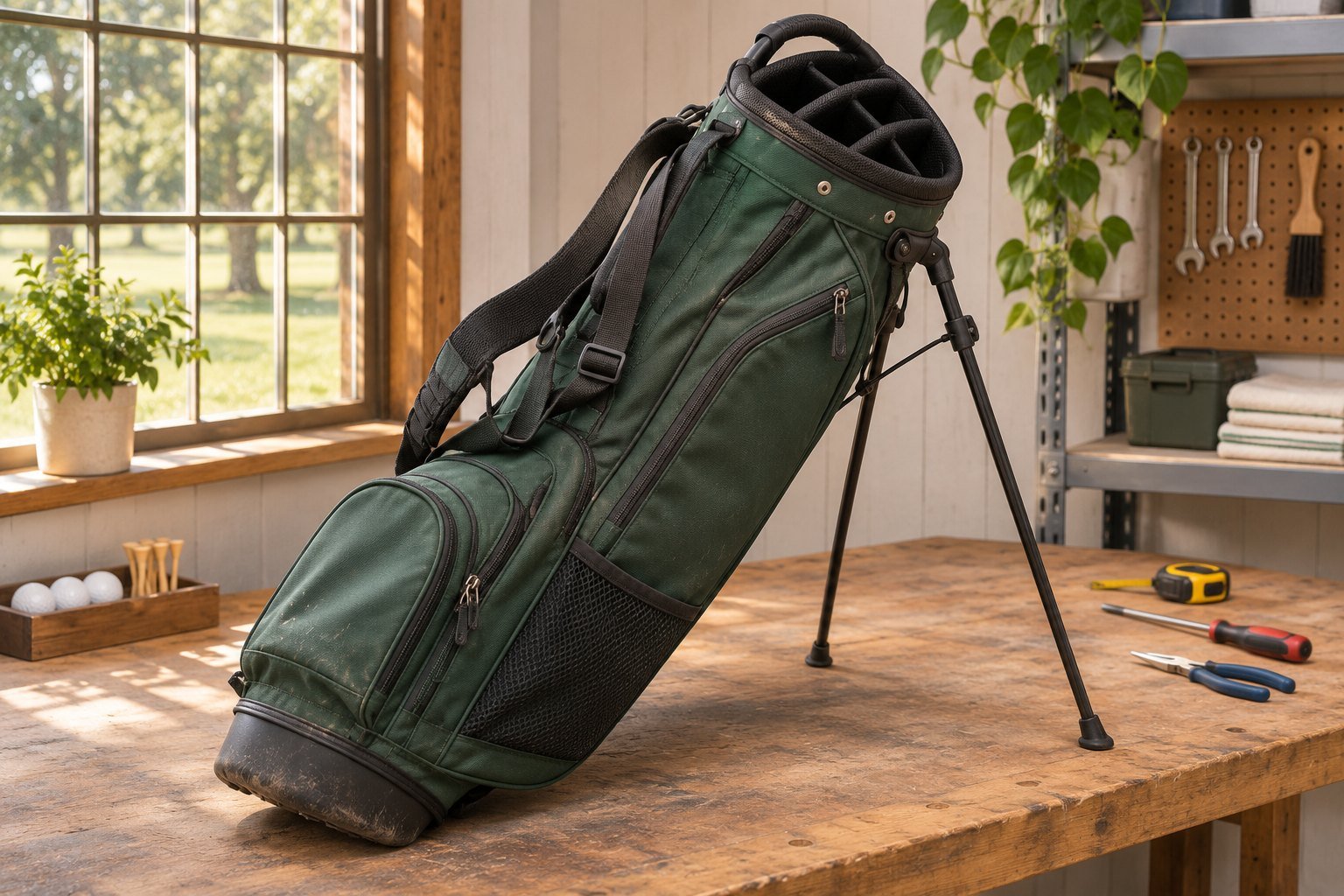
Illustrative scene: identify the fault before spending on a replacement.
Knowing when to replace a golf bag begins with what has stopped working. Faded fabric is a different problem from an insecure carrying handle. A missing rain hood may be replaceable; a cracked base may make further spending difficult to justify.
This guide is for a bag you already own. It helps you separate cleaning, a compatible part and professional repair from faults that call for taking the bag out of use. The aim is to keep useful equipment working without assuming that every worn component can be safely patched.
Ad – includes affiliate links. If you buy through these links, Taylor’s Trailblazing Golf may earn a commission. Recommendations are based on the equipment decision and the available evidence.
The bag still works and its appearance is the main complaint.
Follow the maker’s care instructions for a minor, clearly identified problem.
The fault is isolated and the correct part or repair route can be confirmed.
A vital function remains unreliable, or repair would leave the wrong bag for your needs.
When to replace a golf bag: sort the fault first
Empty the bag and write down each problem separately. Avoid labelling the whole item “worn out” when one pocket is awkward, or calling a damaged handle “cosmetic” because the rest looks new. The table below is an editorial triage aid; it does not certify a bag as safe.
On a phone, swipe within the table to see all columns.
| What you notice | First route to investigate | Reason to stop or escalate |
|---|---|---|
| Dirt or ordinary marks | Maker-approved cleaning; reassess when dry. | Material is deteriorating or the problem is more than surface dirt. |
| Missing pull tab | Ask for a compatible pull or approved repair. | Slider, teeth or zip tape are also damaged. |
| Zip catches or opens behind the slider | Empty the pocket; inspect without forcing; seek a repair assessment. | Repeated failure, torn tape or damage extending into the bag. |
| Worn shoulder padding | Check whether the exact strap can be replaced. | Webbing, buckle or bag anchor is compromised. |
| Stand fails to deploy or support properly | Stop relying on it; contact the maker or suitable repairer. | Damaged hinges, body, base or unavailable correct parts. |
| Cracked base or torn carrying anchor | Take the bag out of loaded use and ask for assessment. | No appropriate structural repair is offered. |
Do not start by buying a bottle of treatment or a universal spare. Identify the part, the bag model and whether the surrounding material is still suitable for the proposed repair.
Back to top ↑Try sensible care before replacing a sound bag
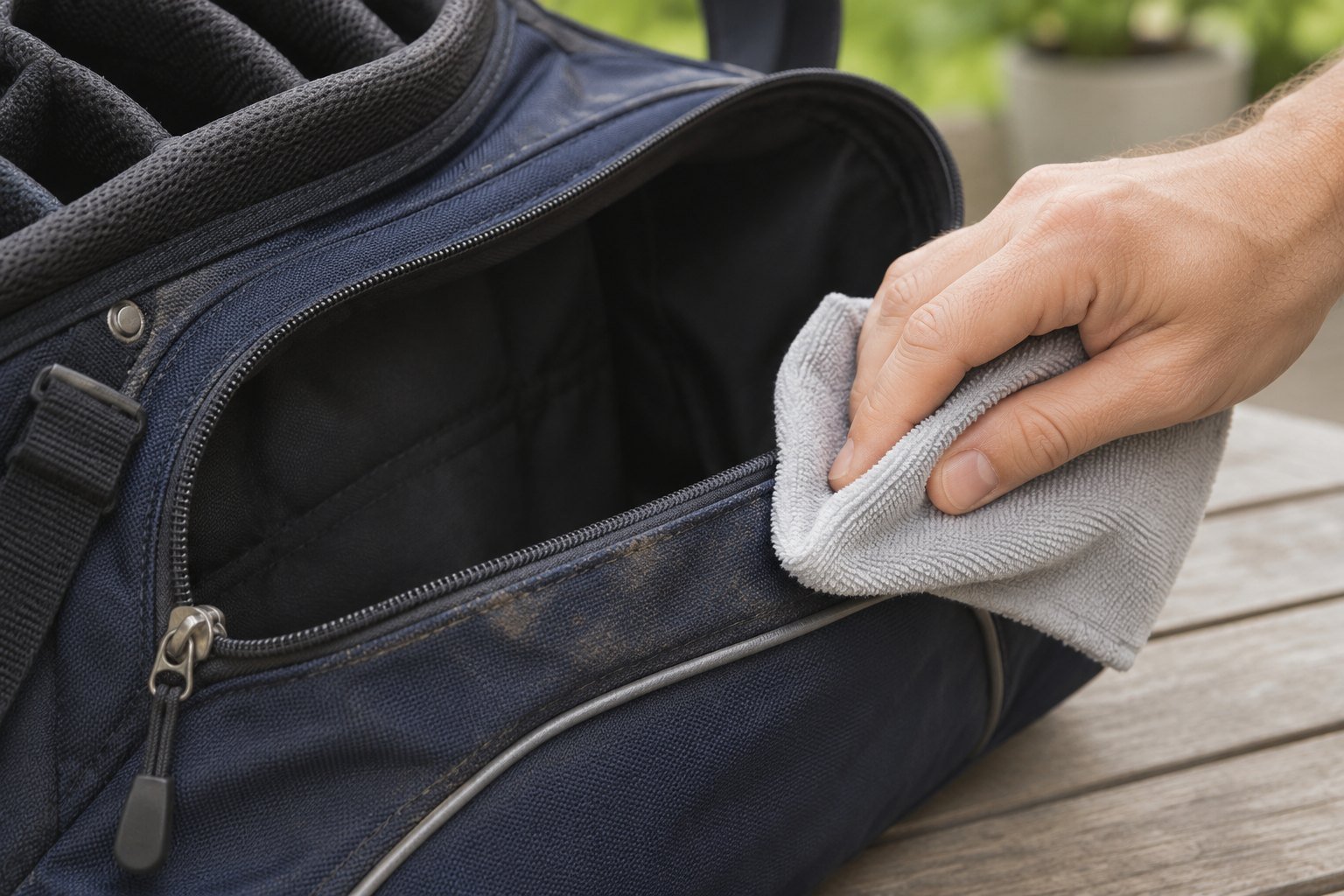
If the bag is dirty rather than damaged, begin with its own care label or manufacturer’s instructions. Sun Mountain’s FAQ advises mild soap, warm water and non-abrasive cleaning tools, while warning against harsh chemicals and bleach. [1] That is a brand example, not a promise that the same treatment suits every leather, coated or waterproof bag.
Remove the contents so that you can see what needs attention. Follow the permitted cleaning method on an inconspicuous area first, keep water away from items that should be removed and allow the bag to dry as directed before putting equipment back. Do not confuse improved appearance with a repaired seam or restored structure.
For a catching zip, remove pressure from an overfilled pocket and look for trapped fabric without forcing the slider. YKK warns that forcing a reluctant zip or closing an overloaded bag can damage it. [2] Ask the bag maker before applying oils, waxes or sprays, particularly around coated fabric.
If the closure still fails, stop treating it as a cleaning problem. A proper assessment is more useful than repeated attempts that make the fault worse.
Back to top ↑Ask about warranty or service before modifying anything
Find the receipt, model information and clear photographs of the fault. Contact the original retailer or manufacturer before commissioning work, especially if the problem appeared during ordinary use within a stated warranty period. Ask what evidence they need and whether you should stop using or return the bag.
As a current example, Motocaddy gives golf bags a 12-month manufacturer’s warranty for covered manufacturing defects in normal use. Its UK terms require proof of purchase and say warranty repairs should be undertaken by Motocaddy or an authorised provider unless the owner is expressly instructed otherwise. Coverage and exclusions need checking for the specific claim. [3]
Do not assume a short manufacturer’s warranty describes all your rights against a seller, or that accidental damage will be treated as a manufacturing defect. Ask for a clear explanation of the route offered. If the repair is chargeable, obtain the complete amount before authorising it.
A useful service enquiry
“This is the model and approximate purchase date. These photographs show the fault and the surrounding material. Is the part replaceable, who should fit it, and what would the total cost and turnaround be?”
Replacement parts must match the actual bag
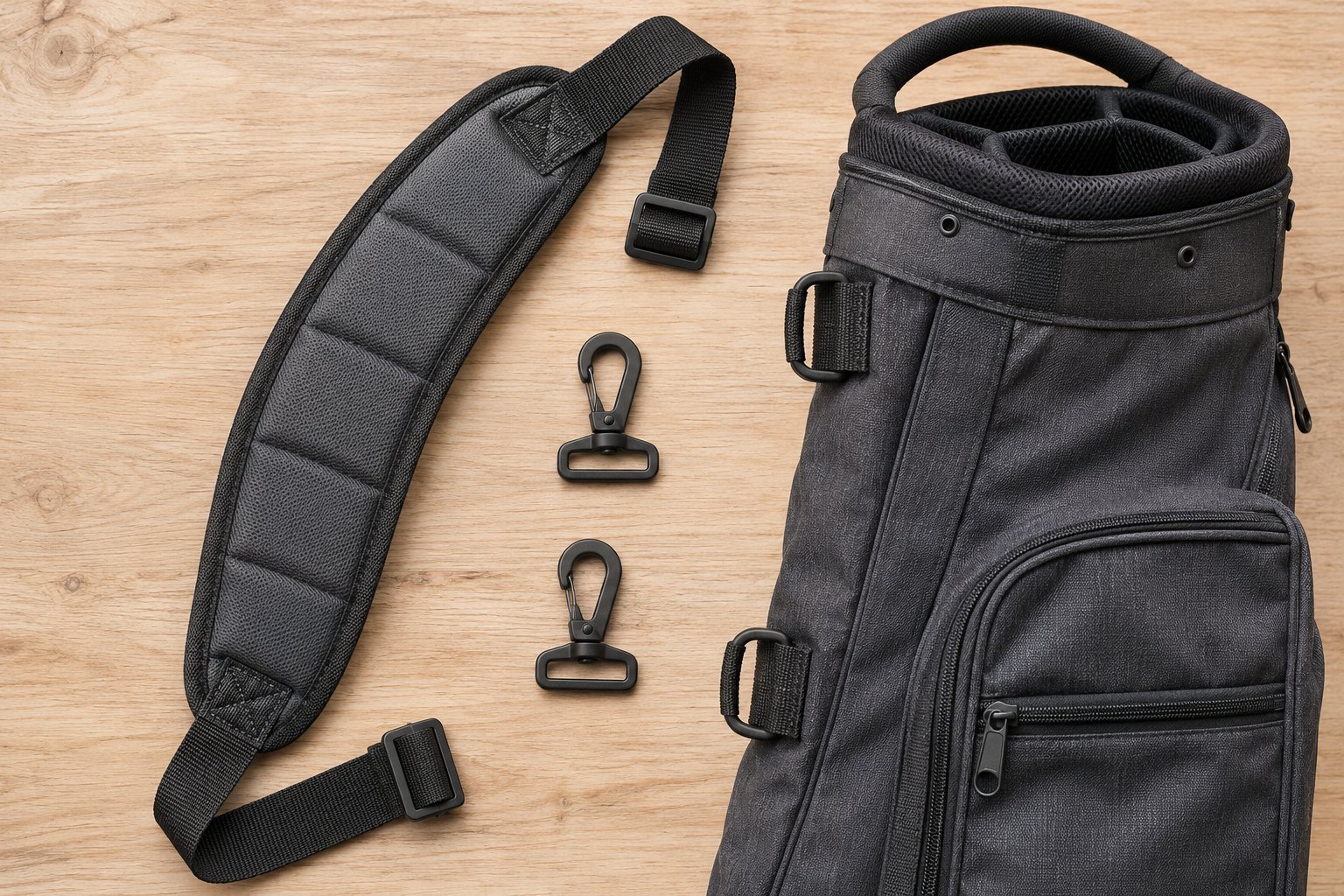
A compatible shoulder strap or rain hood can be a worthwhile purchase when the rest of the bag is in good order. Confirm the model, attachment method and any version differences first. A strap that clips on is not automatically a suitable replacement for the original assembly.
Sun Mountain distinguishes bags that can be re-strapped by the owner from those requiring a different service arrangement. Its support library also lists instructions for specific strap systems. [1][4] Follow the instructions for the correct system rather than applying a video for another model.
Stand parts need the same care. On 23 November 2026, the independent UK retailer SunMountainGolf.co.uk listed a pair of replacement stand-bag legs at £35, marked sold out. It requested leg length and photographs of the bag and hinge to establish a match. [5] This is an example of why compatibility and availability must be confirmed; it is not a current repair quotation or a universal £35 solution.
Do not straighten a damaged leg, drill a new attachment or stitch a load-bearing anchor as a casual trial. Ask whether the proposed work restores the intended function, and whether the body around the part is sound enough to justify it.
Back to top ↑Know which questions belong with a repairer

A suitable luggage or equipment repairer may be able to assess some pocket, lining or zip faults. Describe what failed and ask whether they have experience with that construction. If the bag has a weather-protection claim, ask how opening a seam or changing a zip would affect it; do not assume the original claim survives the work.
For a carrying anchor, main handle, moulded base, leg mounting or stand mechanism, start with the manufacturer or its recommended service route. The important question is whether that particular structure can be restored, not whether someone can make it look neater.
- Which part or material has failed, and is anything around it also affected?
- Is the correct replacement available for this version?
- What function will the repair restore, and what limitation will remain?
- Who should fit the part, and what checks will be made afterwards?
- What does the quote include, and what happens if further damage is discovered?
If nobody can give a credible repair route for a function you depend on, replacing the bag is a reasonable decision. Keeping it in loaded use while hoping the fault will hold is not a repair strategy.
Back to top ↑Use a complete repair-versus-replacement worksheet
Compare the money still to be spent. The original purchase price is already gone; it should not force you either to preserve an unsuitable bag or replace a sound one. Add the costs needed to return the existing bag to an acceptable condition, not just the first replacement part.
On a phone, swipe within the table to see all columns.
| Cost or question | Repair your bag | Suitable replacement |
|---|---|---|
| Item or part | Exact compatible part or quoted repair. | Bag that meets your actual needs. |
| Additional costs | Labour, collection, postage and any other necessary work. | Delivery and required accessories not included. |
| Remaining limitations | Other worn parts, layout, weight and uncertainty. | Fit, storage and transport checks still to complete. |
| Time without a bag | Parts lead time and repair turnaround. | Delivery and any return or exchange period. |
| What must be true? | Appropriate repair confirmed and remaining bag worthwhile. | Replacement improves the job you need it to do. |
Worked example: one isolated fault
Suppose a compatible part costs £28, fitting costs £18 and the total delivery cost is £12. Repair would cost £58. Against a suitable replacement at £150 delivered, keeping the bag leaves £92 unspent. These are illustrative figures, not retailer or repairer quotations.
That saving is persuasive only if the remaining bag suits you and the repair is appropriate. If another necessary repair adds £45, the total becomes £103 and the difference falls to £47. If a vital repair cannot be confirmed, neither calculation makes the bag suitable for use.
There is no universal “repair below half the new price” rule here. Choose using the actual quote, your budget, the condition of the rest of the bag and the benefits a replacement would deliver. Do not assign a guaranteed number of extra seasons to a repair.
Back to top ↑Replace for a clear improvement, not simply a fresh colour
Replacement makes sense when a necessary repair is unavailable, several important components are deteriorating, or the bag no longer suits your routine. For example, repairing a large cart bag may not help someone who now wants to carry a smaller set.
Write down what the new bag must improve: accessible handles, a workable trolley base, comfortable carrying, usable pockets or room for a particular putter grip. Try the relevant checks before spending. The Golf Bags guides can help you examine those features individually.
For a replacement-price comparison, browse stand bags at Clubhouse Golf if you carry, or cart bags at Clubhouse Golf if trolley use is the priority. These are category links checked on 23 November 2026, not claims that a particular model is in stock or suits every golfer. [6][7] Match the role before comparing the price.
Back to top ↑After the decision, keep the next step simple
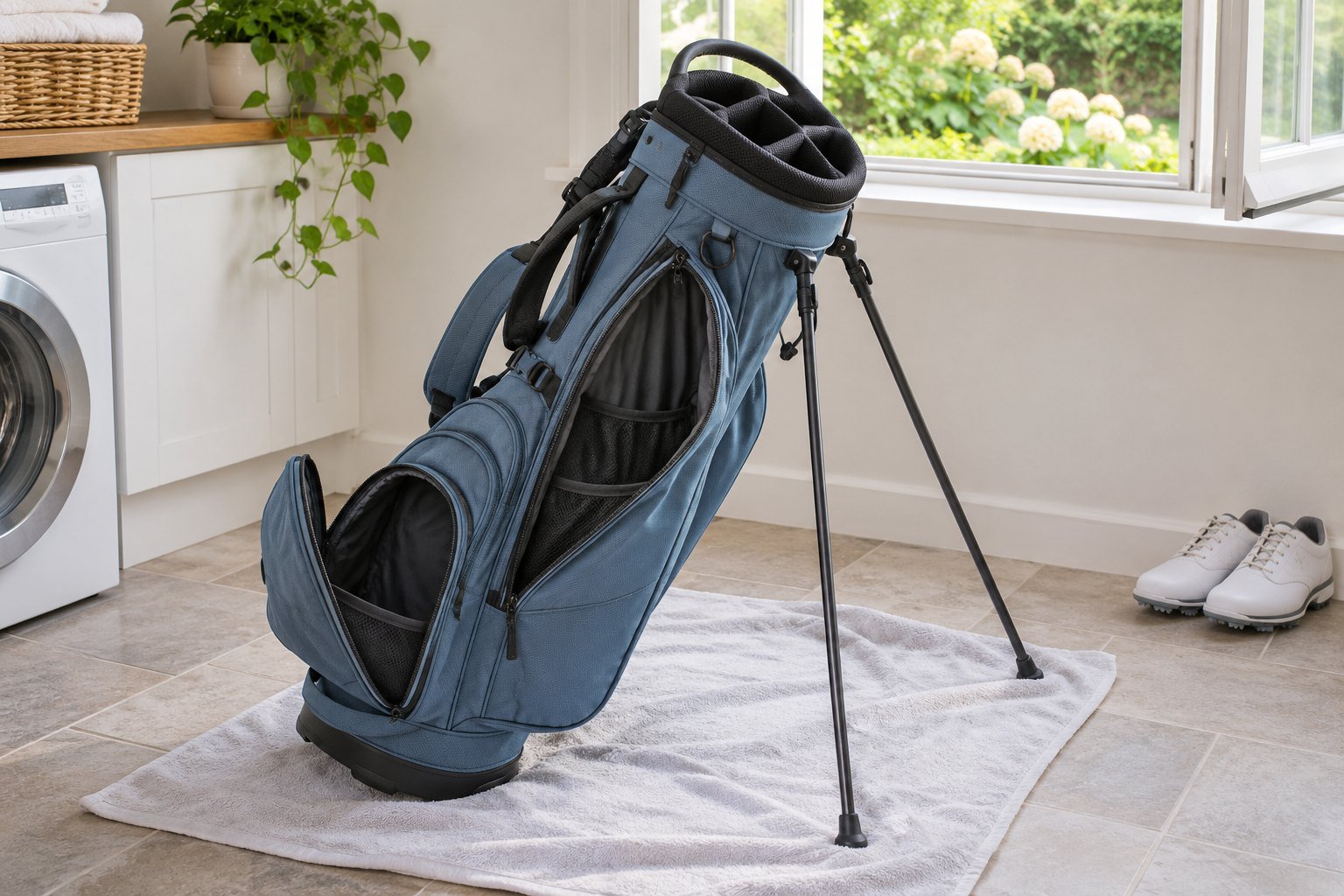
After an approved repair, follow the repairer’s or manufacturer’s instructions before returning the bag to normal use. Keep the invoice and part details so that a repeated fault is easier to explain. Begin with the prescribed checks; do not invent a heavy-load stress test.
If you keep the bag without repair because the issue is only cosmetic, clear out unnecessary contents and make time for its normal cleaning and drying routine. Reassess if the fault changes or starts affecting a function you use.
If you replace it, be honest about the old bag’s condition when selling or donating it. Do not pass an unresolved structural fault to another golfer as a minor mark. A sound bag that no longer suits you may still have a useful next owner; a compromised bag needs a different disposal decision.
The decision to make today
Name the fault and ask for one clear repair answer. Keep the bag if it still works, repair an isolated problem through the right route, and replace when that route cannot restore the function you need.
Sources and checks
Research and specifications checked on 23 November 2026. Manufacturer descriptions are identified in the text; practical checklists and worked examples are editorial guidance, not product testing.
- Sun Mountain — Golf bag FAQs: care and strap replacement — checked 23 November 2026
- YKK Southern Africa — Precautions: proper use of zippers — checked 23 November 2026
- Motocaddy UK — Warranty Information, Golf Bags — checked 23 November 2026
- Sun Mountain — How-to support library: Golf Bags — checked 23 November 2026
- SunMountainGolf.co.uk — Replacement Stand Bag Legs (Pair), independent UK retailer — checked 23 November 2026
- Clubhouse Golf — Golf Stand Bags category — checked 23 November 2026
- Clubhouse Golf — Golf Cart Bags category — checked 23 November 2026
Illustrations in this article were created for Taylor’s Trailblazing Golf. Third-party photographs, where used, are credited beside the image or in the source list.