Golf Bags for Juniors: Length, Load and Room to Grow
Fit the bag to today’s clubs and today’s golfer, with sensible flexibility for what comes next.
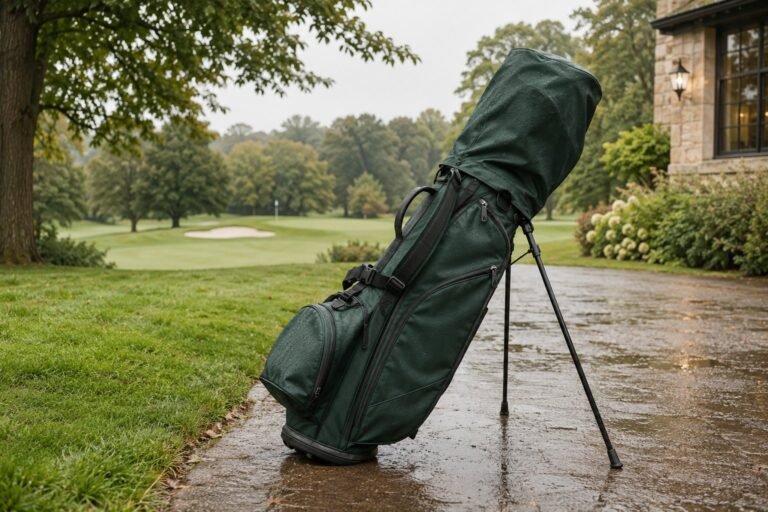
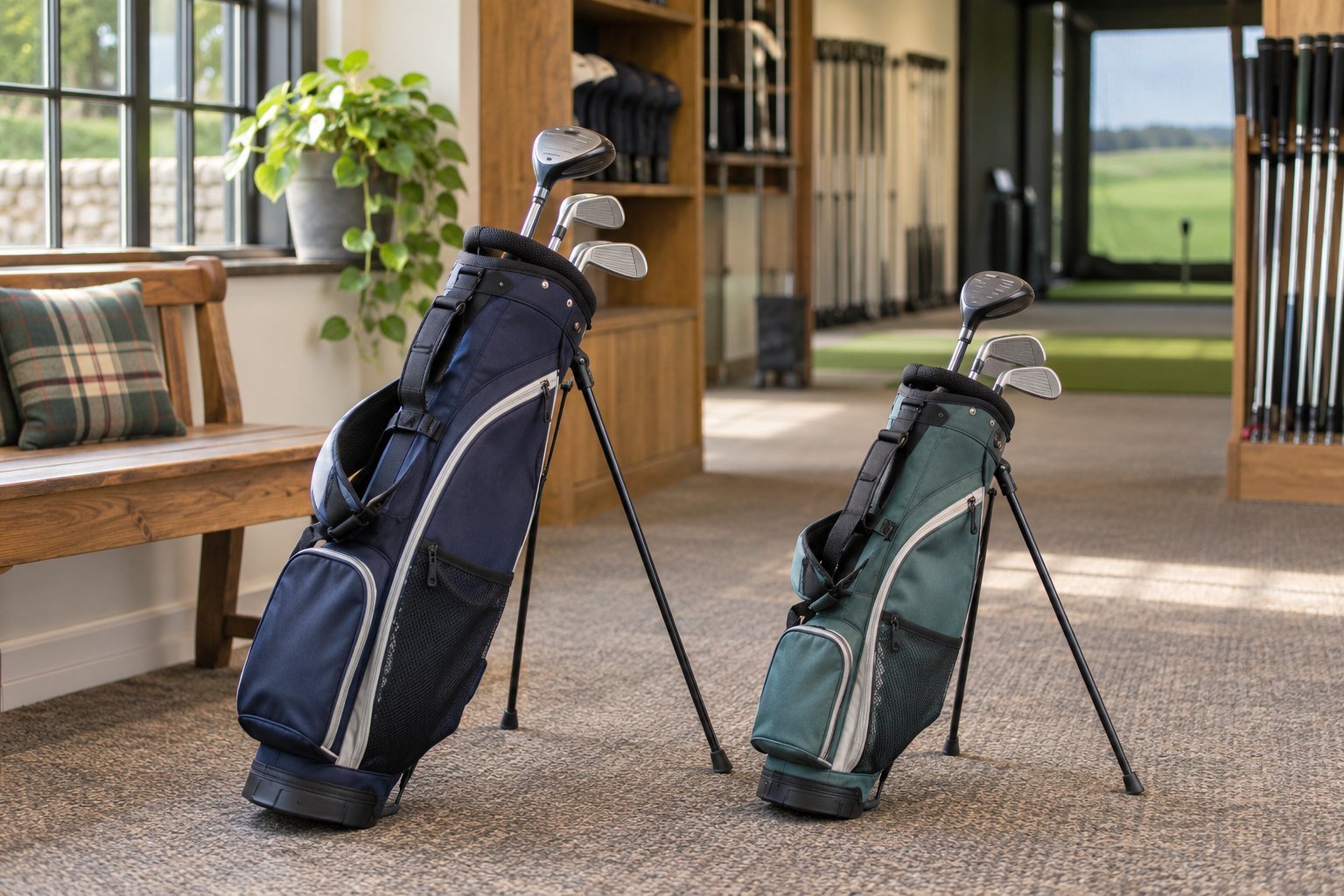
Start with the junior’s present clubs and carrying routine. AI-generated illustration.
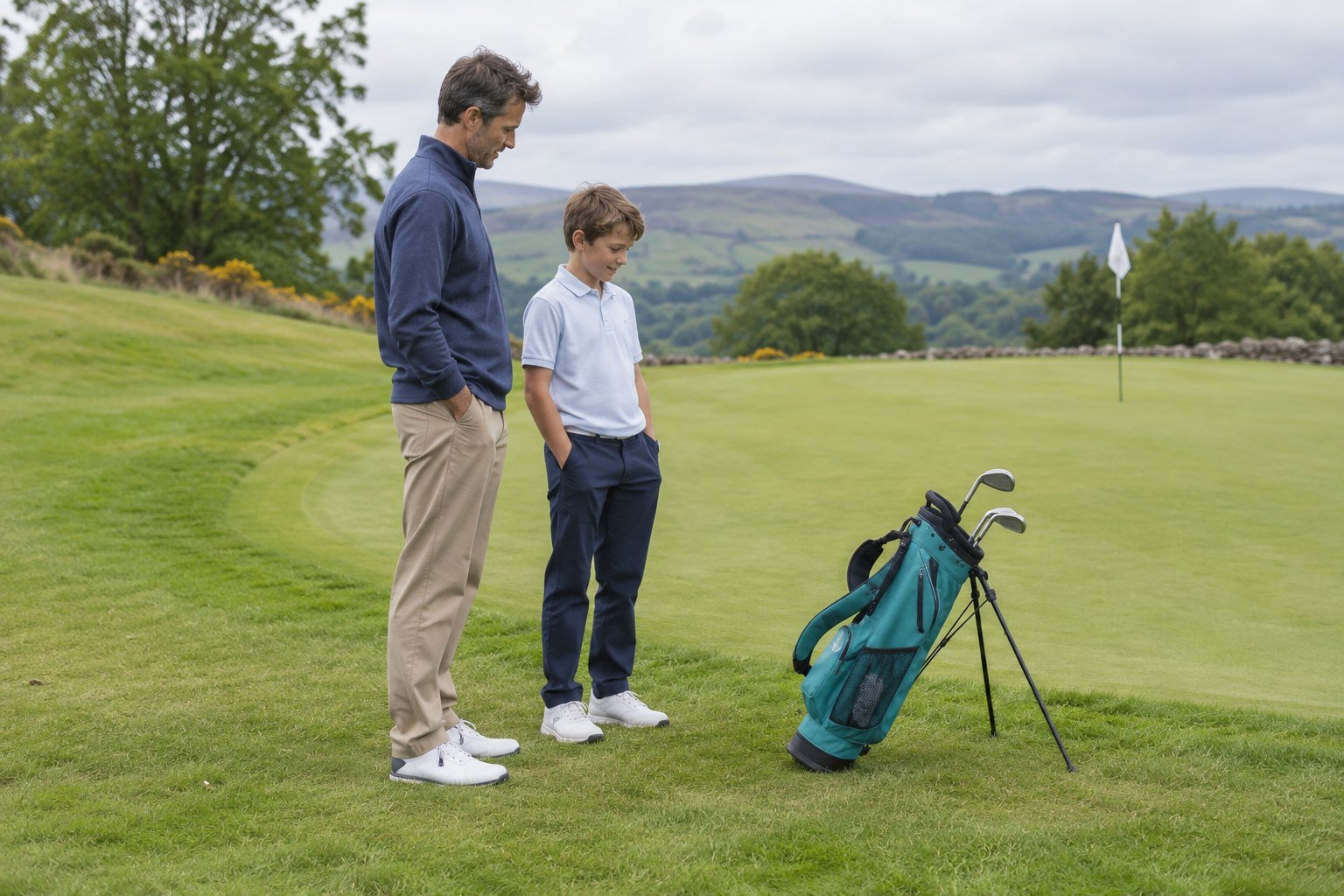
The most useful golf bags for juniors let a child find a club, take it out and put it back without a struggle. Extra pockets and a tour-style appearance matter much less if the bag is awkward to handle before the lesson begins.
Start with the clubs the junior actually uses and how the bag will move: carried, pushed on a trolley or mostly handled by an adult. This guide combines published size information with an original fitting checklist. It does not claim that a specification sheet can establish a child’s comfort or a safe carrying load.
Ad – includes affiliate links. If you buy through these links, Taylor’s Trailblazing Golf may earn a commission. Recommendations are based on the equipment decision and the available evidence.
A label may describe player height, bag height or an age range. They are different measurements.
It exposes a bag that is too deep or awkward to reach into more clearly than the driver does.
Water, balls and spare layers are part of the carried load, even when the empty bag feels light.
Prefer usable strap adjustment and an appropriate layout over extra bulk bought years ahead.
Golf bags for juniors use several kinds of size label
Check what a quoted height actually measures before comparing two bags. PING lists its PRODi G Small bag as 30 inches high and the Large as 34 inches. MKids labels the blue Pro Stand Bag by a player height of 61 inches/155 cm. The latter is not the physical height of the bag. [1] [2]
On a phone, swipe within the table to see all columns.
| Label you see | What it describes | What to ask next |
|---|---|---|
| PING PRODi G Small: 30 in | The manufacturer’s stated bag height; 76.2 cm by conversion. | Do the current shortest club and putter remain easy to reach? |
| PING PRODi G Large: 34 in | A taller bag; 86.4 cm by conversion. | Does the extra length suit the actual clubs, harness adjustment and transport? |
| MKids Pro blue: player height 61 in / 155 cm | The intended player-height label on the manufacturer page. | What is the bag’s actual height, and can the junior try it with their clubs? |
| A retailer’s age range | A shopping label rather than a measurement of this child. | Does the maker’s sizing and a practical trial agree with the label? |
These examples explain the labels, not a universal junior size chart. U.S. Kids Golf also organises its Ultralight bag options around player-height sizes; the available bag styles vary within that system. Do not transfer a number from one manufacturer directly to another. [3]
Keep three measurements separate in your notes: player height as the manufacturer requests it, the bag’s physical length and the club lengths. A colour code is helpful only when you know which product family and size it identifies.
Back to top ↑Test reach and clearance with the real clubs
Take the shortest club, the putter and the longest club to the shop if a full set is inconvenient. Ask to try them in the exact bag rather than a similar-looking adult model. Include the real grips and headcovers; a bare club is not the complete setup.
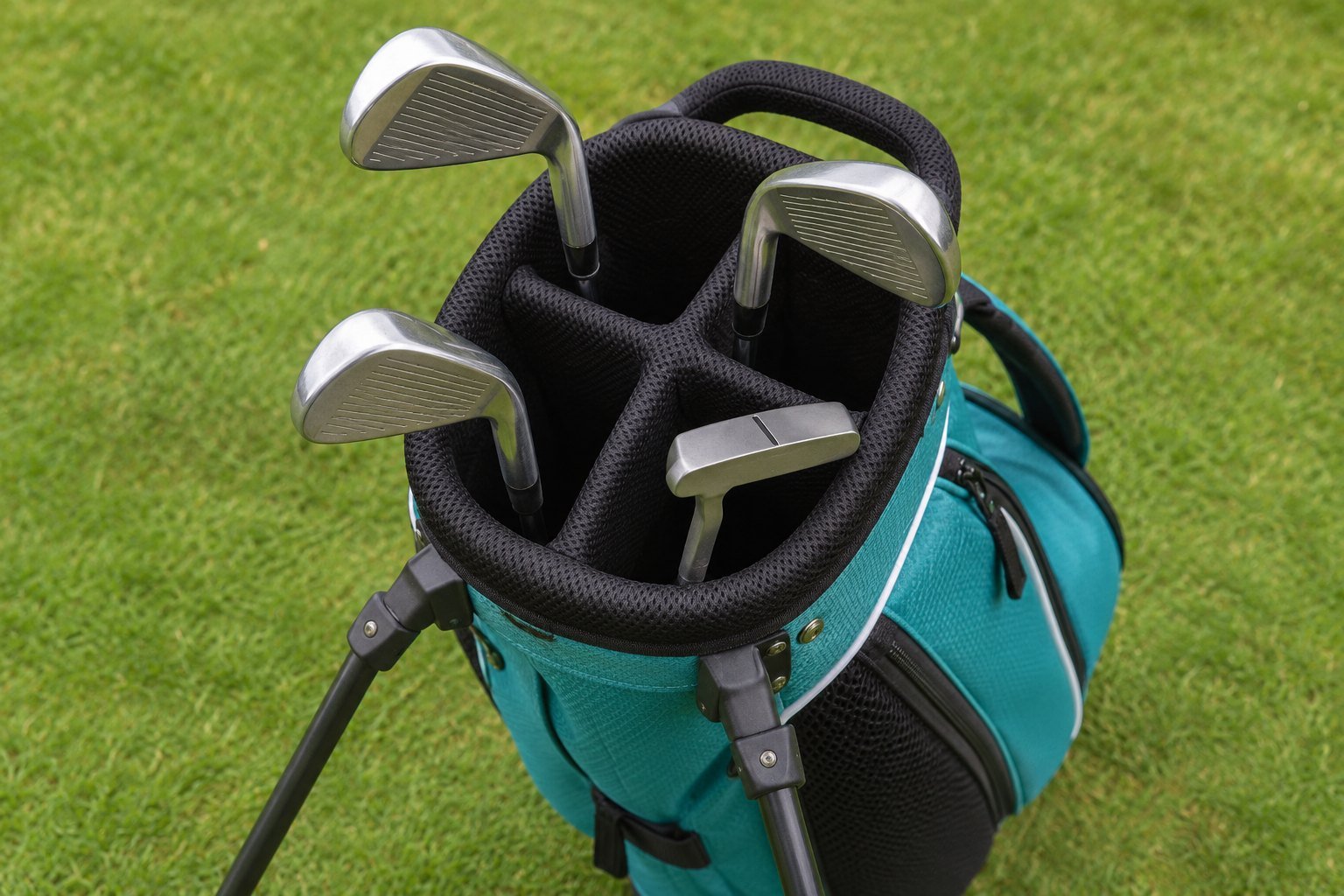
- Rest the bag as its maker intends. Let the junior identify and remove the shortest club without tipping the bag towards themselves or reaching blindly into it.
- Try the putter in the place it will normally occupy. Check whether the grip catches on a divider or the head disappears below an awkward top cuff.
- Replace the clubs one at a time, then together. A single-club demonstration can miss crowding.
- Fit the rain hood with the longest club and its normal cover in place. It should close without forcing the club into a bent or compressed position.
- Check the same access in the position the bag will use on a trolley, where relevant.
There is no universal amount of clubhead that must stand above every junior bag. The useful result is straightforward access and a layout that holds the actual set sensibly. A deeper bag is not automatically better because the child may own longer clubs later.
If the divider layout is confusing, our guide to full-length dividers explains why the number of openings at the top does not settle every storage question.
Back to top ↑Weigh the full bag before judging its weight
The empty-bag figure is only one part of the load. Record the clubs, filled drinks bottle, balls and clothing you expect to take. A bag with large pockets can make it very easy to carry things that were never part of the original plan.
This illustrative worksheet shows the arithmetic. The masses are invented planning inputs, not a tested junior setup, product measurements or a recommended load for a child.
On a phone, swipe within the table to see all columns.
| Item in this example | Mass | What to use for your own check |
|---|---|---|
| Empty bag | 1.3 kg | Weigh the exact bag, including the straps and hood you will use. |
| Clubs and headcovers | 1.7 kg | Use the junior’s real clubs. |
| Filled bottle | 0.6 kg | Include the water planned for the session. |
| Layer, balls and small accessories | 0.4 kg | Weigh the packed contents rather than guessing. |
| Total carried load | 4.0 kg | Add every item; this total is not a safe-load threshold. |

Use the total to compare alternatives, not to justify making a child carry it. If the junior struggles with the bag, remove unnecessary extras or change the carrying arrangement. Preserve essentials such as appropriate water and weather protection; an adult can share the load where practical.
A short supervised trial should feel easy enough to stop and repeat. Stop if the child reports pain, numbness, discomfort or unusual fatigue. Persistent symptoms need suitable professional advice. This equipment guide sets no percentage-of-bodyweight rule and no universal carrying limit.
Back to top ↑Choose how the bag will move before choosing extra capacity
The same bag may travel in three different ways during a morning: from the house to the car, from the car park to a lesson and around the course. Identify who handles each part. A bag bought mainly for an adult to lift needs a different trial from one a junior will carry throughout a round.
On a phone, swipe within the table to see all columns.
| Main use | Useful priority | Trade-off to check |
|---|---|---|
| Lessons with a few clubs | Easy access, low unnecessary bulk and a simple load. | A small carry design may not suit a growing full set later. |
| Junior carries on the course | A harness that adjusts to the child, practical stand and manageable loaded setup. | An empty-bag trial says little about the complete load. |
| Junior pushes a trolley | A stable bag-to-trolley fit and accessible pockets and clubs. | The trolley introduces its own fit, handling and course-use questions. |
| Adult handles most transport | Useful handles and easy loading without making club access difficult for the junior. | Adult convenience should not determine a bag depth the child cannot use. |

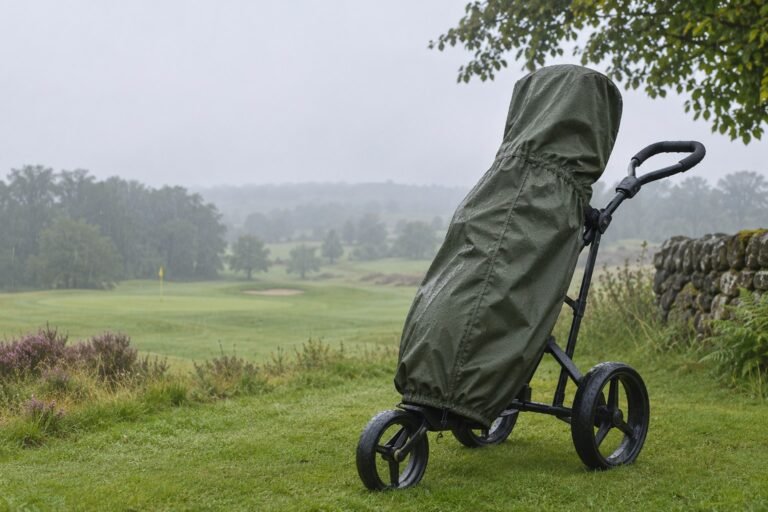
For trolley use, try the actual combination. A short junior bag may sit differently between the supports from an adult bag. Follow both makers’ instructions, check that straps do not trap the stand legs or block a pocket, and confirm that the loaded bag cannot rotate or slide during normal handling. Do not improvise a structural adapter to make an unsuitable combination fit.
Where carrying is the chosen method, our loaded carry-harness check explains what to observe. For a junior, an adult should supervise and the child’s feedback should decide when to stop.
Back to top ↑Use specifications to shortlist, then let the trial decide
Published information can eliminate an unsuitable option. It cannot rank comfort for every junior. The examples below were checked on 23 November 2026 and are deliberately limited to identifiable features.
On a phone, swipe within the table to see all columns.
| Example | Published information | Decision it helps you make |
|---|---|---|
| PING PRODi G Small and Large | 30 in and 34 in bag heights; PING lists both at 4 lb, approximately 1.81 kg, with adjustable padded straps. [1] | The smaller version should not be assumed lighter solely because it is shorter. Check reach and fit. |
| MKids Pro blue, retailer label age 10–12 | Clubhouse Golf lists a 1.75 kg bag with a 7-inch, four-way top and double strap. [4] | Bring the actual club set and check the layout. The age label does not replace a fitting trial. |
| U.S. Kids Golf UL7 bag system | Bag choices are offered in the maker’s player-height system; not every style appears at every height. [3] | Check the precise size and bag type, especially when replacing a bag from a package set. |
The quoted masses may have different inclusions, so confirm what was weighed if a small difference matters. Do not rank the PING and MKids bags on their published weights alone. Their length, harness fit and suitability for the actual set may matter more than that difference.
A useful place to compare the blue MKids option
The following link opens the exact blue retailer listing described above. Check the maker’s sizing and ask about a practical trial or returns before buying it for a child whose needs do not match the suggested age label.
Buy room to adjust, not a problem to grow into
Useful growth allowance is a harness with comfortable adjustment remaining, a sensible club layout and enough pocket space for the next realistic step. It is not several years of unused capacity carried on every outing.
Recheck the bag when the club set changes, when the junior noticeably grows or when the way they play changes. Moving from a short lesson to carrying around a course is a reason to repeat the load and handling trial, even if their height has barely changed.
- Keep the bag if the current clubs remain accessible, the harness or trolley fit works and there is no functional problem.
- Change the setup first if the problem comes from unnecessary contents or a new carrying arrangement.
- Try another size when the shortest clubs are awkward to reach, the longest club no longer fits the hood normally, or the usable strap adjustment has been exhausted.
- Replace damaged or unsuitable load-bearing equipment instead of asking the child to work around it.
Manufacturer-supplied inserts or risers should be used only as directed for the exact bag. PING, for example, lists two one-inch risers with its PRODi G bags. Their presence does not establish that a bag can be adapted safely to every child or club set. [1]
A well-fitting hand-me-down can be a sensible choice. Check that its straps, attachments, stand, base and zips work properly, then perform the same trial. A low price does not make an inaccessible bag a good fit.
Back to top ↑Take this short trial record to the shop
Compare two candidates using the same clubs and contents. Record observations in plain language rather than assigning a comfort score that looks more precise than the trial can support. This is a buying worksheet, not a medical assessment or a durability test.
On a phone, swipe within the table to see all columns.
| Question | Record for each candidate | What changes the decision |
|---|---|---|
| Can the junior reach every club? | Shortest club, putter and longest club; any catching or extra assistance. | A different bag depth or divider layout. |
| What is the complete load? | Bag, clubs, filled bottle and the rest of the session’s contents. | Fewer non-essentials, shared transport or a different bag. |
| Does the chosen transport method work? | Harness adjustment, stand operation or exact trolley fit. | A different size or carrying arrangement. |
| What does the junior say? | Their words after a brief, supervised trial. | Stop and reconsider when the setup is uncomfortable. |
| What can genuinely grow? | Remaining useful adjustment and room for the next planned club. | Buy current fit; repeat the trial when something changes. |
Keep the trial modest. There is no need to make a child complete a long walk to earn a lighter or more suitable bag. A problem in the shop is already a useful reason to try another option.
Back to top ↑Choose the bag the junior can use well now
Start with access, then check the full load and the real carrying arrangement. Only after those work should extra pockets, colour and future capacity decide between otherwise suitable bags.
Does a new set of clubs always need a new bag?
No. Recheck the actual lengths, number of clubs and grip clearance. A bag that still works does not need replacing simply because the clubs are newer.
Should a junior buy an adult bag next?
Try it rather than treating a birthday as the threshold. An adult bag is an option when its depth, loaded handling and adjustment suit that golfer; the label alone establishes none of those things.
The best purchase may be keeping the present bag, removing redundant contents or using a suitable trolley. When a replacement is needed, choose the smallest practical arrangement that meets the junior’s current needs and has useful adjustment left. Explore the wider Golf Bags guides for the storage and carrying decisions that follow.
Back to top ↑Sources and checks
Research and specifications checked on 23 November 2026. Manufacturer descriptions are identified in the text; practical checklists and worked examples are editorial guidance, not product testing.
- PING Europe — PRODi G Small, specifications and Small/Large sizes — checked 23 November 2026
- MKids — Blue Pro Stand Bag, player height 61 inches/155 cm — checked 23 November 2026
- U.S. Kids Golf — Ultralight UL7, bag options by player height — checked 23 November 2026
- Clubhouse Golf — MKids Pro Junior Stand Bag, blue age 10–12 listing — checked 23 November 2026
Illustrations in this article were created for Taylor’s Trailblazing Golf. Third-party photographs, where used, are credited beside the image or in the source list.