Golf Club Trade-In vs Private Sale: Value and Risks
Compare the money you keep, the work involved and the cash needed for your next purchase.
AI illustration. The clubs and paperwork shown are not a real valuation or sale.
A golf club trade-in vs private sale decision starts with two questions: do you want money in your account, and are you already committed to buying a replacement? A generous credit figure can be useful for an agreed purchase. It is less useful when your aim is to clear space or reduce spending.
A private buyer may offer more, but you also take responsibility for the listing, questions, payment, packing and any dispute. This guide uses current UK service terms and clearly labelled example figures to show when that extra work has a worthwhile return. It does not claim a valuation for your particular clubs.
Ad – includes affiliate links. If you buy through these links, Taylor’s Trailblazing Golf may receive a commission at no extra cost to you.
A cash payment can be saved or spent anywhere. Treat store credit as valuable only where you can use it.
Check inspection, expiry, collection costs and the cost of declining a revised offer.
Compare the exact replacement and remaining cash payment, including delivery and fitting.
Retain the specification, condition photographs, payment record and delivery or collection confirmation.
Golf club trade-in vs private sale: start with net proceeds
Write down what reaches you after the transaction. Use the amount credited to the seller, subtract any selling fees, seller-paid delivery, packaging and agreed collection charges, and keep cash separate from shopping credit.
The figures below are invented planning examples for the same set of clubs. They are not current dealer quotations or predicted selling prices. The private-sale figures assume no seller fee and that the seller pays the stated postage. Replace every input with your own terms.
Swipe within the table to see all columns.
| Route | Seller receives before costs | Seller-paid costs | Net cash |
|---|---|---|---|
| Dealer cash offer | £300 | £0, as agreed | £300 |
| Private sale at a lower achieved price | £345 | £15 delivery + £5 packaging | £325 |
| Private sale at a higher achieved price | £375 | £15 delivery + £5 packaging | £355 |
The lower private outcome adds £25 over the dealer offer. If photographs, messages and dispatch take two hours, decide whether that £25 is enough compensation for your time. The higher outcome adds £55. Neither assumes that a buyer will pay the asking price or that the sale will complete by your preferred date.
Also test a less favourable outcome. A later £25 reduction would remove the lower scenario’s advantage. That is a sensitivity check, not a prediction of the likelihood of a problem. It helps you avoid choosing a route whose attraction depends on everything going perfectly.
Use current fees and the correct price
As checked on 24 November 2026, eBay says eligible UK private sellers pay no final-value or regulatory operating fee. Its free-listing allowance and exceptions still matter: optional upgrades, international delivery and other circumstances can produce charges. Business sellers have different terms. Do not copy an old percentage fee into a new comparison.[1]
eBay’s buyer-facing price for UK private listings includes a Buyer Protection fee. Check the seller’s actual proceeds when comparing an offer with a dealer quote; a price seen by a buyer is not automatically the seller’s receipt.[2]

Choose between dealer cash, trade-in credit and private sale
People use “trade-in” for several arrangements. Ask what the offer actually pays before comparing its value. These are editorial decision criteria, rather than claims that every provider works identically.
Swipe within the table to see all columns.
| Route | Useful when | Main compromise |
|---|---|---|
| Outright sale to a dealer | You want money and a single business to deal with. | You accept that business’s valuation and any inspection conditions. |
| Credit or part-exchange | You have already chosen an eligible replacement at a competitive total price. | The benefit may be restricted to one retailer, a deadline or one transaction. |
| Private sale | You have time to find a suitable buyer and the expected extra proceeds are meaningful. | You handle the sales process, delivery evidence and potential return or payment disputes. |
| Keep or pass on suitable clubs | The likely proceeds are small and the clubs still have a useful purpose. | You forgo cash. Condition and safe usability still need honest assessment. |
A dealer’s later retail asking price is not your guaranteed private-sale value. That retail price includes a different transaction: the business holds the stock, finds a buyer and provides its own sales terms. Your useful benchmark is another genuine offer or a comparable completed private sale, with the same model, specification, condition and included accessories.
Back to top ↑Read the actual offer: three current UK examples
These examples show why the payment and conditions deserve separate lines in your comparison. Terms were checked on 24 November 2026 and can change. They are not a ranking, a quotation for your clubs or a promise that a particular item will be accepted.
Clubhouse Golf: a bonus tied to a purchase
Clubhouse Golf currently advertises an extra 30% on its trade-in valuation. Its terms say the resulting credit has no cash alternative and must be used in one transaction. Quotes last three days, clubs must be returned within seven working days, and the condition is checked after arrival. If you decline a revised valuation, the stated charge to return your clubs is £4.99. Those restrictions are part of the offer’s value.[3]
American Golf: an in-store credit route
American Golf describes an in-store valuation followed by store credit. Its trade-in service requires free American Golf Club membership and has eligibility conditions, including matching heads, shafts and flexes within an iron set. Confirm acceptance before travelling with a mixed set.[4]
GolfClubs4Cash: money or credit
GolfClubs4Cash lists bank transfer, PayPal and store credit as payment options. Its selling guide asks for the exact specification and condition photographs, and says quotes are valid for 30 days. Postage charges, where applicable, are deducted from the trade-in value. Ask for the net amount and payment timetable on your own written offer.[5]
For any service, clarify whether accepting the initial quote commits you to the sale, what happens after inspection, and who pays for return delivery if you disagree. Keep the written answer alongside the quote.
Back to top ↑Check the cash you must add to upgrade
If you are buying replacement equipment, extend the calculation to the complete purchase. Compare exactly the same head, shaft, flex, length, grip, set composition and included services wherever possible. A smaller headline discount can still produce a smaller final bill.
Here is a second, separate fictional example. The trade-in credit and prices are invented; they are not the Clubhouse Golf offer above. Assume the credit is fully usable, all prices include delivery, and the replacement specification is identical.
Swipe within the table to see all columns.
| Arrangement | Replacement price | Proceeds or usable credit | Extra cash needed |
|---|---|---|---|
| Retailer with trade-in credit | £650 | £360 credit | £290 |
| Dealer cash sale, buy elsewhere | £590 | £300 cash | £290 |
| Higher private-sale outcome, buy elsewhere | £590 | £355 net cash | £235 |
The first two routes leave the same £290 to pay, despite the £60 difference between the credit and cash offers. The private outcome is £55 better, provided it is actually achieved. Add any necessary fitting, adjustments, finance costs or delivery charges before making your own choice.
Credit also needs a use. If you cannot buy the required specification, would spend more just to redeem it, or would otherwise postpone the purchase, its face value is an unreliable guide to its benefit.
To compare a proposed replacement’s current asking price, you can browse Clubhouse Golf or, for a Callaway replacement, check the Callaway UK club range. These links lead to a retailer and a club category; they do not provide a valuation for your existing clubs.
Back to top ↑Prepare one accurate specification and condition record
Use the same information for every quote and listing. That makes the comparison fair and reduces avoidable changes when somebody sees the clubs in person. Clubhouse Golf’s valuation request explicitly asks for details including handedness, loft, set combination, shaft, grip and custom-fitting changes.[3]
- Record the full model and version. Identify every iron included, rather than writing “full set”.
- Photograph the shaft’s actual markings and record flex as labelled. Distinguish a known build specification from an assumption based on the head model.
- State any known changes to length, loft, lie, shaft, grip or adapter, including repairs. If a measurement has not been verified, say so.
- List the headcover, adjustment tool and any other accessories that will be supplied.
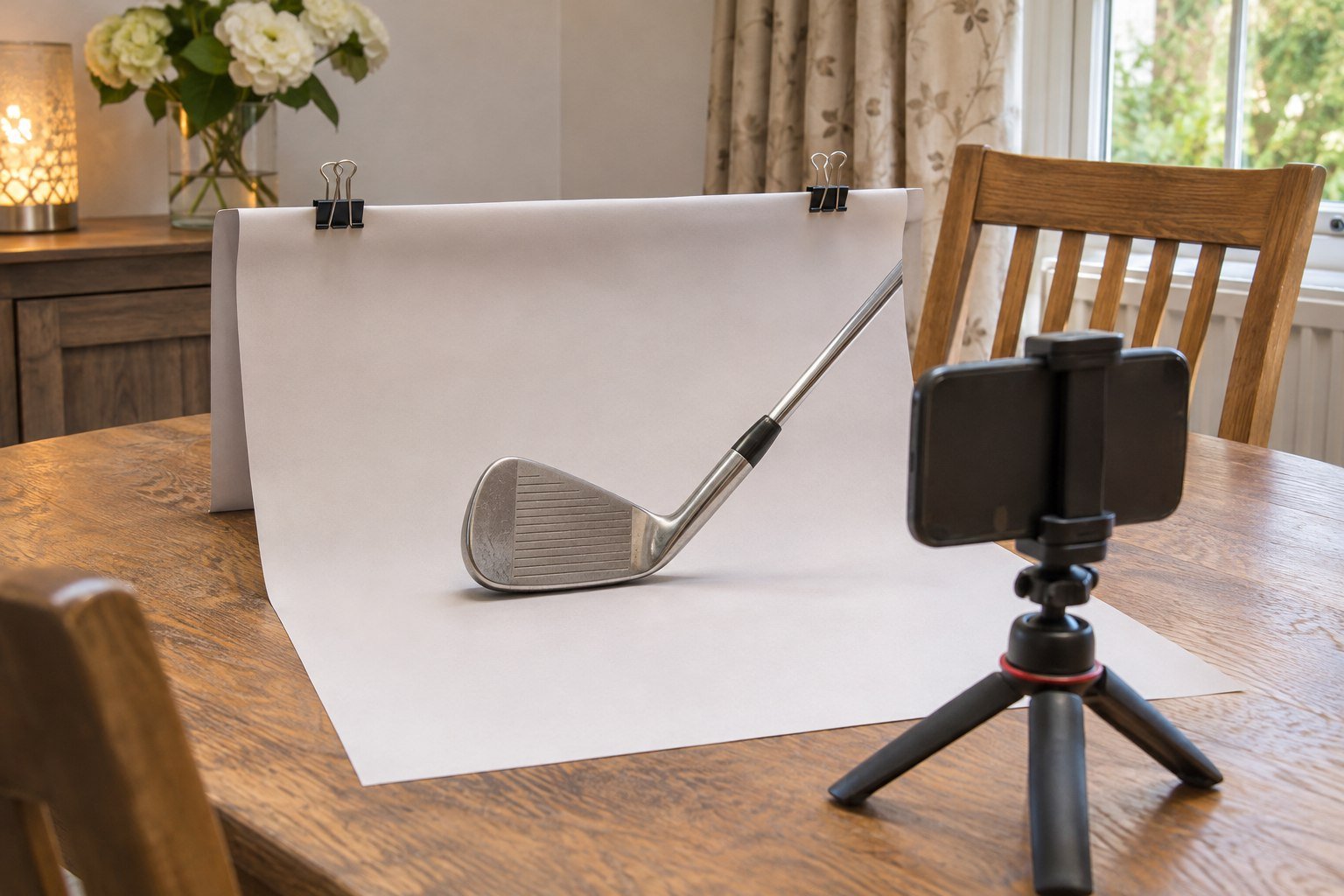
- Photograph the whole club, face, sole, crown or back, shaft and grip, plus clear close-ups of marks.
- Retain proof of ownership and purchase where available. Provide sensitive documentation privately and remove unrelated personal information from public photographs.
Photograph in even light, without filters that hide wear. Clean only by the maker’s appropriate care method. A scratched crown needs a clear description, not a flattering camera angle. Avoid promising “standard length” or “original shaft” merely because you have never changed it yourself; a previous owner may have done so.
Do not pay for speculative refurbishment to improve an offer. Ask for valuations in the present condition and with the proposed work completed. Spending £80 to raise a confirmed valuation by £40 would reduce your proceeds by £40. Those numbers are illustrative, but the test is useful.
If a shaft, head or connection looks damaged, stop using the club and arrange an appropriate professional assessment. A selling photograph cannot establish structural safety, and a suspected defect should never be hidden from a buyer.
Describe the private sale so both sides know the agreement
A useful listing tells a golfer whether this exact club is worth considering. State the build, condition, included items, delivery or collection arrangement, and what is unknown. Replace broad praise such as “perfect” with observations a buyer can check.
For example: “Used right-handed driver; photographs show a mark on the crown and wear on the sole. The shaft label and grip are pictured. Headcover included; adjustment tool not included. Previous owner’s fitting changes are unknown.” This is a writing example, not a description of an actual item for sale.
Keep questions and any agreed changes in the platform’s messages. If a buyer asks whether a shaft is tipped, a length is factory standard or the warranty transfers, an honest uncertainty is preferable to an unsupported assurance. Obtain documentary confirmation before making a guarantee.
Read the chosen platform’s dispute terms before accepting money. Under eBay’s Money Back Guarantee, an item that arrives faulty, damaged or materially different from its listing can be returnable even where the seller states that returns are not accepted. The seller can be responsible for return postage. A private listing therefore still needs accurate descriptions and retained evidence.[6]
Private selling still requires the club to match your description; accurately record its model, build and condition. Citizens Advice provides guidance on complaints about misdescribed private purchases.[10] Buying stock to resell can also make you a trader. The CMA says status depends on the activity and circumstances, so a marketplace account’s “private seller” label does not by itself settle your legal responsibilities.[11]
Offer a trial only if you have agreed where it happens, who supervises it, what happens if damage occurs and whether any sale is conditional on it. You do not need to promise an on-course trial to sell a club. A fitting or launch-monitor result from the buyer would also be that buyer’s experience, not evidence that the club will suit somebody else.
Protect payment, packing and the final handover
Confirm payment through your own account
Open your bank or selling-platform account yourself. Police guidance warns about false payment confirmations, invented courier-insurance fees and overpayments followed by a request to return the difference. Wait for confirmed payment, and report suspicious approaches to the platform.[7] Police.uk also advises checking your account or bank for cleared funds and photographing items before dispatch.[8]
For a marketplace sale, follow its payment and seller-protection process. A screenshot or email supplied by the buyer is not independent confirmation. Do not move a platform transaction elsewhere in the hope of keeping the same protections.
Agree the delivery service before taking payment
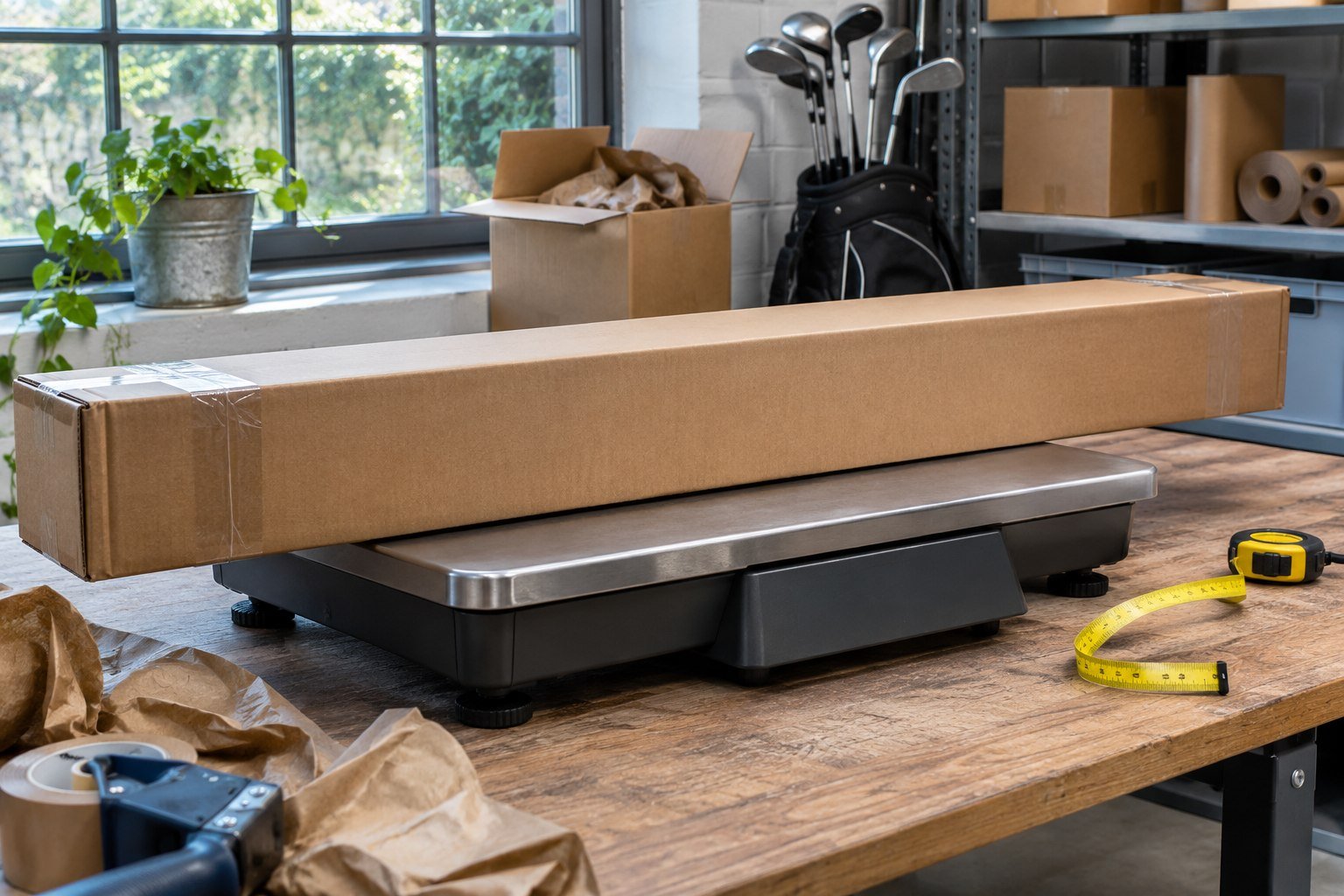
Measure the packed parcel, check the carrier’s limits and make sure the service accepts golf clubs with suitable compensation for the value. A low postage estimate is not useful if the finished box is too long or the item is excluded from cover.
Protect each club separately so heads and shafts cannot strike one another, use a sound box and keep the delivery record. Follow the selected carrier’s packing rules and any dealer instructions. GolfClubs4Cash specifically warns against taping clubs together and says transit damage can reduce an offer.[5]
Complete the platform’s collection record
For eBay collection, check that the order shows as paid and use the buyer’s QR or six-digit collection code in your own order record at handover. Keep arrangements in eBay Messages. The platform says the code supplies proof of collection; meeting the buyer does not by itself complete that record.[9]
Choose a visible, well-lit meeting place where inspection is practical. Make the club, included accessories and agreed condition easy to check before finishing the handover. Keep an accurate record without asking for unnecessary personal documents.
Set a worthwhile premium and keep the option not to upgrade
Before listing privately, choose the extra net amount that would make the work worthwhile for you. There is no universal percentage. A busy golfer clearing one ordinary club may accept a modest dealer offer; an owner with an unusual, well-documented build may be willing to wait for a buyer who wants that exact specification.
- Obtain comparable written offers with the same condition record.
- Calculate cash proceeds and, where relevant, the complete replacement bill.
- Choose a realistic private-sale range and a minimum acceptable net outcome.
- Set a review date. If the listing does not attract suitable interest, reassess the price or route rather than treating the original asking price as money already earned.
If the replacement decision is still uncertain, settle that first. Our guide to a useful club-fitting session explains what evidence and written specification to request. Keeping a suitable club can leave more money in your account than any selling arrangement followed by an unnecessary purchase.
The strongest choice is the one that gives you an acceptable net result on terms you understand. A larger private-sale price or trade-in bonus is useful only when the complete transaction works for your budget and time.
Back to top ↑More questions
Should I sell irons individually or as a set?
Check complete-set and individual-club demand before splitting anything. Selling one desirable iron may leave an awkward remainder and multiply the packing and messages. Ask dealers whether they accept the current set composition, then compare a realistic total from separate sales with an offer for the whole set.
Should I replace the grips before requesting a quote?
Request a quote in the present condition first. Ask how much a documented regrip would change the offer, and compare that with its full cost. A buyer may prefer a different size or material, so there is no reason to assume new grips recover their price.
Does a custom shaft guarantee a higher selling price?
No. Its value to a buyer depends on the exact specification and whether they want it. Show the actual shaft, adapter and known build history, then seek evidence of demand for that combination. Its original upgrade price is not a guaranteed resale premium.
Sources and checks
Retailer and platform terms were checked against the sources below. The amounts in the worked comparisons are illustrative, not quoted valuations.
- eBay — Fees for private sellers
Checked 24 November 2026. - eBay — Buyer Protection fee
Checked 24 November 2026. - Clubhouse Golf — Trade In Gear Up and terms
Checked 24 November 2026. - American Golf — Sell My Clubs
Checked 24 November 2026. - GolfClubs4Cash — How to sell
Checked 24 November 2026. - eBay — Money Back Guarantee policy
Checked 24 November 2026. - Police Scotland — Online marketplace fraud
Checked 24 November 2026. - Police.uk — Online shopping: selling online
Checked 24 November 2026. - eBay — Offering collection in person
Checked 24 November 2026. - Citizens Advice — Misdescribed goods bought from a private seller
Checked 24 November 2026. - Competition and Markets Authority — Unfair commercial practices: who counts as a trader
Checked 24 November 2026.
Illustrations in this article were created for Taylor’s Trailblazing Golf. Third-party photographs, where used, are credited beside the image or in the source list.