
Driver Loft Explained: Adjustable Settings vs Fixed Heads
Understand what the number means, what the sleeve changes and when adjustability is worth paying for.
- Model-specific settings
- Loft and lie kept clear
- Reversible comparisons
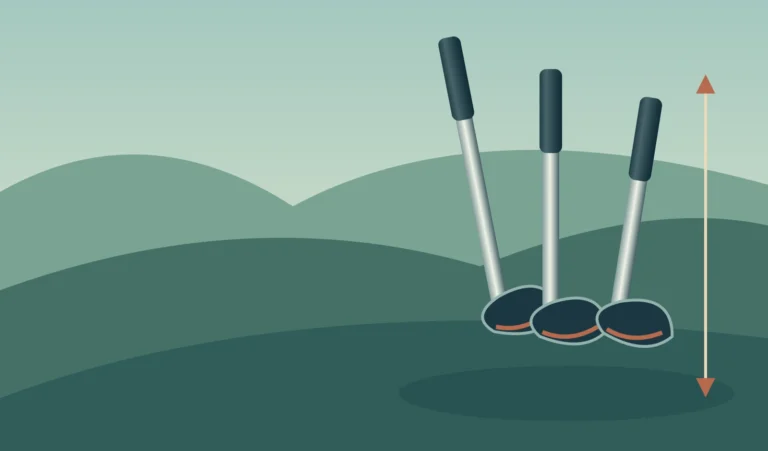
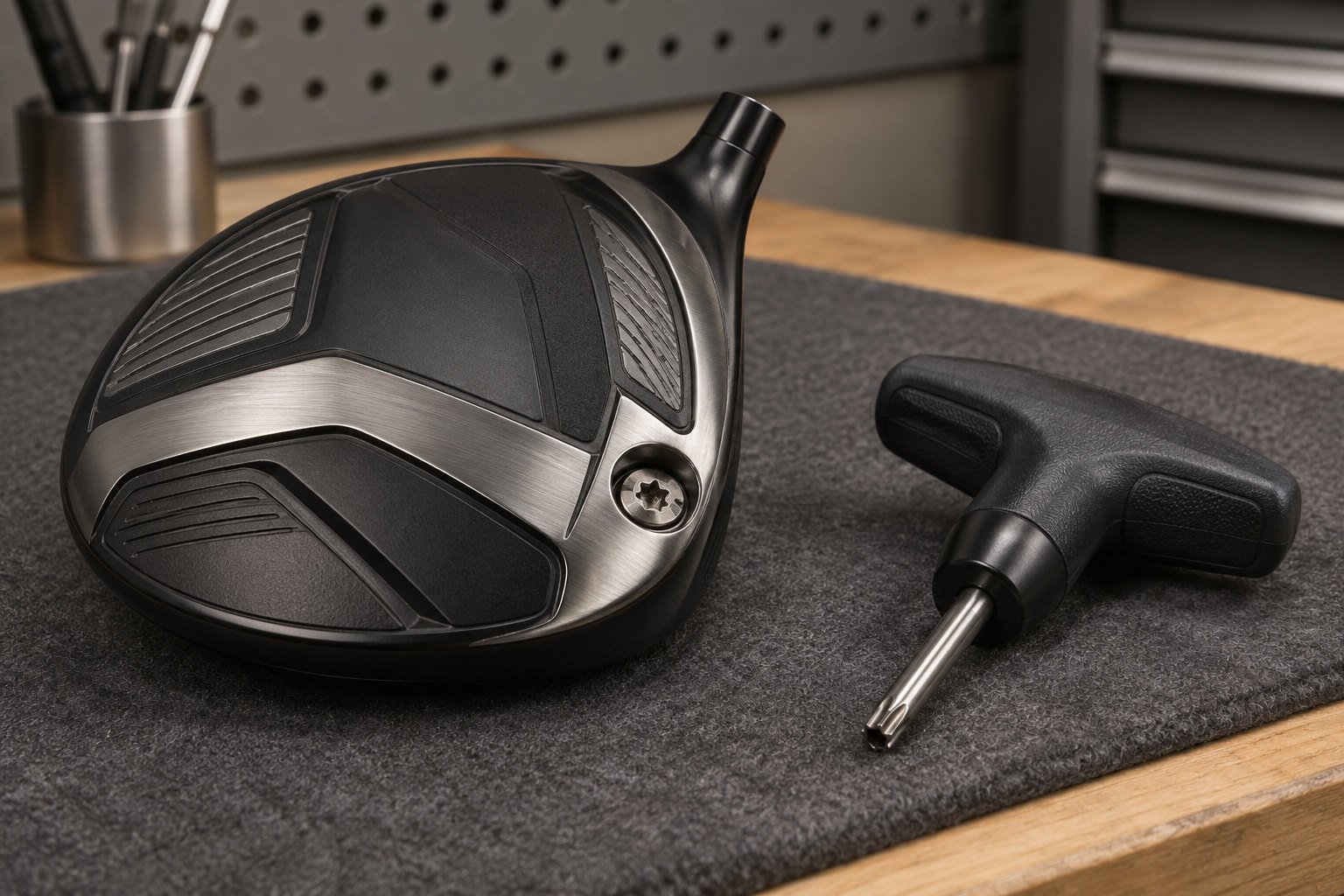
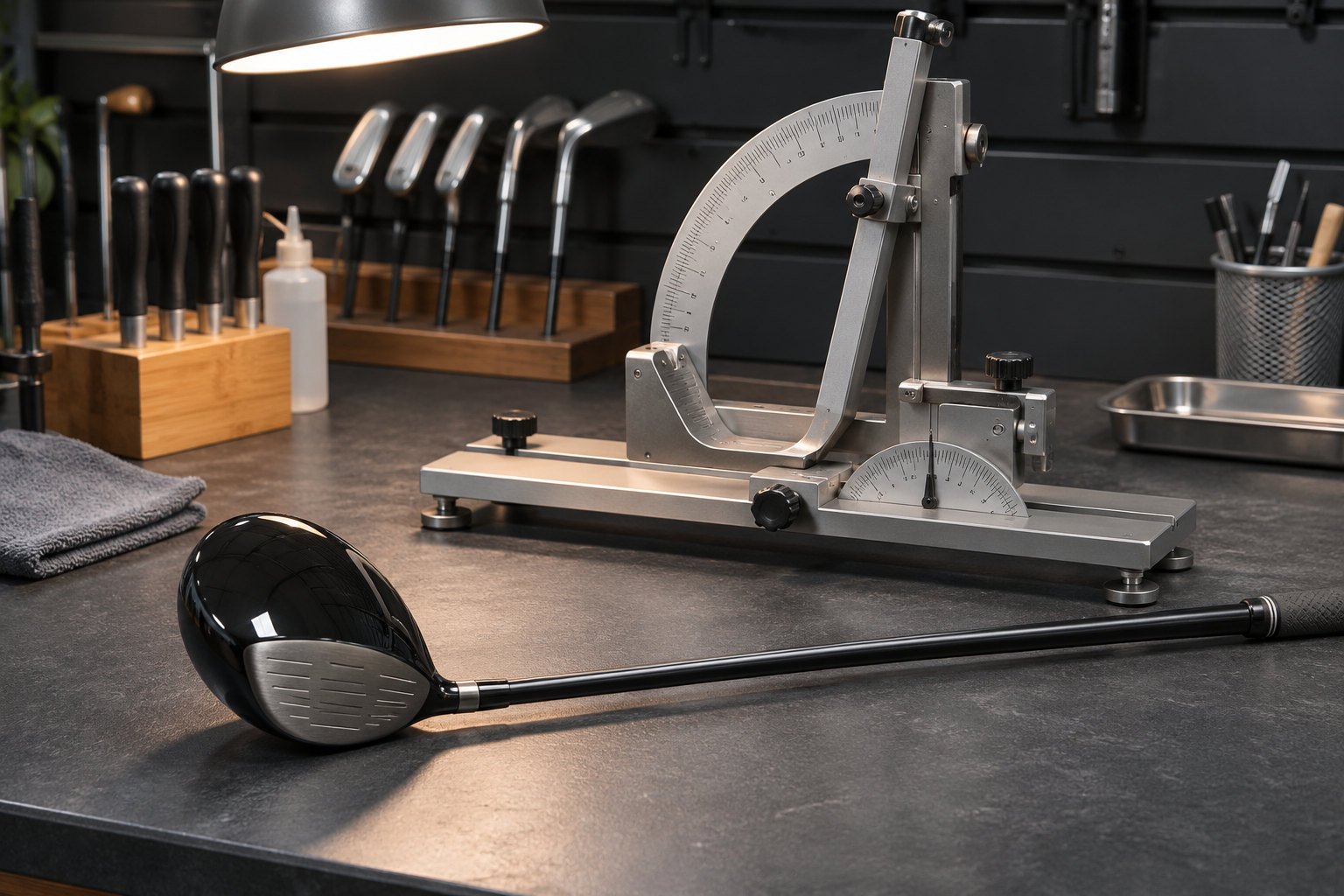
AI-generated illustrations show generic golf equipment and settings. They are not photographs of the named products or records of product testing.
A 10.5° driver is a starting specification, not a promise that every shot will launch at 10.5°. Add an adjustable hosel and there is another question: does turning a setting change the thing you actually need to change?
This guide separates the different angles, compares documented adjustment systems and gives you a practical way to decide between an adjustable and a fixed head. It is a research-led explanation of settings and buying choices, not a personal test of the clubs discussed.
Printed loft
The starting head specification, before the golfer delivers the club.
Delivered loft
The face loft at impact; it need not equal the number on the sole.
Adjustment range
A bounded set of model-specific options, not every possible loft.
Buying test
Can the setting produce a useful, repeatable result for your golf?
Driver loft explained: three numbers to keep separate
| Term | What it describes | What it cannot tell you alone |
|---|---|---|
| Stated or stamped loft | The head’s named loft specification, such as 10.5° | The loft you deliver or the resulting ball flight |
| Dynamic loft | The face’s vertical orientation at impact, at the contact location | The full trajectory without the other impact and ball data |
| Launch angle | The ball’s initial upward direction after leaving the face | Whether carry, spin and dispersion suit your needs |
Scroll within the table to see all columns.
Trackman defines dynamic loft and launch angle separately. It also identifies delivery, shaft behaviour and impact location as influences on dynamic loft. The number printed on the sole therefore cannot specify the flight by itself. [1][2]
Think of the hosel setting as an equipment input. The ball flight is the result you still need to observe. Changing the input by one degree does not promise that your measured launch angle will change by exactly one degree.
Keep the wording precise at a fitting: “The head is 10.5°, the sleeve is at this setting, and these are the measured results.” That is more useful than describing every number on the screen as the loft.
Adjustable versus fixed: what are you paying for?
Here, a fixed head means a driver without a user-adjustable hosel. Its shaft connection does not offer the reversible loft positions found on an adjustable sleeve. It may still be a well-fitted complete club; fixed does not mean unsuitable or obsolete. Titleist also distinguishes adjustment options from a fixed setup, without calling either universally better. [11]
| Buying question | Adjustable hosel | Fixed hosel |
|---|---|---|
| Can I trial a different setting on this head? | Yes, within its documented positions | No equivalent user setting; compare another suitable build |
| Must the original head loft suit the task? | Yes; the adjustment range has limits | Yes; choose the appropriate head specification initially |
| Does it remove the need for a fitting? | No; a menu of settings is not a result | No; the complete club still needs to suit you |
| What is the practical advantage? | Reversible fine-tuning and a recorded setting to revisit | A simpler ownership choice when the existing setup works |
| What is the main trap? | Buying a poor starting fit and expecting the sleeve to rescue it | Buying an untried specification with no easy loft-setting correction |
Scroll within the table to see all columns.
Compare the total quote for suitable complete clubs. Do not assume an adjustable model is always dearer, or that a fixed model always saves weight in a useful place. Those claims need the specifications and prices of the actual models being compared.
If a fixed driver already gives the flight you want, extra settings alone are a weak reason to replace it. If you are choosing between two nearby lofts and a fitting identifies a useful intermediate option, adjustability has a specific job.
Read the chart for the exact system
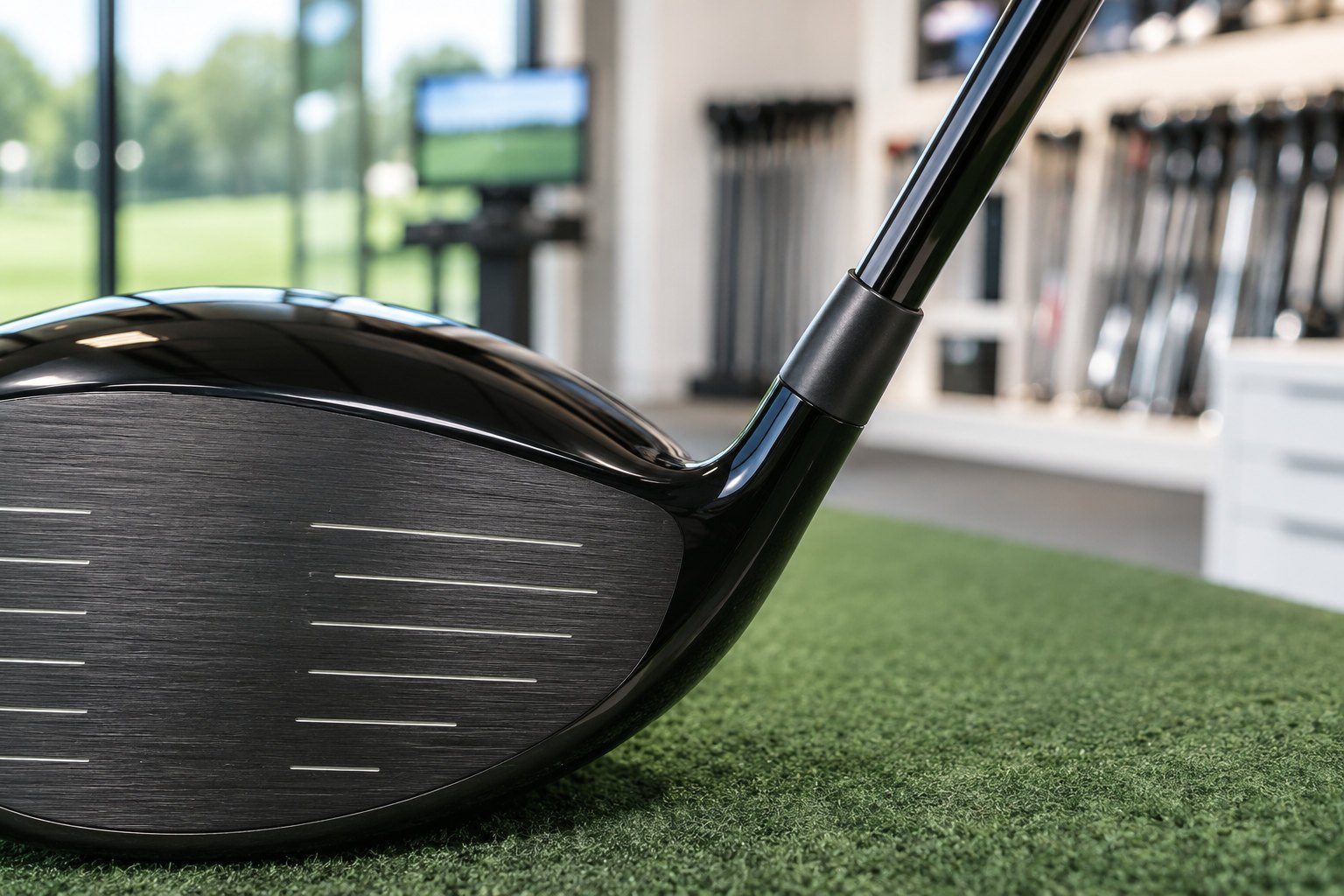
Do not transfer a setting name from one brand to another. Even within a brand, confirm the club category, adapter generation and handedness before using a chart.
| Documented system | What its guidance says | What to record |
|---|---|---|
| Callaway standard two-cog OptiFit | Loft markings −1, S, +1 and +2, combined with N or D lie settings; eight combinations | Head’s stated loft and both cog markings |
| Titleist driver/fairway SureFit | Sixteen loft-and-lie combinations in 0.75° increments; standard A1 for right-handed and D4 for left-handed clubs | Correct handed chart and complete letter-number position |
| PING G440 MAX | Official specifications list ±1.5° loft adjustment | Head loft and the exact position on its own adjustment chart |
Scroll within the table to see all columns.
Sources: the manufacturer instructions and model specifications. [3][4][5] The number of positions is not a quality ranking. Sixteen positions may include different lie combinations, rather than sixteen different lofts.
A simple Callaway example
For a 10.5° head using the standard OptiFit cogs, −1 corresponds to 9.5°, S to 10.5°, +1 to 11.5° and +2 to 12.5°. Those are stated-loft settings calculated from Callaway’s instructions; they are not measured launch angles. N and D identify separate lie choices. [3]
Callaway’s 2022 cog sheet documents specialist strong and flat cogs with different ranges or lie specifications. A used club need not carry the standard arrangement assumed in a generic chart; confirm the installed parts and their instructions. [6]
Similarly, PING’s stated ±1.5° range means a 10.5° head spans nominal endpoints of 9° and 12°. It does not establish which lie combination accompanies every position. Read the complete model chart instead of inventing the intermediate settings. [5]
Why loft, lie and the way the face sits need separate attention
Loft describes the face’s upward tilt. Lie describes the relationship between the shaft and the ground in the specified measurement position. Face angle concerns where the face points. These are different properties, even when one hosel mechanism gives you choices involving more than one of them.
Titleist’s SureFit guidance explicitly defines its charted loft with the face square at impact. Its explanation of the original SureFit Tour system also describes how changing loft can alter the way a soled head rests: adding loft can make the resting face look more closed, and reducing loft more open. That is a description of that system and setup, not a universal prediction of your impact position. [4][7]
After an adjustment, notice whether you address the ball in the same way. If you allow the head to settle differently or change your grip to make the face look familiar, mention that to the fitter. The setting number and your response to the appearance both belong in the trial.
Also keep the hosel separate from movable weights. On the Quantum Max, Callaway documents eight OptiFit configurations and a distinct neutral/draw weighting system. Writing down only “draw setting” would leave the configuration ambiguous. [8]
Ask: “Which loft and lie combination have we selected, and what changed at address?” A vague promise to make the club straighter is not an adequate record.
Compare a loft change without losing the starting point
Use this worksheet as a discussion guide with a fitter or for a permitted range comparison with a sound, correctly assembled club. It does not identify a universal ideal loft.
- Photograph the starting setting and write down the head loft, shaft and playing length.
- Choose one question, such as whether another setting improves useful carry without worsening the main miss.
- Keep the ball, tee arrangement and intended shot as consistent as practical. Record important wind or surface changes.
- Compare the starting setup with one documented alternative, then return to the starting setup while you are still fresh.
- Keep ordinary imperfect shots. Separate a confirmed misread from a shot you simply dislike.
- Review typical carry, spread and strike alongside launch and spin when measured. If the outcome is inconsistent, postpone the purchase or setting decision.
| Write this down | Starting setup | Alternative |
|---|---|---|
| Head loft; hosel; weight position | Your actual configuration | One documented change |
| Carry and landing pattern | Full shot set | Full shot set |
| Strike and measured launch/spin | Available observations | Same observations |
| Appearance and confidence | What feels familiar | Any change in setup |
| Decision | Keep as baseline | Keep, reject or retest |
Scroll within the table to see all columns.
For a fixed-head comparison, acknowledge that another club may also change shaft, length or head design. You are evaluating the complete alternatives, rather than proving that loft alone caused the difference.

Keep an adjustment within its proper limits
Use the instructions and approved tool for the exact model. Titleist’s SureFit guidance says to tighten with its wrench until the specified click, and to stop and realign if the screw binds. Do not treat that as permission to force a different system together. [4]
Stop if the head is loose, a screw is damaged, the shaft or adapter is suspect, or the markings do not match the instructions. Ask the manufacturer or a qualified club technician. A fitting session is not a way to check whether doubtful components are safe.
A fixed hosel is not a home loft-adjustment project. Do not heat, bend or improvise a modification to imitate an adjustable head. If you need another specification, ask a qualified technician what is suitable or compare a different club.
Resolve uncertainty about parts using the driver head and shaft adapter compatibility guide. That is a separate question from whether a sound, compatible setup produces a useful flight.
Set it before the round
Under R&A Rule 4.1a(3), you must not make a stroke with a club whose playing characteristics you deliberately changed during the round. The rule includes an exception where an adjustable feature is restored as nearly as possible to its original position before the club is used. Keep fitting experiments to a suitable practice session, and consult the full rule if a problem arises during play. [9]
When adjustability earns its place on the shortlist
It earns consideration when a fitting identifies a beneficial setting, when you need a documented way to revisit the setup, or when a suitable head offers useful options within your budget. It is less compelling when your fixed driver already fits, or when you cannot explain what the extra adjustment is meant to solve.
Two adjustable examples with clear documentation
The PING G440 MAX is an example with a published ±1.5° loft range. View the G440 MAX at Clubhouse Golf to compare the actual build options with your fitting notes. The range is a reason to consider it, not a promise that it will outperform a fixed head. [5][10]
The Quantum Max is an example of Callaway’s eight-configuration OptiFit approach, with a separate weighting choice. View the Quantum Max at Callaway UK if that configuration is on your fitting shortlist. Confirm the actual head, handedness and fitted components before ordering. [8]
These pages were checked on 21 November 2026. No price, stock status or performance ranking is assumed here. Compare the full quote, including any fitting and custom-build charges, and keep a suitable fixed or existing driver in the comparison.
If you repeatedly need the extreme end of a sleeve’s range, ask the fitter to compare another starting head loft. That may offer a more comfortable set of choices, but the alternative still needs a trial; a centred position on a chart is not a requirement for a good fit.
A few further questions
Is a 9° head adjusted up the same as a 10.5° head at its standard setting?
Do not assume complete equivalence. The nominal lofts may overlap, but the setting, way the head sits and other model/build details can differ. Compare the exact alternatives in a fitting and use the manufacturer chart for each head.
Should I keep changing the setting after a bad round?
Return to the question the setting was chosen to answer. A poor round alone does not establish an equipment problem. Review the recurring pattern, then plan a controlled comparison if there is a clear reason to revisit the setup.
Choose a useful setting, then give it a fair trial
An adjustable hosel is useful when its documented options help you find or preserve a suitable setup. A fixed head is a sensible choice when the complete club already does that job. Identify the correct system, record the configuration and judge the resulting shots. The chart tells you what you can change; a careful comparison tells you whether the change is worth keeping.
Sources
Sources checked on 21 November 2026. Product names refer to the exact models described.
- Trackman — What is Dynamic Loft?Impact loft definition and factors affecting delivery.
- Trackman — What is Launch Angle?Ball launch definition and the distinction from dynamic loft.
- Callaway — OptiFit Technology instructionsStandard two-cog loft and lie markings.
- Titleist UK — SureFit Performance GuideSixteen combinations, increments, handed starting positions, square-face condition and tightening instructions.
- PING — G440 MAX Driver, UK specificationsStated head lofts and ±1.5° adjustment range.
- Callaway — OptiFit COG Adjustment Settings (2022)2022 manufacturer sheet documenting standard, strong and flat cog specifications.
- Titleist — Changing Loft and Face AnglesManufacturer-hosted SureFit Tour explanation dated 2 October 2015; used only for the described system, not universal adapter compatibility.
- Callaway UK — Quantum Max DriverEight OptiFit configurations and a separate neutral/draw weighting system.
- The R&A — Rule 4, The Player’s EquipmentRule 4.1a(3), deliberately changed playing characteristics and the restoration exception.
- Clubhouse Golf — PING G440 Max Golf DriverUK retailer model page and configuration options.
- Titleist — The Complete Guide to Golf DriversSection comparing adjustable and fixed driver choices.
Illustrations in this article were created for Taylor’s Trailblazing Golf. Third-party photographs, where used, are credited beside the image or in the source list.