Golf Ball Marking Pens: Ink Durability and Identification Rules
Choose a readable personal mark, check how the ink behaves on your ball and know when you may lift it to identify it.
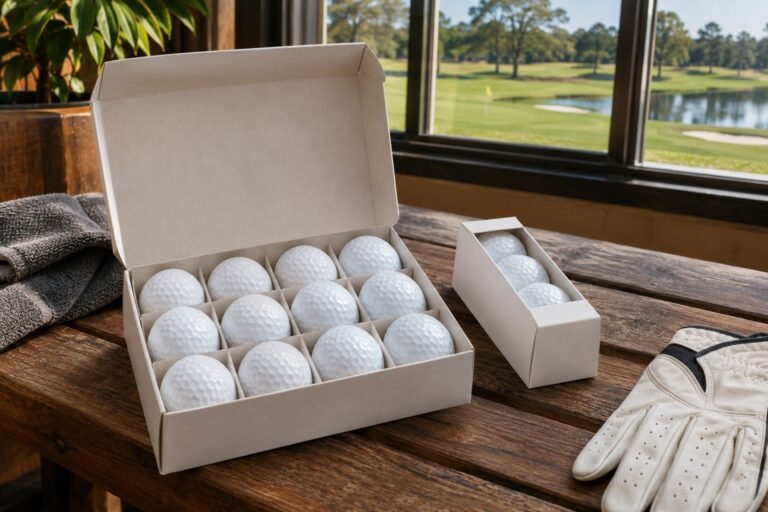
A small, recognisable mark is the starting point. AI-generated illustration.
A useful ball mark survives long enough for you to recognise it and is easy to distinguish from someone else’s. It does not need to be elaborate. A neat symbol that you cannot remember, or a colour you struggle to see on your ball, has missed the practical job.
This guide uses current rules and manufacturer information to explain what can be checked. The comparison sheet below is a practical method you can use yourself; the filled example is fictional. No pen in this article has been subjected to a claimed hands-on durability test.
This guide contains affiliate links. If you buy through them, Taylor’s Trailblazing Golf may receive a commission at no extra cost to you.
Use the official felt-tip marking guidance and keep the ball’s original markings discernible.
Treat “permanent” as a product description, then check readability on your exact ball.
Choose a personal pattern you can describe, including a way to distinguish a provisional ball.
Keep a working pen; buy a stencil only if its shapes help you make the mark you need.
Golf ball marking pens: choose the mark first
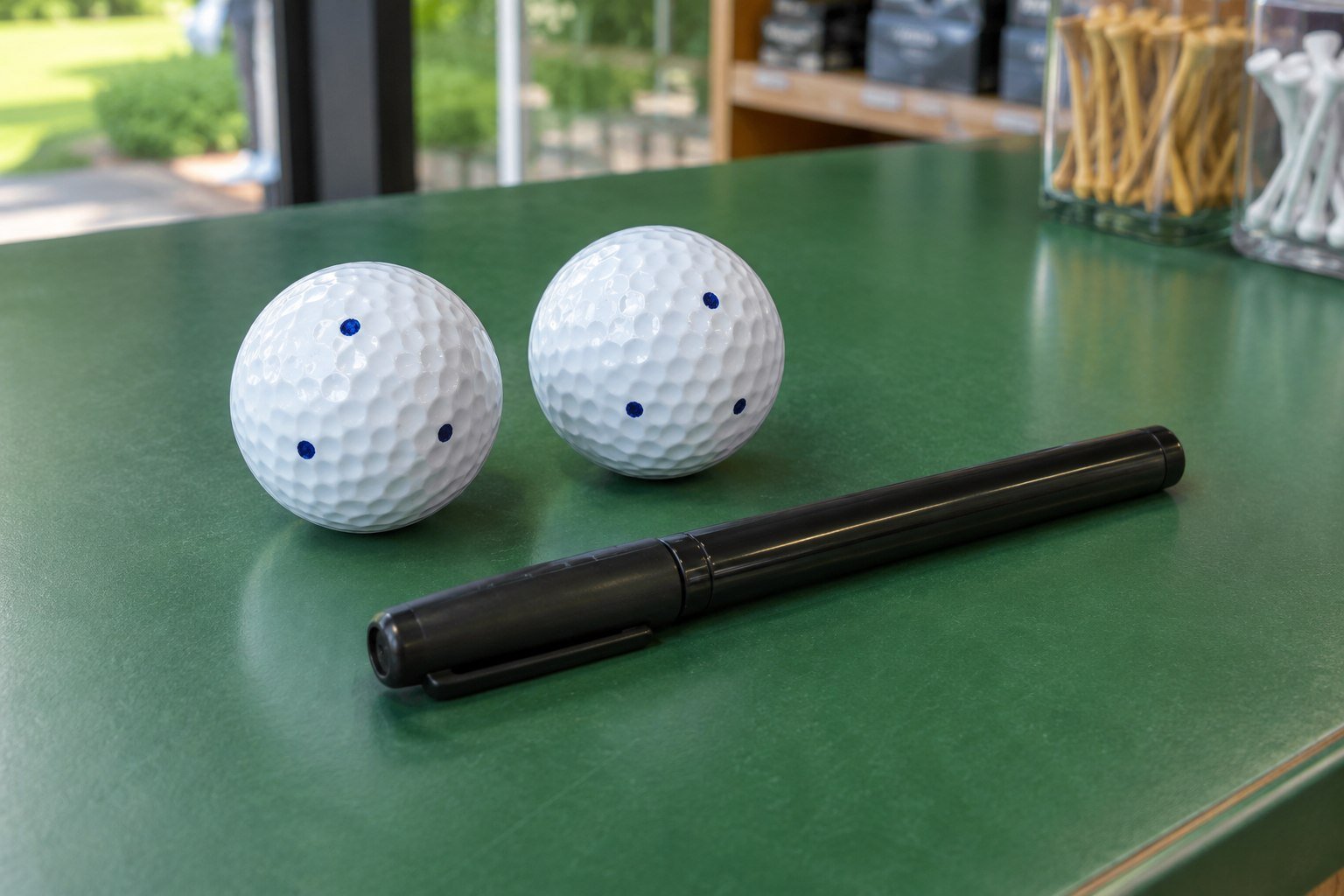
Decide what you want to recognise: two dots beside the number, a small initial or another simple pattern. Then select the nib and colour that make that mark clear. For identification, a repeatable symbol is often a more useful starting point than covering the ball in ink.
On a small screen, scroll sideways inside this table.
| Your priority | What to check | Reason to reject it |
|---|---|---|
| Recognising your ball | Can you describe the mark without looking at a photograph? | The pattern is easily confused with your playing partner’s. |
| Seeing the ink | View a small sample on your usual ball in daylight and shade. | The colour disappears against that ball’s colour or finish. |
| Making a tidy mark | Try the intended dot, initial or short stroke with the actual nib. | The mark spreads into a shape you cannot recognise. |
| Carrying the pen | Check that the cap closes securely and the pen has a sensible place in your bag. | You regularly lose the cap or cannot find the pen before play. |
| Keeping it useful | Record readability after ordinary handling and cleaning. | The mark needs attention more often than you are willing to give it. |
Keep a ball’s personal ink mark separate in your thinking from a ball-marker, the small object used to mark its position. A line can also help you aim, but a common factory line is not a personal signature. This article’s purchase decision is about identification and ink, rather than choosing an aiming pattern.
What the identification rules actually require
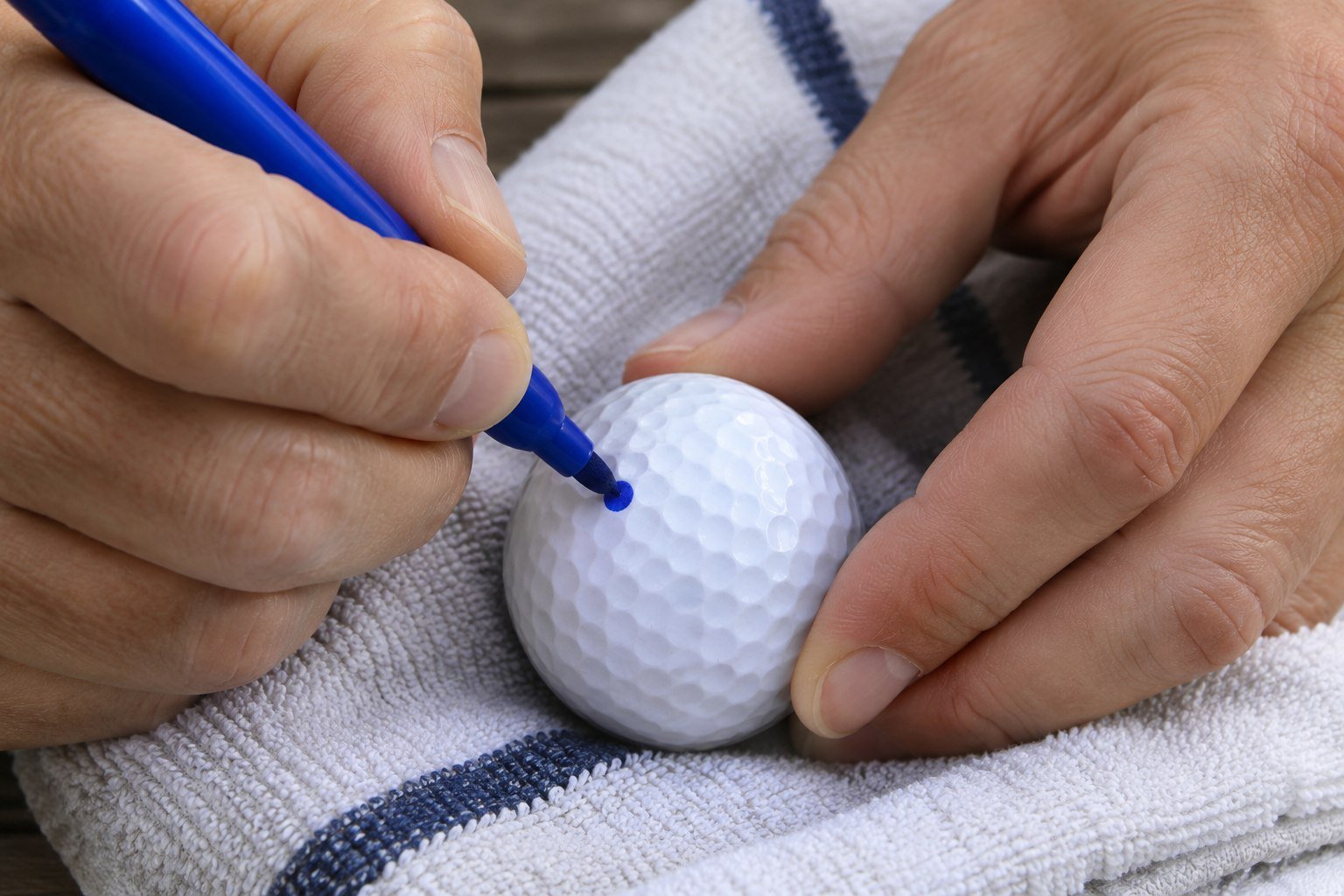
Rule 6.3a says a player should put an identifying mark on the ball. It does not make a personal ink mark the only possible way to establish ownership; Rule 7 also recognises other evidence. [2] [3]
The equipment guidance does not set a numerical limit on felt-tip markings, but the original markings must remain discernible. Leave the manufacturer’s identifying information readable rather than drawing over it. The felt-tip exception should not be treated as permission to apply an unrelated surface treatment. [1]
A practical system is to choose a main pattern and one easy variation: perhaps two dots on the original ball and three on a provisional. Check what the other players are using before the round. Your aim is to reduce ambiguity, not to make a complicated code that nobody can remember.
“Permanent” does not mean a guaranteed number of rounds
Sharpie explains that permanence depends on the ink, surface and exposure; it does not offer one universal lifespan for a mark. That is a useful limit on the evidence when shopping for a golf-ball pen. A general statement about water resistance is not a measurement of repeated ball strikes, washing or rubbing against other equipment. [4]
For example, Sharpie describes its Mini Fine Point permanent marker as suitable for plastic and other surfaces, with quick-drying, water-resistant and fade-resistant ink. Those are manufacturer descriptions, not a golf-ball-specific endurance result. They do not tell you how many holes the ink will remain legible on your particular cover. [5]
Record the actual pen model and colour, not simply “permanent marker”. If you later change the pen, the ball model or its finish, repeat your small check. A result from one combination does not establish how every pen or ball in that brand’s range will behave.
Make the ball finish part of the record too. Our guide to matte vs gloss golf balls considers visibility, cleaning and surface wear; it is useful background when deciding what to observe, rather than evidence that one finish always holds ink better.
Apply a mark you can reproduce
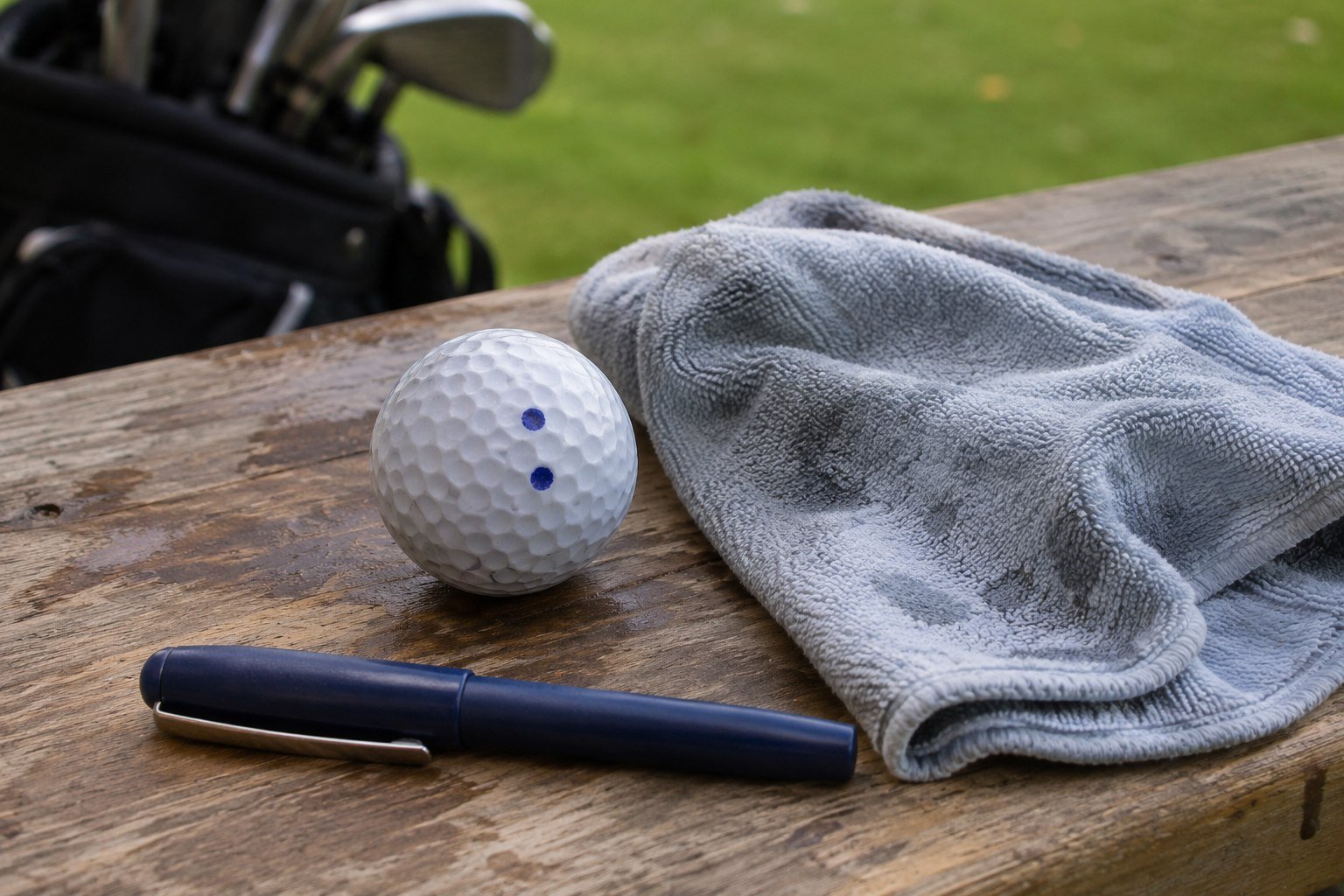
Prepare the balls before you need them. Work with a clean, dry ball and follow the ball maker’s cleaning advice and the pen’s instructions. Keep the design modest enough that you can reproduce it consistently when another ball comes out of the sleeve.
- Find a clear area beside, rather than across, the original identification printing.
- Apply the chosen dot or symbol with light, controlled strokes. Use the same number of passes for each comparison sample.
- Let the ink dry as instructed. Record the interval you actually allowed; there is no universal drying time established by the sources here.
- Check the result without smearing it with your fingers, then close the cap securely.
- Write down the pattern if you are trialling several alternatives. Keep the ball you plan to use as a provisional distinguishable.
Do not rescue a poor mark by building a thick coating over it. For this decision, the useful question is whether a normal, small felt-tip mark is clear enough. If a pen needs repeated heavy application to produce your intended symbol, try another nib or a simpler pattern.
A stencil is optional for a dot or short initial. It becomes more useful when you want a repeatable geometric shape. Try making the mark freehand first: you may already have all the equipment you need.
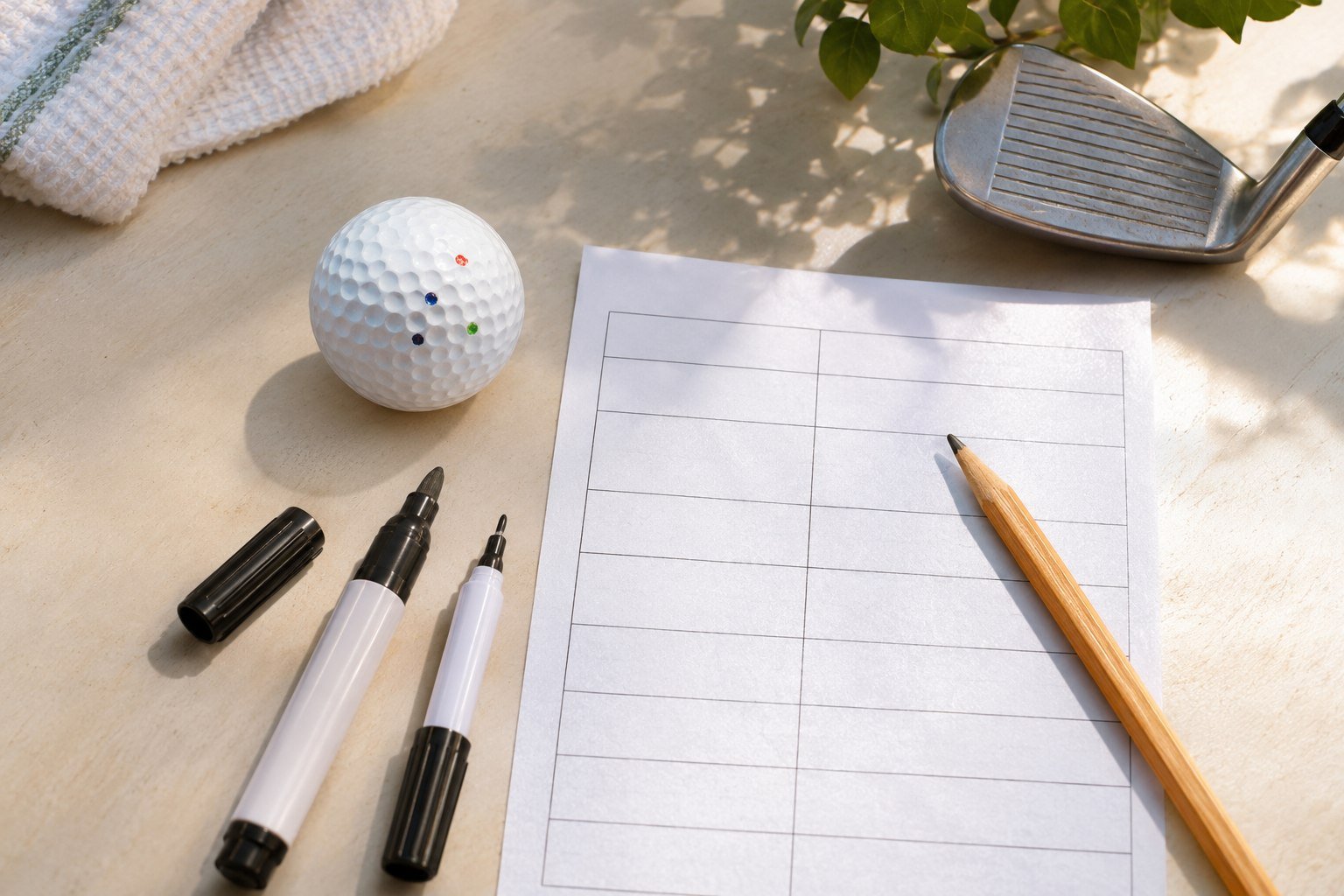
A small ink check you can repeat
This is an editorial comparison method, not a laboratory standard. It screens for an inconvenient pen-and-ball combination; it does not measure ball performance or predict an exact service life.
Use two clean balls of the same model, colour and finish for each pen if available. Give both pens the same pattern and drying interval, provided that interval meets their instructions. A second sample helps reveal whether an untidy first attempt was simply application error.
On a small screen, scroll sideways inside this table.
| Record | What to write down | Decision it supports |
|---|---|---|
| Starting conditions | Pen model, colour, nib; ball model and finish; mark design; drying interval. | Can you repeat this combination? |
| After drying | Clear, blurred or incomplete; photograph from a consistent distance. | Is the mark useful before any wear occurs? |
| After an ordinary damp-cloth wipe | Still identifiable? Any visible transfer or smearing? | Does normal handling make it inconvenient? |
| After a practice session | Mark still distinguishable? Note the session and cleaning, rather than guessing a lifespan. | Is the upkeep acceptable to you? |
| Next action | Keep, repeat with corrected application, or try a different pen. | Have you learned enough to make a purchase? |
Use ordinary, gentle cleaning consistent with the ball maker’s advice. Do not introduce abrasive scrubbing or a solvent-removal experiment: that changes the question from everyday readability to a different treatment of the cover. Judge the ink and the condition of the ball separately.
During practice, use the marked balls in a way the facility permits and note the activity. Putting practice and repeated full shots are different exposures, so do not combine them into one unexplained “rounds survived” figure. You do not need to manufacture extreme wear to discover that a mark smears when you wipe it.
Photographs help you compare a faint mark with its starting point, but the useful result is whether you can still identify the pattern. A mark need not look new to remain useful.
A filled example: when repeating is better than replacing
The following entries are fictional and illustrate how to use the sheet. They are not results for Sharpie, Longridge or any other product.
On a small screen, scroll sideways inside this table.
| Observation | Pen A | Pen B |
|---|---|---|
| After the recorded drying interval | Two dots clearly separated on both samples. | Two dots clearly separated on both samples. |
| After the damp-cloth wipe | No visible change to the pattern. | One sample smeared; the second stayed clear. |
| After the recorded practice session | One dot lighter, but the pattern recognisable. | The earlier smudge remained; the other ball was identifiable. |
| Useful next step | Continue using it and check before the next round. | Repeat application on matched balls before blaming the ink. |
Pen A would be the more convenient provisional choice in this example. Pen B has not yet shown consistent failure: the split result leaves application as a possible explanation. Repeating that one uncertain step is more informative than buying a large pack of another pen immediately.
If both pens remain readable through your normal use, choose on practical details such as nib control and cap security. If neither works, simplify the mark or try another suitable pen before changing a ball model that otherwise suits your golf.
Finding a ball: when you may lift or rotate it
Your mark helps, but it is not conclusive if an identical ball with an identical mark is found in the same area. Rule 7.2 also allows identification through other evidence, including seeing where your ball came to rest. [3]
If a ball might be yours and identification is reasonably necessary, Rule 7.3 permits lifting, including rotation. Mark its spot first, clean only as much as needed to identify it, and replace it on its original spot if it is yours or another player’s. The putting green has a separate cleaning permission. [3]
Do not turn a ball in the rough just to present a prettier view of your mark. Try to recognise it as it lies first. When two players use the same brand, number and ink pattern, the practical prevention is to change your marking system before play rather than rely on certainty the mark cannot provide.

One useful buying option—and when you need nothing new
Clubhouse Golf lists a Longridge Ball Alignment Tool & Sharpie Marker set combining a ball stencil with a Mini Sharpie permanent marker. The listed shapes include lines and small symbols; the retailer says the supplied pen colour may vary. That last detail matters if you are buying for a specific identification colour. [6]
View the Longridge stencil and Mini Sharpie set at Clubhouse Golf if you want both pieces. Check the current contents and colour information before ordering.
For a couple of dots, a functioning suitable pen is enough. The set becomes a sensible option when you need the stencil’s repeatable shape, not simply because it is sold as a golf accessory. Keep a spare pen only if losing or drying out the one you carry is a recurring problem.
Your final check is simple: can you describe the mark, see it on your own ball and keep it readable with acceptable upkeep? If the answer is yes, replacing the pen offers little practical benefit.
Other useful questions
Can I change balls during a hole because the mark has faded?
A faded mark does not by itself give permission to substitute another ball. Rule 6.3 generally requires the same ball throughout the hole unless substitution is allowed. Refresh your system before play or between holes, rather than treating fading as a reason to lift or exchange a ball in play. [2]
Explore more Golf Balls guides
Sources and checks
Sources were checked on 23 November 2026. Product ranges and buying terms can change. The practical worksheets are editorial suggestions for your own comparison.
- Equipment Rules, Part 3: The Golf Ball — Playing RulesThe R&A · Checked 23 November 2026
- Rule 6: Playing a HoleThe R&A · Checked 23 November 2026
- Rule 7: Ball Search — Finding and Identifying BallThe R&A · Checked 23 November 2026
- Frequently Asked Questions: permanent markersSharpie UK · Checked 23 November 2026
- Sharpie Mini Permanent Marker, Fine PointSharpie · Checked 23 November 2026
- Longridge Ball Alignment Tool & Sharpie MarkerClubhouse Golf · Checked 23 November 2026
Illustrations in this article were created for Taylor’s Trailblazing Golf. Third-party photographs, where used, are credited beside the image or in the source list.