Golf GPS Watches for Small Wrists: Case and Strap Fit
Start with the supplied band’s wrist range, then check how the complete watch sits and works. A case diameter cannot answer all three questions.
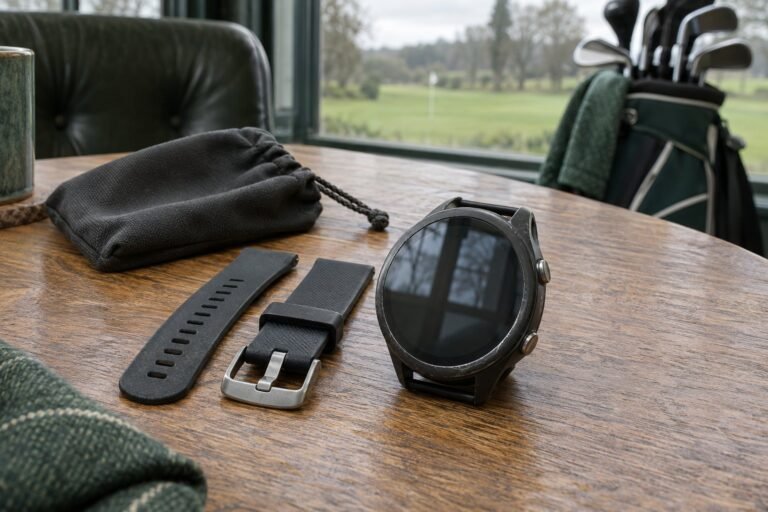
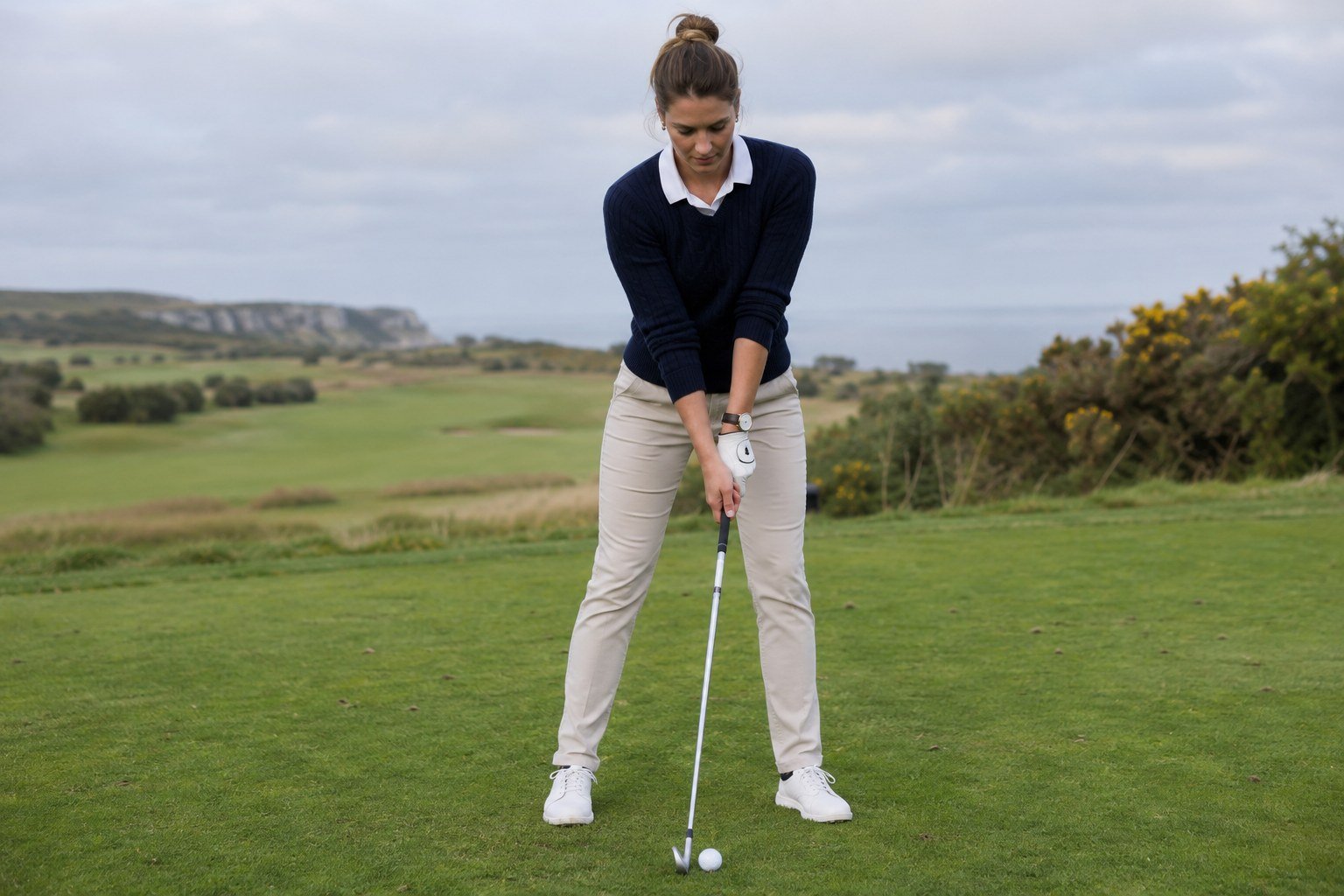
AI illustration. Start with the exact case and strap measurements, then check how the watch sits during normal golf movements.
This guide contains affiliate links. If you buy through them, Taylor’s Trailblazing Golf may receive a commission at no extra cost to you.
Golf GPS watches for small wrists need more than a small case number. Compare the exact strap range and case dimensions, then check how the watch sits with your glove, cuff and normal address position.
Research-led guidance for UK golfers. Read how we assess golf equipment for the distinction between documented features and hands-on testing.
Different colour configurations can have different wrist ranges.
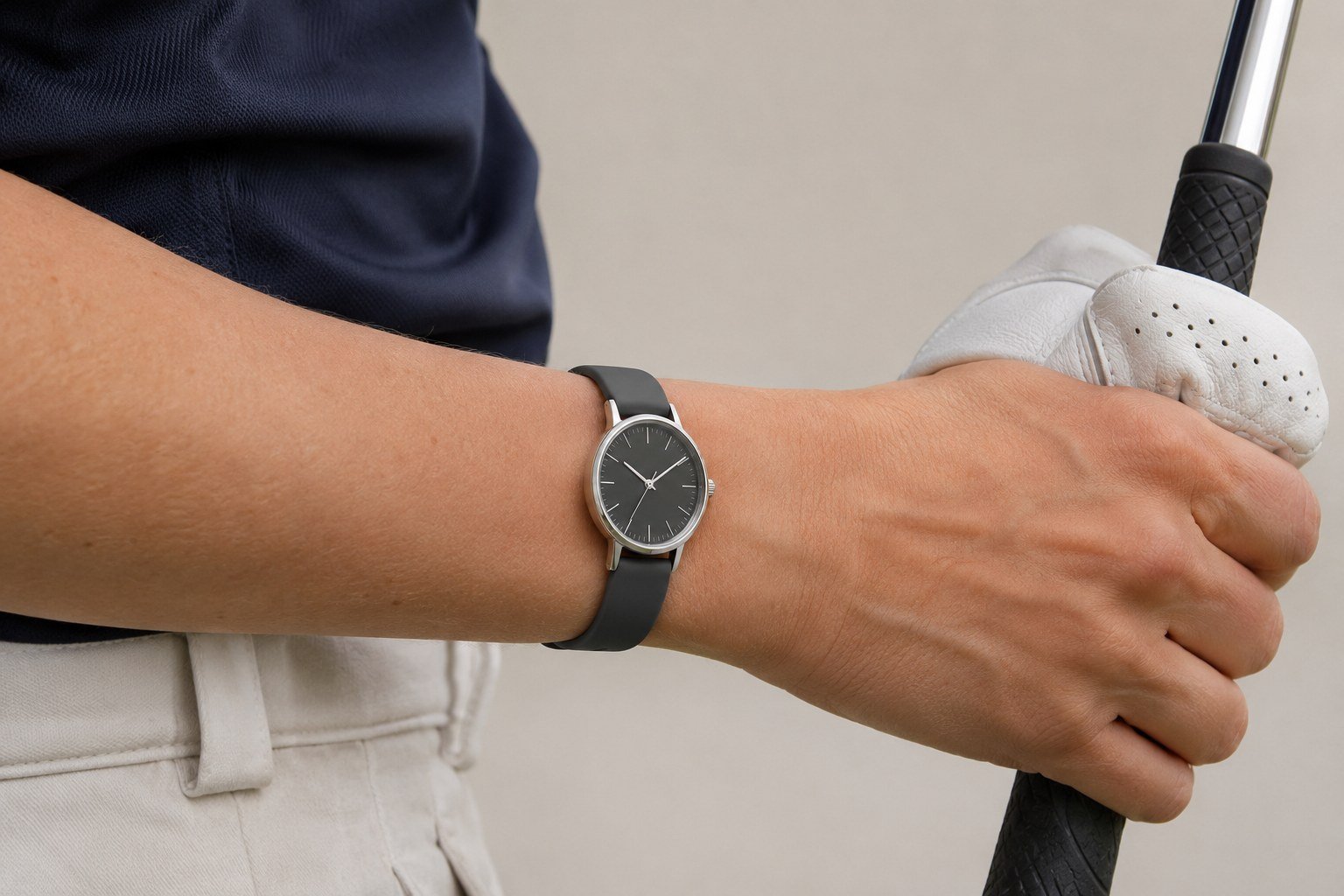
Watch how the case and its strap attachments sit on your wrist.
Comfort, screen reading and ordinary wrist movement must work together.
Golf GPS watches for small wrists: answer three fit questions
“Small wrist” is a useful description of a shopping problem, but it is not a universal watch size. Two people with the same circumference may still prefer different case shapes, fastenings or wearing positions. Avoid starting with an arbitrary maximum case diameter.
First ask whether the supplied band’s stated wrist range includes your measurement. Next ask whether the case and the points where the strap attaches sit comfortably. Finally, check whether you can read and operate the watch while wearing it that way. Passing one check does not settle the others.
A band can fasten yet leave an awkward tail or place the buckle inconveniently. A compact-looking case can sit poorly if its attachments extend across the wrist. A comfortable watch can still be unsuitable if you struggle to obtain the distances you need.
Keep the exact model, case version and supplied band together throughout the comparison. A photograph of another colour or a description covering several variants may conceal the very difference that matters to your fit.
Back to the start ↑Compare the case and the supplied strap separately
These documented Garmin configurations illustrate different fit questions. They are specification examples, not a ranking of the smallest watches available or a claim that any one will suit every small wrist.
On a small screen, swipe inside the table to read every column.
| Model and supplied-band configuration | Published physical size | Published wrist circumference | What to check in person |
|---|---|---|---|
| Approach S70, 42 mm, silicone | 42 × 42 × 12.6 mm | 115–185 mm.[1] | How the complete case and attachments sit, not just the nominal 42 mm size. |
| Approach S44, silicone | 43 × 43 × 11.4 mm | 125–202 mm.[2] | Whether an available fastening position feels secure and comfortable. |
| Approach S50, Ivory S/M ComfortFit nylon | 43 × 43 × 11.4 mm | 127–190 mm.[3] | The adjustment and fastening arrangement on the exact Ivory band. |
| Approach S50, Black M/L ComfortFit nylon | 43 × 43 × 11.4 mm | 145–217 mm.[3] | Whether this supplied band is too large despite the same case dimensions. |
The S50 entries show why a colour choice can also be a fit choice. Do not transfer the Ivory configuration’s band range to the Black one. Equally, the table’s lower limits are specifications for these supplied configurations, not a definition of what counts as a small wrist.
As a hypothetical example, a 120 mm measurement falls within the listed range for the S70 42 mm but below the others shown. That makes one configuration eligible for further checking; it does not prove comfortable case fit. Someone outside every listed range needs a documented alternative, rather than an instruction to tighten harder.
The quoted physical sizes do not establish the full span from one strap attachment to the other. If that dimension matters and is not published, ask to see the actual watch or request a measurement from the seller. Do not estimate it from a product photograph.
Check adjustment, the strap tail and replacement compatibility
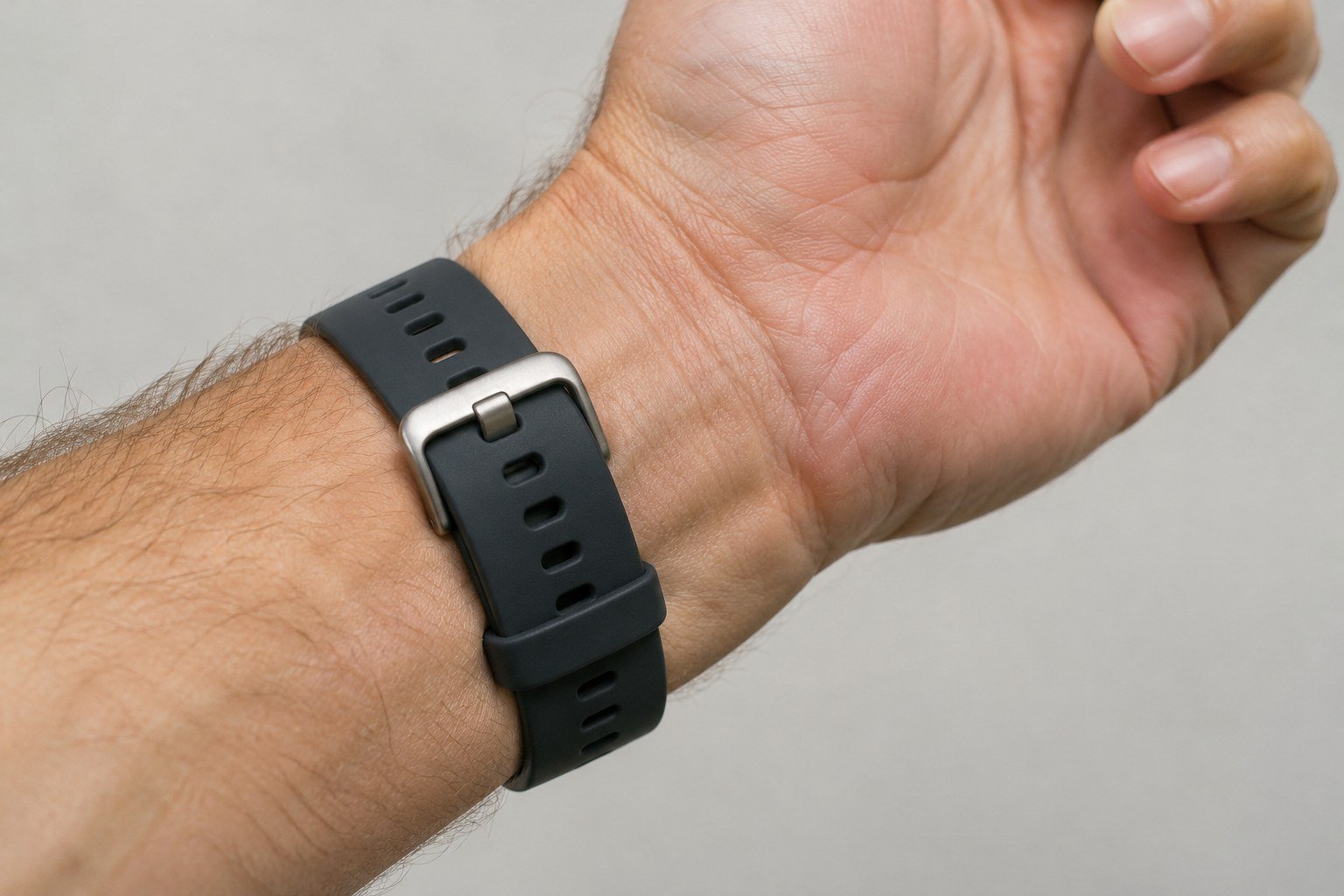
On a buckle strap, try the actual usable positions. If one feels too loose and the next uncomfortable, the nominal wrist range has not solved your problem. On an adjustable fabric band, check the fastening as designed and whether excess material remains neatly secured.
Look underneath as well as from above. Notice where the buckle or closure sits, how the strap bends around the wrist and where the tail finishes. The relevant question is whether the complete arrangement is comfortable during ordinary movement, not simply whether you can close it.
Strap width is also separate from wrist fit and attachment compatibility. The S44 product entry labels its quick-release band as 20 mm,[2] but its current band-changing manual explicitly says the watch is not compatible with third-party bands.[4] Do not interpret the width alone as permission to buy any replacement with that measurement.
If a replacement is central to the purchase, ask the manufacturer or retailer to confirm the exact watch, replacement part and resulting wrist range together. A “short” description without dimensions or compatibility does not resolve the choice. Nor does a shorter band change the shape or span of an oversized case.
Try the intended complete configuration before committing where possible. Avoid making the purchase depend on a future modification, an unverified adaptor or an extra hole in the supplied strap.
Use a measurement and try-on worksheet
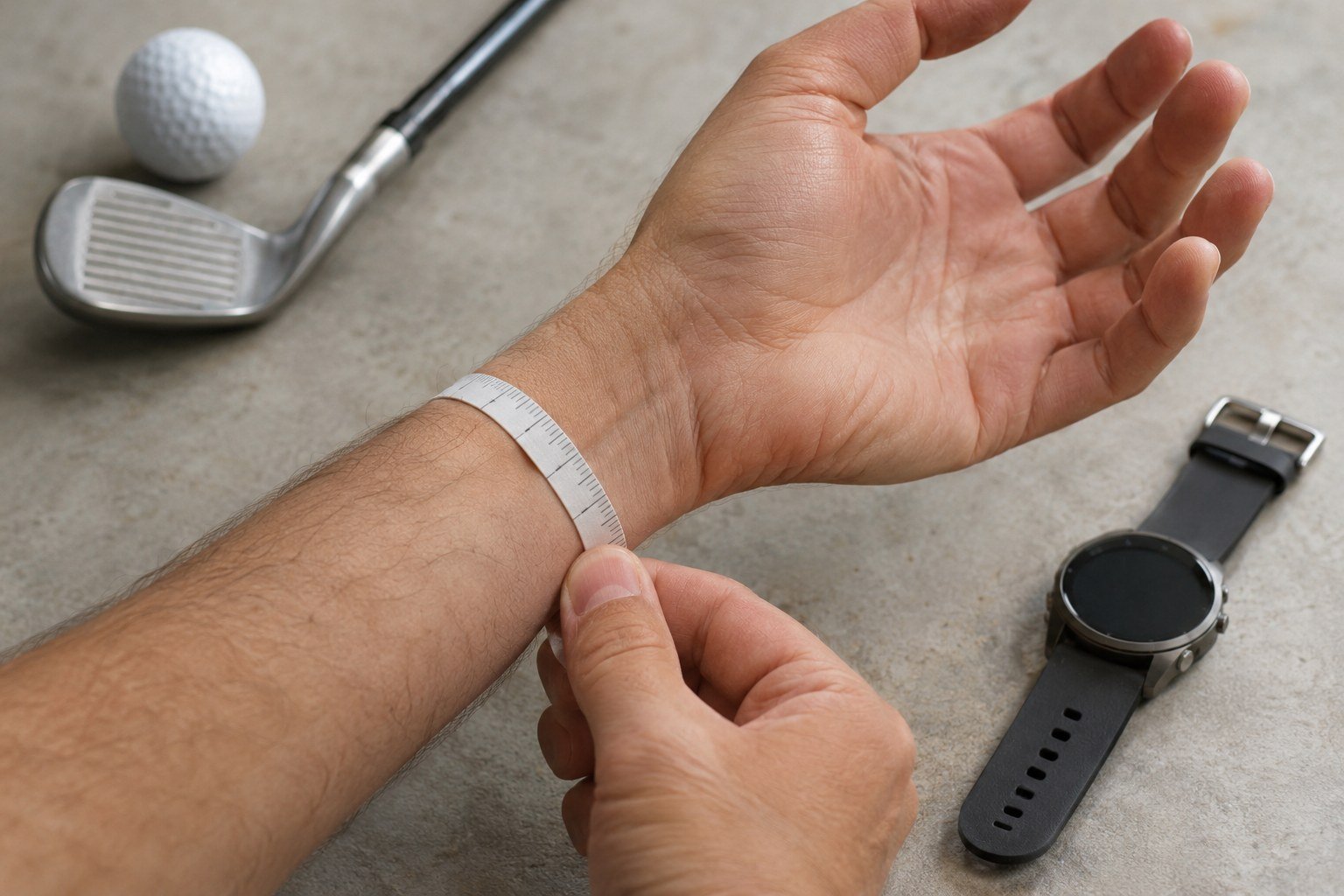
Use a flexible tape to record circumference at the position where the watch is intended to sit, with the tape lying against the skin without being pulled tight. Record millimetres to compare directly with the maker’s range. Repeat if the tape slipped or you are unsure of the reading.
Follow the particular watch’s wearing guidance. For example, the S50 manual places it above the wrist bone and calls for a snug but comfortable fit, without overtightening.[5] This is a position and comfort check, not a universal tightening rule for every device.
Bring the measurement to a shop visit, but leave space for observations that no circumference figure can supply. The following worksheet can be copied into a phone note or notebook.
- Record the model, case size, colour and supplied band. Check that the sample matches the configuration you would buy.
- Compare your wrist measurement with that configuration’s stated range. If it falls outside, resolve the band question before continuing.
- Fasten the watch normally. Record whether the adjustment gives a comfortable secure position and whether the strap tail stays contained.
- Look at the case from above and from the side. Note any attachment that projects awkwardly, a case that rocks or pressure that appears during ordinary wrist movement.
- Try the glove and sleeve you normally wear. Note contact with the cuff, access to the controls and any need to keep moving the watch.
- Write a decision: suitable for further consideration; needs a confirmed different band; or unsuitable case or interaction.
Keep the watch clean and follow the seller’s demonstration and return conditions. A short try-on can reveal an obvious problem. It cannot establish comfort throughout a full round or long-term performance.
Check readability without sacrificing comfortable wear
A watch needs to be readable where you can comfortably wear it. If you keep moving it to another position to see the numbers, repeat the case and strap checks there rather than assuming the original fit assessment still applies.
In a permitted demonstration, bring up the actual basic golf-distance screen. Check the information you would use most often with your normal eyewear. A promotional image at enlarged scale does not tell you what the screen will be like on your wrist.
Try the routine controls with your other hand. Can you wake the display, identify the selected hole and return to the main distance view without repeatedly correcting the strap? If a font or display option matters, ask to see it on that exact model rather than assuming it exists throughout the range.
Then check the ordinary relationship with your golf glove and sleeve. In a clear space, settle into a comfortable address posture without swinging a club. Move the wrist gently through ordinary positions. A case edge or button that becomes troublesome here deserves attention before purchase.
Do not keep tightening the band to compensate for a case that does not sit well. Try a different case or fastening arrangement, or consider whether a device carried elsewhere would suit you better. The aim is a watch that remains useful in a comfortable position, rather than the smallest-looking item in a photograph.
Choose the next step from the unresolved problem
On a small screen, swipe inside the table to read every column.
| What you find | What it means for the purchase | Next step |
|---|---|---|
| Your circumference is within the supplied range, and the try-on feels workable. | The watch remains a candidate; the range is not an all-day comfort guarantee. | Check the golf features, ownership requirements and current seller terms. |
| The case suits you, but the supplied band does not adjust comfortably. | A different band may answer a specific problem. | Require exact approved compatibility and a suitable wrist range before relying on it. |
| The band closes, but the case or attachments project awkwardly. | Fastening alone has not achieved a workable fit. | Compare another case shape or size. |
| Comfort is acceptable, but reading or operating the watch is difficult. | The physical fit and the interaction requirements do not yet match. | Demonstrate relevant display settings or compare another device. |
| No confirmed configuration resolves the problem. | The purchase depends on an assumption. | Pause the purchase; consider a different carrying method. |
Keep a suitable watch you already own if it meets these checks and the information you need. A different marketed size category is not an upgrade by itself. If no watch feels workable, carrying a separate distance device is a legitimate choice rather than a fitting failure.
Back to the start ↑Use the exact configuration when you compare buying options
The UK examples checked for the configurations above are Approach S70 42 mm White at Clubhouse Golf (010-02746-10),[6] Approach S44 Black/Silver (010-03009-00),[7] and Approach S50 Ivory/Cream Gold (010-03010-01).[8] Confirm the supplied band and current details on the product being offered.
The S70 example is useful when its lower stated wrist limit makes it worth a try-on. The S44 offers another case-and-band combination to assess. The S50 Ivory example is relevant when you want to investigate its particular fabric-band configuration. None earns a universal comfort recommendation from the numbers alone.
Before ordering, leave the comparison with three answers: your measurement is covered by the intended band; the case and fastening are workable; and the normal golf screen and controls suit you. If one remains unknown, ask a precise question or arrange a demonstration rather than treating a returns process as proof of fit.
For the broader choice between wearing and carrying a distance device, read the published GPS watch versus laser rangefinder comparison. The GPS & Rangefinders category brings together the related equipment decisions.
Back to the start ↑Questions before you decide
Can I choose a golf watch as a gift without a try-on?
You can narrow the options with the recipient’s wrist measurement and a confirmed supplied-band range, but case feel and interaction remain personal. Establish the seller’s current gift and return arrangements, and keep the exact configuration identifiable. If fit is uncertain, arranging a choice or demonstration with the recipient may be more useful than guessing from a “small” label.
Sources and editorial checks
Manufacturer documentation and published technical evidence inform this guide. The comparisons and checklists are editorial decision aids, not results of hands-on product testing.
- Garmin — Approach S70, 42 mm, comparison entryManufacturer’s US specifications: physical size and supplied-band wrist range; checked 24 November 2026.
- Garmin — Approach S44 comparison entryManufacturer’s US specifications: physical size, wrist range and band-width label; checked 24 November 2026.
- Garmin — Approach S50 comparison entryS50 column: physical size and different Ivory/Black wrist ranges; checked 24 November 2026.
- Garmin — Approach S44: changing the bandsUK-English manual v2: replacement-band compatibility restriction. Checked 24 November 2026.
- Garmin — Approach S50: wearing the watchManual v2: wear position and comfortable fastening; no sensor-performance assessment. Checked 24 November 2026.
- Clubhouse Golf — Approach S70 42 mm WhiteUK listing 010-02746-10; exact buying destination checked 24 November 2026.
- Clubhouse Golf — Approach S44 Black/SilverUK listing 010-03009-00; exact buying destination checked 24 November 2026.
- Clubhouse Golf — Approach S50 Ivory/Cream GoldUK listing 010-03010-01; exact buying destination checked 24 November 2026.
Illustrations in this article were created for Taylor’s Trailblazing Golf. Third-party photographs, where used, are credited beside the image or in the source list.