
Golf Neck Warmers vs Thermal Buffs: Layering Without Bulk
A useful neck layer fills the gap above your jacket without turning its collar into a bundle of fabric. Compare construction, coverage and the way the complete outfit moves.
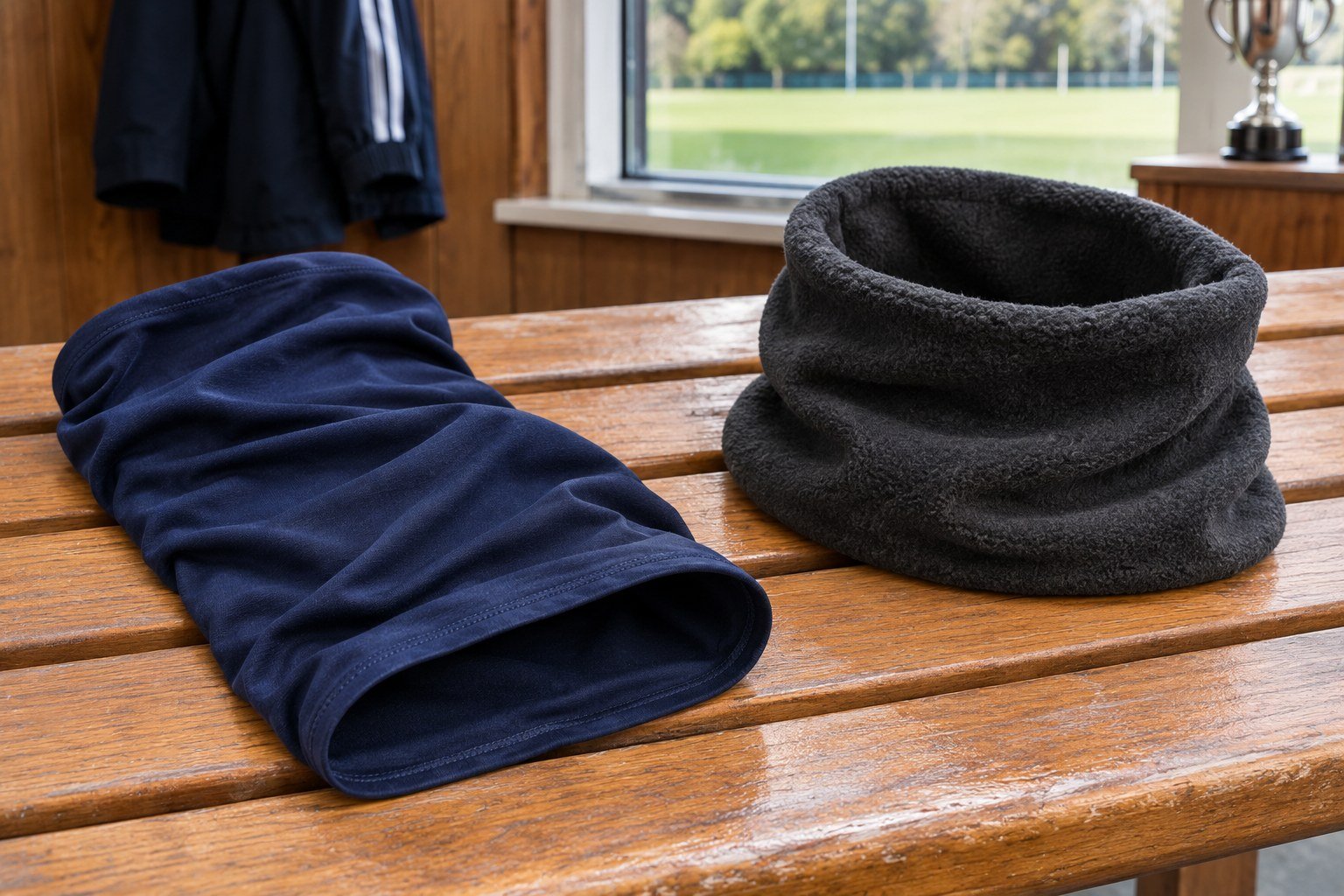
Compare a neck layer with the jacket and collar you actually wear for golf. Generic AI illustration; not a photograph of a named model.
The useful question in golf neck warmers vs thermal buffs is where the fabric will sit when your jacket is zipped and your head turns towards the target. An attractive accessory can still be the wrong shape for that collar.
Begin with the clothing you already own. If its collar closes comfortably and gives you enough coverage, an extra neck layer may add little. If there is a persistent gap, compare how different constructions fill it before choosing the thickest-looking option.
This is a research-led guide. How we assess golf equipment explains the evidence behind our recommendations.
This guide contains affiliate links. If you buy through them, Taylor’s Trailblazing Golf may earn a commission at no extra cost to you.
Try a thin construction first and check it at address. Count the folds you actually need, rather than judging the fabric laid flat.
Compare a fleece tube with a partly fleece design. Check where the thicker section finishes against your jacket.
Use the collar and packing checks before buying another. A different logo alone does not solve a fit problem.
Golf neck warmers vs thermal buffs: compare the build
Neck warmer, snood and neck tube describe closely related accessories. BUFF® is a brand whose winter range includes Merino Lightweight, ThermoNet and Polar. A listing labelled “thermal buff” still needs an exact model and construction.[1]
Look for the material, the number and position of layers, the finished length, and any adjustment. A smooth outer face does not tell you whether fleece sits inside it. Equally, a long tube can make several folds at the neck even when its fabric is thin.
Choose a job for the accessory before comparing models. You might want to cover a gap above a low collar, add a separate layer beneath a roomy shell, or carry something you can put away after the opening holes. Those are different fit and storage decisions. No one construction needs to win all three.
What the published constructions actually tell you
These examples show useful differences to inspect. The final column gives a proposed fitting check, not a measured warmth ranking or a claim that one fabric will suit every golfer.
| Example | Published construction | Check with your jacket |
|---|---|---|
| BUFF Merino Lightweight, Solid Cloud | 100% merino wool; the listed fabric weight is 125 g/m².[2] | Try it where you want a fine wool layer, then check the folds needed to keep it below your chin. |
| BUFF ThermoNet, Munke Blue | A lightweight, seamless, single-layer design in the maker’s thermal range.[3] | Check its stretched fit and return to shape after pulling it over your head; “single layer” does not specify your finished collar bulk. |
| BUFF Polar multifunctional design | The range combines a stretch upper section with fleece below.[1] | Position the fleece deliberately. Check whether the join or excess upper fabric lands under your collar edge. |
| Callaway Snood | Callaway describes a simple folding design made from polar fleece.[4] | Try the folded height you intend to wear, rather than assuming a plain tube will fit a tightly closed collar. |
| Titleist Performance Neck Warmer | A fleece interior, stretch outer material and elastic adjustment tab.[5] | Check whether the adjustment gives useful control without gathering an uncomfortable lump at the collar. |
For the plain fleece option, check the Callaway Snood on Callaway’s UK site. If adjustment is your priority, compare the Titleist Performance Neck Warmer in black at Clubhouse Golf. The latter listing identifies article TA25WPNW-0; use Titleist’s specification for its construction and check the supplied item’s care label.[7]
Choose between these features only after trying the fit you need. The manufacturer descriptions do not provide a common golf test that would justify a universal warmest, driest or smallest-packed winner.
Back to top ↑Use a collar check before adding thickness
Try the neck layer with your normal golf shirt, middle layer and jacket. Start indoors while everything is clean and dry, following the retailer’s conditions if you may return it. This is a check of your own outfit, not a substitute for a product size guide.
- Put the tube on without forcing it over your head. For example, BUFF’s product chart uses head circumference because the neckwear must pass over the head; its adult chart on the Merino Lightweight page lists 50–58 cm.[2]
- Set the jacket zip and collar as you would wear them on the course. Arrange the neck fabric once, without packing repeated rolls underneath the zip.
- Look left and right, look down, then adopt your normal address position without a club. Notice whether the collar pushes the warmer up or pulls it away from the back of your neck.
- Make a slow rehearsal turn in clear space. Check the underside of your chin and the back of the collar for bunching, and whether any adjustment tab presses against you.
- Lower or remove the warmer, then put it back. Decide whether the process is manageable with the jacket and headwear you normally use.
If you have to loosen an otherwise suitable jacket substantially to fit the accessory, try less fabric at that point. If a tube slips down repeatedly, compare its shape or adjustment before reaching for a thicker version. Bulk and security are separate questions.
For the surrounding garments, the golf clothing size-chart guide explains how to compare measurements. A jacket’s size letter alone cannot tell you how this particular collar-and-neck-layer combination will sit.

Match coverage to the gap you want to close
Check the whole neckline from the front, side and back. A warmer that covers the front can still leave a gap when you bend forward. Conversely, pulling it unnecessarily high can leave unused fabric pressing beneath the chin. Start with the coverage you actually want and adjust while stationary.
| Your use | Construction to compare | Coverage and packing check |
|---|---|---|
| Fill a small gap above a close collar | A thin tube | Check the back of the neck at address; fold the unused item as you would carry it and try your intended pocket. |
| Wear a separate layer beneath a roomy collar | Fleece, a partly fleece tube or an adjustable style | Locate every thick fold and fastening. Check that packed neckwear leaves room for the other kit that normally occupies the pocket. |
| Change coverage during the round | A model with the configurations you intend to use | Rehearse lowering and removing it. Decide where it will go when damp, rather than relying on spare space that disappears once the bag is loaded. |
Thermal insulation and weather protection are different specifications. BUFF’s comparison guide separates its Windproof range from Merino, Polar and ThermoNet, and describes the Windproof fabric as water-repellent. That is no basis for calling every thermal tube windproof or waterproof.[1]
For an exposed route, check the exact item’s wind claim and how the neckline meets your outer layer. For rain, check both the garment’s stated protection and the openings in the outfit. Do not infer a rain barrier from a soft lining, a winter name or a product photograph.

Compare packed space and the care you will actually do
A useful bag-space comparison needs no invented litre figure. Fold or roll each candidate the way you would use it, place it in the same intended pocket with your usual contents, and check that the pocket closes without force. Note whether the warmer comes out without dragging other small items with it. If you care about carried weight, weigh the complete dry item; a fabric-weight label cannot supply that answer.
Keep one short note for each option: number of folds at the neck, area of unwanted bunching, pocket used, and care method. That record gives you a more relevant comparison than an unsupported claim that all synthetic tubes pack smaller than all fleece or wool ones.
Care can change the decision. BUFF specifies hand washing and no tumble drying for the Merino Lightweight Solid Cloud example. Its general merino advice recommends gently removing water without twisting, then drying flat on a towel. Follow the exact product label where general guidance offers other methods.[2][6]
BUFF’s winter chart specifies hand washing for Merino Lightweight and a 40°C wash for Polar and ThermoNet. Check your own version’s label before using those settings.[1]
After a damp round, open out the neckwear rather than leaving it tightly folded in the bag. For merino, BUFF advises cool, dry storage and folded rather than hanging storage. Put the item away only once it is ready for storage under its care instructions.[6]

Choose one useful difference, or keep what you have
Use the result of the fit check to make the purchase specific. If your present tube crowds the collar, compare a shorter or thinner construction. If it moves out of position, compare fit or adjustment. If care is the inconvenience, check a different model’s instructions before assuming that a new fibre will solve it.
Buying a second item makes sense when it does a distinct job: a different fit with another jacket, for example, or a clean spare while the first is being cared for. Buying two similarly fitting tubes because one says “golf” and the other says “thermal” gives you no clear improvement to assess.
Keep the product that passes your coverage, movement and packing checks with the least rearranging. If the neckwear you already own passes all three, there is no need to replace it for the sake of the label.
Back to top ↑Frequently asked questions
Does 125 g/m² mean a neck warmer weighs 125 g?
No. Grams per square metre describes fabric mass for a given area, not the total mass of the finished accessory. BUFF lists 125 g/m² for its Merino Lightweight material. To compare weight in your golf bag, use a separately stated finished-item weight or weigh the complete dry garment.[2]
Can I use a neck tube sold for another outdoor activity?
Yes, provided its actual fit, coverage and care requirements suit your golf clothing. The activity label does not decide whether it works with your collar. Use the same movement check and look for any weather protection you specifically need; a golf logo is not a fit specification.
Sources and checks
Sources consulted on 24 November 2026. Manufacturer and retailer descriptions are attributed claims; illustrations do not show tested products. Recheck current product details, sizing and care instructions before use or purchase.
- BUFF — Autumn winter neckwear comparison guide
- BUFF — Merino Lightweight Neckwear, Solid Cloud (113010.003)
- BUFF — ThermoNet Neckwear, Munke Blue (136850.707)
- Callaway UK — Callaway Snood
- Titleist UK — Performance Neck Warmer
- BUFF — How to wash and care for merino wool
- Clubhouse Golf — Titleist Performance Golf Neck Warmer, black
Illustrations in this article were created for Taylor’s Trailblazing Golf. Third-party photographs, where used, are credited beside the image or in the source list.