Golf Winter Socks: Thickness, Shoe Fit and Warmth
A thicker sock is useful only if the shoe still fits. Start with the shoes you own, compare the construction at the foot, and keep a separate record for each combination.
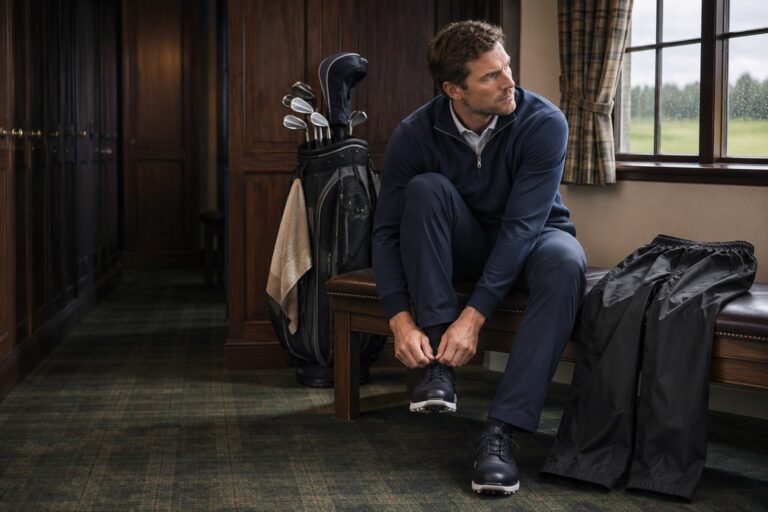
Choose a sock-and-shoe combination, then compare the extra thickness you actually need. Generic AI illustration; not a photograph of a named model.
The buying decision starts inside your golf shoes. A pair that looks reassuringly thick on a shop shelf may be too bulky in the footwear you already use; a lighter pair may leave the fit much closer to normal. FootJoy recommends taking your normal golf socks when fitting shoes, which makes the reverse check just as useful: take your actual shoes when choosing winter socks.[1]
This is a research-led guide to choosing and checking that combination. The worksheet and try-on sequence below are proposed reader checks, not results from a wear trial or a promise of warmth at a particular temperature.
This is a research-led guide. How we assess golf equipment explains the evidence behind our recommendations.
This guide contains affiliate links. If you buy through them, Taylor’s Trailblazing Golf may earn a commission at no extra cost to you.
Compare a less bulky construction first. A thicker pair is unsuitable if it introduces pressure or makes you loosen the shoes until they become insecure.
Treat them as a separate pairing. Check the sock and shoe together instead of assuming that the same sock will suit every pair.
Keep using it. Another pair is useful when it adds a needed dry spare or replaces a worn pair, not simply because its label says winter.
Golf winter socks: start with the shoe you own
Write down what you want to change: cold ankles, an uncomfortable toe seam, a damp pair after a round, or simply too few clean pairs between outings. Those are different buying problems. Extra padding under the foot may not address the one you have.
Make one familiar sock-and-shoe combination your starting point. Use clean, dry shoes with the insoles or orthotics you normally wear. Keep that setup unchanged while comparing socks, so you know which change produced a different feel. Do not remove an insole simply to create space for a bulky sock.
Bridgedale’s footwear advice explains that a thicker, more cushioned sock occupies more room inside a shoe. That physical trade-off is relevant here even though its guide is written for hiking footwear.[2]
If the shoe already feels wrong with your usual socks, pause the sock experiment. Use the golf shoe sizing guide to separate length, width and heel-fit questions. Buying extra sock thickness to fill an unsuitable shoe can obscure the original problem.
Back to top ↑Compare thickness and construction, then read the fibre label
Look at the foot of the sock as well as the cuff. Ask where the cushioning sits: beneath the sole, around the toes and heel, or throughout the foot. Then compare how much fabric will sit over the instep and inside the toe box. A taller cuff and a thicker foot are separate choices.
| Feature | Useful question | Decision it helps with |
|---|---|---|
| Sole and toe cushioning | Where is the extra material, and does it fit inside this shoe? | Whether a warmer-looking option changes toe or instep comfort. |
| Cuff height | Does it cover the gap you actually notice above the shoe? | Whether you need more coverage rather than more padding underfoot. |
| Heel shape and toe seam | Do they sit in the right place before the shoe goes on? | Whether the sock size and shape suit your foot. |
| Fibre blend and knit | What does the exact model say about its construction? | Whether you are comparing similar products rather than relying on a single material word. |
Two manufacturer examples show why the last question matters. Glenmuir’s g.Osiris winter thermal sock has a brushed terry-loop inner and a blend of 93% acrylic, 6% polyester and 1% elastane. Bridgedale’s Hike Ultra Light Merino Performance Crew contains 43% merino wool, yet is expressly designed for warm-weather use with light cushioning and ventilation.[4][5]
These are construction examples, not a head-to-head warmth test or a recommendation to buy a hiking sock for winter golf. “Merino”, “thermal” and “crew” answer different questions. Read them alongside the amount and location of material, then check the actual fit.
Run a sock-and-shoe try-on without changing everything
Check the seller’s current try-on and return conditions before opening packaging or wearing a new pair. Use a clean, level indoor area for any permitted fitting check.
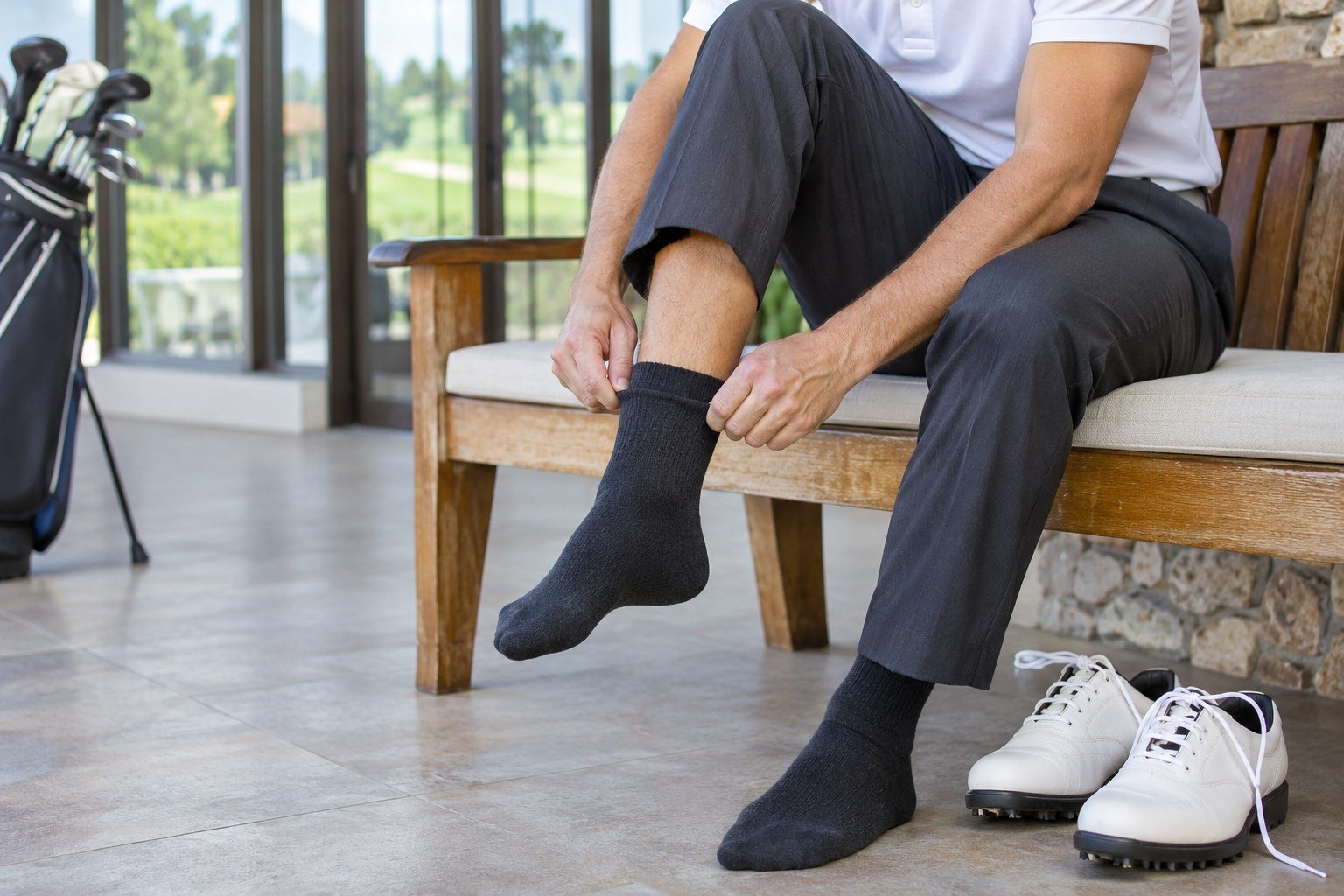
- Settle the sock first. Position the heel correctly and smooth the fabric without stretching the cuff hard up your leg. FootJoy’s sock guidance says the heel pocket should sit on the heel, the toe seam should lie flat and the fabric should not sag or bunch.[3]
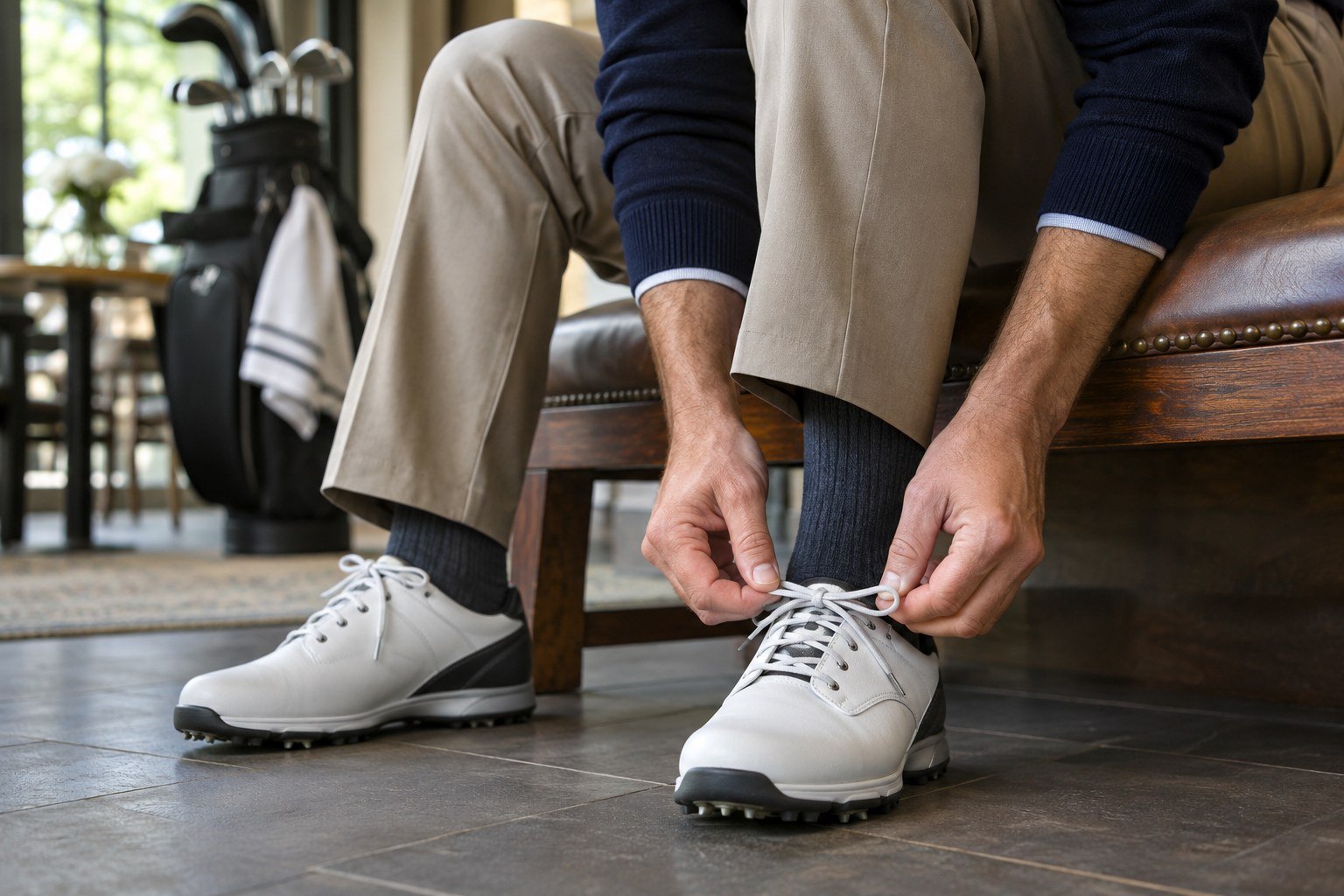
- Put on both shoes. Fasten them as you normally would. Compare the candidate with your familiar pairing rather than judging one shoe with a thick sock and the other with a different pair.
- Check the changed areas. Notice the toes, forefoot and top of the foot. Reject a pairing that creates uncomfortable pressure. Do not assume the sock will become suitable once compressed.
- Walk a few ordinary paces. Check whether the heel remains secure and the sock stays smooth. FootJoy’s shoe-fitting advice includes checking for excess movement while walking.[1]
- Take a comfortable golf stance. Notice whether the toes or instep feel different when you bend slightly. A short indoor check can reveal a poor pairing; it cannot establish all-round warmth or comfort.
Record both feet. If one shoe feels crowded and the other seems acceptable, the combination has not passed simply because the average impression is good. Keep any remedy specific: a different sock construction, another sock size where appropriate, or a separate shoe-fit question.
Use a pairing worksheet instead of a winter-sock ranking
Label your shoes A and B, then number your sock options. You need only the combinations you might genuinely wear. The examples below are hypothetical outcomes, included to show how a decision record works.
| Combination | Observation to record | Example decision |
|---|---|---|
| Shoe A + familiar sock 1 | Normal closure; comfortable toes; familiar heel hold. | Keep this as the reference combination. |
| Shoe A + thicker sock 2 | New pressure over the instep; loosening the shoe loses heel security. | Reject this pairing. Thickness has not solved the fit problem. |
| Shoe A + less bulky crew sock 3 | Similar foot fit to the reference; cuff covers the desired gap. | Candidate for use, subject to your own comfort in normal conditions. |
| Already-owned shoe B + sock 2 | Room remains at the toes; heel stays secure; no bunched fabric. | A possible separate winter pairing. Do not transfer the conclusion to shoe A. |
Add the exact sock name and size, shoe model and width, usual insole, and the date. “Black thermal pair” is too vague when several pairs look alike. A quick note such as “pressure on right instep” is more useful than a numerical comfort score without an explanation.
After you have decided to keep and use a combination, add a brief note after a normal round: conditions, whether the socks felt damp, and where you wanted more or less coverage. That is your own experience record, not a universal temperature rating for the product.
Plan a dry spare and follow the exact care label
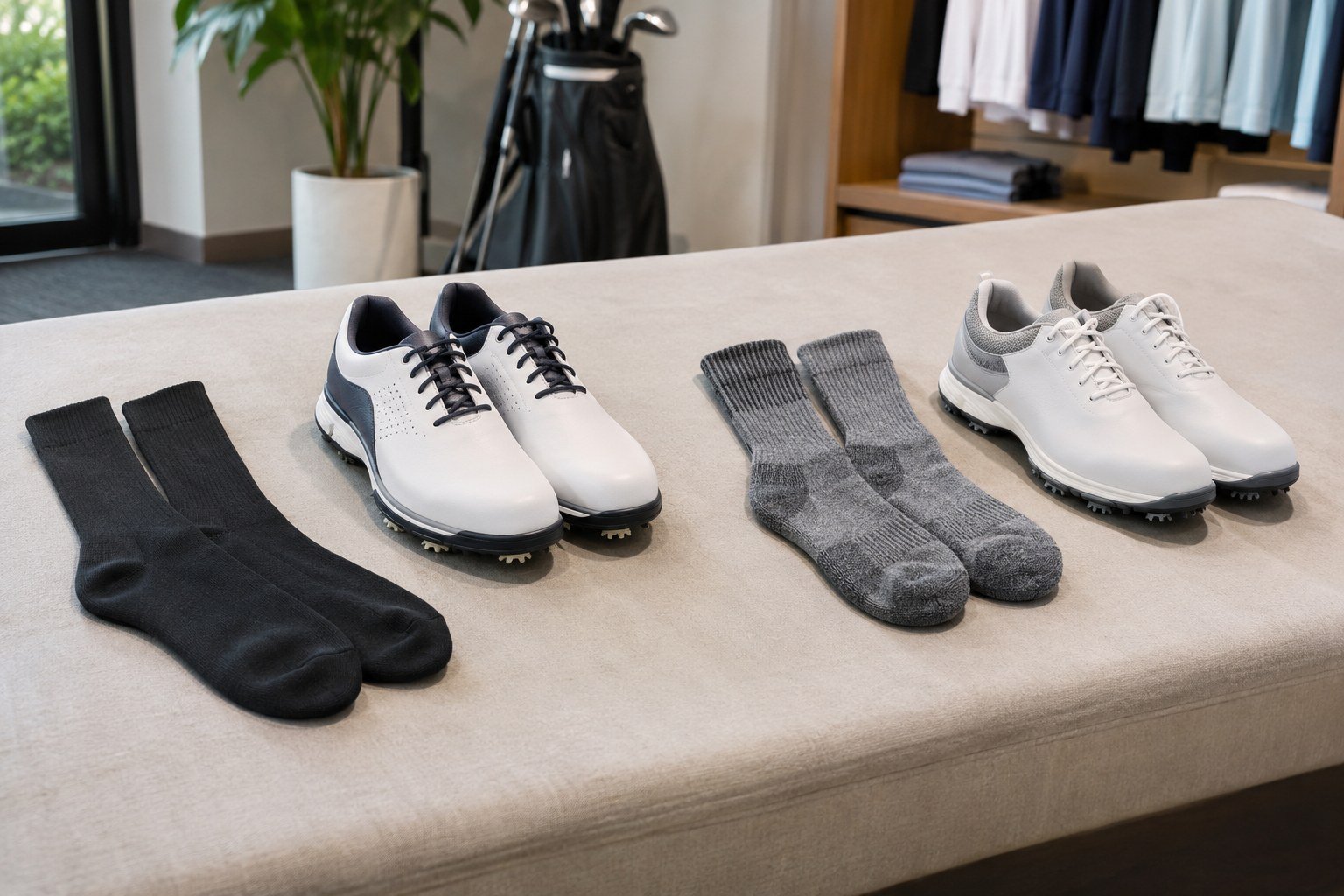
Pack a clean, dry spare separately from used socks. Use the spare when you want a fresh pair, while recognising that changing socks does not dry the shoes around them. If dampness is recurring, consider the whole shoe-and-sock setup before repeatedly buying thicker socks.
After the round, unpack the used pair and let it dry as its care instructions permit. Keep it away from the clean spare. Follow the specific washing and drying label rather than a rule for every wool or synthetic sock: for example, Glenmuir lists a 30°C machine wash for g.Osiris.[4]
Judge the sock again after normal care. A stretched cuff, displaced heel shape or persistent bunching is a reason to reassess the pairing. FootJoy identifies bunching as a possible sign of an oversized sock or worn elastic.[3]
For the number of pairs, use your laundry cycle as the starting point. Two consecutive outings without a reliable wash-and-dry interval create a different need from one round a fortnight. Count the pairs that will be clean and dry when needed, including any carried spare, before buying a multipack.

Buy for the missing job, not the thickest description
A cushioned crew sock can be worth comparing when you want foot padding and a taller cuff but have not established that you need a particularly thick thermal build. FootJoy’s regular ProDry Crew range is a cushioned option.[6]
The verified Clubhouse listing is FootJoy ProDry Crew in black, article 18097, UK 7–11. That size span is the listing’s stated range, not a guarantee of fit throughout it. Use the heel-and-seam check as well as the number.[7] Check the black FootJoy ProDry Crew at Clubhouse Golf.
If your current pair already provides the coverage and comfort you want, keep it in service. Replace it when its condition or fit no longer works, or add a spare when your routine requires one. A thick thermal model is a candidate only when it fits your shoes; a thinner option is a candidate only when it meets your needs in use. Neither construction wins every situation.
Back to top ↑Frequently asked questions
Should I wear two pairs of socks for winter golf?
Do not make doubling up the default. It creates another combination to check inside both shoes, including extra fabric at the toes and heel. Start with one suitable pair. If you prefer two, assess that exact setup for pressure, bunching and secure shoe fit rather than assuming the second layer is an improvement.
Can a walking sock work in a golf shoe?
It can be a candidate if its size, seams, cushioning and cuff suit you and the shoe. The activity name alone does not settle the fit. A walking sock described as ultralight may be less bulky than a thermal golf sock, so compare the actual construction rather than the sport printed on the packaging.
Should I size up my golf shoes just to fit thick socks?
Do not choose a larger shoe solely to accommodate a sock you have not checked. If you need another pair of shoes anyway, fit them with the socks and normal insoles you plan to use. A different width or shape may be the relevant question; a larger label is not a complete fit decision.
Sources and checks
Sources consulted on 24 November 2026. Manufacturer and retailer descriptions are attributed claims; illustrations do not show tested products. Recheck current product details, sizing and care instructions before use or purchase.
- FootJoy — Golf Shoe Fitting Guide
- Bridgedale — Find Your Hike Sock Fit
- FootJoy — Apparel and Sock Fitting Guide
- Glenmuir — g.Osiris Men’s Winter Thermal Golf Socks
- Bridgedale — Men’s Hike Ultra Light Merino Performance Crew
- FootJoy — ProDry Crew Socks
- Clubhouse Golf — FootJoy ProDry Crew Golf Socks, Black
Illustrations in this article were created for Taylor’s Trailblazing Golf. Third-party photographs, where used, are credited beside the image or in the source list.