Hybrid Shaft Length and Lie: Questions for a Fitting
Turn a length or lie concern into a clear comparison, then leave with a specification that can be reproduced.
- Complete-club length
- Lie at impact
- Written build record
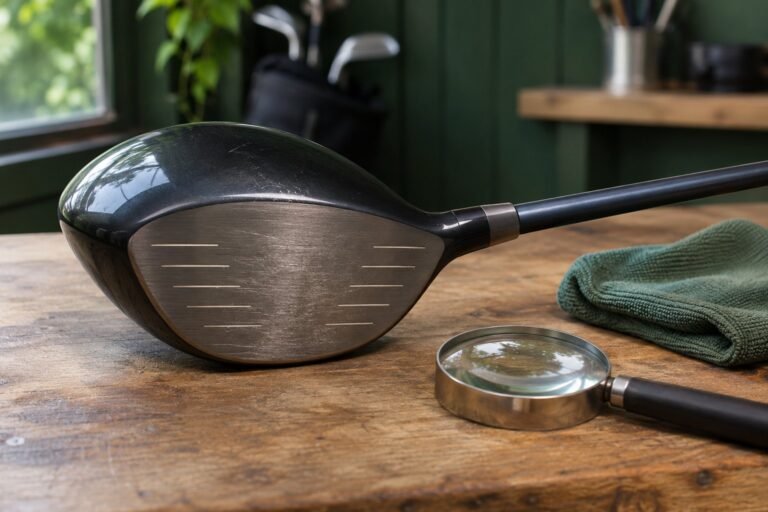
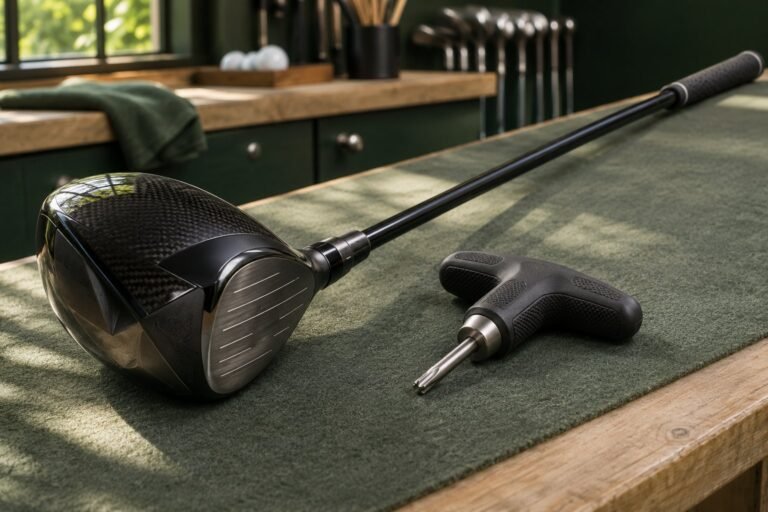
AI-generated illustrations show generic golf equipment and settings. They are not photographs of the named products or records of product testing.
Hybrid shaft length and lie are useful fitting questions when they begin with a specific difficulty: an awkward sense of reach, an inconsistent strike, a persistent directional pattern or a club that works from a tee but feels unreliable from grass. They are much less useful as numbers chosen from a height chart alone.
The fitting needs to connect three things: the club you hold, how you deliver it and the shot you need. A comfortable address position is one observation. The ball flight and contact you produce with that build are the evidence that decides whether a change deserves to stay.
What problem are we testing?
Describe a repeatable difficulty and the shot the hybrid must provide. Avoid changing specifications without a purpose.
What actually changed?
Record the complete club, including its settings and grip. A change of shaft model may also change the standard build.
Can this build be reproduced?
Keep the measured specification and the result together, then compare the order with that record.
Begin with the shot and the current club
Bring your existing hybrid, or the club whose job it will take. Explain where you use it: a long approach from fairway turf, a controlled tee shot, a recovery from playable rough, or a mixture. Say which miss is costly and whether the problem appears with other clubs too.
Then ask the fitter what they need to observe before changing length or lie. Height, wrist-to-floor measurements and posture can inform a starting discussion, but a static recommendation should be followed by hitting the club. PING fitting specialist Nick Boulton describes that progression for iron fittings: initial body measurements, dynamic assessment and ball-flight analysis. An iron colour code is not a ready-made prescription for your hybrid. [2]
Wear the shoes you normally play in and explain any setup that feels uncomfortable. You do not need to arrive with a diagnosis. “I feel stretched and often miss towards the toe” gives the fitter something to investigate; “I need an inch shorter and two degrees flatter” may prematurely close off other explanations.
Agree the scope before paying. The guide to what golf-club fitting fees should include helps you ask about testing, the specification record and follow-up. For a hybrid used mainly from grass, ask early whether a turf comparison is possible.
Ask for playing length, not an isolated shaft number
When comparing clubs, record the length of the assembled hybrid and the measurement method. A replacement shaft’s advertised length is not the same description as the finished club you will hold. “Standard” is also incomplete without the head, shaft option and manufacturer’s specification.
For example, Titleist’s GT hybrid specification page states that hybrids configured with Mitsubishi MMT SpeedMesh shafts are built half an inch longer than the listed lengths. The useful lesson is the build-dependent note, not a universal ideal length. [3]
Ask: “What is this club’s measured playing length, and what length would the ordered build have?” If two candidates differ, establish whether that is intentional. Otherwise a session presented as a shaft comparison may also be comparing different lengths.
A comfortable grip-down trial can help frame the next question. Keep both hands securely on the usable grip and note the position. You are still holding the original club, with its original components and grip shape; moving your hands does not establish how a separately built shorter hybrid will feel or perform.
If the observation is promising, compare a correctly assembled alternative before authorising a permanent change. PING notes that achievable swingweights depend on shaft, length and grip combinations. Ask the fitter to consider the whole build rather than promising that shortening alone will preserve its balance. [4]
Separate the specified lie from the lie delivered at impact
The static lie describes the club’s shaft-to-ground relationship in its reference position. Dynamic lie describes what is delivered during the swing. Trackman defines dynamic lie as the angle of the lower portion of the shaft relative to the horizon at impact, and notes that it may differ from the club’s static lie. [1]
This is why a photograph of the sole at address cannot complete a lie fitting. Ask what the fitter is measuring, how the measurement is obtained and how it relates to strike, launch direction and turf interaction. A static specification and an impact reading answer different questions.
“Upright” and “flat” also need a reference. Ask whether the description means a change from that model’s standard setting, an actual measured club specification or a delivery observation. Two brands’ “standard” settings are not a common numerical baseline.
For a left-handed player, use the correct handedness chart and describe the ball’s actual starting side and curvature. Do not copy a right-handed adjustment code or turn a vague “draw setting” into a diagnosis. Titleist, for example, publishes separate right- and left-handed SureFit fitting charts and different standard codes. [5]
If the fitting system does not provide dynamic lie, ask how the fitter assesses the question through other observations. The record should say what was measured and what was inferred, rather than assigning an exact impact angle that nobody captured.
Read contact and ball flight together
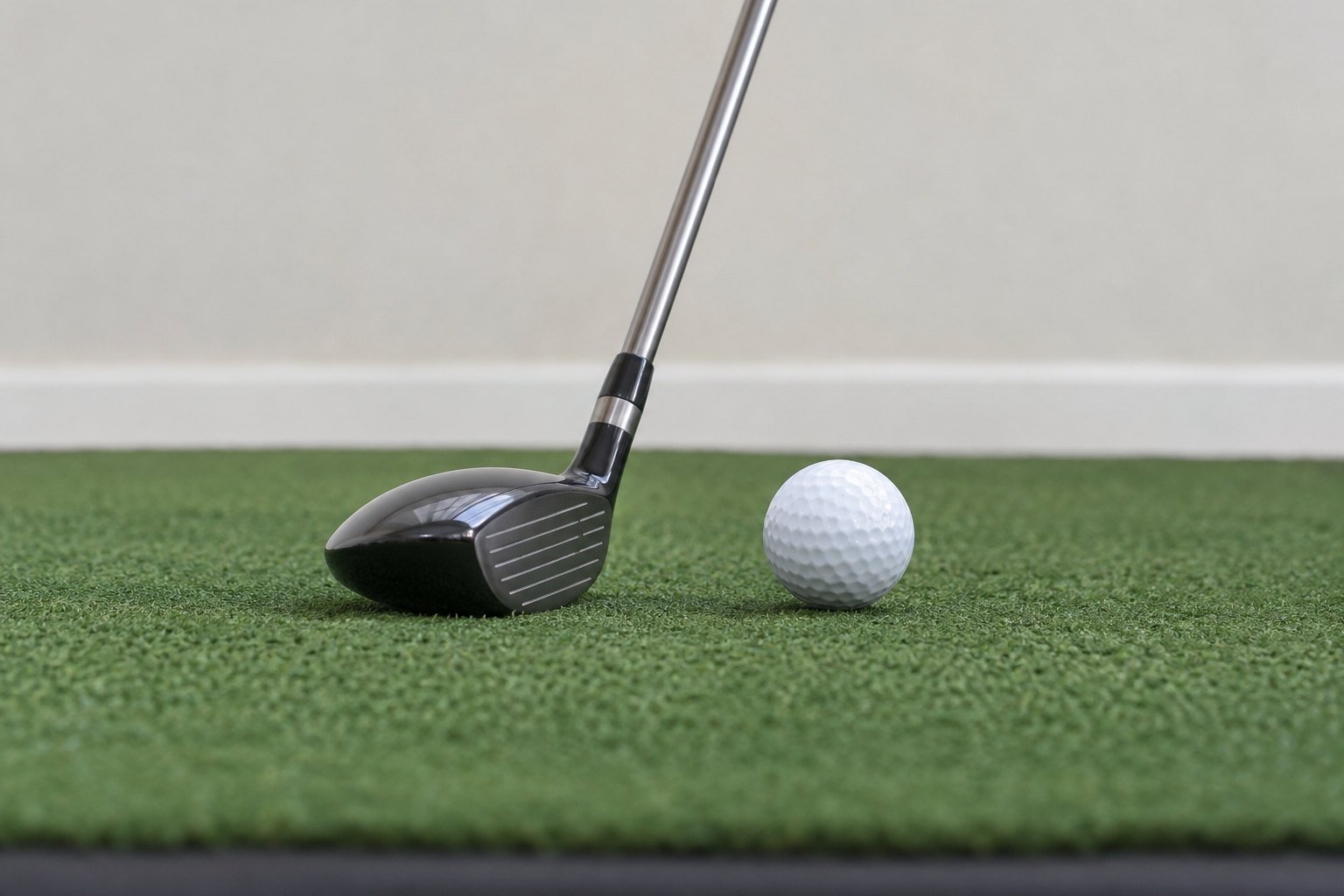
A shot finishing left is not, by itself, proof that a hybrid needs flattening. Trackman identifies face-to-path as an important influence on curvature and explicitly qualifies its usual relationship with the assumption of centred contact. That is a reason to examine delivery and impact together before blaming lie alone. [9]
Ask for starting direction, curvature and final position to be described separately. A ball that starts left and stays there is a different observation from one that starts near the target and then curves strongly left. Neither pattern should be reduced to a single hosel label.
Keep impact location beside the flight record. Use an appropriate strike-recording method agreed with the fitter, and compare several representative swings. One centred shot or one mark towards the heel does not establish a stable pattern.
The purpose is to choose a build that helps your actual task. A tidier impact pattern is encouraging, but check that it still produces useful carry and an acceptable spread. If the fitter proposes a change, ask which observation it is meant to address and what evidence would count against keeping it.
Check the exact hosel before changing loft or lie
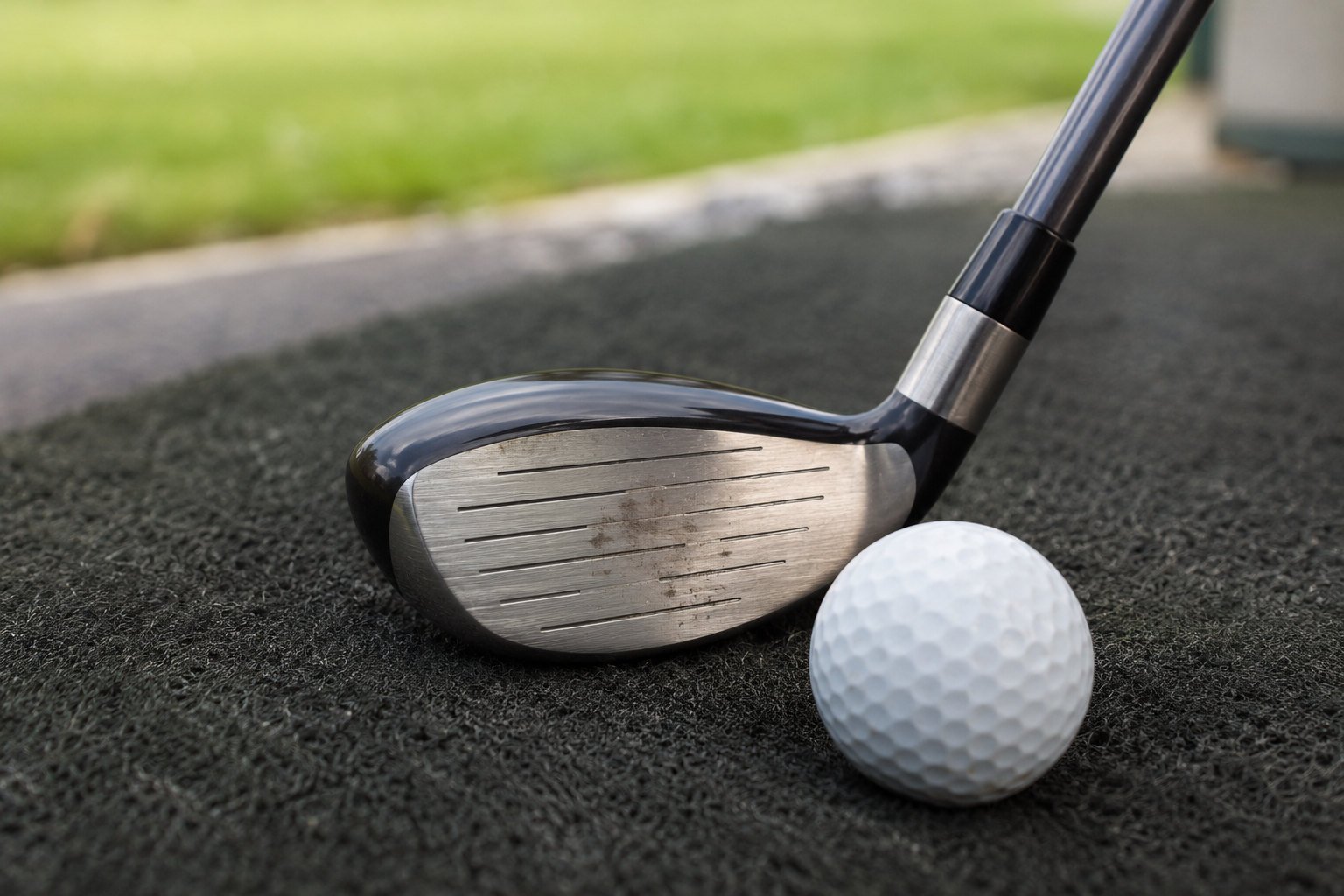
Adjustment systems offer different combinations. The following examples show why the model’s own chart belongs in the fitting; they are not interchangeable instructions.
| Manufacturer example | What the manufacturer states | Question for the fitter |
|---|---|---|
| Titleist hybrid SureFit | Sixteen loft-and-lie combinations; hybrid increments are 1°, while driver and fairway increments are 0.75°. [5] | Which combination and handedness chart are we using? |
| PING G440 hybrid | Loft adjusts ±1.5° and lie can be up to 3° flatter than standard. [4] | What loft-and-lie combination does this specific setting provide? |
| TaylorMade Qi4D Rescue | The loft sleeve provides adjustment of loft, lie and face angle. [6] | What else changes when we move to this setting? |
| Callaway Quantum Max hybrid | OptiFit4 adjusts loft and lie, with seven described ball-flight options. [7] | Which chart position matches the build we actually tested? |
Scroll within the table to see all columns.
There are details even within a specification table. PING states that the published G440 lie angle is an average of five adjustable loft positions. Do not treat that single published number as the measured lie of every setting. [4]
A loft adjustment is therefore a reason to recheck the relevant lie, face presentation and flight; it is not permission to assume a universal relationship. Ask for the selected code and its intended combination in writing. For a fixed-hosel hybrid, ask the manufacturer or a qualified builder what alterations that exact model permits. Do not assume an iron-style bending procedure is suitable.
Compare complete builds under consistent conditions
Establish a baseline with your current club before testing the proposed change. Keep the same ball model, target and playing surface where practical. Record tee use, monitor settings and whether the session is indoors or outdoors, so later results can be understood in context.
Change one controllable feature at a time when the fitting equipment allows it. If a shorter shaft option also changes shaft model, weight or grip, record all of those changes. The trial can still tell you whether you prefer the complete alternative; it cannot cleanly attribute the result to length alone.
Alternate between the baseline and the candidate, allowing time to settle with each. Retain ordinary mishits rather than building the decision around a few polished shots. Exclude a clear recording error only when there is an identifiable reason, and note that reason.
Compare comfort, strike, starting direction, the full landing spread and useful carry. Do not pursue one attractive number while ignoring a new problem. A build that feels easier to manage but introduces an unacceptable miss needs further work; a slightly different flight may be acceptable if it better serves the intended shot.
Finish by returning to the preferred build after testing alternatives. If the improvement disappears or the pattern keeps changing, the honest result is that the choice remains uncertain. A mat-only session also leaves the turf question open for a hybrid mainly used from grass. Arrange a suitable follow-up rather than treating an untested lie as a proven strength.

Use a hybrid fitting worksheet
Copy the rows below into a notebook or ask the fitter to include them in the report. Create a separate column or page for the current club and each serious candidate. Use the same units and names throughout, and leave genuinely unmeasured fields marked as such.
| Record | What to write for each build |
|---|---|
| Job and test conditions | Intended shot; main miss; ball model; tee, mat, fairway or rough; indoor/outdoor conditions and relevant monitor settings. |
| Head and handedness | Manufacturer, exact model, club designation, stated loft and right- or left-handed version. |
| Playing length | Measured assembled length, unit and measurement method; normal or deliberately altered hand position. |
| Shaft and grip | Exact shaft model, stated weight category and flex; grip model, size and agreed build details. |
| Hosel and weights | Exact setting code and relevant manufacturer chart; movable-weight positions or fitted weight specification. |
| Lie information | Specified or measured static lie, its reference setting, and dynamic lie if measured; assessment method and units. |
| Build measurements | Total club mass and swingweight or other balance measurement if taken; distinguish these from a shaft’s advertised weight. |
| Impact and flight | Strike pattern; starting side and curvature; useful carry and landing spread, with ordinary misses retained. |
| Comfort and confidence | Sense of reach, ease of setup and any discomfort or unusual effort required. |
| Decision and remaining check | Keep, reject or revisit; reason; any outstanding turf comparison and the exact proposed order. |
Scroll within the table to see all columns.
Keep the shot record with the build sheet. “The shorter one was better” is difficult to act on if nobody can identify its shaft or hosel position. Conversely, an immaculate specification list without the relevant flight observations cannot explain why that build was chosen.
A worked decision: separate a useful clue from the final order
Illustrative fitting scenario — not a report of measured results. Imagine a golfer who feels stretched with a hybrid and is concerned about shots finishing left. They want to know whether a shorter build and a flatter setting would help.
First, identify the current playing length and settings, then observe the normal strike and flight. A comfortable grip-down trial can explore the sense of reach. If that gives a worthwhile clue, the next comparison is a properly assembled shorter option with its full specification recorded.
Investigate the directional concern with the fitter using impact and delivery evidence. Do not add a flatter setting merely because it was part of the original theory. If both length and hosel position change together, judge the combined build honestly and avoid claiming that either single change caused the result.
The order follows only when the complete candidate suits the job well enough. If the improvement is confined to a tee and the hybrid is mainly a fairway club, a grass check remains part of the decision.
Leave with an order that matches the tested club
Ask the fitter to check the written order against the trial build: exact head and handedness, shaft, playing length, grip, hosel position and any weight specification. Clarify whether the length is an actual finished measurement or a change relative to a named manufacturer’s standard.
If PING G440 is on your shortlist, Clubhouse Golf’s G440 hybrid listing includes custom shaft-length and grip choices for the men’s right-handed graphite model. Use those options against the fitting sheet, with the retailer confirming the finished specification. [8]
If the tested club is a Quantum Max, Callaway UK’s Quantum Max hybrid configurator provides the named model and build fields. Confirm the intended loft and lie setting as well as the selected length; a configurable product page does not decide the fit for you. [7]
Include the grip in this check. The guide to measuring hands and testing grip feel explains that separate decision. If stature led you to investigate length, the fairway-wood length guide offers related questions without treating height as an automatic cutting rule.
Keep permanent alteration with a qualified builder who can confirm the exact model’s limits. Agree the build, cost and relevant custom-order terms before authorising work, then have the delivered club checked against the specification you chose.

Choose the build, then keep its evidence
A useful length-and-lie fitting ends with a clear reason for the choice and a complete specification. Measure the current club, distinguish static geometry from impact delivery, and test the proposed alternative in conditions that matter to your hybrid. Keep promising observations separate from conclusions that still need checking. The best record is one that lets you reproduce both the club and the decision.
Sources
Sources checked on 22 November 2026. Product names refer to the exact models described.
- Trackman Help Center — Parameters: Dynamic LieStatic and dynamic lie, with dynamic lie defined at impact.
- PGA Play — How to Get Fitted for Your IronsPING fitting specialist Nick Boulton describes initial measurements, dynamic assessment and flight analysis in an iron fitting.
- Titleist UK — Custom Components & SpecificationsGT hybrid specifications and the half-inch length note for MMT SpeedMesh shaft configurations.
- PING UK — G440 HybridLoft and lie adjustment ranges, the published-lie footnote and build-dependent swingweight.
- Titleist UK — SureFit Performance GuideHybrid adjustment increments, loft-and-lie combinations and handedness-specific charts.
- TaylorMade UK — Qi4D RescueThe model’s sleeve adjustment of loft, lie and face angle.
- Callaway UK — Quantum Max HybridsOptiFit4 loft-and-lie adjustment and the UK product configuration fields.
- Clubhouse Golf — PING G440 Golf HybridThe named men’s right-handed graphite model and its custom length and grip ordering fields.
- Trackman — What Is Face to Path?Face-to-path and expected curvature, including the centred-contact qualification.
Illustrations in this article were created for Taylor’s Trailblazing Golf. Third-party photographs, where used, are credited beside the image or in the source list.