Iron Fitting Checklist: What to Bring and What to Ask
Prepare a useful baseline, ask clear questions and leave with the complete build and next step in writing.
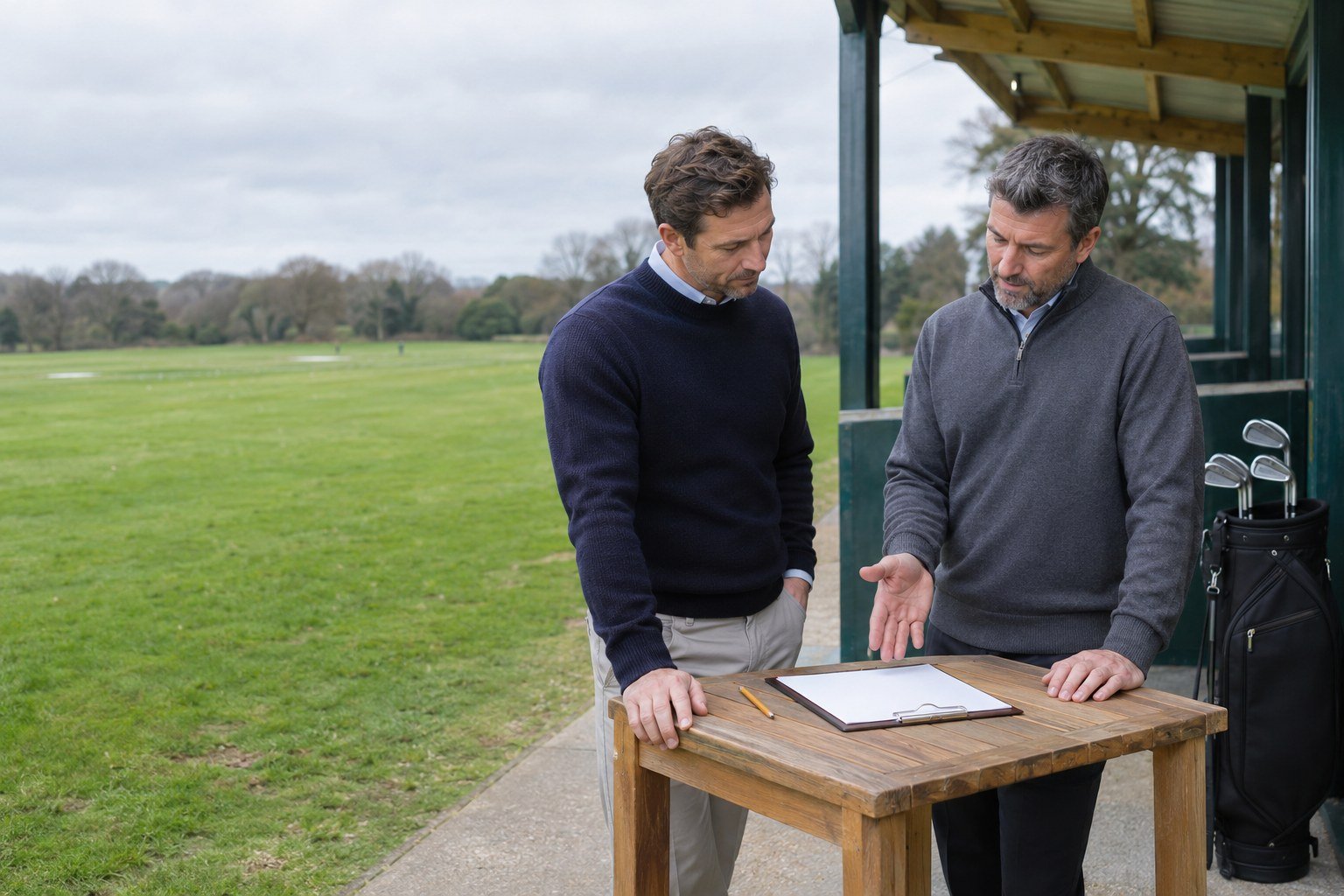
AI illustration of an iron-fitting discussion; it does not depict an observed appointment or a particular manufacturer’s fitting system.
An iron fitting is easier to judge when you arrive with a clear question and leave with a record you can use. Bring the clubs you actually play, your normal golf kit and a short account of the shots you want to improve. Then ask how the proposed irons were compared and exactly what would be ordered. This checklist follows the appointment from booking to delivery.
Ad – includes affiliate links. If you buy through these links, Taylor’s Trailblazing Golf may earn a commission at no extra cost to you. Recommendations consider fit, drawbacks and alternatives.
Bring the present set and explain the job you want the irons to do.
Ask what was tested, what changed and which questions remain open.
Keep the exact build, included clubs, costs and follow-up together.
Iron fitting checklist: agree the appointment before packing
Tell the provider that the appointment is for irons, whether you play right- or left-handed, and what you want to find out. Ask whether the necessary trial heads, shafts, lengths and grips will be available on the day. A long list of brands does not answer that question for your particular build.
Check how much time is set aside for warming up, testing and discussing the result. If the session also covers wedges or long clubs, agree how those questions fit into the appointment. You do not need to book a whole-bag assessment simply because several categories appear on the booking page.
- What is included in the fee, and what information can I take away if I do not buy?
- Can we compare my current irons with suitable alternatives?
- Which iron numbers can I hit, and is there an opportunity to try them from grass?
- Is the appointment limited to one brand or does it compare several?
- What are the cancellation terms, purchase-credit conditions and any deadline?
Clubhouse Golf, for example, publishes venue-specific booking rules and conditions for crediting fitting fees.[2]
Ask for the terms that apply to your booking rather than relying on the word “free”. Our guide to what a useful fitting fee should include covers the service and cost comparison in more detail.
Back to top ↑Bring a useful baseline and your normal playing kit
Titleist asks golfers to bring their current clubs so the fitter can establish a baseline.[1] Take the clubs you actually use, even if their specifications are uncertain. Tell the fitter about known alterations rather than presenting an original catalogue description as a measured build.
Scroll within the table on a small screen.
| Bring or prepare | What it helps establish | Useful detail to keep |
|---|---|---|
| Your current irons and the rest of your usual bag | A reference for the present set and the clubs beside it. | Include the long club above the irons and the wedges below them. |
| Your usual shoes and glove | Familiar equipment for the session. | Use what you normally play in; check any indoor-footwear requirement. |
| The name of your normal golf ball | The ball you want the fitting to relate to. | Ask which balls the venue supplies and whether your own may be used. |
| A short note about recurring shots | A clear reason for comparing the irons. | Describe the situation and miss; do not invent yardages you have not recorded. |
| Known club details or an earlier build sheet | A starting record the fitter can check. | List changes, repairs and anything you do not know. |
| A budget and a way to keep the result | A realistic shortlist and a usable record. | Include fitting, clubs, upgrades and any planned follow-up. |
Clubhouse Golf specifically asks customers to bring clean golf shoes and their glove, if they use one.[2] A new glove, different shoes and unfamiliar clothes are extra changes you do not need to introduce on the same day.
Clean the clubs enough for the fitter to see their condition. If a head, shaft or grip appears damaged or loose, mention it before anyone hits shots with it. A fitting is not a reason to test a suspect club under load.
Photographs or existing shot records can help explain the problem, but bring only information you can identify. A remembered “usual distance” should remain an estimate. If you have no useful measurements, say so; the session can establish its own comparison.

Start with one question and a clear spending limit
Give the fitter a short account of how you use the irons. Which shots do you ask them to play? Which result repeatedly lets you down? Which part of the current set would you like to keep? The aim is to set the brief, not to diagnose a shaft or prescribe a lie angle before the session starts.
A brief you can adapt
“I use my irons mainly for approaches. My longer irons often leave me short, but I like the control of my shorter clubs. I want to compare the present set with a suitable alternative, check the long and short ends, and leave with a written build and total price. I am happy to keep my current set if the evidence is close.”
This is an example of an appointment brief, not a finding about a particular golfer. Change the problem and priorities to match your game. A beginner without established distances can instead ask for a manageable starting set and an explanation of what remains uncertain.
State your budget before the shortlist grows. Explain whether it must cover the fitting and the complete set, or whether those are separate amounts. Ask the fitter to identify any shaft, grip or individual-club charge before you become attached to a build outside that limit.
If you are making a swing change with a coach, Titleist advises discussing it with the coach and sharing relevant information with the fitter.[1] Keep that conversation specific; an imagined future swing is a poor substitute for describing the work you are actually doing.
Back to top ↑Ask how the comparison is being kept fair
Titleist describes a process that combines player feedback, launch information and trials of different head and shaft builds.[1] Your role is to understand what is being compared and tell the fitter when a club feels comfortable, awkward or difficult to repeat.
Begin with your current club after a suitable warm-up. Ask to return to it during the session, rather than letting an early, stiff group of swings become the only baseline for everything that follows. Use normal playing effort; one unusually hard swing should not settle the order.
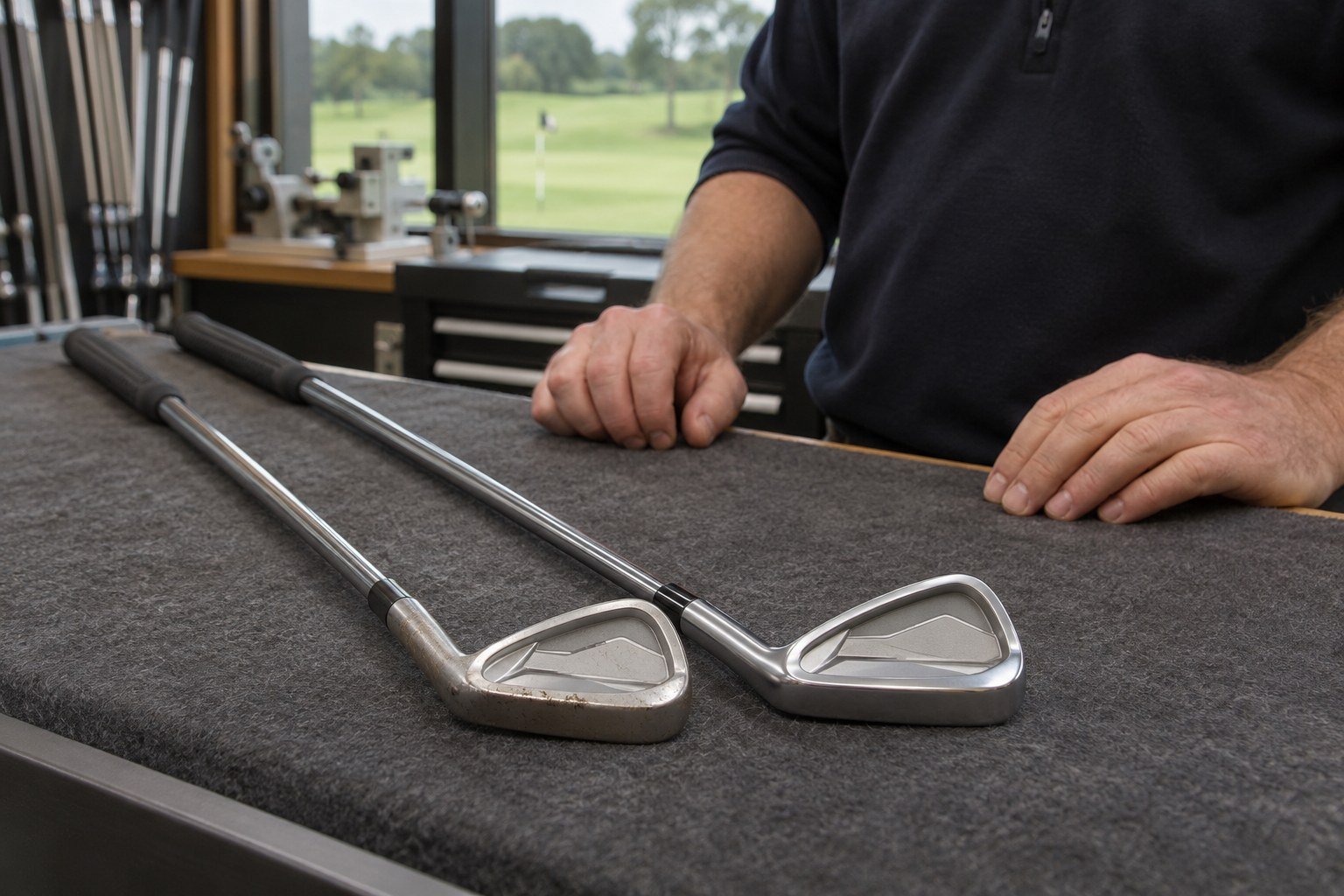
When two clubs share a stamped number, ask to see their actual lofts and playing lengths. Also record the installed shaft and grip. A comparison may intentionally change several features at once, but the recommendation should describe the whole successful build instead of attributing every difference to the head.
Clubhouse Golf describes taking static measurements before collecting shot data and trying shaft and grip options.[2] Ask which observations support the final length and lie recommendation. If a chart or measurement starts the process, ask how the shots you hit influenced the eventual choice.
- Keep the ball type, target and intended shot consistent where the facility allows.
- Ask which shots are retained in the comparison and why any are excluded.
- Keep ordinary mishits visible; a clear equipment misread can be identified separately.
- Take a break when fatigue makes the swings less representative.
- If a setting, shaft or grip changes, make sure the record identifies the new build.
You do not need to dictate a fixed number of shots. Ask for enough useful evidence to explain the recommendation, and acknowledge when the session has not resolved a close comparison. More swings taken after you can no longer repeat your normal effort may add little.
Check the ends of the set and the practice surface
A promising middle iron is a starting point for the set decision. Ask what evidence supports the longest iron you would order and the transition from the shortest set iron to your wedges. Where possible, try relevant long and short examples as well as the usual fitting club.
If the facility has only one test iron in a candidate model, record that limit. Ask how the proposed set will be checked later, especially if the choice depends on a long iron you have not hit. A predicted gap and an observed comparison should remain clearly distinguishable.
For the long end, discuss whether the intended iron produces a useful approach or simply duplicates another club you already carry. At the short end, identify the exact pitching wedge or other set wedge included in the order and how it will sit beside your existing wedges. Avoid leaving that question until a boxed set arrives.
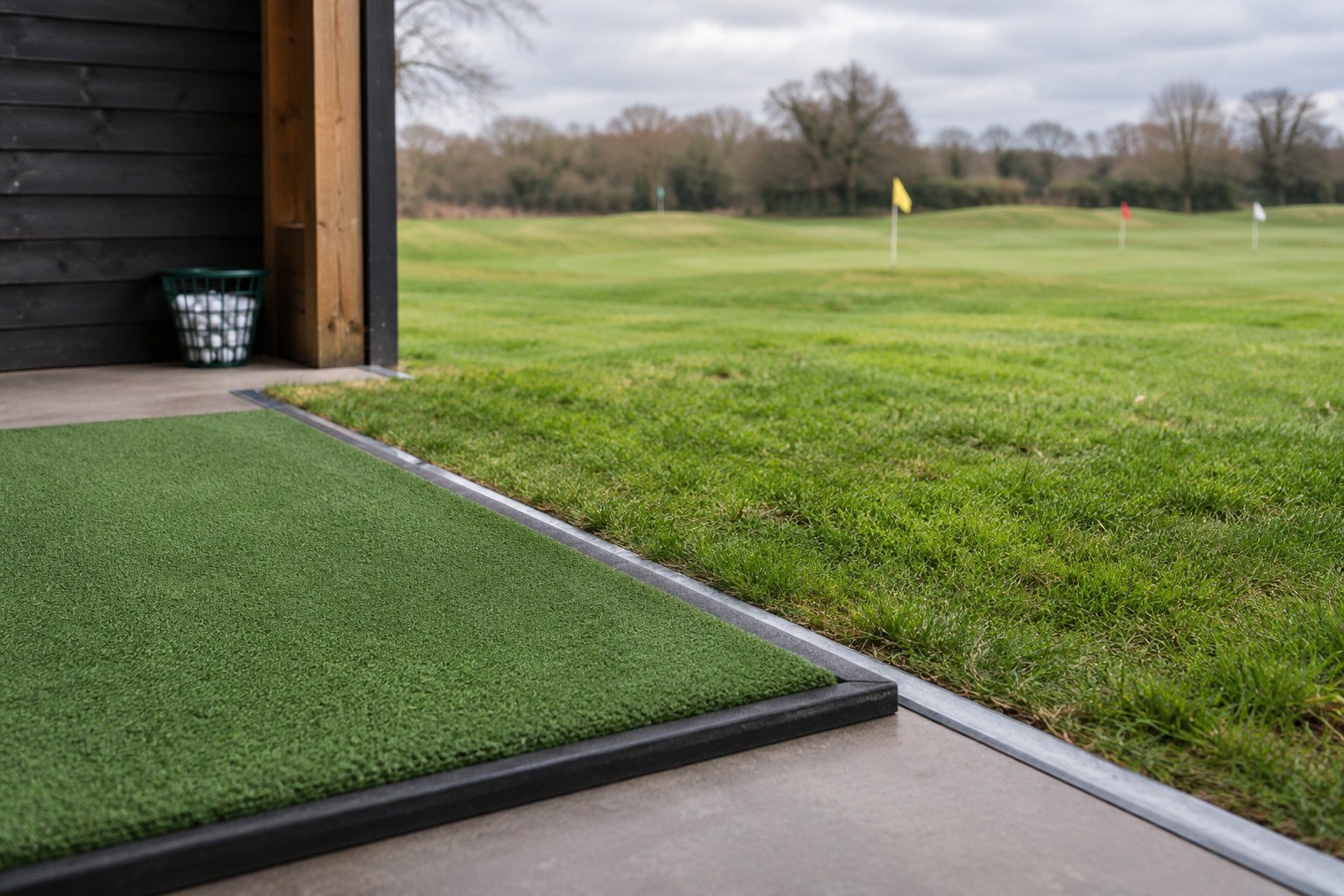
Titleist recommends real-turf trials because interaction with the ground matters for irons.[1] Ask whether grass is available, and keep a mat-only result labelled as such. If the main concern is contact from your usual fairway lies, agree how that missing check can be addressed.
Use only the area and balls the facility permits. Do not walk onto an active range to inspect landings or collect a ball. The useful question is what the facility can safely observe or measure, not how to improvise access to its outfield.
Finish this part by asking: “Which exact clubs would you put in my set, what job does each have, and which of those decisions have we actually checked today?”
Ask what the figures show, then keep the comparison
You do not have to memorise a launch-monitor manual to ask useful questions. Start with what was measured, what was calculated, which conditions were used and how the result relates to the shot you wanted.
Trackman’s normalisation calculates flight for calm conditions at selected temperature and altitude; ball conversion is a separate step.[3] Ask which view is shown and keep that setting with the report.
Scroll within the table on a small screen.
| Ask the fitter | What to retain in the record |
|---|---|
| Is this actual or normalised flight, and is ball conversion active? | Ball type, surface, display mode and relevant conditions. |
| Are we comparing carry, total distance or both? | The named measure; do not mix flight distance with subsequent run. |
| What does the spread of ordinary shots look like? | Short/long and left/right outcomes, not only the longest shot. |
| How does the flight suit the intended approach? | The fitter’s explanation of useful carry, landing and stopping requirements. |
| Were any shots removed, and for what reason? | Which results are included and any technical misreads or exclusions. |
| Did we return to the current club? | A repeat comparison where conditions and effort were still useful. |
| Which clubs and builds have actually been tried? | Separate observations from estimates for untested parts of the proposed set. |
Ask the fitter to explain the recommendation in ordinary language. For example, “this option gave a more useful group of approaches” should be linked to the shots and the trade-off, not left as a general compliment about a new model.
Request the report in a form you can keep, subject to the service you booked. A screenshot should identify the club and build; an attractive cloud of dots with no label may be difficult to interpret later. Record relevant uncertainty beside the result instead of trying to remember it after the appointment.
If the fitter cannot export the data, write down the agreed conclusion, the basis for it and the remaining check. Establishing this before booking is better than discovering at the counter that the session does not provide the record you expected.
Back to top ↑Leave with an orderable specification
A recommendation such as “regular shaft, slightly upright” is not enough to reproduce a tested club. Ask for the manufacturer’s exact terms, the reference used for any adjustment, and the complete list of clubs proposed.
Scroll within the table on a small screen.
| Field | Record or confirm |
|---|---|
| Head and set make-up | Manufacturer, full model/version, playing hand and every included club number or wedge. |
| Loft and lie | The requested values or named manufacturer specification, including any departure from that reference. |
| Playing length | The ordered assembled length or adjustment from the identified standard, with the measurement reference explained. |
| Shaft | Full make/model, flex, weight designation and any specified build option. |
| Grip | Exact model, size, shape and the agreed finished build; note if the trial grip differed. |
| Evidence | The current-club comparison, relevant tested irons, chosen ball, surface and report settings. |
| Cost and supply | All clubs, component upgrades, delivery, fitting fee or credit, deposit and estimated supply time. |
| Follow-up and terms | What is checked on delivery, any agreed later gap/grass trial, adjustment support and applicable cancellation or return terms. |
If the fitting club used a temporary interchangeable system or a different grip from the eventual order, ask the fitter to explain how the finished club will correspond to it. Do not try to recreate a build from a shaft label and a photograph alone.
Grip preference deserves a real note. If the sample felt too thick, too thin or unfamiliar in texture, say so before ordering the full set. Our guide to grip size and finished feel helps separate those questions.
A written specification can also identify what you are keeping. If the recommendation is to retain your irons and investigate a small adjustment, ask for that proposal and its cost rather than accepting a vague suggestion to replace everything later.

Make the purchase decision after the fitting record is clear
You can leave a useful fitting with an order, a focused follow-up or a reason to keep the current set. The fee already spent does not make an unresolved equipment purchase a better choice.
Order when you understand the recommendation, the tested build can be reproduced, the proposed club selection makes sense and the complete cost is acceptable. Ask to resolve a missing long-iron trial, uncertain grip or incomplete specification before treating the session as finished.
When comparing shops, compare the written build and included clubs. A cheaper headline for a shorter set or a different shaft is a different offer. Ask whether any proposed substitute component changes the recommendation, and get that answer before agreeing to the substitution.
Before paying, confirm the applicable order, alteration, cancellation and return terms. Keep the fitting sheet, quotation and order confirmation together. An estimated delivery date should be recorded as an estimate, with a contact route if the build changes or is delayed.
On arrival, check the model, playing hand, included club numbers, shaft labels and grips against the order. Ask the supplier to verify any specification you cannot establish reliably at home. Arrange any agreed follow-up while the session and its remaining questions are still clear.
The three things to take home
A reason for the recommendation, a complete written build, and a clear next step. If one is missing, ask for it before the fitting turns into an order.
Sources and method
This guide brings together manufacturer information and the sources below. The decision aids are editorial suggestions for your own equipment checks, comparisons or fitting. No personal product test or measured performance result is claimed. Read how we review golf gear for the site’s evidence standards.
- Titleist UK — Golf club fitting: preparation, baseline and turf guidance
Checked 22 November 2026. - Clubhouse Golf — Custom Fit Centres, process and appointment guidance
Checked 22 November 2026. - Trackman — Normalisation and ball conversion explained
Checked 22 November 2026.
Illustrations in this article were created for Taylor’s Trailblazing Golf. Third-party photographs, where used, are credited beside the image or in the source list.