Iron Length for Shorter Golfers: What to Check in the Whole Setup
Compare the complete club before committing to a shorter shaft.
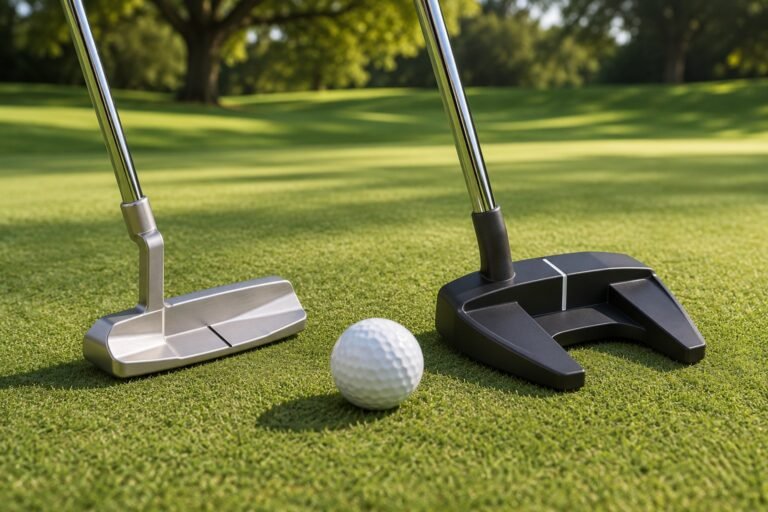
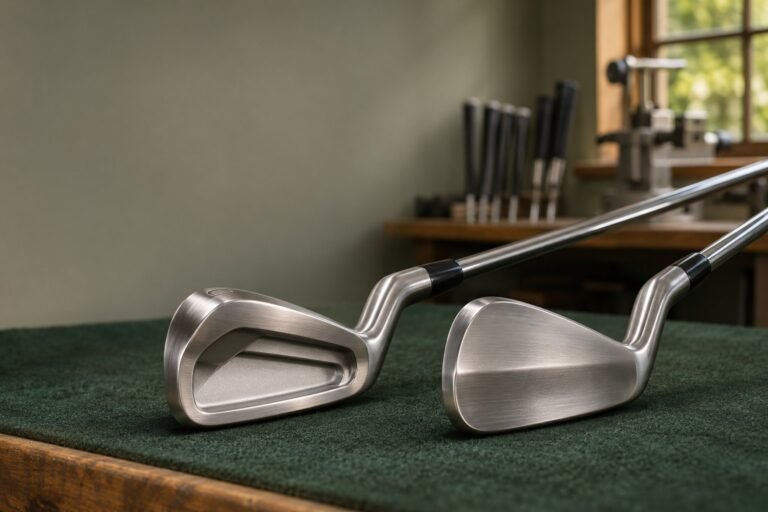
AI illustration: length is one part of finding a setup the golfer can use comfortably.
The right iron length for shorter golfers needs to work with the rest of the club. A shorter shaft might be worth trying, but the decision also involves how you address the ball, what the club weighs, how its grip sits in your hands and where you make contact.
This research-led guide turns that fitting question into a practical comparison. The aim is to leave with an identifiable build you can use, or a sound reason to keep your current irons, rather than a length recommendation based on height alone.
Ad – includes affiliate links. If you buy through these links, Taylor’s Trailblazing Golf may earn a commission at no extra cost to you.
Measure the current club
A known baseline makes a shorter trial meaningful.
Keep the whole build visible
Length, lie, weight and grip belong on the same record.
Earn the change
Keep the present setup when a different build offers no clear practical benefit.
Check iron length for shorter golfers in five parts
Start by explaining the problem in ordinary language. Perhaps you feel crowded at address, repeatedly change your hand position, dislike the club’s weight or struggle with a particular end of the set. Those observations help frame a fitting; none identifies a single cause by itself.
Use the following checklist to agree what the comparison will cover. It is a record of questions to resolve, not a prescription for how many inches to remove.
| Part of the setup | What to establish | What to observe |
|---|---|---|
| Playing length | The finished length of the current and trial clubs, measured consistently | Whether you can take your normal address without forcing your posture |
| Lie | The actual angle and the fitter’s assessment during shots | Contact, turf interaction and shot direction together |
| Weight and balance | Shaft identity, total club weight and the balance specification | Whether you can move the club comfortably through a representative session |
| Grip | Model, size, taper and installed build | A secure hold with both hands properly supported |
| Strike and flight | The conditions and shots used for comparison | Typical contact, ordinary misses and the shot you need the club to produce |
Bring your own irons to the appointment. If the concern is “my clubs feel too long”, the fitter needs to establish what those clubs actually are before interpreting the complaint.

Let measurements start the fitting
PING describes an iron fitting that uses height, wrist-to-floor and hand measurements to establish initial specifications, followed by shots to refine the choice. That sequence matters: the measurements guide the first trial, while the golfer’s results and feedback help settle the build. [1]
Two golfers of the same height can have different hand positions relative to the floor. A height-only shopping chart leaves that information out. Equally, a wrist-to-floor result does not describe how you deliver the club when you swing.
Ask the fitter to take the relevant measurements using their chosen method and record the units. Wear the shoes you normally play in, say if you have been deliberately crouching or standing unusually upright to accommodate the club, and describe the setup you find comfortable. You do not need to force yourself into a pose that makes a chart give a preferred answer.
Before booking, confirm that the facility can compare suitable shorter trial builds in your handedness. Our guide to what a useful fitting fee should include explains how to agree the scope and written outcome.
Back to top ↑Write down length and lie separately
“Half an inch short” is incomplete without the exact model and its reference length. Ask for the finished playing length as well as any adjustment from the manufacturer’s standard. GolfWorks notes that manufacturers have used different length-measuring methods, so comparisons also need an agreed method. [3]
Lie should have its own entry. A club that looks comfortable at address also needs assessment during shots. In PGA Play’s interview with PING fitter Nick Boulton, static measurement is followed by an impact assessment and ball-flight analysis; the golfer’s feedback remains part of the process. [2]
A sole resting flat on the shop floor is therefore a useful thing to discuss, not a sufficient reason to order a whole set at a particular lie angle. Nor should one unusual strike trigger an immediate alteration. Ask what pattern the fitter is seeing and whether the proposed change addresses your normal delivery.
Use a grip-down comparison carefully
Holding a sound club a little farther down can help you describe whether a lower hand position feels more manageable, provided both hands remain securely on the grip. It is only an exploratory comparison: you are holding a different part of the existing grip and have not built a different club. Take that observation to the fitter rather than converting it directly into a cutting instruction.
Back to top ↑Keep weight, balance and grip in the same conversation
Total weight tells you how much the complete club weighs. Swingweight describes its balance about a fixed measuring point and is expressed with a letter-and-number value. They describe different aspects of the build, so matching a swingweight label does not establish that two clubs weigh the same. [4]
Ask to compare a manageable complete club, rather than selecting a shaft solely because it is labelled light, regular or suitable for a particular player category. Record the full shaft model and flex. If the trial also changes shaft weight, head or grip, keep those changes visible: you are judging that combination, and cannot confidently credit length alone.
Grip size deserves a separate check from height. Golf Pride identifies size, taper and texture among the considerations in grip fitting, and explains that grip weight affects the swingweight reading. A regrip can therefore change more than the surface under your hands. [5]
Try the grip with your usual glove and ask about the finished build, including any tape build-up. The hand-measurement and grip-feel guide covers that decision in more detail. An adult golfer’s height alone is also insufficient reason to select a junior set or a women’s-labelled build; compare the actual specifications and the club you can use.

Keep a record that explains why one build worked better
Agree the question before starting: for example, whether a shorter complete build makes address and contact more manageable without losing a useful approach shot. Warm up, then alternate sensible blocks with the current and trial clubs. Use the same ball type, target and hitting surface, allow breaks, and keep ordinary misses in the comparison.
A fitter may use impact feedback and a launch monitor, but ask them to explain what the observations mean. PING’s fitting description includes launch conditions alongside feel, sound and consistency. A single longest shot does not answer the whole setup question. [1]
Copy the record below for each candidate. Leave unknown measurements blank until they can be checked. Note whether carry readings are measured or estimated, and keep the same units throughout.
| Record | Current build | Trial build |
|---|---|---|
| Date, venue, shoes and glove | Record | Record any change |
| Head model, club number and loft configuration | Record | Record |
| Playing length: inches or mm; measuring method | Record | Record |
| Lie: degrees or named manufacturer specification | Record | Record |
| Full shaft model and flex; total club weight in grams | Record | Record |
| Balance specification; grip model, size and build | Record | Record |
| Ball, surface, target, weather and measurement settings | Record | Keep comparable |
| Shot count; strike pattern and ordinary misses | Record | Record |
| Typical carry and spread in yards or metres | Record | Record |
| Address comfort, secure hold and repeated-swing feel | Describe | Describe |
| What improved, worsened or remains uncertain? | Baseline | Decision and follow-up |
The useful result is an explainable trade-off. A build that feels easier to address but produces an unsuitable shot needs further work. A small change that is hard to distinguish from your normal variation is a reason to recheck, rather than rush an order.

Check the clubs beyond the fitting iron
A comfortable middle iron is a promising start. Before changing the set, ask how the recommendation will be checked in the longest iron you plan to use and in a short iron or pitching wedge.
Describe the jobs those clubs need to do. You may need the longer club to provide a reliable approach option and the short club to feel manageable for both a full swing and a controlled shorter shot. Record whether your setup or grip position changes noticeably between them.
Do not assume that removing the same amount from every existing shaft will preserve a satisfactory whole set. GolfWorks advises checking the other affected specifications after a length change, including weight, balance, flex and lie considerations. That is a club-building assessment, not a household trimming task. [3]
Also include the neighbouring hybrid or wedge when checking the finished bag. The purpose is to retain useful shot coverage, not simply produce a tidy row of clubs with matching adjustment labels.
Back to top ↑Choose between keeping, altering and ordering
| Finding | Useful next step |
|---|---|
| Your current build is comfortable and a shorter trial adds no clear benefit | Keep it. Height alone does not create an obligation to change. |
| A different build helps, and the existing clubs are suitable for professional alteration | Request a written finished specification, scope of work and total quote. |
| The preferred combination cannot sensibly be achieved with the current set | Compare a properly specified replacement with the complete alteration cost. |
| The comparison is inconsistent or the right trial club was unavailable | Arrange a focused follow-up before committing to a set. |
An alteration quote should identify which clubs are included, any shafts or grips being replaced, the intended length and lie, how balance will be checked, and the final inspection. Ask the builder to confirm that the particular heads and shafts are suitable for the proposed work. Avoid buying a set on the assumption that every specification can be changed later.
Make the order match the successful trial
Once the model is chosen, check the available order fields against your written specification. For example, Clubhouse Golf’s PING G740 page includes custom length, lie, loft, shaft and grip choices. [6] The Callaway UK Elyte configurator also provides length, lie, loft, shaft and grip fields. [7]
These are examples of ordering detail to verify if either model has already suited your comparison. Confirm your handedness, exact club numbers, selected components, any surcharges, delivery and the terms for a custom order. Ask the supplier to explain any substitution before accepting it.
On collection, check the actual clubs against the agreed specification and keep a copy. If the finished set feels noticeably different from the trial, return to that record with the fitter rather than beginning another round of unmeasured changes.

What to do next
Begin with the irons you have, a clear description of the problem and a fitting that can compare complete builds. Use your measurements to select a starting point, then let comfortable setup, repeatable contact and useful shots guide the decision. Commit to a shorter build only when the whole specification is understood and the comparison supports it.
Sources and further reading
Sources checked on 22 November 2026. Product descriptions and terms can change; confirm the details for the exact item before buying.
- PING — Golf club fitting: static measurements and shot-based refinement
- PGA Play — How to get fitted for your irons: interview with PING fitter Nick Boulton
- The GolfWorks — Technical FAQ: length measurements and effects of changing length
- The GolfWorks — Glossary: swingweight and total weight
- Golf Pride — Products and Features FAQs: grip selection and grip weight
- Clubhouse Golf — PING G740 steel irons: custom-order fields
- Callaway UK — Elyte irons: club configurator
Illustrations in this article were created for Taylor’s Trailblazing Golf. Third-party photographs, where used, are credited beside the image or in the source list.