Putter Fitting Checklist: What to Expect and Ask
Turn a fitting appointment into a clear equipment decision, with a baseline, a fair comparison and a written specification.
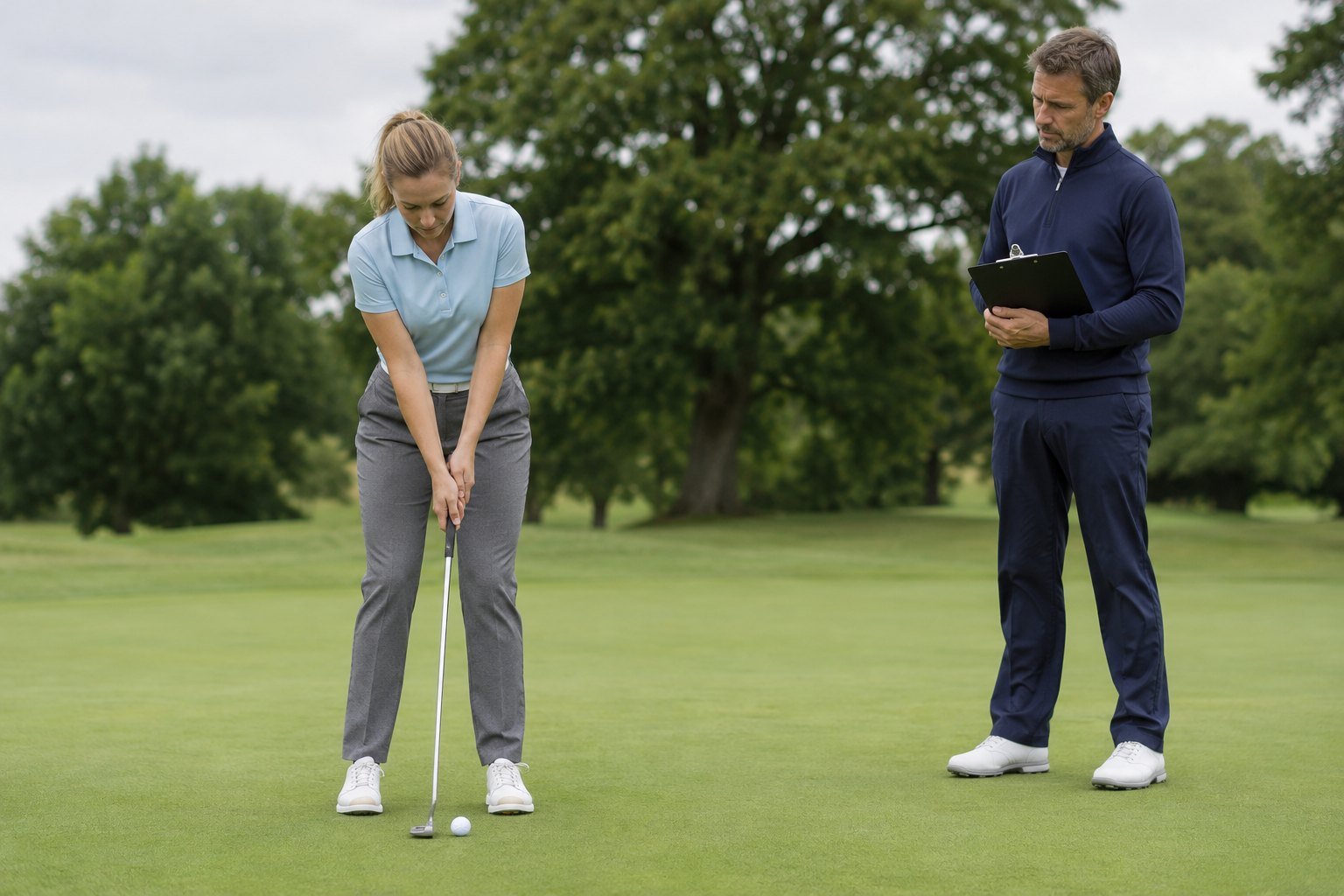
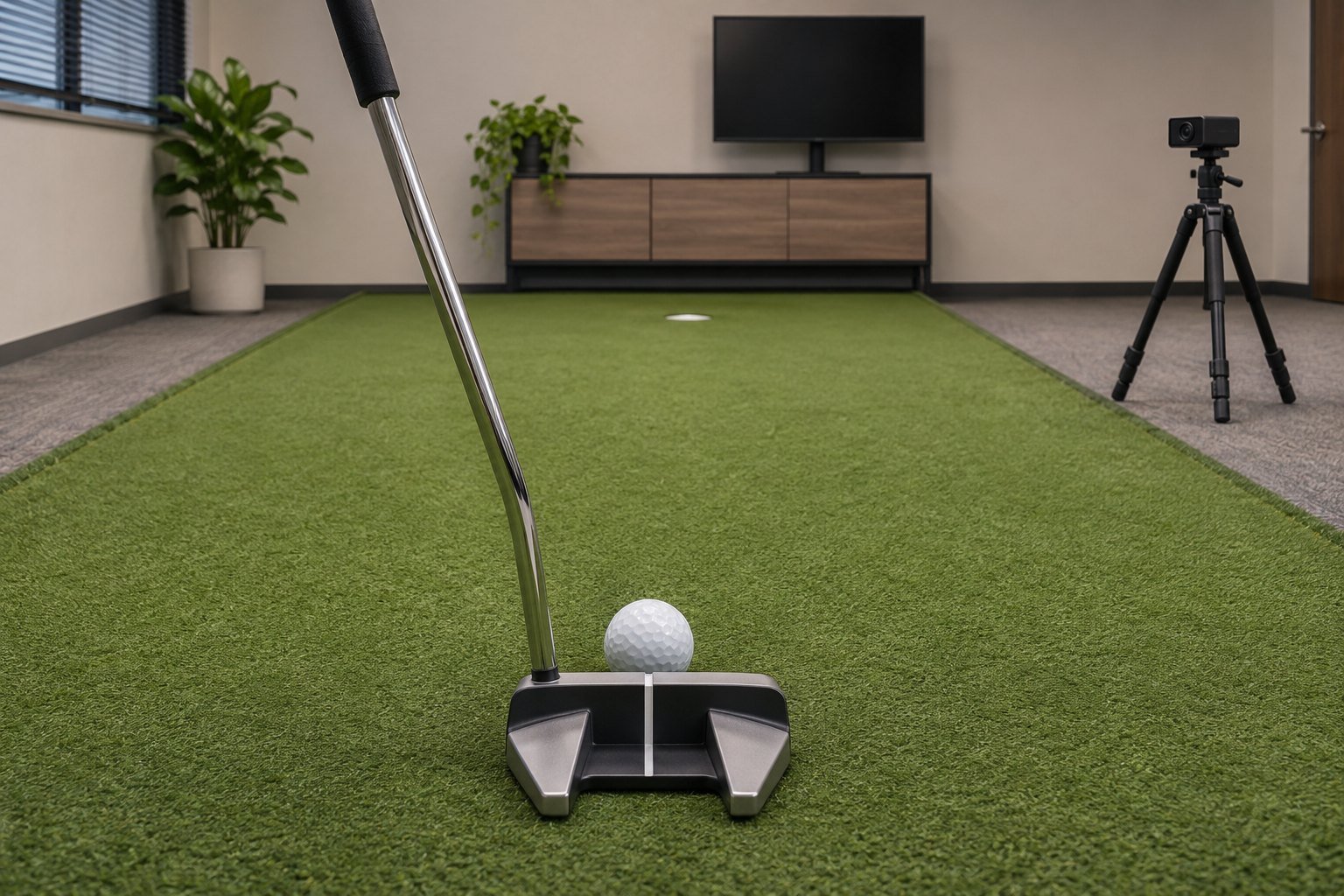
AI illustration of a fitting setting; it does not document a session conducted for this guide.
A useful putter fitting should leave you able to explain the recommendation in ordinary language: what was checked, what changed and why the proposed build suits the job. A screen full of numbers or a run of holed putts is much less useful if nobody connects it to that decision.
This putter fitting checklist covers the appointment from booking to collection. It is a research-led preparation guide, not a prescription for your length, loft or stroke. Keeping your existing putter, adjusting it professionally or taking a lesson can all be sensible outcomes.
This guide contains affiliate links. If you buy through them, Taylor’s Trailblazing Golf may receive a commission at no extra cost to you.
Confirm the service, trial range, fee and whether your current putter will be assessed.
Ask what is measured, what is inferred and what still needs checking on a real green.
Keep comfort and repeatability alongside the data. A small indoor difference may need another trial.
Take home an exact build record and agree how the delivered club will be checked.
Your putter fitting checklist starts before booking
Book the service you need. A brief shop comparison, a brand-specific fitting, a multi-brand session and a putting lesson can have different aims. Ask what the appointment includes and whether its recommendation may be to keep or adjust your current club.
- Will you assess my current putter before showing alternatives?
- Which heads, necks, lengths, grips and handedness options can I actually try?
- How much time is available, and how far can I putt?
- What will be measured, and will I receive the results and specifications?
- What does the fee include, and is any purchase credit conditional or time-limited?
- Can you assess changes to my existing putter, or do you only fit new stock?
Check the particular location rather than assuming every branch has the same equipment. You can check Clubhouse Golf’s fitting locations and services. Its current information lists GCQuad putting analysis at Warrington and different equipment at other locations. Confirm the current service, trial stock and appointment details directly when booking. [1]
For the financial questions, the separate guide to golf club fitting fees explains how to compare the scope of a session. Here, the priority is what you need the putter fitting to establish.
Pack a useful baseline
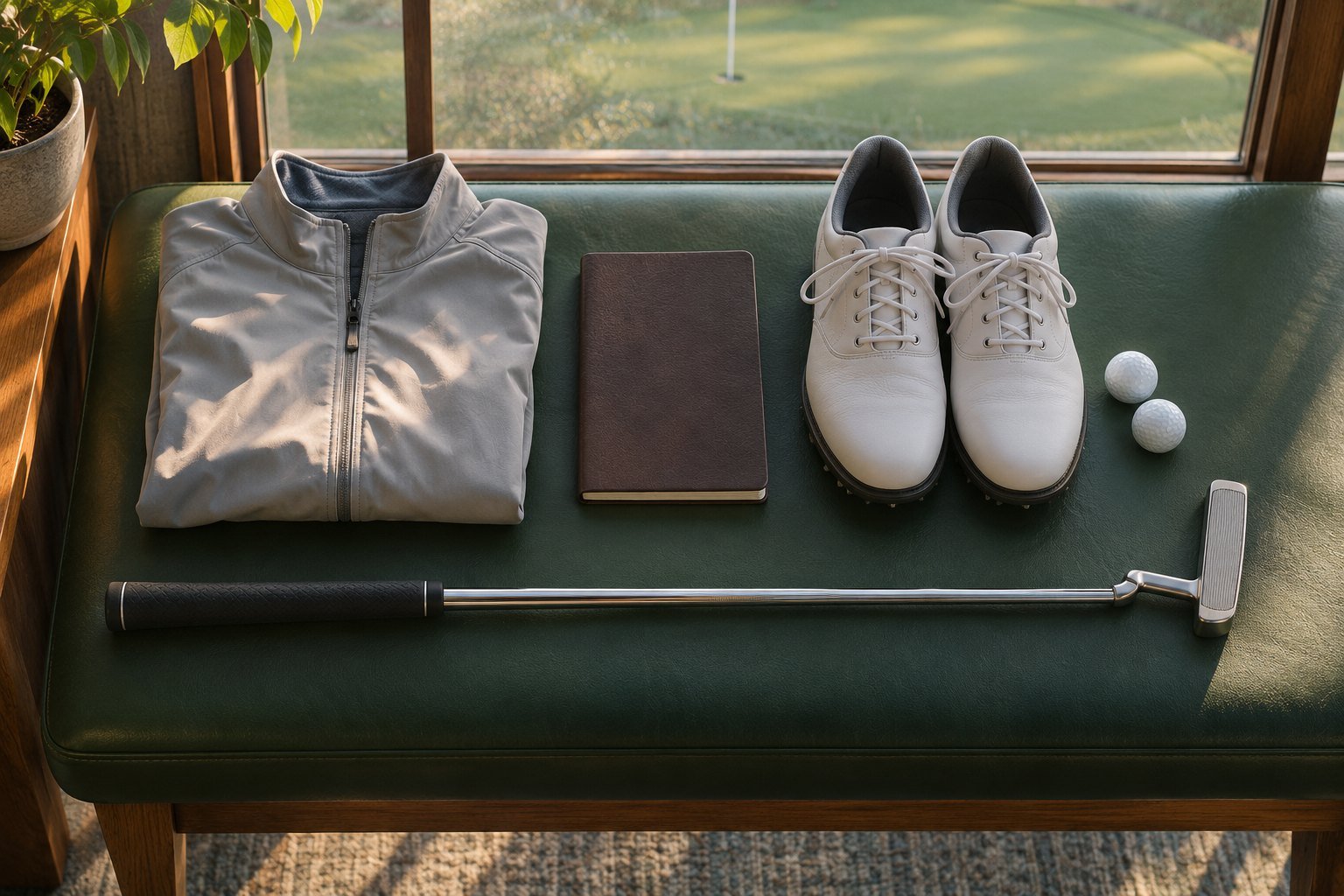
Bring your current putter, the ball you normally use and suitable shoes for the facility. Take a few notes from recent rounds: the distances that concern you, whether misses tend to be short or long, and whether the problem changes between greens. If you use a different grip or setup on the course from the one you intend to demonstrate, say so.
Odyssey’s manufacturer fitting protocol begins with the golfer’s goals, preferences and existing club, including its measured build where possible. That gives the appointment a comparison point instead of making every new club seem like a fresh start. [2]
Start with the putter and stroke you already have
Give yourself time to settle into the surface and explain what you are trying to improve. “I want a better putter” is hard to assess. “I struggle to judge longer putts, but I am comfortable over short ones” creates a more useful conversation.
Ask for the current club’s actual length, loft, lie, head or total weight where measured, shaft identity and grip details. Catalogue specifications describe a model; the fitter needs to know what you have brought, particularly if it has been shortened, extended, adjusted or regripped. Odyssey’s fitting protocol includes these baseline checks. [2]
Then establish what happens with that club. Keep a distinction between where the face points at address, where it points at impact and where the ball starts. A golfer can aim one way and deliver the face differently; one observation does not answer all three questions. Science & Motion’s reporting documentation distinguishes face aim and face angle at impact; its ball-direction figure is calculated from face and path data. [3]
Try not to change your entire technique while every putter is changing too. If the fitter also coaches your setup, ask for a fresh baseline afterwards. Otherwise it becomes difficult to know whether an apparent improvement came from the club, the instruction, growing familiarity or a mixture of them.
Back to the top ↑Assess the setup and the complete club together
Expect discussion of comfortable posture, hand position and how the club sits, followed by observation during actual putts. Science & Motion distinguishes a static setup stage from a dynamic fitting stage that checks the stroke and delivery. Its guidance includes length, head design, balance, grip and delivered loft and lie; it does not reduce fitting to choosing a length from height alone. [4]
Scroll within the table to see every column.
| Area to discuss | Question for the fitter | What you should take away |
|---|---|---|
| Length and posture | Can I repeat this setup comfortably without arranging myself around the club? | The tried length, your observations and the fitter’s reasoning. |
| Lie and delivery | What happens at address and through impact, and how did you assess it? | A measured specification, not merely “more upright”. |
| Loft and launch | What does the ball do as it leaves the face with my normal hand position? | The club’s measured loft and any relevant delivery evidence. |
| Head and neck | What changes when I try this complete head-and-neck combination? | The precise model and the observed trade-off. |
| Grip and weighting | Can I place my hands comfortably and control pace with this finished build? | The actual grip, weight choices and any untried substitutions. |
Use the answers to compare options, not to chase a universal ideal number. A stock loft and the loft delivered at impact describe different things. Ask the fitter to explain which has been measured and how any proposed alteration relates to the ball’s launch. Quintic’s system information distinguishes club delivery, launch and the ball’s transition into roll. [5]
If posture is your main concern, the home setup check for golfers who crouch can help you bring clear observations. It is preparation for this discussion, not a reason to cut a shaft before the appointment.
Ask what the measurements can actually tell you
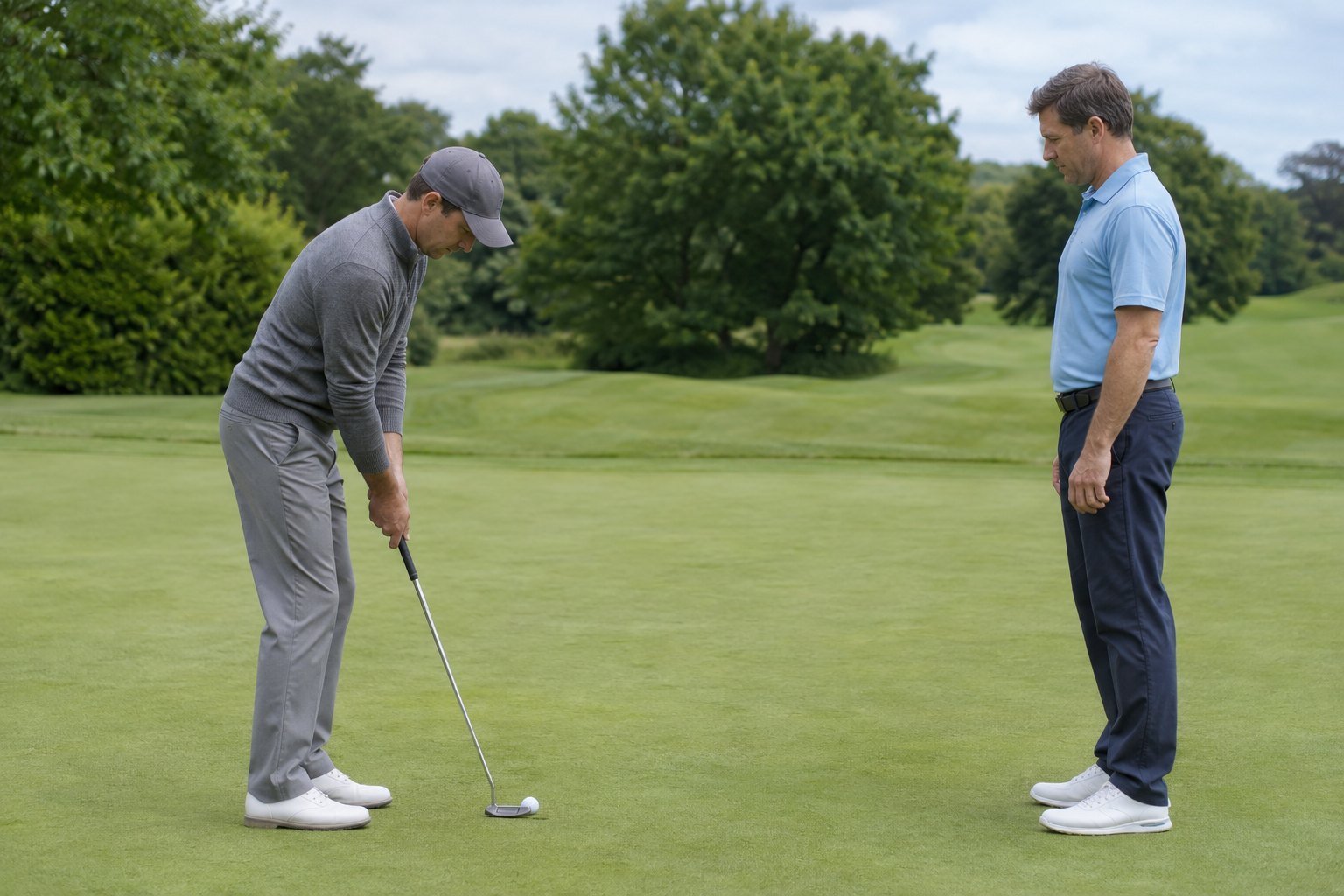
Technology can make comparisons more informative, provided you understand the measurement. SAM PuttLab focuses on stroke and club-delivery analysis; Quintic Ball Roll documents club-and-ball measurements around impact, including launch and roll behaviour. Ask which system and functions your fitter is using, rather than assuming every fitting device captures the same information. [3] [5]
Useful questions are simple:
- Is this number directly measured, calculated from other measurements or judged visually?
- Is the target line calibrated for this test?
- How many valid putts are included, and were any excluded?
- Are you showing the average, the spread or just my best attempt?
- What would count as a meaningful difference for this decision?
Look at the range of results as well as the middle. A candidate with one excellent putt and several poor ones may suit you less than a club whose ordinary outcomes you can repeat. There is no pass mark in this guide: the fitter needs to interpret the observations, the measurement limits and your goal together.
Do not turn an indoor report into a promise about your handicap. A fitting lane cannot reproduce every slope, pace, weather condition or on-course choice. Quintic describes its equipment as a tool for fitting, coaching and analysis; deciding what the results mean for your golf still requires context. [6]
Similarly, avoid selecting a head solely because someone has named your stroke “straight” or “arcing”. Ask to compare the actual candidate and its result. Science & Motion’s support guidance says putter design and setup both influence the recorded data and recommends individual measurement and comparison. [7]
Use a comparison plan you can explain afterwards
The following worksheet is an editorial suggestion to discuss with your fitter. It is not a prescribed diagnostic test or a claim that a particular number of putts proves a winner.
- Choose one main job. For example, reduce the spread of finishing distances while keeping short-putt comfort.
- Keep conditions comparable. Use the same ball model, target, starting positions and available surface for the initial comparison.
- Allow familiarisation. Separate warm-up attempts from the putts being compared.
- Return to the baseline. Try your current putter again after a candidate, so that warming up is not mistaken for an equipment improvement.
- Compare more than one distance. Include a shorter putt and a longer pace task where the facility permits; note any distance that could not be tested.
- Record the whole picture. Note the observed spread, your comfort, any downside and what remains uncertain.
Scroll within the table to see every column.
| Record for each build | What to write |
|---|---|
| Exact configuration | Head and neck, length, measured loft and lie, shaft, grip and weighting |
| Test conditions | Ball, surface, target, distances, familiarisation and number of recorded putts |
| Main result | Evidence linked to the goal; include the spread where available |
| Other observations | Comfort, aim, contact, pace and any change that created a new problem |
| Remaining question | Untested distance, unavailable grip, outdoor trial or adjustment to confirm |
| Decision | Keep, adjust, trial again or order—with the reason |
If all the alternatives differ in head, length and grip, you are comparing complete clubs. That can still be useful, but it does not prove that one particular feature caused the result. Where practical, ask for a second comparison that changes fewer things.
A close result may justify another visit or a permitted trial rather than an immediate purchase. If the winning club is one you cannot order in the tested specification, resolve that before paying.
Back to the top ↑Leave with a specification that can be ordered
“The mallet with the thick grip” is not an adequate order. Ask for a written record of the complete head name and generation, handedness, neck or hosel option, finished length, loft, lie, shaft, exact grip and any agreed weighting. Specify whether figures were measured on the trial club or taken from a catalogue.
Science & Motion’s fitting guidance describes reports that record the recommended build. That is the useful outcome to request, whether your fitter uses its system or another method. [4]
Confirm the commercial details separately
- The full price, including any grip, shaft, adjustment and fitting charges.
- Which work is included, who will do it and whether the manufacturer supports it.
- The expected delivery time and how substitutions will be approved.
- The returns and cancellation terms for this specific order.
- Whether the finished measurements will be checked at collection.
- What follow-up is available if the delivered club differs from the agreed build.
Custom-order terms can differ from those for standard stock. Clubhouse Golf’s published policy, checked on 23 November 2026, excludes certain custom-fit, personalised and non-stock special orders from change-of-mind returns, while distinguishing items that are faulty, unsuitable for their stated purpose or not as described. Read the seller’s current terms for your actual order. [8]
When comparing a quote elsewhere, take the written build with you and confirm that the retailer can supply the exact agreed configuration. A similar name, different neck or substituted grip is a fresh comparison, even when the price is appealing.
Check the finished putter, then give it a fair assessment
At collection, compare the delivered club with the written order before assuming it duplicates the trial. Ask for the agreed measurements to be checked and inspect the grip’s identity and installation. Keep the order and fitting report together so there is a clear reference if something needs discussing.
Then return to the original goal. Give yourself a sensible period of practice on the surfaces you use, without changing the grip, weights and technique after every round. Record what becomes more repeatable and what remains difficult. If the result is disappointing, take that information back to the fitter instead of buying another club on the strength of one poor score.
Is a fitting worthwhile for a beginner?
It can be, if the service helps establish a comfortable, usable setup and distinguishes equipment choices from skills still being learnt. Explain your experience when booking and ask for the session to match it. You do not need an elaborate custom order to make a useful decision.
Should I buy if the fitter finds very little difference?
There is no obligation to create a difference the evidence does not show. If the current putter is suitable and comfortable, keeping it is a valid result. If a new model simply appeals more, make that a preference purchase at a price you are happy with; do not turn it into a measured performance claim.
A good fitting ends with a reasoned next step you understand. That might be an exact new build, a supported professional adjustment, a further trial or focused coaching. The checklist has done its job when you know why that step follows from what was actually observed.
Back to the top ↑Sources and research
Research reviewed on 23 November 2026. Manufacturer descriptions, official guidance and retailer information are distinguished from the suggested comparisons and editorial recommendations in this guide.
- Clubhouse Golf — Custom Fit CentresLocation-specific fitting equipment and service information checked 23 November 2026; confirm current booking details directly.
- Odyssey — Putter Fitting System: Fitting Protocol (2023)Manufacturer protocol, used for interview and baseline principles; consulted 23 November 2026. It is not a specification sheet for every current model.
- Science & Motion — SAM PuttLab 7 Reports ManualDefinitions and distinction between aim and impact measures; consulted 23 November 2026. Current equipment and software capabilities must be confirmed with the fitter.
- Science & Motion — Data-Driven Putter Fitting with SAM PuttLabManufacturer explanation of static/dynamic fitting and written specifications; consulted 23 November 2026.
- Quintic — Putting Analysis Software SystemsManufacturer description of club, launch and ball-roll measurement capabilities; consulted 23 November 2026.
- Quintic — Ball Roll SystemsManufacturer account of fitting/coaching uses and impact analysis; consulted 23 November 2026. No performance guarantees adopted.
- Science & Motion — SAM PuttLab HelpManufacturer guidance on individual comparison, putter design and setup; consulted 23 November 2026.
- Clubhouse Golf — ReturnsCustom-fit and special-order terms checked 23 November 2026; order-specific terms must be checked again before purchase.
Find more equipment guidance in Irons, Wedges & Putters.
Illustrations in this article were created for Taylor’s Trailblazing Golf. Third-party photographs, where used, are credited beside the image or in the source list.