Soft-Feel vs Firm-Feel Golf Balls: What Can You Compare?
Describe what you hear and feel, then decide how much it matters to your game.
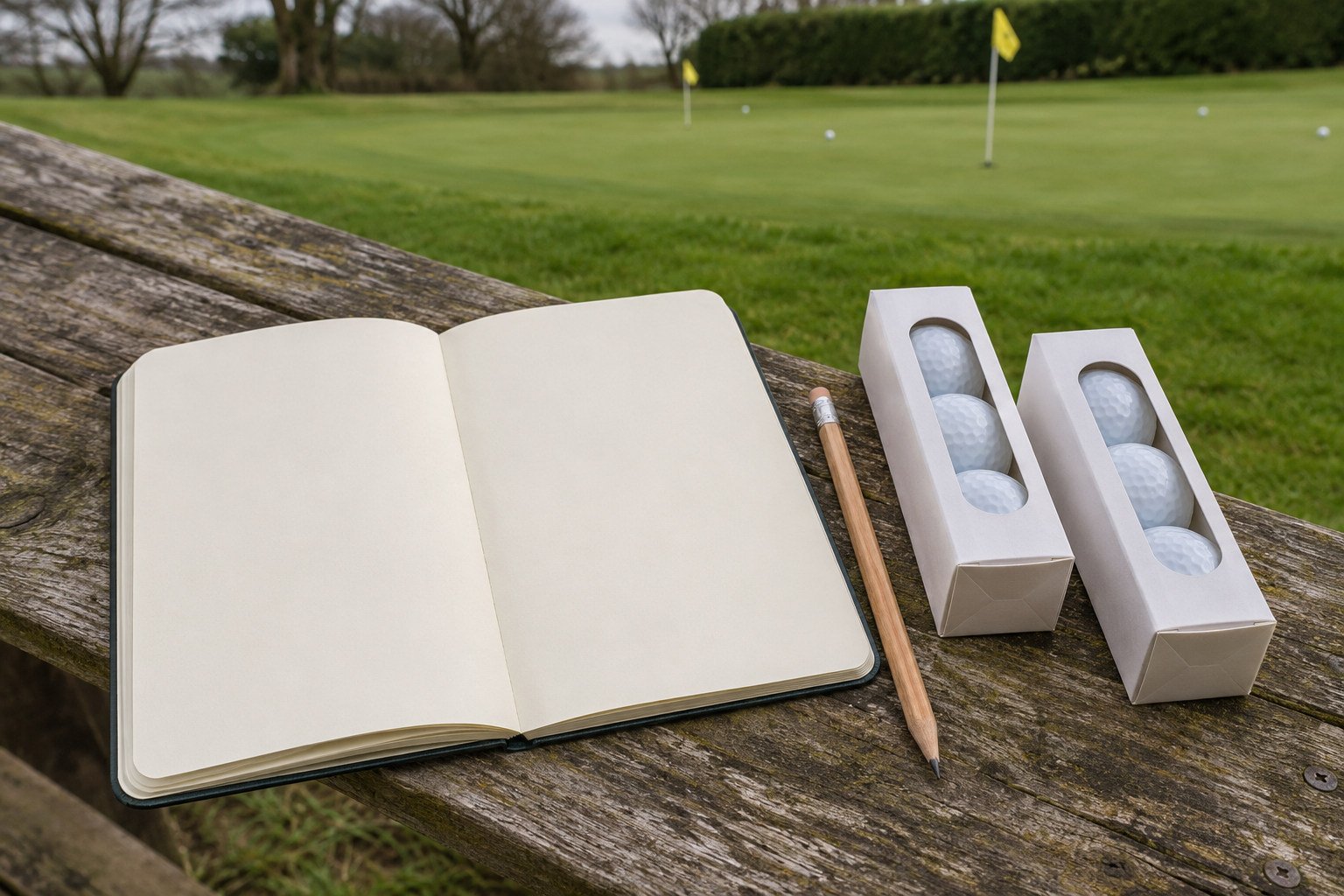
Use a familiar practice setting to compare two identified balls. Illustrative scene.
Some links in this guide are affiliate links. If you buy through them, Taylor’s Trailblazing Golf may earn a commission at no extra cost to you.
A golf ball can feel lovely from the putter and still leave a buying decision unfinished. You may like its muted sound, dislike its response on a short pitch or struggle to notice any difference once the brand name is out of sight. Each of those is a useful observation.
Comparing soft-feel vs firm-feel golf balls works best when you describe a particular shot with a particular club. This guide offers a focused way to record those preferences, then put them alongside the results you need. It is a research-led guide and suggested personal comparison, with no original product-testing results.
Muted, crisp or firm is more informative than a single good-or-bad score.
A putting preference and a pitching preference can be different.
An enjoyable strike and a useful finish answer different questions.
No repeatable preference is a valid result and a reason to consider other buying priorities.
Describe the sensation before calling it soft
Start with words you would actually use after a shot. A quiet click, a crisp note and a cushioned sensation are not interchangeable descriptions. You might enjoy a distinct sound because it gives a clear impression of contact; another player may prefer a more subdued response.
There is no need to settle which ball is objectively softer before deciding which response you like. The useful question is narrower: can you recognise a difference with a familiar club, and does that difference matter to you?
Swipe within the table to see all columns.
| What you are describing | Useful words | Keep separate |
|---|---|---|
| Sound | Muted, quiet, crisp, clicky or difficult to distinguish | Whether the putt reached the hole |
| Sensation at contact | Cushioned, solid, firm or indistinct | A claim about the ball’s construction |
| Personal preference | Prefer A, prefer B or no clear preference | A claim that other golfers will agree |
Choose a few words rather than a ten-point scale with fine distinctions you cannot explain. “A sounded quieter with my putter; I preferred it” is a complete observation. “A is a better ball because it felt softer” has added a performance conclusion that the observation does not establish.
Keep the wording specific if a ball feels different with another club. That is a reason to maintain separate notes, rather than forcing all your impressions into one softness ranking.

Separate an enjoyable response from a useful result
Ask three questions in order: what did I notice, did I like it, and did the shot do the job? This keeps a holed putt from deciding every other part of the comparison. It also allows you to like a ball without having to invent a distance advantage to justify the preference.
For putting, record the sound or sensation immediately, then note whether the pace was usable. On a short chip, note the impression at contact and the eventual finish separately. A ball that feels gentle does not supply a measurement of spin; a sharp click does not tell you how far a drive will travel.
A difference in finish deserves attention, but it needs its own investigation. Was the strike comparable? Did both shots land where intended? Were you trying the same shot? Avoid explaining every short or long finish through the feel label.
The purchase can still be about enjoyment. If two candidates meet your practical requirements and one gives a response you prefer, that is a reasonable deciding factor. When results differ substantially, resolve the performance question before paying for the preferred sensation.
Set up a short, repeatable feel trial
Use two identified models and the clubs you normally play. Check the model name and generation, use clean balls in comparable condition, and keep the same colour or alignment style where practical. If one ball’s markings dominate your attention, our matte-versus-gloss guide helps separate appearance from other preferences.
Choose a practice area where these shots are permitted. Use normal playing equipment and listen under ordinary conditions. A test that changes your putter, grip and ball at once will leave you with a less useful answer about the ball.
Use three familiar stations
- A comfortable putt: choose a repeatable distance on a reasonably even part of the green. Use your usual putter and normal routine.
- A basic chip: select a straightforward lie and one club. Keep the shot shape and landing intention the same for both balls.
- A short pitch: use a stock shot you can repeat without stretching your technique. This checks whether the putting preference also appears with a different strike.
For a manageable first session, try three alternating pairs at each station. Change which model goes first at the next station. This is a suggested personal routine, not a statistical test or a minimum sample that validates a product claim.
Record the impression while it is fresh
After each shot, say or write a brief description before discussing which ball you expect to prefer. If a friend helps, ask them to record your words without adding their own verdict. They can vary the order, but visible logos and markings mean you should not describe the exercise as fully blind.
Mark an obviously heavy, thin or off-centre strike and repeat the pair when useful. It offers a weak comparison of ordinary contact. Keep a note of recurring mishits for the wider fitting decision, however; tidy notes should not conceal a problem you commonly encounter.
Stop when attention or contact deteriorates. Repeat the favourite comparison on another day before buying a large quantity. You are checking whether a preference survives a fresh start, not trying to make one ball win.
Use a shop mat for an initial impression
A shop putting mat can help you form an initial impression with the same putter and surface. Keep the conclusion local to that comparison, then repeat it with your own equipment and ordinary playing conditions before treating it as a durable preference.

Keep a record that preserves the differences
A small record is enough if it keeps the questions apart. Write the exact models and your clubs at the top, then use one row for each shot type. Record the response first; add the outcome afterwards.
Swipe within the table to see all columns.
| Shot | Sound, sensation and preference | Separate practical note |
|---|---|---|
| Putt with your usual putter | Describe A and B; prefer A, B or neither | Was the pace usable? Was contact comparable? |
| Basic chip with one club | Describe A and B; note any changed preference | Did both land near the intended area? |
| Stock short pitch | Describe A and B; note clear or uncertain differences | Was the eventual release suitable for that shot? |
Add “repeatable” or “uncertain” beside the preference after the session. Those words are more useful than pretending a three-shot impression establishes a precise gap between products. If you cannot reliably tell them apart, keep that result.
Here is a hypothetical note, not a test result: “A sounded quieter on putts; I preferred A. Both seemed usable for pace. On pitches I had no clear feel preference.” That supports a modest putting preference. It gives no reason to claim A spins more, flies further or suits every golfer.
A second possible note is “I could not describe a difference, but preferred B after reading the box.” That asks for another comparison with less discussion of the packaging. The aim is to understand your preference rather than to prove that branding has no influence.
Read current model descriptions as comparisons
Manufacturer language can help choose candidates, provided the reference point remains visible. A relative description within one range is easier to interpret than placing every brand’s use of “soft” on an imagined common scale.
Swipe within the table to see all columns.
| Candidate | Verified manufacturer description | Useful question for your trial |
|---|---|---|
| Titleist Pro V1 and Pro V1x | Titleist describes Pro V1 as softer-feeling than Pro V1x. [1] | Can you notice and prefer that relative difference with your own clubs? |
| Callaway Chrome Soft, 2026 | Callaway’s UK product page describes a soft feel. [2] | Does this response suit you when compared with a ball you already know? |
These are manufacturer descriptions checked on 23 November 2026, not a measured ranking from this article. Pro V1x being firmer than Pro V1 also does not make it the firmest ball available.
Where to look if those comparisons fit your shortlist
Clubhouse Golf has separate white-dozen listings for Pro V1 and Pro V1x. Check the model generation and pack details against the balls you plan to compare. [3] [4]
View Pro V1 at Clubhouse Golf View Pro V1x at Clubhouse Golf
For the 2026 Chrome Soft, the official UK product page gives a direct place to check the current options. Choose the intended colour and markings before comparing the delivered cost. [2]
There is no need to buy every example. A familiar ball and one plausible alternative make a more manageable starting comparison than an assortment of unfamiliar models.
Interpret the preference you actually found
You prefer the softer-feeling candidate and both do the job
Keep the preference. You do not need to turn it into an unsupported performance claim. Check the total buying cost, availability of the exact version and whether you enjoy using the same model across a round.
You like the putting feel but dislike the pitch result
Investigate the pitch comparison with comparable strikes and landing intentions. If the difference persists, decide whether that response suits the shots you normally face. A pleasant putting sensation need not outweigh an approach or short-game limitation that matters more to you.
You prefer different models with different clubs
Write that down plainly. Decide which preference is substantial and which is merely noticeable. You are choosing one model for a range of shots, so a small compromise may be acceptable. A trial with a third candidate can be worthwhile if neither of the first two meets your important requirements.
You notice little or no difference
Treat that as a useful result. You can give more weight to dependable results, visibility, the cost of replacing lost balls and access to the same model. Do not keep repeating the exercise until you manufacture a preference that matches the packaging.
In each case, distinguish “I noticed it” from “it changes my decision”. Many differences are interesting without being important enough to justify switching balls.

Make the purchase proportionate to the evidence
A feel trial is a small part of ball selection. Before committing to several dozen, use the finalists on the longer shots and short-game situations you actually play. Our structured golf-ball fitting guide without a launch monitor covers the broader landing, release and repeatability comparison. Use that process for performance questions rather than expanding a putting sensation into a whole-game verdict.
Buy the smallest practical quantity that lets you compare identified balls in sound condition. Borrowing known, undamaged examples can help; a mixed bag of uncertain models or generations makes the conclusion harder to use. Check delivery costs before assuming a small online order is economical.
When the preferred model costs more, state what the extra expense buys for you. “I enjoy the response and the results remain suitable” is honest. “It must be longer because it feels easier to hit” is a different claim and requires different evidence.
Keep a short final note: the exact model, the club with which the preference was strongest, any compromise you accepted and why the purchase fits your budget. That makes the next comparison easier when a manufacturer changes the range.
Sources and checks
- Titleist UK — Inside the Titleist Golf Ball LineupManufacturer discussion of individual feel, acoustics and club-dependent perception; relative Pro V1 and Pro V1x feel.Checked 23 November 2026.
- Callaway Golf UK — 2026 Chrome Soft Golf BallsCurrent UK model page and soft-feel positioning. A manufacturer description, not an independent test.Checked 23 November 2026.
- Clubhouse Golf — Titleist Pro V1, White DozenVerified UK buying destination. Retailer technical claims are not used as evidence for performance.Checked 23 November 2026.
- Clubhouse Golf — Titleist Pro V1x, White DozenVerified UK buying destination; confirm current generation and selected pack before ordering.Checked 23 November 2026.
Illustrations in this article were created for Taylor’s Trailblazing Golf. Third-party photographs, where used, are credited beside the image or in the source list.