Wood-Like vs Iron-Like Hybrid Heads: What Changes?
Separate the shape you can see from the design and complete build you need to compare.
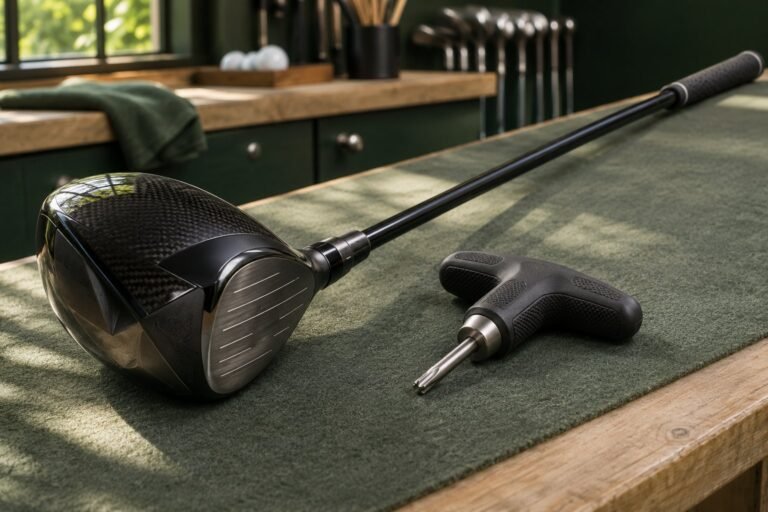
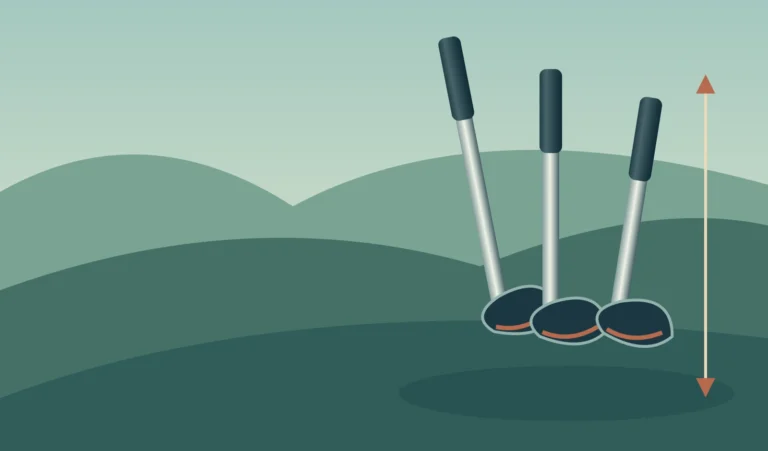
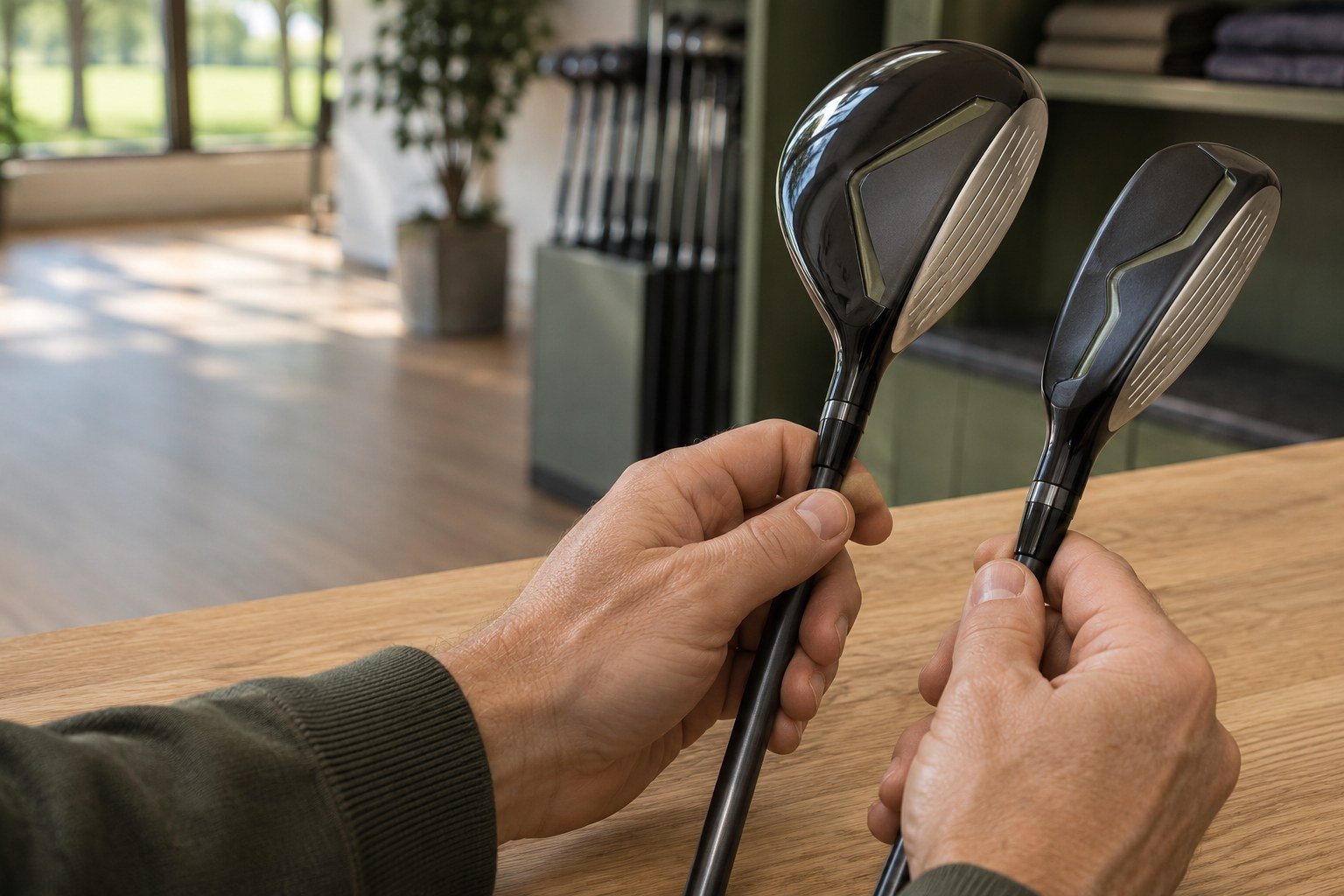
AI illustration: contrasting hybrid shapes, not photographs of the named models.
When comparing wood-like vs iron-like hybrid heads, the first difference is the view behind the ball. One leaves a broad sweep of crown in sight; another presents a more compact outline. That can change which club you feel comfortable aiming, but it does not settle launch, forgiveness or fit.
Ad – includes affiliate links. If you buy through these links, Taylor’s Trailblazing Golf may earn a commission at no extra cost to you. Recommendations consider fit, drawbacks and alternatives.
Record footprint, face and sole separately instead of buying a category label.
CG, MOI and bias need exact model evidence; the outline is not a measurement.
A reassuring look belongs in the decision alongside strike and the complete build.
Wood-like vs iron-like hybrid heads: compare the visible shape
Use these terms to describe a view, not to divide every hybrid into two official grades. In this guide, wood-like means that more of the rounded body is visible behind the face. Iron-like means a more compact presentation, with less of that body dominating the view. There is no consistent numerical boundary in the manufacturer descriptions used here: Titleist calls GT3 compact and iron-like, while Callaway describes Quantum Max as midsized.[1][6]
A model can sit between those descriptions. A relatively small head may still have a rounded crown; a larger head may present a straight leading edge. Write down the particular feature that attracts or distracts you instead of deciding that you only like one category.
Scroll within the table on a small screen.
| Visible feature | What to compare | What the view cannot establish |
|---|---|---|
| Footprint behind the ball | How far the head extends backwards and sideways when you take your normal address position. | The head’s precise centre of gravity or resistance to twisting. |
| Face presentation | Visible face height, heel-to-toe width and the way the leading edge frames the ball. | The launch angle or carry you will produce. |
| Sole and leading edge | Curvature, any steps or rails, and how the head sits on the same level surface. | Whether it will move through your usual turf more reliably. |
| Face relative to the hosel | Whether the leading edge appears set behind the front of the hosel, and whether the face looks easy to aim. | An exact offset measurement or the direction of your next shot. |
| Crown and alignment detail | Whether the finish and markings help you identify the face direction. | A performance improvement simply because one looks more reassuring. |
Compare actual clubs at address where possible. A close product photograph taken from above one head and in front of another is a poor basis for judging their proportions. An impression such as “too much club behind the ball” is useful feedback; “therefore it must hook” is a conclusion you have not established.

The outline does not reveal the weight distribution
Two familiar technical terms explain why appearance needs supporting evidence. Moment of inertia, or MOI, describes resistance to rotation. It contributes to stability on an off-centre strike, but Titleist’s explanation also places it alongside face design and centre-of-gravity location as part of forgiveness.[2]
The centre of gravity, or CG, depends on where the head’s mass is distributed. Its position influences launch, spin and shot bias.[3] A photograph shows the outside shell. It does not show how much mass sits in different parts of that shell, or establish the complete effect of an adjustable weight setting.
That distinction changes how you should read a product page. A broad footprint is a reason to investigate stability, not a substitute for the manufacturer’s model-specific information. Equally, a compact shape is not proof that forgiveness has been sacrificed.
Titleist supplies a useful counterexample. It says GT3 has a smaller profile than TSR3 while its MOI is higher. That is a manufacturer comparison with the previous model, not evidence that every small hybrid is more forgiving than every large one.[1]
Ask which miss the design is meant to help
“More forgiving” is incomplete buying advice. Ask whether the claim concerns loss of speed, directional change or another outcome, and what happens on the part of the face you tend to strike. Your ordinary misses still need to be included in the trial.
Do not compare isolated MOI claims from different brands as though they are automatically measured and reported in the same way. If the information does not state a comparable basis, leave the ranking unresolved. You can still compare what each complete club does for you.

Separate face height, sole shape and offset
Look at the club from more than one angle. A top view helps you judge the footprint; a low front view shows how much face sits above the ball; a sole view reveals contours that the crown conceals. Those are separate observations, so resist reducing them to one “large” or “small” judgement.
The sole deserves its own question
Write down what you can see: a flatter central area, a curved heel or toe, a step, or a pronounced leading edge. Then ask to try the club from a representative permitted grass lie. You are checking whether that sole works with your delivery and conditions, rather than awarding the widest sole an automatic advantage.
For example, Callaway describes Quantum Max’s Step Sole as a design intended to reduce sole contact with the turf.[6] That is a specific design claim. It does not mean that every rounded hybrid glides through grass, or that a compact one necessarily digs.
Offset is not another name for a rounded head
The GolfWorks measurement manual defines hosel offset by the relationship between the front of the hosel and the face’s leading edge. It treats face progression and face angle as separate measurements.[4] The amount of crown behind the face does not supply any of those numbers.
If a club looks closed to you, tell the fitter exactly that. Ask them to check the model, setting and how it sits when you address it. Avoid declaring it draw-biased solely from an oblique photograph. A published draw-bias claim is useful information; your visual impression is useful feedback. Keep both, but do not interchange them.

What current model examples actually demonstrate
The following comparison uses two Titleist hybrids at the same stated loft and their listed standard men’s lengths. These are specifications and manufacturer descriptions, checked on 22 November 2026, not results from a playing test.
Scroll within the table on a small screen.
| Specification | Titleist GT2 hybrid | Titleist GT3 hybrid |
|---|---|---|
| Compared loft | 21° | 21° |
| Published head volume | 124 cc[1] | 109 cc[1] |
| Listed standard length | 40 in[5] | 40 in[5] |
| Shape description | Larger of this particular pair; refined profile. | Compact, described by Titleist as iron-like.[1] |
Titleist’s current specification page notes that hybrids built with Mitsubishi MMT SpeedMesh shafts are half an inch longer than the listed lengths.[5] Check the actual build you are offered; the same head name does not settle the assembled length.
The volume difference is 15 cc, calculated from the published figures. Volume describes three-dimensional size; it does not tell you how much of the difference is face height, width or depth. The equal loft and listed length also show why “iron-like” should not be translated automatically into “shorter shaft”.
Callaway illustrates a different distinction. Its UK page describes Quantum Max as midsized, with neutral CG and moderate face height.[6] Quantum Max OS is described as oversized and draw-biased.[7] Here, choosing the broader-looking model also means investigating a stated directional bias. The shape comparison cannot be separated from that design choice.
These examples identify useful questions, rather than rank the four heads. Keep comparisons within a clearly identified model and build. Neither a cubic-centimetre figure nor a brand’s category label establishes which hybrid will give you the better strike.
Back to top ↑Compare the complete build before blaming the head shape
A common buying trap is to try one compact hybrid with one shaft, then a broader head with a different loft and longer shaft, and attribute the whole difference to appearance. You may have found a better club, but you have not isolated the reason.
Make a short build record for each candidate: full model name, playing hand, stated loft and setting, shaft model and flex, playing length and grip. Add any adjustable weight position that the fitter changes. Keep separate notes for each version instead of mixing their shots into one result.
For a shape-focused comparison, ask whether the fitter can make the loft, shaft and length reasonably comparable. Perfect matching may not be available, so record the differences openly. Do not reject a useful complete club because it fails to prove a tidy theory about its head.
Ask the fitter to distinguish a preference at address from an improvement in strike. If both change, note both. The exact successful specification matters more than proving that one head-shape label is better for everyone.
There are two different results worth recognising. “I prefer aiming this shape” is a visual preference. “This build gives me a more useful group of shots” is a playing observation. They may point to the same club, but a comfortable look is not a reason to disregard repeated poor contact.
For a paid session, our guide to what a useful club-fitting fee should include can help you ask for a clear comparison and a written final specification.
Back to top ↑Use a three-view check and a small comparison sheet
Take your current hybrid, if you have one, and one genuinely different-looking candidate. Start with a quiet address check before hitting. This is an editorial comparison method you can use, not a test claimed to have been carried out by this publication.
- Set both clubs on the same level surface in your normal address position. Note which outline makes the face direction clearest to you.
- Look from the front and underneath. Record the actual differences in face presentation and sole contours, without predicting a ball flight.
- Check the build notes. Identify any loft, shaft or length difference that could affect the comparison.
- Use one target and your normal swing. Alternate short groups so each club has a chance before you become tired or overly familiar with one.
- Record the ordinary poor shots as well as the attractive ones. If possible, check a permitted grass lie relevant to the club’s main job.
Scroll within the table on a small screen.
| Question | A useful note | Conclusion to avoid |
|---|---|---|
| Does it suit your eye? | The face looks easy to aim; the rear of the head is less distracting. | This shape must be straighter. |
| Does the strike hold up? | Contact remained useful across the short groups, including the less tidy swings. | The best strike proves it is more forgiving. |
| Does the sole suit the job? | The result was useful from this fairway lie; rough has not been tried. | It will work from every lie. |
| Did the build change? | The candidate had a different shaft and loft setting. | Head shape caused all of the difference. |
If the view is the only difference you can identify and the shots are otherwise close, appearance can be a reasonable tie-breaker. You do not need a technical story to justify preferring one outline. If one candidate produces repeated costly misses, investigate those before allowing the nicer shape to decide.
Keep the conclusion proportional to the evidence. A handful of shots can reveal a clear dislike or a promising option. It cannot establish a universal rule about every wood-like or iron-like hybrid.

Choose the shape that earns its place in the comparison
A broader head deserves a trial if the visible body helps you settle behind the ball and its exact design offers something you need. A compact head deserves one if you prefer less material in view and can still achieve useful launch and dependable contact. Neither preference needs to be justified by an assumed handicap bracket.
Scroll within the table on a small screen.
| What you find | Sensible next step | What would change the decision |
|---|---|---|
| You prefer the broader view and the shots remain useful | Shortlist that complete build. | A stated bias or repeated miss conflicts with the shot you need. |
| You aim the compact head more comfortably and strike it dependably | Keep it in contention alongside the broader option. | It repeatedly loses the carry or height needed for the main job. |
| The shapes look different but the results are close | Use comfort, build suitability and cost as tie-breakers. | A second representative session reveals a meaningful difference. |
| Your favourite-looking head is unreliable | Ask the fitter to investigate the build before ordering. | A properly recorded adjustment makes the result useful. |
| Neither candidate improves the job | Keep the current club or revise the fitting brief. | You identify a different requirement that the existing club cannot meet. |
Be particularly wary of buying a shape to cure a named miss. A rounder head is not automatically a hook machine, and an iron-like hybrid is not automatically neutral. Read the exact model’s bias information and assess the ball flight you actually produce.
Also keep the product categories straight. Titleist lists GT hybrids separately from its U·505 and T250·U utility irons.[5] An iron-like hybrid remains a hybrid in that range; it is not simply a driving iron with a different name. If you are comparing against a utility iron, you have introduced a different club-category decision.
Back to top ↑Order the useful build, with the shape in context
Once the comparison supports a purchase, match the complete specification to the listing. Check the playing hand, exact model suffix, loft, shaft, length and any agreed setting. Ask what is included and which return terms apply to that particular order, especially if it is custom-built.
The Titleist GT2 and GT3 examples are useful starting points for comparing two distinct presentations. The Quantum Max and Max OS examples show why a size change may also bring a bias change. Browse them as candidates to investigate, not as winners selected from a test.
A previous-generation club that gives you the right view and result may be sufficient. Conversely, changing only the visible shape may be an expensive response when your current club’s loft or build is the unresolved issue. A fitting can help separate those questions before you spend on a replacement.
Choose a hybrid you can aim comfortably, then require the complete club to produce the shot you need. The shape earns a place in that decision; it does not make the decision on its own.
Back to top ↑Sources and method
This guide brings together manufacturer information and the sources below. The comparison methods and decision aids are editorial suggestions for your own fitting or trial. No personal product test or measured performance result is claimed. Read how we review golf gear for the site’s evidence standards.
- Titleist UK — GT1, GT2 and GT3 hybrid announcement, 15 January 2025
Checked 22 November 2026. - Titleist Learning Lab — Moment of inertia
Checked 22 November 2026. - Titleist Learning Lab — Centre of gravity
Checked 22 November 2026. - The GolfWorks — Golf Club Gauges operating manual
Checked 22 November 2026. - Titleist UK — Current club specifications
Checked 22 November 2026. - Callaway UK — Quantum Max hybrids
Checked 22 November 2026. - Callaway UK — Quantum Max OS hybrids
Checked 22 November 2026.
Illustrations in this article were created for Taylor’s Trailblazing Golf. Third-party photographs, where used, are credited beside the image or in the source list.