

Buying a Used Hybrid: Face Condition, Shaft and Adjustability
Check the actual club, its complete build and the terms of the sale before deciding whether it is good value.
AI illustration: examine the actual club and ask for clear evidence of its condition.
Buying a used hybrid starts with the actual club offered for sale. The model name is only part of the purchase: its face, installed shaft, playing length and adjustment components all deserve a clear record.
This research-led guide helps you request useful evidence, decide which questions need professional inspection, and compare the complete cost. It is for checking a used listing or a club on a shop counter; deciding whether its flight suits your game comes after those purchase checks.
Ad – includes affiliate links. If you buy through these links, Taylor’s Trailblazing Golf may earn a commission at no extra cost to you. Recommendations consider fit, drawbacks and alternatives.
Match the head to the installed shaft, length and adjustment components.
Use actual-item photographs and written answers for specific unknowns.
Do not use a hard swing or a shaft-flex test as an inspection method.
Include quoted work, delivery and the terms of any permitted trial.
Buying a used hybrid: decide what the evidence allows
Start by separating an unanswered question from a reason to stop. A missing shaft photograph may be easy to resolve. A seller asking you to ignore a split or an unexplained loose head is a different proposition. Neither a clean crown nor a high condition grade can establish the history of the whole club.
| What you have found | Your next step | What would change the decision |
|---|---|---|
| Clear item photographs, a documented build and suitable terms | Keep it on the shortlist. | Check the delivered club against the listing before using it. |
| Missing shaft label, length, hosel setting or close-up | Ask for the missing evidence. | A clear answer that belongs to this actual club, rather than a stock specification. |
| A possible crack, dent, exposed shaft fibres, movement or unexplained rattle | Do not hit shots with it. Seek assessment by a qualified clubmaker or choose another club. | An appropriate professional assessment, with any necessary work completed and documented. |
| Conflicting identity, refused photographs or a repair you cannot establish | Leave the purchase unresolved; usually move on. | Credible evidence that answers the specific concern, not a bigger discount. |
This is a buying checklist, not a method for certifying a club as structurally sound. The Office for Product Safety and Standards warns that wear and modifications in second-hand goods can create risks that are not obvious to the buyer. Photographs are useful evidence, but their limits matter.[1]
For a playable club you want to use immediately, the strongest candidate is one whose identity, condition and build you can establish without a speculative repair. Someone looking for a restoration project has a different brief.
Back to top ↑Record the exact head and the build attached to it
“Regular four hybrid” leaves too much open. Before comparing prices, make a small record for each candidate. A model’s original catalogue specification is a useful reference; it is not proof that a used example still has its original shaft, grip or length.
| Record | Ask for |
|---|---|
| Head identity | Brand, full model and version, model generation or release year, right- or left-handed, club number and loft marked on the head. |
| Installed shaft | Full manufacturer and model name, flex and weight-class marking as printed on the shaft, with a photograph of the label. |
| Playing length | Measured length of the assembled club, who measured it and how. Keep this separate from the length of a loose shaft. |
| Hosel and weights | Fixed or adjustable hosel; exact sleeve or adapter type, present setting, installed weight positions and any replacement parts. |
| Grip | Model, stated size, condition and any known extra tape or build-up. |
| History and inclusions | Reshafting, shortening, extensions, adapter changes or refinishing; who did the work; receipt if available; included headcover and correct adjustment tool. |
Record unknowns as unknowns. “The previous owner said it was standard” is different evidence from a measurement or a build invoice. Likewise, a premium shaft description tells you little if the photograph does not identify the installed model.
Ask the seller to distinguish the model year from the year they bought it. A club purchased recently may be an earlier generation, and an older head may have a much newer shaft. Those are useful facts to establish, rather than automatic reasons to reject it.
If the club must reproduce one you have already tried, compare the whole record with that trial club. Paying for the right model name while accepting an unknown build defeats the purpose.
Back to top ↑Ask for photographs that answer specific questions
Request photographs of the actual item in clear, diffuse daylight, without filters. A stock image can confirm the model’s appearance but cannot show this club’s condition. One attractive address photograph also leaves most of the shaft and the underside unseen.
- Full face, straight on: include the entire striking surface, the top edge and both ends. Ask for a second angle if glare hides a mark.
- Crown and leading edge: an address view plus an angled close-up makes it easier to locate paint marks and questions you want answered.
- Sole: show the model name, loft, any weight ports and the junctions around the head. Ask for the serial marking where the model has one.
- Whole shaft: photographs covering its full length, with close-ups of the model label and any marked area. An isolated label proves very little about the rest.
- Hosel junction: show the shaft entering the head, the ferrule or adapter, readable adjustment markings and the screw area where accessible without dismantling.
- Grip and complete club: show the gripping surface and butt end, then the entire assembled item so the separate photographs can be matched.
A useful message to copy and adapt:
Please send clear photographs of the actual hybrid’s face, crown, sole, full shaft, shaft label, hosel and grip. Could you confirm its measured playing length, current hosel setting and any shaft, adapter, weight or length changes? Please also identify any damage or repair, what is included, and whether the return terms allow hitting balls.
For a particular mark, ask for the same area from two directions and a wider photograph showing where it sits. Avoid inviting the seller to sand, polish or paint it before photographing it. You want an accurate record of what you are considering.
Save the listing and replies. If buying in person, use the same sequence with the club on a clean counter. You can examine visible surfaces without flexing the shaft, twisting the head or taking the club apart.
Back to top ↑Read face wear cautiously and check the rest of the head
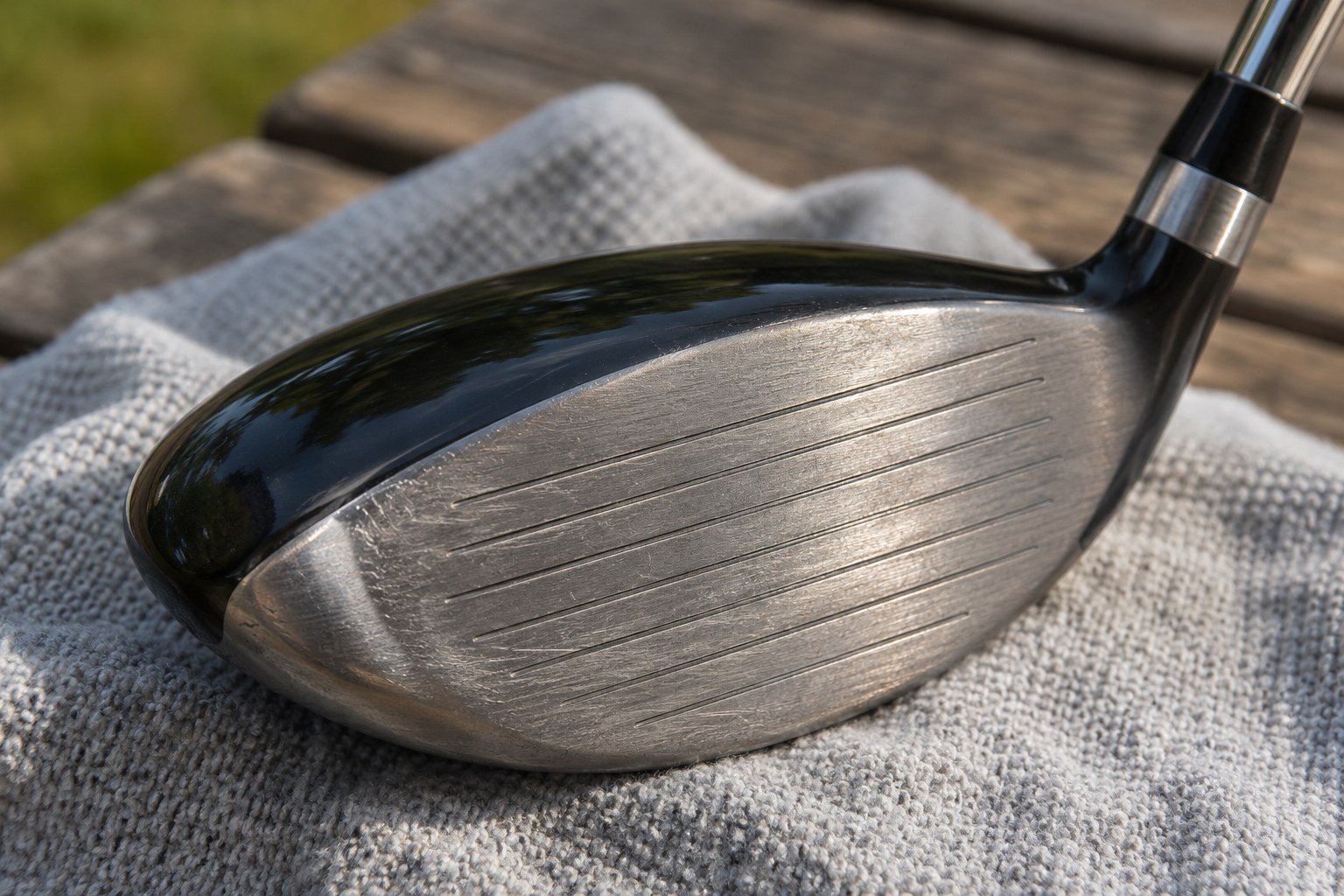
A used hybrid need not look pristine to merit consideration. The buying question is whether the observed condition is adequately explained and acceptable to you. A photograph cannot establish the remaining life of a face, quantify lost ball speed or rule out hidden damage.
Ask what produced a conspicuous mark and whether it has changed. Light-looking contact marks, finish wear and sole scuffs can be questions about appearance and value. An apparent split, depression, displaced edge or deep impact mark calls for professional inspection. Do not decide from the image that either group is definitely harmless.
Check beyond the central hitting area. The face’s upper edge, the crown, the sole and the head-to-shaft junction may tell a different story from a carefully framed photograph. If ordinary handling reveals movement or a rattle, stop the playing trial and have the cause assessed.
A seller’s condition grade is useful only when you know what it covers. GolfClubs4Cash says it assesses the head, shaft and grip separately. Read each component’s assessment and the actual-item photographs; a single overall label should not do all the work.[2]
Do not convert “good” from one seller into an assumed numerical equivalent at another. Instead, write your own concern: “face photograph blurred at the toe” is actionable; “looks about seven out of ten” is not.
For an otherwise suitable candidate, visible cosmetic wear may help you negotiate. Suspected structural damage is a reason to pause or walk away, not an invitation to discover the answer with a few hard swings.
Treat the shaft, length and grip as part of the purchase
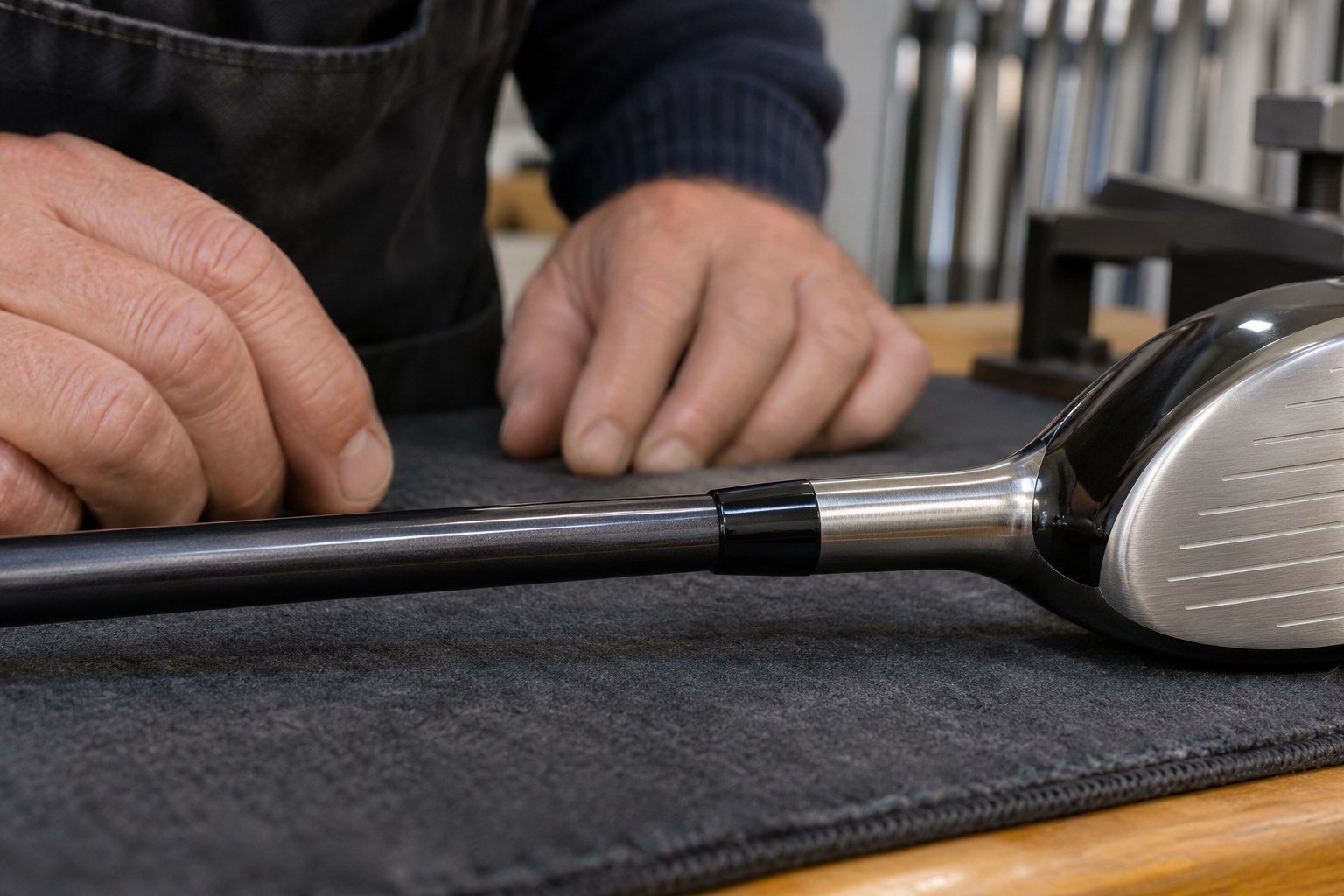
A tidy head can distract from an uncertain shaft. Ask for its full identity and examine the photographs along its length, especially any area the seller describes as rubbed, scratched or repaired. If there are apparent splits, exposed fibres, a crease or unexplained movement at a joint, do not flex or load the shaft to test it. Stop using it and ask a qualified clubmaker.
A replacement shaft is not automatically a problem. Establish what was installed, by whom and whether there is a record of the work. If the seller cannot identify an adapter or explain a length change, obtain a professional assessment before treating the club as ready to play.
“Standard length” needs a reference: standard for which model, club number and original specification? Ask for the actual assembled length and measurement method. If length matters closely to your purchase, have the candidate measured by the same shop or method as your comparison club. Do not turn an approximate photograph beside a tape measure into a claim of millimetre accuracy.
Record any shortening, extension or known tip trimming without trying to reconstruct it from the shaft graphics. A buyer cannot reliably recover an undocumented build history simply by looking at the paintwork. If recreating a familiar build is essential, incomplete records may be enough to choose a better-documented example.
Grip condition deserves its own allowance. Check whether you would want to keep its texture, size and shape, then obtain an installed replacement quote if necessary. The guide to golf grip size and hand measurements can help organise that choice. Do not pay extra for a nearly new grip you already know you would replace.
Keep a routine grip change separate from an unknown shaft repair. The former may be a straightforward quoted cost; the latter needs a clear diagnosis, compatible parts and an agreed outcome before you can sensibly price the purchase.
Verify adjustability against the exact hybrid’s instructions
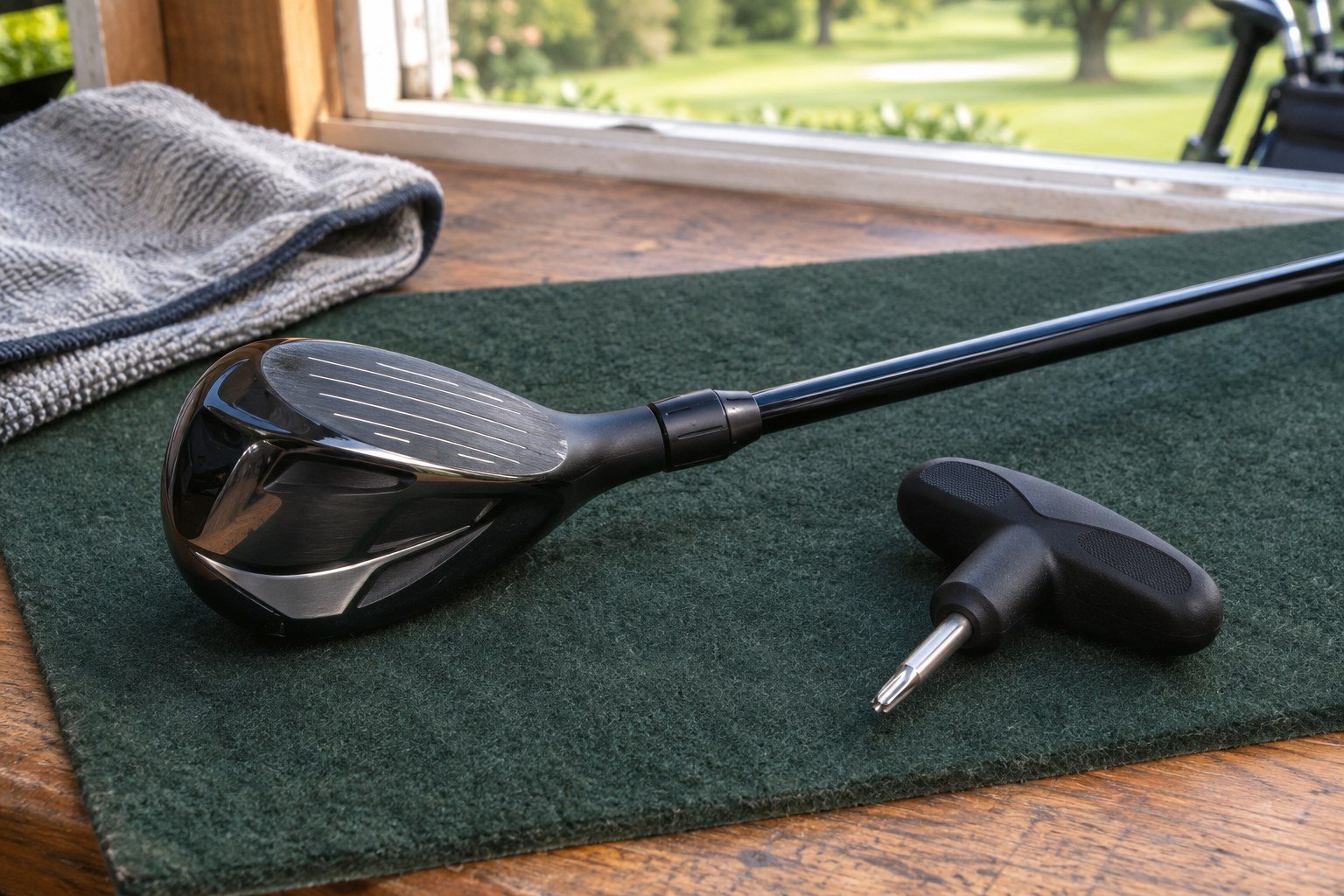
Check whether the listed hybrid has an adjustable hosel at all. A seller calling it “adjustable” might be referring to a removable weight rather than a loft sleeve. Ask for the manufacturer’s instructions for that exact model and keep the photographed setting with your record.
Titleist provides a useful example of why the correct chart matters. Its SureFit guide specifies 1° loft and lie increments for hybrids, compared with 0.75° for its drivers and fairway woods. It also gives different standard positions for right-handed and left-handed clubs: A1 and D4 respectively. Use the hybrid chart for the correct hand.[3]
The purchase checks are specific:
- Can the seller identify the installed adapter and show its markings clearly?
- Does the manufacturer or an authorised repairer confirm that this head, adapter and shaft assembly belong together?
- Are the required screw and other components present, and has anything been replaced?
- Is the correct torque tool included or obtainable, with its cost accounted for?
- Can a competent shop confirm normal adjustment if there is uncertainty, without forcing a damaged or binding connection?
Titleist requires its SureFit wrench and genuine compatible components, and says to stop if the screw binds. Those instructions should guide inspection and assembly; an adapter appearing to fit is insufficient evidence of compatibility.[3]
Do not generalise one brand’s compatibility statement to another generation or club type. The broader guide to head and shaft adapter compatibility explains the questions to ask, but its driver examples are not a hybrid compatibility list.
A fixed-hosel club can still be the right purchase. An adjustable one earns extra value only if its documented settings and complete components serve your needs. Do not buy the wrong loft or build on the assumption that a sleeve will solve everything.
Keep authenticity evidence and warranty promises separate
A serial marking is worth recording, but it is not an authenticity certificate. Titleist’s customer-service guidance explicitly says registering a serial number does not confirm a product is authentic. Successful registration should therefore not end your checks.[4]
Look for a coherent history: the seller’s identity, actual-item photographs, a matching description, purchase or repair records where available, and a clear route for resolving a problem. An original receipt can support that history, but check that it describes the relevant club and build.
If details conflict, ask the manufacturer or an authorised retailer what can be verified. A logo, headcover, serial sticker or unusually low price alone cannot settle the issue. Avoid diagnosing a counterfeit from a colour difference in a photograph; equally, do not let an impressive-looking accessory override unanswered questions about the club.
Warranty cover is a separate enquiry. Titleist’s UK policy, for example, asks for the original receipt and original factory condition, and notes that some third-party repairs can affect whether it can service a club. This does not establish whether a particular second-hand purchase is covered.[5]
Ask whose promise you are relying on: the manufacturer’s warranty, the used retailer’s own cover, or neither. Get the duration, exclusions, claim route and eligibility confirmed for your purchase. Treat “still under warranty” as a question until the responsible business confirms it, rather than adding an assumed benefit to the valuation.
Back to top ↑Read the return terms before arranging a playing trial
Know who is selling and how the contract is made. A marketplace may host both traders and private sellers. A return period also does not, by itself, give permission to play several rounds and return the club unchanged in value.
| Buying route | Change-of-mind position | Confirm before paying |
|---|---|---|
| Distance purchase from a UK trader | For an ordinary non-bespoke purchase, the usual cancellation period gives you 14 days after receipt to notify the seller, then a further 14 days to return it. Handling beyond what is necessary can affect the refund.[6] | How to cancel, return postage, permitted inspection and any separate playing-trial policy. |
| Purchase made in a shop | There is no general legal refund entitlement simply because you change your mind.[6] | Whether the shop voluntarily offers a trial, refund, exchange or credit, and under what conditions. |
| Purchase from a private individual | The automatic 14-day distance-purchase cooling-off period does not apply.[7] | The written description, any agreed return arrangement and the platform’s applicable protection terms. |
Faulty or misdescribed goods bought from a business raise separate rights; a shop’s voluntary returns policy or a manufacturer warranty does not replace them. For a dispute, use the current official guidance rather than assuming a policy’s headline answers every case.[6]
GolfClubs4Cash illustrates why the detail matters. Its UK online policy specifies return within 30 days of receipt in the supplied condition, with the buyer paying postage. It says noticeably worse condition may reduce the refund, but also states that additional use can exclude a used club from its standard return process. Its separate in-store scheme offers a two-week exchange on eligible second-hand clubs, with exclusions. Ask which terms apply to the exact club before arranging a playing trial.[8]
Ask one direct question: “If I hit balls with this exact used club and it does not suit me, what can I receive back, by what deadline, and what costs apply?” Keep the answer. A refund to your payment method, an exchange and a trade-in offer have different consequences for your budget.
When the parcel arrives, compare the head, shaft label, setting and condition with the saved listing before use or alteration. Photograph any discrepancy and contact the seller promptly. Keep the packaging until you have resolved the purchase.

Compare the cost of a usable club, not just the asking price
Add together the purchase, delivery and any work you already know you need. Get a firm quote for the installed result before including a replacement grip, correct adapter, tool or shaft. If parts availability or repairability is unresolved, leave it as an unresolved purchase rather than inventing a reassuring allowance.
| Cost or evidence | Candidate A | Candidate B |
|---|---|---|
| Used club | £85 | £110 |
| Delivery | £8 | Included in this example |
| Necessary grip replacement, supplied and fitted | £15 | No replacement planned |
| Total before optional changes | £108 | £110 |
| Build record | Shaft identified; length still unanswered | Shaft and measured length documented |
| Decision | Ask for the missing measurement before proceeding. | Worth comparing at a £2 difference, if condition and terms also meet your needs. |
Once delivery and the planned grip change are included, Candidate A is only £2 cheaper. Candidate B still needs to meet your condition and return-term requirements, but its documented length is worth considering at that small difference. An uncertain shaft repair or head problem needs its own assessment before either purchase makes sense.
Set the total beside a comparable new option before you commit. Clubhouse Golf’s Callaway hybrid category explicitly offers new clubs rather than second-hand hybrids.[9] It can provide a new-build comparison, while Callaway’s UK hybrid range provides the manufacturer’s current alternatives.[10] Compare the relevant hand, loft and build, plus delivery and terms; a lower starting price for an unsuitable configuration tells you little.
A used club can remain the better purchase even when a new option exists. Choose it because the complete, documented club meets your brief at a worthwhile total cost. If making it suitable consumes the saving, keep looking.
Back to top ↑Finish with a short purchase record
Before paying, complete these five sentences:
- I am buying this exact head, hand, marked loft, shaft and measured playing length.
- I have seen the actual face, crown, sole, full shaft, hosel and grip, and resolved the visible concerns that matter.
- I know the adjustment system, present setting and included parts, or I have confirmed that the hosel is fixed.
- I understand the seller’s terms, any permitted trial, and the total cost of the club as I intend to use it.
- I will check the delivered item before use and stop if damage or a loose component is suspected.
If one answer is missing, ask whether it can realistically be obtained. A missing photograph can be supplied. A claimed shaft history with no record may remain unknown. A seller’s urgency does not make either uncertainty smaller.
For most buyers, the sensible choice is the used hybrid that needs the fewest assumptions: identifiable build, explained condition, compatible components and terms you understand. Accept cosmetic wear you can live with; leave unresolved damage and speculative repairs to a different purchase brief.
Back to top ↑Sources and method
This guide brings together manufacturer information and the sources below. The comparison methods and decision aids are editorial suggestions for your own fitting or trial. No personal product test or measured performance result is claimed. Read how we review golf gear for the site’s evidence standards.
- GOV.UK: Consumer products — buying second-hand goods
Checked 22 November 2026. - GolfClubs4Cash: Buying used golf clubs — frequently asked questions
Checked 22 November 2026. - Titleist UK: SureFit performance guide and safety instructions
Checked 22 November 2026. - Titleist: Product registration does not establish authenticity
Checked 22 November 2026. - Titleist UK: Warranty, care and repair
Checked 22 November 2026. - GOV.UK: Accepting returns and giving refunds
Checked 22 November 2026. - Citizens Advice: Changing your mind about something you have bought
Checked 22 November 2026. - GolfClubs4Cash: UK online returns and in-store exchange policy
Checked 22 November 2026. - Clubhouse Golf: Callaway hybrid range and new-club status
Checked 22 November 2026. - Callaway UK: Current hybrid category for new-club comparison
Checked 22 November 2026.
Illustrations in this article were created for Taylor’s Trailblazing Golf. Third-party photographs, where used, are credited beside the image or in the source list.


