Low-Bounce vs High-Bounce Wedges: Where Each Can Help
Compare two complete soles against the shots and conditions that matter in your bag.
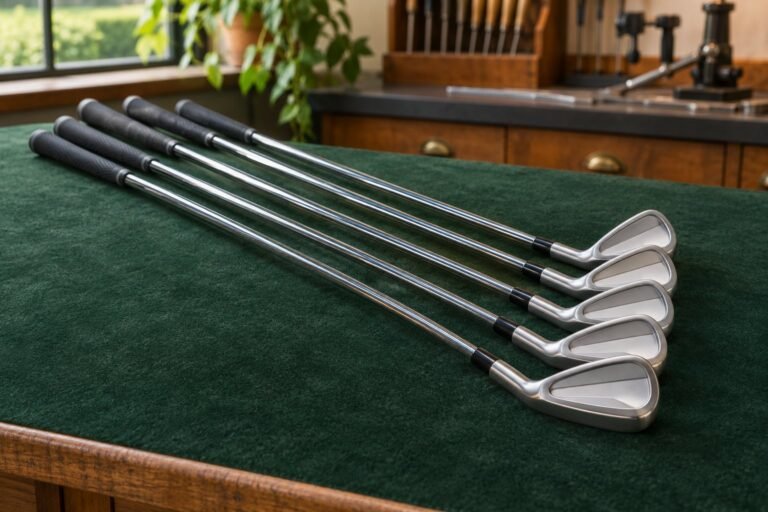
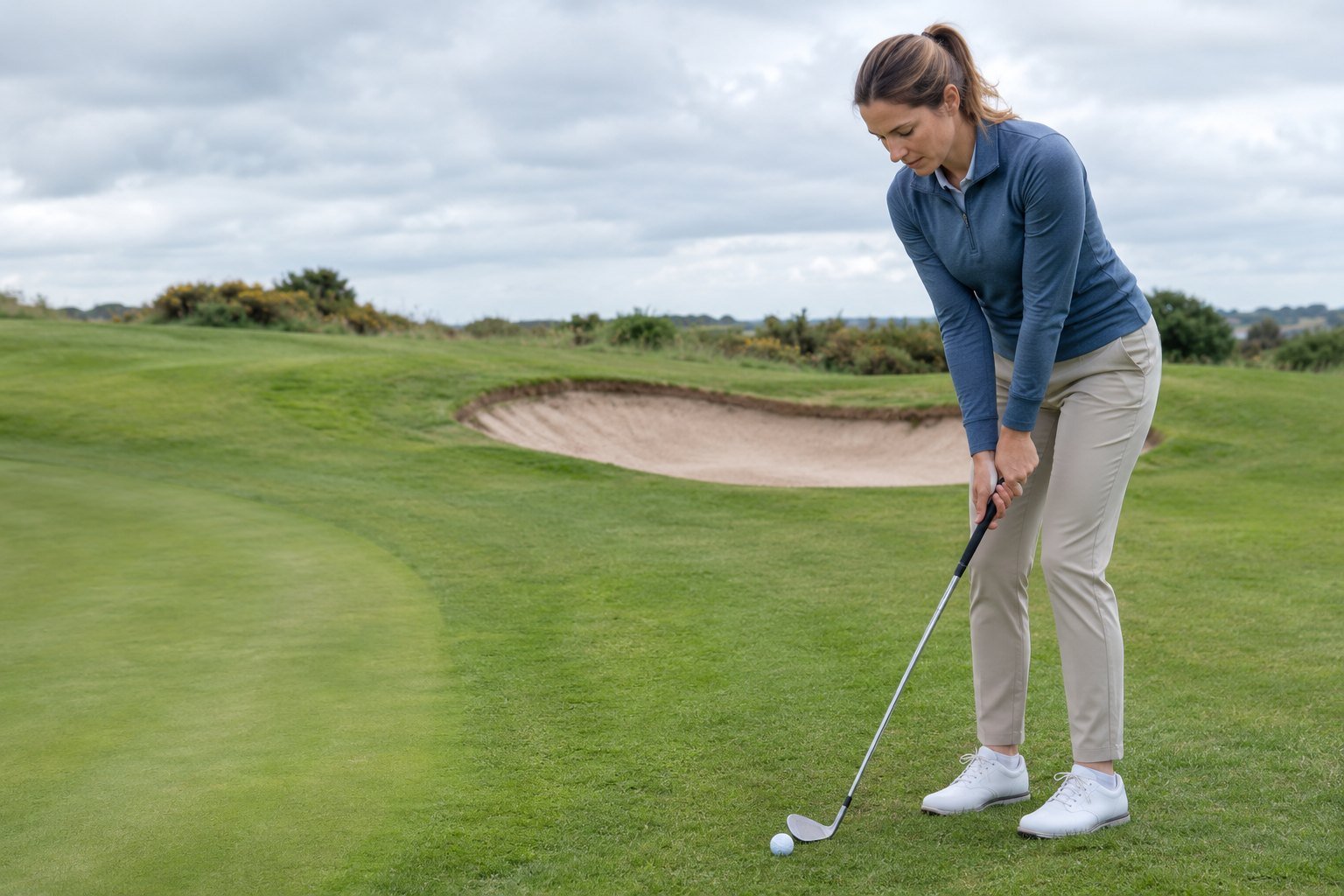
AI illustration of a wedge-comparison setting; the club is generic and does not represent either named configuration.
When comparing low-bounce vs high-bounce wedges, start with the shot you want to improve. The useful choice is the club that handles that task, including your ordinary misses, without creating a bigger problem on another important shot.
Use the scenario grid below to plan a comparison, then keep loft, ball and other build details as consistent as practical. The examples identify real configurations, while the trial method is a way for you and a fitter to gather your own evidence.
This guide contains affiliate links. If you buy through them, Taylor’s Trailblazing Golf may receive a commission at no extra cost to you.
Describe how the ball sits and what the surface is like, not just whether the grass is short or long.
Compare suitable builds at the same loft before attributing a difference to bounce.
Judge useful contact and manageable outcomes across repeated shots, not the best ball alone.
A better bunker result and a worse routine pitch should remain two separate findings.
Low-bounce vs high-bounce wedges: choose the first comparison
Treat the first candidate as a question. Vokey’s guidance links low bounce with firmer turf and sand, and high bounce with softer surfaces. Callaway also distinguishes a sweeping delivery from one that produces deeper divots.[1][2] The grid turns those starting points into practical checks; it is not a prescription from a course description.
Swipe within the table to see all columns.
| Situation | Candidate worth including | What must still work |
|---|---|---|
| Firm, closely mown turf; shallow delivery | A lower-bounce sole. | The ordinary pitch, including contact that is less than perfect. |
| Soft turf; deeper divots | A higher-bounce sole. | Useful contact and distance rather than simply a smaller divot. |
| Loose, soft bunker sand | A higher-bounce design with appropriate sole width. | Repeatable escapes with the shot you normally play. |
| Firm or compact bunker sand | A lower-bounce option alongside your current wedge. | Contact and a controllable outcome from that actual sand. |
| A rough lie with the ball sitting up | A suitable higher-bounce candidate, if the surface and shot support it. | The club meets the ball as intended; long grass alone does not settle the choice. |
| Mixed conditions or an uncertain delivery | Both candidates, with a middle option if needed. | The priority task and the most important secondary shot. |
When the signals conflict, compare rather than guessing. A golfer taking substantial divots on firm turf has a different question from a shallow-delivery player on the same surface. The fitter needs to see the combination, not select a club from one column alone.
Also keep the lie specific. A ball perched on grass and a ball sitting down in it are different trial tasks. Do not roll all rough shots into one result or assume that the club which worked from a clean fairway lie has already answered that question.

Compare real configurations at the same loft
Category names are approximate. Vokey’s guide describes 4°–6° as low, about 7°–10° as mid and more than 10° as high.[1] Use those as that maker’s guide, then read the exact specification rather than treating “low” or “high” as a universal standard.
Swipe within the table to see all columns.
Titleist describes K as a wide, full sole with camber.[3] Its two listed options illustrate why low bounce does not automatically mean a narrow sole. The Callaway pair changes the sole option as well as the stated angle. Neither pair is a laboratory experiment isolating one degree figure.
Compare within each pair, not the 58° Titleist against the 60° Callaway as proof of a bounce effect. These are examples of reading a specification, not a suggestion that your bag needs either loft. A fitter can identify suitable candidates at the loft that serves your actual shot.
The same care applies to different generations and finishes. Copy the full identity from the current listing and confirm that the trial club matches it. Keep any differences in shaft, length, grip or lie visible in the comparison record.
Back to top ↑Separate what the sole changes from what you change
Ask the fitter to observe your normal shot before suggesting a different delivery. A lower-bounce and a higher-bounce club can appear easy or awkward for reasons beyond the label, especially if you change the face position or move your hands to make one work.
Titleist’s Mark Blackburn instruction identifies ball position, shaft lean, face orientation and swing path as variables in greenside shots.[5] That is why the comparison needs a repeatable intended shot. If the fitter introduces a technique change, record it and allow time to settle before judging the equipment again.
Keep different tasks separate. Begin with the face position you normally use for a routine pitch. If an open-face shot matters, test it as another task rather than mixing the results with the first. The same principle applies to a bunker escape and a longer pitch.
Avoid treating one poor contact as a verdict. If both candidates produce the same unhelpful pattern, ask whether the contact or delivery needs attention before changing the sole. If one repeatedly helps on the priority shot, ask whether that advantage survives the other shot the wedge must cover.
There is no obligation to choose an extreme. Request an intermediate option or a different sole shape when the useful answer lies between the two candidates you started with.

Run a comparison that leaves your current wedge intact
Use suitable demo or fitting clubs and retain your present wedge as the reference. The point is to choose a complete club before paying for a replacement or professional work, not to alter the current sole in search of an answer.
- Choose one priority shot and a realistic landing or finishing area. Tell the fitter which miss you want to reduce.
- Identify the two candidate builds. Match loft and the other practical specifications as closely as the equipment allows; write down what differs.
- Use the same ball model and comparable lies. Play small, equal blocks, swap clubs, then return to the first option so the result does not rest on one brief impression.
- Include a representative bunker task when sand performance matters. Ask for a suitable practice facility; a mat-only session cannot supply that observation.
- Repeat the important secondary shot. Keep its result separate, and revisit your current club before choosing.
Pause when fatigue, a changed surface or a lesson makes the blocks no longer comparable. A longer session is not automatically a better comparison. Record what remains uncertain and arrange the missing check if it could change the purchase.
Keep ball selection as a separate task. If you are still choosing a ball, our guide to comparing golf balls without a launch monitor explains that process. During this wedge comparison, use the same ball model so a ball change does not become another explanation for the result.

Record the ordinary outcomes and the trade-off
Use one row per shot type and condition, with separate notes for the current, lower-bounce and higher-bounce builds. You can copy the fields below into a notebook or ask for them in the fitting report.
Swipe within the table to see all columns.
| Field | What to record |
|---|---|
| Build identity | Model, generation, loft, bounce, sole option, shaft, length, lie and grip. |
| Task and surface | Intended shot, ball model, face position, lie, turf or sand firmness. |
| Contact | Ordinary strike pattern and any recurring heavy or thin contact; ask the fitter to interpret it. |
| Useful result | Whether the ball reaches the intended area, plus the misses that remain difficult to manage. |
| Distance behaviour | Landing position and rollout separately when you can observe them; label estimates. |
| Your feedback | How manageable the shot feels without changing it to rescue one candidate. |
| Repeat and decision | What happened on returning to the club, what improved and what remains untested. |
Do not turn a single close finish into a complete performance score. A favourable bounce or roll can hide an untidy strike, and one poor finish can obscure a useful flight. Keep the actual observation separate from the explanation you and the fitter think is most likely.
You do not need to infer spin from how quickly a ball stops. Record the visible landing and finish, or retain a measured figure only when it was actually measured. The comparison can still be useful without a launch-monitor number.

Decide whether lower, higher or neither earns the place
Choose lower bounce when that complete build repeatedly handles your priority task better and its compromises are acceptable. Choose higher bounce on the same basis. Neither conclusion needs to become a rule for every wedge you own.
Swipe within the table to see all columns.
| Observed pattern | Reasonable next step |
|---|---|
| Lower option is more useful on the routine firm-turf shot; bunker performance remains acceptable. | Keep it as the leading candidate and confirm the exact order. |
| Higher option gives the more dependable priority bunker escape without losing the needed pitch. | Confirm that complete higher-bounce build. |
| Each candidate wins a different important task. | Discuss which job this wedge must own and whether another club already covers the other. |
| The current wedge performs as usefully as either replacement. | Keep it unless there is another clear reason to change. |
| The apparent winner changes between blocks or the builds differ too much. | Resolve the uncertainty before buying. |
These are illustrative decision cases, not reported tests. Avoid averaging away the problem that prompted the fitting. If dependable bunker escape is the essential job, a few excellent fairway pitches should not compensate for an unresolved bunker result.
A mixed result does not automatically justify buying two new wedges. First ask whether your existing set, another sole at a suitable loft, or further coaching would answer the missing task more sensibly.
Back to top ↑Order the configuration you compared
For the Vokey example, check the SM11 Tour Chrome steel-shaft options at Clubhouse Golf and verify the exact 58.06K or 58.12K selection, handedness and build.[6] Do not substitute a different generation simply because its letter looks the same.
For the Callaway example, view Opus SP Chrome at Callaway UK and confirm the 60° T or W option that corresponds to your trial.[4] This article’s examples are Opus SP, not a promise that every Opus-branded version shares the same sole menu.
Get the complete price for the exact configuration: club, custom charges, fitting, delivery and any confirmed fitting credit. Read the seller’s terms for that order before paying. A low starting price is not a comparison with a fully specified alternative.
If the trial has not happened yet, check what the fitting fee includes, especially access to the relevant turf or sand and a written result. Our golf club fitting fees guide helps you compare those services.
Keep the club that makes the important shots more dependable for you, with the remaining compromise understood. If that evidence is missing, keep the current wedge and the trial record. The Irons, Wedges & Putters category covers the related equipment decisions.
Back to top ↑Sources and further reading
Sources checked on 22 November 2026. Product descriptions are attributed to their makers; the comparison methods and buying judgements are editorial guidance.
- Vokey — Wedge Bounce Explained
- Callaway — Golf Wedge Buying Guide (updated July 2026)
- Titleist — Vokey SM11 specifications and K sole description
- Callaway UK — Opus SP Chrome Wedge
- Titleist — Mark Blackburn: Trust Bounce, Embrace Loft and Spin (2022)
- Clubhouse Golf — Titleist Vokey SM11 Tour Chrome Wedge, steel shaft
Illustrations in this article were created for Taylor’s Trailblazing Golf. Third-party photographs, where used, are credited beside the image or in the source list.