Steel vs Graphite Iron Shafts: Weight, Feel and Fit
Compare the weight and feel you can use, with the complete iron and the whole set in view.
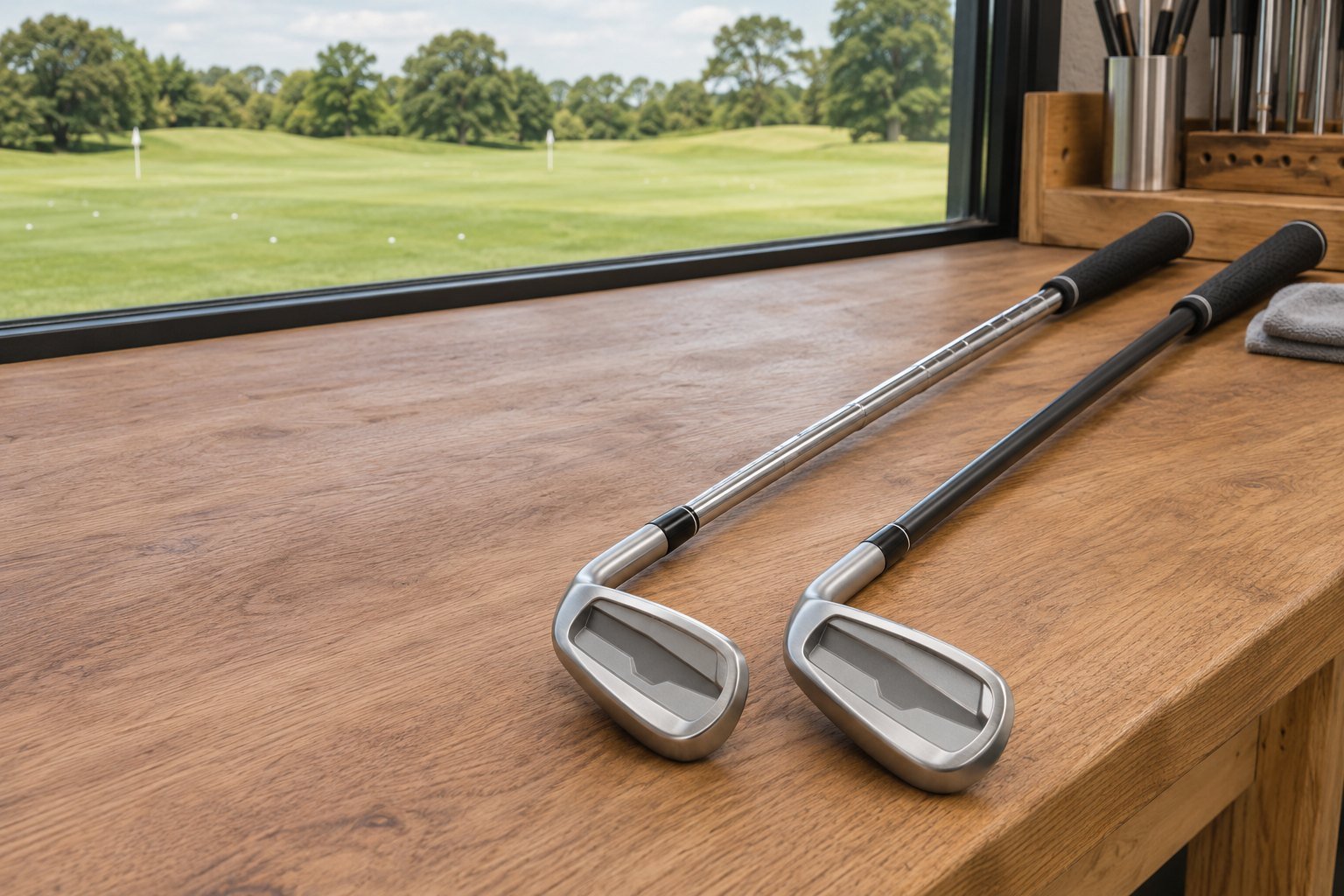
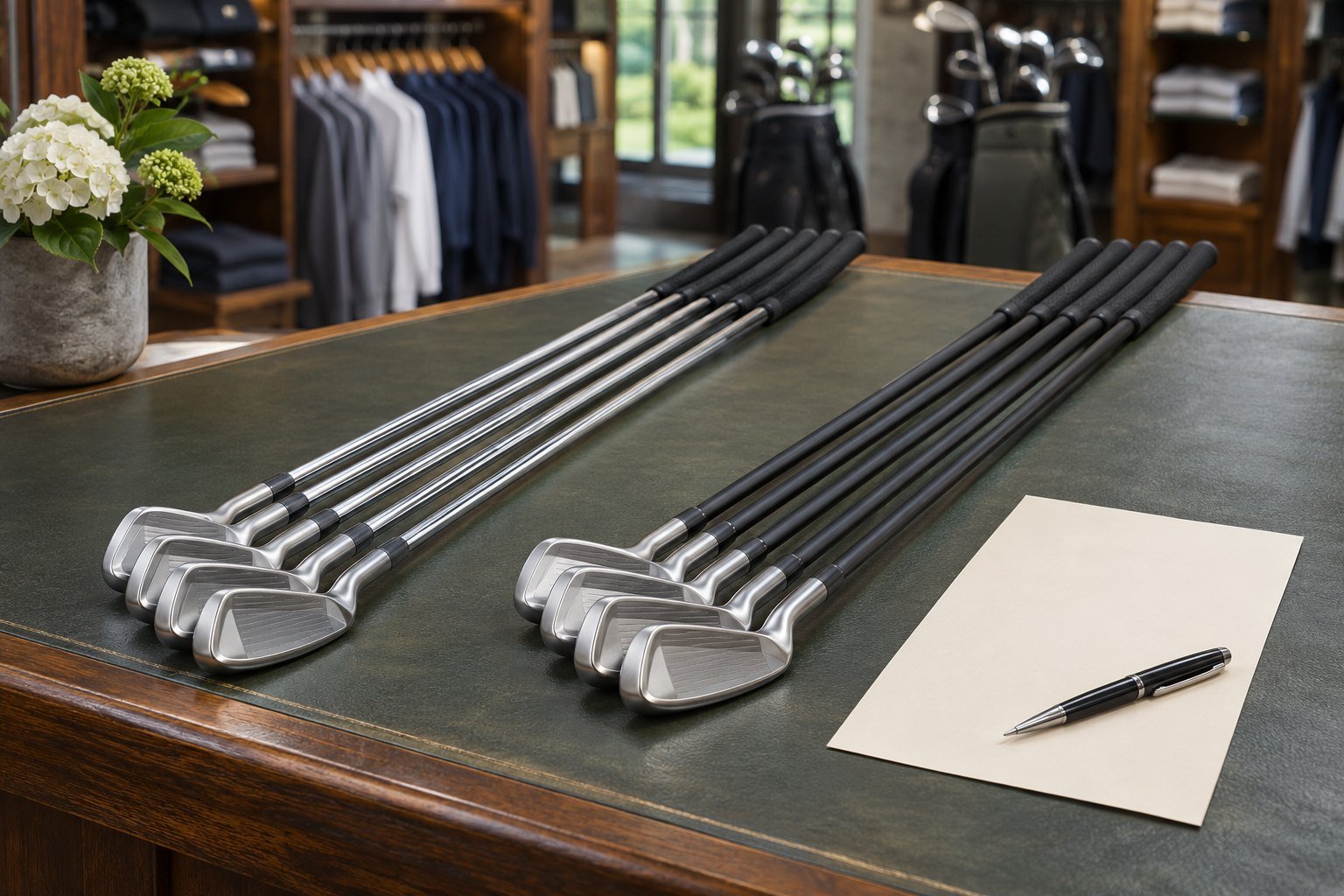
AI illustration: compare the complete iron builds as well as the shaft material.
Choosing steel vs graphite iron shafts is easier when you start with what you want to change. You might want less effort across an iron session, a different sensation at impact, or a build that makes your normal strike easier to repeat. You might also discover that your current shafts already work well.
The material name helps describe the product, but it leaves out its exact weight, flex, profile and the iron built around it. This research-led comparison gives you a way to shortlist both materials, organise a fitting and compare complete quotes without treating either choice as an automatic upgrade.
This guide contains affiliate links. If you buy through them, Taylor’s Trailblazing Golf may receive a commission at no extra cost to you.
Describe the shot, effort or impact sensation you want to change before choosing a material.
A family name, weight class or flex letter does not replace the model specification.
Head, loft, length, grip and balance belong in the same record as the shaft.
Match the number of clubs, fitted build and necessary work before comparing quotes.
Steel vs graphite iron shafts: start with the change you need
A useful fitting brief is specific: “I want the same useful carry with a swing that feels less forced,” or “I like the flight, but want to compare how impact feels.” Either gives the fitter a question to investigate. “Graphite is for me because of my age” does not tell them enough about the club you need.
Swipe within the table to see all columns.
| What matters to you | Compare this | Evidence worth keeping |
|---|---|---|
| The current iron feels cumbersome | A lighter complete build that still suits the intended shot | Normal swing effort, strike pattern and whether the useful flight repeats |
| You want a different impact sensation | Specific steel and graphite options in comparable heads and grips | Your impression of ordinary centred and off-centre contact, alongside the result |
| You want more reliable distance | Carry spread and strike consistency with suitable candidate builds | Several representative shots, including the miss you normally make |
| You already like your irons | Your current club against any proposed replacement | A clear reason to change, or a clear reason to keep it |
These questions can lead to steel, graphite or no purchase. Avoid deciding the outcome from a material label before the comparison has started.
Steel can be light and graphite can be substantial
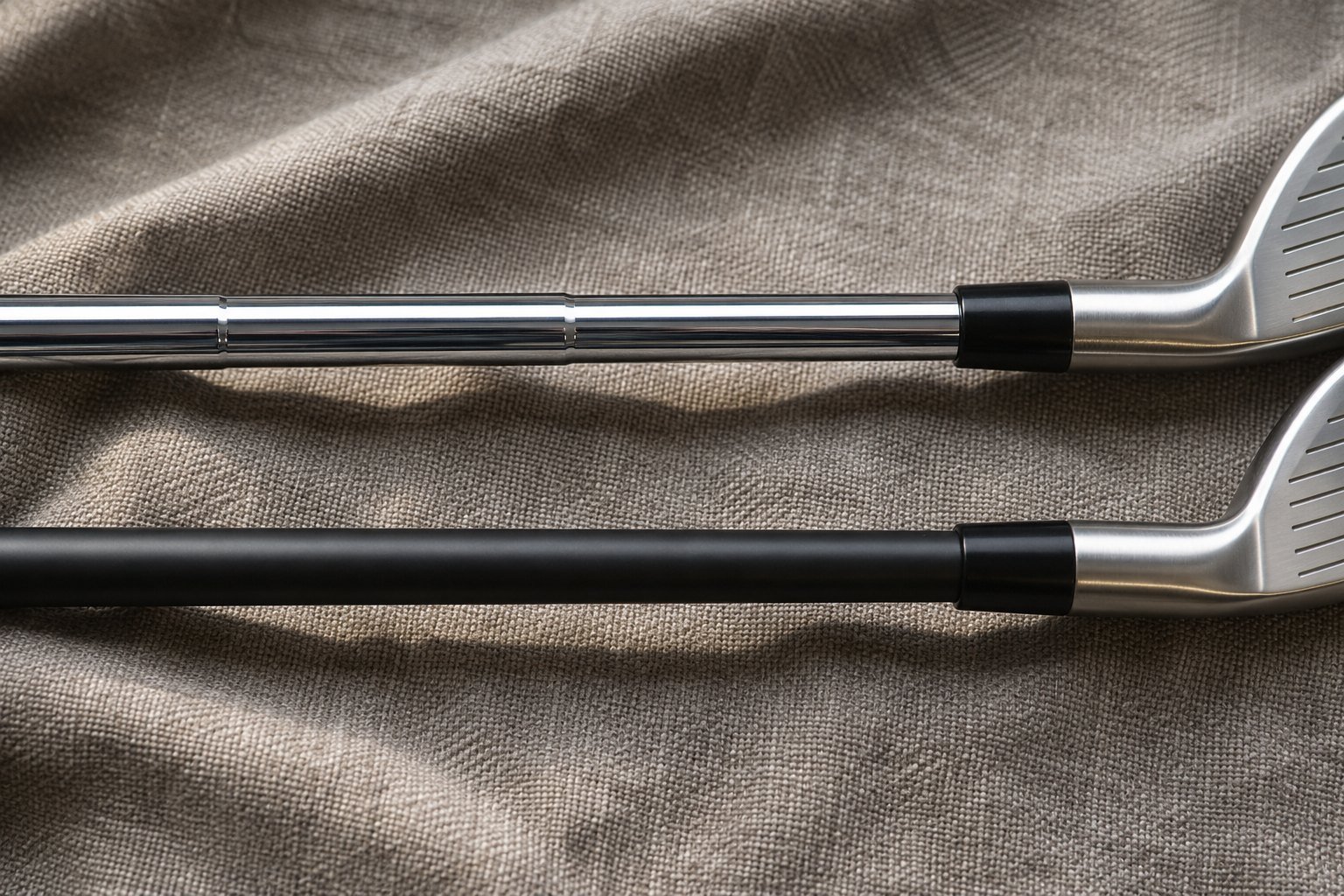
Fujikura explains that steel-shaft stiffness and weight are more closely linked in design, while carbon-composite construction gives designers more freedom to vary them separately. It can be used for a light, stiff design or a heavier, softer one.[1] That is a design distinction, rather than a promise about how every shaft will feel.
Actual component specifications help put the labels in perspective:
Swipe within the table to see all columns.
| Exact shaft | Construction family | Listed weight | Listed shaft lengths |
|---|---|---|---|
| Nippon N.S. PRO Zelos 7 R | Steel | 74.0 g | 38.5–35 inches, 3-iron to wedge.[2] |
| Nippon N.S. PRO Zelos 7 S | Steel | 77.5 g | 38.5–35 inches, 3-iron to wedge.[2] |
| Mitsubishi MMT Taper Iron 65 R | Composite with Metal Mesh | 63 g | 39.5–36.5 inches.[3] |
| Mitsubishi MMT Taper Iron 105 S | Composite with Metal Mesh | 105 g | 39–35.5 inches.[3] |
Nippon expressly identifies its figures as weights before cutting.[2] Mitsubishi’s table lists the component weights at the shaft lengths shown.[3] These are not finished-iron weights, and the rows are examples of available designs, rather than matched alternatives for one golfer.
The practical lesson is to ask for the exact specification. The graphite example is not always lighter than the steel example, and a number in a model name need not equal its listed mass. Nor does an R or S printed on two different products prove equivalent behaviour. Keep the product name, version and flex together on your fitting sheet.
Once a weight range looks promising, compare suitable options within it. You can explore a different material without simultaneously making a large weight change, and you can explore a lighter build without assuming that graphite is the only route.
Back to top ↑Put the whole iron on the comparison sheet
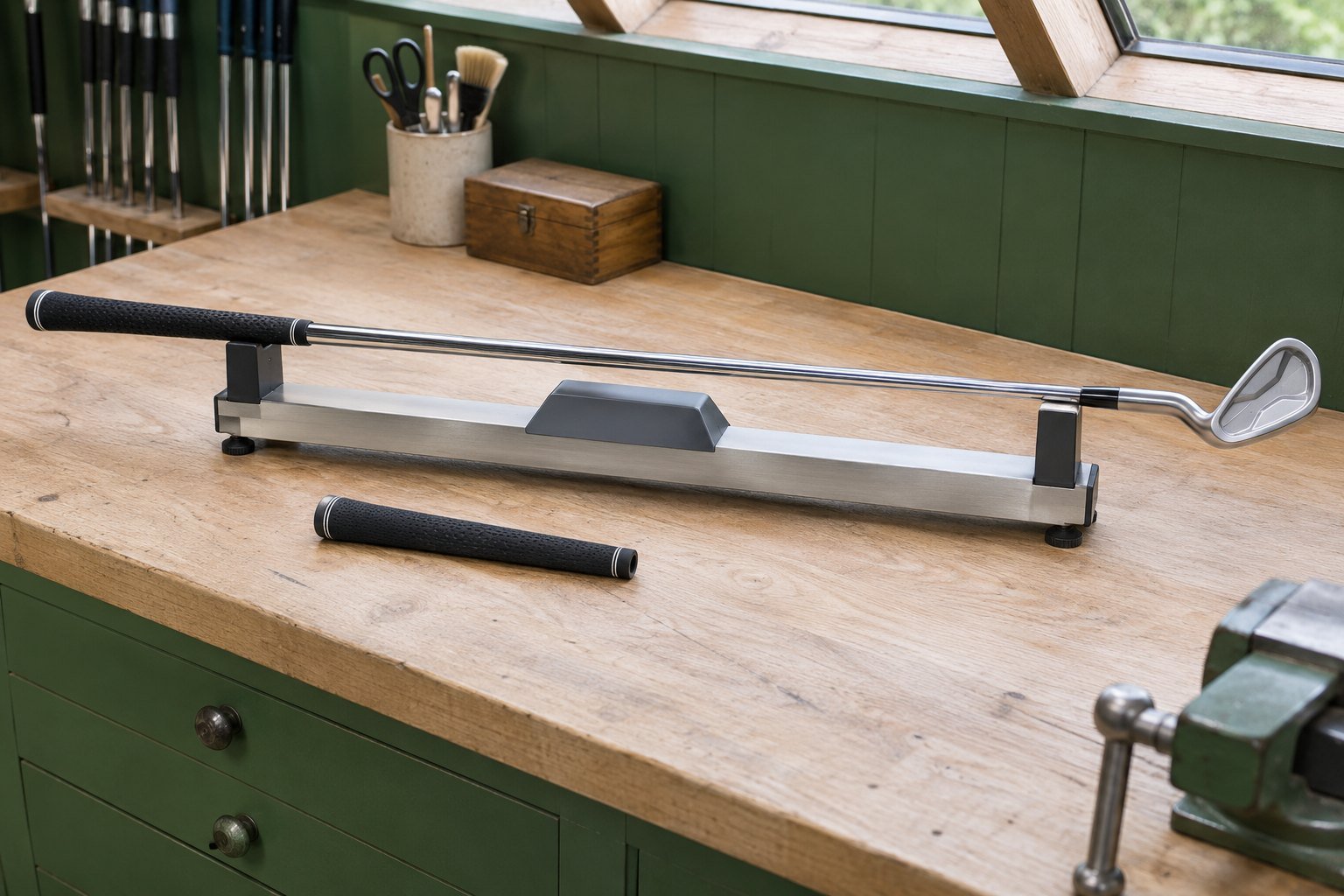
A shaft is one component of the club you swing. Total club weight includes the assembled head, shaft and grip. Swingweight describes weight distribution about a fixed measuring point, conventionally 14 inches from the grip end; a code such as D2 is not a weight in grams.[4] Record both when the fitter measures them.
Swipe within the table to see all columns.
| Record | What a useful entry contains | Why it belongs here |
|---|---|---|
| Head and loft | Model, iron number and actual stated or measured loft | A different head or loft leaves another explanation for changed flight. |
| Shaft | Full model, version, material, flex and weight designation | “Regular graphite” is too broad to reproduce an order. |
| Weight basis | Manufacturer figure, and whether it is raw, prepared or merely a weight class | Numbers need a comparable basis before you subtract them. |
| Playing length | Finished length and the measuring method | The assembled iron is the item being compared. |
| Grip | Model, size, weight and any deliberate build-up | Your hand contact and the finished specification should match the order. |
| Finished measurements | Total weight and swingweight, where measured | They describe different aspects of the complete build. |
| Known alterations | Previous reshafting, extensions or documented preparation | The club in front of you may differ from the original catalogue. |
Start with the same head model where the fitting system allows it. If the better option uses a different head, length or grip, that is still a useful result. Describe it accurately as a preferred complete build; the trial has not isolated material as the cause.
Grip preferences deserve their own discussion. Our guide to measuring hands and choosing golf grip size helps you prepare that part of the fitting.
Separate swing feel from impact feel
“Feels better” becomes more useful when you explain which part of the swing you mean. Is it easier to start the club? Do you sense the head where you expect it during the change of direction? Does impact feel less sharp? Write those observations separately rather than collapsing them into one verdict.
Some composite designs deliberately address vibration. True Temper describes SteelFiber as a graphite-composite core with steel fibres around it, and attributes vibration damping to the core.[5] That also shows why a metal-containing shaft should not automatically be treated as a conventional steel shaft. Read the description of the exact product.
Try to keep the ball, head and grip comparable when assessing impact sensation. Then relate the sensation to the strike. A pleasant centred shot tells you little about how the build feels on the slight misses you make during a normal round. A fitter can help distinguish those situations without turning every mishit into a verdict on the shaft.
Your preference is part of the decision. If two suitable builds produce similar useful shots and you clearly prefer one, that can be enough to choose it. If a build feels wonderful but leaves an unhelpful flight or a wider ordinary miss, discuss the trade-off before ordering the set.
A manufacturer’s material story can explain what to investigate. Your own comparison must establish whether the particular result is worth paying for.
Back to top ↑Compare material and weight without confusing their effects
Bring a familiar mid-iron and tell the fitter which parts of the current build you want to preserve. If its weight and flight already suit you, a change of material can be explored with a reasonably similar weight specification. If the current club feels cumbersome, a deliberately lighter candidate addresses a different question.
Where suitable test options exist, organise the shortlist around three roles:
- Your current build: the reference for the shots, effort and impact sensation you already know.
- A similar-weight alternative in the other material: useful for exploring a different design without making a large weight change at the same time. Its profile and other properties may still differ.
- A deliberately different-weight alternative: useful when reducing or increasing the heft is part of the fitting question. Keep its complete specification beside the result.
There may not be an exact pair in the fitting cart, and matching listed shaft weights does not guarantee matching finished club weights. Ask the fitter to explain the nearest useful comparison. A preferred combination is still a valid result when several things change; just avoid attributing its success solely to steel or graphite.
Keep impact preference alongside useful carry, direction and flight. Include the slight misses you normally make, and return to your familiar iron before accepting a claimed improvement. A single unusually long shot should not outweigh a less useful normal pattern.
Before committing to a set, discuss the longer and shorter irons as well as the demonstration club. The weight or feel you enjoy in one iron still needs to serve the other approaches. Ask how the proposed build will be checked where the new set meets a utility iron or wedge you plan to retain.

Compare the cost of the set you will receive
Make the two quotes comparable before deciding that one material is expensive or good value. Start with the exact clubs included: a six-club offer and a seven-club offer are different purchases even when the headline model matches.
- List the iron numbers and wedges included, with handedness and head model.
- Specify the shaft model and flex, finished lengths and agreed grip.
- Include golf club fitting fees after any purchase credit, delivery and necessary custom-build costs.
- For a reshaft, include shafts, grips, labour and final checks for every club being changed.
- Read the return and warranty terms for the exact stock or custom order.
Keeping suitable heads can make a reshaft worth considering. It also deserves a complete quote beside a suitable factory-built set. Avoid pricing one loose shaft and assuming the cost or result scales neatly to the whole bag.
If a fitting puts PING G440 irons on your shortlist, compare Clubhouse Golf’s steel-shaft listing[6] and graphite-shaft listing[7], checking the selected set composition and actual shafts offered. For a Callaway option, view the Elyte irons at Callaway UK and confirm the precise build before comparing the total.[8] These destinations help check an option you have already identified; the material heading alone does not establish a fit.
Ask for the chosen specification in writing. Judge any premium against the improvement you identified and your full budget. If the choice is close, include the cost of another useful trial. There is no obligation to pay more when your current irons still cover the job.
Keep condition and professional assembly in the decision
Changing material is a fitting choice; suspected damage is a separate reason to stop and obtain an assessment. True Temper warns that both steel and graphite shafts can have internal damage after an impact even when it is not obvious on the surface.[9] A good-looking finish is insufficient to clear a questionable club.
Have a competent club-builder confirm the head and shaft compatibility, preparation, installation and finished specification for a reshaft. Leave extraction, cutting and structural work to them. Ask whether the proposed parts are new or have already been installed, and obtain the relevant warranty terms before approving the work.
If the irons are sound and already produce the shots you need, their shaft material does not create an expiry date. Keep them as a useful benchmark and change only when the fitting or condition assessment supplies a worthwhile reason.
Back to top ↑Choose the build you can explain
My recommendation is to shortlist by a useful weight range and complete specification, then let repeatable shots and your own feel preference settle the choice. A suitable steel shaft remains a good option. A particular graphite shaft may offer the weight or sensation you prefer. Neither deserves the order solely because of its material.
Should every iron have the same material?
You can ask a fitter to assess a mixed arrangement, but record why each club is different and test the transitions. Matching appearances are less useful than a set whose roles and specifications you understand. Avoid replacing every shaft just to make a single specialist club look the same.
Is the familiar flex letter enough when changing material?
No. Take the complete shaft identity and the result you want to preserve to the fitting. A new R or S label does not reproduce the old club’s weight, profile, length or balance.
Keep the final build sheet and full quote. They are what let you order the result that worked and check the delivered set, rather than remember only that one candidate was steel and the other graphite. The Irons, Wedges & Putters guides cover the wider choices around that set.
Back to top ↑Sources and further reading
Sources checked on 22 November 2026. Product descriptions are attributed to their makers; the comparison methods and buying judgements are editorial guidance.
- Fujikura — Steel vs Graphite
- Nippon Shaft — N.S. PRO Zelos 7 specifications
- Mitsubishi Golf — MMT Taper Irons
- The GolfWorks — Glossary
- True Temper — SteelFiber CW (Taper)
- Clubhouse Golf — PING G440 Irons, Steel Shafts
- Clubhouse Golf — PING G440 Irons, Graphite Shafts
- Callaway UK — Elyte Irons
- True Temper — Warranty Policy and shaft impact-damage notice
Illustrations in this article were created for Taylor’s Trailblazing Golf. Third-party photographs, where used, are credited beside the image or in the source list.