Irons for Higher-Handicap Golfers: Forgiveness Without Marketing Hype
Separate speed retention, launch, direction and turf contact, then decide which kind of help your shots need.
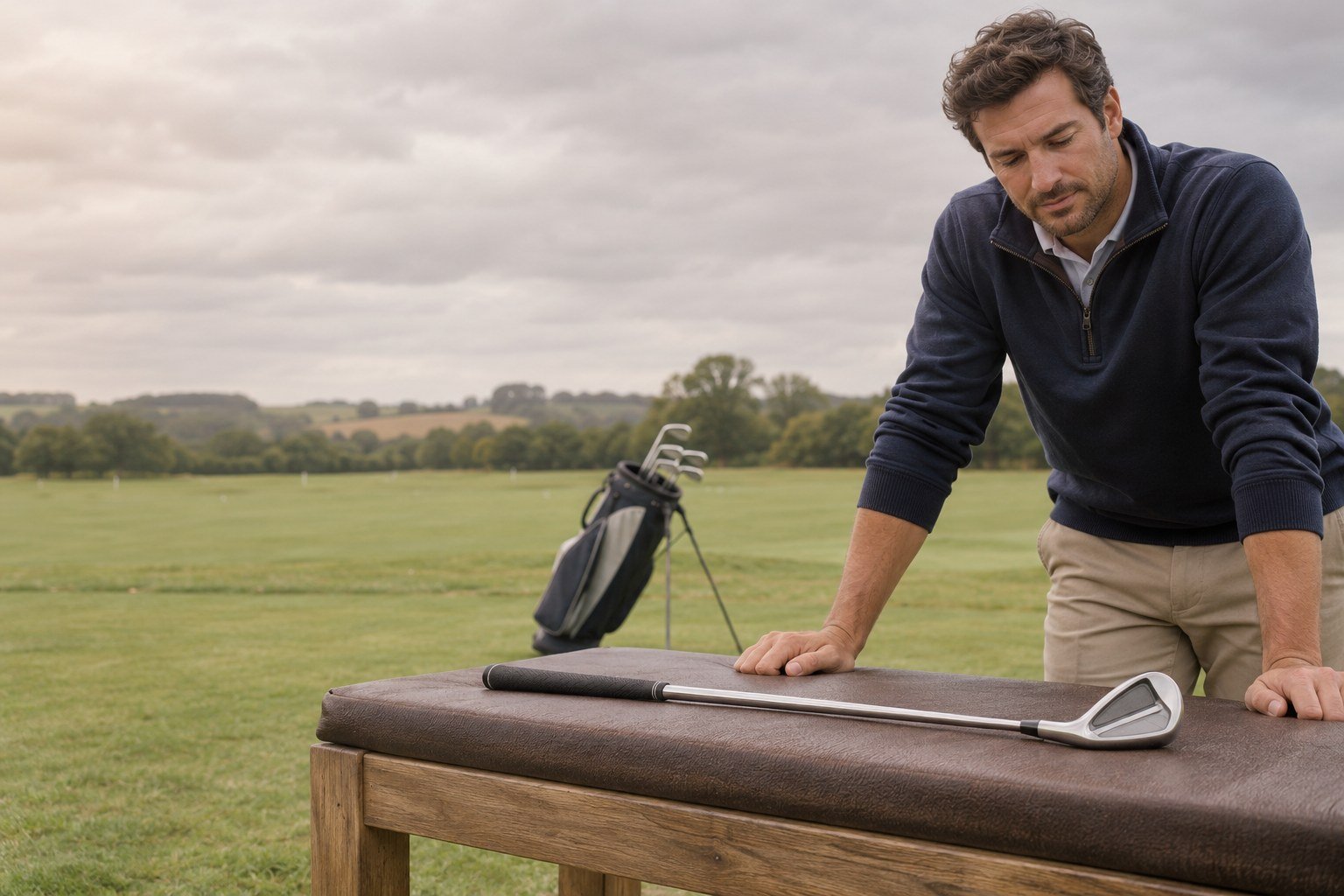
AI illustration of a golfer considering an iron; the generic club is not a rendering of any named product in the guide.
When choosing irons for higher-handicap golfers, “forgiving” needs a more precise meaning. An iron may retain useful distance after an off-centre strike yet leave the ball on the wrong side of the green. Another may help produce a playable flight without improving a severe ground-first strike. Start with the outcome that costs you shots, then decide which design features deserve attention.
Ad – includes affiliate links. If you buy through these links, Taylor’s Trailblazing Golf may earn a commission at no extra cost to you. Recommendations consider fit, drawbacks and alternatives.
Look for a better ordinary outcome, such as a less costly short miss or more usable flight.
A forgiving design cannot promise the same result for every strike or delivery.
Choose the features that answer your observed need and stop adding complexity without a reason.
What makes irons for higher-handicap golfers useful?
Forgiveness becomes useful when an imperfect shot leaves a more manageable result. That might mean carrying the front of a green after a toe strike, keeping a miss out of trouble or making an ordinary approach easier to launch. The outcome must be named before a feature can be ranked.
Two golfers with similar handicaps can need very different irons. One may strike the face reasonably well but struggle to get a useful long-iron flight; another may launch easily but miss across the face. A golfer losing most shots elsewhere may already have suitable irons.
| What you want help with | A useful observation | What it does not establish |
|---|---|---|
| Speed retention | Off-centre strikes lose less useful distance | The ball starts or finishes on the intended line |
| Playable launch | Ordinary strikes produce a flight suited to the approach | Every iron labelled high launch will suit you |
| Directional outcome | Typical misses stay within a manageable width | The head has corrected the underlying delivery |
| Turf interaction | The club produces usable contact from the lies you play | A good result from a mat proves grass performance |
| Repeatable strike | You can make ordinary swings with the complete club | The head design alone caused the improvement |
Use that separation when reading “maximum forgiveness”. Ask maximum in which outcome, under which strikes, and compared with what? A description can identify a design aim without answering those questions for you.
There is no need to reject help because it looks less traditional. There is also no need to buy the largest head on display because of your handicap. Choose the outcome you need most, then examine the compromises that would matter on your course.
Back to top ↑Off-centre help is worth more than one fast centre strike
MOI, or moment of inertia, describes resistance to rotation. In its iron-design explanation, Titleist describes placing tungsten towards the heel and toe to increase that resistance and reduce twisting on off-centre impact. That is one mechanism behind forgiveness; it is not a complete ranking of irons. [1]
Face construction is another part of manufacturers’ performance descriptions. Srixon, for example, attributes ball-speed and forgiveness aims in the ZXi4 to MainFrame channels behind the face. [2] Neither the material name nor the description establishes how much distance your usual miss will retain.
Compare the part of the face you actually use
If your typical strike is towards the toe, examine the toe-side results available in a fitting or supervised trial. Do not infer that pattern solely from sound or how a shot felt. Where strike location can be recorded reliably, keep it alongside the ball result.
Look at useful ordinary strikes and the misses together. A head that produces a very long centred shot may still leave a large gap between that shot and your common miss. Another candidate may offer a less dramatic best shot but leave more attempts in a playable area. The comparison must show which is happening.
Speed retention is valuable only in the context of the shot. A miss that carries further but finishes deeper in trouble is not automatically an improvement. Keep front-to-back and left-to-right results visible rather than reducing forgiveness to the fastest ball.
Also keep the severity of the strike in view. A small miss on the face, a pronounced ground-first strike and a topped shot are different events. No product description establishes that all three will become equivalent to a solid strike.
Ask for a playable flight, not just a higher ball
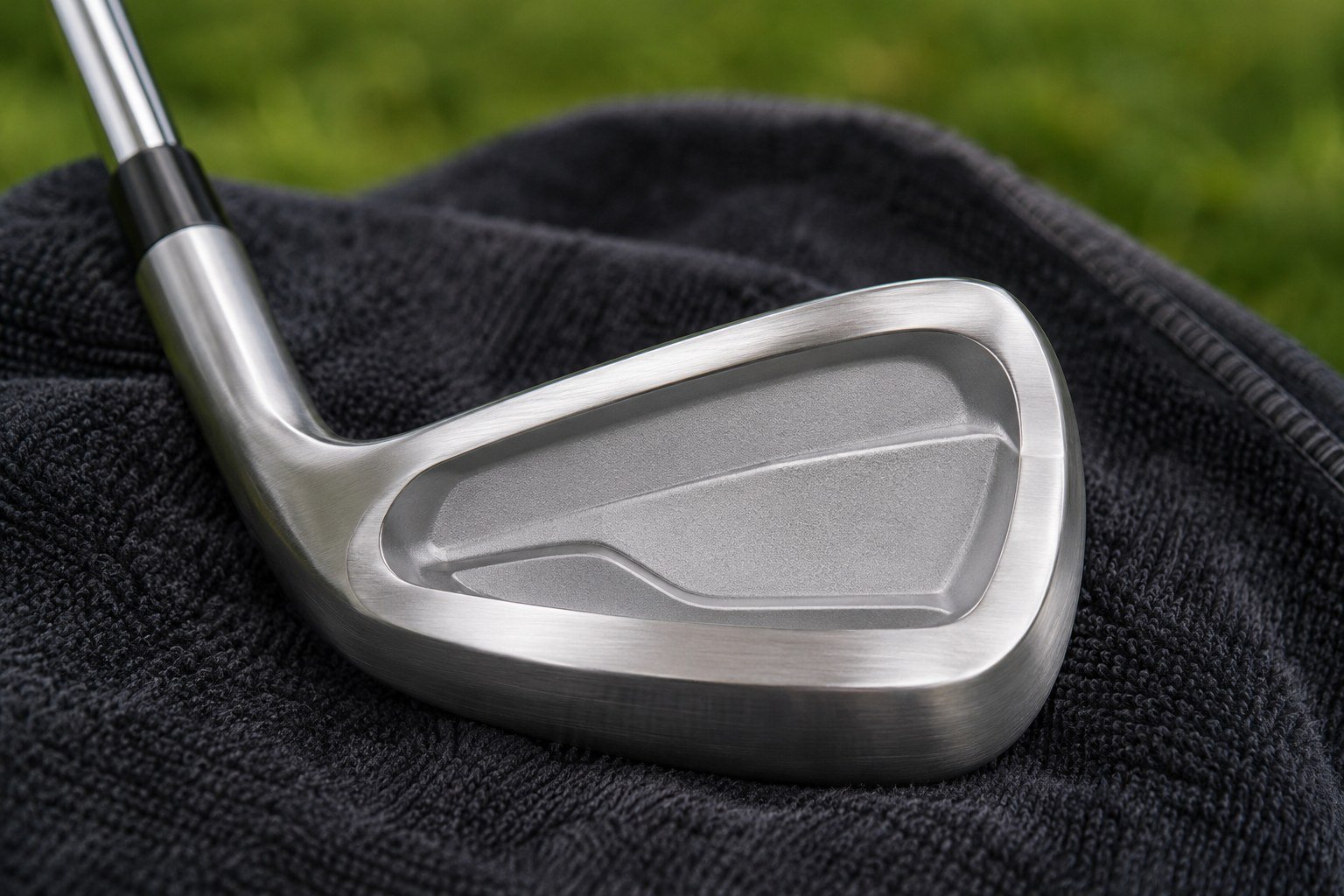
A lower centre of gravity can be part of a launch-focused iron design. Titleist explains that it places tungsten lower in some longer irons to help raise launch. This is a design explanation, not a promise that any head containing tungsten will produce the right flight for every golfer. [1]
Judge height alongside the distance travelled through the air and the landing task. Trackman reports carry at the launch elevation; an uphill green is a different landing problem. [3] Its landing-angle guidance also distinguishes how a ball arrives, because the angle affects bounce and roll. [4]
For a reader who struggles to launch a longer iron, the useful comparison might include a different loft, a different complete build or a different type of club. You do not have to make a low-lofted iron work simply because it is included in the set.
Ask whether the ordinary flight reaches the intended area, whether the shorter misses remain playable and whether the ball has a credible chance of staying in the available depth. If it does, a spectacular peak height is unnecessary. If it does not, a reassuring “high launch” label has not solved the task.
A launch monitor can clarify these questions, but a single spin or landing-angle figure should not become a handicap-based pass mark. Keep the ball, conditions and whole shot in the explanation, and identify which parts were measured and which were estimated.
Back to top ↑Stability and straightness are different questions
A head that resists twisting can still send the ball well away from your intended target. Trackman identifies the relationship between face angle and club path, together with impact location, as factors in shot curvature. [5] A forgiveness claim is therefore not evidence that the club will remove a persistent directional problem.
Start with the actual pattern: mainly one side, both sides, or an apparently central average formed by opposite misses. Then look at how the complete candidate build behaves. Do not choose more or less offset solely because somebody has labelled your handicap group.
When one side matters much more than the other, say so. A narrow fairway approach with trouble left is a different task from a broad green with an easy recovery on both sides. Reducing the average miss is less persuasive if the expensive miss remains.
If the same costly pattern continues with plausible alternatives, ask a fitter or golf professional to examine delivery, strike and the suitability of the build. That is more useful than buying successive heads whose descriptions all promise control.
Keep any equipment conclusion narrow: “this build produced a more manageable pattern in this comparison” is supportable if the observations show it. “This design fixes my swing” claims much more.
Back to top ↑Test the sole where it has to work
Sole width is visible, but it is not the whole turf design. Srixon describes the ZXi4’s Tour V.T. sole as a combination of widths, bounce angles and notches. [2] That is a useful reminder to examine a complete shape instead of selecting by one measurement.
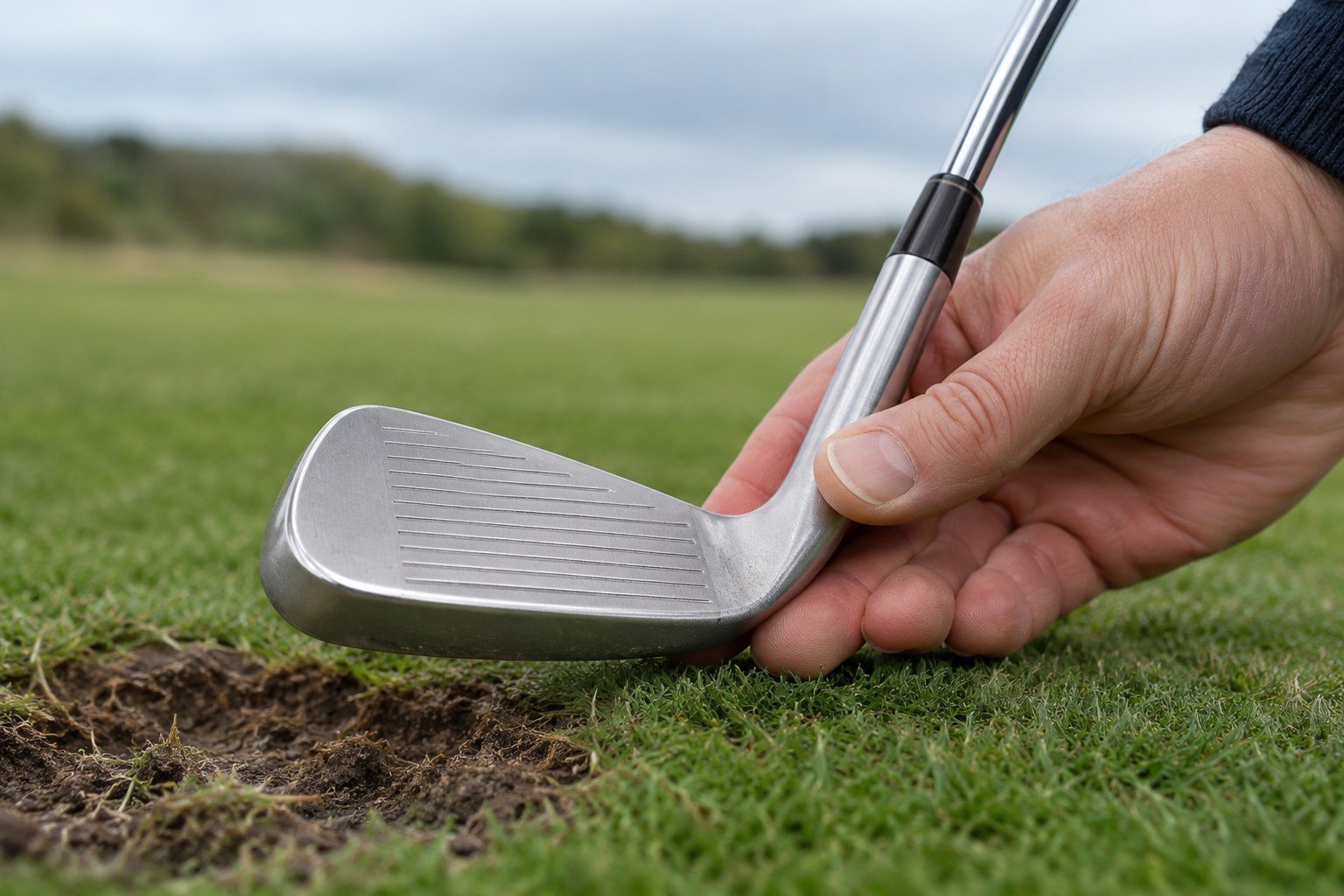
If heavy contact is the recurring problem, compare candidates on representative grass where that is available and permitted. Record whether the strike was heavy, the kind of lie and the resulting shot. A shallower divot or a nicer sound is not enough on its own; the ball still needs to do something useful.
Do not treat a sole as a guarantee against hitting the ground too early. A modest error and a pronounced one can demand very different responses. If every candidate produces the same severe strike problem, a professional assessment of contact may be the more useful next purchase.
Keep surface changes out of the verdict
A comparison from a mat answers a question about that surface. It cannot establish how a specific sole will behave through soft fairway turf or a tight dry lie that you have not tried. Note the limitation and arrange a relevant follow-up when turf behaviour is the reason for changing irons.
You also need a club you can use normally. If its length, grip or overall feel makes ordinary contact harder to repeat, keep that in the decision even if the head is marketed as exceptionally forgiving. The whole build must earn its place.
Rank features by the problem they must address
The order below is an editorial starting point for investigation, not a performance score for products. Choose the row that best describes the observed problem. Change the order if your own results point elsewhere.
| Observed need | First priority | Second priority | Do not pay extra for this alone |
|---|---|---|---|
| Useful contact, but inadequate flight | Loft and complete-build options that produce a usable approach | A head designed to help launch, checked in the relevant clubs | A longer best-shot number |
| Frequent heel or toe contact | Results on those strikes, including distance loss and direction | Build dimensions and feel that support ordinary contact | The word tungsten or a headline MOI claim |
| The same costly lateral miss | Assessment of delivery, strike and build suitability | The candidate’s actual left-to-right pattern | More offset or a larger head without a comparison |
| Heavy contact on normal fairway lies | Ball outcome and contact from representative turf | Alternative sole geometry, evaluated with the rest of the build | A wide sole judged only on appearance |
| The club feels difficult to handle | Suitable length, grip and overall build to try | A head profile you can set down comfortably | A shaft-material or flex label chosen by handicap |
Keep the ranking short enough to act on. “I need help everywhere” tends to turn every advertised feature into a reason to buy. Instead, identify the most expensive recurring outcome, one secondary need and the result you cannot afford to make worse.
Two readers, different priorities
Imagine one golfer whose shorter irons are useful but whose longer irons produce low flights with little separation. The first question is how to cover those longer approaches reliably; a complete new set bought for extra distance has not answered it.
Now imagine a golfer who reaches the required distance easily but scatters ordinary shots towards both sides. Extra length is a low priority. The useful evidence concerns contact, width and whether a different build makes the misses more manageable.
These are invented situations, not profiles that can be diagnosed from a handicap. Their purpose is to show why the same product feature should occupy different places on different shopping lists.
Read two real design descriptions with specific questions in mind
These examples illustrate what a manufacturer description can help you investigate. They are not a tested ranking or a shortlist prescribed to all higher-handicap golfers.
Callaway Quantum Max OS
Callaway positions Quantum Max OS as an oversized design intended for higher launch, and describes a progressive Tri-Sole intended to improve turf interaction through the set. [6] The useful questions are whether its ordinary flight serves your approach and whether the complete build produces acceptable contact and misses.
If that is the design you are considering, compare its actual specification and selected clubs at the UK store. Do not assume the OS suffix answers the shaft, length, grip or set-composition decisions.
Srixon ZXi4, 2025 model
Srixon describes the ZXi4 as a hollow iron with moderate sole width. [2] It is an example worth examining when you want to compare a different profile and sole approach; that description alone does not establish greater or lesser forgiveness than the Callaway.
A verified retailer listing can help identify the offered build, but a right-handed steel listing is not evidence that every hand, shaft or custom option is available. Match the order to what you have evaluated.
Use either route to check a relevant candidate, not to skip the questions. If a sound older or current iron gives you an equally useful result, a more recent design name has not established a reason to pay for the change.
Spend on a usable result, then stop adding features
Put the budget in order: first a sound, usable build; next evidence that it addresses the main problem; then the exact clubs required to cover the shots you play. Cosmetics, a particular construction label and ownership of the latest release can remain preferences after those needs are met.
If grip fit is uncertain, investigate it before attributing every uncomfortable or awkward swing to the head. Use the guide to checking grip size, shape and the finished build, without assuming that a different grip will cure a directional fault.
Ask for the full cost of the configuration you would actually buy, including necessary fitting or build work. Avoid using up the budget on a broad set whose longest clubs you have not shown you can use. Keep money available for the unresolved part of the decision instead.
Choose the iron when the claimed help appears in your relevant ordinary shots, the remaining misses are manageable and the cost is justified. Keep looking when the benefit exists only in marketing language. Keep your current set when it already supplies the useful result.
Forgiveness does not need to make every shot good to be valuable. It needs to reduce the consequence of the imperfections that recur in your game, without introducing a compromise that matters more.
Back to top ↑Sources and method
This guide brings together manufacturer information and the sources below. The decision aids are editorial suggestions for your own equipment checks, comparisons or fitting. No personal product test or measured performance result is claimed. Read how we review golf gear for the site’s evidence standards.
- Titleist — Tungsten in Club Design
Checked 22 November 2026. - Srixon Europe — ZXi4 Irons, 2025 model
Checked 22 November 2026. - Trackman — Carry parameter
Checked 22 November 2026. - Trackman — Landing Angle parameter
Checked 22 November 2026. - Trackman — Face to Path parameter
Checked 22 November 2026. - Callaway UK — Quantum Max OS Irons
Checked 22 November 2026.
Illustrations in this article were created for Taylor’s Trailblazing Golf. Third-party photographs, where used, are credited beside the image or in the source list.