Buying Used Iron Sets: Matching Shafts, Lofts and Club Numbers
Identify the clubs, resolve the gaps and price the finished set.
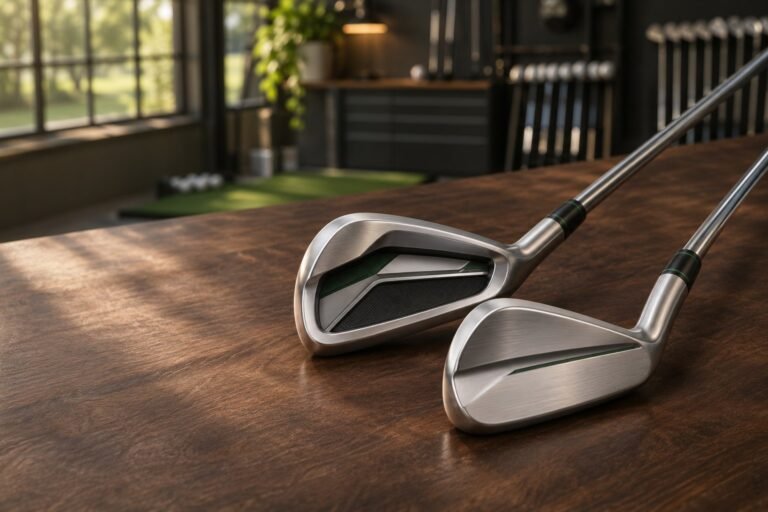
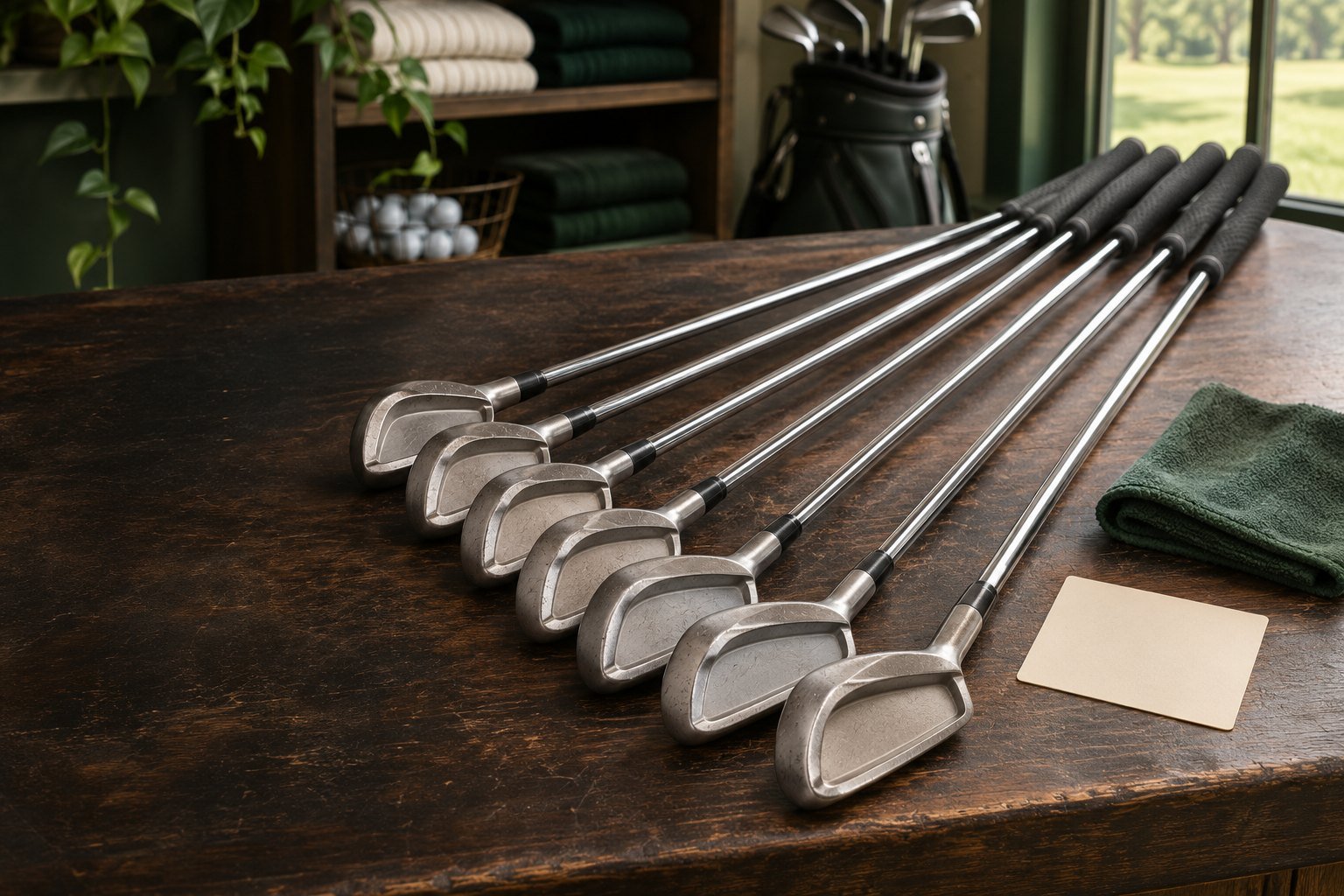
AI illustration: count and identify the actual clubs before comparing the asking price.
Buying used iron sets starts with a list of what is actually for sale. A familiar head shape and an attractive asking price leave plenty unanswered: which clubs are included, whether their shafts match the description, and what you will need to spend before the set is ready to use.
This research-led guide gives you a record to take to a seller, a practical inspection sequence and an example budget. The aim is to buy a known set with a sensible job in your bag, without relying on a vague promise that missing clubs or uncertain specifications will be easy to fix.
Ad – includes affiliate links. If you buy through these links, Taylor’s Trailblazing Golf may earn a commission at no extra cost to you.
Identify the whole set
A range such as 5–PW must match the actual club list.
Resolve unexplained differences
A replacement or mixed build needs a clear description and a reason.
Buy the finished outcome
Add the work and missing parts before comparing prices.
Buying used iron sets starts with the actual club list
Ask for one clear photograph showing every club in order, plus close-ups of the sole markings, backs, faces and shaft labels. The photographs should show the clubs being sold, including any replacement iron. A stock photograph cannot establish their condition or completeness.
For example, 5–PW means 5, 6, 7, 8, 9 and pitching wedge: six clubs. A listing containing 5, 6, 8, 9 and PW contains five, with no 7-iron. Write that difference out before comparing it with a six-club offer.
A smaller set can still be a deliberate, useful purchase. If you already cover the longer end with hybrids, you may want only the shorter irons. Decide the club list you need first; “complete” should describe the agreed set, rather than encourage you to buy clubs you will not use.
| Record | Evidence or question |
|---|---|
| Listing date, seller and asking price | Save the advertisement and contact details. |
| Head model, generation, handedness and club marking | Check the actual head photographs; record any different model. |
| Full shaft model and flex | Photograph each label or marking; note anything unreadable. |
| Finished playing length | Record inches or mm and the measuring method, if supplied. |
| Loft and lie configuration | Distinguish a seller’s description, factory specification and recent measured result. |
| Grip and previous work | Record grip model or visible differences, replacements and stated alterations. |
| Condition, serial and unresolved points | Keep close-up photographs and the seller’s written answers together. |
Do not fill unknown fields with the standard specification from an old catalogue. “Not yet confirmed” is more useful than a tidy but misleading record.
Back to top ↑Match the shaft build, not just the flex letter
Look along the whole set. “Steel, stiff” or “graphite, regular” is a starting description, not a complete shaft identity. Read the brand, model and flex where marked, and ask which clubs have been reshafted or replaced.
PING’s G430 specification page, for example, lists both AWT 2.0 and ALTA CB Black with a Stiff option. That flex label alone cannot identify which of those shafts is fitted. [1]
A different-looking shaft is a question to resolve, rather than automatic proof that the club is unsuitable. A documented replacement or an intentionally blended set may be perfectly sensible. The seller should still describe it accurately, and you should know whether that combination suits the set you are trying to buy.
Ask about shafts that have been shortened or extended, and about grip changes that may conceal earlier work. An invoice or build record can help explain the history. It does not replace an examination of the current club, and there is no reason to remove a grip or dismantle a head yourself simply to investigate a listing.
If lengths are quoted, check them against the exact model’s intended progression using a consistent measuring method. Do not impose a universal half-inch step on every design. If the figures do not make sense, agree a professional specification check before treating the set as a known build.
Identify the loft configuration before judging the numbers
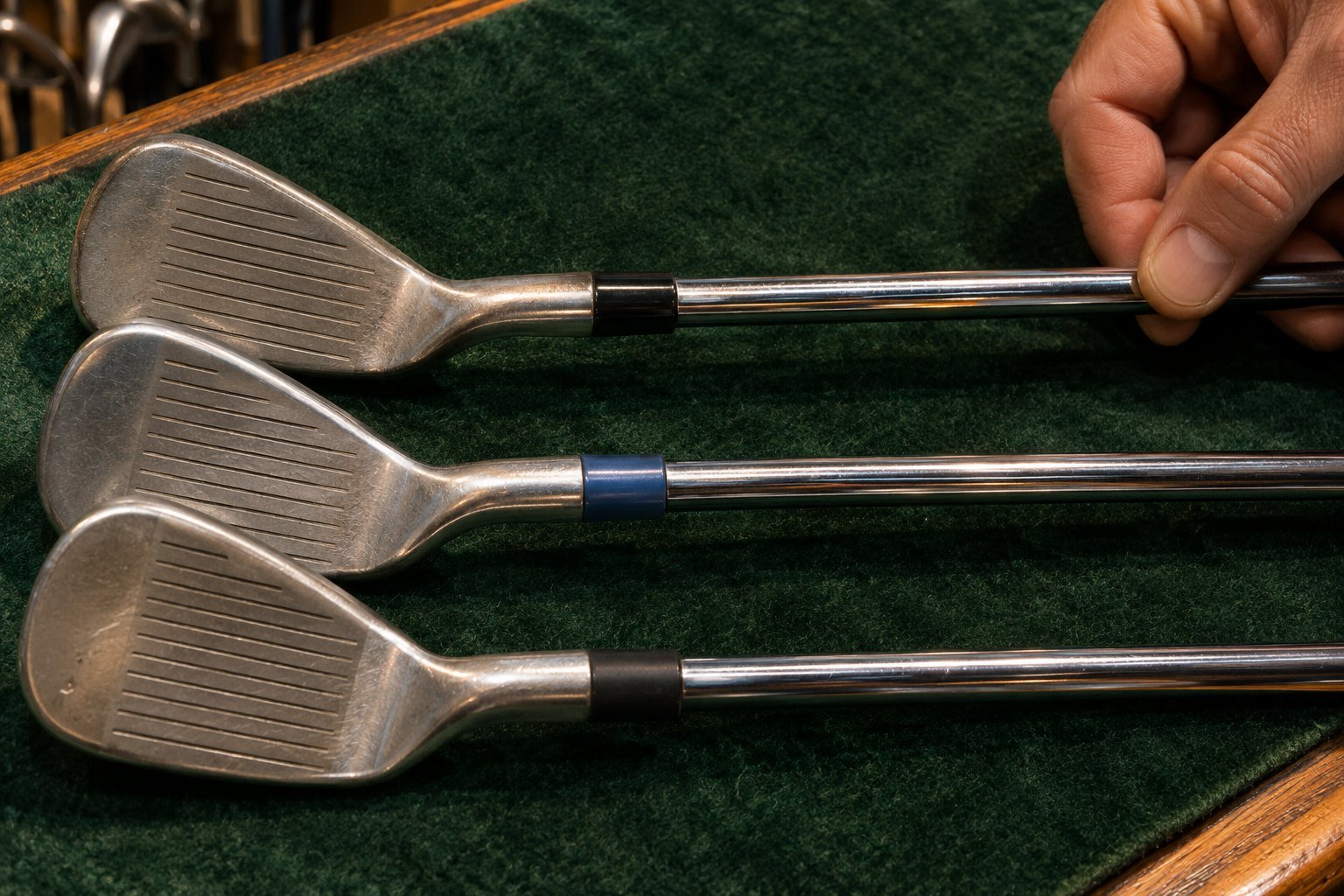
A club number does not establish its present loft. The G430 7-iron illustrates the issue within one model: PING lists 29° standard loft, 27.5° Power Spec and 31° Retro Spec. Those are manufacturer design specifications, subject to tolerances, rather than measurements of a particular used club. [1]
Ask whether the set was ordered in a different configuration or subsequently adjusted. A seller may know; if they do not, record that uncertainty. A professional measurement is useful when the current lofts and lies matter to the purchase or when a replacement iron must join an existing set.
For an intentionally mixed set, write down the models and the transition point. You want useful shots across that transition, not simply consecutive numbers stamped on different heads. Once the clubs are suitable and sound, compare their carry coverage with your existing hybrid and wedges before assuming they fill the gaps.
A specification check and a fitting answer different questions. One establishes the clubs’ measurements; the other helps assess how they work for you. If you need both, agree that scope in advance using the guide to useful fitting fees and written outcomes.
Back to top ↑Separate visible wear from questions that need inspection
Inspect in good light and, where possible, in person. Government guidance on second-hand goods advises checking condition and asking about modifications; wear and alterations can introduce risks that are not immediately obvious. Commercial sellers must supply safe products. [2]
| Area | What to look for | How to handle uncertainty |
|---|---|---|
| Face, grooves and sole | Wear across the hitting area, deep gouges, damage and any area hidden by poor photographs | Request a clear close-up of each face and sole; compare the stated condition with the actual set. |
| Head and hosel | Cracks, unusual deformation or a head that appears loose | Do not hit balls with a suspect club to see what happens; have it assessed professionally. |
| Steel or graphite shaft | Visible bends, dents, cracks, damaged surfaces or exposed fibres | Do not run a bare hand over suspected splintered graphite; stop using the club and seek inspection. |
| Ferrule and shaft join | A gap, movement or inconsistent appearance between clubs | Ask about previous work. A ferrule gap alone does not diagnose the head’s attachment. |
| Grips | Splits, loose fit, pronounced wear or a surface you cannot hold securely | Include any required professional regrip in the quote. |
Small cosmetic marks and a damaged structure are different concerns, but photographs cannot reliably settle every borderline case. Ask for an inspection or pass on a set whose safety is unresolved. Do not budget for a home glue-up, shaft straightening or groove sharpening as though it were an ordinary cosmetic tidy.
If regripping is the main work required, choose the finished grip before pricing all the clubs. Our grip-size and feel guide explains why replacing every grip with the same new size is a decision worth checking first.

Check provenance and replacement availability separately
Ask where the set came from and whether the seller has a receipt or build information. Record serial markings where present and take an unexplained difference to the manufacturer or an authorised retailer. A missing or different marking needs model-specific interpretation, not a universal internet rule.
PING specifically warns that its registration process does not verify authenticity and that photographs can make counterfeit clubs difficult to distinguish. A successful registration should therefore never be treated as an authentication certificate. [3]
Even a confirmed original build record cannot describe alterations made afterwards. Keep the manufacturer’s information alongside the seller’s account of repairs, replacements and adjustments, and ask a professional to resolve a material disagreement.
Check the missing-club route before agreeing a price. PING currently lists the G430 for fill-in or replacement orders through an authorised retailer with a valid serial number, and asks customers to confirm product and component availability with Consumer Relations. This is a route to enquire about, not a promise that every matching iron can be supplied. [1]
Get a quote for the actual handedness, club number, head, shaft, flex and required build. A visually similar head with an unavailable matching shaft may change the economics. If the required club cannot be sourced, reconsider the set instead of treating a guessed replacement cost as settled.

Example budget: compare the finished six-club set
Suppose you want 5–PW and are comparing two otherwise suitable used offers. The figures below are hypothetical inputs for a budgeting exercise. Offer A has five clubs and needs a 7-iron plus six new grips; Offer B already has the six required clubs and usable grips.
| Cost | Offer A: five clubs | Offer B: six clubs |
|---|---|---|
| Asking price | £240 | £330 |
| Set delivery | £10 | £10 |
| Matching 7-iron | £80 | £0 |
| Replacement-iron delivery | £10 | £0 |
| Six grips fitted at £12 each | £72 | £0 |
| Specification check | £30 | £30 |
| Total | £442 | £370 |
Offer A begins £90 cheaper and finishes £72 dearer. Its budget only works if the matching replacement is obtainable at the assumed price and no further work is required. Replace every input with an actual quote, including labour, delivery and any specification changes. Keep unquoted work as an unresolved cost rather than entering zero.
Neither offer automatically wins on price alone. The clubs still need to suit you, their condition must be acceptable, and the seller’s terms matter. If reshafting or structural repairs are proposed, get a separate professional assessment before committing.
Use new stock as a cost comparison
Compare the finished used-set total with the exact new set you would otherwise buy. Clubhouse Golf says it does not sell second-hand irons, so its listings serve as new-stock comparisons here. [4]
For a G430 already on your shortlist, check the new G430 steel-shaft listing at Clubhouse Golf and select the actual set, shaft and flex before comparing totals. [5] If a Callaway build is your alternative, browse Callaway UK’s new iron range for the corresponding set quote. [6]
Compare the same number of clubs, a suitable build, delivery and any necessary work. A cheap headline price for fewer clubs is not an equivalent offer, and a new model’s existence does not establish that it will work better for you.
Back to top ↑Confirm seller terms, then check the delivered clubs
In a UK consumer purchase from a trader, the goods must match their description and meet the standard of satisfactory quality reasonably expected in the circumstances, including price and condition. A private purchase offers fewer protections: the description still matters, but the trader’s quality obligations do not simply carry across. Establish who is selling the set. [7]
For most online purchases from a business, you normally have 14 days after receipt to notify cancellation, then another 14 days to return the goods. An exception may apply if the seller is making the goods to your specifications or clearly personalising them for you. Handling beyond what is needed to inspect them may affect the refund. A general “no returns” statement cannot remove statutory rights. [8]
Before paying, ask for the return address, who pays return postage, any inspection or trial policy, and the process for reporting a mismatch or fault. Do not assume that a change-of-mind policy permits several rounds of golf.
Ask separately about any advertised warranty: who provides it, whether this used purchase is covered, what evidence is needed and what it excludes. Statutory rights against a trader do not depend on having a manufacturer warranty. [8]
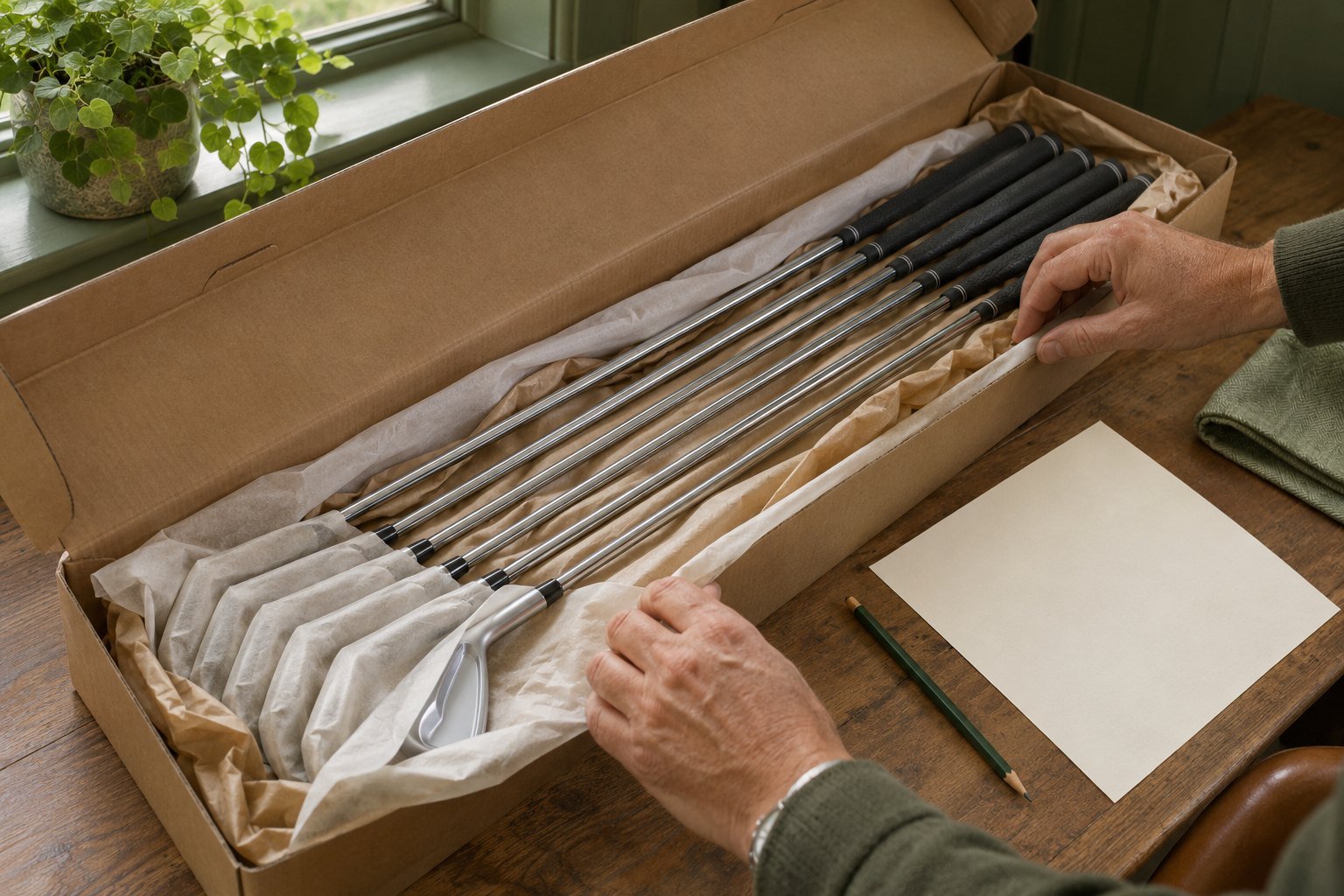
Keep the listing, photographs, written club list, answers and receipt. On arrival, compare every club with the record before altering or putting the set into play. Photograph any transit damage and raise missing clubs or discrepancies promptly with the seller. Keep the packaging until the inspection is complete.
Decide whether to buy, investigate or pass
| Position | Next step |
|---|---|
| The actual clubs and build are identified, condition is acceptable and the complete cost is clear | Consider buying if the set suits your needs and the seller’s terms are acceptable. |
| A replacement, mixed shaft or uncertain measurement has a plausible explanation | Resolve the specific question and cost the proposed check before committing. |
| The necessary club is unavailable, serious condition questions remain, or the description cannot be reconciled | Pass and compare another set. |
You do not need to prove that a difficult listing is a bad product. It is enough that the available evidence cannot support the purchase you want to make. A clearer set with fewer unresolved costs may be the more useful option even when its asking price is higher.
Back to top ↑What to do next
Ask for the club list and photographs first, then resolve shafts, current specifications, condition and provenance. Price the complete set you intend to use, including missing irons and professional work. Pay only when the description, total cost and seller’s terms are clear enough to support the decision.
Sources and further reading
Sources checked on 22 November 2026. Product descriptions and terms can change; confirm the details for the exact item before buying.
- PING UK — G430 irons: specifications, shaft options and fill-in or replacement enquiries
- GOV.UK — Consumer products: buying second-hand goods
- PING UK — Counterfeit clubs: registration and authenticity
- Clubhouse Golf — Golf irons: new-stock and second-hand policy
- Clubhouse Golf — PING G430 steel irons: new-set listing and options
- Callaway UK — New iron and combo-set range
- Consumer Council — Consumer rights when buying goods, including private sales
- GOV.UK — Accepting returns and giving refunds: distance purchases and warranties
Illustrations in this article were created for Taylor’s Trailblazing Golf. Third-party photographs, where used, are credited beside the image or in the source list.