Golf Ball Cover Durability: Scuffs, Cuts and Replacement Decisions
Inspect the cover, choose the appropriate use and record why a ball leaves play.
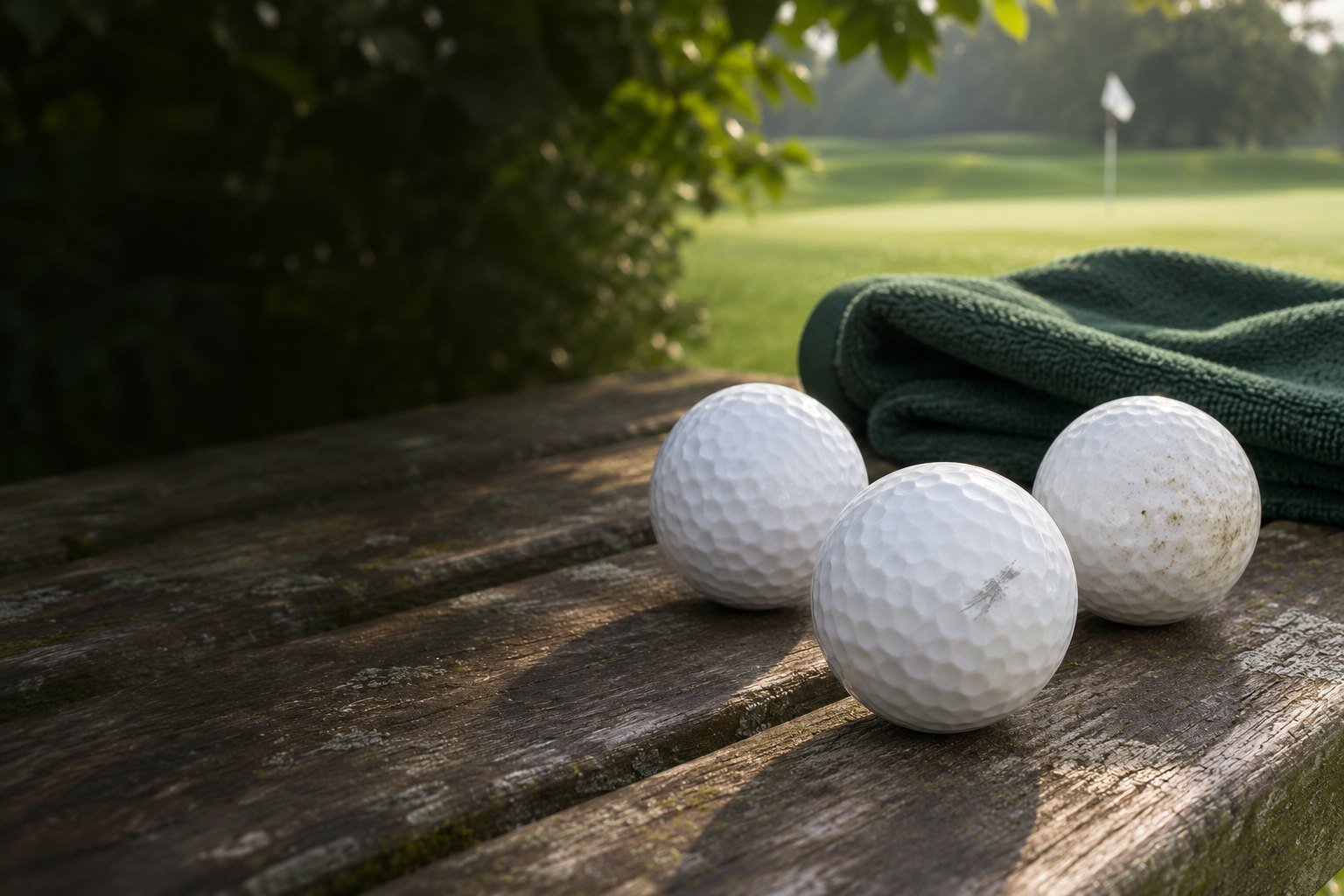
Inspect condition before a ball enters your playing pouch. AI-created illustration of generic golf balls.
A used golf ball can be dirty, cosmetically marked or visibly damaged. Those descriptions lead to different decisions. A useful durability routine starts by identifying what you can actually see, then deciding whether the ball belongs in your playing pouch, a casual-practice group or neither.
Ad – includes affiliate links. Taylor’s Trailblazing Golf may earn a commission from qualifying purchases. Our recommendations follow the reader’s needs and the available evidence. Read our disclosure.
Golf ball cover durability: start with a condition decision
Use this table while choosing balls before a round or preparing for practice. It is an original practical sorting aid, not a laboratory damage scale or a ruling on a ball in play. The on-course procedure appears separately below.
Swipe or scroll the table to see all columns.
| What you can see | What remains uncertain | Practical next step |
|---|---|---|
| Dirt or grass obscures the surface | Whether the mark is removable or hides damage. | Follow the maker’s care guidance, then inspect again before assigning a use. |
| Discolouration or rubbed printing, with an otherwise intact surface | Appearance alone does not establish the ball’s complete condition. | Check the rest of the cover and identity; do not assume a new ball is necessary solely for appearance. |
| A light abrasion, without a visible break or loose material | A glance cannot quantify any performance effect. | Decide whether it meets your playing standard or belongs in casual practice. Keep that standard consistent. |
| An obvious cut, crack, lifted cover edge or distorted shape | How much more damage exists beyond the visible area. | Remove it from the playing and practice-hitting groups. Do not attempt to mend the cover. |
| An unclear line, suspicious mark or unknown condition | Whether it is a harmless mark or actual damage. | Set it aside, seek appropriate advice if useful, and choose a sound alternative before play. |
The “uncertain” route matters. You do not have to declare every mark harmless or prove that a ball has failed. Before play, using another suitable ball is a reasonable response to an unresolved concern. That practical choice does not create permission to substitute at any point during a hole.

Make the inspection consistent enough to be useful
Work in good light and rotate the ball so you inspect more than the patch that first caught your attention. Look for a continuous cover, raised or loose material and a change in the ball’s shape. Check that you can still identify the model if you intend to keep it with your usual playing balls.
Describe the observation plainly. “Flat grey abrasion across several dimples” and “visible open line with an edge lifting” convey more than “a bit rough”. A brief photograph can preserve the location and appearance for a seller or manufacturer, but it cannot establish the hidden condition of the ball.
- Identify: note the model and, where known, generation. Keep an unknown recovered ball separate from a known reference sample.
- Inspect: look around the complete surface after appropriate care away from play.
- Classify: record dirt, appearance-only concern, abrasion, visible damage or uncertainty.
- Assign: choose play, casual practice or removal from hitting use, and put it in the corresponding place immediately.
Do not pick at a suspect edge to see how far it lifts. If the distinction remains unclear, keep the uncertainty rather than turning inspection into damage. For ordinary finish and care questions, our matte-versus-gloss guide covers those separate considerations.
This guide does not give a coin-sized scuff allowance, a guaranteed number of holes or a fixed distance loss from a mark. Without suitable evidence for the exact damage and ball, those numbers would imply more certainty than the inspection provides.
Use the cover material as context, not an expiry date
Titleist describes ionomer covers as harder and more durable than its urethane alternatives, while explaining urethane’s feel and short-game trade-offs. That is useful manufacturer guidance about materials. It does not tell you how many impacts a particular ball will survive, or establish that every mark on one material is acceptable. [1]
Keep the material question separate from the individual ball in your hand. A durability-oriented description does not cancel a visible cut. Equally, a ball with a softer cover should not be retired solely because its material sounds less robust. Inspect its actual condition.
If you repeatedly remove a model from play because of visible wear, record the reason before choosing a replacement. Did the cover actually break, did an abrasion concern you, or did you simply prefer an unmarked ball? Those are different buying priorities and should not be combined into one unsupported claim that the model “does not last”.
During a hole: apply the replacement Rule separately
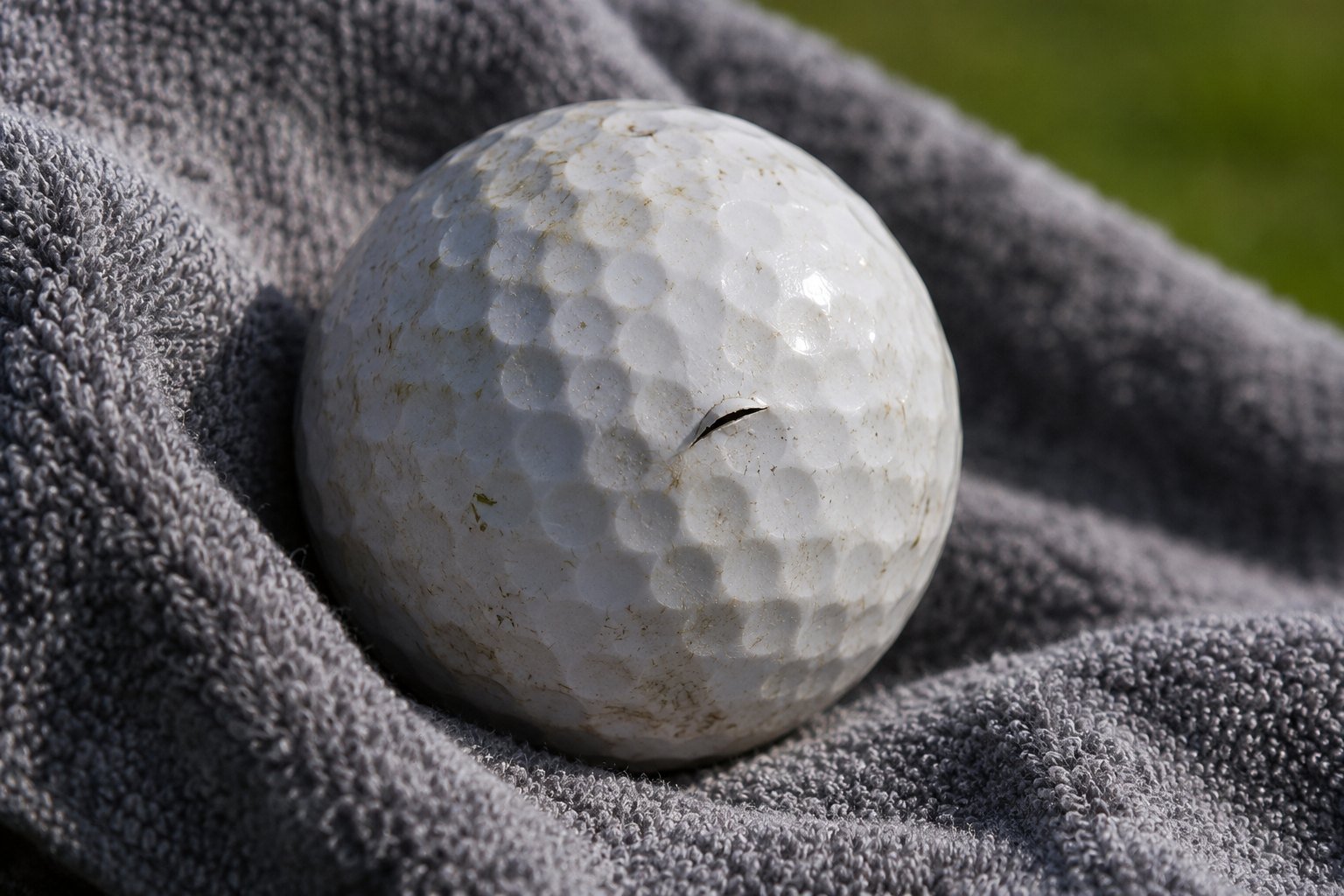
If you reasonably believe your ball became cut or cracked during the hole, Rule 4.2c permits an inspection. Mark its spot before lifting. Do not clean it, except when it is on the putting green. [2]
Substitution under this Rule requires a clearly visible cut or crack that happened during that hole. Scratches, scrapes and damaged or discoloured paint alone do not qualify. If it qualifies, replace either the original ball or another ball on the original spot; otherwise replace the original. Playing an incorrectly substituted ball brings one penalty stroke; playing from a wrong place involves a separate penalty provision. [2]
Changing balls between holes is allowed under Rule 6.3a, and other Rules may permit substitution during a hole in their own circumstances. For example, Rule 6.3b distinguishes situations where you drop or place a ball in taking relief from those where you must replace the original ball. Check the applicable procedure rather than assuming that every lift permits a change. [3]
If the Committee has adopted the One Ball Local Rule, G-4, each ball played must match the same brand and model in a single entry on the current conforming list. It does not require keeping the same physical ball for the entire round. Check the competition conditions and ask for a ruling if the situation is uncertain. [4]

Give play, practice and retirement different criteria
Keep a deliberate playing group
Choose balls you can identify and whose condition you are comfortable accepting before the round. A cosmetic preference is legitimate, but record it as that. You do not need to invent a performance defect to prefer a cleaner-looking ball.
Keep suitable spares together so that a permitted replacement is straightforward. If your usual playing model is changing, identify the new generation clearly; a familiar name on the ball is not a complete purchase record.
Use practice balls for a stated purpose
An intact, lightly marked ball may still have a role in casual practice where the venue permits your own balls. Keep it outside the playing pouch if it no longer meets your chosen playing standard. Recheck it as wear develops rather than allowing “practice” to become a permanent exemption from inspection.
For a ball-fitting comparison, use identified samples in comparable sound condition. A mixed collection of worn balls makes it harder to interpret which model you prefer. Our structured short-game fitting guide explains that comparison; this condition check prepares the samples for it.
Retire damaged balls from hitting use
Keep clearly cut, cracked, loose-covered or misshapen balls out of both groups. Do not pass them into a practice bag without mentioning the defect. If a newly bought ball appears faulty, retain it with its packaging and purchase details while you ask the seller or maker about the appropriate next step.
Do not sand, fill, glue or repaint a damaged cover to turn it back into a playing ball. The Equipment Rules also prohibit playing a ball whose performance characteristics have been deliberately altered. Ordinary permitted identification markings are a different matter. [5]
Record why a ball leaves play
Remembering how often you open a sleeve is not the same as measuring cover durability. Some balls disappear before the cover becomes a concern; others are removed because of a mark you dislike. A useful record preserves those reasons.
Swipe or scroll the table to see all columns.
| Record | Useful detail | Why it matters |
|---|---|---|
| Ball identity | Model, generation where known and your identifying mark. | Keeps observations attached to the right ball. |
| Starting condition | New, previously used and inspected, or history uncertain. | Prevents unlike starting points being treated as equivalent. |
| Visible change | Plain description and an optional photograph. | Distinguishes an abrasion from a visible break. |
| Known incident | Any impact or event you actually observed; otherwise “unknown”. | Avoids inventing a cause from the mark alone. |
| Reason for removal | Lost, visible damage, cosmetic preference or still in use. | Separates replacement spending from cover failure. |
| Next destination | Play, casual practice, set aside for advice or retired from hitting. | Stops an unresolved ball returning to the wrong pouch. |
A hypothetical example: eight balls do not mean eight failed covers
Imagine that you introduce eight identified balls over several outings. Five are lost, one is retired after a visible cut, and two remain in use. You have recorded one damage-related retirement. You have not observed the eventual cover life of the five lost balls or the two still being played.
That simple distinction changes the buying conversation. If most replacements follow losses, a tougher-cover claim may not address the main reason you are buying more balls. If most follow cosmetic preferences, decide whether your own threshold is worth the cost. If visible damage repeatedly ends their use, the record gives a seller, manufacturer or fitter something specific to discuss.
This is an illustrative record, not reported testing or a statistical durability comparison. Different use, impacts and starting condition still limit comparisons between models. A few examples can help you describe your experience without proving a universal lifespan.
Replace for a clear reason, then inspect the replacement
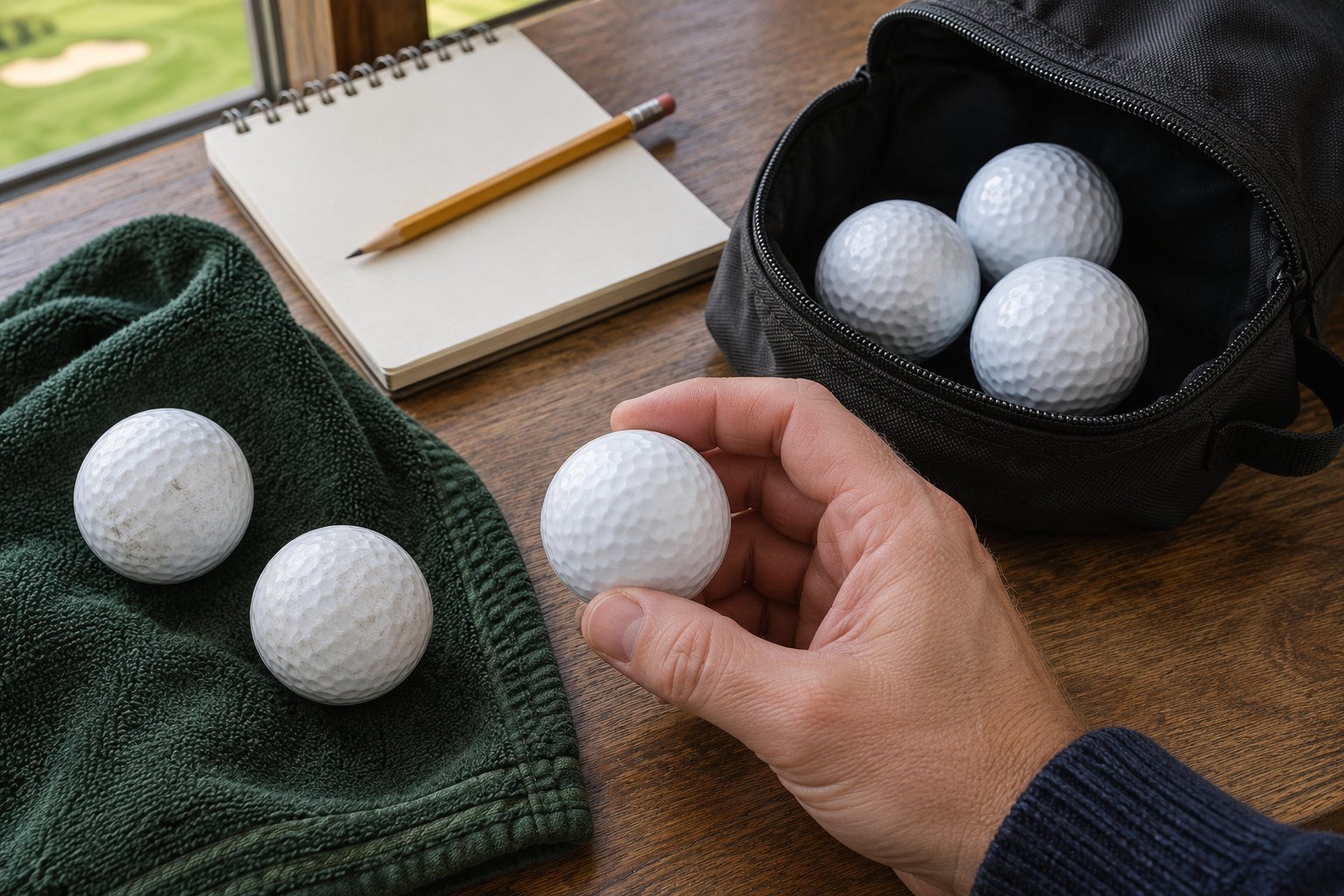
Before buying more, count the sound balls you already have in the intended model. Check new arrivals before mixing them into the playing group, and keep any condition concern separate while it is being resolved. Buying another dozen does not improve the usefulness of an unsorted pocket.
When replenishment is needed, you can compare golf-ball options at Clubhouse Golf or browse Callaway UK’s golf-ball range. Check the exact model, generation, pack quantity and stated condition. These range links do not identify a universal durability winner.
The useful habit is straightforward: inspect before play, describe rather than guess, separate the destinations and record why a ball is removed. During a hole, follow the relevant Rule. A clearer decision is more valuable than an unsupported promise that every ball should survive a fixed number of rounds.
This is a research-led condition guide with an original sorting and recording method; it does not report destructive testing or personal durability results. Read our review methodology or browse the wider Golf Balls guides.
Sources
Official rules and manufacturer material guidance checked on 23 November 2026. The condition table and eight-ball example are original practical aids, not measured performance thresholds or a ruling on an individual ball.
- Titleist Learning Lab: Cover — manufacturer explanation of urethane and ionomer cover materials and durability trade-offs.
- The R&A: Rule 4, The Player’s Equipment — Rule 4.2c inspection and substitution when a ball becomes cut or cracked during a hole.
- The R&A: Rule 6, Playing a Hole — changing balls between holes and the scope of substitution permissions.
- The R&A: Model Local Rules, G-4, One Ball Rule — the brand/model requirement when the Committee adopts it.
- The R&A: Equipment Rules, Part 3, The Golf Ball Playing Rules — deliberately altered performance characteristics and identification markings.
Illustrations in this article were created for Taylor’s Trailblazing Golf. Third-party photographs, where used, are credited beside the image or in the source list.