Golf Ball Performance in Cold Weather: What to Check Before Switching
Keep the weather, the ball and the result in view before buying a seasonal replacement.
AI illustration: begin a winter ball decision with the conditions and the shot you want to improve.
Some links in this guide are affiliate links. If you buy through them, Taylor’s Trailblazing Golf may earn a commission at no extra cost to you.
Golf ball performance in cold weather is easier to judge when you begin with a specific observation. Has carry shortened, has rollout disappeared, does impact feel less pleasant, or is the ball simply harder to find? Those problems call for different checks.
Keep your familiar model as the starting point. A change of ball is worth considering when it solves a problem you can describe and keeps the other shots you need. A winter label or a softer name cannot make that decision for you.
This research-led guide sets out a conditions record and a focused comparison. It does not promise a fixed number of lost yards or report an on-course test.
Check the environment, contact and the type of distance being reported before blaming the model.
Record where the ball lands and what the ground is doing; total distance cannot explain the cause on its own.
Name the particular problem so a practical preference does not become an unsupported distance claim.
What changes golf ball performance in cold weather?
Titleist separates two temperature effects: denser cold air changes the aerodynamic forces on a shot, while a cold ball can lose material resilience and leave the clubface more slowly. The temperature of the air and the temperature inside the ball are different quantities. [1]
A weather reading therefore does not establish the temperature of a ball just brought from indoors. Nor does a shorter drive tell you how much each factor contributed. A useful record preserves what you know instead of giving every winter result the same explanation.
Keep three parts of the result separate
- The ball’s preparation: where it was kept and roughly how long it has been outside.
- The shot environment: air conditions, wind, lie and the state of the landing area.
- The shot itself: club, contact, intended flight and the observed landing and finish.
For instance, “finished short of my summer drive” is incomplete. “The landing was difficult to see, the fairway was wet and the ball stopped near its pitch mark” is more useful. It tells you that the observation cannot be treated as a clean carry comparison.
You do not need to calculate a universal correction from a temperature forecast. Begin with reliable information about the shots you actually face. If the landing point was not visible or measured, write that down rather than turning the finishing position into an exact carry distance.
Choose the problem you want a change to solve
Write one sentence before choosing a candidate: “I want a ball that is easier to find against this background”, or “I want a more pleasant putting response without losing the pitch control I use”. That makes the proposed change specific enough to assess.
A visibility problem can often be investigated by considering another colour of the familiar model. A softer sensation is a preference to compare with the same club and shot. Neither observation establishes that the ball will travel farther.
Visibility deserves its own check
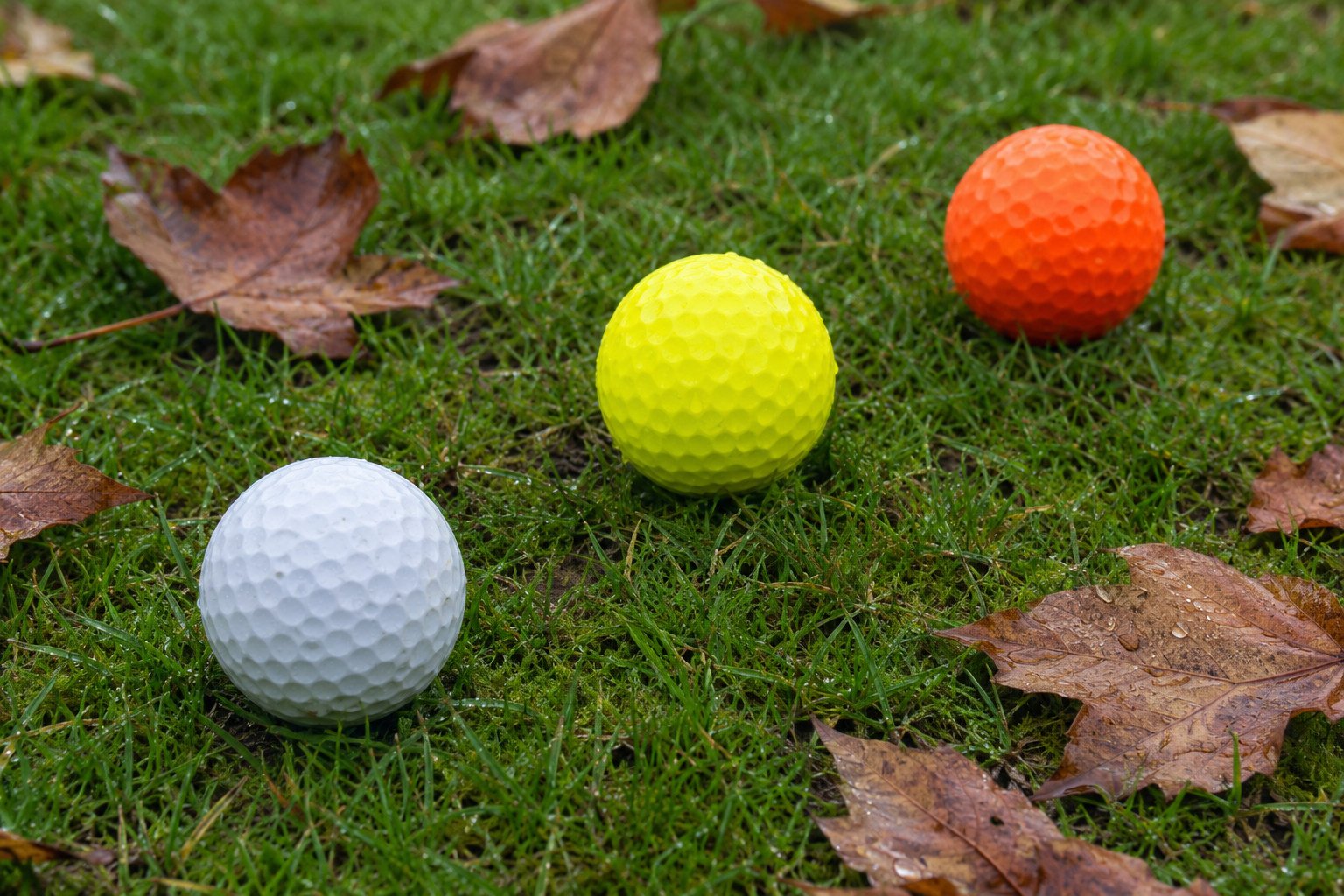
Look at the backgrounds you encounter: damp grass, fallen leaves, pale rough and an overcast sky. A colour that stands out on one background may be less convenient on another. Distinguish following a shot in flight from locating a stationary ball, and use safe, permitted positions for any comparison.
The matte and gloss guide explains a more detailed visibility check. Keep that separate from a claim about cold-weather speed or spin. If you change colour, finish, markings and model together, the result is a preference between those complete products rather than proof about any single feature.
Cost can also be a valid seasonal reason to reconsider a model. Set the budget you are comfortable losing and replacing, then check that the alternative still supports the shots you rely on. A cheaper choice can be sensible without needing an invented winter performance advantage.
Keep a short conditions record before comparing models
A useful record can fit on one page. Its job is to stop a bright, calm practice session being compared casually with a windy, wet round several weeks later.
Use the same units throughout. For air temperature, note the source and time of the reading rather than pretending it measures the ball. “Brought from indoors; first ball hit after about 20 minutes outside” is a preparation note, not a measurement of core temperature.
Swipe within the table to see all columns.
| Record | What to write | What it helps you avoid |
|---|---|---|
| Date, time and environment | Air reading/source, wind description and any change during the session. | Combining substantially different conditions into one conclusion. |
| Ball identity and preparation | Exact model/version; condition; storage before practice; approximate time outdoors. | Confusing a model change with a different preparation routine. |
| Club and contact | Club used, normal shot intention and obvious strike differences. | Giving an equipment change credit for a better strike. |
| Carry information | Measured landing distance, an identifiable landing area, or “not known”. | Calling total distance carry when the landing was not observed. |
| Ground and finish | Wet, soft, firm or otherwise notable landing conditions; bounce and final position. | Treating a different ground response as proof of a ball-speed change. |
| Feel and visibility | Specific impression and whether it affected the decision. | Converting a preference into an unsupported performance claim. |
If the wind changes markedly or rain begins, start a new block of notes. Do not blend it with the earlier block and then compare a single average. The important question is whether the difference between balls persists when the comparison is reasonably fair.
Keep the record proportionate. You are trying to make a playing choice, not create a weather laboratory. A few honest unknowns make the notes more useful than a complete set of guessed numbers.

Prepare normally, then compare one candidate
Titleist recommends room-temperature balls and indoor storage, with a gradual return to normal temperature after extreme exposure. [1] Give both models the same ordinary preparation before practice rather than giving one a special treatment.
Keep preparation to normal storage. Rule 4.2a(2) prohibits playing a ball whose performance characteristics have been deliberately altered, including by heating. Treat the rule separately from ordinary indoor storage; do not use heating experiments as a winter playing strategy. [4]
Use the familiar model as a reference
At a suitable practice facility, choose the shot linked to your concern and alternate the familiar ball with one candidate. Keep the club, intended shot and lie comparable. Record obvious mishits rather than quietly retaining only the attractive results. If the balls spend different amounts of time outside, preserve that detail in the notes.
Once a possible benefit appears, check the shot you are least willing to compromise. For a distance-focused change, that might be a familiar pitch. For a softer putting response, it might be an approach shot. This is a focused seasonal check; the full short-game comparison guide provides a broader fitting routine.
A softer label is a candidate, not a result
Titleist cautions against automatically changing to a lower-compression model for cold weather: changing models also changes other playing characteristics. [1] If you prefer another ball’s response, that is a useful observation. Confirm the rest of its behaviour instead of claiming that the preference proves better energy transfer or extra carry.
Repeat an unclear result on another suitable day before buying in quantity. If you cannot distinguish a dependable benefit, keeping the familiar model is a complete decision.
Ask what the launch-monitor distance represents
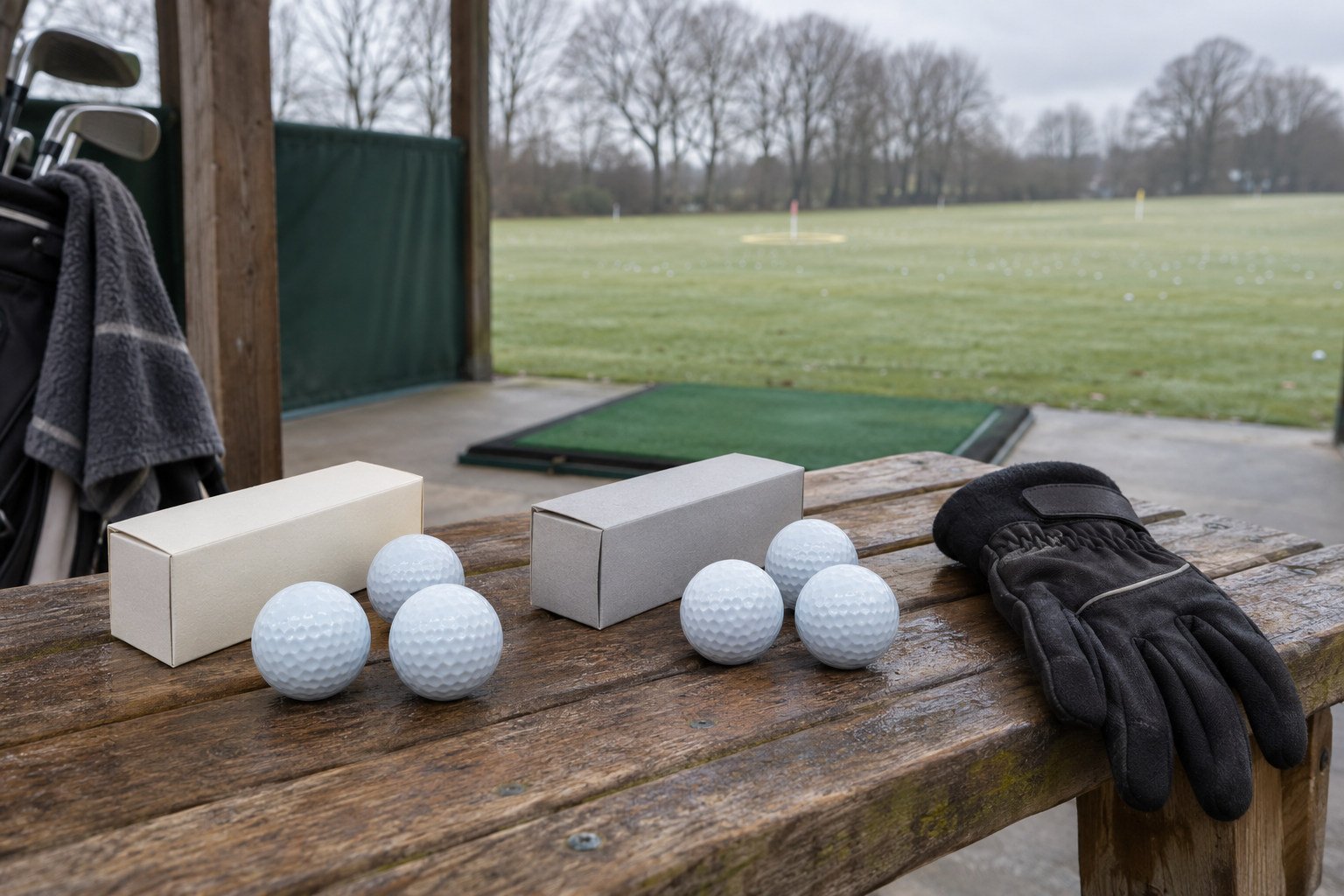
A fitting session can help when the difference matters but the landing point is difficult to observe. Ask the fitter to identify which figures were measured and which were calculated, then retain the relevant settings with the result.
Trackman’s current support guidance says its normalization feature adjusts for wind, altitude and temperature, with editable environmental settings. Its explanation distinguishes an actual trajectory from a calculated flight under the selected calm conditions. [2] [3]
That distinction matters when an indoor figure is compared with a winter shot outdoors. A normalized result and an observed cold-weather carry answer different questions. Neither should quietly be substituted for the other.
- Is the displayed distance carry or total?
- Is normalization enabled, and what temperature and altitude are entered?
- Is any range-ball conversion being applied?
- Were both candidate models tested in the same mode and conditions?
- Does the comparison show the shots that matter to your decision, including the trade-off elsewhere?
Keep screenshots or a summary only if the settings can be identified. A number without its context may look precise while being unsuitable for the comparison you want to make. Do not assume a software setting can reconstruct how a particular ball was stored or how long it had been cooling outside.
Check a specific colour option before changing the design
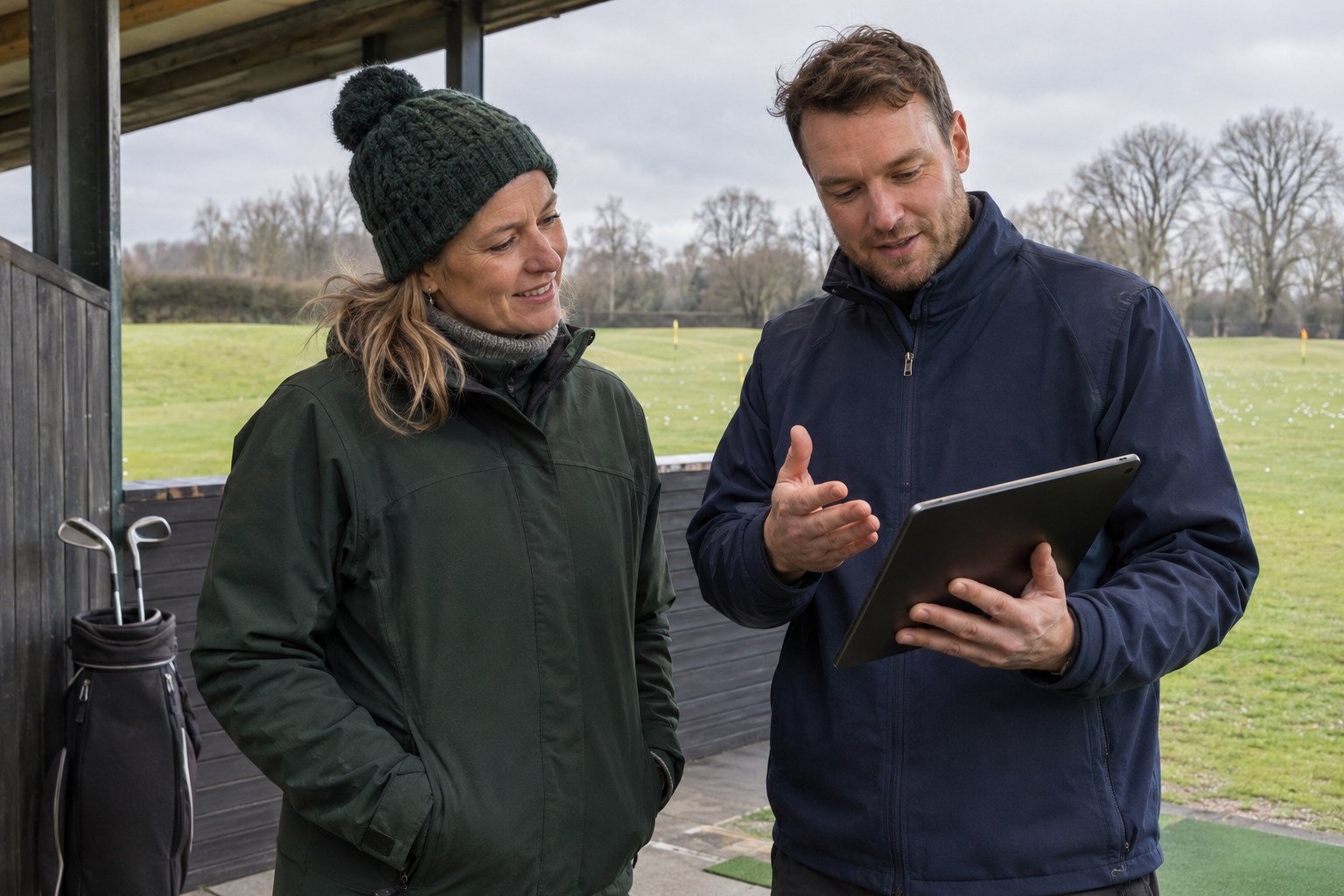
If the main concern is locating the ball, start by checking the colour options within a model you already like. Two current UK examples show how to keep that choice specific without presenting a list of supposed winter winners.
For an existing Tour Soft player
Titleist lists white and yellow versions of the 2026 Tour Soft. Clubhouse Golf’s yellow-dozen page describes the same generation’s 386-dimple design. [5] [6] Match the generation with the balls you currently play; “Tour Soft” alone is not enough to identify an older supply.
For an existing Supersoft player
Callaway’s UK store has an exact 2025 Supersoft Yellow dozen page. [7] That is a colour option to consider if you already like that version, not evidence that its name or colour makes it superior in the cold.
These are separate starting points for existing users, not an assertion that the two models play alike. If you currently use something else, look for its exact colour variant first. Buy a small enough quantity to check your own visibility preference, and confirm the current pack and variant before ordering.
Finish with a decision tied to the evidence
Use your notes to choose one of four outcomes. You do not need to force a switch just because the season has changed.
Swipe within the table to see all columns.
| Your finding | Decision | What to keep checking |
|---|---|---|
| The concern disappears when carry, ground and preparation are recorded separately. | Keep the familiar model and plan shots using the conditions you actually face. | Whether the same explanation holds on a later day. |
| A different colour is easier for you to locate on relevant backgrounds. | Consider that variant, with the model and generation clearly identified. | Flight tracking as well as ground visibility. |
| Another model provides a repeatable useful change without an unacceptable compromise. | Use a modest supply and keep the comparison notes. | The shots you intended to preserve, not only the one that improved. |
| The difference changes direction between sessions or depends on a few strikes. | Postpone the purchase or ask a fitter to investigate. | Contact, conditions and the meaning of any displayed numbers. |
A useful final note might read: “I preferred the putting response, but the pitch comparison is still unclear.” That is a reason for another focused check, not a complete model recommendation. Another might read: “The yellow version was easier for me to locate in this rough.” Keep that conclusion about visibility.
Before your next winter session, write down one thing a new ball would need to improve and one thing you want to preserve. Use those two requirements to judge the result. They will tell you more about whether to switch than a seasonal slogan.
Sources and checks
- Titleist Learning Lab: Temperature and Golf BallsAir versus ball-temperature effects, ordinary storage and the limits of an automatic lower-compression switch. No universal yardage correction adopted.Checked 23 November 2026.
- Trackman: Normalization and Optimizer Feature in TPSCurrent support documentation, updated 8 July 2026; temperature, altitude and wind context.Checked 23 November 2026.
- Trackman: The Normalization Feature ExplainedManufacturer explanation of actual versus normalized trajectory and ball conversion; dated 9 July 2014, used alongside current support guidance.Checked 23 November 2026.
- The R&A: Rule 4, The Player’s EquipmentRule 4.2a(2), deliberately altered ball performance, including heating.Checked 23 November 2026.
- Titleist UK: 2026 Tour SoftExact current-generation and colour identification; no cold-weather superiority claimed.Checked 23 November 2026.
- Clubhouse Golf: Titleist Tour Soft, yellow dozenExact UK product destination and generation description, checked against the manufacturer.Checked 23 November 2026.
- Callaway UK: 2025 Supersoft Yellow, dozenExact colour, generation and UK product destination; no cold-weather distance claim.Checked 23 November 2026.
Illustrations in this article were created for Taylor’s Trailblazing Golf. Third-party photographs, where used, are credited beside the image or in the source list.