Conforming Golf Balls: How to Check the Official List
Match the ball in your hand, check the effective dates and read the event’s Local Rules.
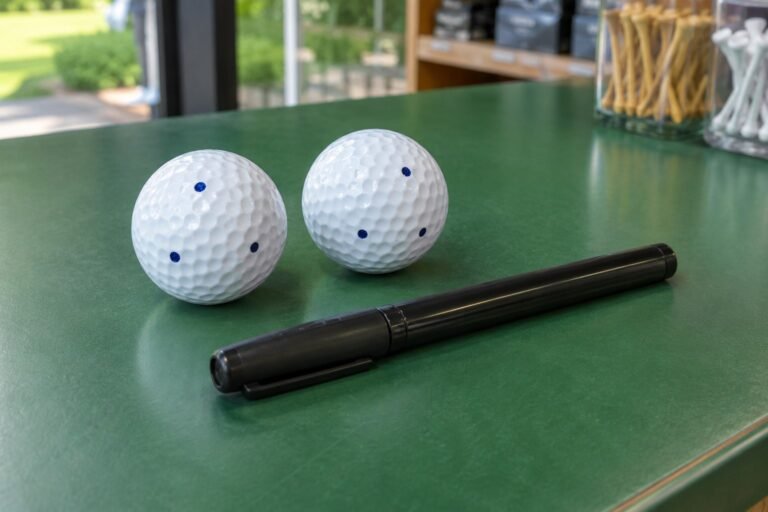
An eligibility question is easier to resolve with the actual ball and the event’s requirements to hand. AI-generated illustration; no official ruling is depicted.
A familiar logo is a starting point, not a completed equipment check. A brand can sell several versions of a ball, and the wording on an old box may not settle which one you have.
This guide gives you a way to check the actual ball before a competition: find the applicable requirement, record its markings, then resolve any difference with the Committee. It is an identification process, not a recommendation to replace a ball simply because it is old.
Read its equipment requirements before choosing the balls for your bag.
Compare the complete marking description and colour, not just the familiar name.
Keep the ball and your observations available for the Committee’s advice.
Check the separate one-ball requirement before assuming all listed balls are interchangeable.
Start with the event’s requirements
Every ball used under the Rules must conform to the Equipment Rules. The Committee can add a requirement to use a ball on the current list. Those are related checks, but the second is not automatically in force at every club competition. [2]
Swipe within the table to see all columns.
| Requirement | What to establish | Your next action |
|---|---|---|
| General equipment requirement | The ball must conform. | Do not knowingly use a non-conforming ball. |
| Model Local Rule G-3 | The current-list requirement applies. | Find the exact listed identity. |
| Model Local Rule G-4 | A separate one-ball restriction applies. | Check that your intended spares meet that restriction too. |
The Committee’s published Local Rules are the place to check G-3 and G-4. Ask the organiser if the wording is unclear. [3]
Keep a copy of the event instructions alongside your ball record. That lets you ask a precise question: which requirement applies to this event, and which part of this ball’s identity remains unresolved? A shop description or an old screenshot should not be your only evidence.
Open the current list and check its dates
Start at The R&A’s official conforming-ball page and choose its current download. The list is updated on the first Wednesday of each month. [1]
The edition checked on 23 November 2026 covers 4 November–1 December 2026. [4]
Those dates identify the document checked for this article; they are not a promise about a future competition. For a later event, return to the official page and use the list whose effective period covers the event. A saved search result can be useful as a record, but it does not replace checking the relevant edition.
The R&A explains that continued listing requires the manufacturer to submit further samples after twelve months. That renewal process concerns a model’s listing, not an expiry date printed on every physical ball. [1]
Record the date you checked, the effective period shown on the document and where you found the entry. If the document opens at a search result halfway through, return to its date information before relying on it.
Read the actual ball before searching
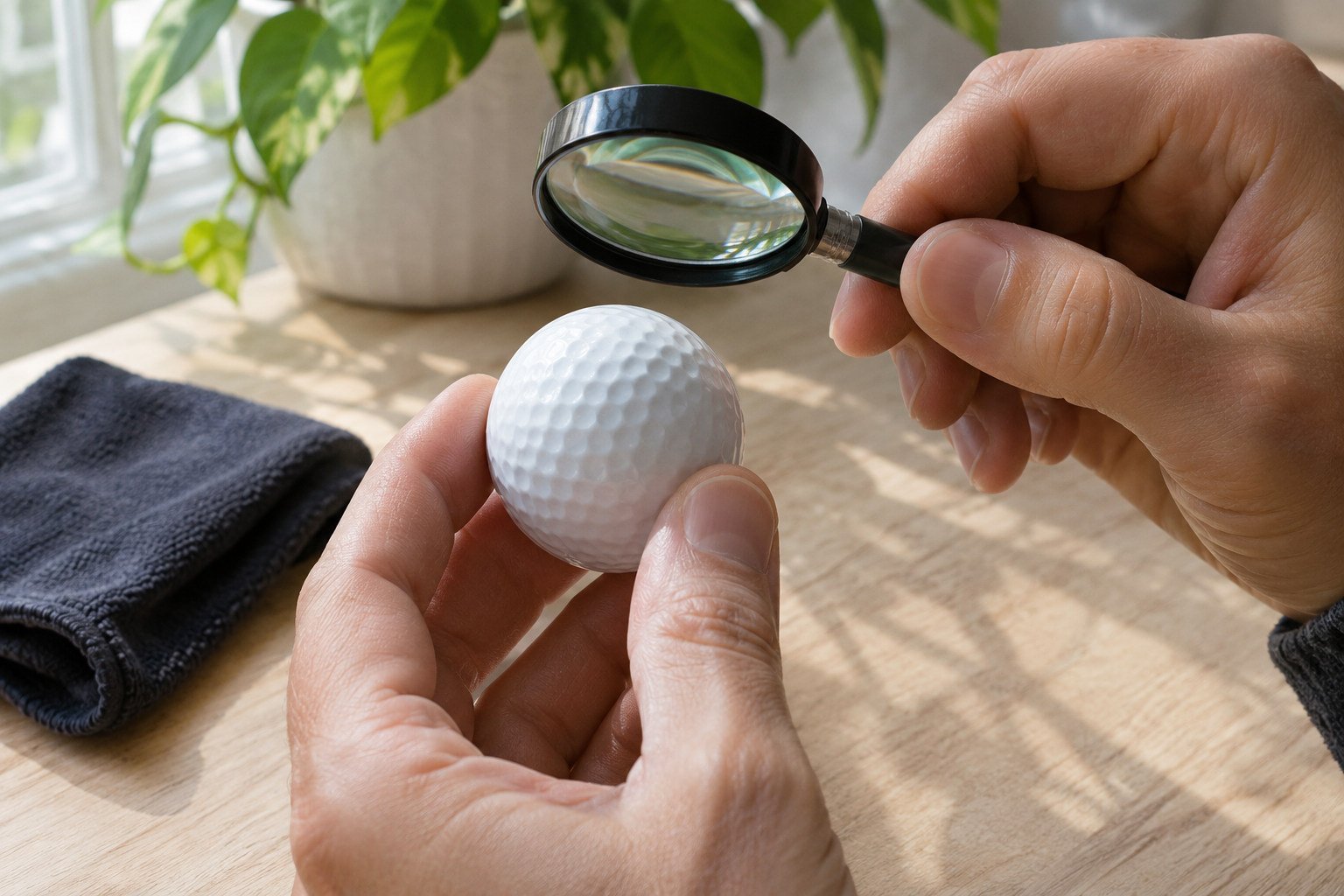
Place the ball in good light and turn it through a full rotation. Make a record of every factory marking you can see before choosing a search term. This avoids stopping at the first entry that looks familiar.
Swipe within the table to see all columns.
| Field to record | What to compare | Useful record |
|---|---|---|
| Major marking | The listed pole marking or markings | A clear photograph of each side |
| Secondary marking | The seam wording and symbols | The complete design, including arrows or extra graphics |
| Cover colour | The colour named in the entry | White, yellow or the actual listed colour |
| Entry location | The full matching entry | The document date and page or database result |
Pole and seam mean major and minor markings, respectively; ordinary player numbers are excluded. [4]
You can also open the official equipment search. It provides keyword, equipment-category and manufacturer controls. [5] If the search does not give you a useful match, use the downloadable list and its instructions. A failed search is a reason to investigate, not a conformance ruling.
Do this with the balls you intend to use, including loose spares. The box helps you organise the check; the ball is the item that must be identified. If a printed symbol is worn away or hidden, note the uncertainty instead of reconstructing it from memory.
A worked example: one name can lead to several entries
The November 2026 list shows white Bridgestone e12 Straight entries with and without circles and arrows as a second seam marking, plus a yellow version. Matching only the B logo and e12 name misses these differences. [4]
Use that example as a checking exercise:
- Start with the actual ball. Write down its colour and take photographs of its factory markings.
- Keep every plausible entry in view. Do not discard the alternatives simply because the first result has the right brand.
- Compare the remaining detail. Work through the secondary graphics against your photographs and the full official descriptions.
- Record an unresolved difference. A partly hidden marking, extra symbol or unexplained colour difference needs an answer before you treat the check as finished.
This is a demonstration of the method, not a ruling on an unseen e12 ball or an assurance about a future list. The generic photographs in this guide do not show the official markings and cannot be used to identify a model.
A useful record is specific enough for someone else to follow: the event, the list edition, the complete entry and your photographs of the physical ball. “It looks like the same brand” leaves too much of the decision undocumented.
What to do when the ball is not an exact match
First check for an ordinary identification error. Re-read the spelling, look for small symbols you missed, confirm the cover colour and make sure you have the correct list edition. Search a shorter distinctive word if a long search phrase gives no result. Keep both your observations and the entry you were considering.
If the mismatch remains, ask the competition Committee or the governing body. Show them clear photographs rather than asking only whether a broad brand or product family is allowed. Their answer needs to address the ball and the event you will actually play.
Without G-3, the official clarification presumes that never-tested models conform, and that previously listed models not resubmitted continue to conform. A model known to have failed the Equipment Rules remains prohibited. Absence from the current list does not by itself prove that a ball has become non-conforming. [6]
That distinction is useful when sorting an older collection. Do not confuse “I cannot identify this” with “it has been ruled non-conforming”. Equally, an unresolved identity is a poor starting point for a competition that requires a current listing. Set the uncertain ball aside while you obtain an answer.
Check special stamps and the separate one-ball rule
An added word or mark can raise a different question from the basic model search:
Swipe within the table to see all columns.
| Mark or description | Relevant distinction |
|---|---|
| X-Out or refurbished | These must not be used where G-3 applies, even if the underlying identification resembles a listed model. |
| Practice or an added club/company logo | Such a stamp does not by itself exclude an otherwise qualifying listed ball. |
These distinctions come from Clarification 4.2a(1)/2. A Practice stamp is not a blanket approval for every range or training ball. [6]
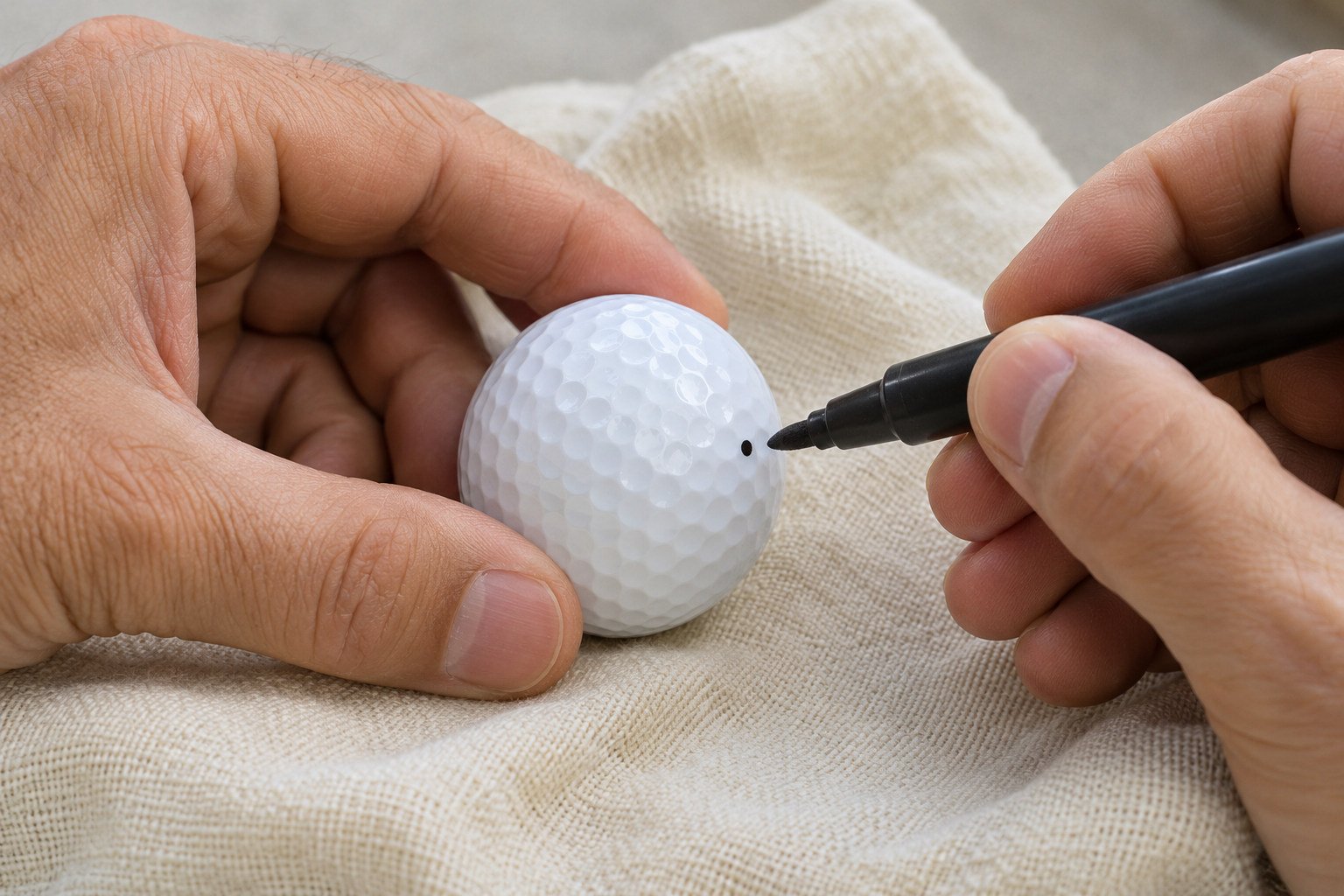
A personal felt-tip identification mark is allowed provided the original markings remain discernible. Keep that mark separate from the task of matching the factory identity. [2]
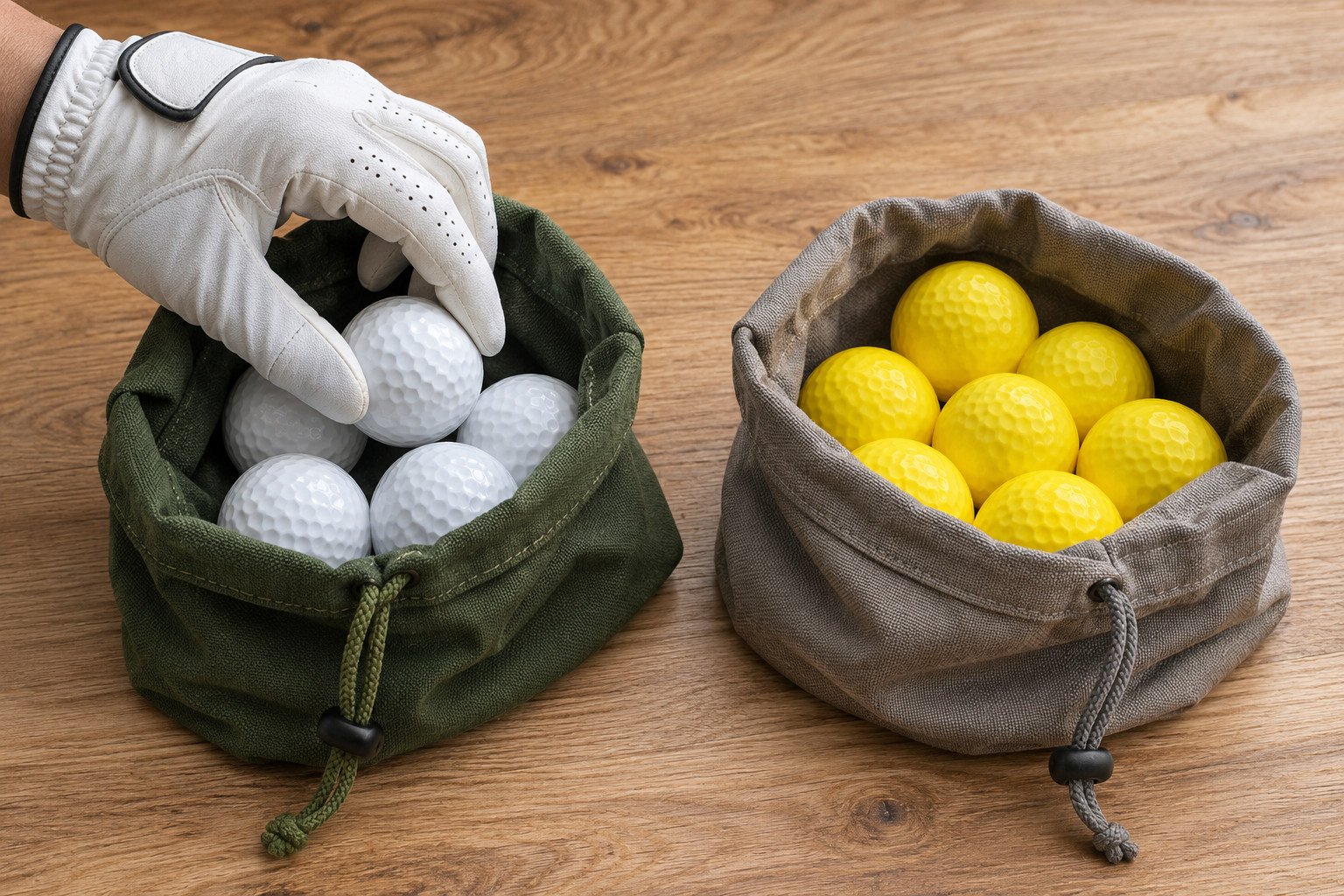
Under G-4, balls played during the round must match one listed brand-and-model entry; different cover colours are treated as different balls. Check this restriction before packing mixed spares. [3]
Under G-3, playing a counting stroke with an unlisted ball can mean disqualification. Before playing an incorrectly dropped, placed or replaced ball, Rule 14.5 allows correction. G-4 has different correction and penalty provisions. Ask the referee promptly if a problem arises. [3] [6]
A practical record to finish before the first tee
Keep a short record with six items: the competition and date; the applicable equipment Local Rules; the official list’s effective period; photographs of the ball’s factory markings and colour; the complete entry you matched; and any question or ruling still to resolve.
Then check the spares you have packed against that record. This is particularly useful after buying a mixed used-ball lot or combining several partly used sleeves. Sorting by a familiar logo is quick, but recording the actual identities makes a later check much easier.
If everything is clear, keep the record and enjoy the round. If it is not, take the specific unanswered question to the Committee before relying on that ball. Buying something new is not the only useful next step; establishing exactly what you already have may settle the issue.
Eligibility and playing suitability are separate decisions. Once the equipment question is settled, our structured short-game ball comparison can help you compare the shots that matter to you. A successful practice comparison does not replace a competition equipment check.
Sources and checks
- The R&A: Conforming Ball ListOfficial current-list download, monthly update schedule and submission-renewal explanation.Checked 23 November 2026.
- The R&A Equipment Rules: The Golf Ball Playing RulesGeneral conformance requirement and personal identification marks.Checked 23 November 2026.
- The R&A Committee Procedures: Model Local Rules G-3 and G-4Current-list condition, separate one-ball restriction and correction provisions.Checked 23 November 2026.
- R&A/USGA List of Conforming Golf Balls: November 2026Effective 4 November–1 December 2026; identification instructions and e12 Straight entries.Checked 23 November 2026.
- The R&A: Golf Equipment SearchOfficial search route; the dated worked example uses the downloaded list.Checked 23 November 2026.
- The R&A: Rule 4 Clarifications, 4.2a(1)/1–3Unlisted models, special stamps and strokes that do not count.Checked 23 November 2026.
Illustrations in this article were created for Taylor’s Trailblazing Golf. Third-party photographs, where used, are credited beside the image or in the source list.