Golf Sun-Protection Clothing: Coverage, Fabric and Fit
Golf sun-protection clothing needs to work as a complete outfit. Check what the fabric is claimed to do, which areas it covers and whether that coverage stays in place when you reach, turn and bend.
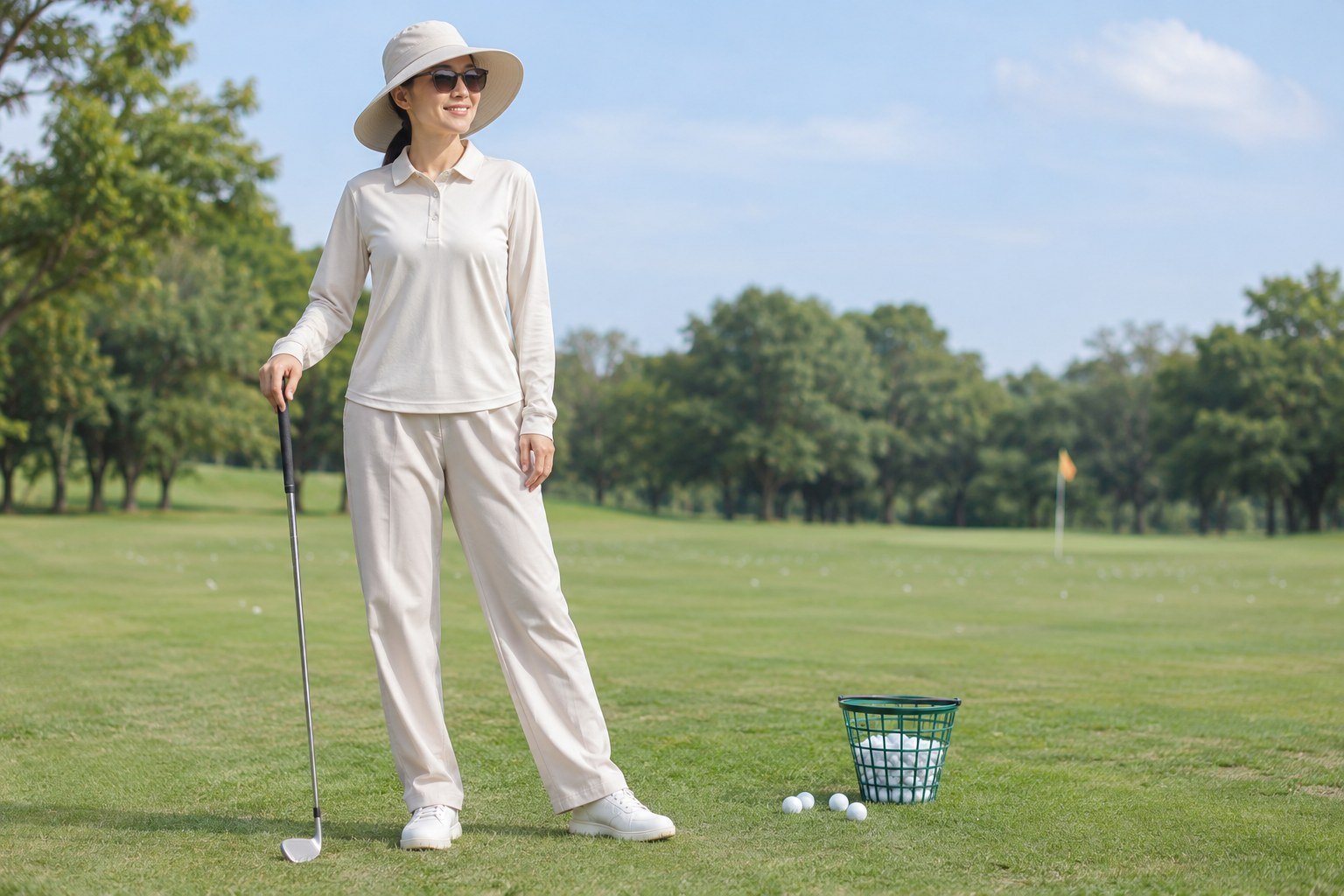
Illustrative golf clothing and coverage; the scene does not identify a tested garment or establish a UV rating. Generic AI illustration; not a photograph of a named model.
A high number on a swing tag cannot cover the forearms below a short sleeve or the neck above a low collar. Equally, a long-sleeved top needs more than a reassuring appearance if you want a documented UV rating. This guide brings those two buying decisions together: evidence for the material and useful coverage on your body. The checks below are proposed shopping and outfit checks, not measurements of UV protection or reports of on-course testing.
This is a research-led guide. How we assess golf equipment explains the evidence behind our recommendations.
This guide contains affiliate links. If you buy through them, Taylor’s Trailblazing Golf may earn a commission at no extra cost to you.
Look at the whole outfit, including the neck, wrists, lower legs and backs of the hands.
Keep a stated UPF separate from a general UV description and ask about missing test details.
Inspect the outfit in golf positions before choosing by the size label alone.
Golf sun-protection clothing: start with the gaps
Cancer Research UK recommends loose-fitting clothing, ideally with long sleeves, close-weave fabrics and a hat that shades the face, ears and neck. Its central point is useful for golfers: covering more skin improves protection.[2]
Start with the outfit you already own. In a mirror, note the areas left uncovered when you stand normally, take your address position and bend down. A partner can help check the back of the neck and waist. This is a coverage audit; it cannot tell you a fabric’s UPF.
| Area | Clothing decision | Check on your body |
|---|---|---|
| Shoulders and arms | Long sleeves, or a shirt combined with appropriate sun sleeves. | Do sleeves reach the intended point without an upper-arm gap or repeated slipping? |
| Neck and upper chest | Collar height and the opening at the front. | What remains exposed when you look down at the ball or turn your head? |
| Waist and lower back | Top length and overlap with trousers or a skirt. | Does the hem lift clear when you reach or bend? |
| Legs and ankles | Long trousers or other suitable longer coverage. | What is exposed below the hem, including when you sit or crouch? |
| Head and hands | Hat coverage and the actual openings in your glove arrangement. | Which parts of the ears, neck and backs of both hands remain outside clothing? |
A sleeve accessory adds another join to check. Try it with the actual polo rather than assuming the two pieces overlap. A golf glove should not be treated as a documented sun-protection product unless the exact model carries an appropriate claim.

Read a fabric rating without turning it into a promise
UPF means ultraviolet protection factor. The UK government’s 2014 UV explainer describes it as a measure of how much solar UV is reduced as it passes through clothing fabric, assessed under controlled laboratory conditions. It is not a measurement of the coverage of your entire outfit.[4]
ARPANSA’s guidance for the Australian and New Zealand clothing standard makes the coverage limit explicit. It also warns that protection may decrease when material is wet, stretched, worn or affected by chemicals. These qualifications matter when choosing golf clothing; they are not proof that every item has been tested in every one of those states.[3]
| Record | Useful evidence | Question if it is missing |
|---|---|---|
| Exact garment | Model, style code, colour and size. | Does the description belong to the version being supplied? |
| UV wording | The stated UPF, or the manufacturer’s exact alternative wording. | Is there a numerical UPF behind a general sun-protection claim? |
| Test basis | A named test standard and any manufacturer explanation of testing. | What conditions and parts of the garment does the claim cover? |
| Use and care limits | Instructions about fit, washing, wet use and service condition. | Does the stated rating depend on any particular treatment or use conditions? |
Keep an unanswered field marked “ask the manufacturer” in your own notes. Do not fill it with a standard borrowed from another brand. “Breathable”, “cooling” and “moisture-wicking” describe different buying considerations; none supplies a missing numerical UPF.
A light-through check can reveal a visibly open fabric, but it does not produce a UPF number. If a documented rating is part of your buying requirement, obtain the product evidence rather than estimating it from colour, thickness or feel.

Choose fabric you can keep wearing
The material name is only part of the story. The government’s UV guidance identifies fibre composition, weave or knit density, stretching and wear as factors in protection. “Polyester” or “cotton” on its own therefore cannot establish the rating of a particular golf top.[4]
Separate three questions during a try-on. Does the fabric have the evidence you need? Does the garment cover the intended areas? Does it feel comfortable enough to wear as planned? A top that repeatedly prompts you to roll up its sleeves leaves a different outfit from the one you assessed at home.
Room to move without pulling the fabric taut
Look for a cut that allows your ordinary golf movements. Avoid solving a loose cuff by choosing a much tighter body, or solving a restrictive shoulder by accepting a hem that is too short. Try a different cut when one size change creates a new coverage problem. An intended close-fitting sleeve still needs to be selected using its own manufacturer’s guidance.
Colour, ventilation and the complete design
Cancer Research UK notes that dark or bright colours can help filter more UV. That does not give every dark garment a known rating or make a verified light-coloured product unsuitable. Compare the exact garment’s evidence before making colour the deciding factor.[2]
Inspect any mesh, open panels, zip opening and roll-up sleeve arrangement. Ask whether the claimed protection applies to all relevant panels if the description is unclear. An adjustable opening can be convenient, but check the skin exposed in the position you actually expect to use.
Back to top ↑Check coverage in golf positions
Use the brand’s chart to choose a starting size. The guide to interpreting golf clothing size charts explains the difference between body measurements and finished garment dimensions. Here, the final question is narrower: does the outfit keep covering the areas you selected?
- Stand normally with the top fastened as you intend to wear it. Check the collar opening, sleeve ends and overlap at the waist.
- Take your normal address posture without making a swing. Look for sleeves moving up the arms and fabric pulling across the shoulders or upper back.
- Turn gently through a comfortable range, with plenty of space around you. Check whether the top rides up, the collar shifts or a sleeve accessory pulls away from the shirt.
- Bend as you would to retrieve a ball. Then stand again and see whether the outfit settles back without repeated tugging.
Record a specific observation, such as “right wrist exposed at address” or “shirt hem lifts above waistband when bending”. That gives you a problem to solve with another length, cut or combination. “Size medium feels fine” is much less useful.
Try your hat at the same time: look down and turn your head to judge brim position, comfort and whether it stays in place. Do not remove a useful piece of coverage simply because it clashes with another item; compare the combination before buying.
Keep new garments clean and follow the seller’s return conditions. This check establishes fit and visible coverage only. It cannot certify protection, simulate a whole round’s comfort or show how a fabric performs when wet.

Compare exact examples by the job they do
These UK product pages illustrate different ways manufacturers describe sun-related clothing. They are not ranked by protection, and the wording is not interchangeable. Check the current label, size and availability before ordering.
| Exact example | What the manufacturer states | What you still need to decide |
|---|---|---|
| PING Lindum men’s polo, Black, P03464-060 | UPF 40+ and 100% recycled polyester.[5] | The short sleeves leave the forearms outside the shirt. That rating does not remove the coverage gap. |
| Galvin Green Enzo men’s top, Navy/Blue, E01000039650 | Long-sleeved SKINTIGHT fresh top, regular fit, 88% polyester/12% spandex, with “UV protection 50+”.[6] | Check the crew-neck opening and whether you will wear it alone or beneath a golf shirt. Ask for the test basis if you require a documented UPF specification. |
If a short-sleeved polo fits your planned combination, view the exact black PING Lindum listing at Clubhouse Golf. Its product code matches the manufacturer example above. Resolve the uncovered-arm question before choosing it as your sun-related purchase.[7]
For the long-sleeved example, read the Enzo specification at Galvin Green. A different neckline or cut may suit you better; the table does not establish equal protection between these garments.
A hat is a separate fit and coverage decision
The Callaway Sun Hat at Callaway UK has a brim around the crown, mesh panels and an adjustable toggle. The UK page states “50+ UV Protection”. It does not display a test standard in the inspected description, so ask about the exact rating and panel coverage if that evidence is important to you.[8]
Judge how the hat shades your own face, ears and neck. Its listed number is not a rating for the uncovered skin beneath or around the brim, and it does not replace the rest of your sun-protection routine.
Back to top ↑Keep the clothing and the rest of the routine working together
Follow the exact care label. For example, Galvin Green’s Enzo instructions exclude bleach and fabric softener and specify hanging to dry instead of tumble drying. That is an instruction for this garment, not a universal washing recipe for every UV top.[6]
Before the next round, check for holes, visibly thinned areas, stretched cuffs and seams that no longer sit as intended. These are reasons to reassess the garment; a visual check cannot tell you its remaining UPF. Ask the manufacturer about an unclear care limit rather than assuming protection lasts unchanged for a fixed number of washes.
Check the forecast UV index before play. NHS guidance says to consider skin protection at 3 or above, and advises shade particularly from 11am to 3pm during March to October in the UK. For exposed skin, it recommends sunscreen of at least SPF 30 with at least four-star UVA protection, reapplied frequently and after sweating, towel drying or rubbing off.[1]
Make those actions practical: keep your sunscreen accessible, know where you can take a shaded break and check coverage again if you remove a layer. If a garment becomes uncomfortable, reassess the outfit and your time in strong sun instead of treating the original label as a substitute for the clothing you have taken off.
Choose the change that closes your actual gap
Use the coverage audit to choose the next step. These are illustrative shopping decisions, not tested outfits or protection scores.
Example: the forearms are the main missing coverage
You already have trousers and a suitable hat, but your usual polo leaves both forearms exposed. Compare a long-sleeved top with a sleeve accessory worn under that polo. Check the evidence for the new garment and the joins in your actual outfit. Buying another short-sleeved polo with a larger printed number would leave the original gap.
Example: the clothing covers well but the hat does not
Your existing long sleeves and trousers fit well and have the evidence you require. Your cap leaves the ears and back of the neck outside its shade. Compare a suitable broader-brimmed or neck-covering design first, rather than replacing the whole clothing set. Check it in your golf posture and keep protection for exposed skin in the plan.
Buy when you can identify the improvement: clearer fabric evidence, more useful coverage or a fit that stays in place. Keep suitable clothing you already own. A new logo, a cooling description or a larger number alone is not a reason to replace an otherwise appropriate garment.
Back to top ↑Frequently asked questions
Does UPF 50 mean I can stay in the sun fifty times longer?
No. UPF describes UV passing through material under test conditions; it is not a personal exposure-time allowance. The government’s UV guidance does not identify a completely safe level of exposure. Do not calculate extra playing time from a garment label.[4]
Do I need a special branded sun-protection outfit?
A brand name is not the deciding factor. Cancer Research UK recommends coverage, a suitable fit and close-weave clothing. If you want a documented numerical UPF, check the exact product evidence; an ordinary garment’s appearance cannot supply that number.[2]
Can I assume every colour of a model has the same claim?
Check the selected colour and style code against the manufacturer’s description. If a rating is stated for the range without explaining which variants it covers, ask for confirmation about the garment you intend to order.
What if I cannot find the original label on a used top?
Ask for the exact model and any retained care information. Treat a rating that cannot be traced to that item as unknown. A photograph can help assess visible coverage and condition, but it cannot recover missing test evidence.
Sources and checks
Sources consulted on 24 November 2026. Manufacturer and retailer descriptions are attributed claims; illustrations do not show tested products. Recheck current product details, sizing and care instructions before use or purchase.
- NHS — Sunscreen and sun safety
- Cancer Research UK — Sun safety
- ARPANSA — Australian sun protective clothing: consumer and labelling guidance
- UK government — Ultraviolet radiation: frequently asked questions (2014)
- PING Europe — Lindum men’s polo, Black, P03464-060
- Galvin Green UK — Enzo UV protection top, Navy/Blue
- Clubhouse Golf — PING Lindum polo, Black
- Callaway UK — Sun Hat
Illustrations in this article were created for Taylor’s Trailblazing Golf. Third-party photographs, where used, are credited beside the image or in the source list.