Taylor’s Trailblazing Golf · Equipment guides
Tech & Upkeep · Buying, Care & RepairsGolf Club Customisation: Which Changes Can Affect Conformance?
Check the finished club, the timing of a change and the evidence behind a rules claim.
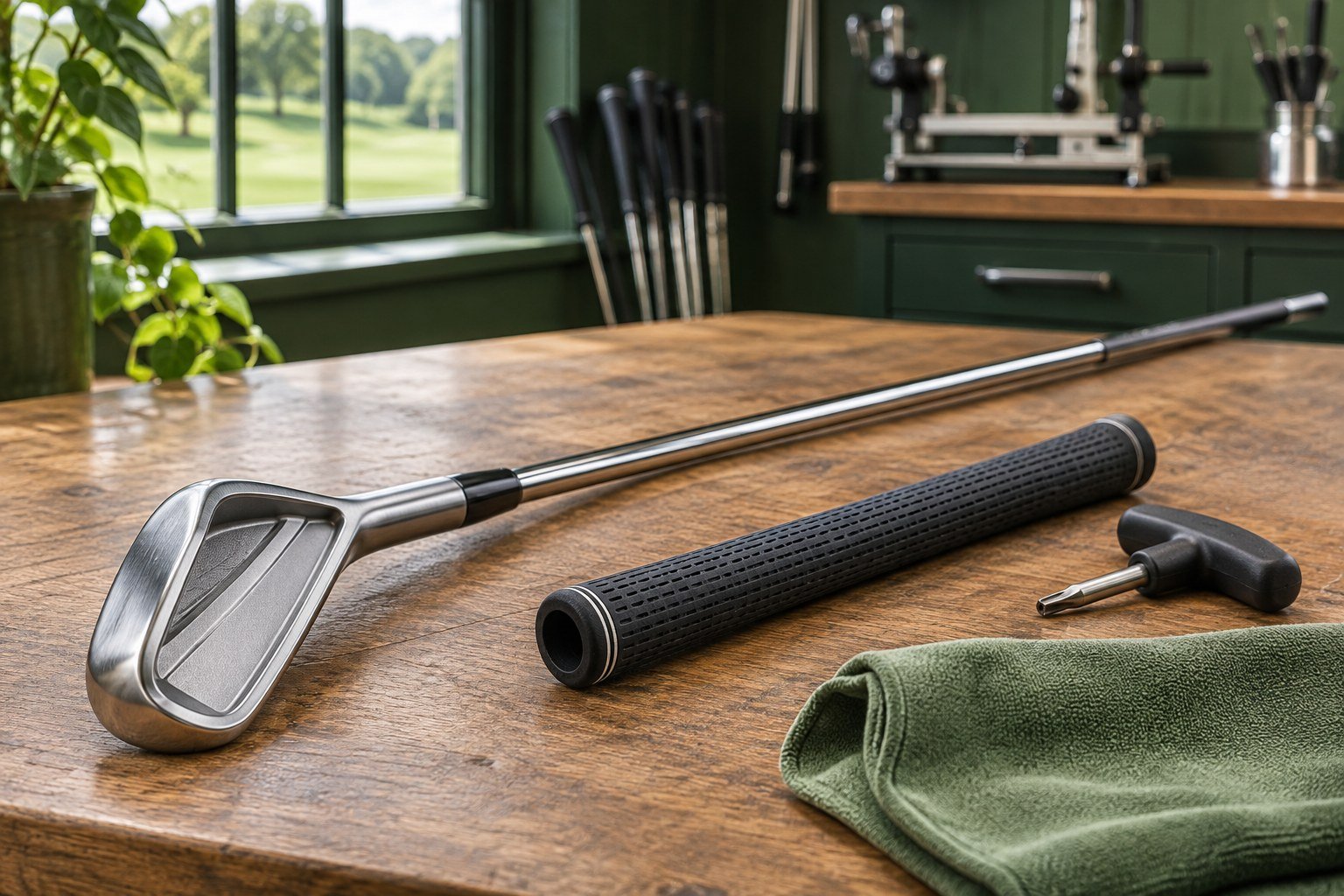
Identify the intended change before agreeing to the work. AI-generated illustration; not conformance evidence.
Golf club customisation covers everything from replacing a worn grip to grinding a wedge. Those jobs do not carry the same questions. Before agreeing to a change, establish what will be different, who can assess the finished club and whether you intend to use it under the Rules of Golf.
This is a research-led guide to the questions worth asking, not a conformance certificate for an individual club. A photograph, a retailer description or an unchanged model name cannot settle every detail of an altered build.
Ad – includes affiliate links. If you buy through the links in this guide, Taylor’s Trailblazing Golf may receive a commission at no extra cost to you.
Check the finished club
An original model listing does not answer every question about an altered example.
Set it before the round
Equipment conformance and changing it during play are separate issues.
Keep the specification
Record components, work and any ruling that applies to your actual club.
Use the right specialist
A rules answer does not establish structural safety or workmanship.
Golf club customisation needs two separate checks
Rule 4.1a distinguishes new or altered clubs, normal wear and deliberate mid-round changes. A conforming adjustable club still faces the timing restriction.[1]
A useful request to a technician is: “Please explain the finished specification and any rules question this work creates.” A useful request to the competition organiser is: “These are the exact club, alteration and circumstances; which rules and Local Rules apply?” Ask both where necessary. They answer different parts of the problem.
Do that before making the change where practical. The cost of an irreversible alteration can be wasted if the result does not suit the intended use.
Back to top ↑Match the proposed change to the right question
Take this enquiry checklist to the technician. The Equipment Rules separately cover the club, shaft, grip, head and face.[2]
Swipe within the table to see all columns.
| Proposed change | Ask before the work | Keep afterwards |
|---|---|---|
| New grip or extra build-up | Does the completed grip retain an allowed shape, size and installation? | Exact grip model, size and build. |
| New shaft, extension or shortening | Are the components compatible, the build safe and the finished length appropriate? | Actual finished length and component specification. |
| Loft or lie adjustment | Does the manufacturer permit this work on this head, and who will perform it? | Measured before-and-after specification. |
| Weight or adjustable-hosel change | Is this a supported configuration, securely assembled before play? | Parts used and chosen settings. |
| Groove sharpening or face refinishing | How will the altered face be assessed against the relevant limits? | Scope of work and conformance evidence. |
| Paint, engraving, stickers or attachments | Exactly where is the change, and can it affect the face, shape, alignment or performance? | Clear photographs and the explanation received. |
Descriptions such as “tour treatment”, “just cosmetic” or “only a little heavier” leave too much unspecified. Ask what is actually added, removed, bent or replaced. If that cannot be explained, postpone the work.
Back to top ↑Regripping is familiar work, but the result still matters
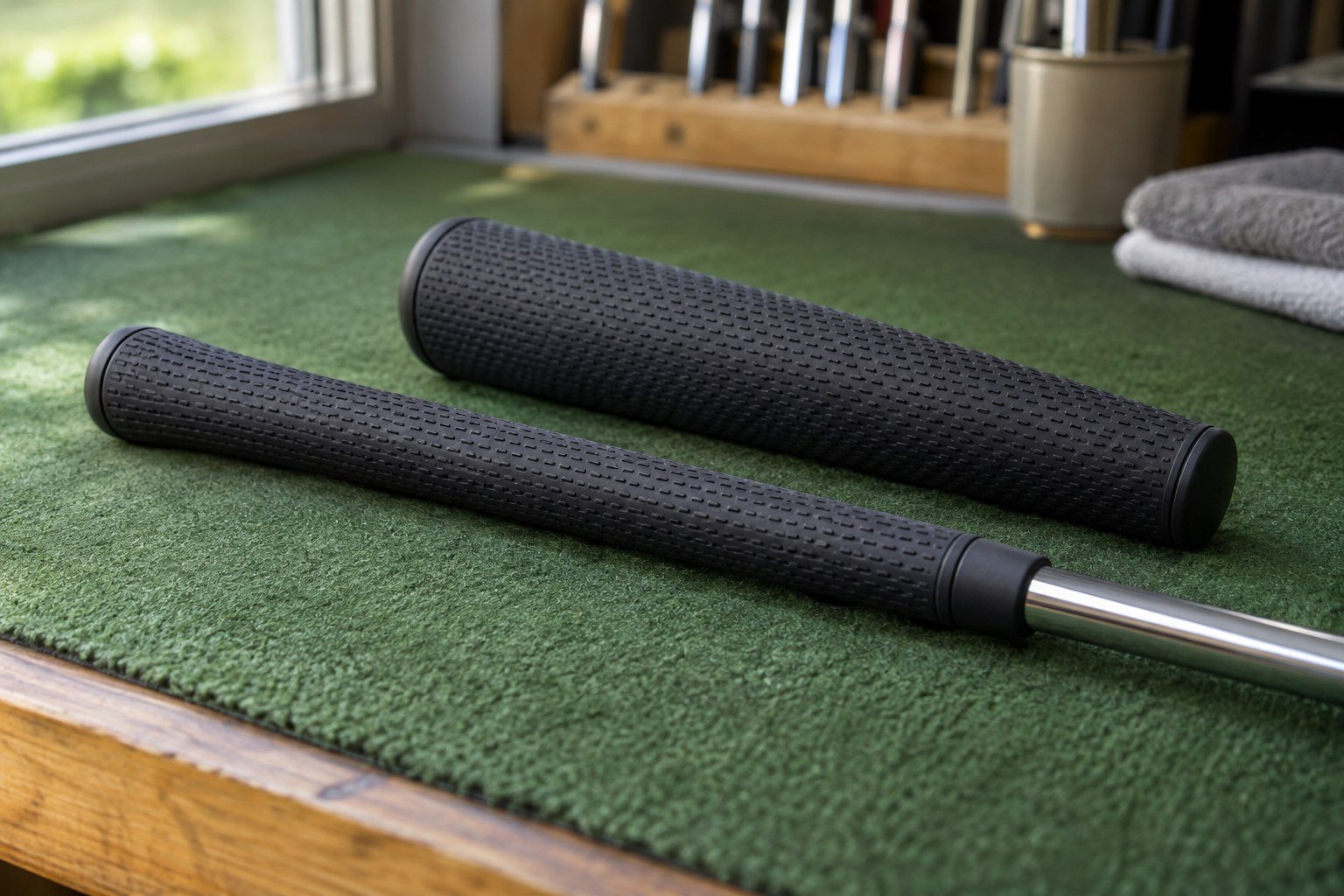
Grips must be fixed, straight and plain, without being moulded for the hands. Woods and irons generally need circular grips, subject to specified exceptions; putters have different shape provisions. Do not treat a moulded training grip as an ordinary replacement.[2]
For a normal regrip, agree the model and size and explain whether you want to retain or change the feel. Ask the installer to record any build-up rather than relying on “standard”. If you want a pronounced shape change, seek an explicit rules check instead of assuming that tape is harmless because it is hidden underneath.
Clubhouse Golf lists the Golf Pride Tour Velvet 360 in white/black as one replacement option.[3] If that is the grip your fitter has identified, view the Tour Velvet 360 at Clubhouse Golf. The link is a buying option, not a personalised size recommendation or approval of every way it could be installed.
Before collection, ask when the club can be used and check that the job matches the agreed order. If anything moves or looks wrong, return it to the installer for assessment rather than experimenting on the course.
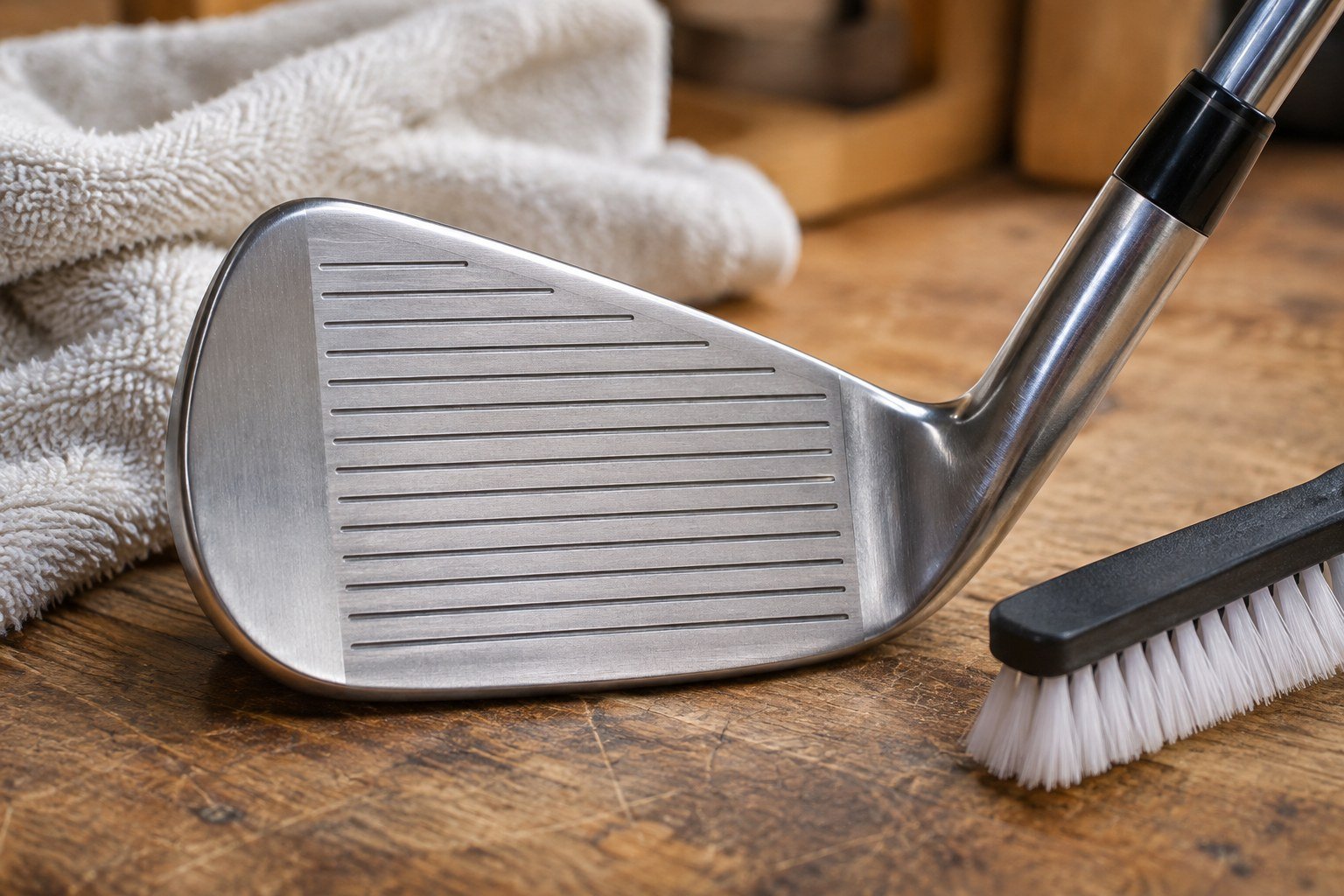
Treat groove work and face changes with particular care
Face characteristics and groove geometry are regulated. Deliberate re-grooving differs from ordinary wear; sharp-looking grooves do not prove conformance.[2]
The R&A’s groove-measurement guidance says deliberately filed or scored grooves on a used club must be treated as new for that assessment, with measurements near the centre of the face. The published procedure requires much more than judging a photograph or running a fingernail along the grooves.[4]
That makes a sensible stopping point for home improvement. Cleaning away dirt according to the maker’s instructions is one task; cutting metal, altering the edges or applying a performance treatment is another. Do not use a sharpening tool on a club intended for rules-compliant play unless you have a properly supported route to checking the result.
Older equipment adds another question. The R&A currently permits qualifying pre-2010 clubs under the earlier groove provisions in circumstances where the stricter Local Rule has not been adopted. It says any future decision extending the 2010 specifications to all golfers would allow at least four years before taking effect. Deliberate re-grooving still requires an assessment of the altered face.[5][2]
Do not turn an adjustment feature into an on-course experiment
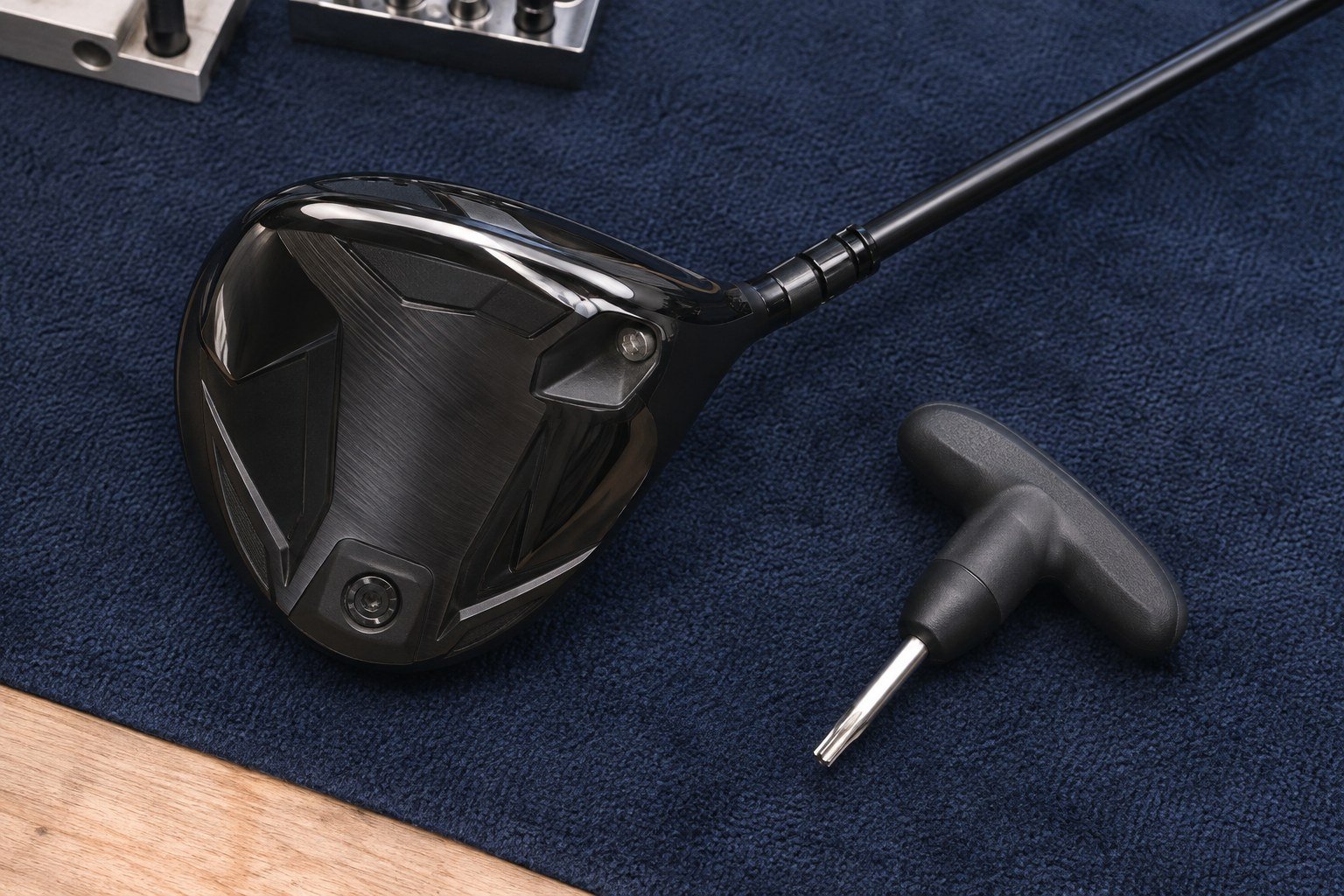
Under Rule 4.1a(3), a stroke after deliberate mid-round alteration can mean disqualification, including changes during suspended play. The prohibition covers adjustments and performance-affecting substances on the head. Exceptions cover restoring an adjustable feature or removing a non-permissible attachment before use; they do not permit experimenting with settings through the round.[1]
Lead tape has a recognised place under the Equipment Rules, but deliberately adding, removing or moving it during the round is restricted.[2] Repairing damage is a separate case. For example, the Oregon Golf Association explains, by reference to Clarification 4.1a(2)/1, that tape which came off during a stroke may be replaced as a repair, including with new tape if it will not stay in place.[6]
If something loosens or detaches, describe what happened to an official before improvising. A repair should not quietly become a chance to choose a different setup. Where structural safety is in doubt, stop using the club; a permitted rules action does not establish that the equipment is safe.
For a planned adjustment, use the manufacturer’s correct parts and procedure, complete it before the round and note the starting setting. That record is useful if the mechanism later needs attention.
Check length and competition conditions after a rebuild
The ordinary Equipment Rules limit clubs other than putters to 48 inches, while Model Local Rule G-10 allows an event to impose a 46-inch maximum. G-10 is recommended for professional and elite amateur competitions; do not assume it applies at every club.[2][7]
Ask the builder for the finished measurement using the governing-body method, particularly after an extension, reshaft or unusual build. A shaft’s advertised raw length and the finished club length are not the same description. Keep the measurement with the job record.
Competition conditions may also adopt the conforming-driver-head requirement under G-1 or the groove and punch-mark requirement under G-2. Check the event’s published Local Rules and ask its Committee about the exact club you intend to use.[7]
Do not interpret a list entry for an original head as evidence that later face work has been assessed. Give the organiser the alteration history as well as the model name. If your club needs a medical or adaptive exception, contact the appropriate authority in advance instead of relying on an informal comparison with another player’s equipment.
Back to top ↑Conformance, safe workmanship and warranty are separate decisions
Ask the manufacturer whether it supports the proposed work on that exact head, shaft or adapter. Where bending, cutting, heating, drilling, internal weighting or bonding is involved, use a qualified technician and a model-specific plan. This guide deliberately provides no structural modification procedure.
A rules-compliant design can still be assembled badly. Equally, careful workmanship does not waive an Equipment Rule. Ask the technician to identify what they can confirm themselves and what requires an equipment ruling.
Warranty deserves its own question. For example, Callaway’s published warranty excludes responsibility for damage or defective workmanship caused by third parties. That is a reason to discuss the proposed service route before altering a club; it is not a claim that every non-factory alteration removes every consumer right.[8]
Obtain a complete quote, including replacement components, labour and any follow-up checks. Compare it with leaving the club unchanged. If the objective is vague, a fitting discussion may be a better first spend; our guide to useful club-fitting fees explains what to ask for before booking.
Back to top ↑Use a one-page work order before committing
You do not need to become an equipment engineer. You do need an identifiable job and a clear answer about who is responsible for assessing it. Copy these headings into a note and ask the technician to fill the gaps with you.
- Identify the club: brand, exact model, loft, handedness and known previous changes.
- State the problem: worn grip, unsuitable length, damaged part or another specific concern.
- Describe the work: components, quantities, settings and any material that will be removed.
- Separate the checks: compatibility and safety; applicable conformance question; event-specific requirements.
- Record the evidence: manufacturer instructions, a written technician explanation and any relevant governing-body decision.
- Confirm the handover: finished specification, inspection, waiting time before use, price and aftercare.
Here is the difference it makes. “Regrip my seven irons” leaves the size and build open. “Fit the agreed model and size to these seven identified irons, record the build and tell me when they are ready for use” is a job you can check at collection. A request to grind or re-groove a face needs a much more demanding explanation of the finished result.
Keep the invoice and specification if you later sell the club. Describe the alteration honestly. A future owner cannot make a sensible decision if the listing presents a modified build as untouched.

Pause when the answer depends on an unseen detail
A photograph can help identify a model or explain the proposed work. It cannot reliably establish every groove measurement, internal change or aspect of structural condition. If a seller or technician promises universal tournament legality from a quick glance, ask what evidence supports that promise.
For a doubtful equipment design or alteration, use The R&A or USGA’s equipment guidance and contact route. For the rules applying to your round, ask the Committee. Send the exact specification, photographs, work history and the question you need resolved. Allow time for an inspection or further information if requested.
The sensible decision is usually straightforward: make a clear, supported change before play, retain the records and check the result. If safety or conformance remains uncertain, leave the club out of use until the uncertainty is resolved. A familiar brand name or a cheap modification is not a substitute for that answer.
Back to top ↑Questions golfers ask
Does every replacement shaft need a new ruling?
A replacement shaft is not automatically a non-conforming change. Compatibility, the completed build and any unusual design feature matter. Use the manufacturer and a qualified technician, and seek an equipment ruling where they cannot resolve the actual conformance question.
Can I use a custom putter grip on a chipper?
A putting-style stroke does not make a chipper a putter. The R&A classifies chippers as irons for relevant equipment requirements, including grips. Check before fitting a putter-style grip.[2]
Will a club builder’s invoice prove tournament legality?
It records who did the work and what was ordered. It is useful evidence, but it is not automatically a governing-body decision or confirmation that an event’s Local Rules have been checked.
Sources and checks
Official rules, manufacturer guidance and retailer terms checked on 24 November 2026. Prices, services and policies can change; check the relevant details before buying or playing.
- The R&A — Rule 4, The Player’s EquipmentChecked 24 November 2026
- The R&A — Equipment Rules, Part 2: Conformance of ClubsChecked 24 November 2026
- Clubhouse Golf — Golf Pride Tour Velvet 360, white/blackChecked 24 November 2026
- The R&A — Supplementary Paper B: Field Measurement of GroovesChecked 24 November 2026
- The R&A — Equipment Information for PlayersChecked 24 November 2026
- Oregon Golf Association — In Clubs We Distrust, 30 April 2025Checked 24 November 2026
- The R&A — Committee Procedures, Model Local Rules G-1, G-2 and G-10Checked 24 November 2026
- Callaway UK — Warranty InformationChecked 24 November 2026
Illustrations in this article were created for Taylor’s Trailblazing Golf. Third-party photographs, where used, are credited beside the image or in the source list.