
Golf Club Loft and Lie Adjustments: When to Use a Professional
Ask for a measured diagnosis and an agreed alteration, with the exact club’s limits established first.
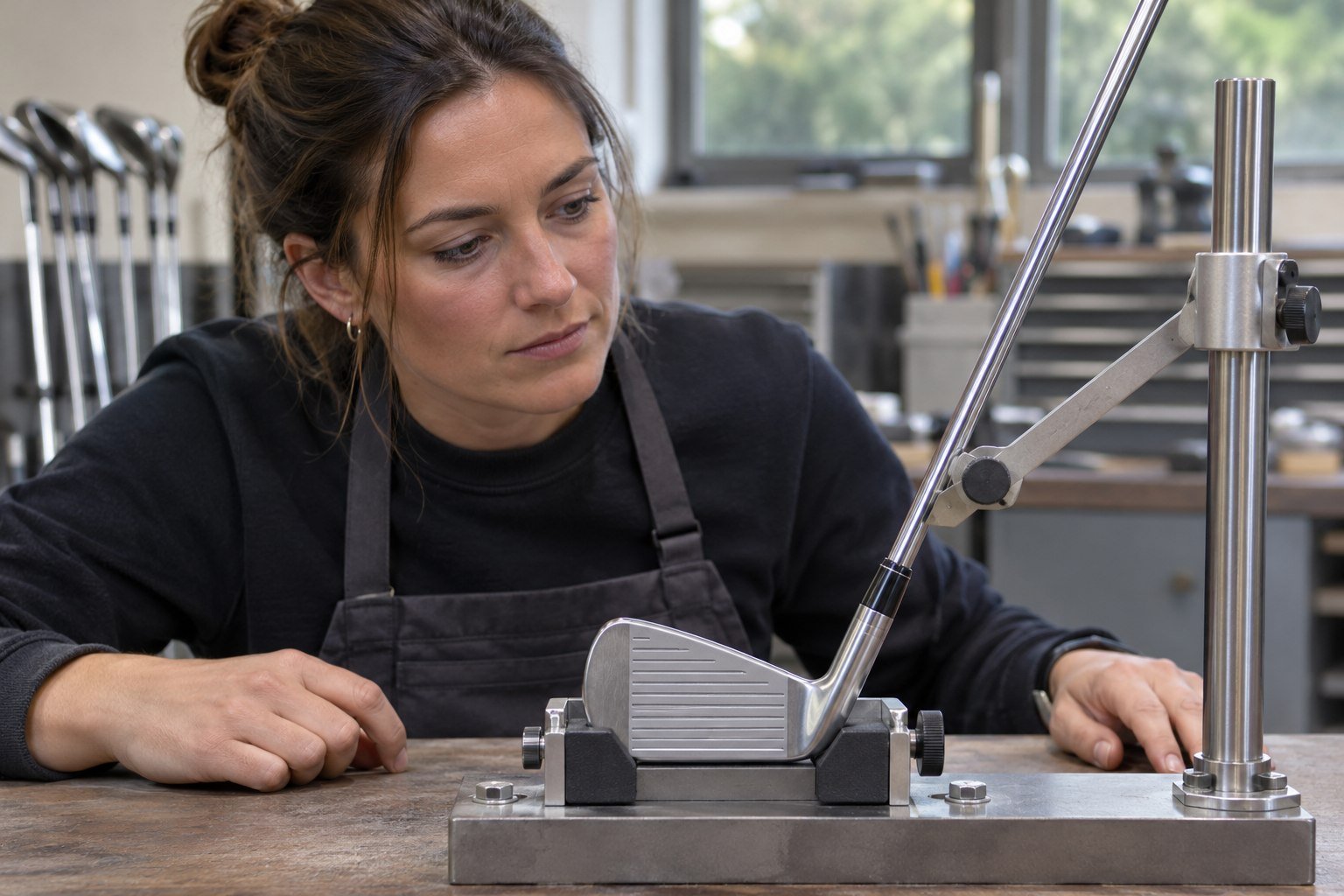
Discuss the club and the fitting question before deciding whether any adjustment is appropriate. AI-created category illustrations show generic golf equipment, not the named products or a product test.
Golf club loft and lie adjustments should begin with a question, not a number of degrees. Are you checking a specification, investigating an uneven carry gap, or trying to understand a repeated strike or direction pattern? A professional can separate the measurement from the fitting decision, then establish whether that exact club is suitable for the proposed alteration.
Record model, generation, club number and alteration history.
Separate actual starting values from catalogue specifications.
Discuss the purpose, accepted risks and exact proposed work.
Keep final measurements and assess the result with the fitter.
Golf club loft and lie adjustments: two different jobs
In practical terms, loft describes face inclination, while lie describes the shaft’s angle relative to the ground reference when the head is correctly registered. Neither becomes a reliable workshop measurement simply by resting a phone against a curved sole. A consistent reference matters when comparing before and after. [4]
Scroll the table horizontally on a small screen to see every column.
| What you have | What the decision involves | Appropriate next step |
|---|---|---|
| Adjustable hosel or sleeve | Choosing a documented setting within that exact system. | Find the manufacturer’s chart for the club type, model and handedness. Ask an authorised fitter if identification is uncertain. |
| An iron or wedge needing a physical change | Assessing whether its construction and condition allow an agreed alteration. | Ask a qualified builder to measure it and confirm the manufacturer’s limits. |
| A putter | Checking the exact head and neck design rather than borrowing an iron rule. | Ask whether that model has an approved service route and what can be assessed or altered. |
| A damaged or unidentified club | Resolving identity and condition before any performance adjustment. | Have the fault or uncertainty assessed first; do not authorise a bend to work around it. |
Titleist’s SureFit sleeve and ring provide 16 combinations, with charts that distinguish club type and handedness. That is a model-specific setting system, not permission to physically bend a hosel. [1]
The guide to reading driver loft-sleeve charts helps with that separate decision. This article concentrates on when professional measurement and physical-alteration advice are needed.
Back to guide contents ↑Identify the exact head, not just “forged” or “cast”
Give the builder the manufacturer, full model, generation, club number, handedness and any serial or identifying details available. Disclose previous bending, repairs and unknown second-hand history. A familiar family name does not establish the construction of every club in the set.
Mizuno’s JPX925 Forged illustrates the point. Its 4–7 irons use a forged Chromoly 4120 face and neck with a 431 stainless-steel back; the 8–GW use 1025E Pure Select mild carbon steel. “Forged” on the model name therefore does not mean the same construction throughout. This description supplies no universal bending allowance. [3]
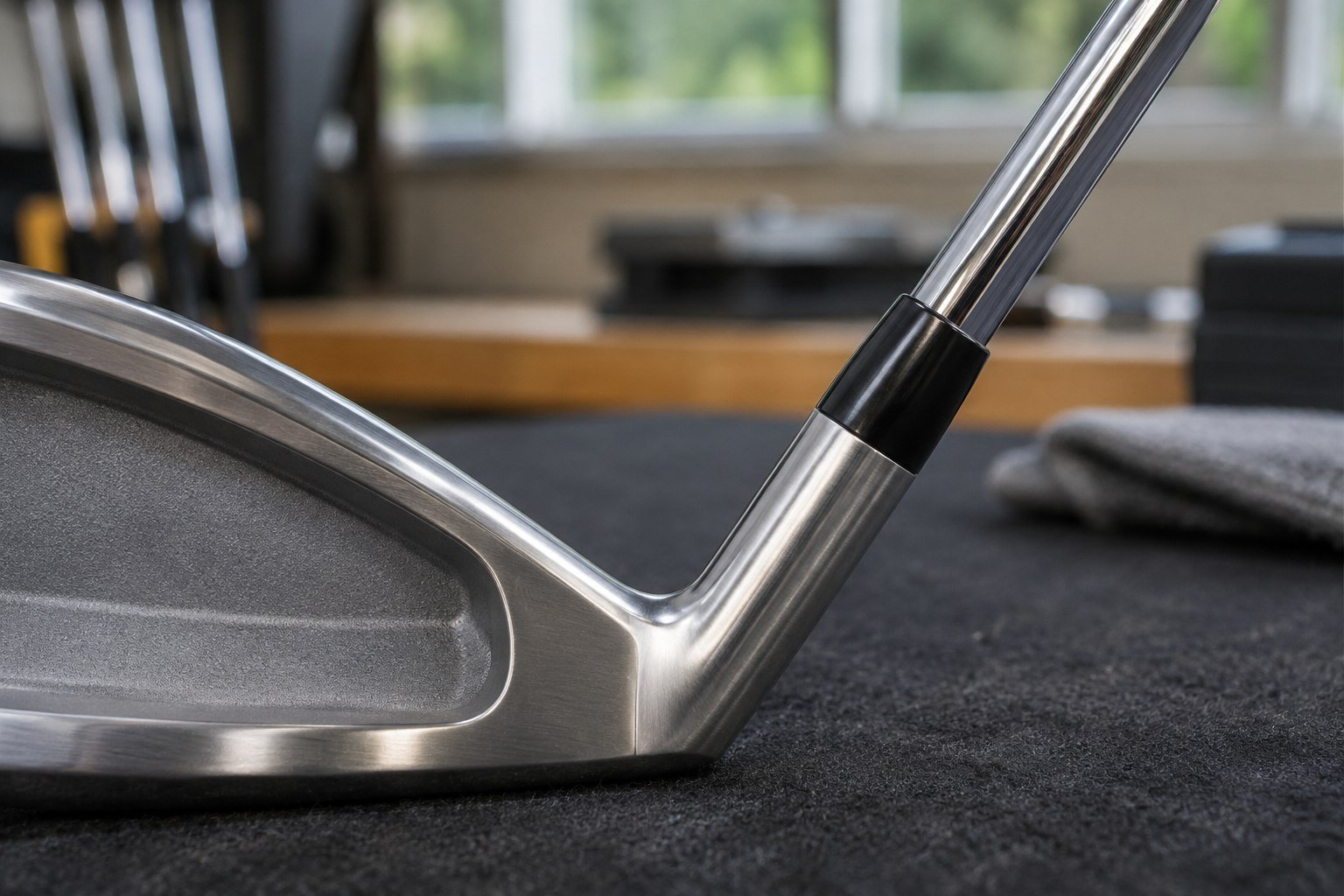
Mizuno’s UK custom-specification page says adjustment varies with model and material. It also distinguishes custom putter options for M.Craft City Series from M.Craft X. Factory-order options are useful evidence of model differences; they do not promise that a used club is eligible for the same work. Ask about your actual head and its service history. [2]
A useful question: “What information supports altering this exact model and club number, in its present condition?” A blanket statement that all forged heads bend, or all cast heads cannot, is not a sufficient answer.
Commission a measurement before agreeing a prescription
A measurement request can be simple: “Please record the actual loft and lie of these clubs and tell me whether anything needs further assessment.” It does not commit you to changing them. If you already have a previous service record, supply it without treating it as proof of the current values.
Mitchell Golf’s professional reference explains why repeatable head registration matters and why a label such as “standard lie” is not a universal angle across manufacturers. Ask for actual degree values, the clubs measured and a consistent before-and-after method. A catalogue specification is a comparison point, not a measurement of your own club. [4]
Scroll the table horizontally on a small screen to see every column.
| Record | What to put in it | Why it helps the appointment |
|---|---|---|
| Exact club | Manufacturer, full model, generation, club number and handedness. | The builder can establish the correct specification and service information. |
| Known history | Previous adjustments, repairs, purchase history and any uncertainty. | The appointment starts with what is known, rather than an assumed untouched head. |
| Your question | For example, an unexplained gap between two clubs or a request to verify a purchased set. | The builder can distinguish a measurement check from a fitting investigation. |
| Available evidence | Existing measurements, representative shots or observations, and the conditions in which they arose. | The fitter can decide what needs to be reproduced or checked. |
| Authority to proceed | Measurement only, or a separate decision after findings and risks are explained. | An assessment does not silently become permission to alter every club. |
The iron lie-angle preparation guide can help you organise the discussion. Keep the brief factual: “this is what I noticed” is more useful than arriving with an unsupported number of degrees.
Back to guide contents ↑Discuss the intended benefit and what else changes
Ask the fitter to explain the proposed link between your observations and the alteration. If the problem appears only occasionally, say so. One poor shot, a photograph at address or another golfer’s specification is not a sound basis for this guide to prescribe your loft or lie.

Loft changes have consequences beyond the number stamped on a worksheet. Mizuno notes that altering loft changes bounce; strengthening loft reduces bounce and increases offset. Discuss those effects alongside the intended distance or set-spacing objective. A lower loft figure is not an automatic promise of a particular extra carry distance. [2]
Ask how the proposed change will be evaluated: which clubs will be compared, what shots the fitter wants to see and whether a follow-up check is needed. If several gaps are in question, agree the scope of the assessment rather than assuming every iron needs an identical alteration.
A useful consultation can end with no change. The measured club may already match the intended specification, the evidence may need further investigation, or alteration may be inappropriate for the head. Request the reason and a practical next step. Buying a bending tool or ordering replacement clubs before that conversation solves none of those uncertainties.
Back to guide contents ↑Questions to answer before a builder alters the club
Use this record as the boundary between assessment and agreed work. Ask the professional to fill in the technical values; it is not a worksheet for selecting your own bend.
Scroll the table horizontally on a small screen to see every column.
| Question | What a useful answer records |
|---|---|
| Is this exact club accepted for alteration? | The model-specific basis, condition findings and any reason to decline or refer to the manufacturer. |
| What are the starting measurements? | Actual loft and lie for each club involved, with catalogue values clearly identified as references. |
| What change is proposed, and why? | An agreed target or scope supported by the assessment, including related sole or appearance trade-offs. |
| What risks and costs apply? | Possible marks or damage, the provider’s terms, any manufacturer or warranty query and what happens if work is stopped. |
| How will completion be documented? | Final measured values, the date, the work actually completed and any uncompleted request. |
| What happens after collection? | The provider’s inspection, review or follow-up arrangements if the outcome needs further discussion. |
Physical bending is not risk-free merely because an experienced technician performs it. Mitchell’s professional guide acknowledges breakage risk, and Mizuno notes that adjustment can leave craftsman marks. Ask the service provider to explain its own acceptance and remedy terms before work starts; do not assume a material description guarantees an unmarked or damage-free result. [4] [2]
Do not use a home vice, an improvised lever or a test bend to find out what the head will tolerate. A refusal to bend a particular club is useful information. Ask whether manufacturer assessment, a different fitting approach or simply leaving it unchanged is the sensible next step.
Back to guide contents ↑Collect a record, then review the result
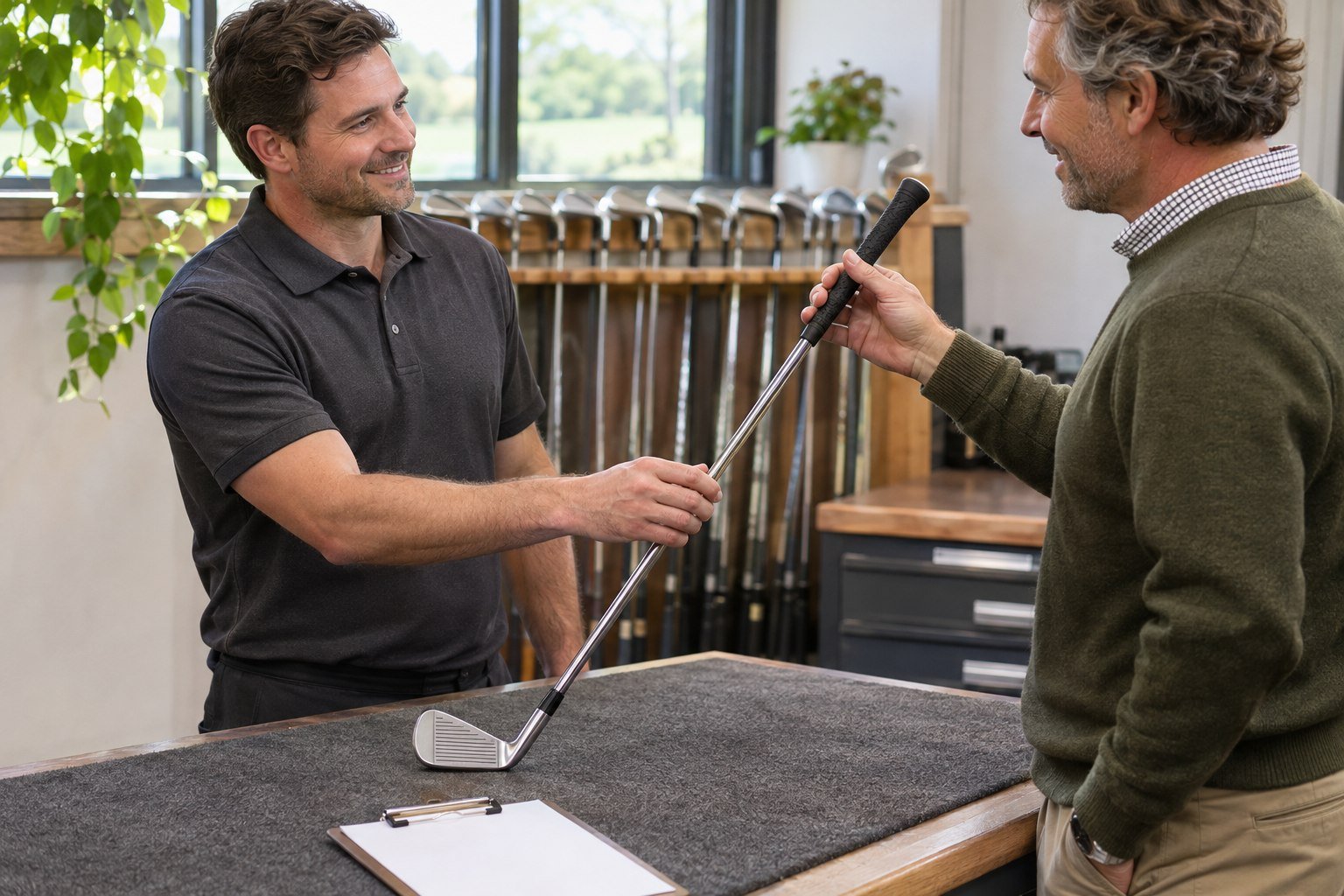
At collection, check that the record identifies the actual clubs returned and distinguishes measured results from requested targets. Ask about anything different from the agreed scope, any visible marks and any recommendation still outstanding. Keep the record with the club’s purchase and service information.
Review the result in the conditions agreed with the fitter. For a gapping question, the point is whether the set now serves the intended spacing; for another fitting concern, use the fitter’s agreed assessment rather than judging one strike. If uncertainty remains, return with the record and your observations rather than immediately commissioning another change elsewhere.
To start the process, a manufacturer’s fitting network can provide an appropriate contact; for example, Titleist’s fitter locator. Confirm whether the chosen location offers measurement and alterations for your exact clubs—being listed as a fitter does not itself promise every repair service. [5]
The guide to what golf club fitting fees should include helps you ask about scope and charges. The best next step is a clear assessment brief, followed by a documented decision. Establish the club’s eligibility and the purpose of the change before authorising physical work.
Back to guide contents ↑Sources
- Titleist UK — SureFit fitting guide
Model-specific sleeve and ring settings. Checked 24 November 2026. - Mizuno UK — custom specifications
Model/material limits, loft trade-offs, possible marks and putter-option distinctions. Factory options are not a used-club service promise. Checked 24 November 2026. - Mizuno UK — JPX925 Forged construction
Different construction for 4–7 and 8–GW. No universal bending range inferred. Checked 24 November 2026. - Mitchell Golf — measuring and bending professional reference
2010 professional reference: measurement terminology and physical-alteration risk. Checked 24 November 2026. - Titleist UK — fitter locator
Manufacturer fitting-directory starting point; confirm the local service scope. Checked 24 November 2026.
Illustrations in this article were created for Taylor’s Trailblazing Golf. Third-party photographs, where used, are credited beside the image or in the source list.