

Adjustable Fairway Woods: When Do Loft Sleeves Add Value?
Pay for a useful setting, with a clear job for the club and a fair comparison of the cost.
AI illustration of generic equipment; use the exact manufacturer chart for a named model.
A loft sleeve can be a valuable fitting tool, even if you set it once and leave it alone. The useful question is whether its available settings help a suitable fairway wood perform the job you need.
Perhaps you like a head but want to explore a modest loft change. Perhaps a fitter wants to compare lie settings. Or perhaps your fixed-hosel wood already covers its distance comfortably. This guide to adjustable fairway woods helps you decide which situation you are in, using exact manufacturer charts and a practical price comparison.
This guide contains affiliate links. If you buy through them, Taylor’s Trailblazing Golf may receive a commission at no extra cost to you.
Decide which turf or tee shot the wood must cover and what needs to improve.
Check the model, generation, handedness and available loft-and-lie combinations.
Include fitting, the required wrench and any changes needed to make the club suitable.
Confirm the setting and secure assembly before play begins.
When adjustable fairway woods deserve a trial
“I want an adjustable wood” describes a feature. “I like this head, but want to compare a little more loft without changing the rest of the build” describes a useful fitting question. The second gives you something to investigate and a reason to accept or reject the extra cost.
Write down the club’s main task before looking at settings: a dependable tee shot, a long approach from a good lie, or both. If you need both, decide which matters more when the results conflict. A wood that looks excellent from a low tee still needs a separate trial from grass if that is where you intend to use it.
Swipe within the table to see all columns.
| Your situation | Useful comparison | Buying decision |
|---|---|---|
| A suitable head leaves you considering a small loft change | Current setting against an available neighbouring loft setting | Pay for the option if the resulting shots better serve the club’s job. |
| A fitter wants to investigate direction through lie settings | A documented lie alternative, with any accompanying loft change recorded | Look for a useful pattern across ordinary shots. |
| You cannot yet say what the wood should do | A fitting that establishes the role and suitable head first | Postpone the feature-based purchase. |
| Your fixed-hosel wood already covers the intended shot | Keep it in the comparison as the benchmark | Require a worthwhile improvement before replacing it. |
There is no need to keep turning the sleeve to justify owning it. One well-chosen setting that helps you for years can be its entire value.
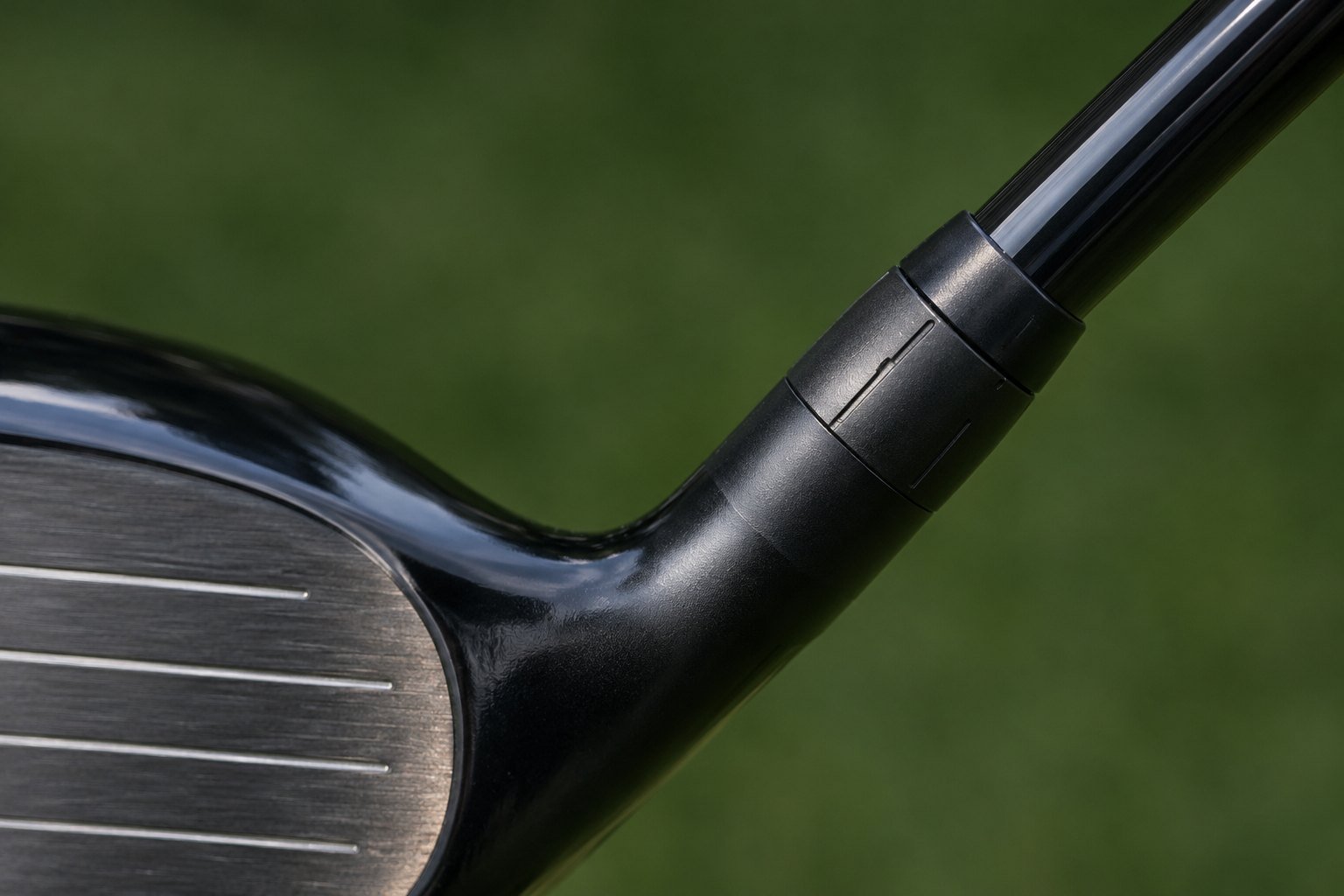
Compare the actual setting range
Loft and lie are separate specifications. More loft is often called “weaker”; less loft is “stronger”. A flatter lie has a smaller lie angle, and an upright setting a larger one. The available combinations depend on the particular sleeve, so its advertised maximum changes may not be available together.
Swipe within the table to see all columns.
| Model or system | Loft adjustment | Lie adjustment | What to check |
|---|---|---|---|
| PING G440 MAX fairway | ±1.5° | Up to 3° flatter | Check the available loft-and-lie pairings.[1] |
| Titleist SureFit fairway hosel, including GT2 | 0.75° less to 1.5° more | 0.75° flatter to 1.5° more upright | 16 combinations in 0.75° increments; standard is A1 for right-handed and D4 for left-handed clubs.[2] |
| Callaway Quantum MAX with OptiFit 4 | Standard, 1° less or 1° more | Standard or ±2° at standard loft; ±1° with a loft change | The instruction guide lists seven combinations. Follow the correct adapter and handedness chart.[3] |
Check the exact numbered wood as well as the family name. Callaway’s Quantum MAX specification lists adjustable 3-wood, 3HL and 5-wood heads; its 7-wood and higher-lofted options do not share that adjustable specification.[4] A product photograph or a general range description is insufficient when the option you want differs.
A chart also needs interpretation. Titleist defines its charted loft as effective loft with the face square at impact.[2] That is a specification convention, rather than a forecast of your launch angle. Use the setting to form a comparison, then assess what you actually deliver. Record loft and lie together, even when you changed the sleeve intending to alter only one of them.
If you switch generations, read the new guide from the beginning. Familiar-looking markings are a poor reason to carry over the old instructions.
Back to top ↑A sleeve cannot turn every head into the wood you need
The printed loft is only part of the choice. Consider Titleist’s GT2 specifications: the 15° model has a standard 43-inch length and a 170 cc head, while the 18° model is 42 inches long with a 150 cc head.[5] Turning the 15° club’s sleeve leaves its head size and playing length unchanged. Its SureFit range also stops at 16.5° nominal loft.[2]
That makes the lofted-up 15° club a candidate to try, rather than an automatic substitute for the 18° model. You may prefer either complete club. The comparison must establish which one suits the shot; the number reached on a chart cannot settle it.
This matters particularly when a purchase begins with a distance ambition. If the club is mainly for approaches, include useful flight and the ability to produce that shot from the intended lie in your judgement. If it is mainly for tee shots, judge the reliable distance and direction you can use from a tee. Your priorities can differ without either choice being wrong.
Our guide to mini drivers and fairway woods off the tee can help when the missing shot is still unclear. Establish that role before expecting a sleeve to make one club cover every task.
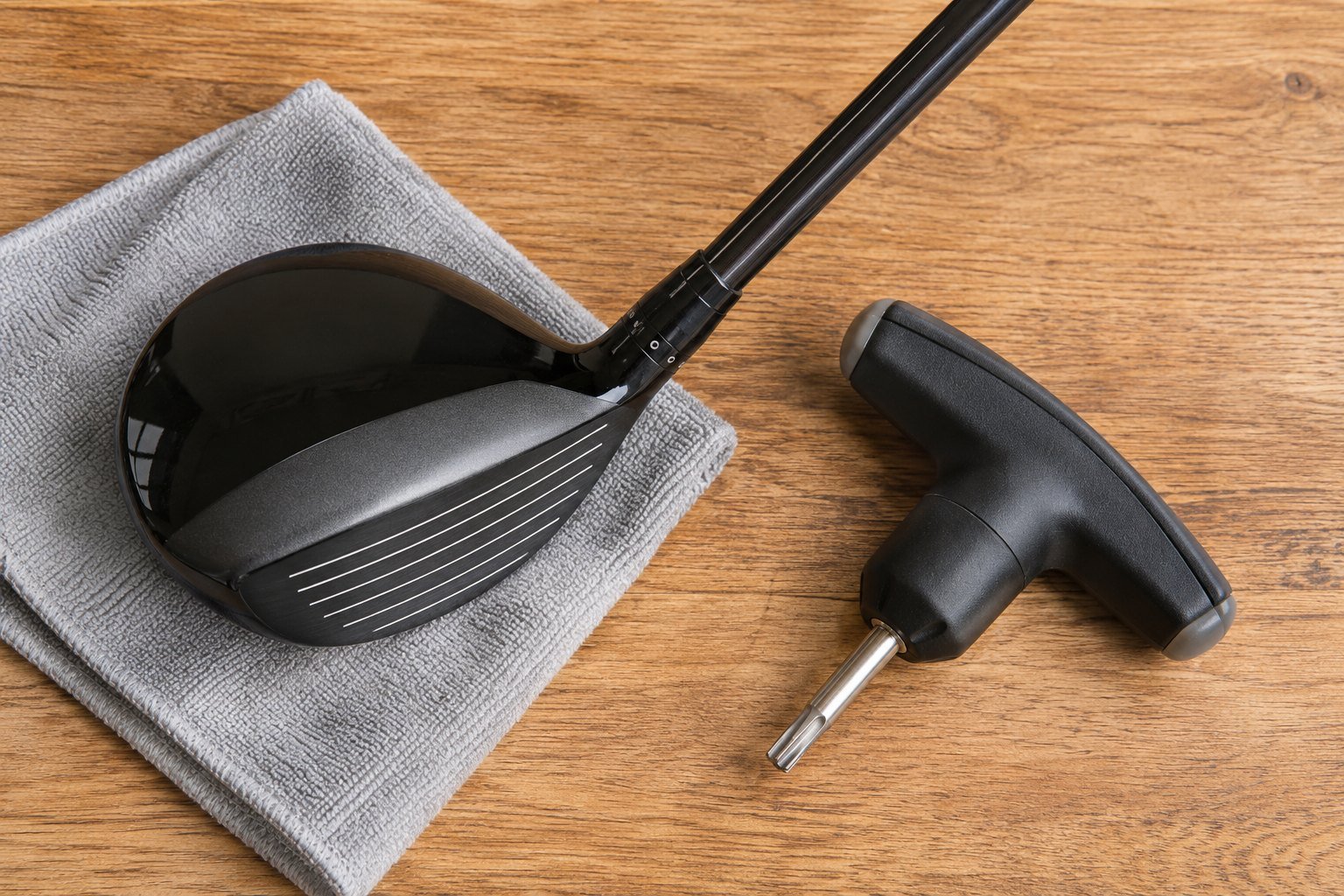
Make a setting change worth judging
For a useful trial, take your current club, the balls you normally play and a clear description of the shot you want. Ask the fitter to record the head, shaft, length and starting setting. This gives you a reference if you later forget which combination produced the result you liked.
- Establish the starting pattern. Hit enough ordinary shots to recognise your usual strike and miss. Include the intended lie, rather than relying entirely on a tee or a very forgiving mat.
- Choose one documented comparison. Agree the question first. If a setting changes both loft and lie, record both; you are comparing the complete setting.
- Alternate short blocks. Move between the original and proposed settings so that one does not receive all the fresh swings and the other all the tired ones. The fitter should manage each adjustment safely.
- Keep the normal mishits. Record carry, direction and strike alongside your impression of the flight. A few exceptional swings should not decide a club intended for regular use.
- Return to the original. Check whether the apparent difference still helps when you revisit the benchmark. If the result is unclear, another trial is a better basis for spending than a confident guess.
Use the observations that matter to the task. Total distance on a firm range is a weak basis for deciding whether an approach will suit a receptive green. Equally, the highest flight is not automatically the right result for a club whose main job is a controlled tee shot. Discuss those priorities with the fitter rather than chasing a single launch-monitor number.
Swipe within the table to see all columns.
| Record | What to write |
|---|---|
| Exact setting | Markings, nominal loft and lie, plus a clear photograph |
| Useful outcome | The typical shot that improved and the conditions in which it helped |
| Trade-off | Any change that made the club less suitable for its other job |
| Confidence | Whether the improvement repeated, needs another trial, or was inconclusive |
These are practical comparison steps, with no universal pass mark. You are looking for evidence strong enough to support your own purchase.
Back to top ↑Put a price on the complete choice
Ask for two complete quotes: the fixed-hosel candidate you would actually buy and the adjustable candidate in the build you would actually use. Include fitting charges, delivery, any grip or shaft changes, and the correct wrench if you need one. Check whether a fitting fee is credited against a purchase.
A wrench is not guaranteed to be in the box. For example, Clubhouse Golf’s GT2 listing says it is excluded.[6] Confirm the contents of your exact order, even if you already own a tool that looks similar.
Swipe within the table to see all columns.
| Cost | Suitable fixed-hosel candidate | Suitable adjustable candidate |
|---|---|---|
| Club | £180 | £240 |
| Fitting, after any credit | £40 | £40 |
| Required wrench | £0 | £20 |
| Delivery and necessary build changes | £0 assumed | £0 assumed |
| Total | £220 | £300 |
| Extra spend | — | £80 |
In this example, £80 is the difference between the two purchases. The clubs may differ in other ways, so it does not establish the price of the sleeve itself. Replace every figure with your quotes and remove the wrench cost if you already have the manufacturer-approved tool for that club.
Then ask what the extra spend buys you. A demonstrated setting that improves the required shot is a reason to pay. An unresolved fitting question may justify keeping an adjustable candidate on the shortlist. “I might need all those settings one day” is a weaker reason if the fixed club already performs well.
For a wood you already own, price an adjustment or fitting session before treating this as a replacement decision. The useful setting may already be available in your bag.
Back to top ↑Check the adapter and use the correct instructions
Match the instructions to the exact head and adapter. The manufacturer’s compatibility list should name the relevant fairway generations; a list of compatible drivers does not establish fairway compatibility. Titleist publishes separate driver and fairway lists and specifies genuine components and its SureFit wrench.[2]
Have the fitter or retailer identify an unfamiliar assembly before adjusting it. Ask them to confirm the adapter, handedness, screw and wrench, and show you how the intended setting is recorded. Keep a photograph of the completed position with the club’s specification.
Follow the manufacturer’s seating and tightening procedure each time. Titleist instructs users to stop and realign components if the screw binds.[2] Callaway’s OptiFit 4 guide requires the adapter and hosel tick marks to align and specifies a Callaway torque wrench.[3] A setting experiment should end if the assembly does not seat or tighten correctly; get it checked before using the club.
The aim is a secure, reproducible setting. If you would rather leave adjustment to a professional, that is entirely compatible with benefiting from an adjustable wood.

Choose the setting before play begins
Rule 4.1a(3) prevents you from playing a shot with a club after deliberately altering how it plays during the round, including by changing an adjustable setting. The rule provides an exception if you undo that adjustment before hitting a shot with the club, restoring it as closely as possible to how it was.[7]
Plan your testing before the round and check the final setting before you start. An adjustment between holes to suit the next tee shot is not an option to use in play. If the situation involves damage or a repair during a round, ask the Committee about the applicable rule rather than treating it as an ordinary fitting adjustment.
There is still plenty of value in being able to refine a club during practice and then keep the successful setting for play. Frequent changes are not a requirement.

Buy the setting you can use
The strongest case for an adjustable fairway wood is a suitable head, a documented setting and shots that justify the complete price. If those pieces are missing, start with a fitting or keep the club that already works. A wider menu of settings becomes valuable only when one of them serves your game.
If the Quantum MAX is on your fitting shortlist, check Callaway’s UK Quantum MAX options and confirm that the chosen numbered wood has the sleeve you want.[8] For a SureFit alternative, compare the Titleist GT2 options at Clubhouse Golf, checking the selected loft, shaft, handedness and included accessories before ordering.[6]
Take one final question back to the fitting: what useful shot does this setting give me that my other suitable option does not? A clear, repeatable answer is a better reason to pay for adjustability than the adjustment count.
Back to top ↑Sources and further reading
Sources checked on 22 November 2026. Product descriptions are attributed to their makers; the comparison methods and buying judgements are editorial guidance.
- PING — G440 MAX Fairway, UK specifications
- Titleist — SureFit Performance Guide and official driver/fairway charts
- Callaway — 2026 OptiFit 4 Fairway & Hybrid Hosel Guide (PDF)
- Callaway — Quantum MAX Fairway Woods, model specifications
- Titleist Newsroom — Titleist Launches New GT Fairway Metals
- Clubhouse Golf — Titleist GT2 Golf Fairway Wood
- The R&A — Rules of Golf, Rule 4: The Player’s Equipment
- Callaway — Quantum MAX Fairway Woods, UK buying options
Illustrations in this article were created for Taylor’s Trailblazing Golf. Third-party photographs, where used, are credited beside the image or in the source list.


