Driver Fitting vs Buying Off the Rack: When Is a Session Worth It?
Choose the buying route that answers a real question, including the possibility that your current driver should stay.
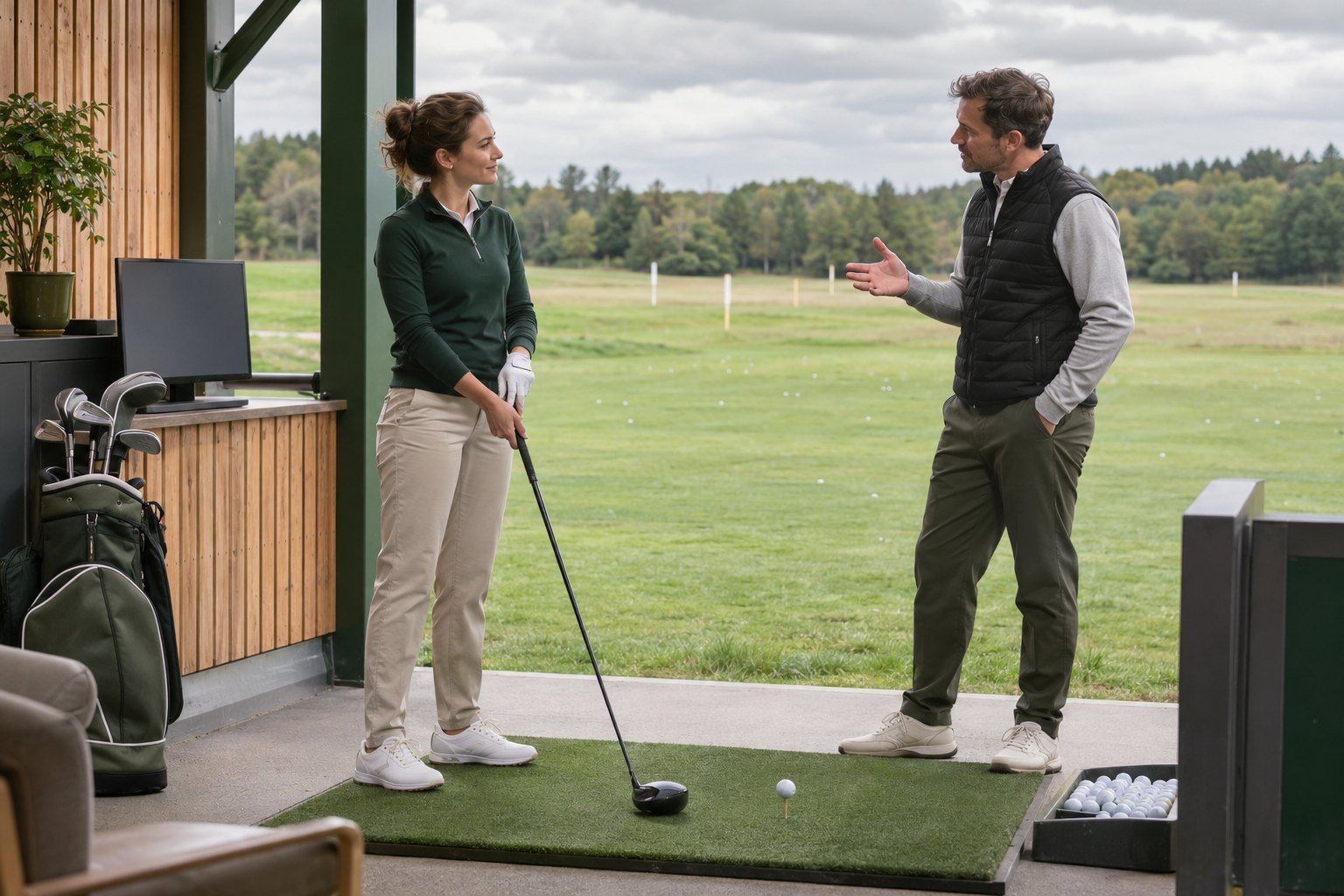
AI illustration of a fitting conversation; no personal test or measured result is depicted.
The choice between a driver fitting and buying off the rack starts with what you already know. If you have compared an exact standard build, understand its specification and like its ordinary results, ordering it from stock can be sensible. If you are guessing at several parts of an expensive purchase, a fitting has a clearer job.
A useful session changes the quality of the decision. It might identify a different build, confirm that a standard option suits, improve the understanding of your current driver or give you a reason to buy nothing. This research-led guide helps you choose between those routes without treating a fitting appointment as a promise of extra distance.
Ad – includes affiliate links. If you buy through these links, Taylor’s Trailblazing Golf may earn a commission at no extra cost to you.
A question worth answering
Know what the session could change about your choice before booking.
An affordable alternative
The trial should include builds you could realistically buy or keep.
Permission to buy nothing
Clearer evidence can be worthwhile even when your current driver wins.
Driver fitting vs buying off the rack: choose from four routes
Use the route that matches your uncertainty. This is an editorial decision matrix, not a ranking of golfers or a claim that one type of shop always offers the best service.
| Your position | Most useful route | What would justify it? | A valid outcome |
|---|---|---|---|
| Your current driver does its job and you have no clear change in mind | Keep it and observe | No unresolved equipment question yet warrants spending | No purchase and no appointment |
| You have fairly tried an exact standard build that meets your needs | Buy the known stock specification | You can identify and order the same build, with suitable terms | A standard club bought with useful evidence |
| You like your driver but do not understand its settings or suitability | Assess the existing club first | The provider agrees to evaluate it, including permitted adjustments | Keep it, change an approved setting or identify the next question |
| You need a replacement but several specifications remain uncertain | Fit and compare realistic candidates | Suitable trial builds, a fair baseline and your budget are included | A stock or custom build, or a decision to postpone |
The routes can lead into one another. An assessment of your present club may show that replacement deserves a comparison. A full fitting may finish with a readily available standard build. Decide what information you need, then choose how to obtain it.

Separate fitting from ordering a custom build
For this guide, off the rack means a ready-made specification available from stock. Custom ordering means selecting a build to be supplied to an agreed specification. Fitting is the assessment used to decide which specification makes sense. These describe different parts of the process.
A standard head, shaft, length and grip can be the conclusion of a careful trial. It does not become less suitable because it was already in a shop. Equally, choosing several options on a custom-order form does not establish that they work well together for you.
Think of two golfers. One has repeatedly tried a particular standard build and wants to replace the same model in the same specification. The other has chosen a premium shaft from a description without hitting it. The second order may involve more customisation, but the first golfer has clearer evidence about the purchase.
Before paying for an upgrade, ask which observed improvement it is meant to preserve. If the answer concerns the component’s reputation rather than your comparison, you still have a decision to investigate.
Back to top ↑Ask whether new information could change your decision
A fitting becomes more valuable when three conditions line up: the uncertainty matters, the appointment can investigate it and the answer would alter your next step. Use that test before deciding how much time or money to commit.
- What is uncertain? Perhaps the current driver seems difficult to manage, two plausible builds feel different, or a replacement is needed and the old specification is unknown.
- Can this session answer it? The fitter needs appropriate trial options and a way to compare the relevant result.
- What would you do differently? You might keep the club, buy another specification, choose a cheaper build or delay the purchase.
If you intend to buy one particular model regardless of every result, a broad comparison session has less influence on that choice. A focused assessment of that model’s available builds may be a better match. If no plausible recommendation would fit your budget, establish a more realistic set of options before booking.
This also explains why an inexpensive used driver can merit a fitting conversation while an expensive new model may not need another lengthy assessment when you already know the exact suitable build. The price label does not measure how much uncertainty remains.
Give the existing driver a fair chance
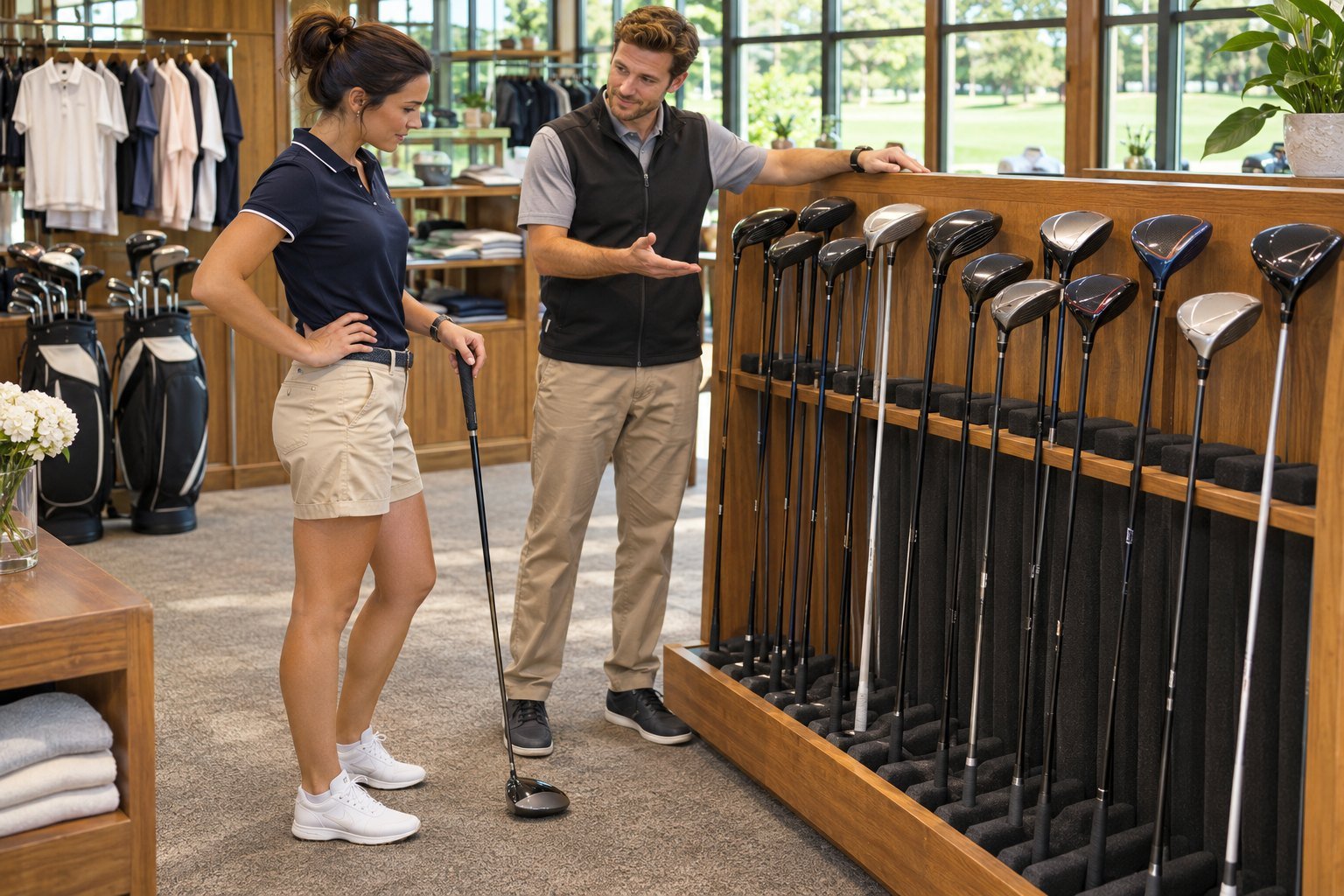
Take your current driver unless the provider gives a clear reason otherwise, and explain any changes to its shaft, length, grip or settings. Titleist’s fitting guidance describes a discussion of your game, a baseline with your current clubs, launch-monitor observations and trial combinations. [1]
Ask whether the appointment can examine the existing setup before introducing a replacement. Confirm this when booking: assessing an older club or evaluating its current settings may differ from a demonstration aimed at choosing among new heads.
You do not need to arrive with a technical diagnosis. Useful observations are enough: the club feels difficult to control, a familiar miss is costly, or you cannot tell whether a new option improves anything meaningful. Describe the outcome you want to understand, and let the assessment establish which equipment questions are relevant.
A fitting is also not a structural safety inspection by default. Tell the provider about suspected damage or uncertain repairs beforehand. A club that needs inspection should not be used as a hitting baseline until an appropriate professional has cleared it.
Back to top ↑Choose a session whose scope matches the choice
A brand-specific fitting can be useful when you want to explore that manufacturer’s builds. A multi-brand session can address a broader shortlist, provided the relevant heads, handedness and components are actually available. Neither automatically answers a question outside its selection.
Titleist’s National Fitting Centres describe driver and fairway sessions using Titleist equipment, a range of shaft choices and TrackMan. That establishes the intended brand scope; it does not establish a comparison against every rival driver. [2]
TaylorMade’s MyFittingIntelligence description provides another format: it starts with the current driver, recommends trial configurations and compares three driver builds using launch-monitor data. Treat an automated recommendation within that process as a candidate decision within its available selection, rather than a verdict on the whole market. [3]
Ask a prospective provider whether it can compare a suitable standard build before premium upgrades, include the current club, and explain a no-purchase conclusion. For appointment charges, credits and report details, use our separate guide to golf club fitting fees. Here the question is whether the available comparison can influence your driver choice.
Use a baseline, challenger and recheck worksheet
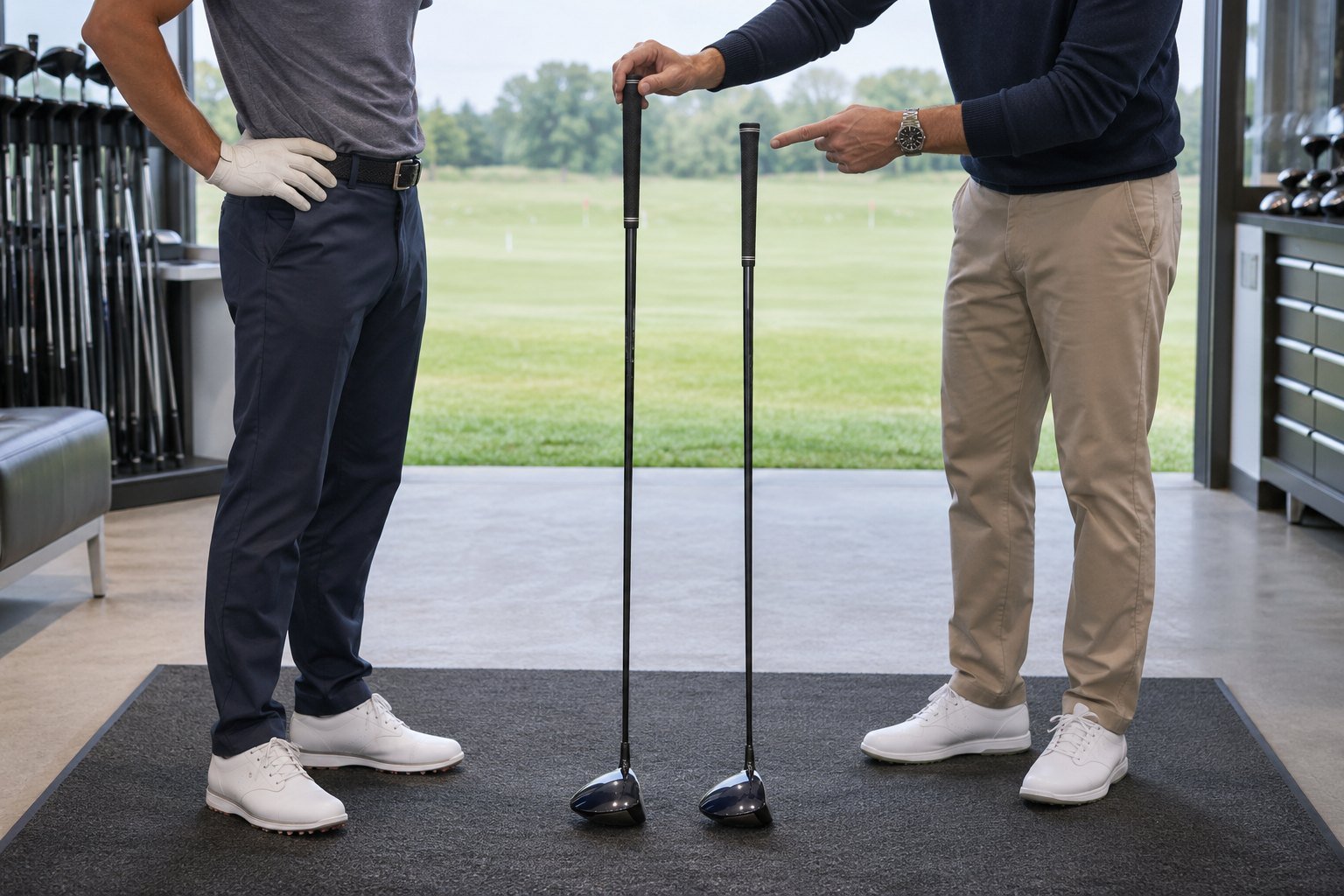
Agree what would make a replacement worthwhile before reviewing the longest shot. You might value a more manageable spread, more dependable carry or a club that is easier to use consistently. There is no single minimum distance gain that settles the decision for every golfer.
| Stage | What to record | Buying question |
|---|---|---|
| Baseline | Current driver specification, representative shots and the problem you want to improve | What must a challenger do better? |
| Challenger | The complete trial build, ordinary results, difficult misses and quoted specification | Does the change help the priority without an unacceptable trade-off? |
| Recheck | A return to the original club and, where useful, another comparison with the candidate | Does the advantage remain, or did warm-up, familiarity or fatigue change the picture? |
| Purchase decision | The credible benefit, unresolved questions and complete cost | Is the evidence strong enough for this particular commitment? |
Use comparable balls, target and measurement settings throughout. Agree how misreads and interruptions are identified, while keeping normal imperfect swings visible. Selecting only the best shots from the candidate would answer a different question from how it handles your usual golf.
This worksheet is an original recording method, not a claim that a fixed shot count proves a winner. If the result reverses each time you swap clubs, call it inconclusive. When a small apparent difference would trigger a costly order, ask whether another permitted trial or follow-up could clarify it.
For a first driver, a suitable trial build can provide a reference when there is no owned club. Explain that it is the session’s starting comparison, not evidence about equipment you already play.
Back to top ↑Understand what the screen can and cannot settle
Ask the fitter to explain the important readings in ordinary language and connect them to your decision. A display full of numbers is useful only when you understand which differences are reliable and why they matter for the tee shots you face.
Trackman defines total distance as the distance to a calculated resting point. Its calculation uses landing conditions and assumes a flat surface with normal hardness. A larger total on that display is therefore not a promise of the same run on your wet or sloping fairway. [4]
Trackman’s normalisation feature can adjust the reported data for environmental assumptions such as altitude and temperature. Its ball-conversion guidance also explains that range and premium balls can produce different launch data. Ask which settings and ball type are being used, and keep them consistent across the comparison. [5] [6]
Those features can support a fair comparison when understood. They also mean that two screenshots from different sessions may be unsuitable for a direct comparison. Before buying on a claimed gain, establish that both clubs were judged on a comparable basis.

Treat four different outcomes as useful results
The current driver remains the sensible choice
The challenger does not improve the important result consistently, or introduces a drawback you do not want. Keep the current club and retain the record. Avoid buying merely to turn the appointment into a transaction.
A standard build answers the question
The successful configuration is available from stock. Confirm that the item for sale matches the trial in its complete specification. You have used fitting evidence to make an off-the-rack purchase; those two choices work together.
A different build has a clear purpose
A change to the tested configuration produces a repeatable, relevant benefit and fits the agreed budget. Obtain the exact specification and full quote. A custom order can make sense here because the requested differences have an identified job.
The result is inconclusive
You were unable to make representative swings, suitable alternatives were missing or the advantage did not repeat. Record what remains unknown and discuss a sensible next step. An inconclusive session does not justify pretending that the most expensive option won.
Back to top ↑Buy the build that was compared, with terms you understand
Before ordering, match the head model and handedness, stamped loft and settings, full shaft specification, finished playing length and grip. Ask the supplier to clarify any difference between the demonstration club and the item being sold. A matching head name alone leaves too much unspecified.
For a known specification, you can browse the driver range at Clubhouse Golf. If the chosen build is a Callaway, browse Callaway’s UK clubs and check the required options. These are range links, not recommendations that every listed driver will suit you.
Include any fitting charge, component upgrade and delivery in the amount you compare. Confirm the actual order, cancellation, return and trial terms before committing; do not assume permission to take a new driver onto the course and then return it. If buying a substitute specification to save money, recognise that its suitability may need a new comparison.
Back to top ↑A few final questions
Do I need a low handicap before a driver fitting is worthwhile?
Use the equipment question rather than a handicap threshold. A newer golfer may need help identifying a manageable starting build; an experienced golfer may already have a well-understood specification. Explain your experience and current uncertainty when booking so the provider can recommend an appropriate assessment.
Can I use a fitting result to buy a previous-generation driver?
Use it to guide the questions, not to declare a different head or shaft equivalent. Look for an opportunity to compare the actual older build and check its condition. If it cannot be tried, recognise the remaining uncertainty rather than transferring the newer model’s result to it.
Must I decide on the day?
Ask about the provider’s terms before the appointment. Where there is no agreed purchase commitment, take the specification and findings away to consider the whole cost. A time-limited credit or offer should not decide whether the club provides a worthwhile benefit.
What to do next
Choose a fitting when its findings could change a meaningful equipment decision and the session can test realistic options. Choose a known standard build when you already have the evidence needed to buy it. Keep the current driver when it remains the better answer. The valuable outcome is a decision you can explain, whether or not a new club follows.
Sources and further reading
Sources checked on 22 November 2026. Product descriptions and terms can change; confirm the details for the exact item before buying.
- Titleist UK — Fitting guidance: current-club baseline and comparison process
- Titleist UK — National Fitting Centres: driver/fairway session scope
- TaylorMade — MyFittingIntelligence: current driver and trial-build process
- Trackman — Total (Tee to Green): calculation and surface assumptions
- Trackman — Normalization & Optimizer Feature in TPS
- Trackman — Ball Types for Ball Conversion
Illustrations in this article were created for Taylor’s Trailblazing Golf. Third-party photographs, where used, are credited beside the image or in the source list.