Fairway Wood Shaft Materials and Weights: A Whole-Club Comparison
Look beyond the number on the shaft and compare the club you will actually swing.
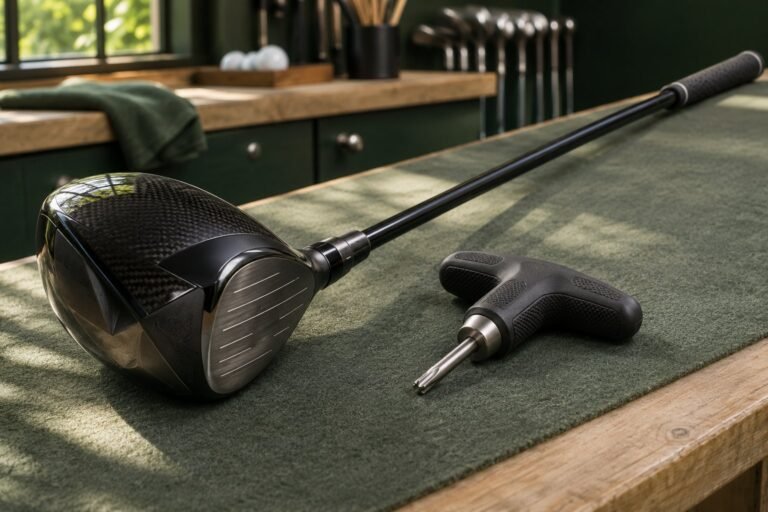
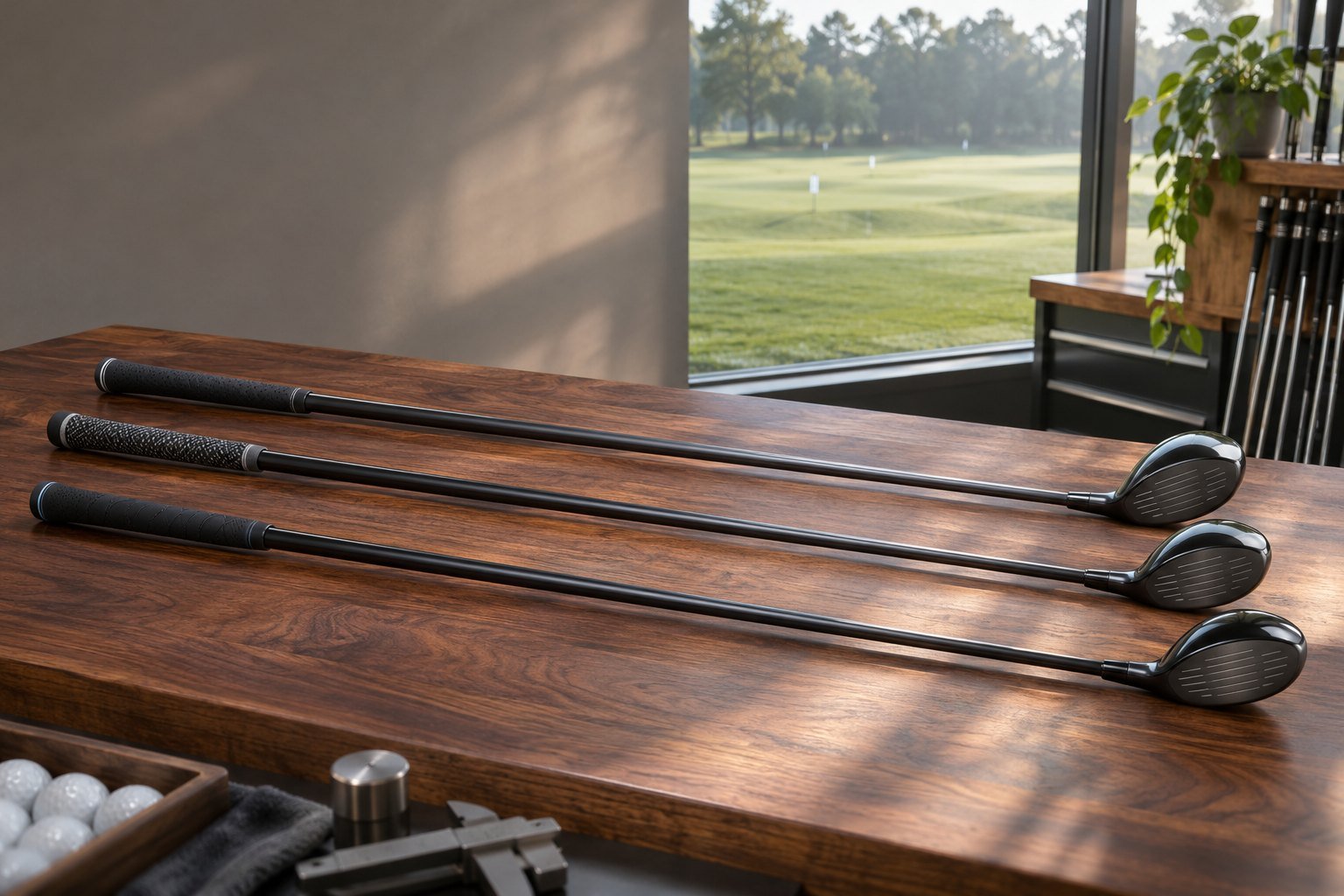
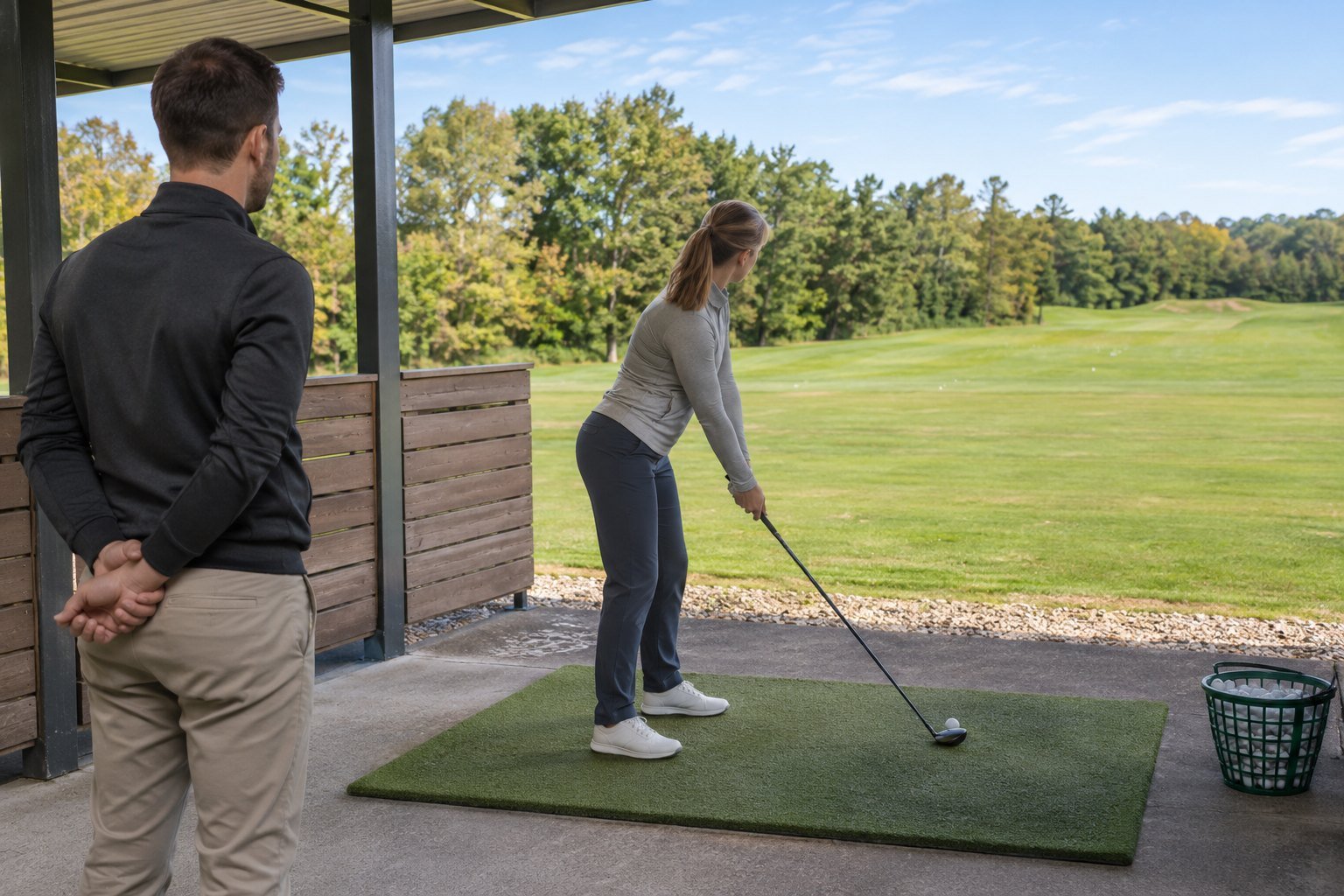
AI illustration of a whole-club comparison; the equipment is generic.
A lighter shaft can sound like an easy route to a better fairway wood. A heavier one can sound like a quick fix for control. Before buying either, ask a more useful question: what else changes in the finished club?
Fairway wood shaft materials and weights make more sense alongside playing length, head weight, grip and the shots you need. This research-led guide explains how to compare those details and prepare a useful fitting.
This guide contains affiliate links. If you buy through them, Taylor’s Trailblazing Golf may receive a commission at no extra cost to you.
A shaft label leaves out the head, grip, length and final balance.
Shaft weight, total club weight and swingweight answer different questions.
Bring your existing fairway wood and explain its actual job.
A dependable spread of shots matters more than one unusually long strike.
Start with a whole-club comparison sheet
Write down the club you own beside each candidate. Ask the fitter to fill the gaps; a question mark is more useful than an assumed specification. Keep the same level of detail for each candidate.
Swipe within the table to see all columns.
| Detail | Record for both clubs | Why it matters to the comparison |
|---|---|---|
| Head and loft | Exact model, version, stamped loft and sleeve setting | A different head or loft introduces another explanation for the result. |
| Shaft identity | Full model, generation, weight designation and flex | Similar paint or a shared family name does not establish the same specification. |
| Weight basis | Catalogue figure and whether it describes an uncut shaft, a prepared shaft or a weight class | You need comparable figures before treating a difference as exact. |
| Playing length | Finished club length, measured by the same method | Changing length makes this a different build, even with the same shaft. |
| Grip | Model, size, weight and any extra wraps | A comfortable grip also belongs in the specification you intend to order. |
| Finished measurements | Total club weight and swingweight | These describe the assembled club rather than its shaft alone.[2] |
| Build history | Any tip trimming, extension or previous reshaft | A used shaft may no longer match the original catalogue build. |
| Intended shot | Tee club, fairway approach or both | Judge the candidate on the task it must perform. |
Start with one sentence such as, “I want a fairway wood I can launch from short grass without losing my dependable tee shot.” That gives the fitting a purpose. “I want a 70-gram shaft” decides part of the answer before you have compared anything.
If you are choosing the club’s role as well as its shaft, the Woods & Hybrids guides cover the wider equipment decision.
Back to top ↑What fairway wood shaft materials and weights tell you
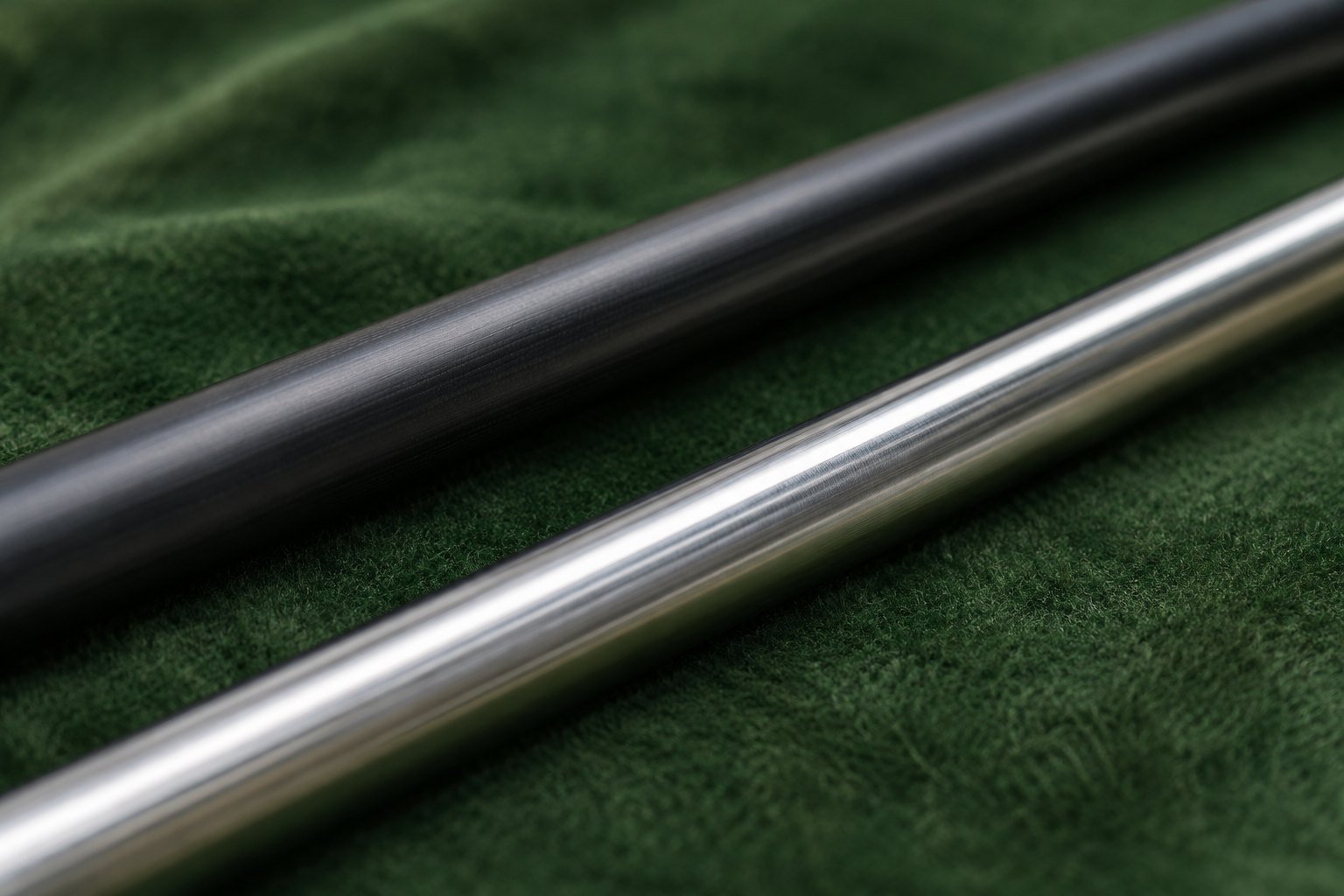
Graphite golf shafts are carbon-fibre composites, with fibres held in a resin system. Fujikura explains that the material can be built into different weights, flexes and bending profiles.[1] “Graphite” therefore describes a broad construction family, rather than one soft, light or high-launching type.
Materials affect how a shaft can be designed. Fujikura explains that changing stiffness in a steel shaft is more closely tied to changing its weight, whereas composite construction gives designers more freedom to vary those properties separately.[3] That is why a light graphite shaft need not be soft, and a heavier one need not be the firmest option. It does not establish a universal winner for your swing.
Swipe within the table to see all columns.
| What you are comparing | Useful approach | Assumption to avoid |
|---|---|---|
| One graphite shaft against another | Compare the exact weight and profile in the intended head. | That both will feel or perform alike because the material matches. |
| An existing steel-shafted wood against a graphite replacement | Measure the old club and keep it in the trial as a complete-club reference. | That every change in flight comes from the material switch. |
| A shaft described with several materials | Read the maker’s description of that exact model. | That a metal or reinforced section makes it equivalent to a conventional steel shaft. |
If a steel-shafted fairway wood already gives you the shots you need, the material name is not a reason to retire it. Equally, copying its flex label onto a graphite order is too little information. Preserve the useful result, then investigate which complete builds can reproduce or improve it.
A product’s material story can be interesting without settling the purchase. For example, Mitsubishi describes carbon cloth, resin and boron reinforcement in the TENSEI 1K Pro Blue.[4] Those construction details do not tell you whether its feel suits your swing. Ask what difference the candidate makes to your normal strikes.
Separate shaft weight, total weight and swingweight
Shaft weight is the mass of one component. Total weight is the mass of the assembled club. Swingweight describes its balance about a fixed measuring point, conventionally 14 inches from the grip end; it is expressed with codes such as D2 rather than grams.[2] Two clubs can therefore share a swingweight while weighing different amounts overall.
A model number is not necessarily its exact mass. Mitsubishi’s published TENSEI 1K Pro Blue specifications give a useful example:
Swipe within the table to see all columns.
| Exact shaft | Listed length | Listed weight |
|---|---|---|
| TENSEI 1K Pro Blue 60 R | 46 inches | 58 g |
| TENSEI 1K Pro Blue 60 S | 46 inches | 61 g |
| TENSEI 1K Pro Blue 80 S | 46 inches | 80 g |
Source: Mitsubishi’s model specification table, checked 22 November 2026.[4] These are its listed component figures at the stated length, not measurements of three finished fairway woods. A prepared shaft, adapter and grip need their own clear description.
If a seller simply writes “60 g stiff”, ask for the actual model and build. Do not subtract two marketing weight classes and treat the answer as the change in your complete club. The useful comparison is the finished specification and what you can repeat with it.
You can ask a fitter to weigh and balance the assembled clubs without taking them apart. There is no need to remove a grip or loosen a head just to collect a starting reference.

A lighter build changes more than the shaft
PING’s G440 MAX and MAX HL show why it pays to look at the whole club. The HL configuration uses a lighter head weight, an ALTA Quick shaft and a lighter grip.[5][6] It is not simply the standard club with a different shaft label.
Swipe within the table to see all columns.
| Published detail | G440 MAX | G440 MAX HL |
|---|---|---|
| Nominal loft | 15° | 15° |
| Standard length | 43 inches | 43 inches |
| Head weight | 219.0 g | 210.8 g |
| Example listed shaft | ALTA CB Blue 65, Regular: 58 g | ALTA Quick 35: 38 g |
| Published swingweight | D2 | C9 with ALTA Quick 35 |
Manufacturer design specifications checked 22 November 2026; manufacturing tolerances and build choices apply.[5][6] The shaft figures are reproduced as PING lists them. They should not be added to the head figures to claim a measured total club weight.
The head alone is listed 8.2 g lighter in the HL example. If you preferred that club in a fitting, you would have evidence about that entire build. You would not yet know that reducing shaft mass by the same amount in another wood would give the same result.
Conversely, a lighter shaft installed in your existing head may create a different comparison again. Ask the fitter whether you are investigating shaft weight specifically or choosing between complete clubs. Both are worthwhile; the record should make clear which question the trial can answer.
Back to top ↑Check profile and preparation before ordering
Weight does not describe every part of a shaft’s behaviour. Bending profile concerns how stiffness is distributed along it; torque describes twisting. Mitsubishi also cautions that its launch and spin descriptions are broad expectations, because golfers load and deliver shafts differently.[7] A “high launch” label is a starting point for a trial.
Keep flex and weight as separate questions
If you change both together, record both changes. Choosing the most controllable result is sensible, but calling it proof that heavier is always better goes beyond what that comparison showed. A fitter may need to try another profile at a similar weight before you spend money.
Know what happened to the shaft before it reached you
Tip trimming means shortening the shaft from its head end during construction. Fujikura provides club-specific guidance and directs golfers to a fitter or club-builder for the appropriate treatment.[8] An instruction for one shaft should not become a universal rule for every brand or model.
For a reshaft quote, ask for the exact shaft, compatible adapter where needed, finished playing length, grip and any trimming to be written down. Ask whether the quote covers installation and the final checks. A shaft price alone is not the price of a playable replacement.
Leave cutting, extraction and structural work to a competent club-builder. True Temper warns that steel and graphite shafts can suffer internal impact damage without obvious surface evidence.[9] Stop using a club with suspected damage and have it assessed; an attractive finish is not proof that the shaft is sound.
If length is also part of the question, see the guide to fairway wood shaft length for shorter golfers. Use the fitting principles to investigate your setup; height alone does not settle the specification.
Run a comparison that answers your own question
Take your current wood to the appointment, together with the club immediately below it in the bag. Explain which shots disappoint you and which you want to preserve. Use the session to compare the shots that matter to you.
- Warm up, then hit a short baseline with your existing wood. Use the same ball type and comparable conditions for the candidates.
- Compare a small number of builds. For example, alternate short blocks of around five shots so the first club does not get every fresh swing and the last every tired one.
- Record the complete specification each time. If length, head or grip also changes, keep that beside the shaft details.
- Keep ordinary mishits in the record. Note obvious measurement errors separately rather than quietly removing inconvenient shots.
- Check the intended lies. If it is a fairway approach club, a successful low-tee session alone leaves an important question unanswered.
- Return to the original club, then repeat the strongest candidate on another occasion if the difference is unclear.
Swipe within the table to see all columns.
| Observation | What to write down |
|---|---|
| Strike and flight | Usual contact, typical carry and the spread of outcomes; record measured values only when actually measured. |
| Direction | Where normal shots finish, including the miss you want to reduce. |
| Effort and confidence | Whether you can make your normal swing without feeling you must force it. |
| Useful role | Whether it supplies a dependable shot your neighbouring club does not. |
Let the important task settle a close decision. An extra few yards on the best strike is little help if the approach pattern becomes less usable. Equally, a shorter club can still be the wrong choice if it removes the only useful gap you were trying to fill. Ask the fitter to explain the trade-off in shots you recognise.
Decide whether to keep, reshaft or buy a complete wood
Keep the existing build when it remains dependable and the trial shows no worthwhile improvement. Consider a reshaft when the head and loft still suit the job, compatibility is confirmed and the complete installed price makes sense. Compare another finished wood when several parts of the build need to change.
For example, if a shaft, adapter, grip and fitting work total £180, while a suitable complete club costs £230, the difference is £50. Those are illustrative figures, not shop quotes. Ask whether retaining your head is worth that saving and compare the actual return and warranty terms before ordering.
To compare real buying options, you can view the PING G440 MAX options at Clubhouse Golf.[10] For a different complete-club option, check the Elyte fairway wood at Callaway UK.[11] Select the exact hand, loft and shaft offered, and ask for the finished specification before paying. Neither listing establishes that its standard build suits you.
The most useful order sheet describes the whole club. Keep a copy of the specification that worked and make sure the delivered club matches it. If the evidence is inconclusive, spend the money on resolving the fitting question first.
Back to top ↑A few questions before you change shafts
Must my fairway wood shaft be heavier than my driver’s?
Do not make a fixed gram difference the purchase rule. Compare the two clubs’ jobs and finished builds, then ask a fitter whether the fairway candidate gives you the flight, contact and effort you need. A matching brand or numerical progression can look tidy without answering that question.
Will copying my iron-shaft material make the bag more consistent?
Material matching alone does not make two clubs comparable. Start with the fairway wood’s own length, head and intended shot. Keep the irons as useful background about your preferences, rather than assuming that their shaft specification belongs in a wood.
What should I take away from a fitting?
A written specification, the reason it was chosen, its complete cost and a clear account of the compromise. “It is graphite and felt nice” is too little to reproduce later. The better outcome is a club you understand well enough to order accurately and judge fairly.
Back to top ↑Sources and further reading
Sources checked on 22 November 2026. Product descriptions are attributed to their makers; the comparison methods and buying judgements are editorial guidance.
- Fujikura — Education
- The GolfWorks — Technical glossary
- Fujikura — Steel vs Graphite
- Mitsubishi Golf — TENSEI 1K Pro Blue
- PING UK — G440 MAX Fairway
- PING UK — G440 MAX HL Fairway
- Mitsubishi Golf — Golf Shaft Basics
- Fujikura — Tip Trimming
- True Temper — Warranty Policy and impact-damage notice
- Clubhouse Golf — PING G440 MAX Fairway Wood
- Callaway UK — Elyte Fairway Woods
Illustrations in this article were created for Taylor’s Trailblazing Golf. Third-party photographs, where used, are credited beside the image or in the source list.