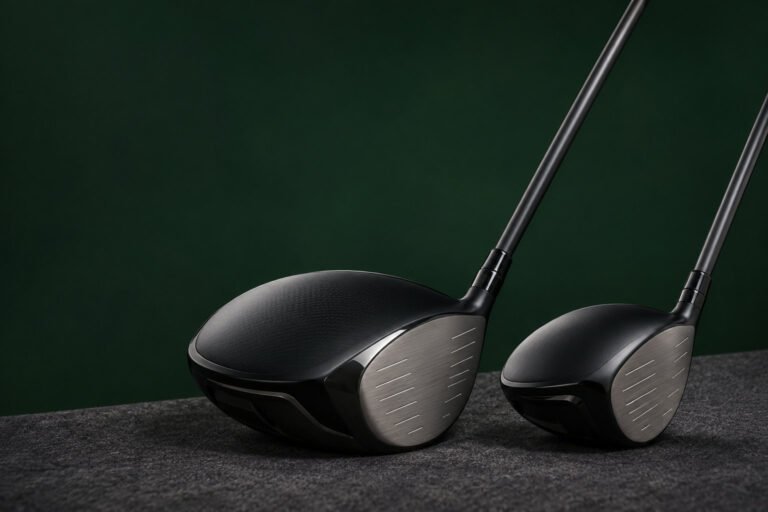
Driver Headcovers: Fit, Closure and Protection Trade-Offs
Choose the cover that fits, stays on and works with the rest of your bag.
AI illustration of a generic headcover. The named products discussed later are identified by their source links.
Driver headcovers are easy to buy by colour and surprisingly easy to get wrong in use. A cover might fit around the head but be awkward to remove, sit too high above the hosel or catch the club beside it every time you reach into the bag.
The useful comparison starts with your driver and normal bag layout. This research-led guide explains what to inspect, offers a short scoring worksheet and uses published products to illustrate different construction choices. The examples are not a durability ranking or a claim that these covers have been personally tested.
Ad – includes affiliate links. If you buy through these links, Taylor’s Trailblazing Golf may earn a commission at no extra cost to you.
Try the actual head
A size label helps you shortlist; the opening and head shape decide the fit.
Check the neck
Look at the shaft area exposed to neighbouring iron heads.
Use your full bag
Access, rain-hood clearance and neighbouring covers change the decision.
Keep working equipment
A replacement is optional when your current cover already does the job.
Driver headcovers: fit the head before choosing the finish
Start with the exact driver model and the cover’s intended club category. Driver, fairway and hybrid versions can look almost identical online, particularly when a retailer uses a shared photograph. Select the driver version and confirm the item description before comparing colour or price.
Where a maker or retailer states a capacity, use it as a screening detail. For example, Clubhouse Golf describes TaylorMade’s black N89455 driver cover as suitable for driver heads up to 460cc. [1] Volume does not describe every contour or the shape of the opening, so it is still sensible to try the actual combination.
A careful fitting sequence
- Inspect the inside for debris, rough seams, loose lining or exposed fastenings.
- Support the club and guide the cover over the head in its intended orientation.
- Check that the face, crown and sole sit inside the padded area rather than being partly exposed.
- Remove and replace it gently several times, noting any catching or force.
- Place the covered driver in the loaded bag and repeat your normal access movement.
Do not stretch a tight cover by using the shaft as a lever. Equally, a very roomy cover should not be accepted merely because it slides on easily: check that it remains where you put it during ordinary handling. For a mini driver or an unusual head shape, ask the cover supplier about that exact model. A broad “wood cover” description is not enough.
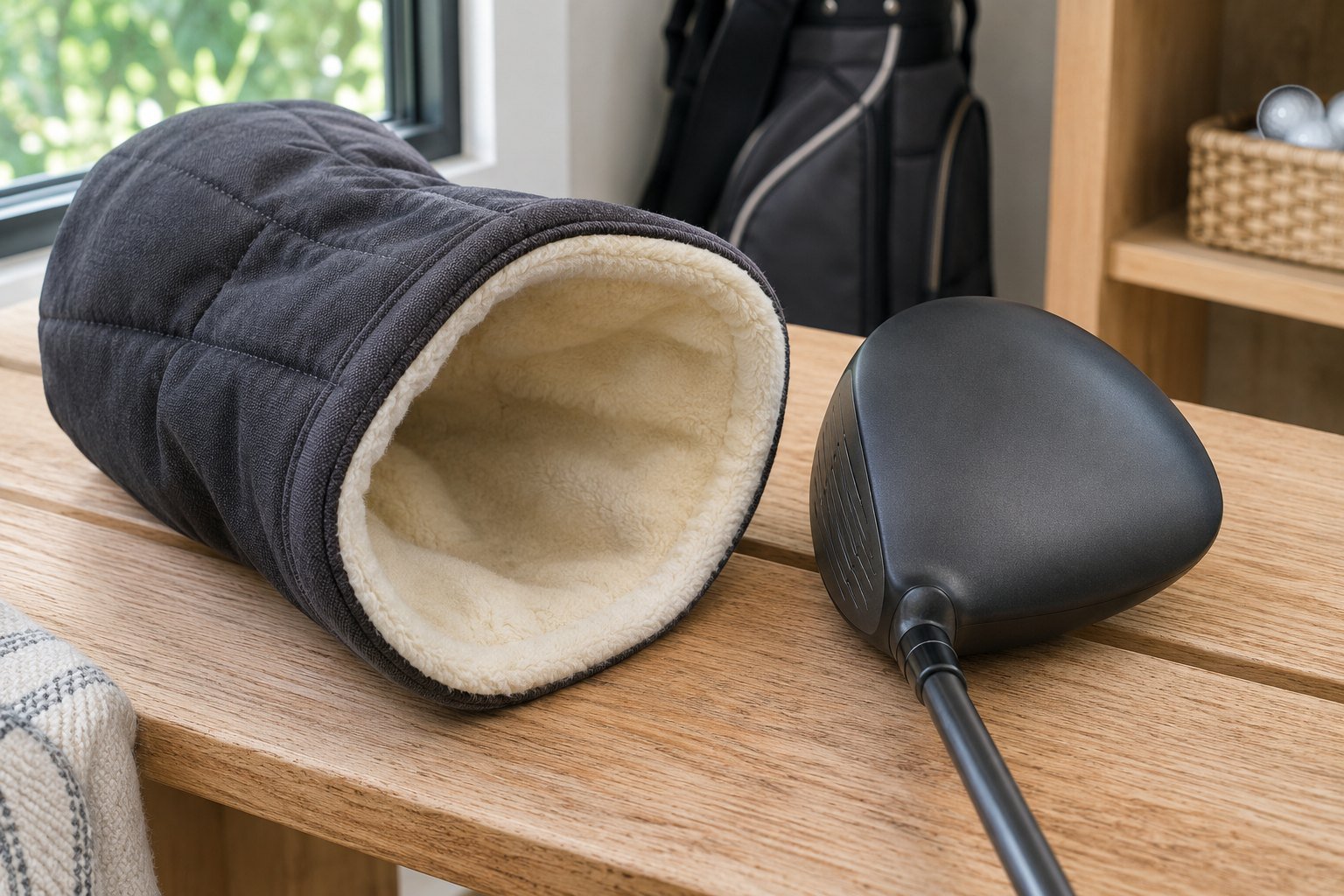
Compare closures by the movement you will repeat
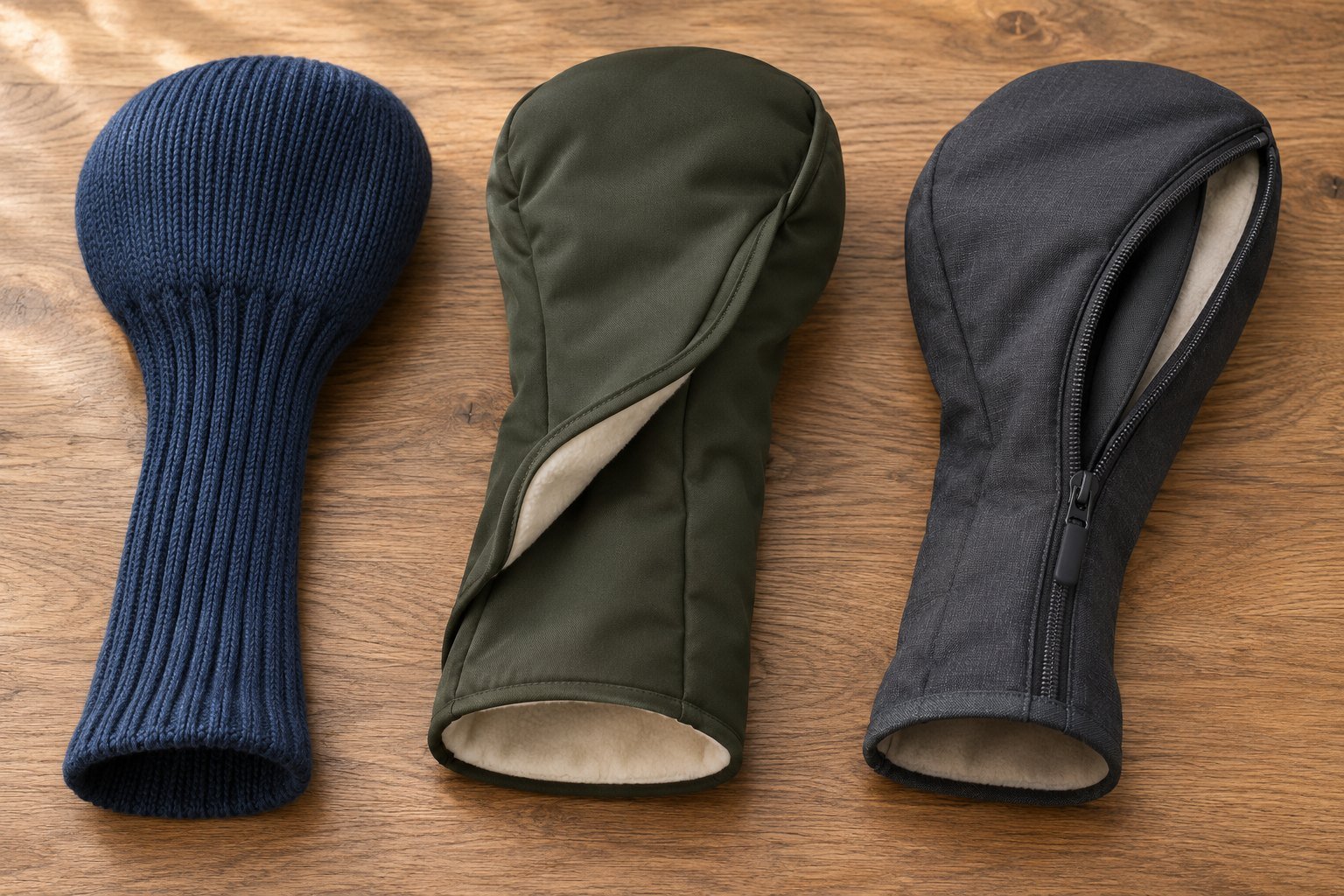
Closure labels describe a mechanism, not a guaranteed level of protection. Examine the actual opening, lining and stitching, and try the movement with the glove or wet-weather clothing you normally wear. The following are practical inspection questions, not measured comparisons of competing products.
| Design | Potential convenience | What to inspect |
|---|---|---|
| Pull-on with an elastic opening | No separate fastening to operate. | Does the opening recover after use, retain the head and avoid excessive pulling? |
| Knitted neck or sock | A flexible opening and potentially useful shaft coverage. | Does the neck stay in position, and can it pass the head without snagging? |
| Magnetic opening | The closure may be easy to bring together. | Do both sides meet fully, with magnets enclosed and no hard edge touching the club? |
| Hook-and-loop flap | You can see whether the mating surfaces have engaged. | Does the flap close cleanly, and are hooks kept away from lining and club surfaces? |
| Zip opening | A defined opening which can be closed deliberately. | Is the zip guarded from the head, and can it close without pinching the lining? |
A magnetic cover that opens unintentionally is a poor fit for your use, however convenient it feels in the shop. A secure pull-on cover can also be frustrating if it takes a forceful tug every time. Judge security and ease separately; a cover needs both.
Before buying a novelty shape, consider where you will put it while playing. If its size makes it awkward to stow, it may spend more time loose on the ground or pushed into a damp pocket. That is a practical reason to choose a simpler shape, even when both fit the head.
Check the shaft below the head and the space around it
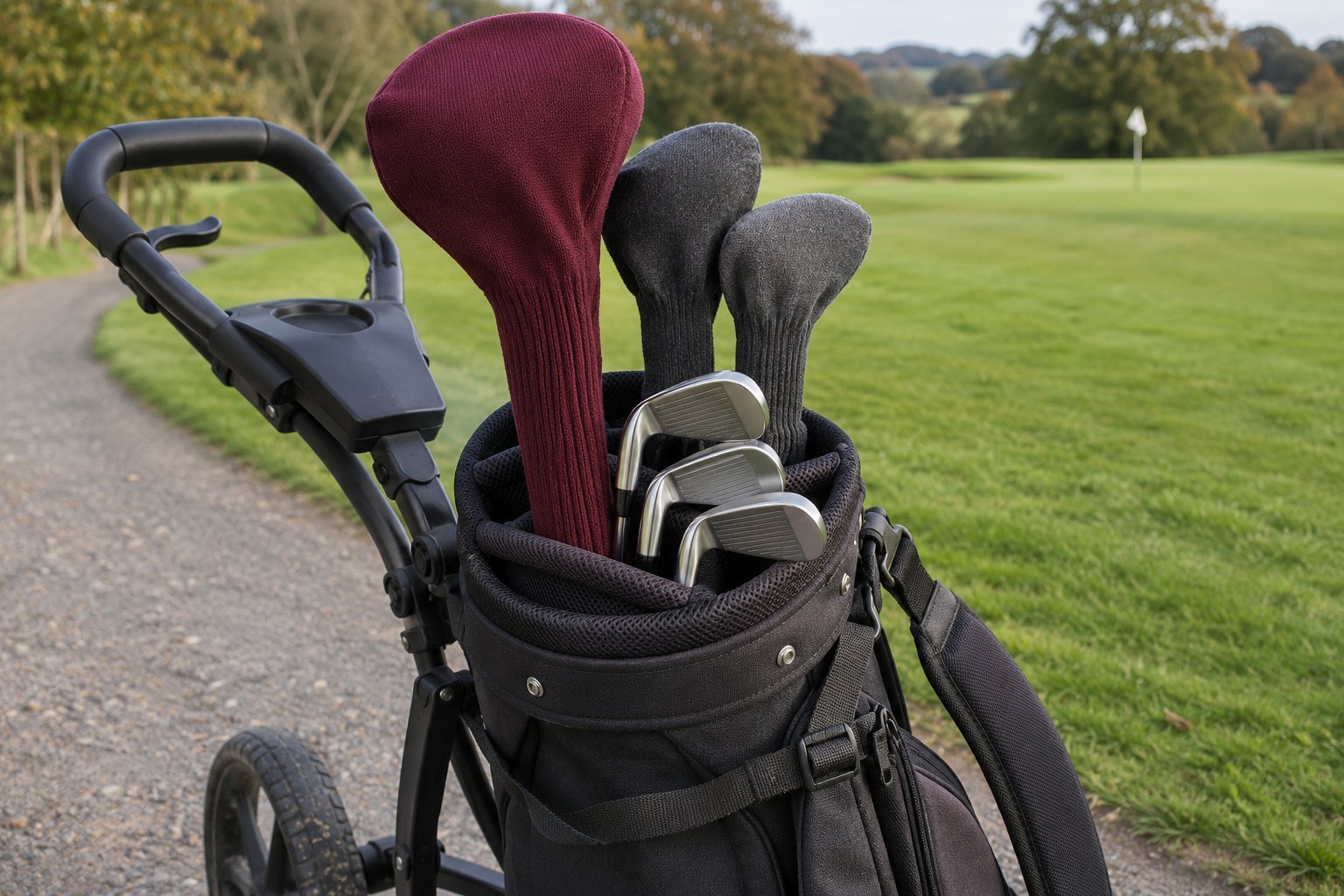
Head coverage is only one part of the job. Mitsubishi Chemical recommends long headcovers that prevent iron heads contacting the shaft in the bag. It also advises inserting and removing clubs straight rather than scraping them against dividers. [2] Look at where your own irons sit relative to the driver’s exposed shaft.
With the bag standing or mounted as you normally use it, check whether the headcover’s neck reaches the relevant contact area. A short barrel shape may cover the head neatly while leaving that area exposed. A longer neck may help, but only if it stays in position and does not make access awkward.
Do not swing clubs together to simulate impacts. Simply inspect the arrangement and move each club gently through its usual path. Include your putter cover, alignment sticks and rain hood, because the empty bag cannot show every obstruction.
If the driver is difficult to remove even without the headcover, investigate the bag layout too. The guide to golf bags with full-length dividers separates the top openings from the channels below and explains how to check a loaded bag. A larger headcover will not solve a grip catching further down.
Use a fit-and-protection worksheet, with two checks that cannot be traded away
This is an original shopping worksheet for comparing covers on your own club and bag. It records what you can observe during careful handling; it does not measure impact resistance, waterproofing or long-term durability.
First apply two essential checks. The cover must seat fully without force or hard contact against the head. It must also stay seated during ordinary, gentle handling. Reject a cover that fails either check. A high score for appearance or convenience cannot compensate.
| Criterion | 0 points | 1 point | 2 points | Weight |
|---|---|---|---|---|
| Head fit and lining | Incomplete fit, force or exposed hard contact | Seats fully; opening needs careful alignment | Fully seated; smooth lining throughout | ×3 |
| Retention and removal | Slips or opens during ordinary handling | Stays seated; deliberate removal needs extra care | Stays seated; deliberate removal is straightforward | ×3 |
| Shaft/contact coverage | Relevant contact area remains exposed | Coverage depends on rearranging the bag | Neck covers the relevant area in your normal layout | ×2 |
| Bag and hood access | Repeated obstruction | Usable with an occasional extra movement | Clean access with neighbouring clubs and hood considered | ×1 |
| Care practicality | No suitable care information or obvious damage | Care needs are understood but inconvenient | Clear instructions you can readily follow | ×1 |
The maximum is 20. The weights deliberately put fit and retention ahead of convenience; shaft coverage comes next. They express editorial priorities for ordinary bag use, not laboratory findings. Mark an unchecked criterion as “not checked” rather than guessing a score.
For example, scores of 2, 2, 1, 2 and 1 give 17 out of 20. That still leaves a real question about shaft coverage. Compare how the alternatives resolve it instead of treating 17 as a product approval. If two covers solve the same practical problems equally well, let price, appearance and the effort of care decide.
Back to top ↑Use materials and published examples to build a shortlist
Material names are useful, but “premium” is not a protection standard. Ask about the lining, padding, opening and care instructions. Do not assume that leather is waterproof, that synthetic material needs no care or that a knitted exterior establishes what is inside.
| Exact example | Published construction detail | Decision still to make |
|---|---|---|
| TaylorMade Driver Headcover, black, N89455 | Clubhouse Golf describes synthetic PU leather and a fit for drivers up to 460cc. [1] | Try its opening and check the neck coverage on your club. |
| Callaway Premium Driver Headcovers, ceu252959 | Callaway describes faux leather and a form-fitting design. [3] | Confirm the chosen colour/version and inspect the inside and fit. |
| Callaway Pom Pom Driver Headcover, ceu246378 | Callaway describes a soft yarn feel and a form-fitting design. [4] | Check retention, neck position and how you will dry and store it. |
These examples illustrate two different approaches to the exterior. The published descriptions do not establish a winner for impact protection or weather resistance. We have not converted marketing wording into a durability score.
You can view the TaylorMade driver cover at Clubhouse Golf, or compare Callaway’s Premium driver cover with its Pom Pom driver cover. Confirm the selected variant, current price, availability and return conditions before ordering. Product descriptions do not replace checking the fit on your own driver.
Back to top ↑Make care easy and replace for a reason
Follow the headcover maker’s cleaning instructions for the exact materials. If machine washing, soaking or a particular cleaner is not approved, ask before trying it. A leather exterior, synthetic coating, knitted section and internal lining may need different treatment.
After a wet round, separate the damp cover from the club and let both dry according to their care guidance before storage. Check the inside for grit or debris before putting it back on. Mitsubishi Chemical advises wiping moisture and dirt from shafts with a soft cloth and avoiding prolonged hot or humid storage. [2] Do not try to speed drying by leaving the club against a heater.
Keep it if it works
A faded logo is a cosmetic reason to buy, not proof that the cover has stopped protecting the club. Replacement becomes more useful when the lining is torn, a fastening exposes a hard edge, the opening has lost retention or the fit no longer suits the driver.
Before replacing the entire cover, check whether a maker offers the correct replacement or an appropriate repair. If you simply dislike the appearance, that is a perfectly reasonable personal preference; keep it separate from an unsupported claim that the expensive option will protect better.
Finally, treat a headcover as part of normal club care. It cannot repair a damaged shaft or certify protection against a heavy object crushing a bag. Suspected club damage still needs appropriate assessment before play.

A few final questions
Does the headcover brand need to match the driver?
The useful checks are fit, lining, retention and coverage. A matching name can help identify the original cover, but it does not replace trying the actual cover on the actual club. Check any model-specific fit restrictions.
Can I use a driver headcover on a fairway wood?
Only if the combination fits securely and protects the club properly. Do not assume it will: a cover that is too roomy can sit poorly or slip. Buying the intended fairway version is a better starting point than relying on a shared design name.
Is a magnetic closure automatically more secure?
No. Inspect whether the particular opening closes fully and stays closed in ordinary use. Magnet presence alone tells you neither the holding strength nor whether the cover fits your head shape.
What to do next
Try the cover with your driver, normal bag load and rain hood before deciding. Keep fit and retention as essential checks, then compare shaft coverage, convenient access and care. When your original headcover already meets those needs, keeping it is a sound choice. When it does not, buy the replacement that resolves the specific problem you observed.
Sources and further reading
Sources checked on 22 November 2026. Product descriptions and terms can change; confirm the details for the exact item before buying.
Illustrations in this article were created for Taylor’s Trailblazing Golf. Third-party photographs, where used, are credited beside the image or in the source list.