Forged vs Cast Wedges: Claims Worth Checking
Verify the construction, compare the finished club and give any premium a clear reason.
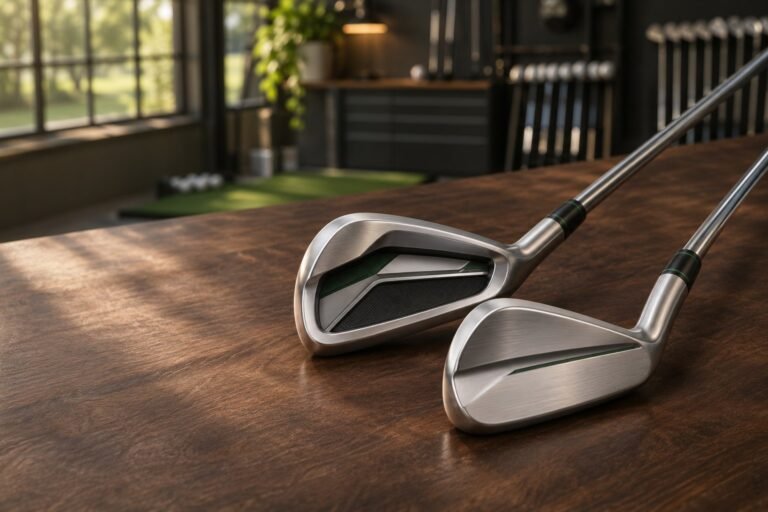
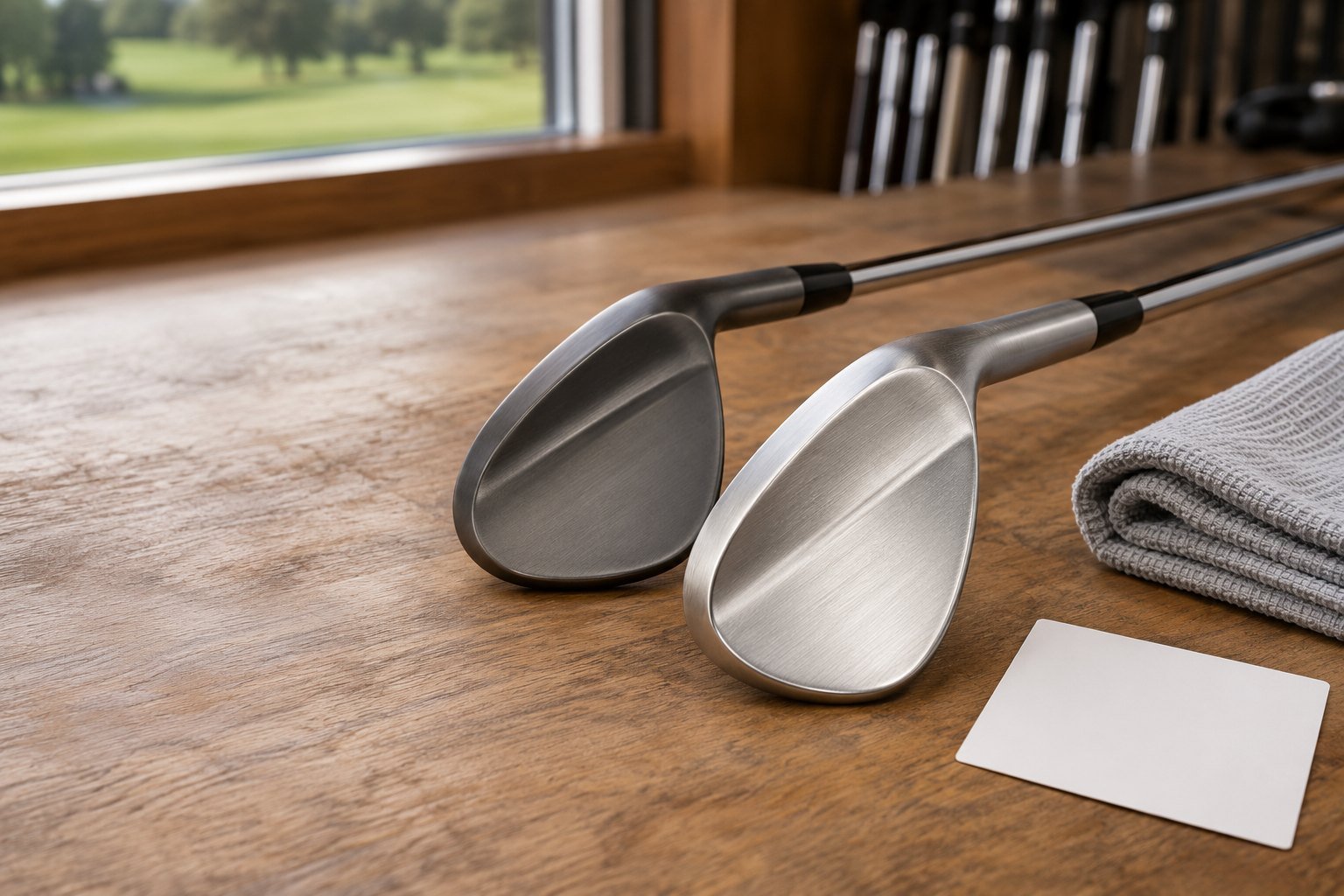
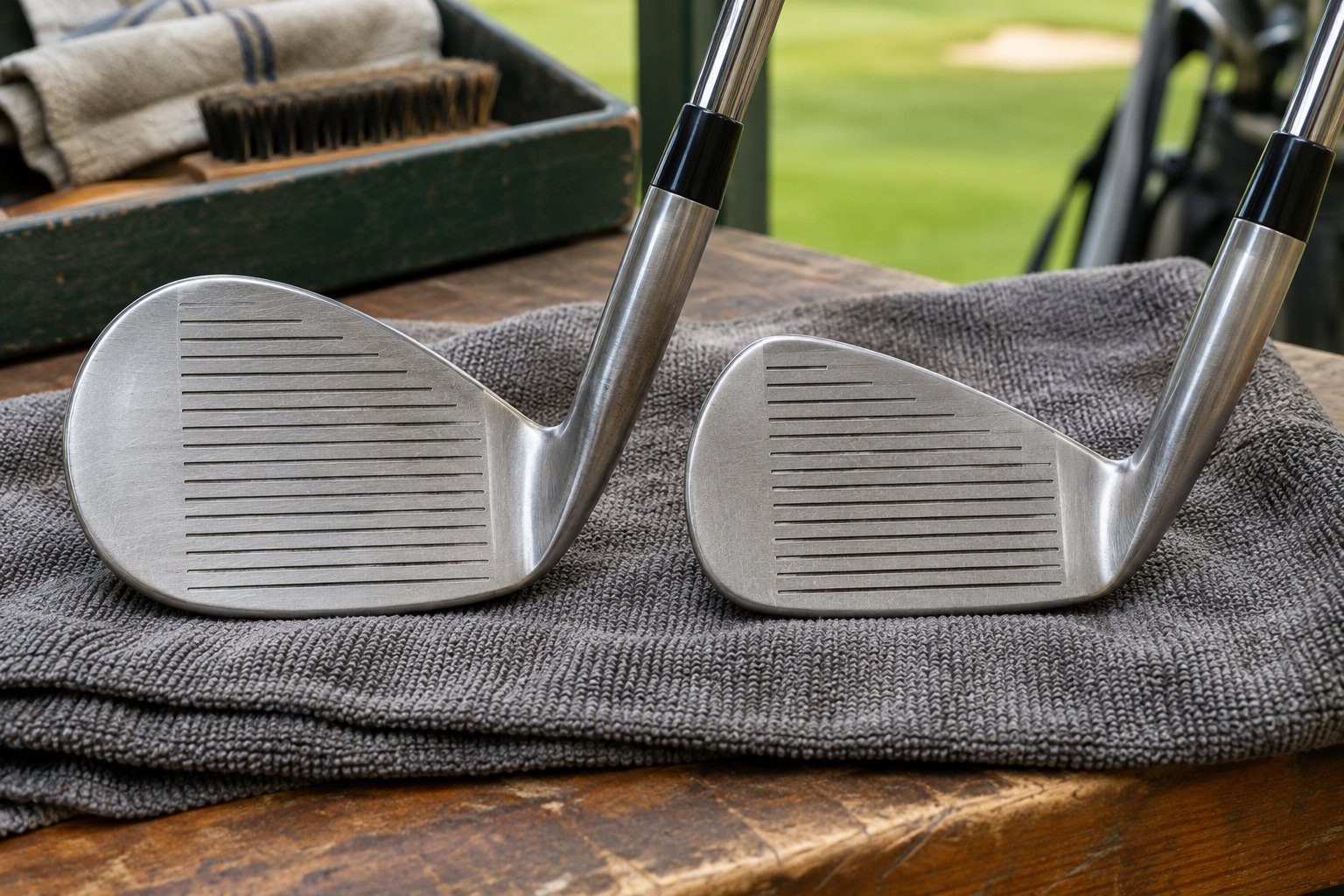
AI illustration of contrasting finishes. Finish does not establish whether a wedge or any of its parts is forged or cast.
The useful question in forged vs cast wedges is what the description tells you about the actual club. Does it identify how the whole head was made, the process used for its face, or only a material? Those are different pieces of information, and none should be stretched into a promised result for your game.
A well-documented construction can be a reason to investigate a wedge. A purchase still needs the right specification, useful shots and an acceptable total cost. This guide compares real manufacturer descriptions and shows how to challenge the claims that often get attached to them. It does not claim a hands-on comparison of the models.
This guide contains affiliate links. If you buy through them, Taylor’s Trailblazing Golf may receive a commission at no extra cost to you.
Identify the head, face, material and process separately.
Keep a personal feel preference separate from a measured shot advantage.
Include fitting, required build changes and the actual number of wedges needed.
Forged vs cast wedges: check which part the label describes
At its simplest, casting forms a shape by pouring molten metal into a mould; forging shapes solid metal under pressure. Titleist’s manufacturing explainer describes these two processes for irons and wedges.[1] This distinction concerns production. It is not, by itself, a comparison of two finished clubs with matched specifications.
Mizuno’s account of Grain Flow Forging illustrates the detail that can sit behind a brand’s term: a steel billet passes through several shaping stages.[2] Read that process description alongside the exact wedge page. Do not assume that every product containing the word “forged” uses the same sequence or one-piece construction.
The same discipline applies to the material. “Carbon steel” names a material family; a more specific grade adds information. Neither phrase tells you the loft, sole design, face condition or complete build. Keep those fields on the comparison instead of allowing an appealing manufacturing story to displace them.
A useful first question for the seller is: “Which component is this statement about?” If the answer is the face, record it as a face specification. If a model uses separate parts, ask for the manufacturer’s description of those parts rather than shortening the whole construction to one word.
Back to top ↑Three documented examples complicate the simple choice
The following examples were checked on 22 November 2026. They show different construction descriptions, not an attempt to rank the models or isolate the effect of manufacturing. The original Callaway Opus and Opus SP are separate generations.
Swipe within the table to see all columns.
| Model example | What the manufacturer documents | What that does not establish |
|---|---|---|
| Mizuno Pro T-1, Soft White Satin | The UK product page identifies Grain Flow Forged HD, 1025 Pure Select Mild Carbon Steel and a copper underlay.[3] | How you will prefer its impact sensation, or whether its complete build suits your shots. |
| Callaway Opus, original generation | The official US comparison specifies 8620 cast construction.[4] | An inferior result merely because the listed process is casting. |
| Callaway Opus SP, sand/lob example | The chart lists a 1025 form-forged face and 8620 cast body, with Spin Pocket in 54°–60° lofts.[4] | A one-piece billet-forged head, or permission to transfer every feature to another loft or Opus version. |
Read the component names literally: a form-forged face is not a claim that the entire head was forged from one billet.
Likewise, a copper underlay is a layer within the specified finish/construction description; it does not mean the entire Mizuno head is copper.[3] A finish name, a base material and a production process answer different questions.
When documentation comes from another market, use it for the feature it actually describes. Confirm the UK configuration separately, especially the hand, loft, sole, shaft and finish. A correct head-construction statement does not verify that every regional buying option is the same.
Separate a material description from a feel preference
Ask what “soft” means in the sentence you are reading. It might be a description of material, the maker’s intended impact sensation or a player’s personal preference. These should not be treated as interchangeable evidence.
Titleist’s discussion of modern iron design explains that feel can be engineered through structure and how components resonate.[1] That is useful context, not a controlled test proving that one wedge manufacturing category will feel better to every golfer. Mizuno’s Pro T-1 page also makes a feel claim for its specified steel and copper underlay; that remains the manufacturer’s claim.[3]
During a comparison, describe the sensation before asking which club is supposed to feel softer. “More muted”, “sharper sound” or “clearer feedback on a missed strike” gives the fitter something more precise to discuss than repeating the label on the head.
Use the same ball model and compare relevant shots with both clubs. Ask the fitter to note substantial differences in loft, shaft, grip or other build details. If several things change, you can still prefer the finished wedge, but the session has not isolated its manufacturing process as the cause.
A preference does not need to become a scientific superiority claim to be worth paying for. If you consistently enjoy the sensation or appearance of a particular model, can afford it and retain the shots you need, that is an honest reason. Record it as a preference rather than an unmeasured promise of lower scores.
Back to top ↑A spin claim needs more than a manufacturing label
Trackman’s spin-rate guidance identifies spin loft, speed, friction and centredness of contact as relevant contributors.[5] A forged or cast label does not report those inputs for the shots being compared.
For a manufacturer’s “more spin” statement, ask what the reference is: an older model, a particular competitor or a specific test condition. Then look for the ball, loft, shot type, face condition and wet/dry setup. Without that context, a percentage or superlative is difficult to apply to your game.
Callaway attributes its Opus SP claims to the two-piece head and Spin Gen 2.0 face.[6] This model description does not isolate a spin benefit from forging.
If a fitting includes measured shots, ask to compare the ordinary pattern as well as the best result. Keep track of whether a number is measured and what was excluded. A difference produced with another ball, loft or strike pattern is a difference between those test conditions; it is not a clean manufacturing experiment.
Judge whether the result helps the intended shot. A claim of extra spin is not a complete purchasing objective without useful flight, distance and control. You may reasonably prefer a wedge that makes your normal result easier to plan, even if its marketing does not promise the largest number.
Turn the claim into evidence you can use
Use this matrix when a feature is offered as the reason to spend more. It separates a fact you can verify in documentation from an outcome that needs different evidence. The decision rules are editorial guidance, not manufacturer test results.
Swipe within the table to see all columns.
| Claim or reason offered | Evidence worth requesting | Reasonable decision |
|---|---|---|
| “This is forged.” | Exact model and the part or parts covered by the claim. | Keep it on the shortlist if the actual design interests you; do not award an automatic performance win. |
| “It uses a premium metal.” | The specified material and the feature that material enables in this head. | Decide whether that feature solves a need you have. |
| “It feels much softer.” | Clear manufacturer attribution or your own repeatable preference in a fair comparison. | Pay for a valued preference if the useful shots and budget still work. |
| “It spins more.” | A defined reference and relevant, documented conditions or comparative fitting results. | Defer a performance premium when the claimed advantage cannot be connected to your shots. |
| “The expensive option will last longer.” | Model-specific durability evidence with a method and stated limits. | Do not invent a replacement interval or spread the price over an unsupported extra lifespan. |
| “These two offers are equivalent.” | Matching model/version, hand, loft, sole, shaft, grip and included services. | Resolve differences before calling one quote better value. |
Notice that a documented feature and a useful purchase are separate stages. A claim can be accurate without being important to your choice. Conversely, a modest-looking model can remain a sensible candidate when its specification and observed shots meet the brief.

Compare the complete quote before paying a premium
A manufacturing category is not a dependable price list. Compare the actual offered builds, including any fitting fee, required shaft or grip changes and delivery. Do not assume an appointment fee will be credited against the order unless the provider confirms it.
Suppose you have already established that two wedges need replacing. The figures below are invented UK budgeting examples, not prices for the named products above or quotations from a retailer.
Swipe within the table to see all columns.
| Cost item | Quote A | Quote B |
|---|---|---|
| Two wedges | 2 × £140 = £280 | 2 × £180 = £360 |
| Fitting fee, not credited | £40 | £40 |
| Required grip changes | Included | 2 × £10 = £20 |
| Delivery in this example | Included | Included |
| Total | £320 | £420 |
Quote B is £100 more. The £80 difference in the two club prices is only part of that total; the specified grips add £20. That makes the useful question “What am I receiving for the extra £100?” rather than “How much does forging cost?” Neither quote has been assigned a manufacturing category.
If the dearer build solves a documented problem or offers a repeatable preference you value, the difference may be reasonable. If the explanation is only a badge on the head, continue comparing or keep the current wedges. If only one club needs changing, price that smaller decision rather than replacing a complete set to match the appearance.
Our guide to golf club fitting fees helps you clarify the appointment’s scope and any purchase credit. Keep the written build specification with the quote so that the price and the club you evaluated remain connected.
Back to top ↑Do not infer an adjustment allowance from the label
“Forged” is not permission to bend a wedge by a chosen number of degrees, and “cast” is not enough information to declare all adjustment impossible. Mitchell Golf’s 2019 professional guidance makes adjustment conditional on hosel design and manufacturing processes, and acknowledges that breakage can occur even during professional work.[7]
Before ordering a change, have a qualified clubmaker identify and inspect the exact head, check its present measurements and obtain the applicable manufacturer guidance. Ask whether the requested change is supported for that model and what consequences it has for the finished specification.
If adjustability is essential to a proposed purchase, settle that question before paying. A general promise based on the manufacturing word is not a substitute for an accepted work order. This guide provides no DIY bending method or universal safe range.
Back to top ↑Choose the documented build that earns its place
For a UK comparison of the documented examples, you can check Opus SP Chrome at Callaway UK or the right-handed steel-shaft Mizuno Pro T-1 Soft White Satin listing at Clubhouse Golf.[6][8] Use the configurator and written quote to confirm the exact option. A working product page does not establish stock of every loft, hand or build.
Choose a forged model when its documented design, useful shots or a preference you value justify the complete price. Apply the same test to a cast or mixed-construction model. If neither improves the decision beyond the manufacturing story, there is no need to change a wedge that still serves its intended role.
The strongest purchase explanation is specific: what the manufacturer documents, what the comparison showed, what remains uncertain and why the finished club is worth its cost to you. That explanation will still make sense after the label has lost its novelty.

Sources and further reading
Sources checked on 22 November 2026. Product descriptions are attributed to their makers; the comparison methods and buying judgements are editorial guidance.
- Titleist Learning Lab — Forged vs Cast Irons
- Mizuno Golf UK — The Art of Forging
- Mizuno UK — Pro T-1 Soft White Satin
- Callaway Golf US — Opus SP Chrome product comparison
- Trackman — What is Spin Rate?
- Callaway Golf UK — Opus SP Chrome Wedge
- Mitchell Golf — Bending Golf Clubs: 5 Facts & Fallacies, 26 March 2019
- Clubhouse Golf — Mizuno Pro T-1 Soft White Satin, right-handed steel-shaft listing
Illustrations in this article were created for Taylor’s Trailblazing Golf. Third-party photographs, where used, are credited beside the image or in the source list.