Sand Wedge Bounce Explained: Match Sole Design to the Task
Understand the sole, describe the job and check the complete wedge before you buy.
AI illustration of a generic wedge in a bunker. It does not depict a named model or a measured bounce angle.
Sand wedge bounce explained simply: it helps the sole resist digging into sand and turf.[1] The degree marking is useful, but a shopping decision needs more than a bigger or smaller number.
Start with the job. Are you replacing a club that struggles in your usual bunkers, adding a reliable pitch option, or trying to cover both with one wedge? Those are different briefs. A promising design still has to suit the shots you play and the conditions in which you play them.
This guide shows you what the sole features mean, what to look for on a listing and which questions to take to a fitting. You do not need to diagnose your swing or measure bounce at home.
This guide contains affiliate links. If you buy through them, Taylor’s Trailblazing Golf may receive a commission at no extra cost to you.
Name the bunker shot and the turf shot it must handle before choosing a specification.
Bounce, sole width and shape belong together when comparing designs.
Tell the fitter which bunkers trouble you and how the ball tends to sit.
Record loft, sole option, handedness and complete build before placing an order.
Sand wedge bounce explained: angle, width and shape
Vokey defines bounce using the angle between the sole line and the ground at address. This raises the leading edge and helps resist digging.[1]
Swipe within the table to see all columns.
| Detail | What it describes | Useful buying question |
|---|---|---|
| Leading and trailing edges | The sole’s front and rear edges. | Which part of this sole is intended to meet the surface first? |
| Sole width | Its front-to-back span. | Is this a broad sole or a narrower design? |
| Camber | The sole’s front-to-back curvature. | How rounded is the sole when viewed from the side? |
| Relief | Sole areas shaped back. | Which areas have relief, and what shot is it intended to help? |
The terminology follows Vokey’s glossary.[1] The questions are a way to make a shop or fitting conversation more specific; they are not a home measurement procedure.
Vokey distinguishes measured from effective bounce; width, camber and relief influence the latter.[1] Ask how a manufacturer describes its own design. Do not assume that equal numbers across different brands mean identical behaviour.
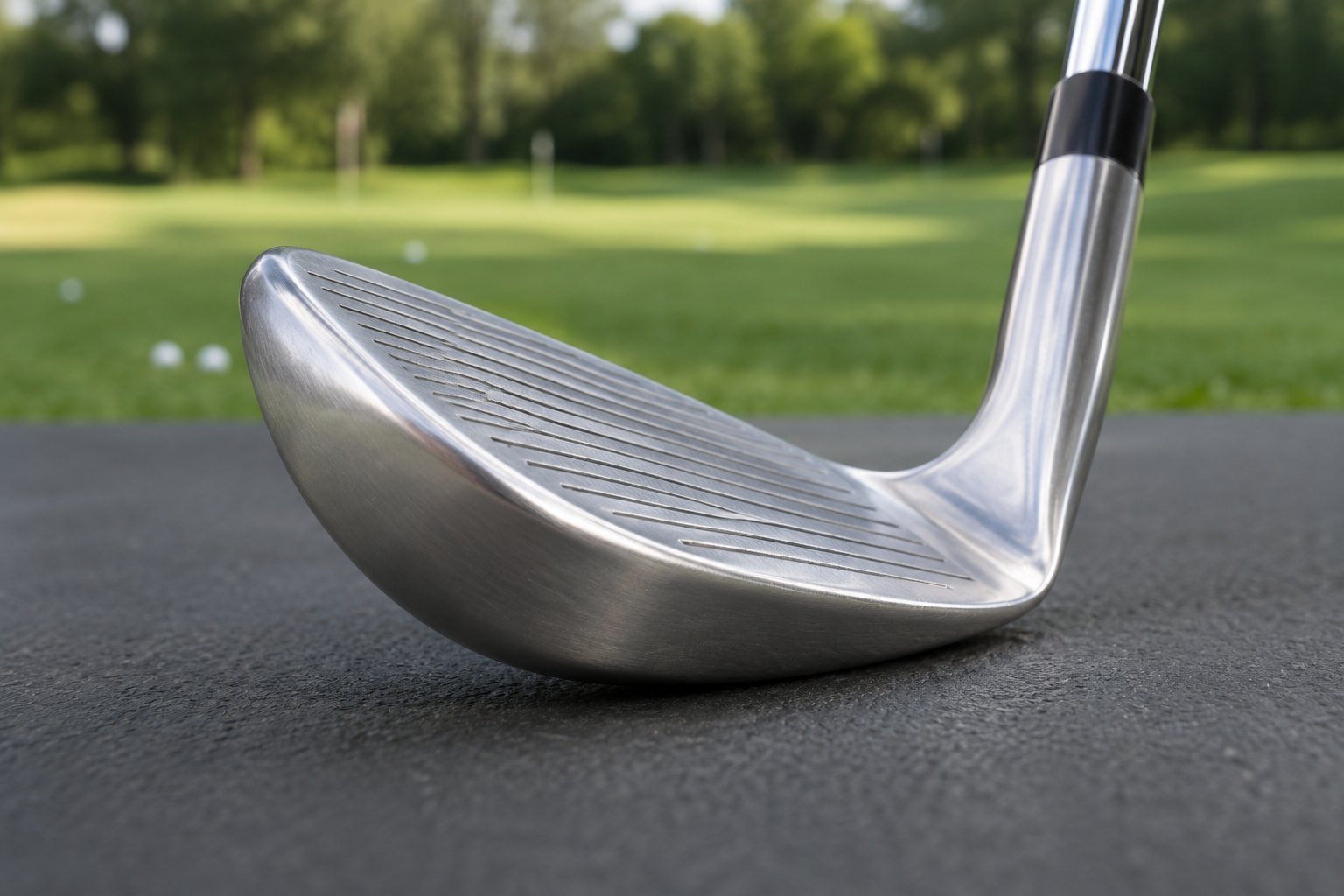
Give the wedge a job before choosing its loft
A sand wedge can serve approach, pitch and chip duties as well as bunker shots; the name does not confine it to sand.[2] Work out which duties matter in your bag before asking for a particular sole.
Keep loft and bounce as separate entries on your shopping list. Loft identifies the face angle; bounce concerns the sole.[3] In an illustrative listing reading “56° loft, 12° bounce”, those figures describe different things. The example is not a recommendation that every golfer needs that combination.
Swipe within the table to see all columns.
| Job | What to tell the fitter | What would justify keeping it |
|---|---|---|
| Your usual greenside bunker escape | The sand you normally face and the miss that causes trouble. | A manageable escape that repeats with ordinary swings. |
| A pitch from closely mown grass | The distance and landing area you normally try to use. | Useful contact and a flight you can judge. |
| Longer approach shots | The club above it and the distance gap you need to cover. | A distinct, useful distance rather than duplicated coverage. |
| An open-face shot you already play | How often you need it and the lies you normally face. | The sole remains usable in that actual setup. |
Mark one job as essential and the others as desirable. A wedge that is excellent for an occasional shot but awkward for your routine bunker escape is a poor answer to a bunker-first brief. Equally, do not buy a specialised sand option without checking the fairway shots you expect it to cover.
Back to top ↑Describe the bunker problem more precisely
Vokey associates higher bounce with soft sand and lower bounce with harder sand.[4] That is a starting point for a shortlist, not a complete diagnosis of a missed shot.
Bring a description of your regular practice or course bunkers. Record whether the sand is usually loose or compact, whether the ball sits up or settles down, and whether the problem appears across many bunkers or mainly in one type. Keep the weather and the actual playing surface as separate notes.
Then name the outcome you want to change. “The club goes deeply into the sand and the ball stays in” is more informative than “I need more bounce”. “I often send it over the green from a firm lie” is useful too, but it does not establish the cause by itself. Ask the fitter to observe the strike and delivery before blaming the sole.
For a bunker-led purchase, ask whether the appointment includes a suitable practice bunker. A session conducted only on a mat leaves that central job untested. You can still learn about the build and other shots, but record the missing check before buying.
Set a realistic target for the comparison: a repeatable escape into a sensible area may matter more than producing one impressive shot close to the flag. Discuss that priority before the trial starts.
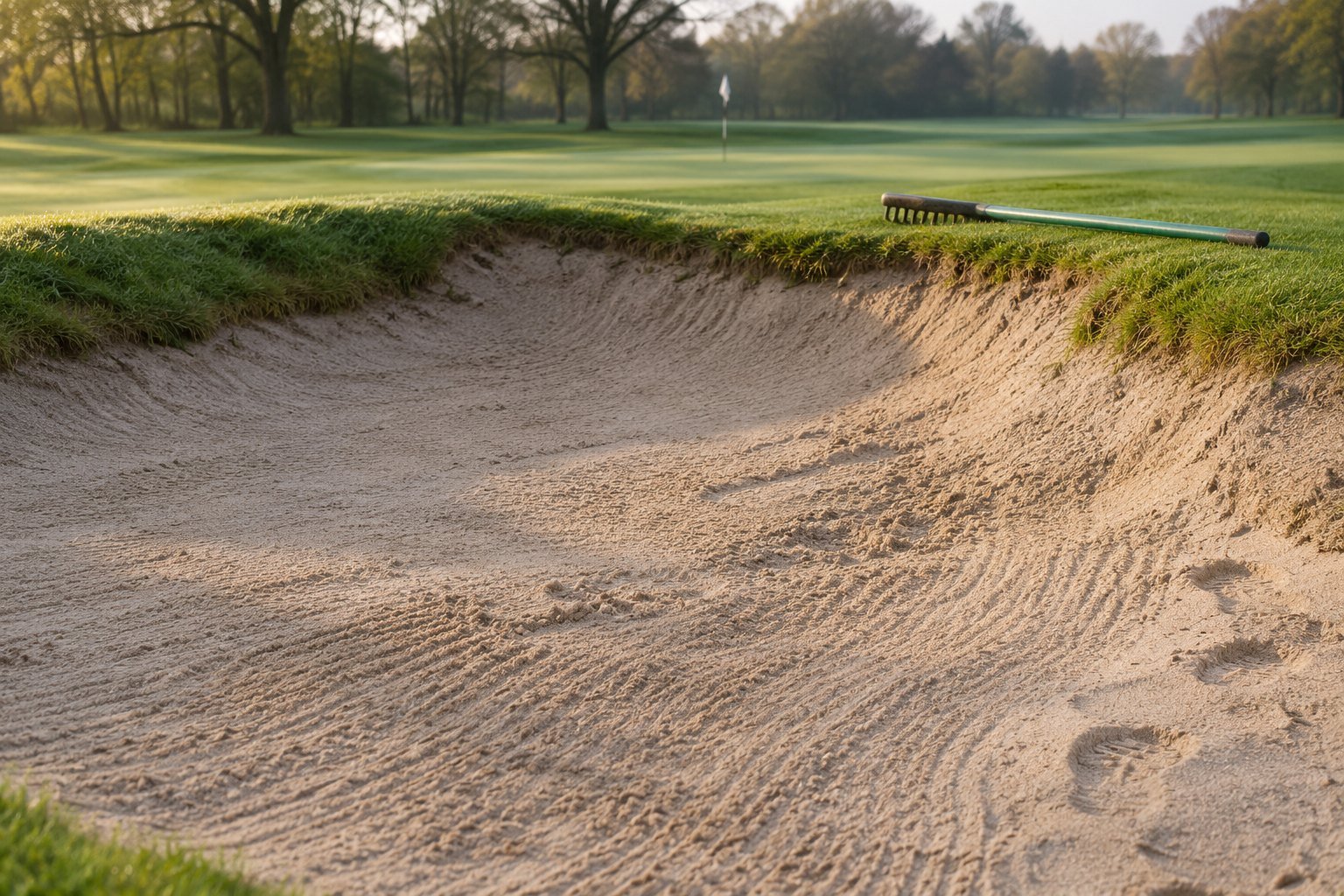
Look at the sole in the positions you actually use
Ask to see the candidate from the side and underneath, then place it on the shop’s approved surface in your usual address position. Look at its footprint and the visible leading edge. This is an identification check; a photograph or a glance at address cannot tell you how the club will behave during a swing.
If you routinely open the face, show that position as well. Opening the face tends to add effective bounce, although the sole shape influences the result.[1] The useful question is whether this exact design works for the shot you intend, not whether its address position looks like a tour player’s.
A wider sole is worth discussing when resistance to digging is the priority, but width is only part of the design. Vokey’s current explanation pairs sole shape with delivery and conditions, and describes different designs for full shots and manipulated-face shots.[3] Keep the discussion about your shot rather than choosing a letter because it appears familiar.
Use the same viewing process for your current wedge. You may discover that the replacement is a different sole type rather than a modest change in the stamped angle. Ask the fitter to explain that difference before a comparison is treated as a test of bounce alone.
Back to top ↑Let the fitter separate delivery from equipment
Your divot description is useful background, but it should not become a permanent label. Tell the fitter whether the problem concerns a full pitch, a short chip or a bunker shot. Ask them to watch the task you are buying the wedge to perform.
Titleist’s instruction from Mark Blackburn identifies ball position, shaft lean, face orientation and swing path as variables affecting greenside shots.[5] If several of those change while you try another wedge, the result belongs to the combined change. It does not establish that a new bounce number alone fixed the problem.
A useful fitting explanation connects the recommendation to visible evidence. Ask what the club is doing through the surface, where contact occurs and which ordinary miss improved. You should be able to explain the reason in a sentence without adopting a new technical vocabulary.
Bring your current club and use it during the appointment. If a simple instruction changes the result substantially, give yourself time to understand it before ordering a replacement. Coaching and equipment can both be relevant; the buying question is what additional job the new wedge does for you.
Before booking, check whether the quoted service includes the relevant short-game area and a written specification. Our guide to golf club fitting fees helps you compare the scope of the appointment.

Use a shortlist to ask better questions
A manufacturer’s description can identify a design worth trying. It cannot establish how well you will play it. Keep that distinction when a product is described as forgiving, versatile or tour-inspired.
For a current wide-sole example, Callaway describes the CB 12 as a cavity-back wedge with a wide Tri-Sole and a chamfered leading edge intended to resist digging.[6] If that design addresses your brief, view the CB 12 at Callaway UK and check the available loft, handedness and shaft before arranging a trial. The model name is not a substitute for those specifications.
If your shortlist instead includes Vokey, Clubhouse Golf’s SM11 Tour Chrome steel-shaft listing provides a place to select the exact loft, bounce and sole option.[7] Read every selector together. A photograph of the family does not establish which configuration is in the basket, and a familiar grind letter does not identify the generation.
A useful online selector can also organise your questions. Titleist’s current wedge selector asks about pitching-wedge loft, shot types, divots, fairway conditions and bunker conditions separately.[8] Use your answers as a brief for a fitter; an online recommendation is not the same as watching the suggested club perform your bunker shot.
There is no need to narrow the search to one head style before that discussion. Ask for a suitable alternative when the first candidate solves one task but creates a different problem elsewhere.
Back to top ↑Check the complete wedge and the complete price
Once a candidate earns its place, write down enough detail to order the same club. A receipt saying only “sand wedge” leaves too much open.
Swipe within the table to see all columns.
| Record | Why it belongs on the order |
|---|---|
| Brand, model, generation and finish | Separates the chosen wedge from a visually similar version. |
| Handedness, loft, stated bounce and sole option | Identifies the exact head configuration. |
| Shaft model and flex; playing length and lie | Keeps the rest of the tested build visible. |
| Grip model, size and any agreed build-up | Preserves the contact point used during the trial. |
| Total price and included services | Shows fitting, custom charges, delivery and any agreed fitting credit. |
| Order terms and delivery estimate | Lets you resolve the conditions for that particular purchase before paying. |
Compare quotes for the same configuration. A cheaper listing is not a saving if it supplies the wrong sole or needs additional paid work to become the club you meant to buy. Ask about any unfamiliar selector or substitution before completing the order.
For a used wedge, ask whether its loft or sole has previously been altered. An original marking alone cannot confirm the club’s present specification.[1] Have uncertain modifications assessed professionally; do not grind or bend a wedge yourself to chase a different bounce description.
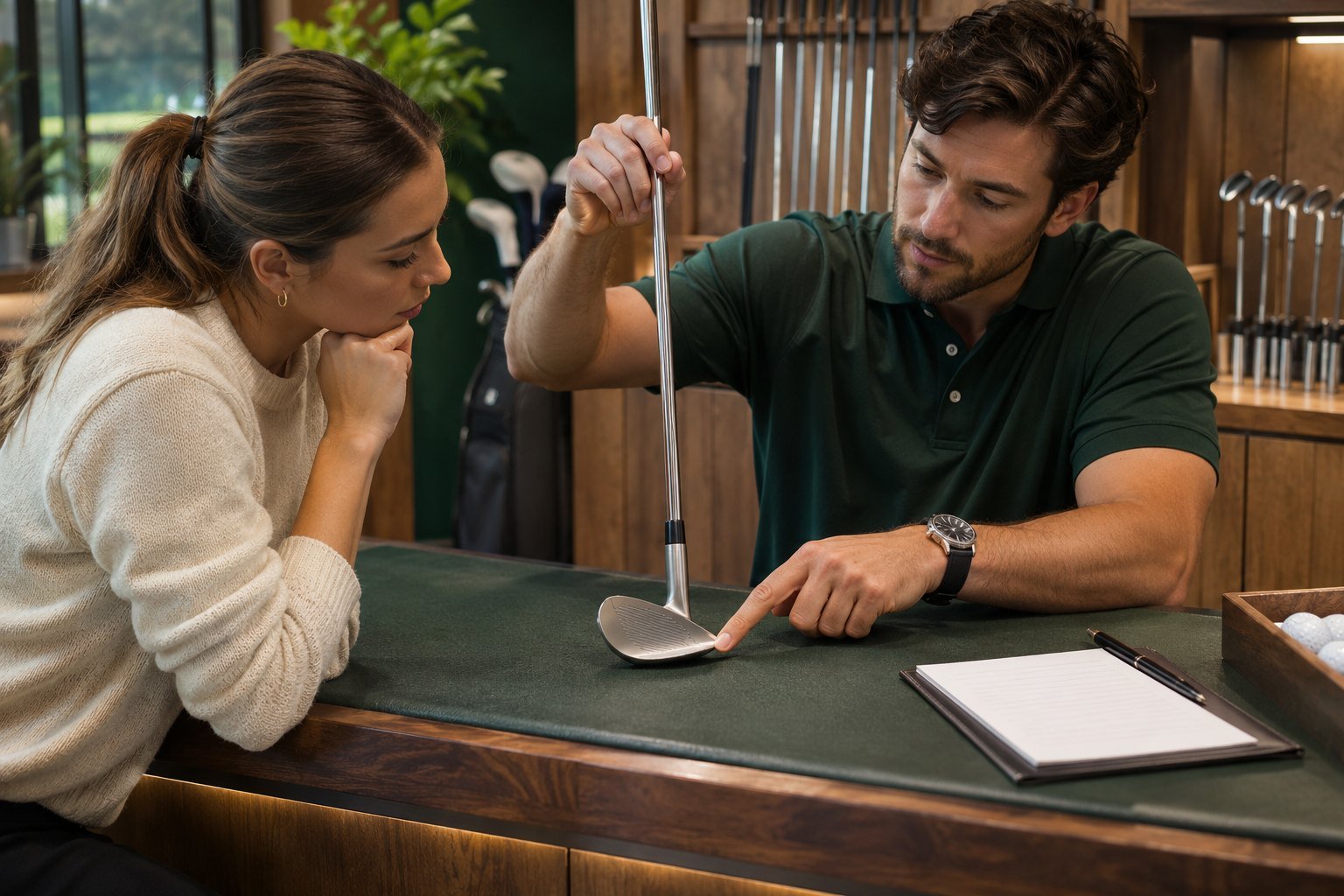
Buy for the essential job, or leave the decision open
Choose the candidate that handles your essential task and remains useful for the other shots you expect from it. Keep the assessment specific: the ordinary bunker escape, the routine pitch and any open-face shot you actually need.
Wait when the bunker task has not been tried, the comparison used substantially different builds, or the apparent benefit disappears when you return to your current club. Those are reasons to ask another question, not reasons to select the largest bounce number available.
You can also keep a wedge that already covers the job. A new specification is worthwhile when it addresses a clear need; an unfamiliar sole shape or a fresh model year is not enough on its own. The Irons, Wedges & Putters guides cover the wider fitting and buying decisions.
Back to top ↑Sources and further reading
Sources checked on 22 November 2026. Product descriptions are attributed to their makers; the comparison methods and buying judgements are editorial guidance.
- Vokey — Vocabulary: bounce, sole width, camber and effective bounce
- Callaway — Golf Wedge Buying Guide (updated July 2026)
- Vokey — Understanding Wedge Loft, Bounce, and Grind (August 2026)
- Vokey — Wedge Bounce Explained
- Titleist — Mark Blackburn: Trust Bounce, Embrace Loft and Spin (2022)
- Callaway UK — CB 12 Wedge
- Clubhouse Golf — Titleist Vokey SM11 Tour Chrome Wedge, steel shaft
- Titleist — Vokey Design Wedge Selector
Illustrations in this article were created for Taylor’s Trailblazing Golf. Third-party photographs, where used, are credited beside the image or in the source list.