Waterproof vs Water-Resistant Golf Bags: Read Construction Claims
Read the claim on each part of the bag, then decide how much protection your setup needs.
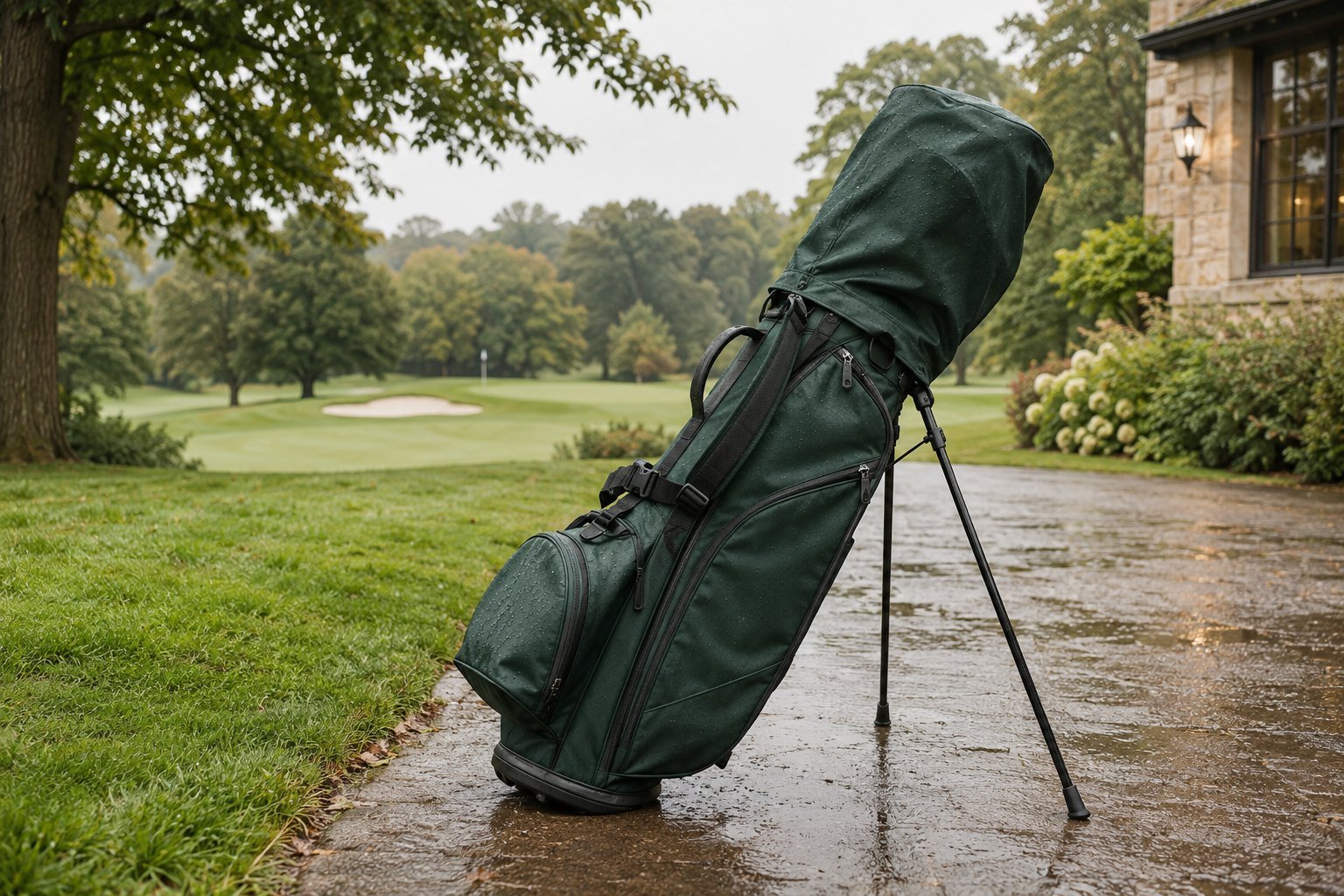
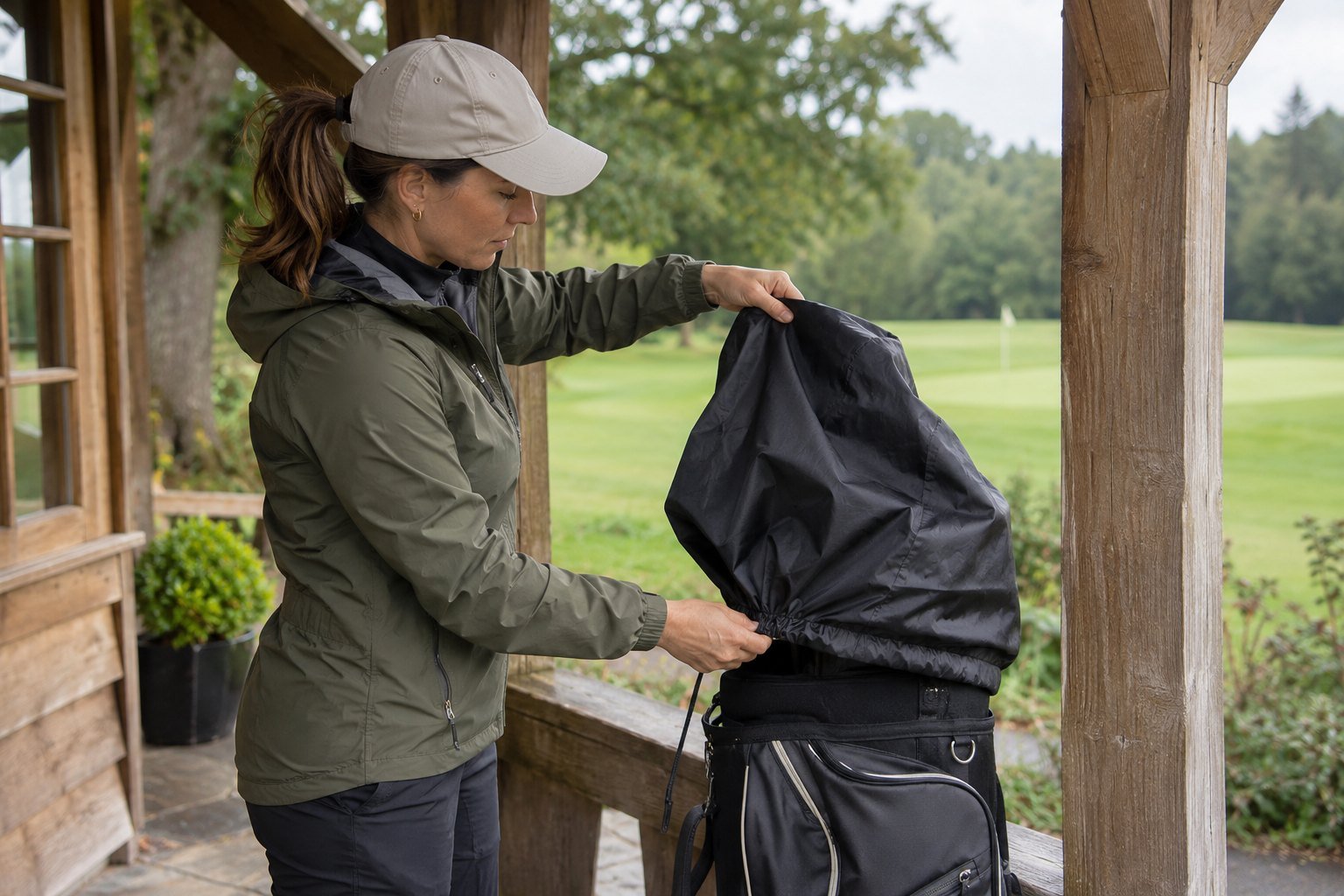
AI illustration of a hooded bag in wet conditions; it does not demonstrate any named model’s waterproof performance.
Comparing waterproof vs water-resistant golf bags is easier when you stop treating the headline as the complete specification. The useful questions concern the fabric, the joins between panels, the closures, the club opening and the particular pockets you intend to use.
A bag may offer a protected valuables pocket alongside open external storage. Another may describe waterproof fabric and water-resistant zips. Those distinctions matter more than deciding which adjective sounds strongest.
This guide compares published construction information and provides a dry inspection checklist. It does not report a rain test or establish how long any named bag will keep its contents dry.
This guide contains affiliate links. If you buy through them, Taylor’s Trailblazing Golf may receive a commission at no extra cost to you.
A fabric claim and a whole-bag claim describe different things.
Include the hood, pocket closures and the way you reach clubs in rain.
An absent test condition is a question for the maker, not a rating to infer.
A compatible cover or small protective pouch may be enough.
Waterproof vs water-resistant: start with the scope
Read the full description, including the specifications and care information. Treat “waterproof”, “water-resistant” and “water-repellent” as claims that need a named subject and any stated conditions. Do not assign an invented rainfall duration or pressure rating to a word on a product page.
Scroll within the table to see every column.
| Claim names | What it tells you | What still needs checking |
|---|---|---|
| Fabric or coating | The claimed protection concerns the material. | How joins, openings, pockets and the base are treated. |
| Sealed seams or zips | The maker identifies protection at particular joins or closures. | Which seams or zips are covered, and any operating instructions. |
| Waterproof valuables pocket | A named storage compartment has its own claim. | Its exact opening and capacity; protection elsewhere is a separate question. |
| Rain hood | A cover is available for the club opening. | Whether it is included, fits this version and works with your clubs. |
| Whole-bag waterproof description | The maker presents the assembled bag as waterproof. | The stated conditions, exclusions, closure requirements and care advice. |
A lining, coated appearance or prominent zip brand is not a substitute for a construction description. Equally, a hidden seam cannot be judged simply because you cannot see its treatment in a photograph. Ask for the relevant specification rather than attempting to identify every internal layer yourself.
Begin with the contents that matter. Protecting a phone and keys is a different storage requirement from keeping several spare clothing items dry. Listing those items gives the manufacturer’s claims a practical purpose.
Back to the top ↑Compare real descriptions without creating a rain ranking
These current manufacturer pages illustrate different levels of description. They were checked on 23 November 2026; they are examples of wording, not results from a common test.
Scroll within the table to see every column.
| Exact manufacturer page | Construction information supplied | Useful follow-up |
|---|---|---|
| Titleist Players S4 StaDry, UK | Titleist specifies waterproof StaDry construction, sealed zip construction and a waterproof valuables pocket. [1] | Identify the protected pocket and check the supplied hood and access arrangement. |
| Sun Mountain H2NO C-130, US | The maker describes waterproof fabric, water-resistant sealed zips and a matching rain hood. [2] | Keep the fabric and zip descriptions separate; this is a US specification example. |
| PING Hoofer Monsoon, UK | PING describes water-repellent construction, sealed pockets and external mesh slip pockets. [3] | Ask which pockets provide the protection you need; do not extend that claim to mesh storage. |
The three descriptions do not support a ranking for a particular downpour. They do tell you what to investigate. The Sun Mountain example is especially useful: the fabric and zips receive different descriptions within the same product listing. Preserve that distinction when asking a retailer about the bag.
Match regional page, product code and version before transferring a specification to a UK offer. A familiar model name alone does not establish that a discounted listing has the same construction as a current manufacturer page.
Inspect seams and zips without guessing their specification
With the bag empty and dry, inspect accessible panel joins and the closures you will use. Look for damaged or lifting material, distorted openings and anything preventing a zip from closing normally. Use the maker’s operating instructions; avoid pulling harder to overcome a caught lining or an overfilled pocket.
For a component-level example, YKK describes its AquaGuard coil narrow-width tape zip as water-resistant rather than watertight. That does not identify the zip fitted to any bag in this guide. It explains why a coated appearance or the YKK name alone cannot establish the protection of a finished bag. [4]
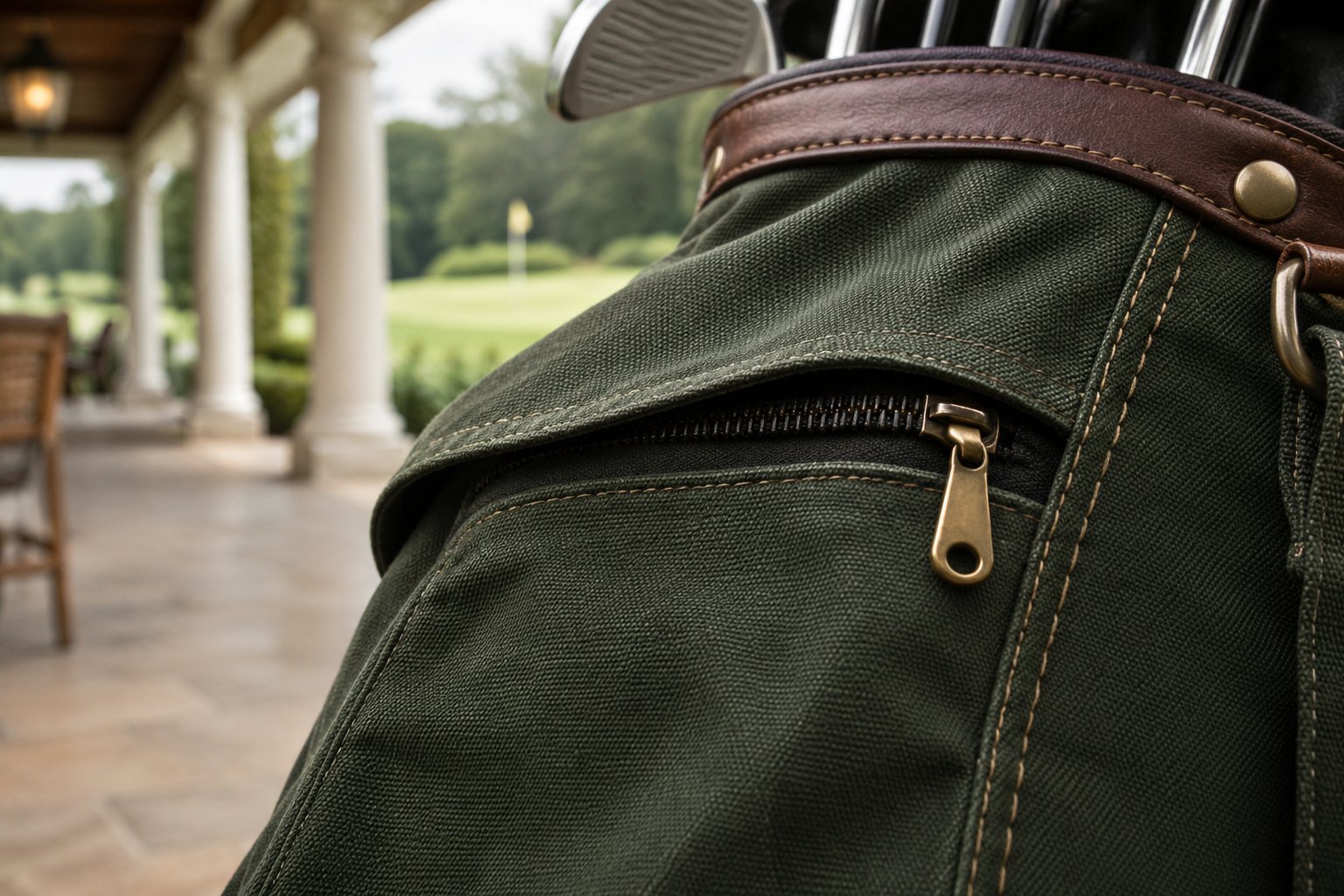
Ask which joins are sealed and whether the information covers every pocket or only specified compartments. If the seller supplies a close-up, connect it to the exact feature being discussed. A picture of one protected zip does not describe the other openings.
Keep this an inspection. Pouring water into a pocket, hosing a new bag or submerging its base creates a different exposure from an ordinary shopping check. It also cannot produce a meaningful comparison without agreed conditions and a suitable test method.
Include the hood, base and pocket openings
Fit the correct hood with your normal clubs and headcovers in place, following its instructions. Check that the attachments engage without stretching and that the club-access opening closes as intended. Then consider the actual routine: can you take and replace a club without leaving the opening unnecessarily wide?
Ask what is specified for the underside and its joins to the body. Do not infer a sealed base from a waterproof fabric description, or assume that a visible hole should be plugged. Establish its purpose with the maker. A bag standing on wet ground and one secured to a trolley also present different contact points to inspect.
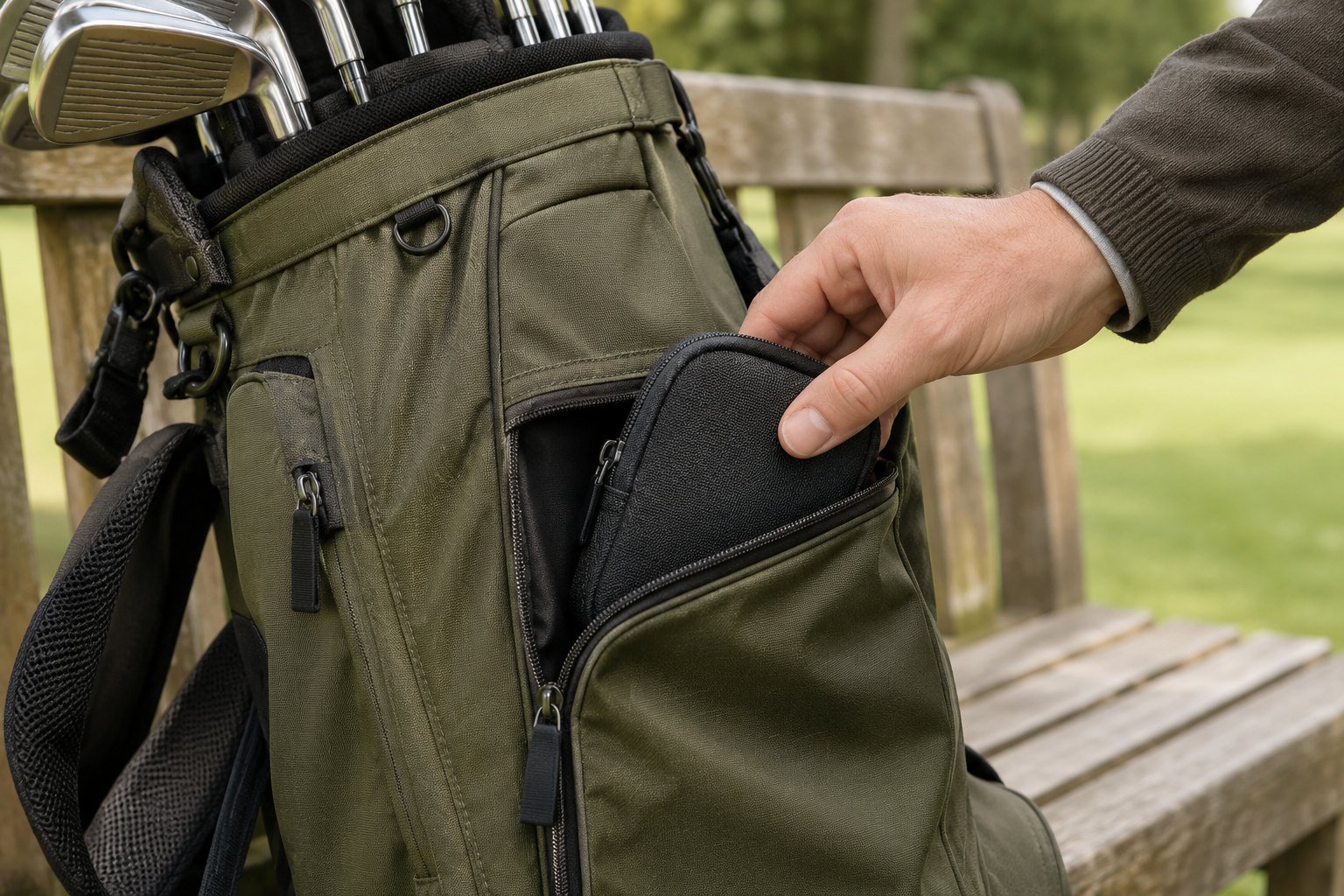
Open the pockets you expect to use. Identify which compartment the valuables-pocket claim names; a soft lining alone does not answer that question. External mesh storage and open bottle holders should be assessed on their own design, rather than inheriting a nearby pocket’s description.
Pack the intended clothing and accessories, then close everything again. A protected compartment is useful only if the items fit and its closure can operate normally. Keep a damp jacket or towel separate from dry spares: wet contents brought inside the bag are a different problem from water entering through its construction.
Make a short construction-and-access record
Use the following worksheet for your existing bag or a shortlist. Photograph the label and relevant openings if useful, and save the manufacturer’s page. You need a traceable answer to a few decisions, not a numerical waterproof score.
Scroll within the table to see every column.
| Record field | Write down | If the answer is missing |
|---|---|---|
| Exact identity | Model, product code, colour/variant and listing date. | Ask which version the specification describes. |
| Claim and scope | The maker’s wording and the parts it names. | Keep fabric, pocket and whole-bag claims separate. |
| Openings and hood | How each relevant closure operates; hood inclusion and fit. | Request photographs or a demonstration of the exact bag. |
| Conditions and care | Any stated test conditions, restrictions and cleaning instructions. | Record “not supplied”; do not invent a rating. |
| Your intended use | Carry or trolley setup; the items that must stay dry. | Define the need before comparing prices. |
| Remaining question | One question whose answer would change your purchase. | Get a written answer or shortlist a clearer specification. |
For example, suppose a listing names waterproof fabric but says nothing about seams, while your priority is dry spare clothing. Your next question concerns the apparel compartment’s complete construction and closure. It is not yet a reason to conclude that the bag will leak, or that it will meet your needs.
Alternatively, a clear description may already cover the pockets you need, but the hood is absent from a particular offer. The useful action is to establish the correct hood and total cost. These are illustrative decisions, not observations from testing the named products.
Check the seller’s inspection and returns conditions before trying a new bag. An indoor packing check and an outdoor wet round are different activities; do not assume the latter is an accepted trial.
Back to the top ↑Keep closures usable and investigate changes
Follow the care instructions for the exact bag. Sun Mountain’s waterproof-bag guidance recommends gentle cleaning with a damp cloth and mild soap, avoiding harsh chemicals and abrasive tools, keeping seams and zips clear, and drying thoroughly. That is manufacturer guidance, not approval to use any cleaner on every brand’s material. [5]
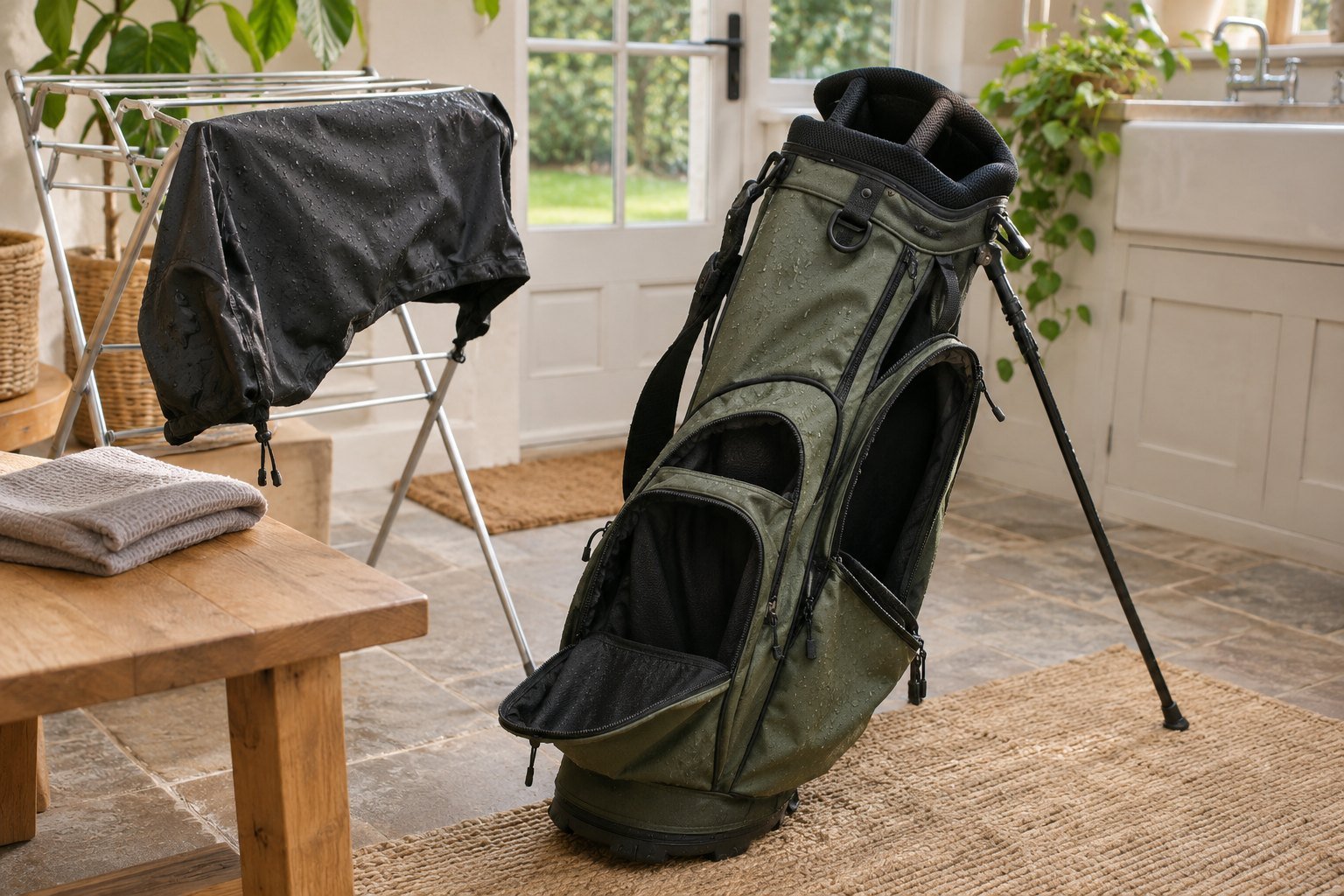
After a wet round, remove damp contents so that they can dry separately. Notice whether moisture was beside an opening left unfastened, in a pocket containing a wet item, or along a damaged join. Record the conditions and photographs before making a conclusion about the cause.
If the change appears to involve peeling material, a failed join or a damaged closure, ask the maker or seller about the appropriate repair. Do not add heat, seam sealant, waterproofing spray or replacement parts simply because a treatment works on a different outdoor product. Seek instructions that apply to this bag.
A single dry round is not proof of protection in every condition. Equally, finding a damp item does not identify the entry point by itself. Useful notes help distinguish a closure problem, a packing problem and a construction question.
Choose a cover, a new bag or no purchase
Scroll within the table to see every column.
| Your situation | First option to assess | Reason to replace the bag |
|---|---|---|
| The bag works, but a small essential needs separate protection | A suitable independently specified protective pouch in an accessible pocket. | The required protection or usable storage cannot be achieved conveniently. |
| Your cart bag needs more coverage in rain | A compatible rain cover with usable club and pocket access. | The cover interferes with the setup or does not address the problem. |
| You regularly need several protected storage areas | A bag with clear construction and pocket claims. | A new layout and documented protection solve a recurring need. |
| A previously satisfactory bag has damaged seams or closures | Manufacturer or seller advice on inspection and repair. | The supported repair is unsuitable or replacement is the practical option. |
For a cart-bag cover option, view Callaway’s Performance Dry Waterproof Bag Cover. The maker lists zipped access to side pockets and clubs plus an elasticated base closure. Check how it works with your bag and trolley attachments; its cart-bag description does not establish compatibility with carrying straps or a deployed stand. [7]
If you need a replacement stand bag with an explicitly identified protected valuables pocket, view the Titleist Players S4 StaDry in Graphite/Black at Clubhouse Golf. The listing identifies product code TB26SX2-200 and an included rain hood. Confirm that exact configuration and use the checklist above; the link is a comparison starting point, not a rain-performance verdict. [6]
Weather protection is only one part of the purchase. If divider claims also influence your shortlist, use the separate guide to checking full-length golf-bag dividers. Keep the decisions separate so that a strong weather description does not distract from awkward everyday use.
Buy when the proposed construction and access answer your stated need more convincingly than your present setup. Where the existing bag already does the job, keep it and use the correct closures and care routine.
Back to the top ↑Sources and research
Research reviewed on 23 November 2026. Manufacturer descriptions, official guidance and retailer information are distinguished from the original planning worksheets and editorial recommendations in this guide.
- Titleist UK — Players S4 StaDryConstruction and named pocket claims. Checked 23 November 2026.
- Sun Mountain — H2NO C-130 cart bagUS manufacturer wording for fabric, closures and hood. Checked 23 November 2026.
- PING UK — Hoofer MonsoonConstruction and pocket descriptions on this regional page. Checked 23 November 2026.
- YKK Europe — AquaGuard coil, narrow-width tapeComponent-specific water-resistance limitation; not identification of a named bag’s zip. Checked 23 November 2026.
- Sun Mountain — How to clean a golf bagWaterproof-bag cleaning and drying guidance, published 24 March 2026. Checked 23 November 2026.
- Clubhouse Golf — Titleist Players S4 StaDry, Graphite/BlackExact TB26SX2-200 listing and rain-hood inclusion. Checked 23 November 2026.
- Callaway UK — Performance Dry Waterproof Bag CoverCart-bag cover, access openings and closure arrangement. Checked 23 November 2026.
Find more equipment guidance in Golf Bags.
Illustrations in this article were created for Taylor’s Trailblazing Golf. Third-party photographs, where used, are credited beside the image or in the source list.