Iron Lie Angle: What to Check Before Ordering Adjustments
Measure the club, observe the delivery and agree the work before anything is bent.
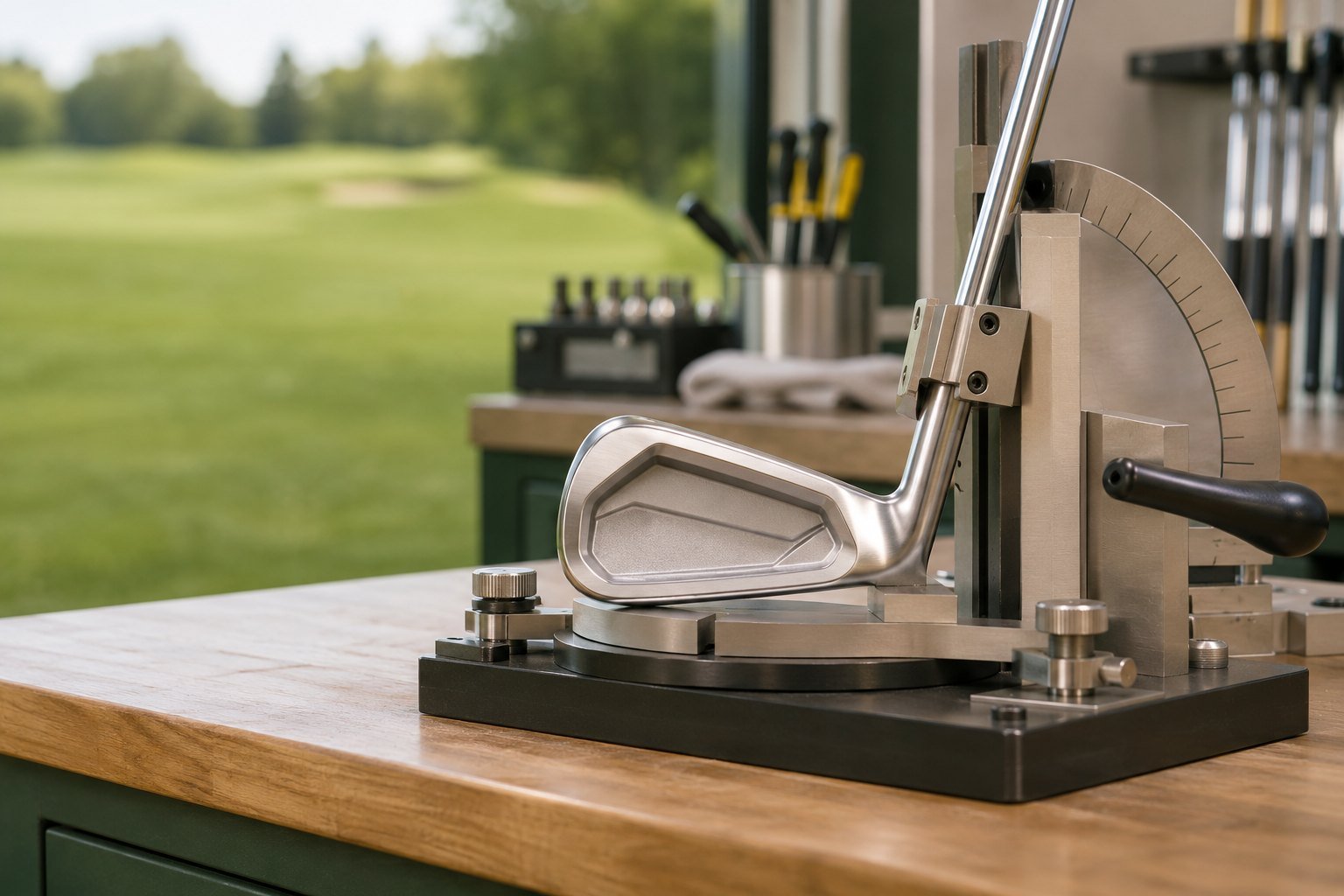
AI illustration of a professional assessment; it is not a bending instruction.
Iron lie angle deserves a proper check before an adjustment order. A height measurement, an upright-looking address position or a familiar left miss can give a fitter something to investigate. None should become an automatic instruction to bend the whole set.
Separate three questions: what is the club’s present specification, what happens when you deliver it to the ball, and what change can this particular head safely accommodate? You can then agree a trial and, if it supports an adjustment, a written work order. That is more useful than asking for “a couple of degrees” without a measured starting point.
This guide contains affiliate links. If you buy through them, Taylor’s Trailblazing Golf may receive a commission at no extra cost to you.
Record actual lie, loft and playing length; “standard” needs a model-specific reference.
Compare repeated impact evidence with the shot pattern and your normal delivery.
Confirm the exact head’s limits and the target measurements before professional adjustment.
What iron lie angle measures
Static lie describes the shaft’s angle relative to a horizontal reference through the head. Correct positioning matters: Mitchell’s measurement guide specifies a square face and level scorelines, rather than allowing the sole’s curvature to dictate the reference.[1] In a measured specification, a larger lie angle is more upright; a smaller one is flatter.
Dynamic lie describes the club during the swing. Trackman defines it using the angle between the lower part of the shaft and the horizon at impact.[2] That impact measurement answers a different question from the specification measured on a workshop gauge. Ask the fitter to explain what it means for the head’s toe and heel position; do not copy a launch-monitor number straight onto an adjustment order.
“One degree upright” also needs a reference. Mitchell notes that manufacturers’ standard lie specifications can differ.[1] The hypothetical example below shows why actual degrees help when comparing orders; these figures do not describe particular products.
Swipe within the table to see all columns.
| Illustrative reference | Instruction | Resulting target |
|---|---|---|
| Model A: standard lie 63° | 1° upright from that standard | 64° |
| Model B: standard lie 62° | 1° upright from that standard | 63° |
The same relative instruction produces different targets. For existing clubs, also distinguish a change from the manufacturer’s catalogue standard from a change relative to the club’s measured present lie. Write both the starting measurement and intended finish on the job sheet.
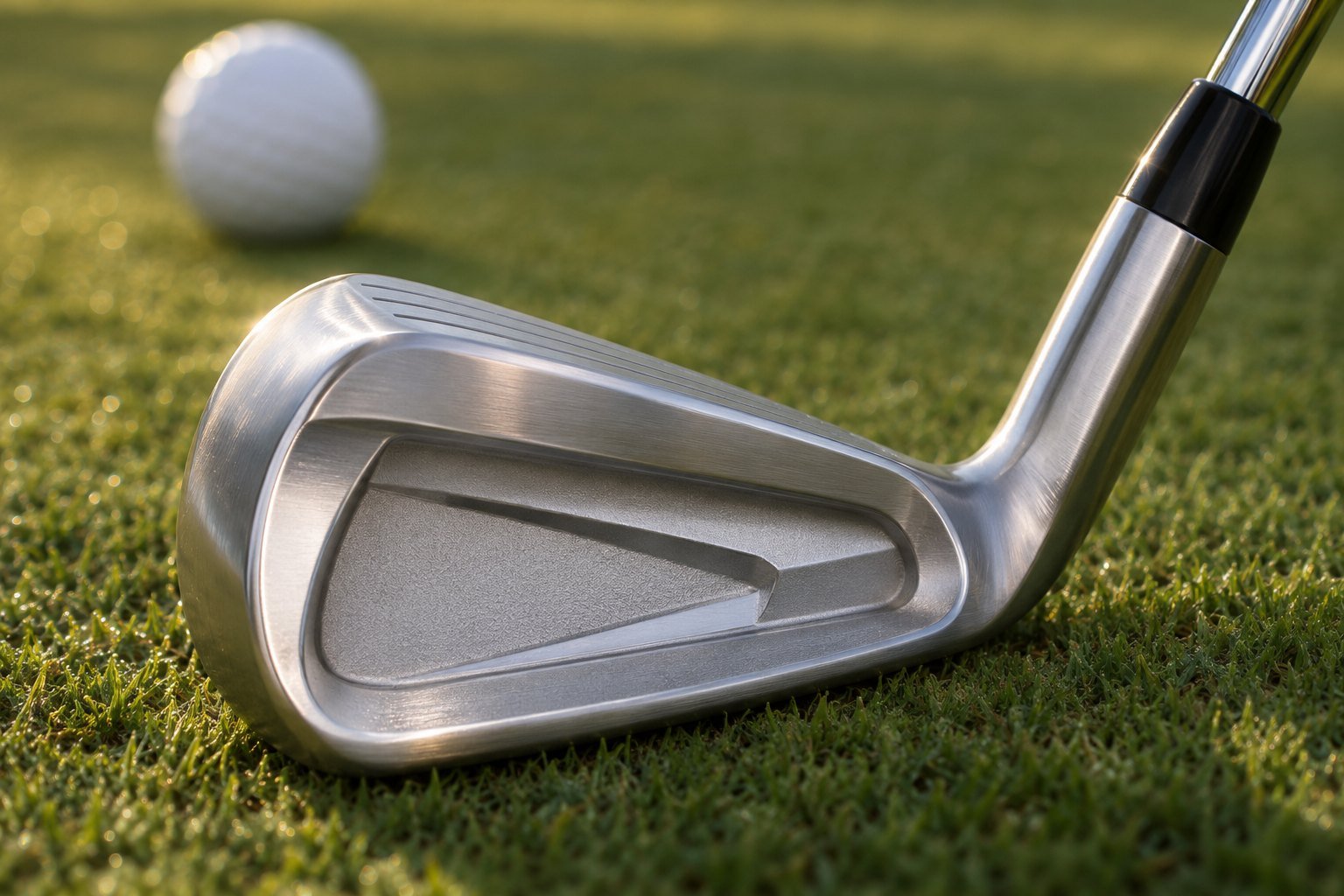
Use each measurement for the question it can answer
PING describes taking static body measurements to establish initial specifications, then refining those specifications after the golfer hits shots.[3] That sequence is a useful reminder: a chart can organise the first trial, while the trial supplies evidence about your delivery.
Use this checklist to ask what the fitter has established and what remains uncertain.
Swipe within the table to see all columns.
| Evidence | What it can contribute | What still needs checking |
|---|---|---|
| Height and wrist-to-floor measurements | A starting specification to investigate.[3] | Whether it works when you swing, using the proposed playing length. |
| A photograph at address | A record of your setup and the club’s resting position. | The position at impact; a still photograph of address cannot show that later moment. |
| A sole mark from a lie board | Evidence of the club’s contact with that surface. | Its interpretation alongside face orientation and shots. Mitchell explains that face angle affects the mark’s position and shape.[1] |
| Dynamic lie recorded at impact | An impact measurement under the device’s definition.[2] | Repeatability, strike and flight; ask how the fitter translates it into a proposed club specification. |
| A swing-plane number | Information about the clubhead’s movement through part of the swing. | It is not a substitute for lie measurement. Trackman specifically advises against using its swing-plane value to fit lie.[5] |
| A recurring left or right miss | A practical problem to investigate and a pattern to compare. | Whether lie is involved, alongside alignment, face orientation, path and strike.[4] |
You do not need every available measurement. You need a coherent explanation from the evidence that was collected. If a chart suggests one setting but the repeated shots support another, ask the fitter to explain the difference. If the evidence is inconsistent, pause the adjustment and agree what further trial would resolve it.

Understand the directional effect without diagnosing a swing
Tilting a lofted face changes the direction it points. Titleist illustrates this with the leading edge remaining square to the target line: for a right-handed golfer, toe-up delivery points the face left, while toe-down delivery points it right.[4] The left-handed column below mirrors that geometry.
Swipe within the table to see all columns.
| Head orientation at impact | Right-handed club | Left-handed club |
|---|---|---|
| Toe higher than heel | Face direction influenced left | Face direction influenced right |
| Toe lower than heel | Face direction influenced right | Face direction influenced left |
This is the geometric tendency with the other orientation assumptions held constant, not a promise about the ball’s final curve or landing position.[4] Mitchell’s guide explains that the directional influence of a lie error increases with loft.[1]
That is why handedness and the actual shot matter. A left miss does not, by itself, prove that a right-handed player needs flatter irons. The fitter still needs to assess how the clubface, path and contact combine in that shot.[4] Ask them to identify the observed toe/heel orientation and show whether an alternative specification improves the pattern.
A useful explanation sounds like a testable proposal: “This is the repeated delivery we are seeing; let us compare a flatter trial club and check what changes.” It should not end with a diagnosis from one divot or a direction rule copied without its assumptions.
Back to top ↑Agree a trial before ordering a set-wide change
Begin with the iron and shot that made you question the fit. Bring the current club, use a defined target and give the fitter a normal sample of swings. Record the present specification before comparing an alternative.
Where a suitable fitting system is available, it may let the fitter compare settings without altering your own club. For example, Callaway’s 2026 OptiFit Connect chart describes an iron fitting tool with nine loft-and-lie configurations.[6] That fitting tool’s menu is not evidence that a production iron can be bent through the same range.
Agree these trial details:
- The question: which miss or impact pattern is the proposed change intended to address?
- The comparison: which head, shaft, playing length and grip will be used, and what differs from your present iron?
- The evidence: how will the fitter assess impact, strike and the useful shot pattern together?
- The return check: will you revisit the original setting or club to see whether the apparent improvement persists?
- The set check: which other irons need confirmation before extending the recommendation across the bag?
Keep a change of playing length visible in the discussion. If one trial also changes the head, shaft or length, record that fact. The result may still identify a better complete build, but it will not tell you that lie alone produced the difference.
Do not treat a successful trial with one iron as a complete inspection of the set. Ask the fitter to measure the clubs being considered and decide how to confirm the relevant longer and shorter approaches. The work order should say which clubs are included, rather than leaving the workshop to infer “all of them”.

Confirm what this particular head can accommodate
A suitable fitting target and a feasible workshop adjustment are separate decisions. Mitchell’s professional guidance explains that bendability depends on the material and hosel design, and that breakage can occur even in experienced hands.[7] “Forged” or “cast” is therefore not enough information to approve a particular amount of movement.
Give the repairer the exact iron model, generation, handedness and finish. Ask them to identify the construction and consult the manufacturer’s guidance for that head. A number quoted for a different iron, a different version or a factory custom-order service should not automatically become permission to alter your existing set.
Before authorising work, ask:
- Does the manufacturer or repairer approve this requested adjustment for the exact head?
- Is the proposed change measured from catalogue standard or from the club’s current measured position?
- Has the club been adjusted before, and is that history known?
- Does inspection reveal damage or another condition that needs attention first?
- Could the work mark the finish, and what outcome is the repairer prepared to accept?
- If the target cannot be reached within the agreed limits, will the workshop stop and contact you?
These are questions for a qualified club repairer or the manufacturer’s service team. They are not instructions for bending at home. If the head’s suitability remains uncertain, leave it unchanged while the service provider resolves that uncertainty. Another fitting option or a different build can be considered later; forcing the present head to meet an unsupported target is not a necessary step.
Back to top ↑Put the measurements and scope on the work order
Ask for a record that another competent workshop could understand. You are agreeing the result, the clubs covered and the limits of the work. The table below is an original checklist you can copy into an email or bring to the appointment.
Swipe within the table to see all columns.
| Work-order field | What to record |
|---|---|
| Club identity | Manufacturer, model, generation, handedness, finish and each iron included. |
| Current build | Shaft model, playing length and any known previous adjustments. |
| Starting measurements | Actual loft and lie for each club, with the measurement method or workshop identified. |
| Target | Intended lie in degrees, the loft to retain and the tolerance agreed with the repairer. |
| Approval and limits | The model-specific adjustment the provider has agreed to undertake, including when they must stop. |
| Cost and handling | Total quote, clubs covered, carriage if relevant, likely turnaround and any disclosed finish risk. |
| Completion record | Measured loft and lie after the work, plus any target that could not be reached. |
| Follow-up | How and when the adjusted clubs will be assessed in use, and whom to contact with a concern. |
Loft belongs on the sheet even when the requested change concerns lie. Mitchell warns that a lie adjustment can unintentionally alter loft and advises checking both measurements against the starting reference and target after bending.[8]
Ask for the whole quote before sending clubs away. A per-club rate does not tell you the final bill if inspection, fitting, carriage or follow-up is charged separately. Have the provider list what is included. Our guide to golf club fitting fees helps you compare the appointment’s scope with any separate workshop quote.
When the clubs return, compare the completion record with the agreed order. Then assess the shots that prompted the work, using the same questions as the original trial. A measured target confirms what the workshop achieved; the follow-up establishes whether that specification serves your game.
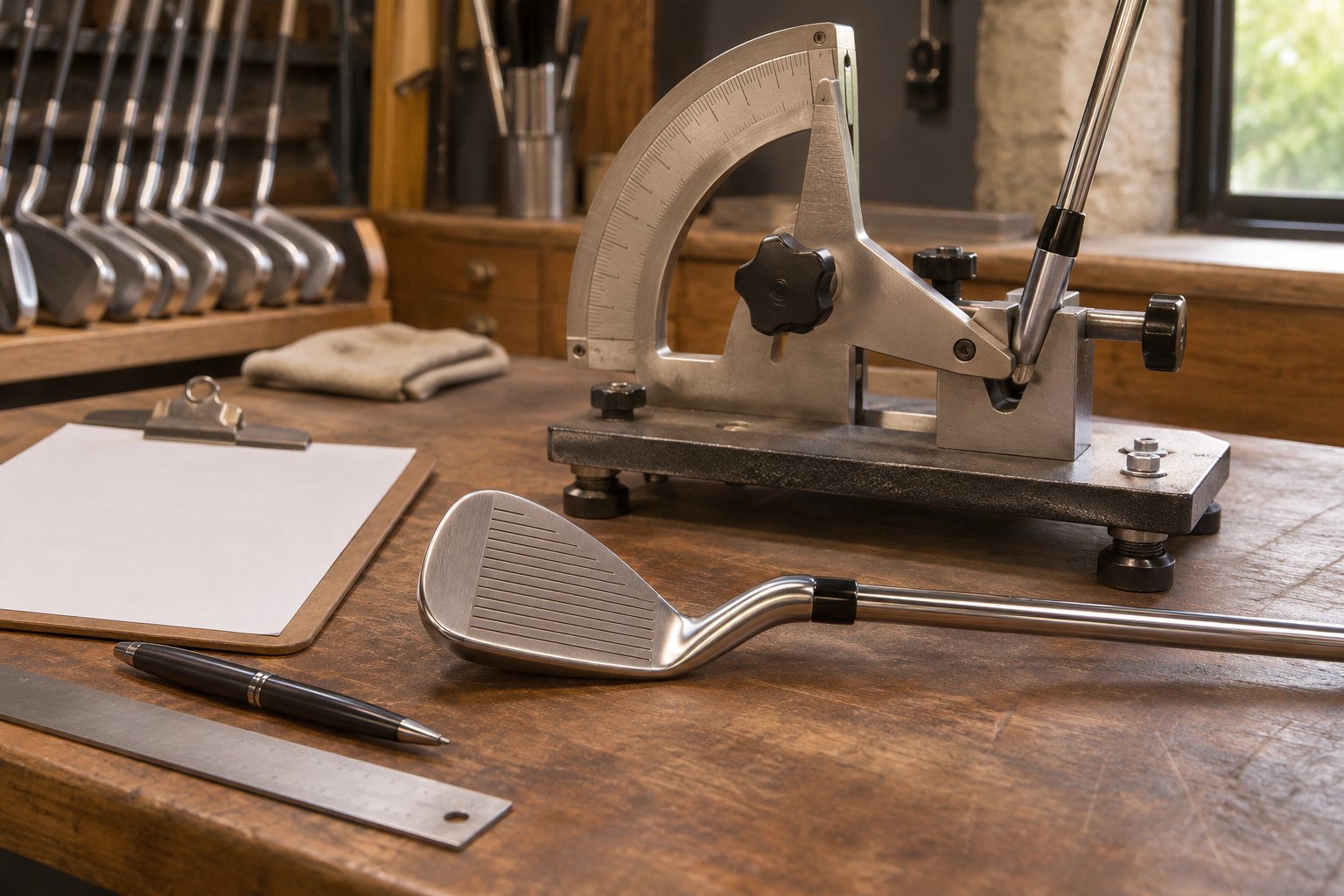
Choose the next step that the evidence supports
Keep the current specification when the shots already do the job or the trial provides no convincing improvement. Continue the fitting when the evidence conflicts or another build variable remains unresolved. Authorise an adjustment when the trial supports a clear target and the service provider confirms that the head can accommodate it.
For an existing set, ask a qualified local club repairer or the manufacturer’s service team about measurement and adjustment first. Be specific about the model and the requested service. An appointment advertised for new-club fitting does not, by itself, confirm that the provider will inspect or bend your own irons.
If you are considering a new fitted set, Callaway’s UK fitting information and Clubhouse Golf’s custom-fit centres can help you investigate fitting routes.[9][10] Check the appointment’s scope before booking, including whether it addresses your lie-angle question and provides a written specification.
The Irons, Wedges & Putters guides cover related equipment decisions. For this one, the useful outcome is precise: you know the current measurements, understand the evidence for a change and have agreed what a professional should deliver.
Back to top ↑Sources and further reading
Sources checked on 22 November 2026. Product descriptions are attributed to their makers; the comparison methods and buying judgements are editorial guidance.
- Mitchell Golf — Measuring and Bending Golf Clubs (2010)
- Trackman — Dynamic Lie parameter definition
- PING — Golf club fitting process
- Titleist Learning Lab — How to Aim and Align Properly in Golf
- Trackman — What is Swing Plane?
- Callaway — 2026 OptiFit Connect Iron Hosel Guide
- Mitchell Golf — Golf Club Bending Facts and Fallacies (2019)
- Mitchell Golf — Loft and lie adjustment FAQ
- Callaway Golf UK — Fitting options
- Clubhouse Golf — Custom-fit centres
Illustrations in this article were created for Taylor’s Trailblazing Golf. Third-party photographs, where used, are credited beside the image or in the source list.