Golf Club Shaft Damage: Warning Signs Before Your Next Round
Notice the change, keep the club out of use when in doubt, and give the assessor a clear account.
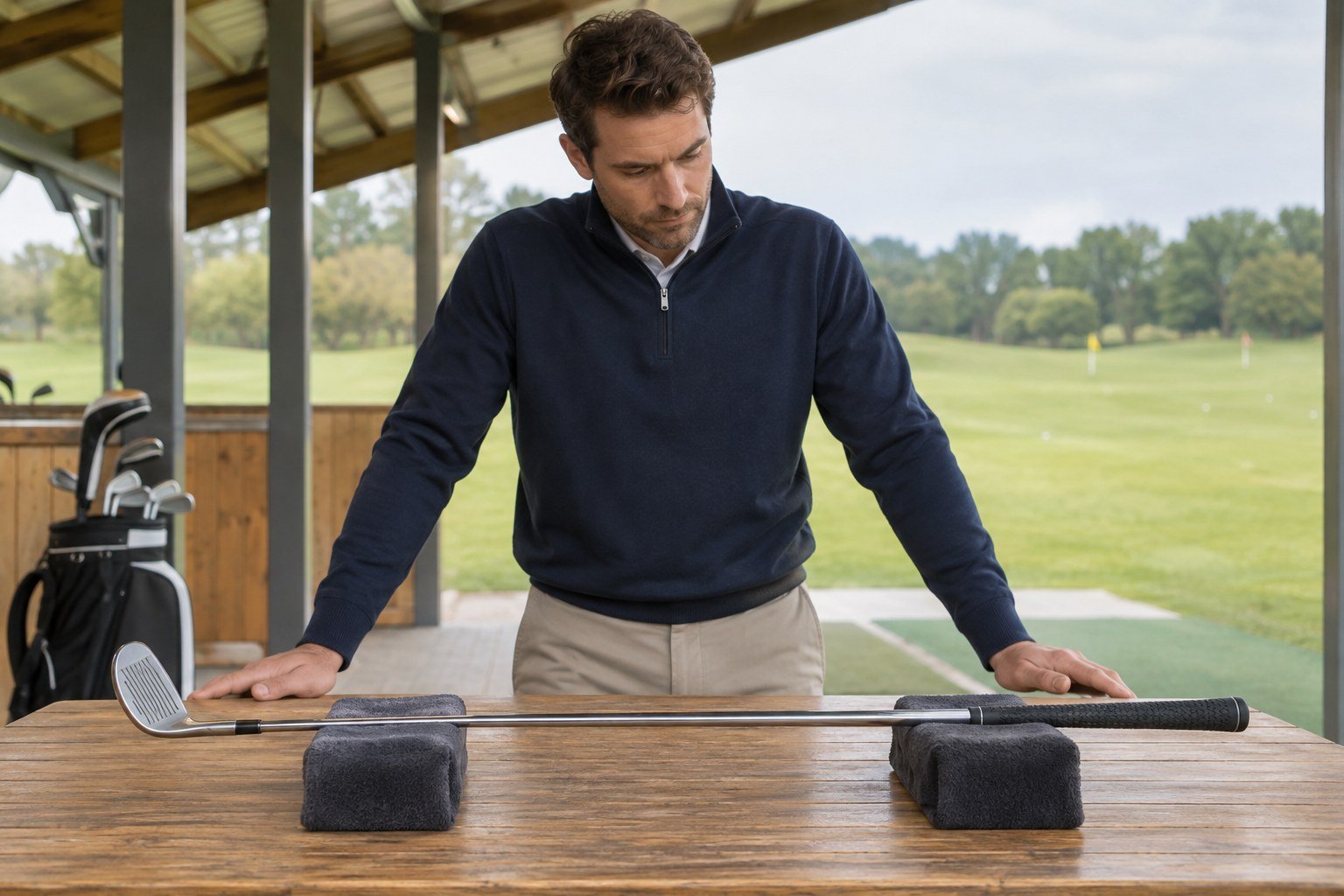
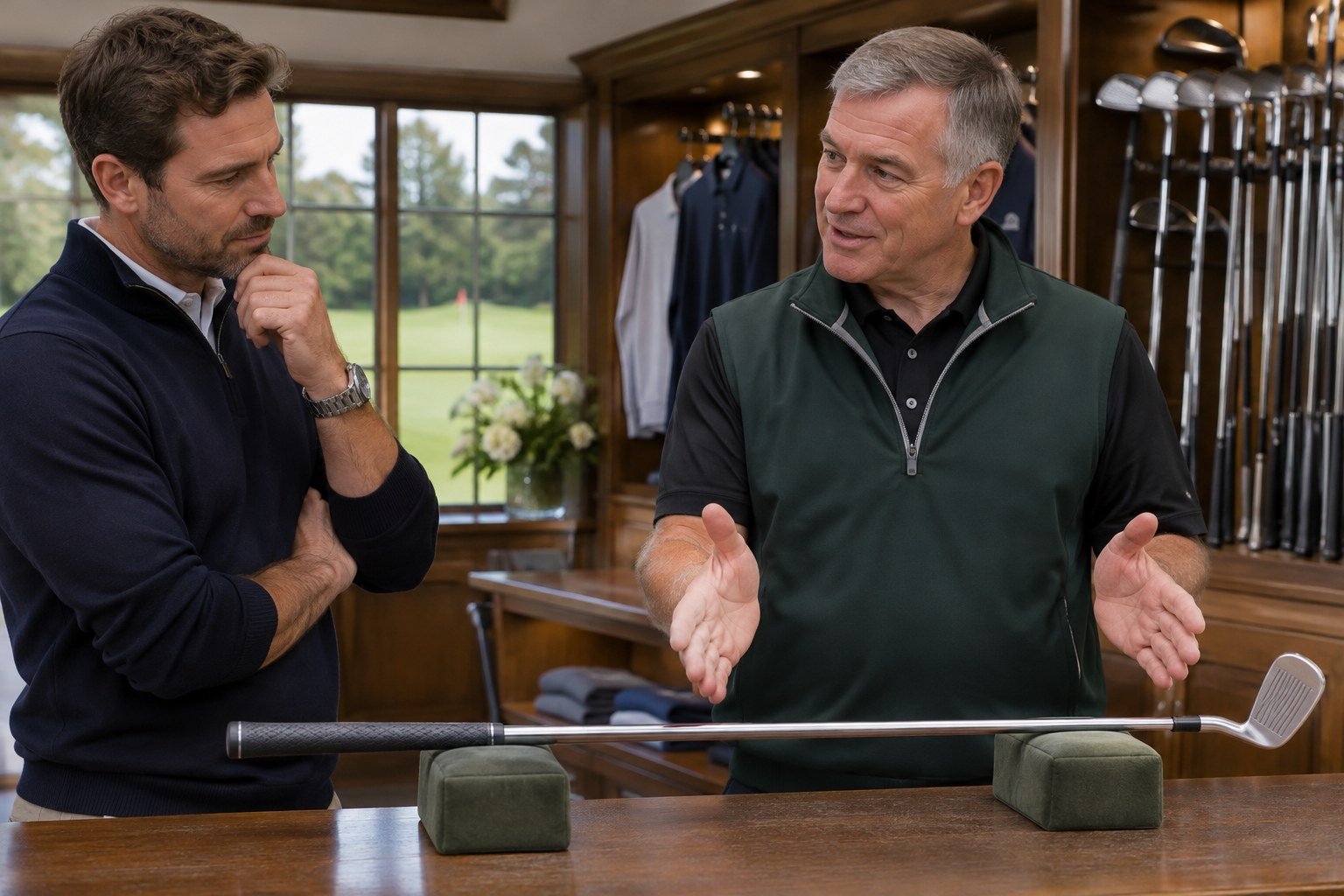
Look at the supported club without bending it or rubbing a suspect shaft. Generic AI illustration; not a photograph of a named model.
Checking golf club shaft damage before your next round starts with deciding whether the club needs professional assessment. It is easy to focus on a visible scratch and overlook the incident that caused it, or to keep swinging because the last shot felt normal. Neither approach establishes the shaft’s condition.
True Temper warns that unexpected impact can leave hidden damage in both steel and graphite shafts. It recommends removing a suspect club from play for inspection. [2]
This guide concerns a club you already own. It provides a non-invasive observation routine and a short handover record, without asking you to prove strength by hitting balls.
This is a research-led guide. How we assess golf equipment explains the evidence behind our recommendations.
Leave the club out of play and keep hands away from damaged areas.
Report the incident even if the surface still looks tidy.
Ask the retailer or manufacturer what inspection is needed before use.
Golf club shaft damage: look before you handle
Use good light and a stable, padded support. Look along the exposed shaft without moving your fingers over it. Leave any area that requires handling a suspect section for the assessor. [1]
Mitsubishi Chemical warns that broken carbon fibres can puncture skin. It says to avoid broken sections and to hold only an unbroken portion when transporting a broken shaft, keeping the damaged end away from others. [1]
Leave a damaged club out of the playing bag. Ask the receiving shop about transport; Mitsubishi warns that sharp fragments can tear through plastic bags. [1]
Nippon Shaft warns against excessive force or twisting to check a shaft, particularly loading it with the head or grip against the ground. This checklist uses observation only. [3]
Do not bend the shaft, twist the head against resistance, tap the area with a tool or hit a few balls as a test. If an observation raises doubt, stop the home check at that point.
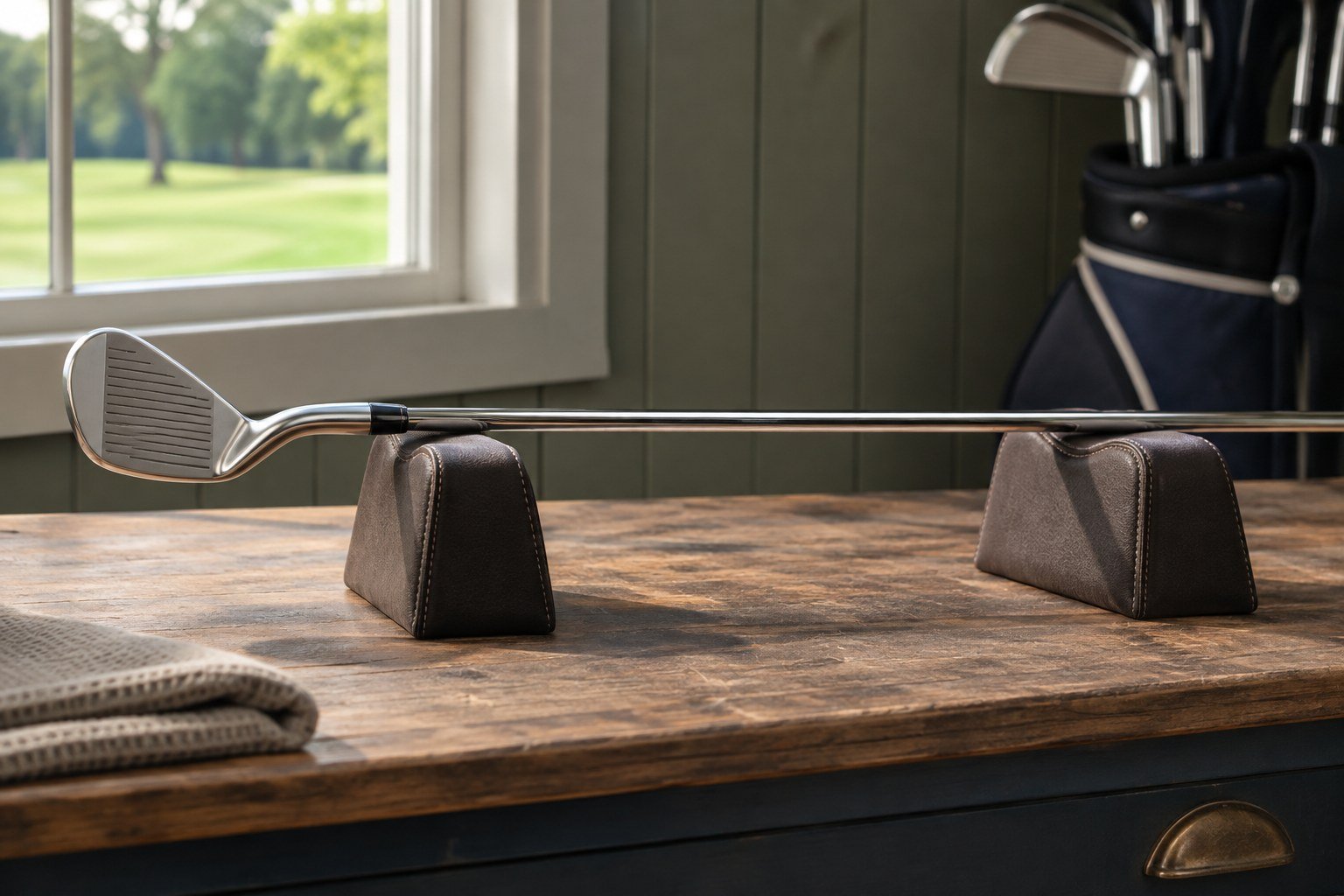
Identify the material, then describe the warning sign
Read the actual shaft model. Nippon makes painted steel shafts, so a dark outer finish is not enough to identify graphite. If the label is missing, give the assessor that uncertainty instead of guessing. [3]
| Observation | Maker guidance | Useful record |
|---|---|---|
| Visible steel dent, crease or deformation | True Temper says to remove the shaft from play and not use it again. | Photograph the location and describe any remembered impact. [2] |
| Crack, scratch, discolouration or other graphite-shaft abnormality | Mitsubishi directs users to stop and obtain a retailer’s safety inspection. | Record when it appeared; do not probe its depth. [1] |
| Uncertain paint mark | Establish the material and exact maker’s instructions before classifying it. | Use “new surface mark” until its nature has been assessed. |
The last row matters because a photograph can show the position of a mark without resolving what lies beneath it. Avoid promoting a small mark to “cosmetic only” because you cannot see fibres, or deciding that every surface change requires a new set of clubs. The immediate decision is what assessment the individual club needs.
Photograph one wide view, the shaft identity and a closer view in the same lighting. Do not scrape off paint, remove a label or wrap tape over the mark before asking for advice. Keep an unchanged record of what you noticed.
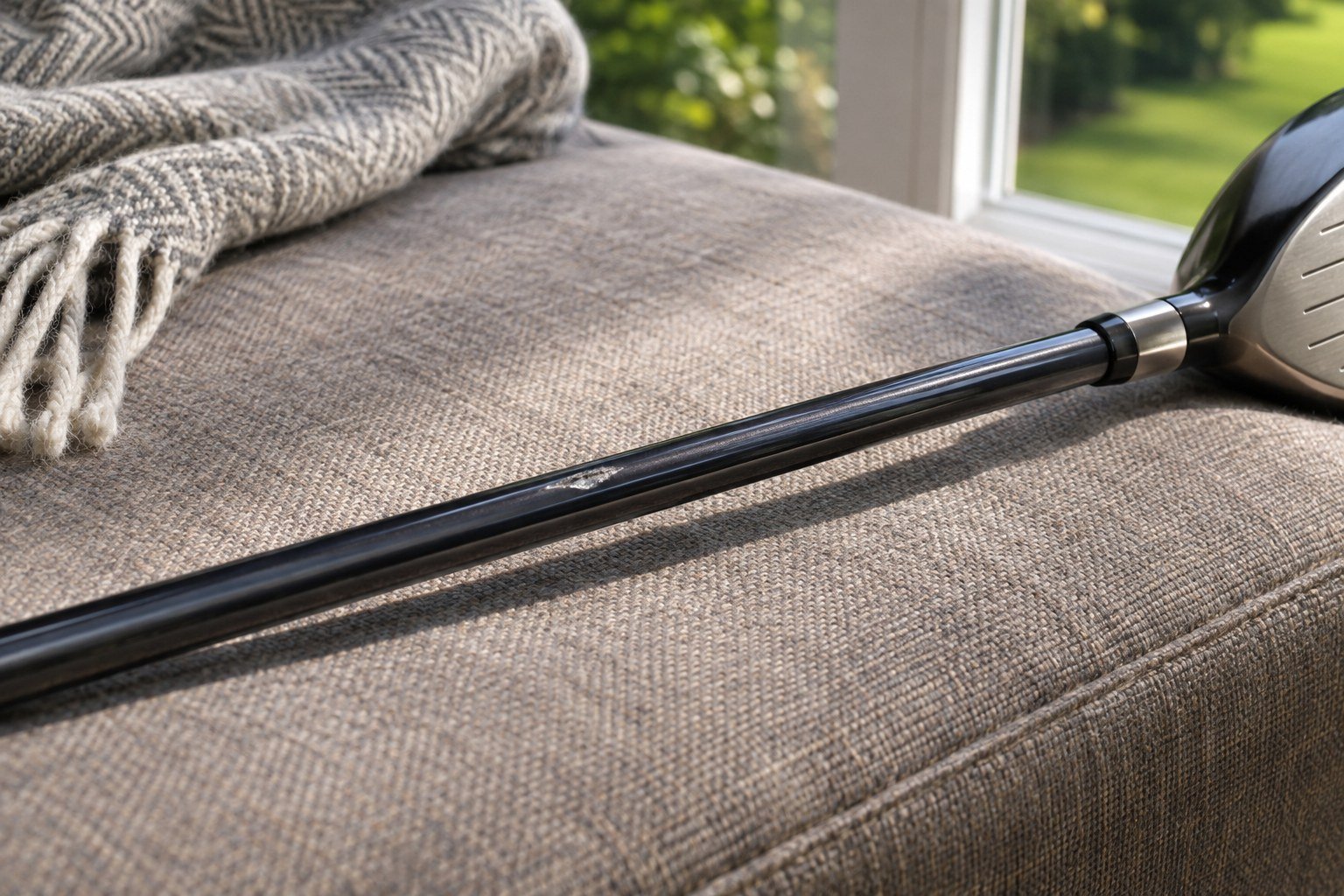
Include the head and grip junctions in the observation
Look where the exposed shaft meets the hosel or adapter and where it emerges below the grip. Record a new gap, a changed alignment or an apparently displaced part. Write down what you see without diagnosing whether a decorative collar, the shaft or the head attachment is responsible.
After a heavy ground strike, Mitsubishi specifically tells users to check the shaft and head connection and stop for damage or abnormalities. A concern at the joint belongs in the assessment of the complete club. [1]
Recent work is relevant too. Fujikura warns against excessive shaft clamping during regripping and says not to use a shaft if cracks or unusual noises occur. Tell the assessor when the work took place and what changed afterwards. [5]
A visual gap is not an instruction to push a part back, add glue or tighten unfamiliar hardware. Leave the club in its observed state. If you already noticed movement or an unusual sound in normal handling, report that; do not recreate it repeatedly for a recording.
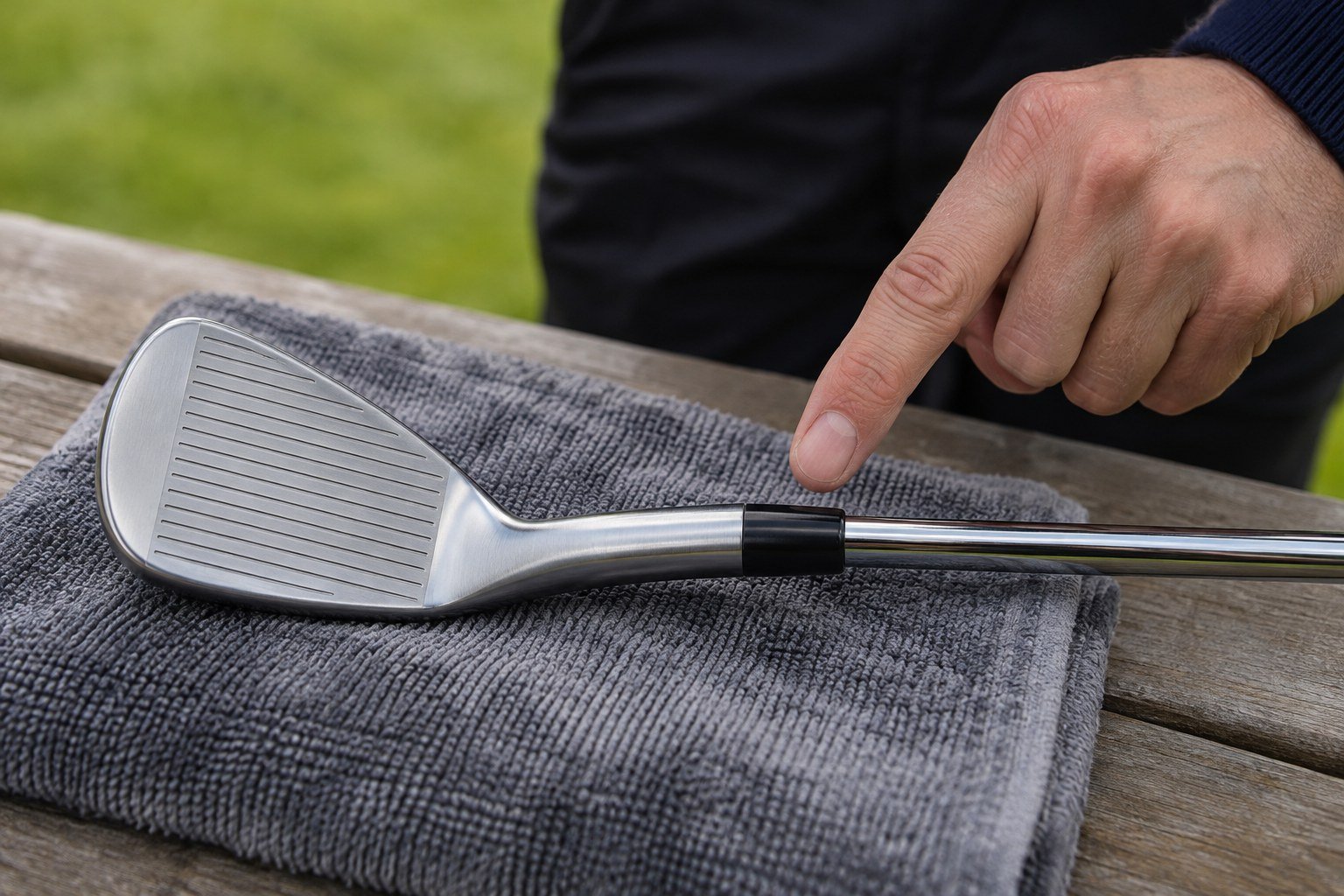
Use an incident checklist before the next round
Begin with the event as well as the mark. This short checklist is intended to stop an unresolved concern being forgotten when you pack the bag.
| Question | What to write down | Action while unresolved |
|---|---|---|
| Was there an unexpected impact or crushing incident? | Date, what happened and which club was involved. | Keep the club out of play pending inspection, even if damage is not obvious. [2] |
| Is a mark new or has a known mark changed? | Its location and any earlier photograph. | Ask for assessment; do not invent a safe size or depth. |
| Did something change after repair, adjustment or regripping? | Work performed, date and observed change. | Contact the shop with the complete club and its work record. |
| Has someone actually resolved the concern? | Who inspected it, what they found and the next step. | A casual opinion about a photo is not a completed inspection. |
When there is no obvious mark
Suppose a club was caught under luggage and now looks unchanged. The useful report is “the bag was compressed here”, with the time and circumstances. Do not substitute “nothing is visible” for that history. Equally, a mark found while unpacking needs a description even if you cannot remember an incident.
Keep the affected club on a separate list from routine jobs such as washing a towel or cleaning grips. Arrange the assessment before putting it back into the playing bag. There is no benefit in creating a deadline that pressures you to use an unresolved club.
Back to top ↑Give the professional a short, useful handover
Contact the original retailer, manufacturer service route or an appropriately qualified club repairer. Say that you are asking about possible damage and whether the club should return to use. A fitting appointment to compare ball flight is a different request.
Include these details:
- Clubhead and shaft model, including readable flex and other identifying markings.
- Where the concern is located, with a wide photograph and a clear close-up.
- The impact or other event, if known, and when it happened.
- Relevant recent work and who carried it out.
- Whether the club has been used since you noticed the issue.
Ask what can be assessed remotely, what requires the physical club and whether there is an assessment charge. Request an explanation of the affected component before approving a purchase.
If a new shaft is recommended, have the assembly carried out through the appropriate specialist route. Fujikura’s handling instructions direct club assembly to a specialist or manufacturer. [5]
You can then ask for the proposed finished build and the complete quote, including any required grip, adapter, labour and delivery. Availability and suitability need confirming for your club; this guide does not assign a generic reshafting price or recommend a shaft solely from its flex letter.
For an adjustable driver, the head and shaft adapter compatibility guide explains the separate component checks. Use it after the condition question has been addressed, rather than treating a compatible adapter as evidence that a damaged shaft is sound.
Keep the next check simple and repeatable
Fujikura’s instructions call for moisture and dirt to be removed with a soft cloth, exclude oils and waxes, and warn against prolonged high heat and humidity. They also prohibit bending a shaft by pressing the head against the ground. [5]
For routine care, follow the exact shaft’s instructions. If you encounter a suspected crack or damaged area, stop wiping there and return to the inspection route. Cleaning should not become a way to feel around an uncertain surface.
Use two prompts: “Has anything happened to this club?” and “Has anything changed since its last known condition?” Check when preparing the bag and after an incident, rather than relying on the date of an annual tidy-up. Keep the photographs and any professional findings together.
If work is completed, record what was changed and ask whether any further checks are required. If the answer is to leave the club out of use, keep it separate until the agreed next step is complete. A repaired or replacement component should solve the assessed issue; it need not start an unnecessary replacement of the rest of the bag.
Back to top ↑Frequently asked questions
Does an old shaft need replacing just because of its age?
Age alone does not settle the decision. Nippon links service life to use, care and condition, and notes that some damage is not visible. Ask about inspection rather than assigning every shaft the same expiry date. [4]
Does a shaft problem mean the clubhead must be replaced too?
Ask the assessor which components are affected and what work is appropriate. Do not buy a new head or a complete set merely because a shaft needs attention. The available repair and its finished cost should be established for the actual club.
Sources and checks
Sources consulted on 24 November 2026. Manufacturer and retailer descriptions are attributed claims; illustrations do not show tested products. Recheck current care instructions, model and finish compatibility, rules and retailer details before use or purchase.
Illustrations in this article were created for Taylor’s Trailblazing Golf. Third-party photographs, where used, are credited beside the image or in the source list.