Golf Gloves for Juniors: Secure Fit Without Overbuying
Fit the hand playing today, then decide whether a spare earns its place.
Choose a glove for the hand using it today. This generic illustration does not show a named junior model.
Buying golf gloves for juniors involves two different questions: does this glove fit now, and how many will the child use before that fit changes? Buying larger or ordering several sizes ahead tries to answer both at once. It also makes it harder to tell whether the first glove is suitable.
Start with one candidate, the measurement method for that exact model and the junior’s own feedback. This guide combines manufacturer information with a practical fitting and buying record; it does not report a hands-on product test. The images are generic illustrations.
Ad – includes affiliate links. If you buy through these links, Taylor’s Trailblazing Golf may earn a commission. Recommendations are based on the equipment decision and the available evidence.
Check the exact model and measuring method before choosing a size label.
A glove that looks tidy still needs to feel comfortable while holding the club.
A spare needs a job now; future growth is not a reliable stock-order schedule.
Choosing golf gloves for juniors starts with the right measurement
Identify the glove’s brand, model and junior size range before reaching for a tape. Then check what its chart measures. U.S. Kids Golf’s 2024 glove chart measures from the base of the palm to the middle fingertip and labels ages as approximate. FootJoy’s general fitting guide instead uses middle-finger length and hand circumference, excluding the thumb. Those measurements cannot be swapped between charts. [1] [2]
For a hand-length chart, place the hand comfortably open and use the start and end points shown by that maker. For a circumference chart, follow its illustrated route around the hand. Record the unit as well as the number. If a printable guide is supplied, follow its printing instructions and check any reference scale before trusting it.

Measure the hand that will wear the glove. Do not copy a sibling’s size or use a clothing age label as a substitute. Keep the measurement beside the chart’s name or link: “16 cm” without the method is not a useful fitting record.
If the chart gives only age bands, or the shop selector and chart use different labels, ask the retailer which chart applies to its stock. A missing size guide is a reason to try the glove in person or seek clarification, not to create a centimetres-to-size conversion. Our golf glove size and hand measurement guide explains the broader fit checks.
Back to top ↑Check the fingers and palm before testing the grip
FootJoy’s fit guidance calls for close contact across the palm and fingers, without excess material at the fingertips, while leaving adjustment in the closure. Use those observations as a starting point rather than treating a tight-feeling glove as automatically correct. [2]
- Open the fastening fully. Let the child put the glove on without an adult pulling hard on the fingers.
- Ask them to open and gently curl the hand. Have them point to any seam that presses or area that feels restrictive.
- Look for empty fingertip space and material gathering in the palm. Compare another size or shape if either is noticeable.
- With the club stationary and space around them, ask the junior to take their normal hold. Check whether they are repeatedly tugging the glove into place or changing their hold to avoid discomfort.
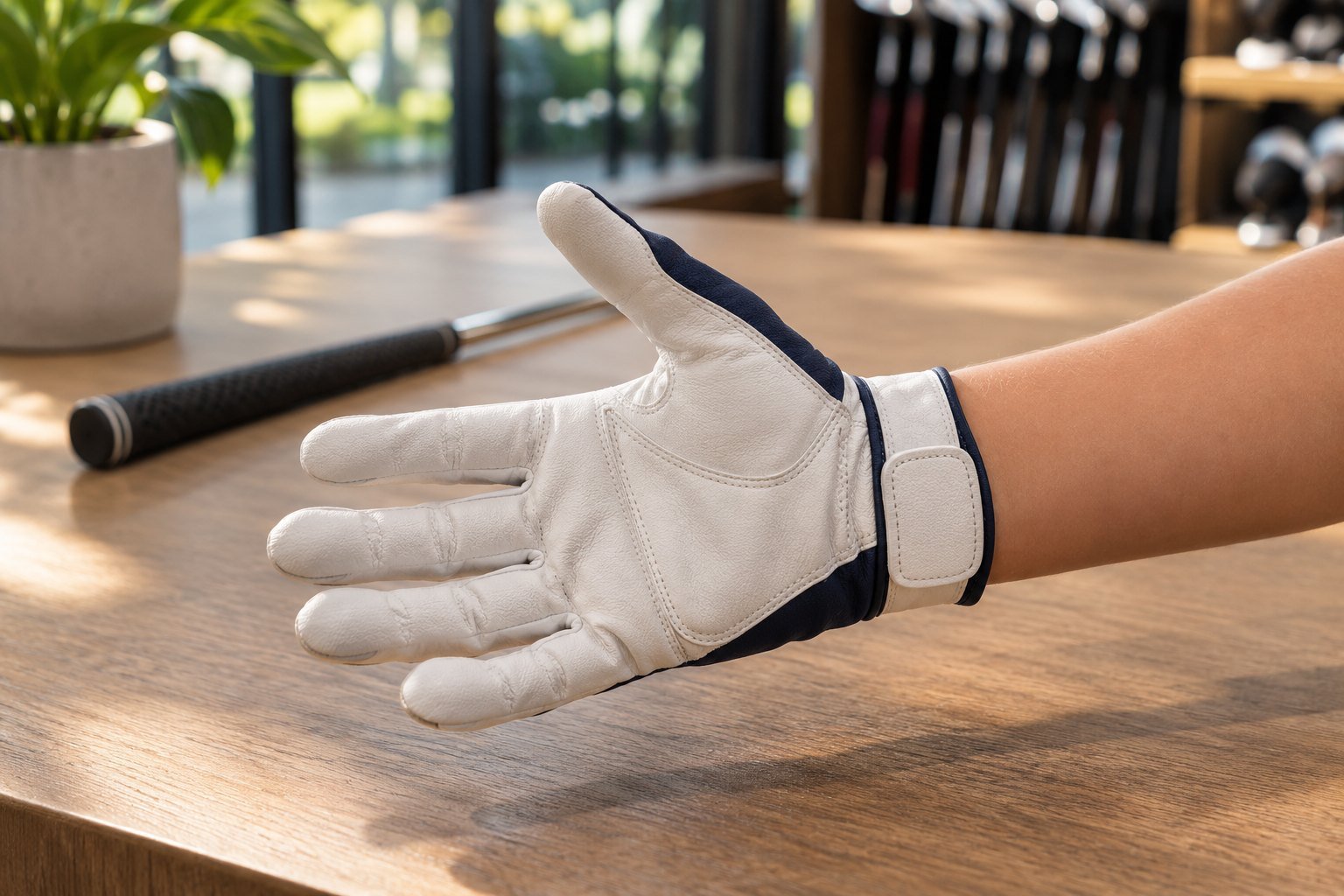
Make the question specific: “Where does it pull?” is more useful than “Is it fine?” Give the child time to answer before telling them which glove is meant to fit. A shop trial is a comfort check, not a reason to swing a club in an unsuitable space.
If fingers fit but the palm does not, try another model as well as another size. Moving up can solve one tight area while introducing unwanted space elsewhere. Remove a glove that is uncomfortable; do not plan to make it fit by forcing or stretching it.
Back to top ↑Use the fastening to secure the glove, not to hide the wrong size
Fasten the tab with the hand relaxed, then check it again with the fingers gently curled. The child should be able to manage it without an adult having to haul the glove across the back of the hand. The tab cannot remove excess length from the fingers.

Closure designs differ, so do not insist that every junior glove must leave the same fraction of its fastening exposed. Follow the advice for that model and check that the fastener engages properly.
Stretch panels can help a glove accommodate movement. For example, FootJoy describes knuckle stretch on its FJ Junior, style 65944E. That is a construction feature, not a promise that the glove will remain suitable through an unspecified amount of growth. [3]
A useful comparison is to try two candidates with the same simple hand movements. Record what improves and what gets worse. “The larger glove closes easily but leaves empty tips” is better evidence than assuming the next size must be better value.
Back to top ↑Recheck fit when something changes
Use a brief fit check before buying a replacement, after a break from golf and when the junior reports a different feel. FootJoy advises checking size at the start of each season; for a growing player, changes noticed between those checks matter too. [2]
Look again if the glove has become harder to put on, a previously comfortable seam now presses, or the child keeps loosening the fastening. Also inspect the glove itself: a change in feel does not prove that the hand has grown. Condition and fit need checking separately.
Take the existing glove to the shop and explain what has changed, but measure again rather than copying its label. Keep a spare only while it still fits. An unused glove in the drawer is not automatically a suitable replacement months later.
For a gift, arrange a fitting visit or agree how the correct size will be chosen. Check the seller’s current exchange conditions before buying ahead, particularly whether a trial must remain unworn and whether return costs apply.
Two junior options to investigate after the fit check
These are examples of different buying routes, not a ranking. Neither listing establishes that its size will suit a particular child.
MKids: check the colour and the size together
MKids describes four colour-coded sizes, Lycra inserts and an adjustable fastening. Clubhouse Golf’s white/red listing is specifically Medium and is labelled for a right-handed golfer. The colour identifies that option; it is not a universal age or hand measurement. [4] [5]
If that is the model, size and orientation you have confirmed, view the MKids Medium glove at Clubhouse Golf. For another size, use its own listing and check the full label again.
Callaway Weather Spann Junior: verify the current version
Callaway’s UK Weather Spann Junior page, product ceu234805, specifies Fusetech synthetic material with leather on the palm and thumb. This is a mixed-material glove, so keep its own care instructions with the purchase. [6]
Check the Weather Spann Junior options at Callaway. Confirm the available hand, size and pack contents before ordering. The product name alone does not establish fit, and a retailer’s older description may refer to different construction.
If neither candidate suits the hand, keep looking. A known brand, attractive colour or small saving is not a reason to accept a poor fit.
Back to top ↑Give a spare a specific job
A child starting occasional lessons can begin with one correctly fitting glove. Reconsider a spare if frequent sessions leave too little time for the existing glove to be ready, if a dry replacement is regularly needed during play, or if losing the only glove repeatedly interrupts planned golf.
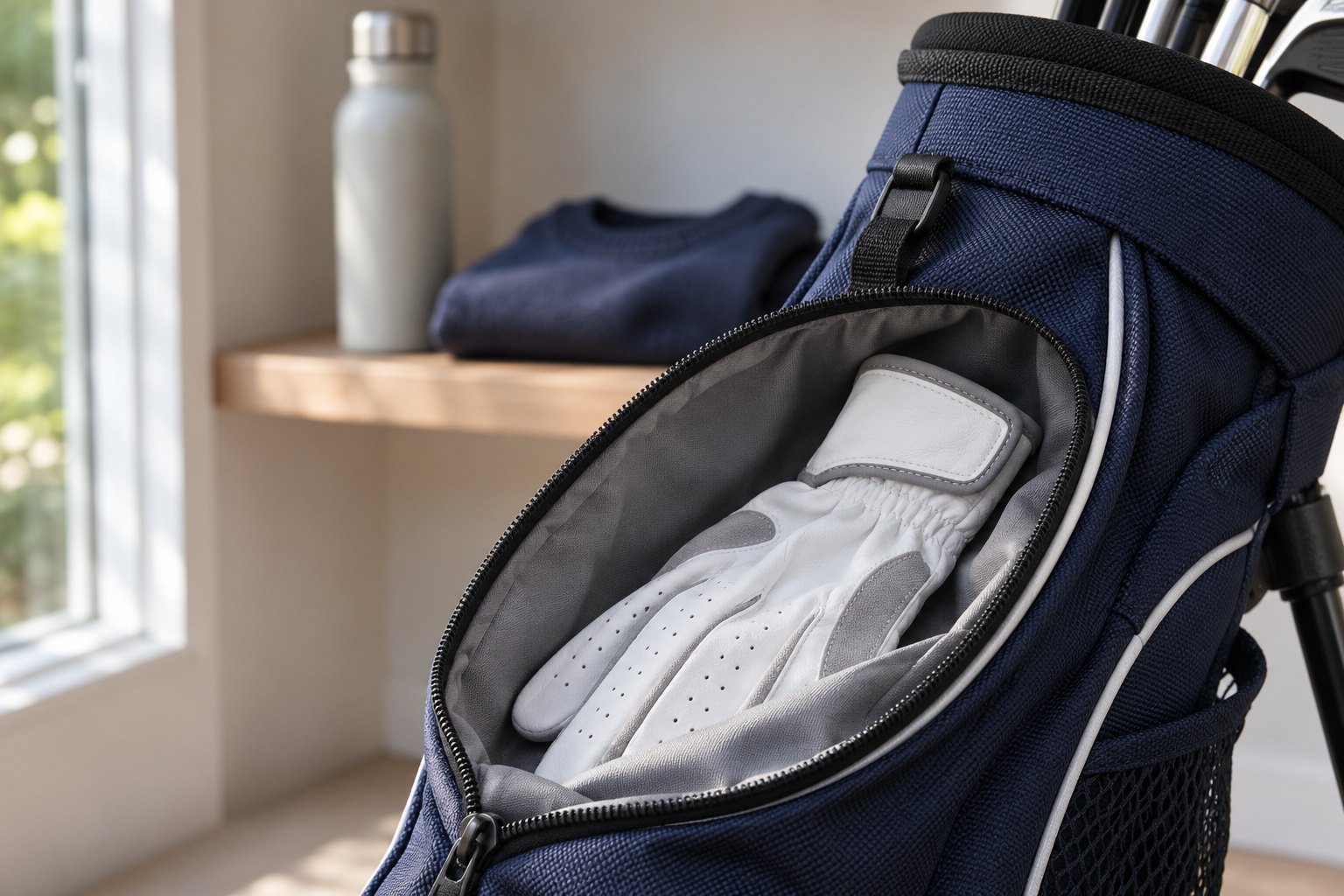
Buy the spare in the fit needed now. Do not make the working glove oversized to delay replacing it, and do not assume a spare bought one size up will become useful on a predictable date.
Check the bag with the junior after golf. Follow the glove’s care instructions and let it dry as directed before storing it. Avoid treating a closed bag pocket as a drying place. A simple habit of checking where the glove is and whether it is ready can be more useful than buying several extras.
Back to top ↑A fitting record and a worked multibuy decision
Keep this short record on your phone or with the glove packaging. It separates a confirmed fit from a guess about future use.
On a phone, swipe within the table to see all columns.
| Record | What to write |
|---|---|
| Glove identity | Brand, model, size label and the hand it is worn on. |
| Measurement | Date, chart used, measurement route, number and unit. |
| Trial result | Fingertips, palm, fastening and the child’s own comfort comments while holding a stationary club. |
| Quantity needed now | One working glove; add a spare only with a stated purpose. |
| Next review | Before reordering, after a break, or sooner if comfort or fit changes. |
Worked example: a discount with an uncertain use window
This is an illustrative calculation, not a current offer or a prediction of growth. Suppose one glove costs £10, or three identical gloves cost £8 each: £24 in total. Assume the single price stays at £10, delivery is equal and unused gloves cannot be returned, sold or passed on.
On a phone, swipe within the table to see all columns.
| Gloves used before the fit changes | Spend on the three-pack | Buying only those gloves singly |
|---|---|---|
| One | £24 | £10 |
| Two | £24 | £20 |
| Three | £24 | £30 |
In this example, the pack saves £6 only if all three are used while they fit. If two are used, it costs £4 more; if only one is used, it costs £14 more. Actual delivery charges, returns and a useful spare can change the decision. The calculation does not tell you how quickly a child will grow.
A completed decision might read: “First term of weekly lessons; fit confirmed in the shop; no established need for a spare. Buy one now. Recheck after the first few sessions and before the next purchase.” For a junior already using gloves regularly, the same record might justify two. Choose the quantity from that routine, then compare prices.
Back to top ↑Sources and checks
Research and specifications checked on 24 November 2026. Manufacturer descriptions are identified in the text; practical checklists and worked examples are editorial guidance, not product testing.
- U.S. Kids Golf — Glove Sizing Chart (2024) — checked 24 November 2026
- FootJoy UK — Golf Glove Fitting Guide — checked 24 November 2026
- FootJoy UK — FJ Junior, style 65944E — checked 24 November 2026
- MKids — Junior Golf Gloves — checked 24 November 2026
- Clubhouse Golf — MKids Junior Golf Glove, Medium, White/Red — checked 24 November 2026
- Callaway UK — Weather Spann Junior, ceu234805 — checked 24 November 2026
Illustrations in this article were created for Taylor’s Trailblazing Golf. Third-party photographs, where used, are credited beside the image or in the source list.