One Golf Glove or Two? Dry, Wet and Cold Conditions Compared
Decide what goes on your hands, then count what belongs in the bag.
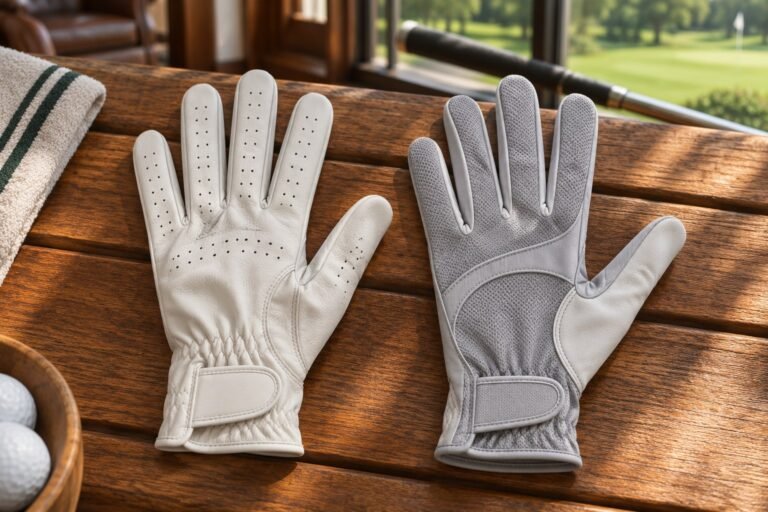
One single plus a left/right pair makes three individual gloves in the kit. These are generic illustrations, not the named products.
The choice between one golf glove or two becomes easier when you separate three counts: gloves worn while playing, gloves carried as alternatives, and gloves included in the pack you buy. Those numbers can be different without any of the gloves being redundant.
Start with the conditions you expect and the fit you already trust. This guide compares dry, wet and cold choices using manufacturer specifications and a practical kit record. It does not report personal product testing. The images illustrate generic equipment, not the named models.
Ad – includes affiliate links. If you buy through these links, Taylor’s Trailblazing Golf may earn a commission. Recommendations are based on the equipment decision and the available evidence.
Use fit and the current conditions to decide between a single glove and a playing pair.
A spare or alternative has a separate job from the gloves currently on your hands.
Check quantity and hand combination; two items do not automatically make a left/right pair.
One golf glove or two: dry, wet and cold conditions compared
Use the table as a starting plan, then change it if your hands, glove or grip feel different during the round. The weather label alone cannot establish that a glove fits or that you can hold the club comfortably.
On a phone, swipe within the table to see all columns.
| Conditions | Starting option to wear | Reason to carry something else |
|---|---|---|
| Dry and comfortable | One familiar, correctly fitting playing glove. | A same-hand dry spare if moisture, wear or loss would otherwise interrupt the round. |
| Rain or persistently wet equipment | A purpose-made rain pair if a glove on each hand suits you. | Your ordinary glove kept dry for a change back when conditions improve. |
| Cold with little rain | A winter playing pair, after checking both hands on the grip. | Between-shot mittens, or a thinner playing option if the day warms up. |
| Cold and wet | Check the exact product’s wet-use and insulation claims together. | A suitable dry alternative; a rain label alone does not establish warmth or waterproofing. |
These are kit choices, not a temperature chart or a guarantee of grip. As examples of the different priorities, FootJoy describes its RainGrip Pair with a water-absorbing palm, while WinterSof Pair has a water-resistant palm and additional protection on the back. Neither description should be silently converted into a claim that every part of the glove keeps water out. [1] [2]
Back to top ↑Dry conditions: begin with the feel you already know
If your current single glove fits well and you are comfortable holding the club, there may be nothing to buy. Check that it is ready for the round and decide whether you need a spare. Two gloves carried can simply mean one being worn and one replacement for that same hand.

Trying a glove on the other hand is a preference to assess, not an automatic upgrade. Try the proposed setup during practice before relying on it in a competition. Compare how the club feels in the fingers, whether either glove moves and whether you can make your normal comfortable hold without fighting the extra material.
Keep fit and quantity separate. Putting a second glove on the other hand will not fix a loose first glove. Nor does a pair need to match your ordinary glove’s size label: try both gloves in the actual pair you are considering. The hand measurement and glove fit guide covers the basic checks.
There is no need to make wearing two gloves an all-season commitment. A pair can remain a weather option while your familiar single glove stays the dry-day choice.
Back to top ↑Wet conditions: a rain pair has a different job from two ordinary gloves
A purpose-made rain glove should be judged by its own wet-use instructions. FootJoy’s current RainGrip Pair, style 66083E, is described with an absorbent Autosuede palm and material intended to dry quickly on the backs of the fingers. That is a specific manufacturer description, not evidence that soaking an ordinary leather glove improves it. [1]
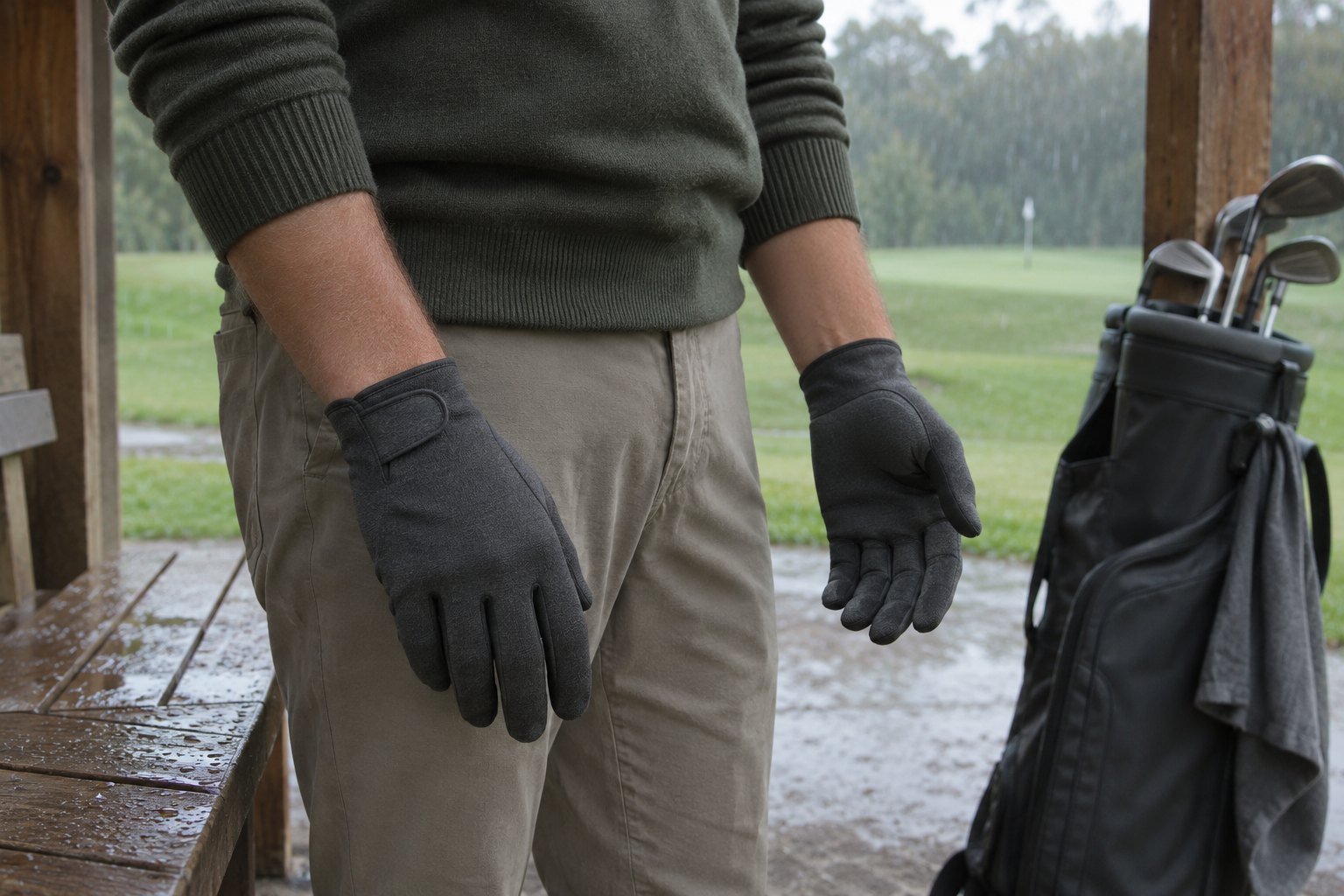
Check the hands separately. If the bare hand is where the hold feels uncertain, replacing only the glove already being worn may not address the issue. A rain pair gives you an option for both hands. Try it beforehand and follow the maker’s instructions; do not invent a soaking routine from the product name.
Keep the ordinary glove out of the rain if you intend to use it again later. Also check the club grip and whether the new gloves bunch or move. Stop and resolve an insecure hold rather than relying on a “rain” label to make it safe.
RainGrip listing check: Clubhouse Golf’s Rain Grip pair is explicitly listed for both hands, but its description uses additional material names and does not identify style 66083E. If you want that exact current FootJoy version, confirm the style with the seller before ordering. [4]
Check the Rain Grip pair listing at Clubhouse Golf. Confirm the style, pair contents and chosen size.
Cold conditions: separate playing gloves from mittens
A winter playing pair is worth considering when you want a fitted glove on each hand throughout play. Check the palm, fingers and fastening while holding a stationary club, particularly if the material feels bulkier than your usual glove. Warmth is not useful if the resulting fit makes your normal hold awkward.
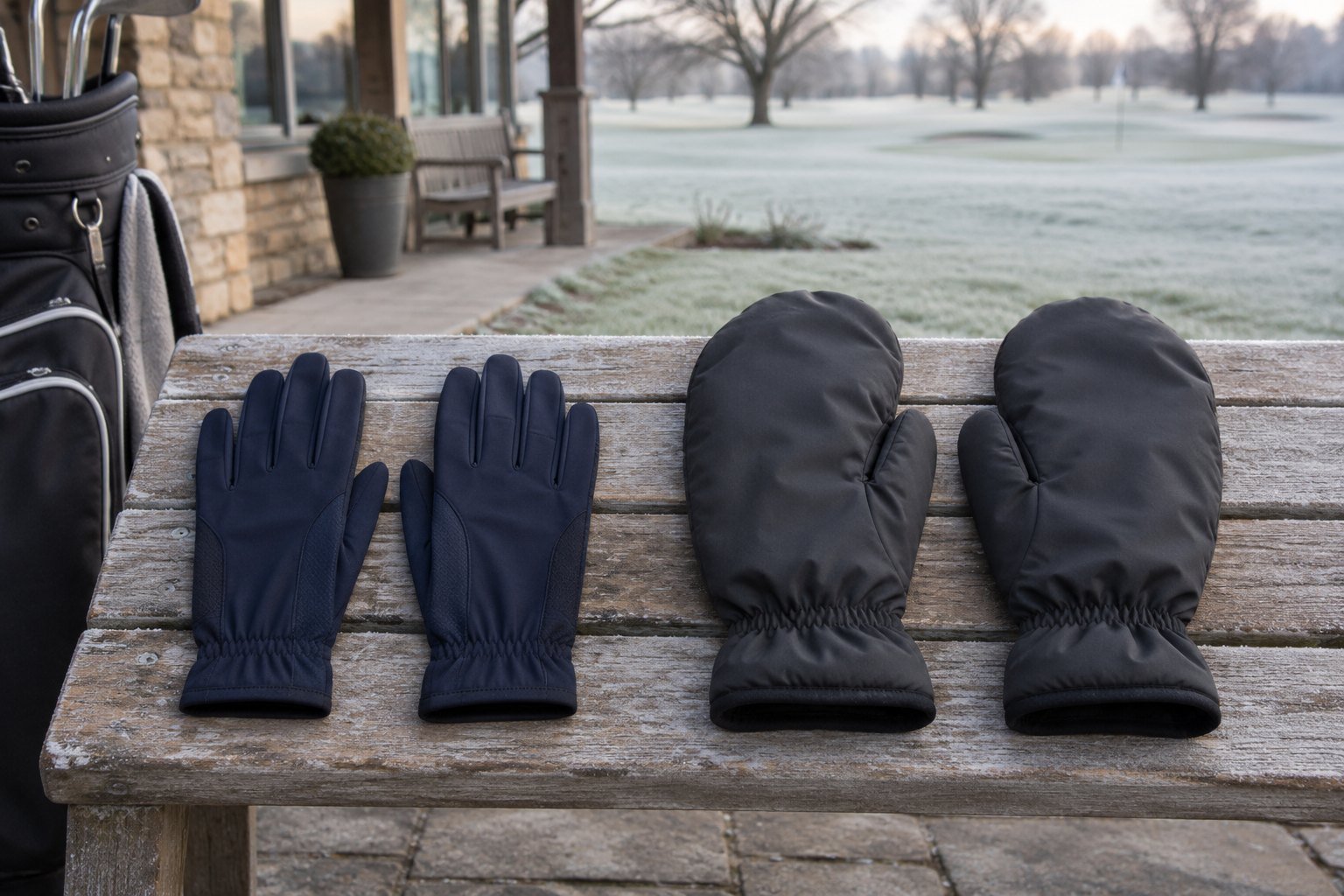
FootJoy’s WinterSof Pair, style 66893E, combines a water-resistant Autosuede palm with an extended knit cuff; the manufacturer describes waterproof nylon and foam fleece on the back. The waterproof wording applies to that back construction, not a stated whole-glove waterproof rating or a guaranteed playing temperature. [2]
Clubhouse Golf also identifies its WinterSof listing as a thermal/winter pair for both hands and describes the same palm and back materials. [5] View the WinterSof pair at Clubhouse Golf and check the size and current pack details.
Bulky mittens have a separate role between shots. Remove them before playing and use the playing-glove setup you have checked. Do not treat ordinary mittens, a liner under a tight glove or an improvised thick layer as equivalent to a fitted golf glove.
If the round begins cold and becomes milder, carrying a thinner option lets you change without committing to a new purchase for every forecast. On a cold, wet day, read both sets of claims: insulation and wet grip answer different questions.
Back to top ↑A pair, a two-pack and two purchases can mean different things
Look for an explicit description of the hand combination. “Pair” commonly means one for each hand, but the contents still need checking. A quantity of two can instead mean two matching replacements for the same hand.
For a concrete example, FootJoy’s UK WeatherSof 2-Pack page offers the hand option “Regular Left”, while the RainGrip Pair page offers “Regular Pair”. The first is a replacement-pack route for one wearing hand; the second is a playing pair. Do not buy solely from the number in the title. [3] [1]
- Write down the hand or hands that need covering.
- Read whether the selector describes the golfer’s playing orientation or the hand wearing the glove.
- Check the pack quantity and whether it contains one of each hand or two of the same.
- Confirm the size for that model and count how many useful gloves the purchase adds.
If the title, picture and selector disagree, ask the seller before ordering. A photograph showing two gloves is not enough to settle the hand combination. Check the actual selection again at the basket stage.
A replacement pack makes sense when both gloves have a use in the same fit. It does not create a rain pair merely because two gloves arrive together, and it need not be bought if you already have an appropriate spare.
Back to top ↑Build a small kit and give every glove a job
Before packing, write four things: expected conditions, starting gloves, the change that would make you switch, and what you already own. Then count individual gloves, not packs.
On a phone, swipe within the table to see all columns.
| Example plan | What is packed | What is worn while playing |
|---|---|---|
| Dry round with a backup | One single plus one same-hand spare: two gloves. | One at a time; the spare replaces it. |
| Mild round with showers expected | One single plus one left/right rain pair: three gloves. | One in the dry, or two from the rain pair after changing. |
| Cold round with between-shot cover | One winter playing pair plus a separate pair of mittens: two gloves and two mittens. | The playing pair; mittens come off before the stroke. |
Worked example: dry start, showers later
This is a hypothetical planning example, not a forecast or product test. Alex already owns a comfortable single glove and a rain pair that fits both hands. The expected round is mild, with showers later. Alex packs those three gloves and a towel, starts with the single glove and keeps the rain pair accessible.
If showers arrive and the ordinary setup no longer gives a comfortable, secure hold, Alex can change to the rain pair. The single glove comes off; the pair is not layered over it. When changing back is appropriate, Alex checks that the ordinary glove is still dry and suitable. Nothing in this plan requires buying a fourth glove simply because a replacement pack is on offer.

Keep the dry alternative apart from wet equipment and check that its pocket is actually dry. After the round, take damp gloves out and follow the maker’s drying instructions. A spare forgotten in a wet pocket may not be ready next time. Our glove holders and drying clips guide covers the storage choices.
Back to top ↑Are two golf gloves allowed?
The R&A’s Rule 4.3 permits a plain glove that meets the Equipment Rules. Those equipment provisions describe permitted glove construction and prohibited assistance; they do not impose a one-glove limit. Wearing a conforming glove on each hand is therefore a permitted choice. [6] [7]
The word “plain” has a rules meaning. For example, the requirements address separate coverings or openings for the digits and exclude devices such as straps attaching the hand to the club or features restricting a joint. A glove sold for sport, warmth or training is not automatically suitable under those rules. Ask the competition committee if a particular design leaves you unsure. [7]
For the buying decision, return to fit and purpose: a familiar single, a genuine wet-weather alternative, or a winter playing pair. Pack the changes you are likely to use, with the hand combination checked before you pay.
Back to top ↑Sources and checks
Research and specifications checked on 24 November 2026. Manufacturer descriptions are identified in the text; practical checklists and worked examples are editorial guidance, not product testing.
- FootJoy UK — RainGrip Pair, style 66083E — checked 24 November 2026
- FootJoy UK — WinterSof Pair, style 66893E — checked 24 November 2026
- FootJoy UK — WeatherSof 2-Pack — checked 24 November 2026
- Clubhouse Golf — FootJoy Rain Grip Golf Gloves, Pair Pack, Black — checked 24 November 2026
- Clubhouse Golf — FootJoy WinterSof Golf Gloves, Pair Pack, Black — checked 24 November 2026
- The R&A — Rule 4, The Player’s Equipment — checked 24 November 2026
- The R&A — Equipment Rules, Part 6, Gloves — checked 24 November 2026
Illustrations in this article were created for Taylor’s Trailblazing Golf. Third-party photographs, where used, are credited beside the image or in the source list.