Golf Gloves for Sweaty Hands: Materials and Carry Strategy
A glove choice works better when the fit, club grip and dry-spare routine all support it.
A clean dry hand and a ready spare are part of the glove decision.
Choosing golf gloves for sweaty hands starts with finding out where control is being lost. Your hand can move inside a loose glove, a damp palm can feel uncomfortable, or the club’s grip can remain slippery after a glove change. Buying another “breathable” model only addresses part of that picture.
This guide uses manufacturer construction and care information checked on 23 November 2026, then builds a practical carry routine around it. The product examples show designs to try; they are not the results of a comparative sweat test.
This is a research-led guide. How we assess golf equipment explains the evidence behind our recommendations.
This guide contains affiliate links. If you buy through them, Taylor’s Trailblazing Golf may earn a commission at no extra cost to you.
Check your hand, glove and club grip before changing the glove model.
Confirm the fit and contact feel before committing to several identical gloves.
Keep the glove in use, the dry reserve and the damp used glove separate.
Check the whole contact chain
Set the club down and separate three questions: is your bare hand damp, does the glove move around it, and is the club grip itself clean and dry? This is a practical inspection, not a reason to squeeze harder and hope.
Golf Pride recommends cleaning its grips between rounds with soap, water and a soft brush, keeping hands free of residue and drying grips thoroughly. Follow the maker’s instructions for your particular grip rather than extending one cleaning method to every material.[3]
| What you notice | Check first | Practical next step |
|---|---|---|
| A clean, dry replacement glove also feels insecure | The club grip and your normal hand position | Clean and dry the grip as directed; ask a professional to inspect persistent slipping or grip wear. |
| Your hand moves inside the glove | Palm folds, finger length and closure adjustment | Try a different size or cut before buying a multipack. |
| The fit starts well but the glove becomes damp | Whether a dry replacement is ready | Change to the reserve and note when the first glove stopped working for you. |
| A fresh glove gets damp immediately | Wet hands, towel, pocket or club grip | Dry the contact surfaces and stop storing the reserve with damp items. |
| The same area repeatedly develops a hole | Fit, contact with the club and how you remove the glove | Review the cause with a golf professional; do not assume sweat alone explains the wear. |
Keep a clean dry area of towel available for hands and grips. A towel already saturated from wiping equipment cannot perform the same job as a dry one. You may already have everything you need: start by changing the routine before adding another accessory.

Compare golf gloves for sweaty hands by construction
A palm description answers what touches the club. The back, finger panels, cuff and closure answer different questions about coverage and fit. Inspect them separately. A glove can contain leather and synthetic sections, so a shop’s broad category is not a complete construction map.
Titleist Players Flex: leather with separate back panels
Titleist lists tanned Cabretta leather, synthetic material across the back, satin-net panels over the back and knuckles, and an elastic terrycloth cuff. The manufacturer presents this as a flexible, breathable design.[1]
It is a candidate to try if you like leather contact but want to compare a more panelled construction. The listing does not tell you how many holes your hand will stay comfortable, so assess that during your own use.
Clubhouse Golf separates the Players Flex glove worn on the left hand from the version worn on the right hand. Check the hand being covered as well as the retailer’s “right-handed golfer” or “left-handed golfer” wording before choosing a size.[7][8]
Callaway Weather Spann: ventilation in several areas
Callaway combines FUSETECH synthetic with leather on the palm and thumb, and specifies micro-ventilation on the palm, thumb, closure and fingers. These are stated design features, not a measured sweat-control result.[2]
Compare the Weather Spann on Callaway’s UK store if you want to try that construction. Confirm the exact hand and size, and buy one to assess before ordering multiples.
| Area | Question to answer | What the label cannot settle |
|---|---|---|
| Palm and thumb | Do you like the material against your actual club grip? | Whether it remains comfortable through your particular round. |
| Back and finger panels | Where are the openings or stretch sections? | A precise drying time or a measured sweat reduction. |
| Closure and cuff | Can you obtain a secure fit without pulling the glove out of shape? | Whether another size in the same nominal category fits identically. |
| Seams and reinforcement | Does any edge press into your normal grip? | Whether extra material is an advantage for your hand. |
A rain glove is another design to try only if you prefer its feel and its intended use suits the conditions. Evidence that a palm is designed for an externally wet grip does not establish how it will manage perspiration inside the glove. There is no need to treat rain gloves as a universal answer to sweaty hands.
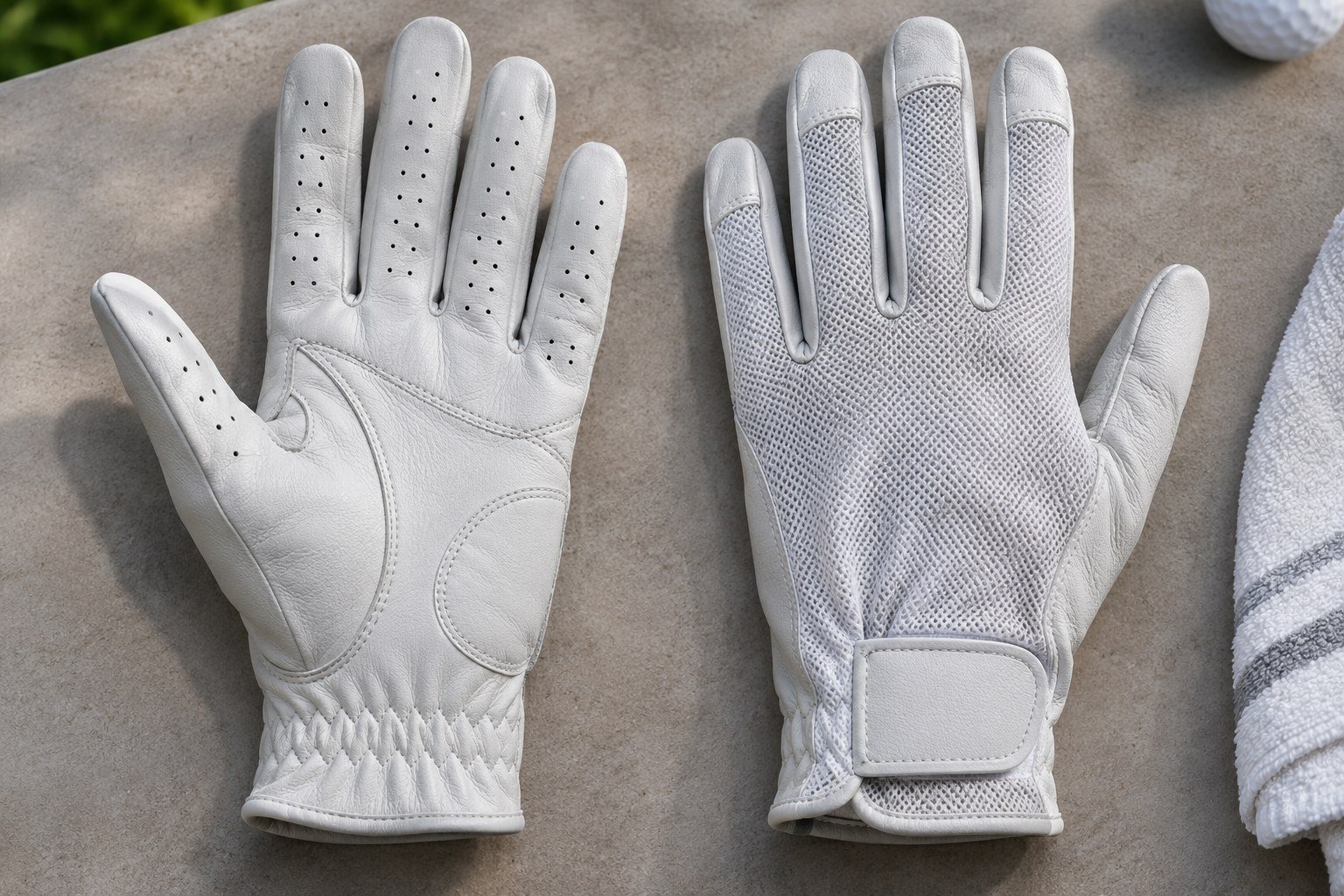
Confirm the fit before buying spares
FootJoy advises a close fit without loose palm or fingertip material. It also identifies cadet proportions as a wider palm with shorter fingers. A different cut may solve a fit problem better than simply moving up or down a size.[4]
Use our hand measurement and golf glove size guide for the sizing steps. Here, the practical check is whether the glove stays in position as you take your usual grip. Look at a fresh dry glove first, then notice what changes during use.
Do not buy a loose glove to create ventilation space, or a painfully tight glove to compensate for a worn grip. Try a different model if the palm fits but the fingers do not. When a candidate works, buying matching spares can make changes feel more consistent; it cannot rescue the wrong cut.
Take a little care when removing it. Titleist’s staff guidance recommends releasing the closure and easing the glove off, rather than tugging at the thumb or fingertips.[5]
Back to top ↑Give each glove a clear job
Start by taking one dry spare alongside the glove you expect to use. Add another only if your own rounds show that you need it. The useful number depends on how often you need to change and whether a used glove becomes usable again, not on a universal three-glove rule.
| Position | What belongs there | When it changes |
|---|---|---|
| In use | The glove currently comfortable and secure on your hand | Change when its condition interferes with your normal grip. |
| Dry reserve | A clean, dry, correctly fitting replacement protected from damp kit | Take it out after drying your hand and checking the club grip. |
| Used and airing | The removed glove, opened out where practical | Return it to use only when its condition is suitable; otherwise leave it out of the rotation. |
At a natural pause, take the glove off if convenient and give your hand a chance to dry. Do not delay play while constructing an elaborate drying setup. The reserve is there so you can change promptly; the damp glove does not have to recover before the next shot.
On a damp or humid day, do not count on an airing glove becoming dry during the round. Check it instead of cycling back simply because its turn has come. Keep an unused reserve away from a wet towel, rainwear and the glove you have just removed.
For your next two or three rounds, note when you first needed a change and whether the first glove became usable again. If one spare consistently covers the problem, stop there. If every glove is already unsuitable well before the finish, review the materials, fit and carry setup together.
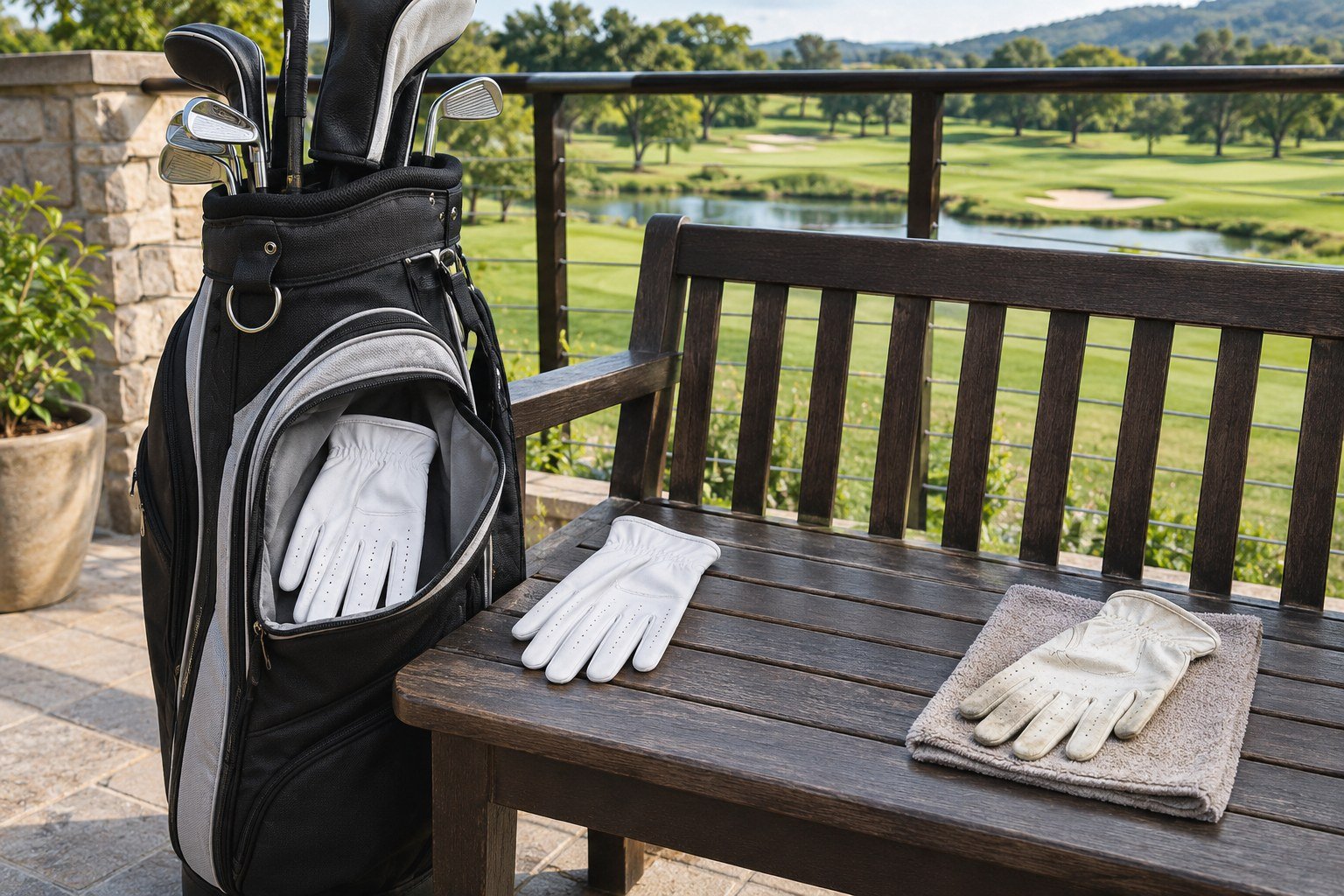
Dry first, then pack for the next round
Titleist’s 2016 staff care advice says to reshape a damp glove, lay it flat on a towel and return it to its packaging once dry. The sequence matters: packaging is storage, not a way to dry a wet glove.[5]
Follow the particular glove’s care label. FootJoy’s general guidance cautions against machine drying or a nearby heat source and treats fully leather gloves differently from general washing advice.[6]
At home, remove used gloves from the golf bag rather than leaving the inspection until the next tee time. Keep the palm smooth without pulling the fingers longer. Check the inside as well as the outside before returning a glove to its protective sleeve.
A holder or ventilated carry pocket can keep things organised; it does not promise a drying time. Our glove holders and drying clips guide covers those storage choices in detail. Use a clean existing arrangement if it already keeps dry and used gloves separate.
Back to top ↑Budget from condition and recorded use
Replace a glove when damage or lost fit prevents a secure, comfortable hold: for example, a hole in a contact area, a failed closure, or material that still moves or feels slippery after appropriate care. Inspect a stiff or distorted glove before reusing it. “Still in one piece” is not the only test.
Keep practice use in your record as well as rounds. A glove used for several long range sessions has done work that a rounds-only count misses. For comparing your own purchases, choose one consistent measure, such as usable holes plus separate practice sessions, and record why each glove was retired.
| Item | Example A | Example B |
|---|---|---|
| Gloves bought | 2 | 3 |
| Example price per glove | £18 | £14 |
| Initial outlay | 2 × £18 = £36 | 3 × £14 = £42 |
| Recorded holes played before all those gloves are retired | 216 holes | 216 holes |
| Equivalent 18-hole rounds | 216 ÷ 18 = 12 | 216 ÷ 18 = 12 |
| Glove cost per equivalent round | £36 ÷ 12 = £3.00 | £42 ÷ 12 = £3.50 |
The table assumes no additional practice use and counts each hole once, even if you changed gloves during it. The figures are invented solely to demonstrate the calculation. Replace them with your receipts and actual records; they do not forecast either glove’s life.
Initial outlay = number bought × price paid. Once the set has been retired, divide its cost by the recorded use. Do not count a glove remaining on the shelf as proof of durability, or claim a final cost per round while it still has useful life left.
Rotation can make a dry option available without proving that total wear life has increased. A larger starting spend may be worthwhile for that convenience, but it needs no exaggerated savings claim. Buy the number that serves your rounds and compare like with like when reviewing cost.

Make the next round a useful comparison
Start with clean grips, a correctly fitting glove and a protected dry spare. Keep the club and hand-drying routine the same when trying another model, so you are not changing everything at once. Note the point at which fit or contact stopped feeling right, and the condition after drying.
If a familiar glove works well with a better rotation routine, there is no need to replace the whole setup. If it repeatedly becomes unsuitable despite that routine, compare another construction one glove at a time. Your own observations can answer the buying question more directly than a breathable label alone.
Back to top ↑Frequently asked questions
What is the best glove material for sweaty hands?
There is no universal winner. Compare the actual palm, back panels and fit, then judge how the glove behaves for you with clean grips and a dry spare. Leather and synthetic sections can appear in the same glove, so one material label is incomplete.[1][2]
How many gloves should I carry?
Start with your playing glove and one genuinely dry spare. Add another if your records show you need it. Do not assume a damp glove will dry soon enough to reuse during the same round.
Do rain gloves solve sweaty hands?
They may suit an individual golfer, but wet-grip design claims do not establish universal comfort or perspiration management inside the glove. Assess the exact model’s purpose, feel and fit instead of treating rain gloves as a guaranteed solution.
Does rotating gloves make them cheaper per round?
Not automatically. Rotation helps you keep another glove available, but savings depend on actual cost and useful service. Record the set’s use without counting the same hole twice, and make a final comparison when the gloves have been retired.
Should I keep a damp glove in its original sleeve?
Dry it first. Titleist’s staff care guidance puts drying before storage in the original packaging; a sleeve protects a ready glove but does not replace the drying step.[5]
Sources and checks
Sources consulted on 23 November 2026. Manufacturer and retailer descriptions are attributed claims; illustrations do not show tested products. Recheck current product details, sizing and care instructions before use or purchase.
- Titleist — Players Flex Men’s, UK product details
- Callaway — Weather Spann Men’s Golf Glove, UK
- Golf Pride — Grip Care
- FootJoy — Golf Glove Fitting Guide
- Titleist — Glove Durability, staff care response (24 February 2016)
- FootJoy — Men’s Golf Gloves, care FAQs
- Clubhouse Golf — Players Flex, glove for the left hand
- Clubhouse Golf — Players Flex, glove for the right hand
Illustrations in this article were created for Taylor’s Trailblazing Golf. Third-party photographs, where used, are credited beside the image or in the source list.