Golf Waterproof Jacket vs Packable Rain Shell: Which to Carry?
Choose a jacket you can wear comfortably when needed and carry accessibly when it is not. Protection and packability belong on the same checklist.
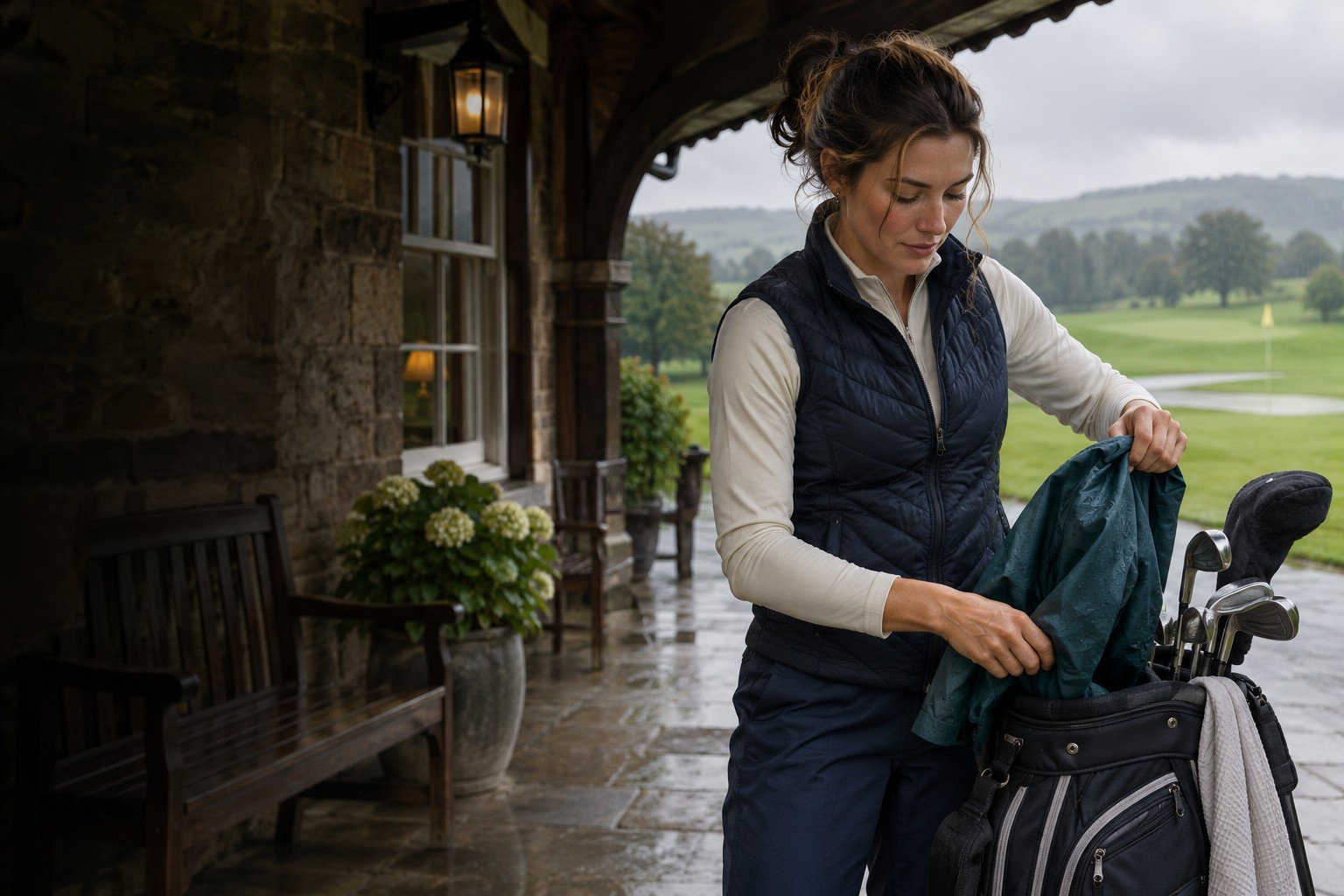
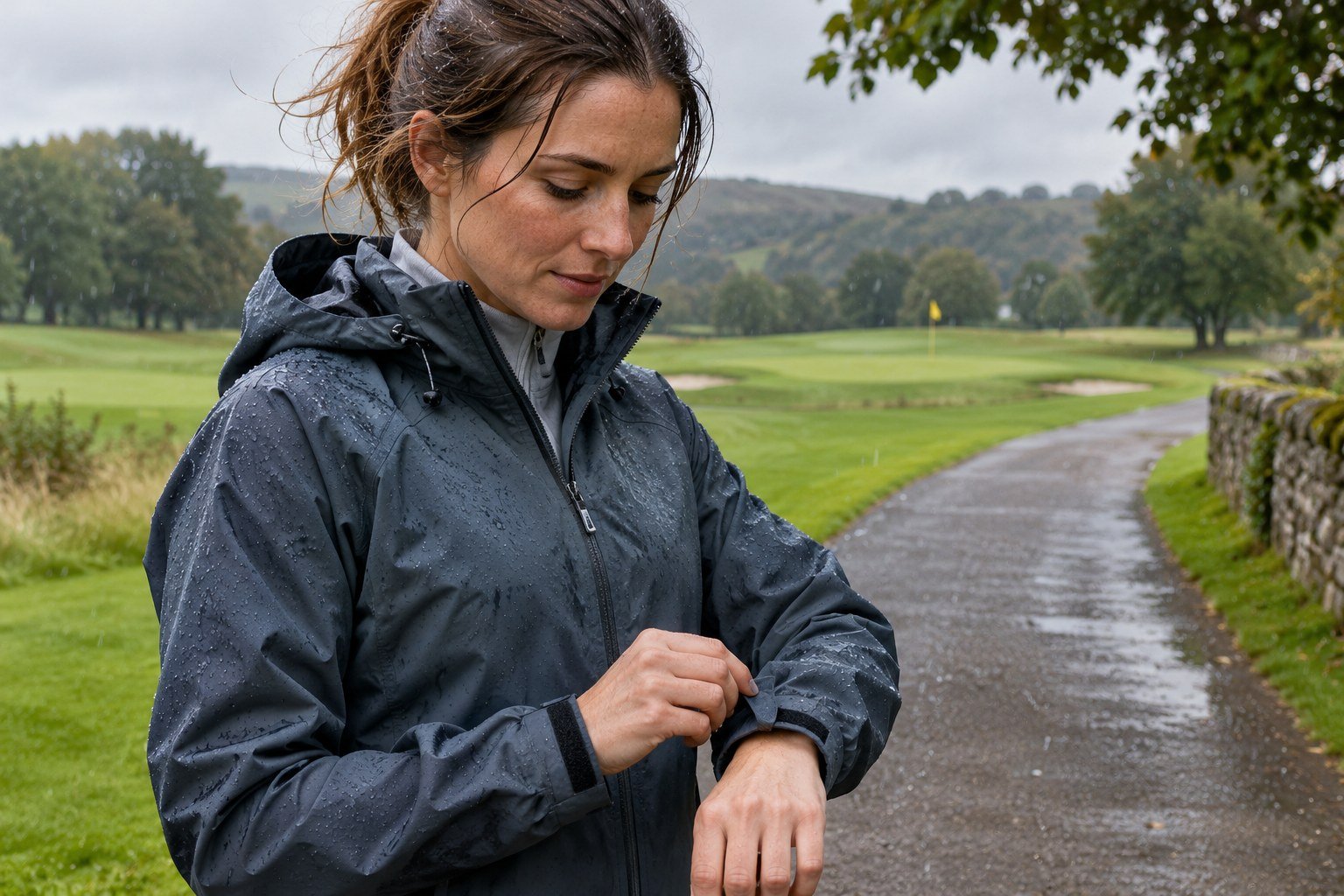
AI illustration. Start with the protection you expect to need and the space available in your bag. Generic scene, not a product test.
This guide contains affiliate links. If you buy through them, Taylor’s Trailblazing Golf may receive a commission at no extra cost to you.
A waterproof jacket and a packable rain shell can describe the same garment. Start with the rain you expect, the layers underneath and the space in your golf bag, then compare the exact construction and features.
Research-led guidance for UK golfers. Read how we assess golf equipment for the distinction between documented features and hands-on testing.
Confirm waterproof construction separately from light weight or compact storage.
Try the shell over the layers you actually expect to wear.
Check the loaded pocket and the route for taking the jacket out.
Buy to solve an identified problem, not to collect two labels for the same job.
Golf waterproof jacket vs packable rain shell: read both descriptions
The useful question is whether the garment meets your rainwear needs and remains convenient to carry. A jacket described as packable has not automatically given up waterproof protection. Equally, a small bundle or a water-repellent description does not establish the construction of the complete garment.
Galvin Green’s UK page for the Akron Black, article A01000519403, provides a clear example of overlap: it describes a waterproof, seam-sealed, two-layer Pertex Shield jacket and says the fabric takes little packing space.[1]
Read three parts of the specification separately. First, establish what the maker says about waterproof construction and seams. Next, examine the garment: collar or hood, cuffs, hem, front fastening and pockets. Finally, ask about carrying it: actual weight, folded size and whether a stated packing method or pouch is provided. An impressive answer in one part does not fill a gap in another.
Also separate rain protection from warmth. Decide what you will wear underneath and whether the jacket has a lining or insulation that changes the outfit. Do not turn fabric layer counts into a count of warm clothing layers. This guide focuses on that practical choice; a laboratory rating alone cannot decide which jacket you will be willing to keep on.
Back to the start ↑Choose the carrying plan before comparing products
Consider how much of the outing you expect to spend in the jacket, how often you may change layers and what else must fit in the bag. Check the forecast near your round and allow for uncertainty. Use the matrix as a planning aid, rather than a prediction of how long any garment will keep you dry.
On a small screen, swipe inside the table to read every column.
| Your likely outing | Give priority to | What could change the choice? |
|---|---|---|
| Rain is expected for much of the round | A complete waterproof you are comfortable wearing over the intended outfit. | A compact shell is still suitable if its construction, fit and features meet that same need. |
| Mostly dry, with showers possible | A verified waterproof that fits an accessible pocket and is straightforward to put on. | Limited coverage, awkward fastening or a poor layer fit outweigh a small bundle. |
| Mild weather with repeated on-and-off changes | Easy entry and removal, manageable cuffs and a practical way to adjust the outfit. | A lighter-looking shell may still feel unsuitable over the layers you have chosen. |
| A carry bag with little spare room | The smallest suitable complete clothing arrangement, checked in the loaded bag. | Removing an unnecessary spare garment may solve the problem without a new jacket. |
| You already own a jacket that fits and packs well | Its condition, care requirements and suitability for the day. | Replace it only when a real unresolved limitation justifies doing so. |
Frequent wear makes small annoyances more relevant: a collar that troubles you, a sleeve that catches or a pocket you cannot reach can matter throughout the round. Occasional wear changes the emphasis towards access and storage, but does not excuse an unsuitable garment. These priorities can lead two golfers to different choices without either needing the heaviest or smallest jacket on sale.
Use exact models to see which features you would use
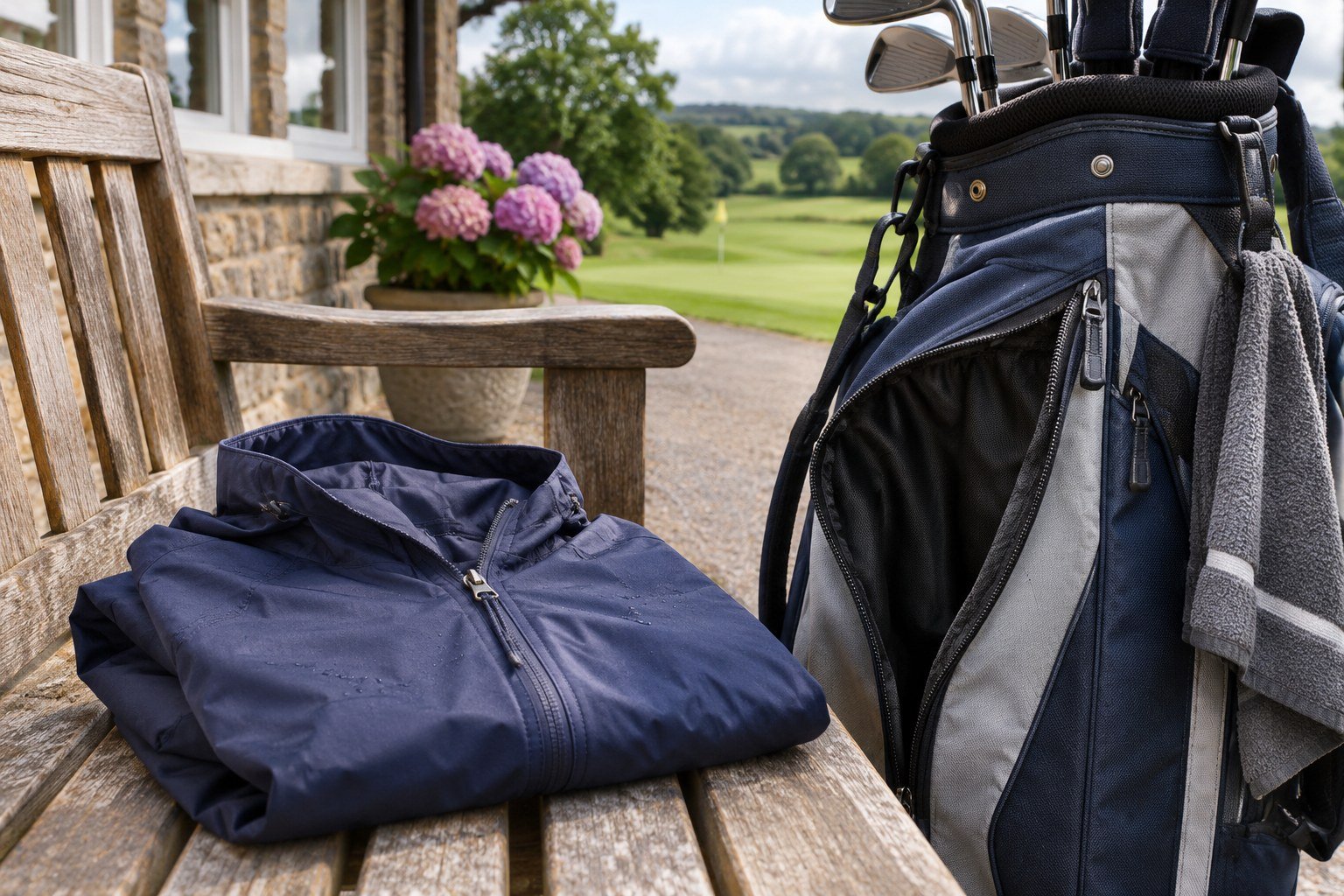
These two men’s jackets illustrate different feature combinations. They are specification examples, not a tested ranking. Select the relevant women’s or other product range on its own measurements and specification rather than translating a men’s size label.
On a small screen, swipe inside the table to read every column.
| Exact garment | Maker’s relevant features | Question to resolve before buying |
|---|---|---|
| Galvin Green Akron, Black, A01000519403 | Adjustable hood and cuffs, drawstring hem and front pockets.[1] | Does the hood and closure arrangement suit you, and does your size fit the available pocket? |
| FootJoy HydroTour, Black, 31944 | Three-layer fabric, sealed seams, underarm zip vents, DrySeal collar and adjustable cuffs.[2] | Would you use the venting and collar arrangement comfortably while wearing your planned layers? |
The cited specifications do not establish comparable finished weights or packed volumes for these two jackets. They cannot support a smallest-or-lightest award. Nor does a three-layer description by itself show that one garment is warmer, bulkier or more durable than the other.
Use the feature list to decide what to inspect. Can you work the front zip normally? Do the cuffs close without gathering into an awkward lump? Does a hood, if fitted, stay comfortable when you turn your head? Can you reach the pockets with the bag arrangement you use? A feature is worth paying for when it answers one of your actual needs.
Back to the start ↑Check the complete outfit, including the bag straps
FootJoy’s clothing guide bases men’s top sizing on chest measurements, with a defined measuring method.[3]
For help distinguishing wearer measurements from clothing dimensions, use the published golf clothing size-chart guide. Then assess the jacket over the outfit it needs to cover.
- Put on the intended shirt and midlayer. Use a realistic combination, not every warm garment you own.
- Fasten the jacket normally and make its usual cuff and hem adjustments. Notice pressure at the shoulders, underarms and front zip.
- In a clear indoor space, reach forward, sit and make a slow, comfortable empty-handed golf movement. Check whether the sleeves, collar or lower hem need constant correction.
- If you carry, assess the relationship with your usual bag straps without overloading the bag or turning the try-on into an endurance test. Check that pockets and adjustments remain usable.
Keep a new garment clean and follow the seller’s current trial and return conditions. If the size that gives enough room also leaves troublesome sleeves or excess fabric, compare another cut. Automatic sizing-up can exchange one problem for another.
Repeat the check over a lighter outfit if you expect to use the same jacket across seasons. A successful indoor try-on can reveal obvious restrictions; it does not establish comfort through a full wet round or verify the waterproof claim.
Run a packing check with the bag you actually take
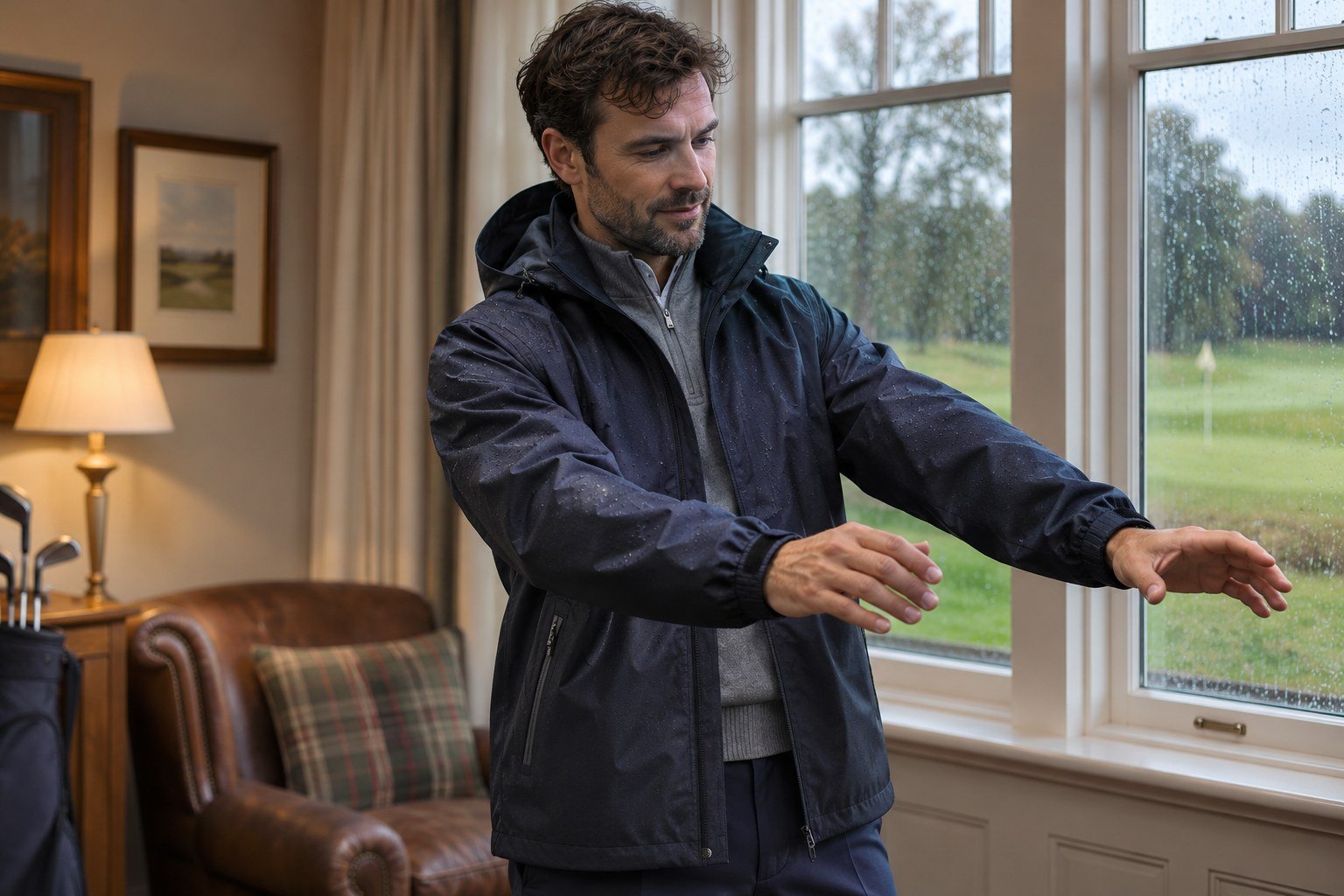
A jacket that fits an empty pocket may be awkward once the bag contains rain trousers, a spare glove and the other items you normally bring. Assess the whole load before paying for a smaller shell. The check below produces observations about your arrangement, not a universal packed-volume figure.
- Load the bag as for the intended round. Include the clothing you would want available alongside the jacket.
- Use a clean, dry jacket and its intended folding or packing method. Keep a supplied pouch with it if that is how you will carry it.
- Place it in the chosen pocket. The fastening should close normally without forcing the jacket against sharp or dirty items.
- Take it out and put it back while the bag is positioned as you normally use it. Notice what else has to be removed and where those items would go.
- Check the alternative arrangement. Could another pocket, or leaving an unnecessary duplicate layer at home, make the current jacket practical?
Write three short results: fits with the full load; comes out without unloading; returns without forced compression. If one fails, describe why. “The rain trousers occupy the same pocket” is a more useful shopping requirement than “I need something more premium”.
A hypothetical carrying decision
A golfer owns a comfortable waterproof, but usually leaves it behind because the clothing pocket is full. The packing check shows that an extra sweatshirt and a second unused top occupy that space. If the planned outfit already covers the day’s warmth needs, removing the duplicate top may make the existing jacket convenient to carry. If both layers are necessary, the remaining space becomes a genuine criterion for a different shell.
A small advertised weight difference does not settle this example. The useful result is a suitable garment that has a place in the real bag and can be reached when needed.
Back to the start ↑Keep the jacket usable between the bag and the course
Put the jacket somewhere you can reach before the clothes beneath it become wet. Practise the ordinary zip, cuff and hem adjustments at home so you know which controls belong to the garment. During a round, make clothing changes while stationary in a suitable place rather than trying to wrestle a sleeve while walking.
Use ventilation features as their design permits and reconsider the layers beneath when you feel uncomfortable. Opening a garment changes its coverage. A high breathability claim does not remove the need to manage the outfit, and dampness inside a jacket is not, by itself, a diagnosis of where moisture entered.
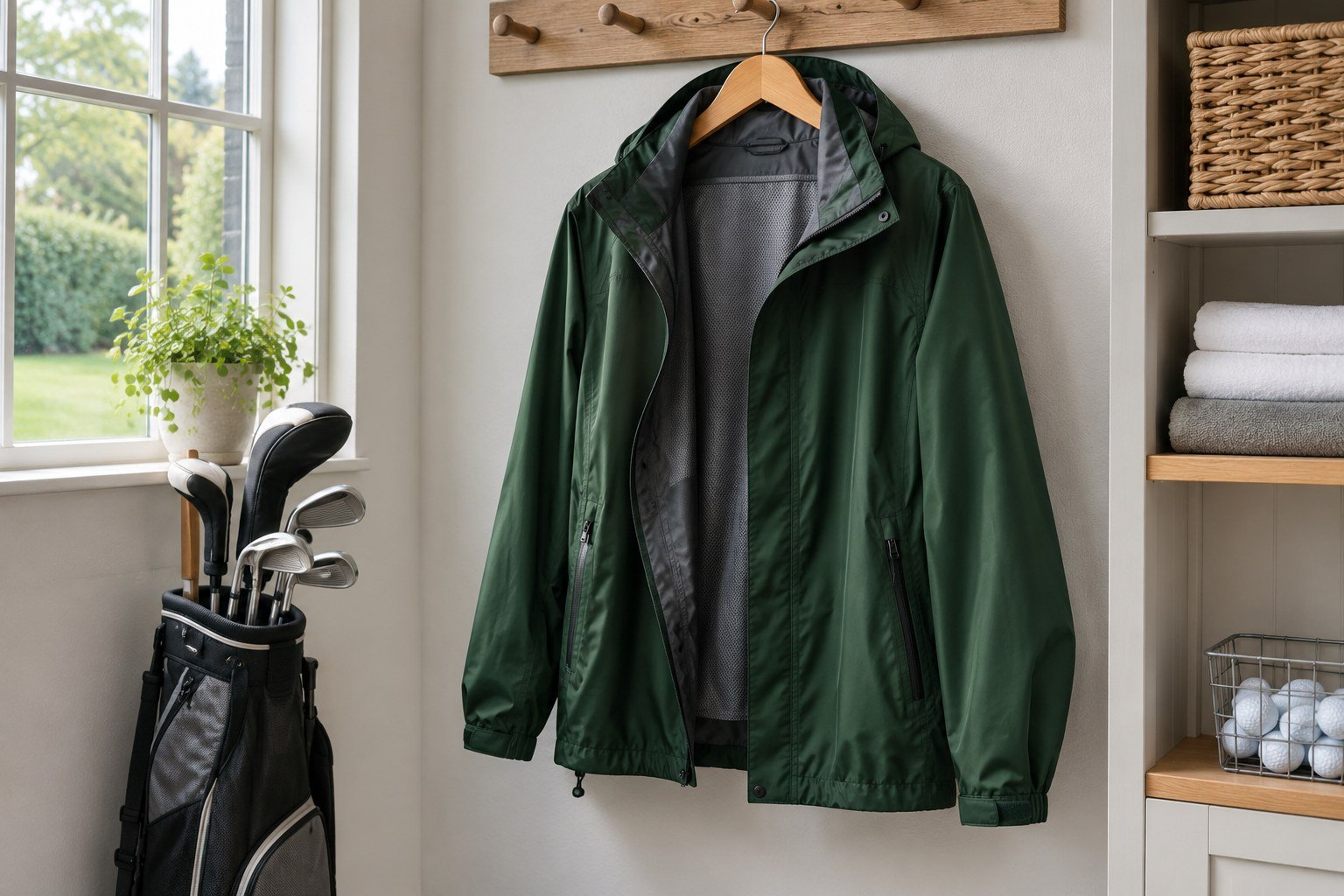
Compact transport is a different job from storage between outings. Galvin Green’s Akron instructions recommend hanging the rainwear to dry after use and caution against leaving it packed while wet.[1] Build that unpacking step into arriving home, rather than leaving the garment in the golf bag until the next shower.
Follow the label and current instructions for your exact jacket when washing, drying or renewing a treatment. Do not copy another brand’s heat setting or assume a home spray repairs damaged fabric or seams. If a closure, seam or lining has deteriorated, ask the maker about the appropriate service route before relying on it.
Buy for the unresolved limitation, or keep the jacket you have
Make the final choice in order: suitable rainwear construction, comfortable fit with the intended layers, useful closures, then practical carrying. A favourable answer to the first three followed by an awkward bag fit is a reason to investigate packing. A tiny packed size followed by poor fit is a reason to choose another garment.
If you want to compare the documented hooded option, view the Galvin Green Akron Black at Clubhouse Golf. The retailer identifies article A01000519403.[4] For the collar-and-vent arrangement, view the FootJoy HydroTour Black at Clubhouse Golf, listed as article 31944.[5] Check the selected size, current terms and exact product details before ordering.
Keep your current jacket if it already meets the need. Seek an exchange or another cut when a new purchase fails the outfit check. Consider service when a previously suitable garment has a specific condition problem. Buy a replacement when you can explain which missing feature or fit requirement it solves.
For your next round, finish with one practical sentence: “I will wear or carry this jacket over these layers, in this pocket.” That is a usable plan. Owning both a waterproof jacket and another item labelled packable is optional when one garment already does both jobs.
Back to the start ↑Questions before you decide
Can a waterproof jacket from another outdoor activity work for golf?
It may be worth assessing if you already own one. Apply the same construction, layering, movement and packing checks. A non-golf label does not answer those questions either way. Pay particular attention to sleeve movement, pocket access and anything that becomes awkward in your usual golf outfit.
Should a packable shell have a full zip or a pullover opening?
Choose the opening you can manage comfortably over your layers. Compare putting it on and taking it off, the available adjustment and the way it sits when closed. A full zip and a pullover can each be practical; the opening style alone does not establish waterproof performance or packed size.
Sources and editorial checks
Manufacturer documentation and published technical evidence inform this guide. The comparisons and checklists are editorial decision aids, not results of hands-on product testing.
- Galvin Green UK — Akron Black, A01000519403Exact construction, packing description, features and care instructions; checked 24 November 2026.
- FootJoy UK — HydroTour Black, 31944Exact jacket construction, vents, collar and cuffs; checked 24 November 2026.
- FootJoy UK — Clothing Fitting GuideMen’s top measurement basis. Checked 24 November 2026.
- Clubhouse Golf — Akron BlackMatching article A01000519403; checked 24 November 2026.
- Clubhouse Golf — HydroTour BlackMatching article 31944; checked 24 November 2026.
Illustrations in this article were created for Taylor’s Trailblazing Golf. Third-party photographs, where used, are credited beside the image or in the source list.