Golf Rangefinder Waterproofing: Making Sense of IP Ratings
Read the rating, the owner’s instructions and the warranty as three separate checks.
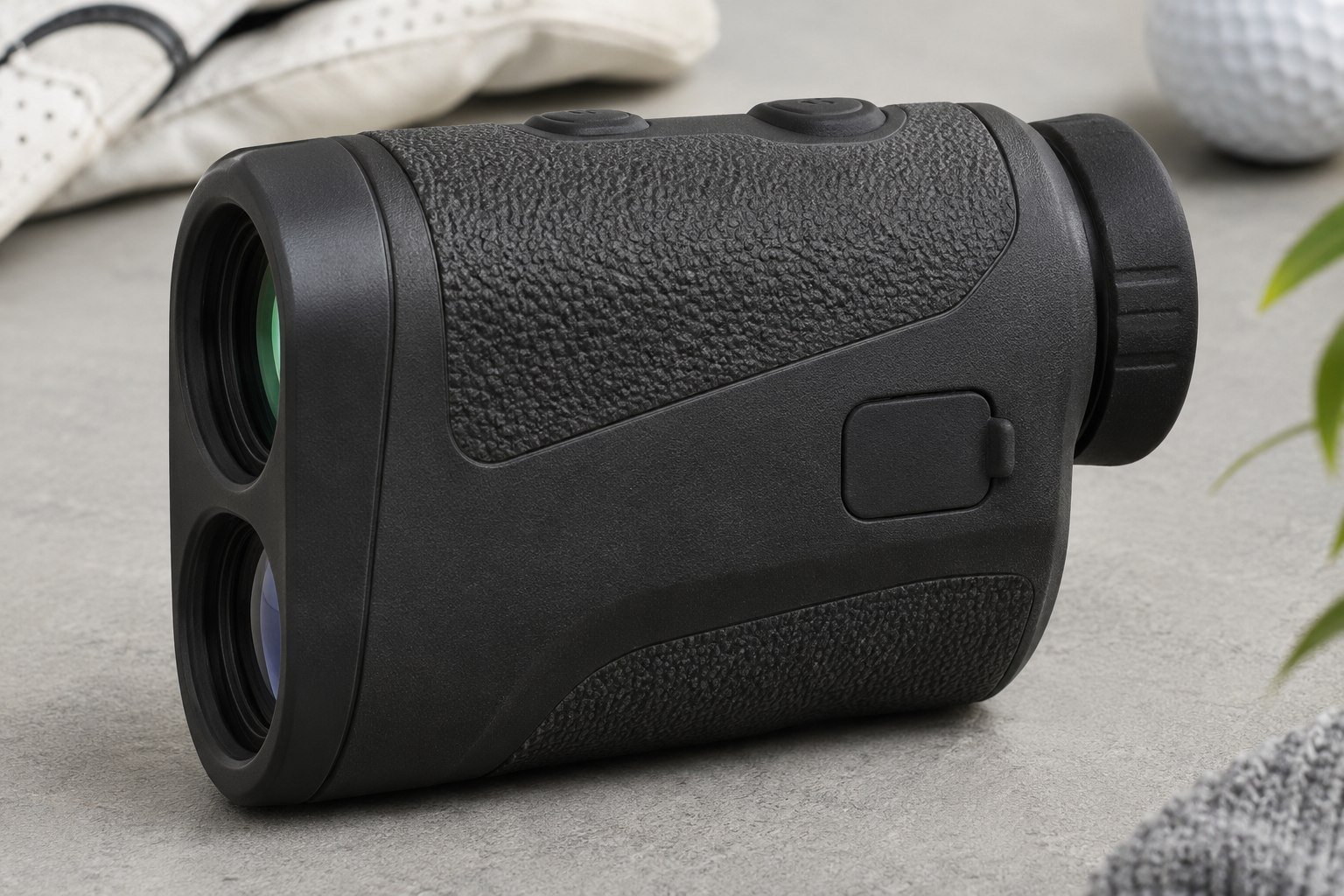
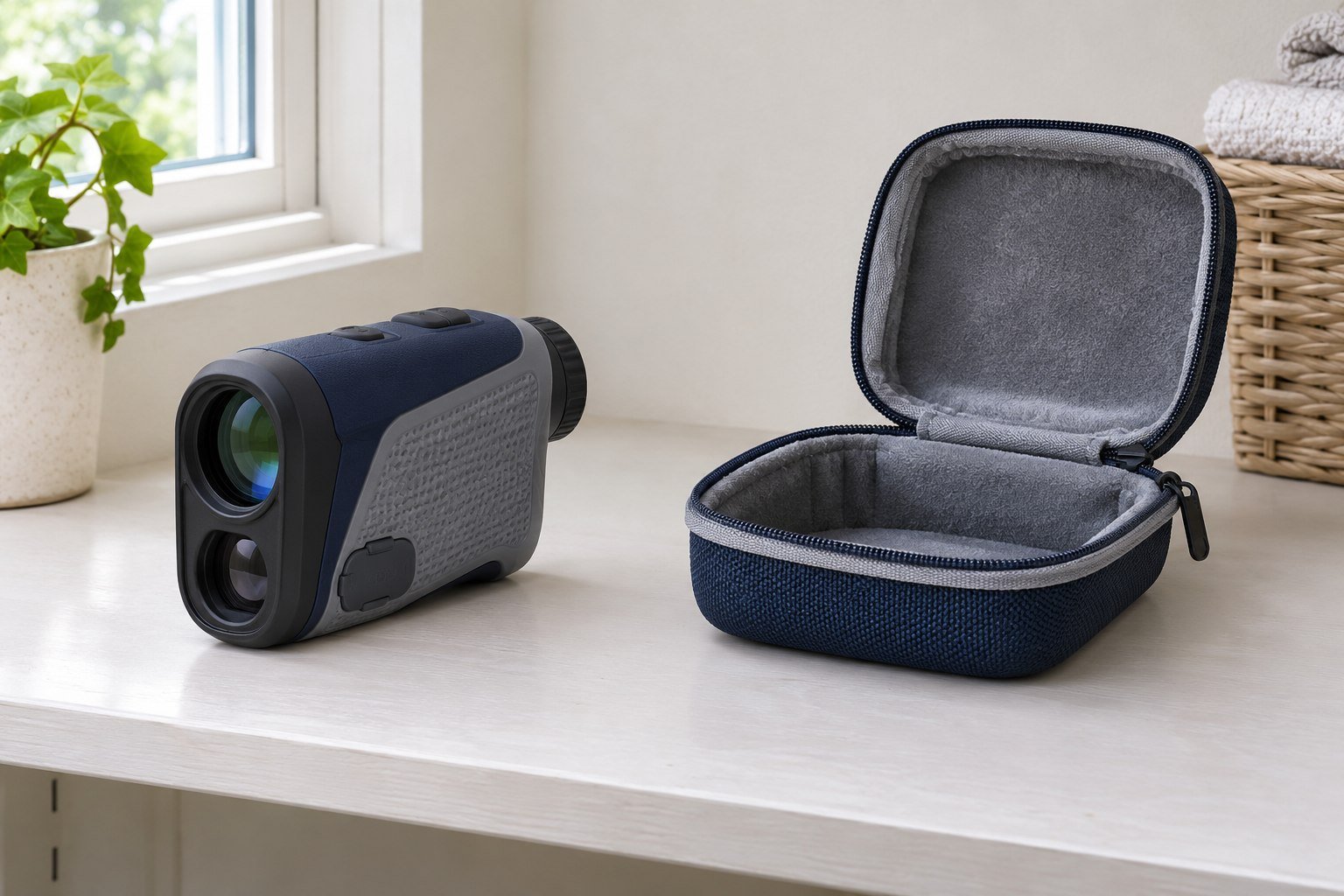
Keep the device protected and check the weather limits documented for the exact model. AI-created category illustrations show generic golf equipment, not the named products or a product test.
Golf rangefinder waterproofing is easier to judge when you separate three questions: which water exposure is documented, what the owner’s manual permits, and what happens if the device develops a fault. A large IP number or a “water resistant” label cannot answer all three.
This guide compares published specifications and care instructions, then provides a worksheet for your exact model. The examples are research based; they are not results from soaking or rain testing.
This guide contains affiliate links. If you buy through them, Taylor’s Trailblazing Golf may receive a commission at no extra cost to you.
Read the solid-particle and water positions separately.
Put the product claim beside the exact owner’s manual.
Check accessible closures and visible damage before wet use.
Save the model, instructions, receipt and unanswered questions.
What golf rangefinder waterproofing ratings actually tell you
IEC 60529 classifies protection provided by enclosures. The first numeral concerns solid objects; the second concerns water. An X leaves that characteristic unspecified, while 0 denotes no protection. Thus IPX7 makes no dust-protection claim in its first position. [1] [2]
Scroll the table horizontally on a small screen to see every column.
| Code | Exposure described | Question to take to the manual |
|---|---|---|
| IPX4 | Water splashing from any direction. | What usage and closure conditions apply? |
| IPX5 | Water jets. | Does the maker impose additional care restrictions? |
| IPX6 | More powerful water jets. | Is the published use guidance consistent with the rating? |
| IPX7 | Temporary immersion under stated test conditions. | What depth, duration and handling limits does this model specify? |
The standard treats immersion and jet exposure separately. An IPX7-only marking does not establish the IPX5 or IPX6 jet requirements; combined protection can be identified with dual coding. A higher-looking number is therefore not a universal upgrade for every wet situation. [1]
Use the code to ask better questions. Do not reproduce a laboratory exposure with a bucket, hose or pressure washer. A claim about an intact enclosure is not a useful home challenge for a valuable optical instrument.
Back to guide contents ↑Two exact models show why the manual matters
These examples illustrate different kinds of documentation. They are not a ranking of real-world waterproof performance.
Scroll the table horizontally on a small screen to see every column.
| Exact model | Documented water claim | What the owner should retain |
|---|---|---|
| Garmin Approach Z30 | The manual specifies IEC 60529 IPX7, with incidental water exposure up to 1 metre for up to 30 minutes. | The same manual asks owners to keep the battery-cover gasket and compartment free of debris and close the cover correctly. Rain can also reduce ranging ability. [3] |
| Bushnell A1-Slope, model 202510S | The official product page lists IPX6. | Its model-specific manual nevertheless says to avoid heavy rain and direct streams, and states that the device cannot withstand immersion. Treat that restrictive instruction as the limit until Bushnell clarifies it. [4] [5] |
The A1-Slope documents should not be blended into a confident “heavy-rain proof” recommendation. Save both passages and ask the manufacturer which instruction applies to the unit you intend to buy. A seller repeating the IP number does not resolve the discrepancy.
The Z30 warning also separates enclosure protection from useful readings. A water rating does not promise reliable ranging in rain.
Build an exact-model IP and condition record
Complete this small record before purchase, or use it to review the rangefinder already in your bag. “Unknown” is a useful result when it identifies the question you need answered.
Scroll the table horizontally on a small screen to see every column.
| Record | What to write down | Decision if unclear |
|---|---|---|
| Identity | Full model, suffix, product code and manual version. | Do not borrow a rating from a similarly named generation. |
| Water claim | Complete IP code and the manufacturer’s stated conditions. | Ask for the written specification; leave the rating unknown meanwhile. |
| Restrictions | Rain, immersion, cleaning and storage cautions. | Follow the restrictive instruction while conflicting wording is clarified. |
| Closures | Which user-accessible covers must be closed, and how the manual says to check them. | Do not improvise an extra seal, tape wrap or adhesive repair. |
| Present condition | Visible cracks, loose covers, damaged accessible seals or previous repairs. | Ask the manufacturer or authorised service team about continued use. |
| Fault route | Seller, receipt, applicable warranty and service contact. | Resolve the route before relying on a broad “waterproof” sales claim. |
For a used unit, request clear photographs of the exact housing and closures as well as its model label. A specification from the original sale does not establish the present condition of the particular item. Treat an unexplained repair or missing cover as an unresolved condition question, not as a reason to conduct your own water test.
Back to guide contents ↑A practical routine before, during and after rain
Before the round
Read the closure instructions in a dry place and inspect only the areas intended for owner access. A cover that will not seat as directed, an obvious crack or a damaged visible seal is a reason to stop and seek model-specific advice. Keep the manual available on your phone so that a wet-weather decision does not depend on remembering a shop description.
While playing
Keep the carrying case accessible and return the instrument to it when the conditions exceed its stated guidance. A case is useful storage; do not assign it a waterproof rating merely because it has a zip or looks padded. Avoid leaving a rangefinder exposed simply because retrieving it from a magnet or open holder is convenient.

Back under shelter
Garmin’s Z30 instructions specify a soft, non-scratching cloth dampened with water or alcohol for the exterior and lens, drying the casing and allowing the lens to air dry. They prohibit dry-cloth lens cleaning. Follow the instructions for your own model. [3]
Separate inspection from repair. Look at exterior condition in good light, but do not remove housing screws or prise out seals to investigate. If you see apparent moisture inside an optical window or the unit behaves abnormally after getting wet, stop using it and ask the maker for the next step.

Check the warranty before you need a claim
An IP claim and a warranty answer different questions. Bushnell’s A1-Slope product page, for example, describes limited cover for manufacturing defects and excludes damage from misuse or improper handling. That wording does not establish that every water-related fault will be accepted. Check the terms that apply to your seller and market. [4]
Keep a short written enquiry with your model record: “This exact model is listed as [rating], while its manual says [restriction]. Is my intended use in [conditions] permitted, and which warranty terms apply if it develops water ingress?” A precise question is more useful than asking whether a device is “waterproof”.
If there is a problem, record the date, conditions, visible symptoms and the instructions followed. Photograph the exterior without opening the housing, retain the receipt and contact the seller or manufacturer. Avoid promising yourself a repair outcome before the fault has been assessed.
For ordinary post-round storage, follow the drying instructions before closing the kit away. Keep the rangefinder and its damp carry case separate while they dry; do not introduce a radiator, hairdryer or improvised heat treatment. If water may have entered the instrument, ask for service guidance rather than treating exterior drying as proof that it is ready to use.
When clearer documentation is worth paying for
Keep your existing rangefinder if its documented limits match your use and its condition remains satisfactory. Buying a new one solely for a larger-looking IP number is not a complete decision.
If you are already replacing a unit and want a clearly stated incidental-immersion limit, the Approach Z30 is one candidate to compare. Clubhouse Golf listed the black Z30, product code RFGAR048, at £349 and in stock on 24 November 2026. Check the Garmin Approach Z30 at Clubhouse Golf. Price and availability may change; confirm the current offer and applicable terms before ordering. [6]
Choose the model whose exact rating, instructions and service route you can explain without filling in gaps. Where the documents conflict, obtain clarification first. No shopping decision requires deliberately soaking the device to find out.
Back to guide contents ↑Sources
- IEC 60529 — published standard text via iTeh
Code arrangement, X versus 0, water categories and separate jet/immersion coding; standard text includes amendment material. Checked 24 November 2026. - IEC — consolidated IEC 60529 catalogue
Official scope and identity of the enclosure-protection standard. Checked 24 November 2026. - Garmin — Approach Z30 owner’s manual
Exact IPX7 conditions, closure check, weather limitation and model-specific cleaning instructions. Checked 24 November 2026. - Bushnell — A1-Slope official product page
IPX6 specification and limited-warranty wording. Checked 24 November 2026. - Bushnell — A1-Slope model 202510S manual
The care section gives restrictive rain, stream and immersion guidance. Checked 24 November 2026. - Clubhouse Golf — Garmin Approach Z30
Exact black model RFGAR048, listed £349 and in stock at the check. Checked 24 November 2026.
Illustrations in this article were created for Taylor’s Trailblazing Golf. Third-party photographs, where used, are credited beside the image or in the source list.