Golf Shoes for Wide Feet: Last Shape and Indoor Fit Checks
Match the shoe’s shape and selected width to your foot, with a clear indoor record of what fits and what does not.
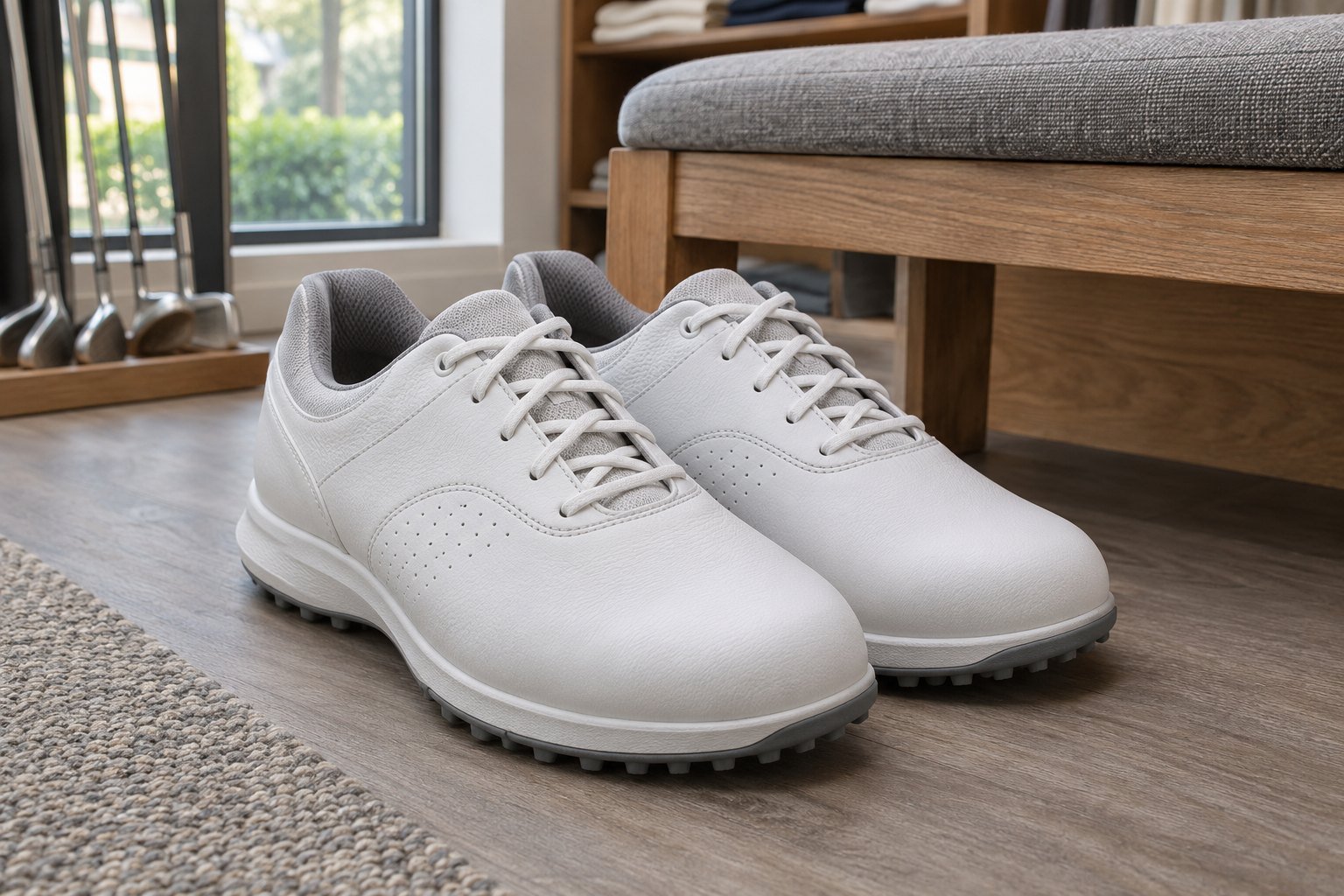
A broad-looking toe is a starting observation, not proof of fit. AI-generated illustration of generic shoes.
Golf shoes for wide feet need room in the right places. A shoe that frees the forefoot can still let the heel move, while a longer size may leave the original pressure point unresolved.
This guide explains how to compare last shape, width options and the complete indoor fit. It uses current manufacturer descriptions and UK retailer listings, with a practical record you can take to a fitter. It does not claim that these shoes have been worn or tested on the course.
Ad – includes affiliate links. If you buy through these links, Taylor’s Trailblazing Golf may earn a commission. Recommendations are based on the equipment decision and the available evidence.
Locate the pressure point before changing the size.
A roomy front still needs suitable instep space and heel hold.
A maker’s wide range may differ from a retailer’s listing.
Record both feet and reject unresolved problems without averaging them away.
Golf shoes for wide feet: locate the fit problem first
A shoe can feel tight across the ball of the foot, press on the top of the instep or crowd the toes. Those observations describe different problems. Before changing size, identify where you need room and where the shoe already holds your foot well.
On a phone, swipe within the table to see all columns.
| Where you notice it | What to record | Useful next comparison |
|---|---|---|
| Forefoot | Pressure at the sides near the ball of the foot. | The correct length in a wider fitting, then another last if needed. |
| Toe area | Toes pressed together or pushed against the front. | Toe-box shape and length separately; a rounded outline alone proves neither. |
| Instep | Pressure under the tongue or closure. | Interior volume, opening and normal fastening adjustment. |
| Heel | Repeated lifting or side-to-side movement while walking. | Heel shape and retention; extra forefoot room should still leave a usable heel fit. |
These are observations to discuss with a fitter, not a diagnosis or a universal sizing formula. FootJoy’s fitting guidance considers shoe shape, opening and lining as well as the size label, and recommends fitting both feet. [1]
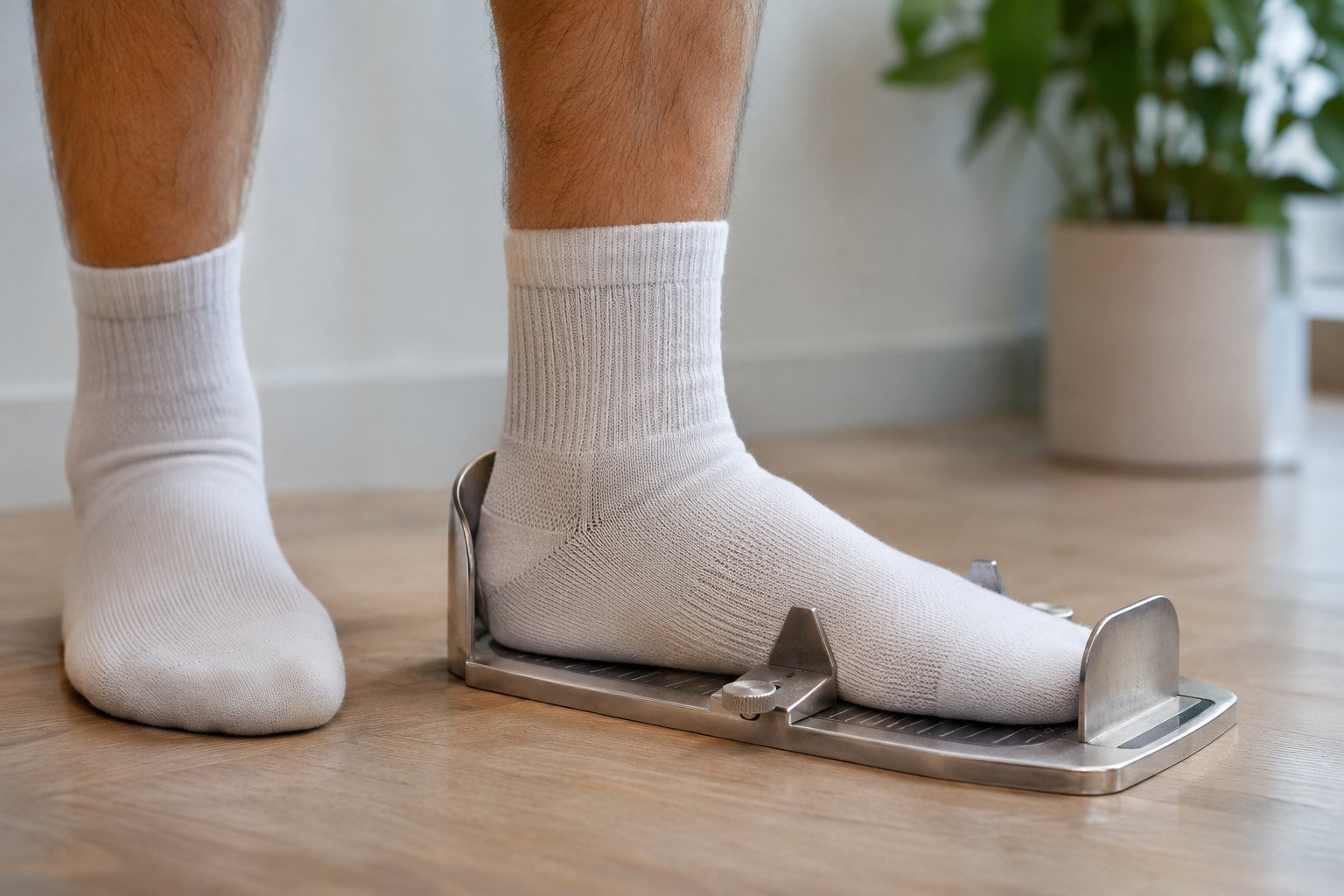
If the starting measurements are missing, use our golf shoe sizing guide for the separate left/right record and the correct brand chart. This guide takes the next step: choosing a shape and width that work together.
Back to top ↑Read the last description alongside the width option
A last is the form around which a shoe is made; its proportions help determine the finished shape. A wide option changes the fitting within that model. The name of the last, a broad-looking outsole and the word “Wide” therefore provide different pieces of information.
Two current UK manufacturer descriptions show why a model-level check matters. These are men’s examples, not recommendations for every wide foot.
On a phone, swipe within the table to see all columns.
| Exact example | Maker’s last description | What it does not establish |
|---|---|---|
| FootJoy Pro/SL, style 56951 | Vantage Last: room across the forefoot, a rounded toe and a slightly narrower heel. [2] | The interior dimensions of your selected size/width, or whether its heel suits you. |
| FootJoy Traditions, style 57903 | Laser Street Last: rounded toe, standard forefoot/instep proportions and a slightly narrower heel. [3] | That every Traditions version is a wide fitting. Select the width separately. |
Both maker pages display Medium, Wide and Extra Wide options. That is a range description, not evidence that your size is available at a particular retailer. The last descriptions also do not give a millimetre difference between widths. [2] [3]
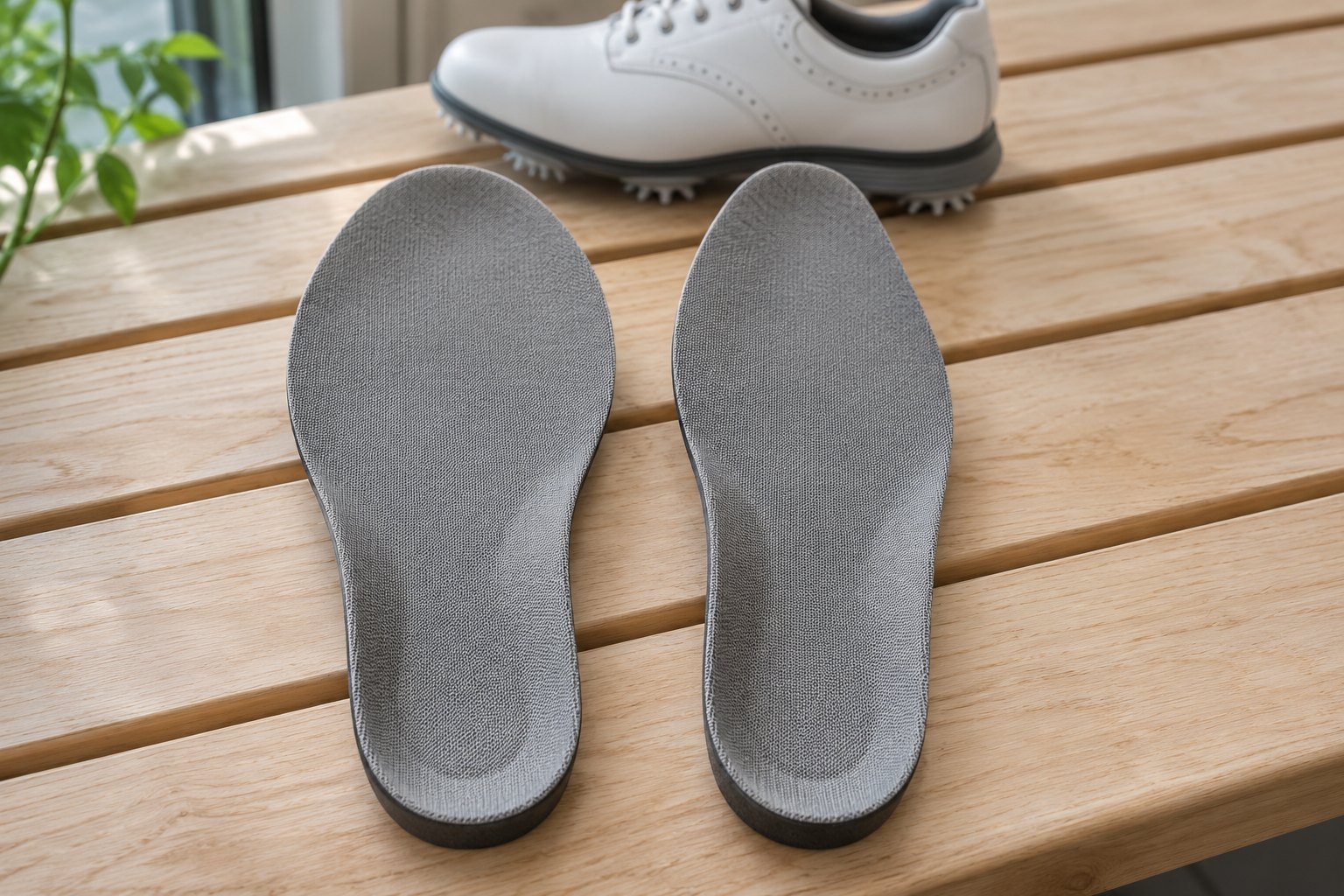
Use each brand’s own chart and the correct men’s, women’s or junior range. Skechers, for example, specifically warns that its performance running, walking and golf sizes may vary. Do not transfer a familiar letter or width name into another range without checking. [4]
Back to top ↑Set up a clean indoor comparison
Before ordering, check the exact size system, width, colour and style number. Keep a note of those choices: a product family name can cover more than one version, and a size dropdown may default to the regular width.
Wear the socks you normally use for golf and have both feet measured using the chosen brand’s method. FootJoy recommends measuring later in the day and checking the larger foot when the two differ. A measurement is a starting point for the fitting, not a substitute for wearing the shoes. [1]
Read the seller’s return conditions before trying them. Keep the packaging intact, use a clean indoor surface and avoid outdoor grass, paths or deliberate wear. If the conditions for trying shoes are unclear, ask the retailer first. There is no general trial period promised by this article.
If you normally use an insert, establish whether the shoe allows that arrangement and assess the complete setup. Removing padding or stacking extra inserts simply to change the fit makes the comparison unreliable. Ask a fitter about any special fitting requirement before modifying the shoe.
Back to top ↑Check both shoes in a consistent order
Use the same socks and a comparable fastening tension for each candidate. Start with the correct length and selected width, then follow this short sequence:
- Seat the foot normally. Open the closure enough to put the shoe on without forcing the heel. Fasten it as instructed, without pulling it unusually tight.
- Check the front. Compare toe clearance with the maker’s guidance. Notice side pressure and whether the toes can sit naturally; do not curl them to make the shoe feel long enough.
- Check the top. Look for concentrated pressure under the tongue or closure. More length is not a precise way to solve an instep-volume problem.
- Walk on the clean indoor surface. Notice heel movement, sliding and any rubbing. Check both feet, not just the one that usually causes trouble.
- Watch the flex. Does the shoe bend where your forefoot bends? If the shape or length feels wrong, stop and compare another option.
FootJoy’s guide calls for comfortable first wear, a suitable forefoot flex point and no excess movement when walking. It does not suggest enduring a poor fit until the shoe stretches. [1]
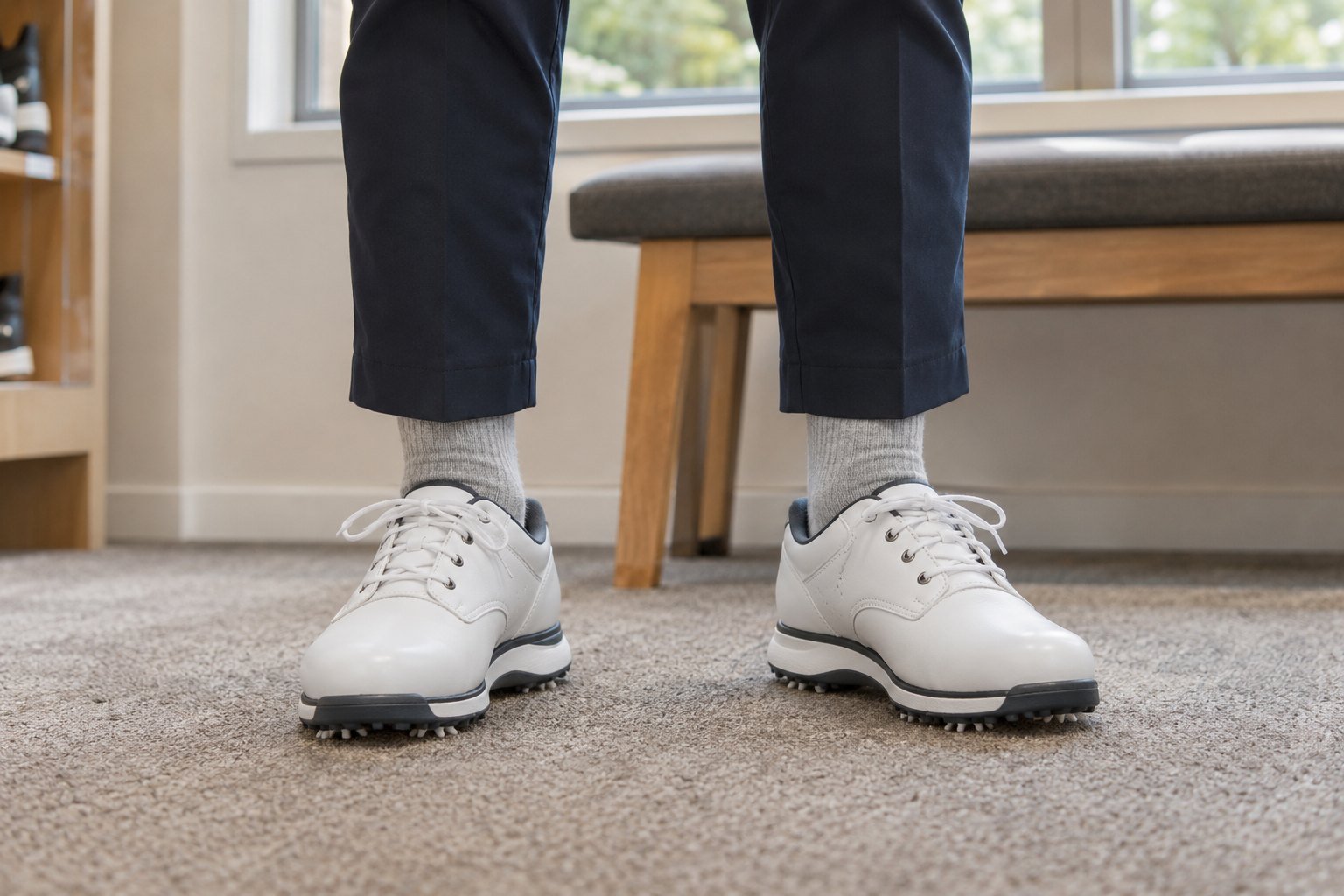
A clean indoor check cannot prove traction on wet grass or comfort over a full round. Its job is to identify an obvious mismatch while you can still discuss the purchase with the retailer.
Back to top ↑Keep a record that allows a clear reject decision
Copy the following into a phone note. Give each candidate its exact model, style, UK size and width. Record the left and right foot separately where the experience differs.
On a phone, swipe within the table to see all columns.
| Check | Record for each candidate | Reason to stop comparing this pair |
|---|---|---|
| Toes and forefoot | Where space feels adequate, where pressure occurs and whether length is appropriate. | Persistent crowding, side pressure or a need to curl the toes. |
| Instep and closure | Normal fastening setting and any concentrated pressure. | Comfort requires an extreme adjustment or the closure cannot work normally. |
| Heel and movement | Heel lift, sideways movement and sliding during a short indoor walk. | Repeated movement that remains after sensible normal adjustment. |
| Flex and overall feel | Where the upper bends and any left/right difference. | The bend feels misplaced or one foot remains uncomfortable. |
| Buying details | Selected variant, care requirements, return conditions and questions for the retailer. | The desired width or return conditions remain unclear. |
This is deliberately a record rather than a points score. A roomy toe box does not cancel out an unstable heel, and a good price does not resolve a fit problem.
A worked example: roomier front, loose heel
Suppose your usual length feels comfortable at the toes in Wide, but the heel repeatedly lifts. The next comparison is a different last with suitable forefoot room and better heel retention. Going down a length may crowd the toes again; tightening hard or adding several inserts hides the original problem. This is an illustrative decision, not a result from testing a named shoe.
Check the selected width on the buying page
The two Clubhouse Golf listings below showed Medium and Wide in their specification tables when checked. Select Wide and your actual size before assessing availability. No individual size/width stock combination or current price is promised here. Both are men’s models.
- View FootJoy Pro/SL 56951 in White/White/Grey — select Wide. The retailer’s style number matches the current Vantage Last model described above. [6]
- View FootJoy Traditions 57903 in White/White — select Wide. This is the named Laser Street Last example; FootJoy places it in its previous-season range. [7] [3]
Do not infer Extra Wide availability at Clubhouse from the wider selection on FootJoy’s own pages. The retailer evidence here supports Medium/Wide only.
A same-model listing can still have the wrong width
Skechers UK displays Medium and Wide for the men’s Flow SI, style 214153-WHT. The matching white Flow Slip-In listing at Clubhouse Golf states Regular only. Its matching name and colour therefore do not make that retailer page a verified Wide buying option. Check the selected width with the supplier before ordering. [5] [8]
Keep the return decision separate from the fit check
Once you have a promising pair, check its intended use and care instructions before wearing it outside. For an unwanted-item return, follow the retailer’s current instructions and retain the order record, box and any required paperwork.
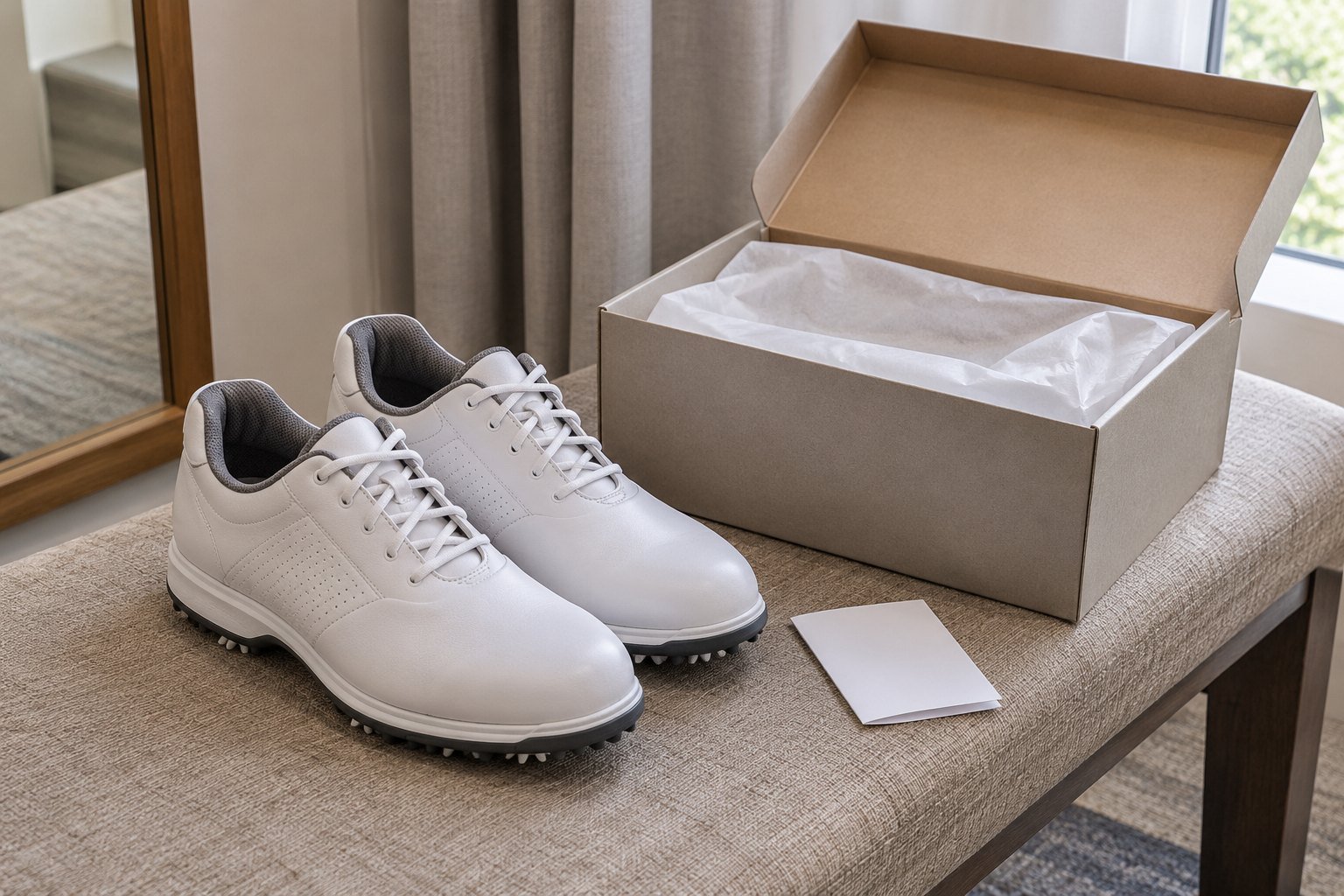
Clubhouse Golf asks for original product packaging and the delivery note or its return form. Its general conditions require the original condition, no signs of wear or damage, and no odours. These are the retailer’s published conditions; keeping a shoe indoors alone does not guarantee that a return will be accepted. [9]
The seller’s commercial policy also sits alongside statutory rights. GOV.UK says online buyers may handle an item as they would in a shop, including trying it on. Keep the fit check within that purpose and check the applicable cancellation rules for your purchase. [10]
If the fit remains poor, stop and ask about another width or model. Avoid stretching, heating, cutting, gluing or wearing the shoes for a round in the hope of making them suitable. Persistent discomfort or a medical fitting requirement needs appropriate professional advice.
You may also find that your existing pair still fits well and needs no replacement. The useful outcome is a clear fit decision, whether that means keeping what you have, choosing another shape or returning an unsuitable new pair. The Shoes & Gloves guides cover related equipment choices.
Back to top ↑Sources and checks
Research and specifications checked on 23 November 2026. Manufacturer descriptions are identified in the text; practical checklists and worked examples are editorial guidance, not product testing.
- FootJoy UK — Golf Shoe Fitting Guide — checked 23 November 2026
- FootJoy UK — Pro/SL, style 56951, Vantage Last and width options — checked 23 November 2026
- FootJoy UK — previous-season Traditions, style 57903, Laser Street Last — checked 23 November 2026
- Skechers UK — Men’s Footwear Size Chart and performance-size caveat — checked 23 November 2026
- Skechers UK — men’s Flow SI, 214153-WHT, width selectors — checked 23 November 2026
- Clubhouse Golf — Pro SL 56951, White/White/Grey, Medium/Wide listing — checked 23 November 2026
- Clubhouse Golf — FJ Traditions 57903, White/White, Medium/Wide listing — checked 23 November 2026
- Clubhouse Golf — Flow Slip-In 214153-WHT, Regular-width listing — checked 23 November 2026
- Clubhouse Golf — Returns and General Conditions — checked 23 November 2026
- GOV.UK — Online purchases, permitted handling and cancellation rights — checked 23 November 2026
Illustrations in this article were created for Taylor’s Trailblazing Golf. Third-party photographs, where used, are credited beside the image or in the source list.