Replacement Electric Trolley Batteries: Connectors and Approved Models
Match the complete trolley model, battery part and charging arrangement before buying. A familiar connector or a shared product-family name does not settle the replacement question.
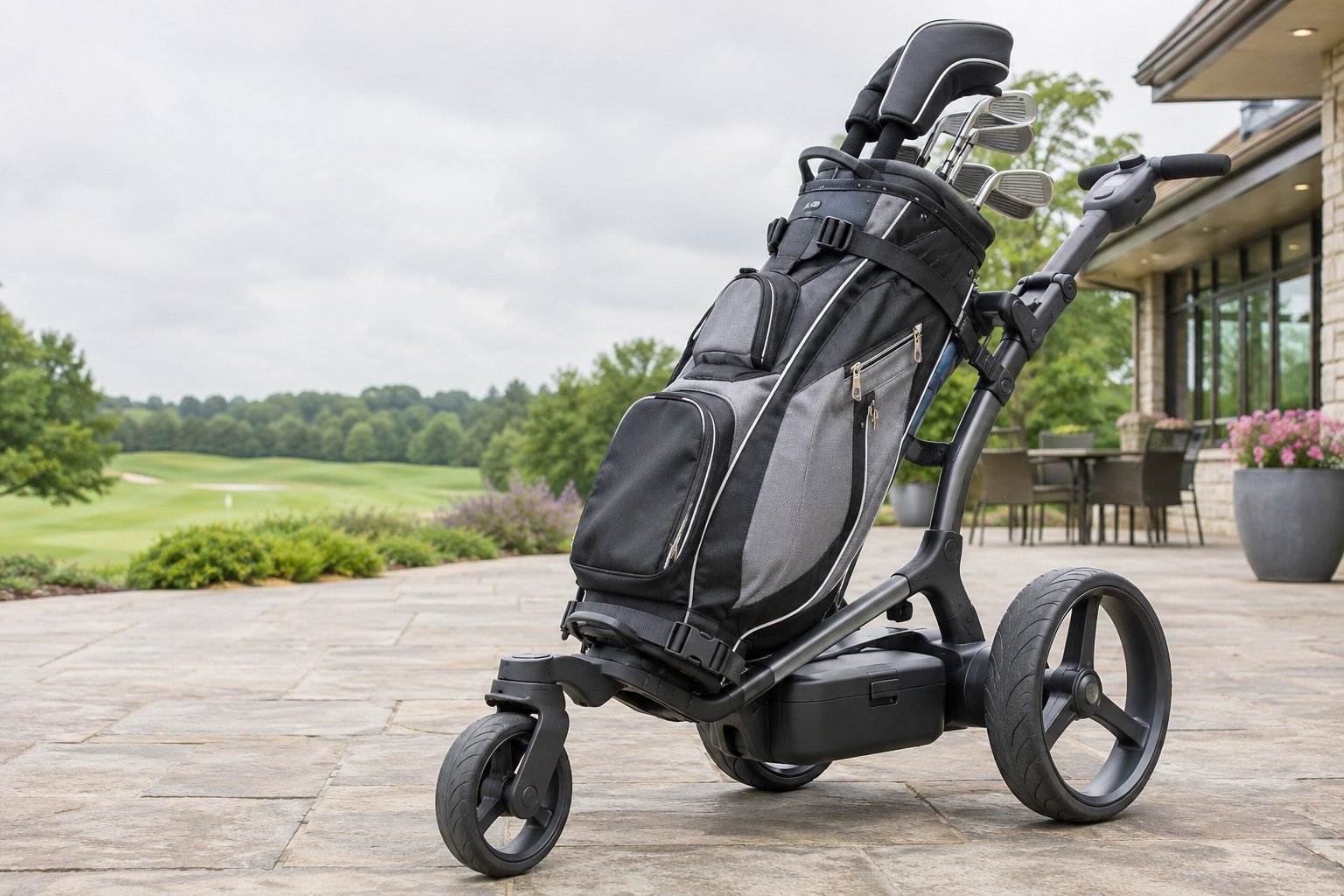
Identify the exact trolley before choosing a replacement battery. Generic AI illustration; not a product or compatibility test.
Replacement electric trolley batteries can have deceptively similar names. A listing may refer to the same brand, a familiar voltage or a matching plug while belonging to a different trolley generation.
The practical solution is a documented match. This research-led guide uses current manufacturer instructions and product pages to explain the replacement routes, the information to collect and the questions to settle with a supplier. It does not report electrical testing, remaining-capacity testing or first-hand use of the batteries.
This is a research-led guide. How we assess golf equipment explains the evidence behind our recommendations.
Keep the full model, generation and serial number together.
Match the current battery part and its approved charging arrangement.
Save the manual reference, supplier confirmation and order contents.
Identify the trolley before searching for a battery
Start with the trolley you own, rather than a shopping result headed “golf trolley battery”. Record its full model name, generation and serial number. Keep suffixes such as DHC, GPS and REMOTE in the record: a shortened family name can remove information a supplier needs.
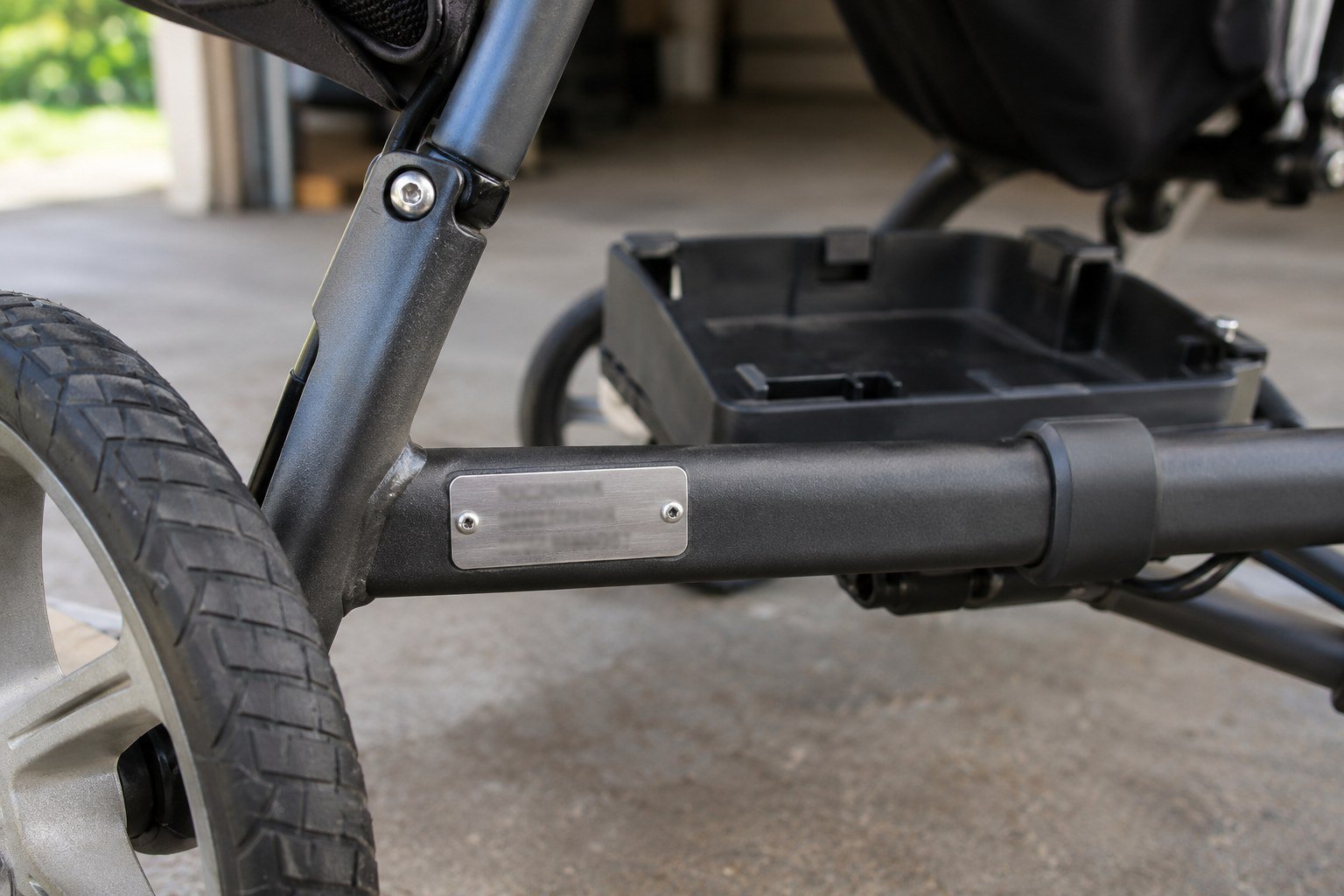
Use the model’s instructions to locate its identification label. For example, the 2026 Motocaddy ME REMOTE manual places the trolley serial number inside the battery tray. That is a location for that model, not a rule for every trolley.[3]
Then record the existing battery and charger separately. An inherited or second-hand trolley may have arrived with an incorrect accessory, so the old pack is evidence of what you have, not proof of what the manufacturer approves. Photograph accessible labels and connectors without dismantling anything or touching the contacts.
| Record | What to copy or photograph | Why it matters |
|---|---|---|
| Trolley identity | Maker, full model, generation and serial number | Distinguishes machines with similar names. |
| Existing battery | Maker, model or part number, label voltage, chemistry where stated, capacity and serial number | Gives support staff an identifiable starting point. |
| Connection and retention | Accessible plug or socket, battery tray, locating features and latch | Shows the complete physical arrangement. |
| Existing charger | Maker, exact model code and readable rating label | Allows its suitability to be checked separately. |
| Replacement evidence | Current part number, relevant manual page and supplier’s written confirmation | Connects the advertised item to your specific trolley. |
If a label is missing or unreadable, send clear photographs to the manufacturer or an authorised service agent. Do not identify a voltage system from the frame colour, approximate age or shape of the battery case.
Replacement electric trolley batteries: documented routes
The examples below show how narrowly a replacement needs to be identified. They are a dated guide to manufacturer documentation, not a complete compatibility catalogue or approval of an unidentified listing. Check the current part against your serial number before ordering.
| Identified trolley or system | Documented battery route | Boundary to preserve |
|---|---|---|
| 2026 M1 / M1 DHC | The manual specifies Motocaddy 28V High Power or 28V High Power ULTRA batteries.[1] | Follow that manual’s battery, charger and indicator-setting instructions; the voltage alone is insufficient. |
| 2026 ME REMOTE | The manual names the 28.8V High Power ULTRA 282Wh model.[3] | Obtain confirmation of the current replacement part number for the exact trolley. |
| M-Series CLICK ’N’ CONNECT models from 2024, excluding REMOTE | The NEW Standard battery-and-charger listing is SKU BT28MSLPST.[2] | That product page expressly excludes REMOTE models. |
| 28V S-Series models from 2022 onwards | The S-Series 28V Standard listing is SKU BALI014SS.[5] | Identify the actual 28V S-Series system; do not apply a year-based shortcut to every trolley. |
| Identified 12V/14V S-Series system | The S-Series 12V/14V ULTRA listing is SKU BT12SSLIUL.[6] | Its page excludes the 28V S-Series models introduced from 2022. |
“REMOTE” is not a universal battery specification either. Motocaddy’s separate BALI020M11M7 listing names M7 REMOTE and M7 GPS REMOTE, while explicitly excluding ME REMOTE. A broader family claim elsewhere on a page should not override that specific exclusion. Ask the manufacturer to resolve conflicting wording against your trolley’s identity.[4]
| Battery description | Ranges listed by PowaKaddy | Buying implication |
|---|---|---|
| 30V Plug ’n’ Play Standard, 220Wh | FX and CT.[7] | Confirm the exact FX or CT model; do not extend the listing to RX. |
| 30V Plug ’n’ Play Extended, 260Wh | FX and CT.[8] | Greater capacity does not create approval for an unlisted trolley. |
| 30V Plug ’n’ Play XL-Plus, 299Wh | RX, FX and CT.[9] | For an RX replacement, check this specifically identified route and the exact model instructions. |
These PowaKaddy pages give all three cases the same published dimensions, yet list different supported ranges. That is a useful demonstration of why a pack looking right for the tray is not enough.[7][8][9]
Older machines and other brands need the same documentary match. If your model is absent, the next step is manufacturer support, not choosing the nearest-looking row. A discontinued original part may have an approved successor, but that relationship needs to be confirmed.
Treat the connector as identification evidence
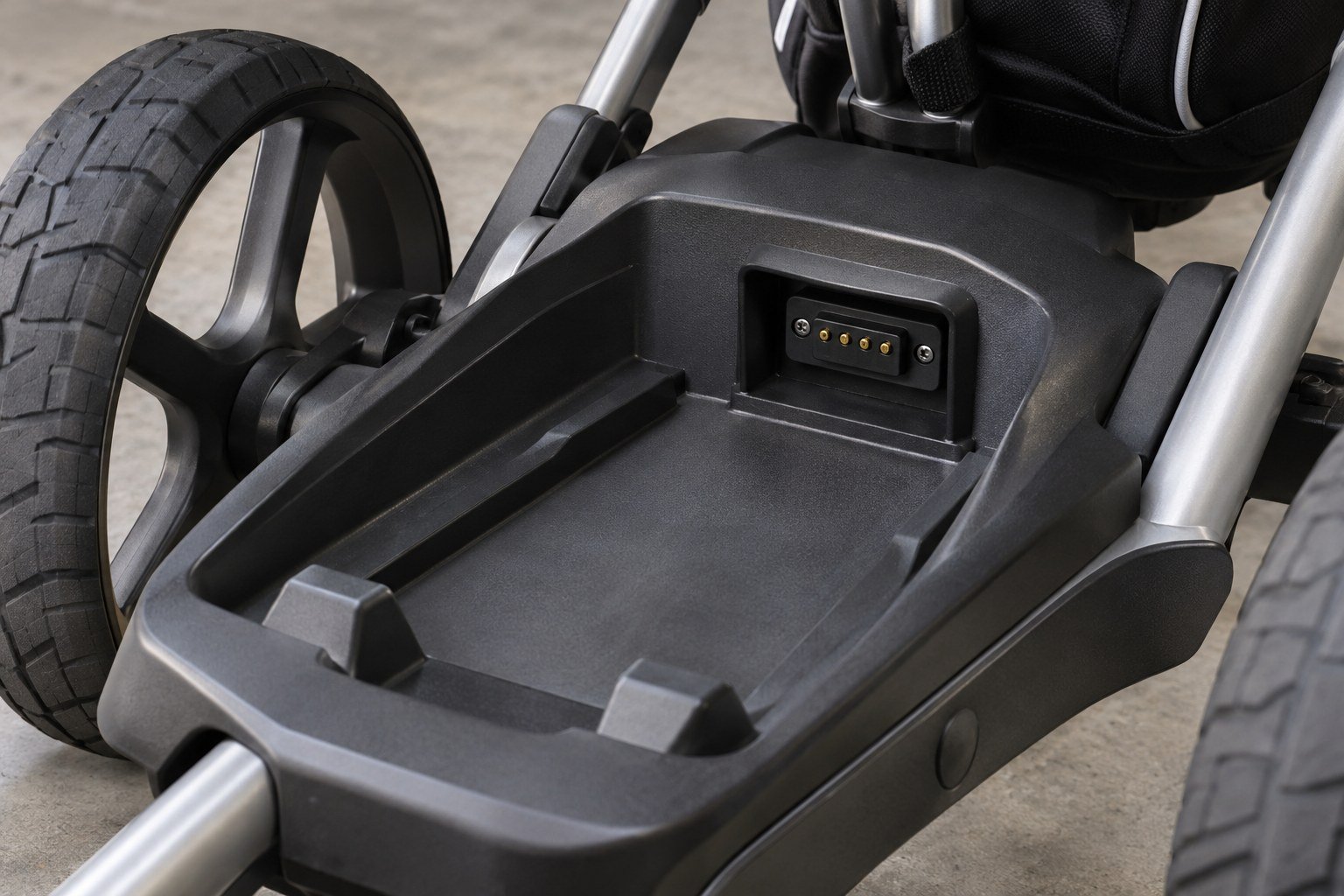
There are three separate questions: does the battery belong to the trolley’s approved system, is its charging equipment correct, and does its case attach as intended? A photograph of one plug cannot settle all three.
The 2026 M1/M1 DHC manual illustrates the distinction. It pairs its specified blue/black 28V battery connection with the white LC-2326 charger, and the specified grey/black 28V connection with the black LC-2323 charger. It also directs owners using the latter battery type to an indicator-setting procedure on page 22. These are instructions for that documented system, not a colour code to apply to other batteries.[1]
Changing a battery-indicator setting does not approve a different battery. Nor does the presence of a battery management system turn an otherwise undocumented combination into a supported one. Record the maker’s exact battery and charger references before considering any setting change.
- Photograph both the trolley connection area and the battery’s accessible connection point.
- Include the complete label in a separate, readable photograph.
- Describe any difference in the latch, locating features or supplied lead to the retailer.
- If the proposed item requires a different lead or fitting, ask for the manufacturer’s named part and installation instructions.
Do not splice leads, swap terminals or use an unapproved adaptor to make a mismatch connect. PowaKaddy’s safety instructions prohibit battery modification and opening the pack, and warn against probing terminals with conductive objects. Connector repair and internal battery work belong with the manufacturer or its authorised service agent.[10]
Confirm what the replacement order actually includes
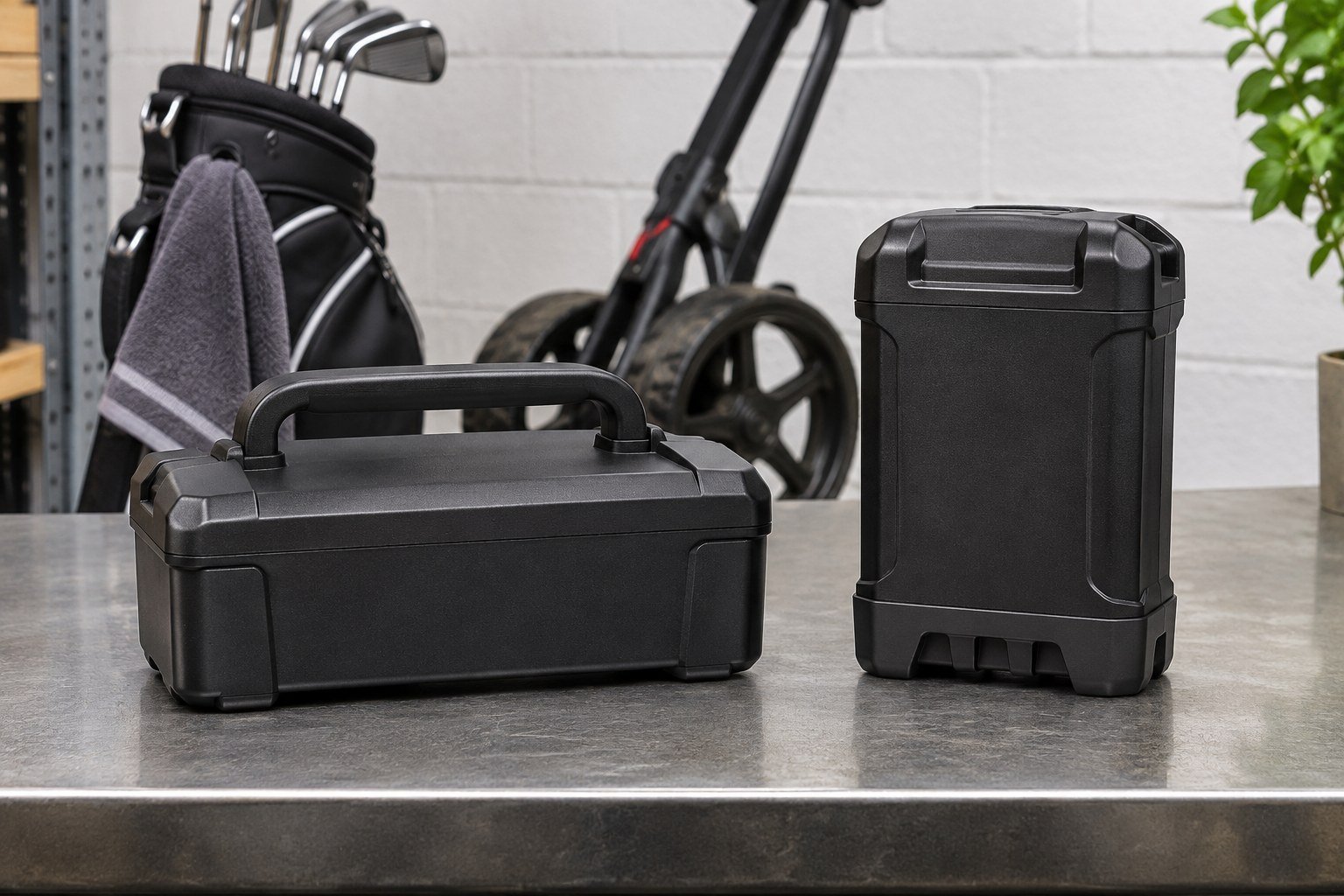
Ask for the exact battery product code and the complete contents of the order. “Battery”, “battery and charger” and “battery for a trolley bundle” describe different purchases. Keep the written answer with your order confirmation.
A useful enquiry is specific enough that the supplier can check it:
My trolley is [full model and generation], serial number [number]. The current battery is [model/part number] and my charger is [model]. Please confirm the approved replacement battery code, whether my charger remains suitable, everything supplied, and any manufacturer instructions needed before first use.
Where a part has been superseded, ask the manufacturer or authorised agent to identify the replacement chain: the original part, its current successor and any associated charger or fitting requirement. A seller saying that the new one is “the same sort” leaves the important question unanswered.
Compare the total supported replacement cost, including a required charger, with your budget. If the trolley itself also needs assessment, obtain that advice before buying the pack. This prevents a battery purchase being used as an expensive experiment to diagnose an unidentified fault.
Choose capacity only within the approved options. For the separate question of whether an advertised two-round pack suits your route and load, read our guide to the conditions behind 36-hole battery claims. The replacement decision here starts with compatibility.
Back to top ↑Ask different questions about used batteries and old stock
An unopened box answers a packaging question. It does not, by itself, establish when the battery was made, how it was stored or whether it is the revision your trolley requires. Equally, a photograph of a used battery powering a trolley does not document its remaining capacity or its suitability for yours.
Before considering either, ask for clear pictures of the actual item’s label and connections, its condition description and the paperwork available. Distinguish new stock, an unused private resale, an ex-display item and a manufacturer-supplied replacement. Do not let a single word such as “new” stand in for those details.
| Question | A useful answer establishes |
|---|---|
| Is this the pictured battery? | The actual item’s identity, rather than a generic catalogue photograph. |
| What history can you document? | Purchase information, storage information where known, and any prior service or replacement. |
| Who supports it? | The seller or manufacturer providing any stated warranty, its terms and the evidence needed. |
| What if it is the wrong item or arrives damaged? | The supplier’s contact and agreed return or collection process before a problem occurs. |
Do not assume the original owner’s manufacturer warranty transfers. PowaKaddy’s UK and Ireland terms effective from January 2026 expressly make battery warranties non-transferable. Check the terms applicable to the actual purchase, rather than relying on a seller’s remaining-years calculation.[11]
If identity, history or approval cannot be established sufficiently, decline that item and ask for a documented replacement route. There is no universal age cut-off in this guide, and no claim that tidy packaging proves a battery is safe.
Back to top ↑Check the delivered item before connecting it
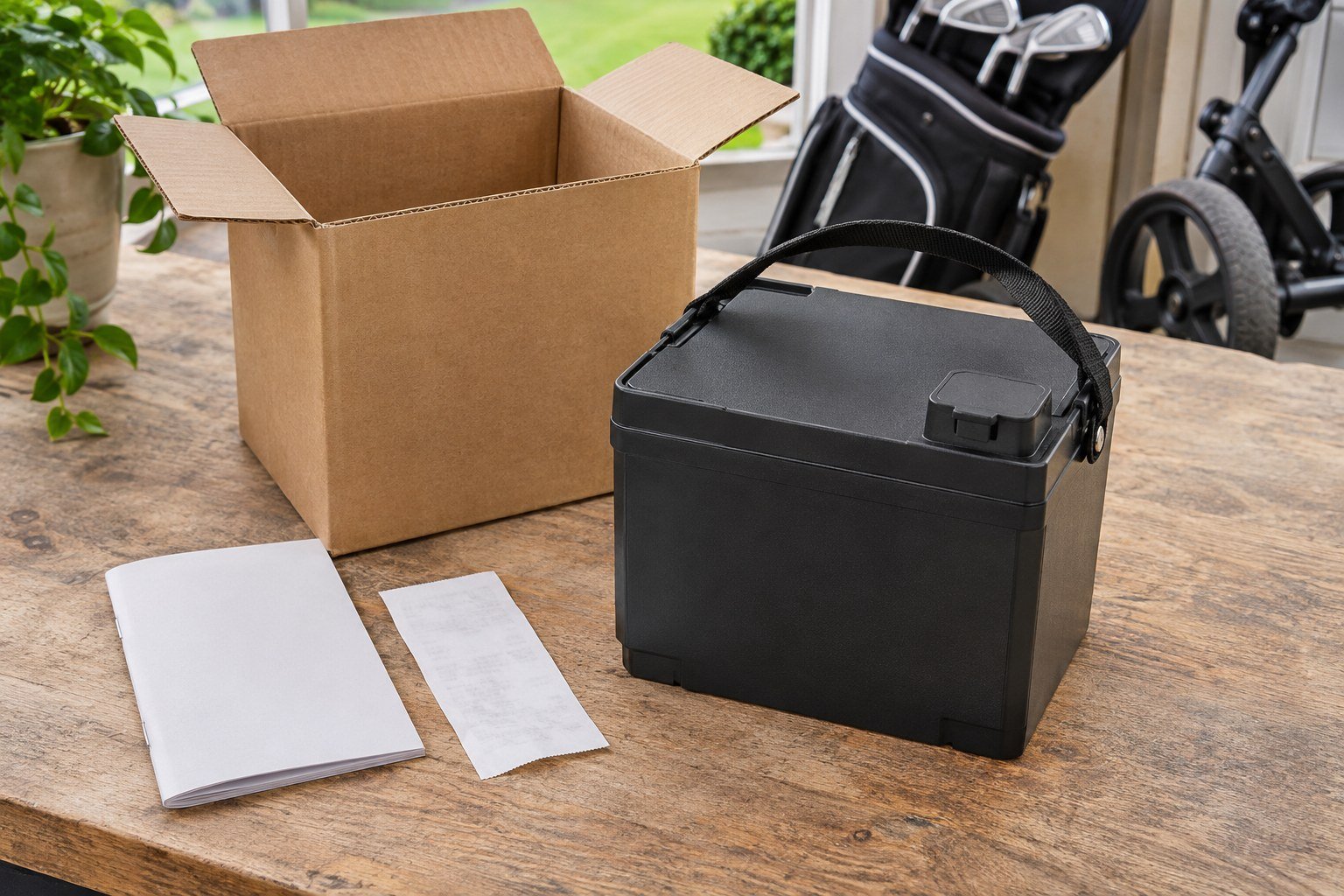
Compare the delivered battery’s model and part number with the agreed order. Check the charger reference if one was included. Keep photographs of the labels, the invoice and the manufacturer’s confirmation together; they are useful if the wrong revision has been sent.
Look at the accessible case, connector and supplied lead without opening the pack. If anything appears damaged or inconsistent with the order, stop and contact the supplier. Do not plug in an unfamiliar pack to see whether the trolley accepts it.
For a battery that has been dropped, damaged or immersed, follow the manufacturer’s stop-use advice. PowaKaddy specifically says not to use a damaged product and not to use or charge an immersed battery; it directs owners to its support team or service agent. Do not attempt to dry out, repair or return such a pack through an improvised process. Ask for handling and collection instructions.[10]
Once identity, condition and approval are established, follow the exact model instructions for fitting and the first charge. If the case does not locate and retain as described, stop. Padding, straps, altered contacts or extra force should not be needed to turn the wrong battery into the right one.
Finish with a replacement decision you can check later
Your final record should connect three identities: this trolley, this battery and this charger. Add the relevant manual edition, the supplier’s confirmation and the date you checked them. Keep the record with the receipt rather than relying on a browser tab that may change.
- Ready to order: the exact trolley is identified, the battery route is documented, the charging arrangement is confirmed and the order contents are clear.
- Ask for clarification: the model year, successor part, charger or fitting requirement remains uncertain.
- Stop and seek service advice: there is damage, unexplained modification, conflicting compatibility information or a suggestion to make an unapproved combination fit.
The cheapest useful replacement is one that belongs to the trolley’s supported system and arrives with the information needed to use it correctly. A matching connector is only one part of that decision.
Back to top ↑Frequently asked questions
Can I reuse the charger that came with the old battery?
Only when its exact model is approved for the replacement battery. Confirm that separately, including when the new pack uses the same-looking connection. If approval is unclear, include the charger reference in your enquiry rather than connecting it to find out.
Does a higher-capacity battery fit every trolley in the range?
No. Capacity is not a compatibility approval. Check the manufacturer’s specific model list and exclusions before comparing capacity. The PowaKaddy table above shows why packs with similar cases still need separate identification.
What does “approved replacement” mean in this guide?
It means the trolley manufacturer names the battery for that exact trolley or confirms the replacement route. A marketplace seller’s general compatibility statement is a different claim. Ask for the current part number and model-specific evidence if the listing is ambiguous.
What if the original battery has been discontinued?
Ask the manufacturer or an authorised service agent whether a supported successor exists and what it requires. If no supported route can be confirmed, compare a service assessment or trolley replacement with your needs; do not improvise a battery conversion.
Sources and checks
Sources consulted on 23 November 2026. Manufacturer and retailer descriptions are attributed claims; illustrations do not show tested products. Recheck current model-specific instructions and compatibility before use or purchase.
- Motocaddy M1 / M1 DHC instruction manual — 2026
- Motocaddy NEW M-Series 28V Standard battery and charger — BT28MSLPST
- Motocaddy ME REMOTE instruction manual — 2026
- Motocaddy M-Series 28V REMOTE battery and charger — BALI020M11M7
- Motocaddy S-Series 28V Standard battery and charger — BALI014SS
- Motocaddy S-Series 12V/14V ULTRA battery and charger — BT12SSLIUL
- PowaKaddy Plug ’n’ Play Standard Lithium Battery
- PowaKaddy Plug ’n’ Play Extended Lithium Battery
- PowaKaddy Plug ’n’ Play XL-Plus Lithium Battery
- PowaKaddy 30V product safety instructions
- PowaKaddy UK and Ireland warranty terms — effective 1 January 2026
Illustrations in this article were created for Taylor’s Trailblazing Golf. Third-party photographs, where used, are credited beside the image or in the source list.