7-Wood vs 4-Hybrid: Carry Gaps, Flight and Lies
Compare the exact builds, then find out which useful gap each one fills.
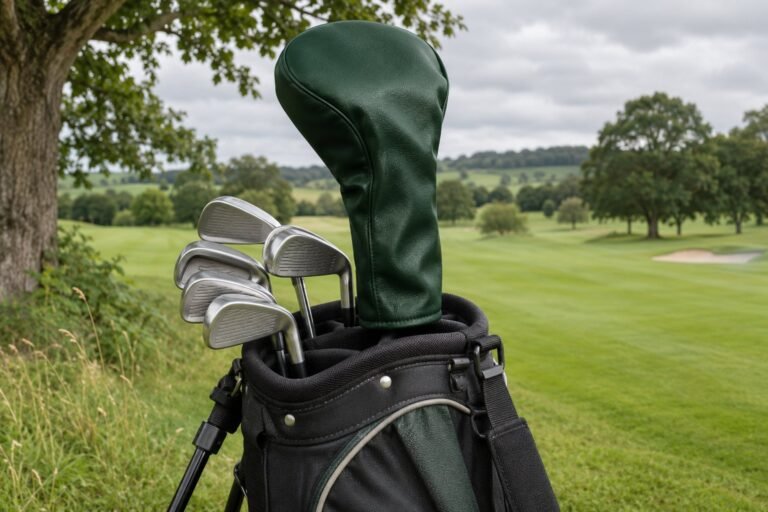
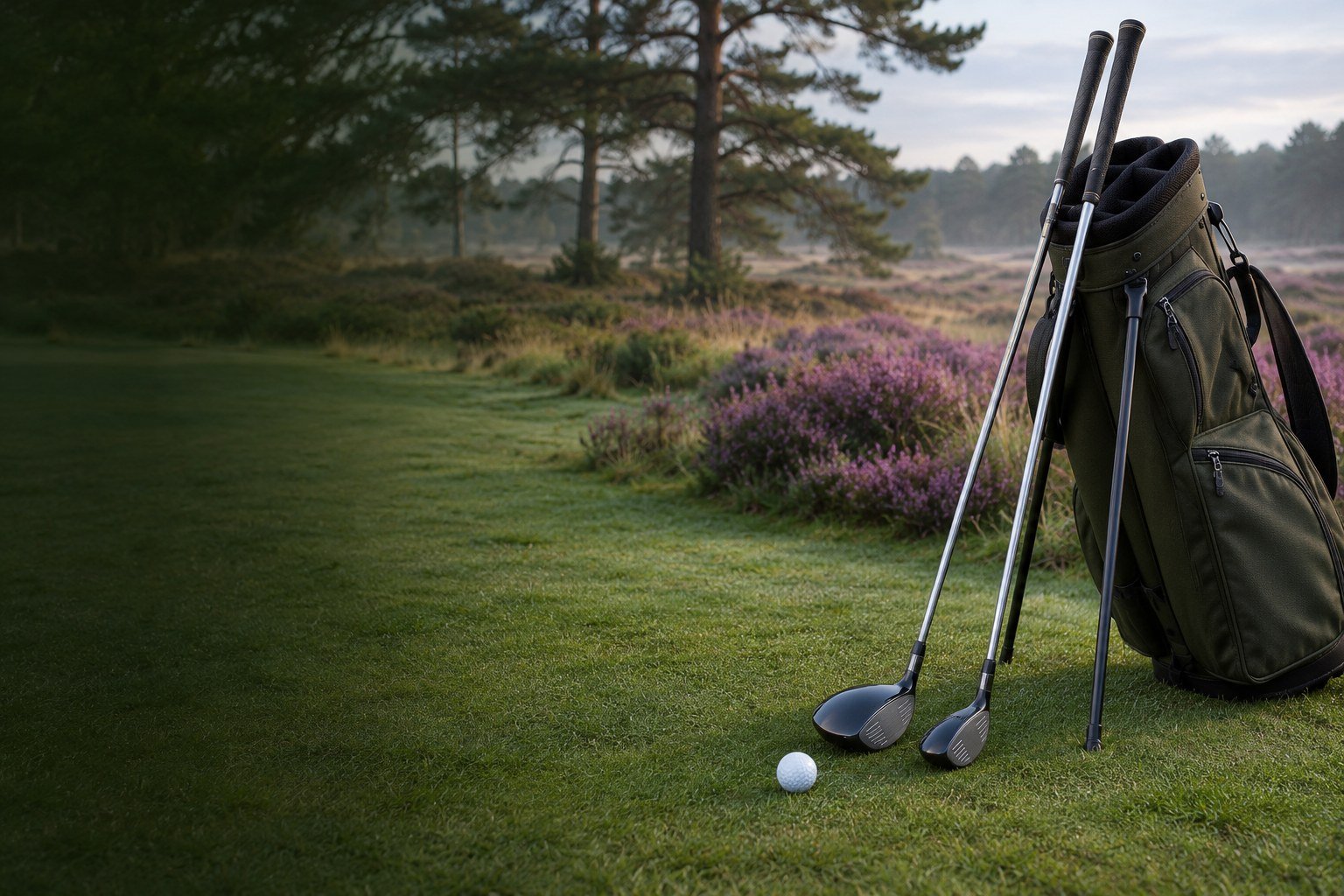
AI illustration: the two generic club shapes represent candidates for a bag slot, not exact models.
A 7-wood and a 4-hybrid can both appear to fill the space between your fairway wood and longest comfortable iron. That makes them worth comparing, but it does not make them interchangeable. One may carry noticeably further, one may suit a different lie, or both may leave you with almost the same shot.
Start with the exact clubs, then measure the gap you are trying to fill. This guide gives you a specification check, a worked bag example and a practical way to decide whether to choose one, carry both or keep what you already have.
Ad – includes affiliate links. If you buy through these links, Taylor’s Trailblazing Golf may earn a commission at no extra cost to you. Recommendations consider fit, drawbacks and alternatives.
A 7-wood and a 4-hybrid need not have matching lofts or playing lengths.
Judge the gap to the club above and the dependable club below.
Carry both only when their distinct roles justify the space.
7-wood vs 4-hybrid starts with the exact specification
These manufacturer specifications show why a club number is not a distance conversion. The examples use the standard men’s builds listed by the manufacturers. They are specification references, not a ranked shortlist or results from a playing test.
| Exact model and club | Stated loft | Listed standard length | Build note |
|---|---|---|---|
| PING G440 MAX 7-wood | 21° | 42 in | Standard length based on ALTA CB Blue 65.[1] |
| PING G440 4-hybrid | 23° | 39¾ in | Standard hybrid specification.[2] |
| Callaway Elyte 7-wood | 21° | 42¼ in | Standard Elyte fairway; men’s length.[3] |
| Callaway Elyte 4-hybrid | 22° | 40 in | Standard Elyte hybrid; men’s length.[4] |
The PING pair has a two-degree loft difference and a 2¼-inch length difference. The Callaway pair has a one-degree loft difference and the same 2¼-inch length difference. Those are calculations from the specifications above. They show different builds; they do not tell you how many yards will separate your shots.
For the G440 range, PING actually lists its 3-hybrid as the 7-wood equivalent and its 4-hybrid as the 9-wood equivalent.[2] Even that manufacturer guidance is a starting point for comparison, not a promise that two clubs will carry equally for you.
Record the exact model, handedness, loft setting, shaft and playing length before comparing. “Elyte” and “Elyte X”, for example, identify different models. A shorter build or adjusted hosel needs its own entry in your notes. Used clubs may also have been altered since leaving the factory. For a related fitting question, see our guide to fairway-wood shaft length for shorter golfers.

Identify the missing shot before removing a club
Write down the longest club you strike dependably from grass and the next shorter club you trust. The candidate belongs between those two only if it adds a shot you can use. An impressive range number is less helpful when it duplicates a club already in the bag.
There are three different reasons to consider this change:
- You need another carry distance between two established clubs.
- You need a different flight at roughly the same distance, such as a shot that suits a smaller landing area.
- You need a club you strike more consistently from the lies you regularly face.
Choose the main reason before testing. Otherwise, the goal can drift during the session: the wood wins because it went further, then the hybrid wins because it felt easier, while neither is judged against the original problem.
A useful brief might be: “My fairway wood is comfortable from a good lie, but my next club leaves too much distance on two long par threes.” Another might be: “I have enough distance already; I need a more dependable option from the first cut.” Those golfers may end up with different choices even if their best strikes travel equally far.
Leave the current club in the comparison until the replacement proves useful. It is perfectly reasonable for the result to be “keep the 4-hybrid” or “keep the 7-wood”.
Back to top ↑Build a carry-gap worksheet you can actually use
Use carry for the first comparison: the distance travelled in flight.[5] Keep run separate so a firm practice area does not disguise a shortage of carry.
For each club, record several normal shots, the middle result and the range of ordinary outcomes. The median is a convenient middle result: sort the carries, then take the middle value, or average the two middle values when you have an even number. Keep the poor strikes visible; their frequency helps you judge the club.
| Club | Example carry | Gap to next shorter club | Question raised |
|---|---|---|---|
| Existing 5-wood | 205 yd | 18 yd | Does the 7-wood provide a useful intermediate shot? |
| Candidate 7-wood | 187 yd | 3 yd | Does it do something different from the 4-hybrid? |
| Existing 4-hybrid | 184 yd | 15 yd | Is its strike or flight useful enough to keep? |
| Longest reliable iron | 169 yd | — | Does removing either candidate leave a shot you cannot cover? |
In this example, removing the 7-wood leaves a 21-yard gap from the 5-wood to the hybrid. Removing the hybrid leaves an 18-yard gap from the 7-wood to the iron. The right choice depends on the distances you face and how dependable those shots are. Neither gap is automatically wrong.
The three-yard difference between the two candidates deserves attention. If their shot patterns overlap heavily and they serve the same purpose, carrying both may add little. If one supplies a noticeably different, useful flight or works more dependably from a common lie, the overlap can be justified.
Copy these headings into your notes
Club and setting • median carry • shortest and longest ordinary carry • left/right pattern • lie • intended job. Measure the neighbouring clubs in the same session so the gaps have a fair basis.
There is no requirement to make every gap identical. Build around useful shots. Repeat a close result on another day before spending money; a small sample is easily influenced by a few unusually good or poor swings.

Compare the flight as well as the gap
A 7-wood is worth trying when the missing job calls for more height and a useful approach flight. A 4-hybrid is worth trying when its shorter build helps you make a more reliable strike. SGGT’s fitting guidance describes how woods and hybrids can cover similar distances with different trajectories, while stressing the importance of the golfer’s delivery and build.[6]
Turn those tendencies into observations rather than assumptions. If the hybrid gives you the higher usable flight, accept the result. If the wood gives you the tighter pattern, accept that too. The purpose of the comparison is to discover what works in your hands.
| Observation | Useful question | What to avoid |
|---|---|---|
| Flight and landing | Which shot suits the room available on your usual approach? | Choosing height simply because it looks impressive. |
| Short miss | Which club loses less useful carry on your ordinary imperfect strike? | Deleting the poor shots and comparing only the best. |
| Sideways miss | Which pattern fits the width of the target? | Assuming that a shorter shaft guarantees straighter shots. |
| Wind | Can you still choose a sensible target and distance in your usual conditions? | Declaring all woods unusable in wind or all hybrids wind-proof. |
| Confidence at address | Can you make your normal swing without trying to force the result? | Letting appearance outweigh a repeated poor outcome. |
Ask the fitter to explain any marked difference. Loft, shaft, playing length, strike and delivery all deserve attention before you attribute everything to the head category. A useful explanation should lead to a testable adjustment, not a promise of automatic extra distance.
Back to top ↑Test the lies you expect to use
A comparison from a perfect mat answers a limited question. It may help identify the better starting build, but it does not show how either club will interact with your normal fairway or how you will strike a ball in light rough.
Fairway and tight lies
Compare both with the ball sitting normally on grass. Note whether you trust the strike without making an exaggerated effort to lift the ball. If either club works only after several rehearsals and repeated attempts, include that in the decision.
Light semi-rough
Try a suitable lie during a permitted practice session. A hybrid is a candidate for this job, not an automatic solution. Check whether you can see enough of the ball for a sensible strike and whether the resulting carry remains useful. If the wood is the more dependable option for you from that lie, keep the evidence.
Heavy rough or a poor stance
Do not make the contest compulsory. When a long shot has become unreliable, choose a club that gets the ball back to a better position. Neither the “7” nor the “4” on the sole is a reason to attempt a shot the lie does not support.
A short tee
If the winner also needs to cover a par three or tight tee shot, test that separately. Keep the tee results alongside the turf results. A useful second role can justify a place in the bag, but it should not conceal a poor result in the main job you set out to solve.

Run a fair trial without chasing the winner
Bring both neighbouring clubs, your existing candidate and a consistent ball choice. Tell the fitter whether the priority is a missing distance, a particular flight or a difficult strike. You do not need to alter every variable at once.
- Check the loft setting and exact build of each candidate before hitting.
- Warm up, then use short alternating blocks with rests. Keep your target and normal effort consistent.
- Record the shots you would normally have to play, including the awkward ones. Separate a genuine measurement failure from a poor strike.
- Compare the median carry and overall pattern before looking at the longest shot.
- Hit the clubs above and below the candidate to check whether the proposed gap exists that day.
- Assess at least one relevant grass lie if the facility permits it. State clearly in your notes when the evidence is mat-only.
- Repeat a close decision before ordering. Finish by checking the exact specification that produced the useful result.
A fitter may find a better version of either candidate by changing the build. Keep each version separate in your notes. Combining results from different loft settings into one average makes it difficult to know what you are buying.
You do not need a perfect swing to make the comparison worthwhile. You need a sample that resembles your actual golf. If both clubs are too inconsistent to assess, work with a qualified coach or fitter on that problem before treating the purchase as the solution.
Back to top ↑Choose one, carry both, or leave the bag alone
| Result | Reasonable decision | Check before committing |
|---|---|---|
| 7-wood fills the distance and flight you need | Choose the tested 7-wood build. | Removing the hybrid does not leave an important shorter shot uncovered. |
| 4-hybrid gives the more useful ordinary pattern | Choose or keep that hybrid. | The distance to your next longer club remains manageable. |
| Similar carry, clearly different useful roles | Consider carrying both. | The second role occurs often enough to justify another bag place. |
| Similar carry and similar role | Keep the one you strike and trust more. | The choice holds up after another comparison. |
| Neither solves the problem | Keep your money and revisit the fitting brief. | A different loft, build or strategy may be the missing piece. |
If you carry both, count the complete set. Rule 4.1b limits a player to 14 clubs at the start of and during a round.[7] A second long club has to justify the place it takes from elsewhere; there is no obligation to fill every available place.
Before ordering, compare the actual build with your fitting notes and confirm the playing hand, included accessories and applicable return terms. The model examples earlier are useful starting points for checking specifications. They are not a reason to buy a different shaft or length simply because that combination is available.
A suitable used or previous-generation club may do the same job at a price that suits you better. Check its identity and condition, and ask a qualified professional about damage or uncertain alterations. Do not assume the original catalogue length still describes a used club.
Buy the missing shot, not a number on the sole
The 7-wood earns its place when it adds a useful carry or flight that your existing clubs cannot provide dependably. The 4-hybrid earns its place when its build and your strike pattern make it the more useful choice for the required distance and lies.
Start by measuring the two neighbouring clubs. Compare both candidates against that gap, then check their flights and ordinary misses. If the result is close, keep the club you already own until there is a clear reason to change.
The best outcome may be one club, both clubs with different jobs, or no purchase. You have made a good decision when you can explain which shot the club is there to play and why the rest of the bag still makes sense.
Back to top ↑A few further questions
Can I compare clubs from different brands?
Yes. Compare the exact loft, shaft, playing length and result rather than insisting on matching names. You are building a useful set of shots, so there is no need for the wood and hybrid to come from the same range.
Do I need to match the shaft flex label across the two clubs?
Treat the full shaft model and build as the reference. Ask the fitter to compare the candidates you can swing comfortably and to record the successful specification. Choosing by the printed flex label alone leaves too much of the club unspecified.
Is a 7-wood only a club for slower swings?
No. It is a club option to evaluate against a particular distance, flight and strike requirement. Your age or handicap does not establish whether it belongs in your bag; the actual comparison does.
Sources and method
This guide brings together manufacturer information and the sources below. The comparison methods and decision aids are editorial suggestions for your own fitting or trial. No personal product test or measured performance result is claimed. Read how we review golf gear for the site’s evidence standards.
- PING UK: G440 MAX fairway specifications
Checked 22 November 2026. - PING UK: G440 hybrid specifications
Checked 22 November 2026. - Callaway Europe: Elyte fairway specification sheet
Checked 22 November 2026. - Callaway Europe: Elyte hybrid specification sheet
Checked 22 November 2026. - Trackman: Carry
Checked 22 November 2026. - SGGT: Should you hit fairway woods or hybrids?
Checked 22 November 2026. - The R&A: Rule 4.1b, limit of 14 clubs
Checked 22 November 2026.
Illustrations in this article were created for Taylor’s Trailblazing Golf. Third-party photographs, where used, are credited beside the image or in the source list.