Draw-Biased vs Neutral Drivers: What the Design Can and Cannot Fix
Identify the miss, understand the design and test whether the whole pattern improves.
- Start line and curve
- Right- and left-handed
- A fitter question sheet
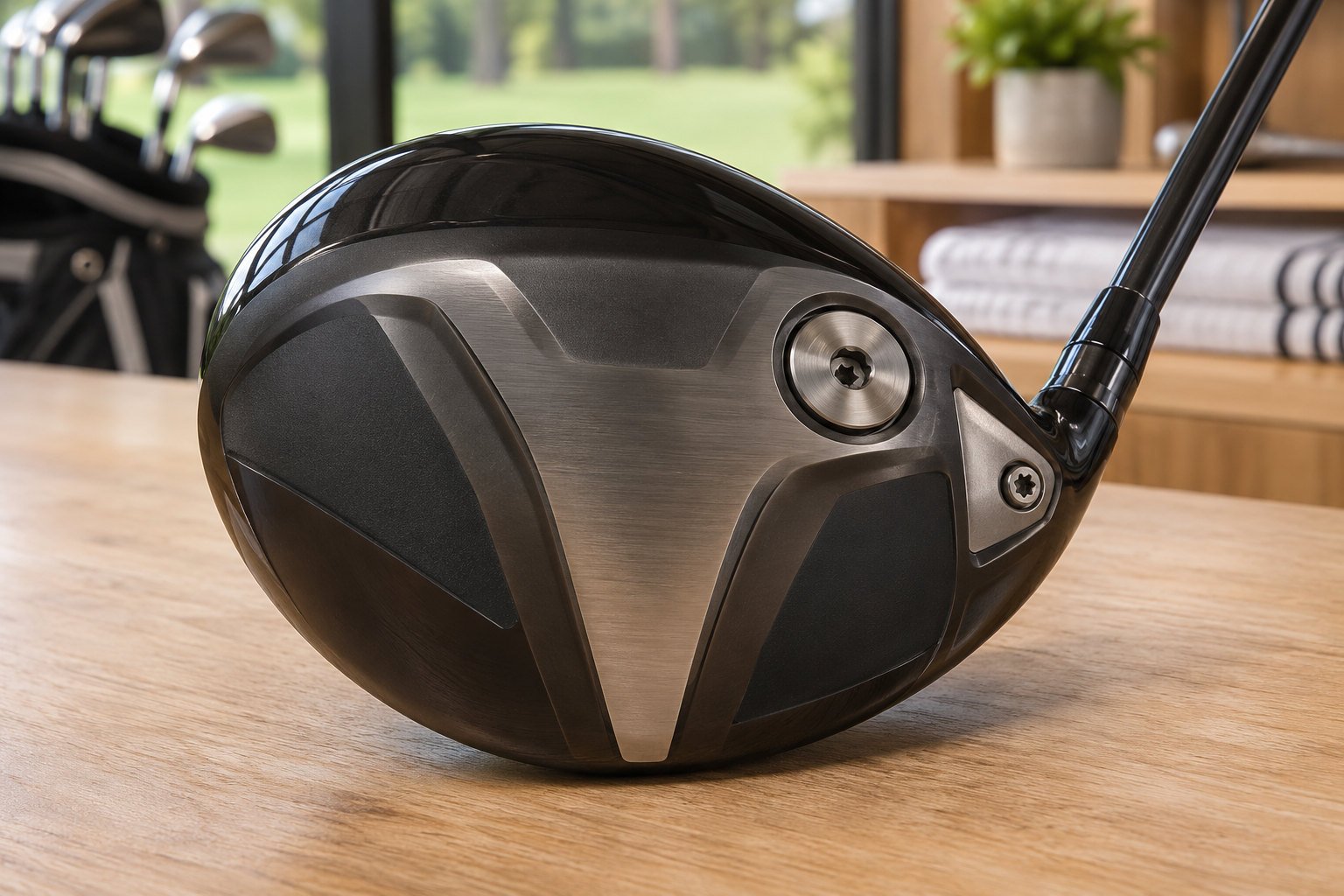
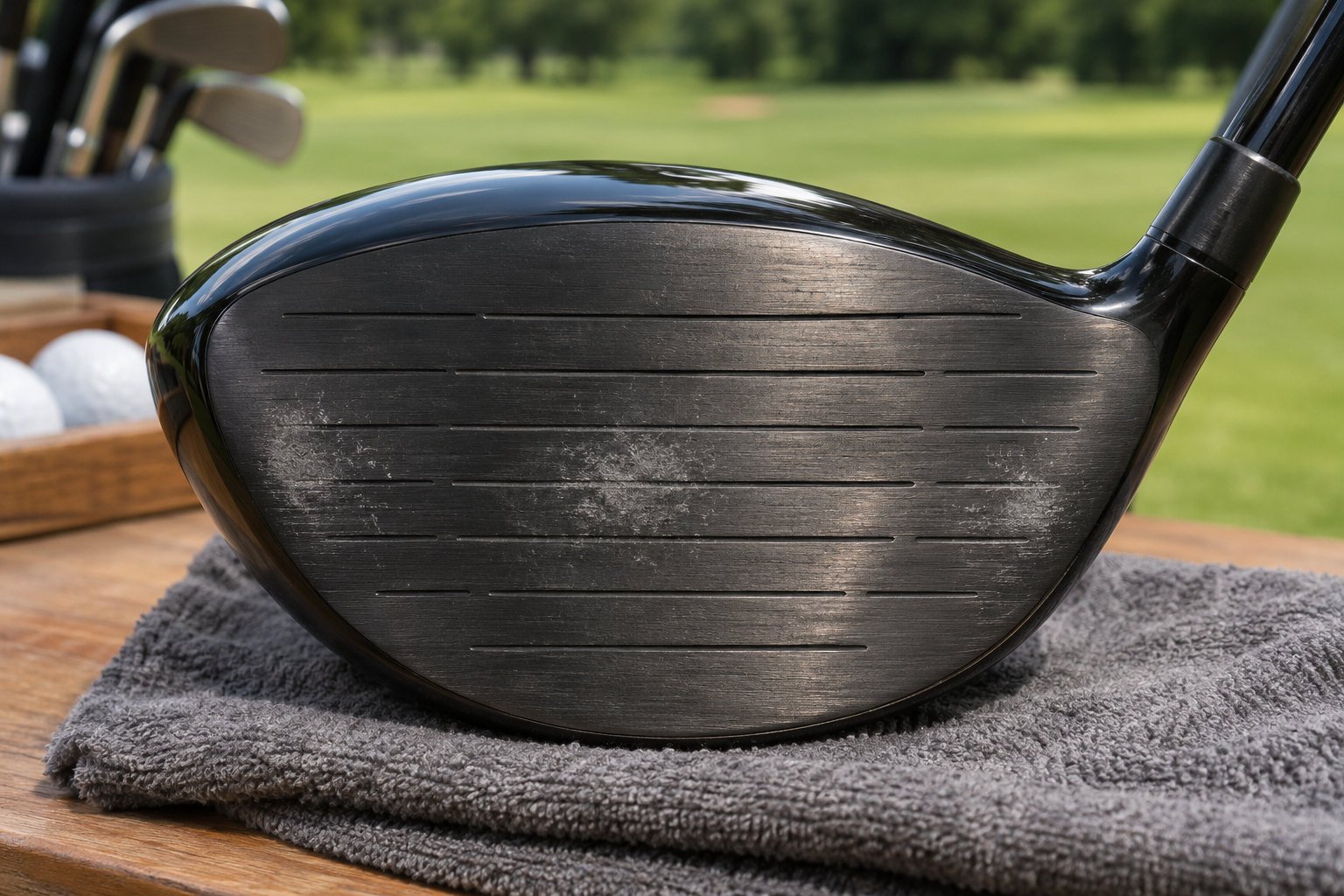
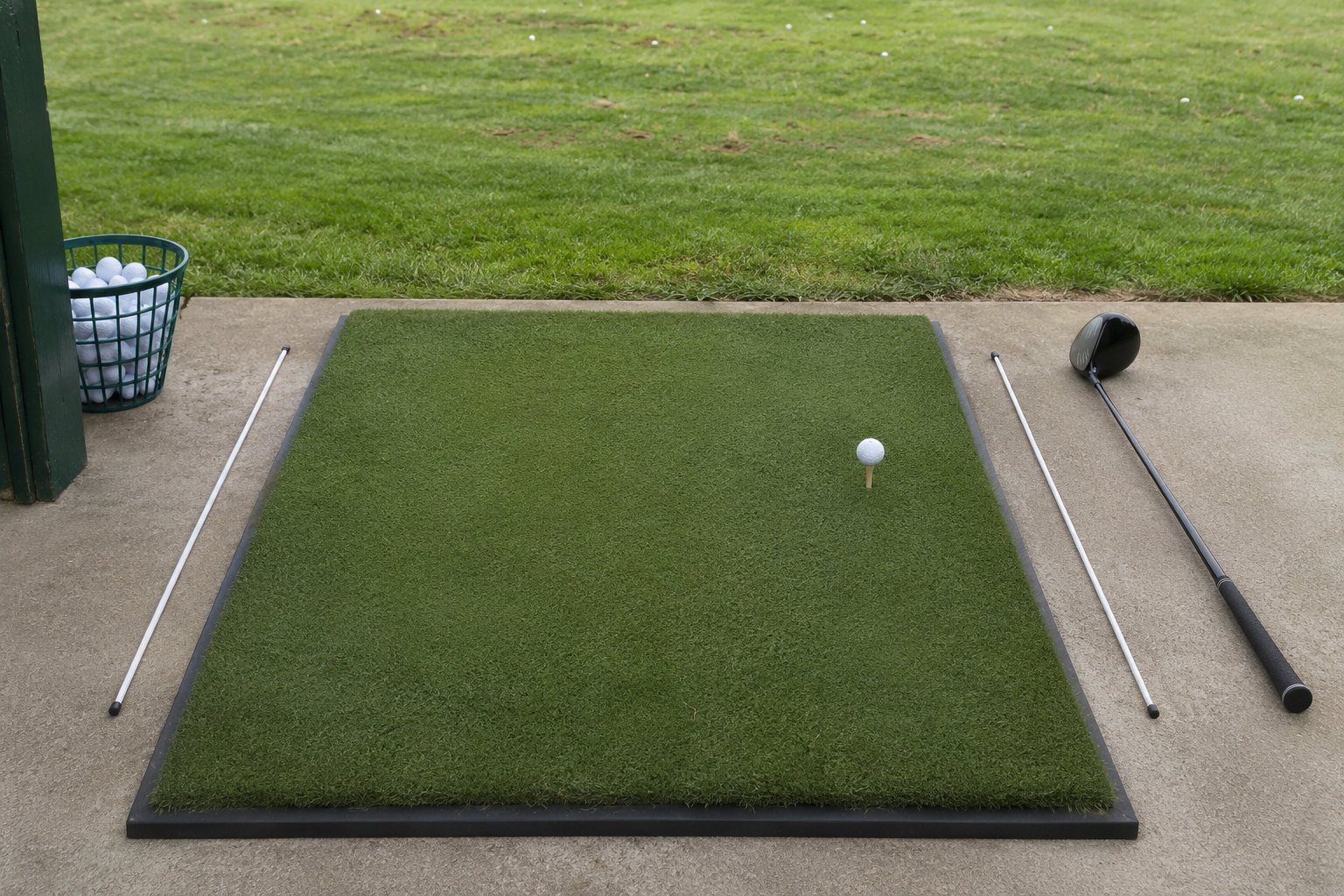
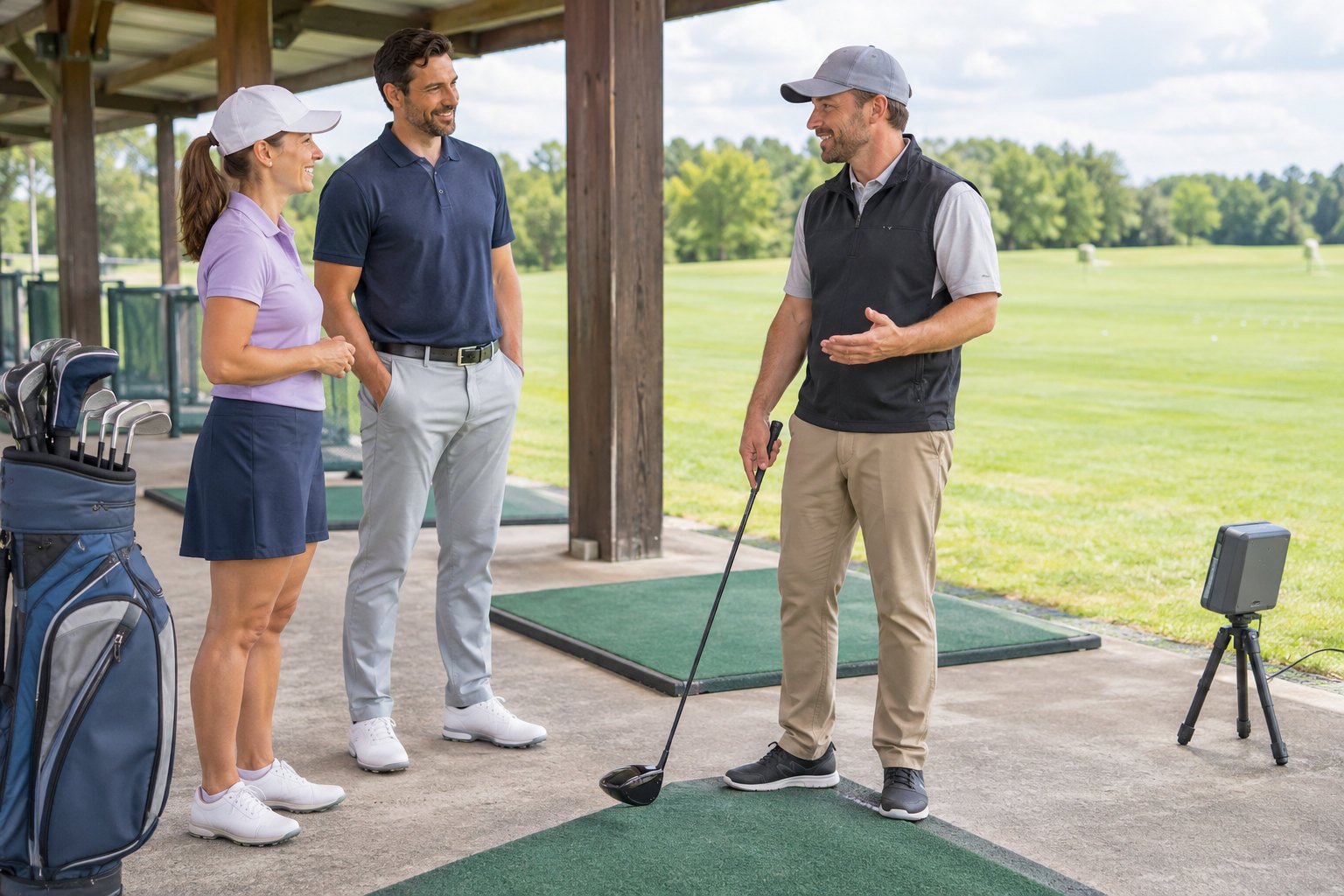
AI-generated illustrations show generic golf equipment and settings. They are not photographs of the named products or records of product testing.
A draw-biased driver is worth considering when your usual miss keeps moving towards the fade side. The useful question is whether it makes that miss more manageable without creating another one. A few straight balls in a shop are encouraging, but they do not tell you what happens when your familiar poor strike returns.
This guide compares draw-biased vs neutral drivers through the decisions that matter: where the ball starts, how it curves, where it meets the face and which complete club you are actually trying. The product examples explain different design approaches. They are research-led examples, not clubs tested by this website.
Name both parts of the miss
A shot can start one way and curve the other. Record both before selecting a draw setting.
Keep the opposite miss visible
A smaller slice is useful only if the new pulls or hooks remain acceptable.
Compare complete clubs
Loft, shaft, playing length and settings need recording alongside the head name.
Read the start line before blaming the curve
Face angle describes where the face points at impact relative to the target. It has the strongest influence on the ball’s initial direction. Club path describes the direction the head travels. The difference between face angle and path is particularly useful for understanding curvature when contact is centred. These are separate measurements: a face square to the path can still point away from the target. [1][2]
For a right-handed golfer, a draw curves left and a fade curves right; those names reverse for a left-handed golfer. Left and right themselves do not reverse. Trackman, for example, uses positive spin-axis values for rightward curvature regardless of handedness. Ask a fitter to explain the screen using your playing hand before comparing numbers. [3]
| Observation | What to record | Useful next question |
|---|---|---|
| Starts towards the fade side and keeps curving that way | Initial direction, amount of curve and impact position | Does draw bias improve the start, the curve or both? |
| Starts towards the draw side, then curves back across the target | The starting line as well as the final landing point | Are we reducing curvature while keeping a workable start line? |
| Flies fairly straight but finishes off target | Alignment and starting direction | Would a directional adjustment simply move the whole pattern? |
| Misses badly in both directions | Separate examples of each miss, with impact locations | What differs between those shots before we choose a bias? |
Scroll within the table to see all columns.
Use this as an observation sheet, not a remote swing diagnosis. “It went right” leaves out too much, especially when a left-handed player and a right-handed player describe the same flight.
What draw bias changes in the head
Draw bias is a design intention, not a promise that every shot will become a draw. Manufacturers can use a dedicated head with heel-side weighting or offer a movable weight setting in a more broadly adjustable model. The wording on a hosel chart describes that particular adjustment system; it does not mean every club marked D has the same construction.
Callaway’s Quantum Max D provides a clear example: Callaway describes internal heel weighting intended to promote a slight draw bias. The Quantum Max instead has a 10g perimeter weight system with neutral and draw positions. Both also have hosel adjustment, so the weight position and hosel setting need recording separately. [4][5]
| Model | Documented approach | Question for a trial |
|---|---|---|
| Callaway Quantum Max D | Internal heel weighting; described by Callaway as slightly draw-biased. [4] | Is the built-in assistance helpful across your ordinary swings? |
| Callaway Quantum Max | Neutral or draw position in its movable perimeter weighting. [5] | Can a reversible weight adjustment do enough before changing head type? |
| PING G440 SFT | Dedicated Straight Flight model with an adjustable backweight intended to promote a draw. [6] | Does a dedicated draw model control the troublesome side more effectively? |
Scroll within the table to see all columns.
These descriptions establish features and intended effects. They do not establish which model produces your tightest dispersion. A “neutral” label is a useful baseline within a fitting; it does not guarantee a straight shot or identical behaviour to another manufacturer’s neutral model.
Check heel and toe contact before adding more bias
Off-centre contact can change curvature through gear effect. When a driver strike lands towards the toe relative to the head’s centre of gravity, the head’s rotation during impact contributes draw curvature for a right-handed golfer. Heel contact contributes the opposite tendency. Reverse those left/right directions for a left-hander. This effect combines with the face-to-path relationship rather than replacing it. [7]
That is why two similar-looking slices may need different comparisons. One player repeatedly strikes near the heel; another strikes nearer the centre but delivers the face differently relative to the path. Both can try draw bias, but a fitter needs the impact evidence to understand whether it tackles the main problem.
Ask for impact-location tracking during the trial. If a temporary marking product is used, let the fitter choose a method suitable for the face and explain whether it changes the conditions being measured. For performance comparisons, keep the measurement method consistent and remove anything that should not remain on the face.
Pay particular attention to the shot that looks unexpectedly good. A straight flight can result from influences partly cancelling each other. If the next strike moves to a different part of the face, the outcome can change. Record the successful shot, then see whether its strike and direction are repeatable before treating it as proof. [2][7]
Choose a trial that matches the problem
The following matrix is our editorial starting point for a fitting discussion. It deliberately includes keeping your existing driver. It is not a recommendation based on handicap, age or swing speed alone.
| Your usual pattern | Sensible first comparison | What would justify the change? |
|---|---|---|
| Repeatable fade-side miss, with little trouble on the other side | Current club versus modest draw assistance | Fewer unplayable misses without losing useful carry or introducing severe opposite-side shots |
| A small, dependable fade that already finds suitable landing areas | Keep the neutral baseline; trial alternatives only for a specific problem | A practical improvement you can describe, rather than simply a different shape |
| Hooks or pulls are the expensive miss | Neutral first, with delivery and strike reviewed | A narrower, more predictable spread; extra draw bias needs a clear reason |
| Wide variation in strike and direction | Check the complete build and contact pattern before judging bias | A change that remains helpful on ordinary imperfect swings |
| Your swing is changing through lessons | Include a reversible setting in the comparison | A useful present setup that can be reassessed without assuming you need a permanent correction |
Scroll within the table to see all columns.
Do not ask the new driver to reproduce a favourite ball flight merely because it looks attractive. Ask it to improve the tee shots you actually need. A playable fade can be a better result than an unreliable draw.
Make the range comparison fair enough to use
Start with the driver you own. Agree a target line and a realistic landing corridor before hitting. Choose a corridor relevant to the holes that trouble you, and identify which side brings the greater penalty. Keep that choice fixed while comparing clubs.
- Warm up, then record the current club’s full specification and settings. Use the same type of ball and the same measurement setup for each candidate.
- If the current head has an appropriate adjustment, compare that first. Change one setting at a time so there is a useful answer to “what helped?”.
- When comparing different heads, have the fitter match controllable build variables where practical. If loft, shaft or length changes too, record it as a complete-club comparison.
- Hit short alternating groups, for example A–B–A–B, rather than exhausting yourself with one club before starting the other. Take breaks and stop when fatigue changes the session.
- Keep ordinary mishits. Exclude only obvious measurement failures or agreed non-comparable shots, and note why. Deleting every slice defeats the purpose of a slice-control comparison.
- Review start line, curvature, strike position, useful carry and both edges of the landing spread. Repeat the comparison if the apparent winner depends on one exceptional swing.
Use it to organise a fitting discussion; small or inconsistent differences need another comparison. Its value is that you decide the question before seeing an appealing result.
Imagine a trial in which the worst fade-side shot improves, but two new draw-side shots reach the out-of-bounds area you were trying to avoid. That is a reason to inspect the whole pattern, even if the longest shot is excellent. The better choice depends on which outcomes remain playable on your course.
Keep the comparison sheet or screenshots that explain the decision. A clear record is more useful than remembering only that the new club “felt straighter”.
Take these questions to the fitter
A productive fitting should leave you able to explain why the recommended club suits you. These questions keep the conversation on your evidence rather than the badge on the sole.
- Is my troublesome shot mainly a starting-direction problem, excessive curvature, strike location, or a mixture?
- What changed when we added draw bias: face delivery, impact position, curvature, or the final landing pattern?
- Did the opposite-side miss worsen, and how often did it occur?
- Are these heads being compared at similar playing length, loft and shaft specification? If not, what conclusion can we draw about the complete builds?
- Could a setting on my current driver produce enough improvement?
- What evidence would make you recommend a neutral head instead?
- Which exact handed version and manufacturer adjustment chart apply to the club I would receive?
Do not assume a borrowed shaft is suitable simply because its sleeve slides into a head. Our driver head and shaft adapter compatibility guide covers the separate component checks needed before a trial.
For adjustments, use the exact manufacturer’s instructions and correct tool. Leave uncertain assembly, structural alterations and damaged components to a qualified club builder. A performance comparison should begin with a correctly assembled club.
Buy the build that earned its place
Once a trial identifies useful draw assistance, match the purchase to that result. Record the complete head name, playing hand, loft marking, hosel setting, weight position, shaft model and flex, finished length and grip. “Same driver, stiff shaft” is not a sufficient order description.
If a dedicated draw head is the better candidate, view the Quantum Max D at Callaway UK or view the PING G440 SFT at Clubhouse Golf. The Clubhouse listing checked for this guide is explicitly a men’s right-handed version, so left-handed readers need the correct separate option. These are product destinations, not confirmation that your fitted specification is available. [4][8]
If the attraction is a reversible neutral-to-draw comparison, check the Quantum Max at Callaway UK. Confirm the configuration in the order before paying. [5]
A previous-generation or used head may also deserve a trial if it supplies the right build at a sensible total cost. Include any inspection, correct replacement components and fitting work in that comparison. If the seller cannot establish what you are buying, a lower asking price does not resolve the uncertainty.
Read the actual trial, return and custom-order conditions for the retailer and build you choose. The ability to change a weight is not the same as the right to return a club after using it.
The right bias earns its place through better misses
Choose draw assistance when it makes your ordinary tee-shot pattern more useful, with enough carry and an acceptable miss on both sides. Choose neutral when your existing shape already works or a directional change fails to improve the overall spread.
If neither produces a convincing improvement, keep the current driver while the fitter or coach investigates contact and delivery. The aim is a club you can explain and trust, not a draw badge bought in hope.
Sources
Sources checked on 21 November 2026. Product names refer to the exact models described.
- Trackman — What is Face Angle?Face direction and starting-line relationship. Checked 21 November 2026.
- Trackman Help Center — Face to Path (Tee to Green)Centred-contact curvature, distinction from the target line and impact-location influence. Checked 21 November 2026.
- Trackman — What is Spin Axis?Right- and left-handed shot-shape names and directional signs. Checked 21 November 2026.
- Callaway UK — Quantum Max D DriverManufacturer's internal heel-weighting and slight-draw-bias description; no individual result or stock claim. Checked 21 November 2026.
- Callaway UK — Quantum Max DriverManufacturer's 10g perimeter weighting, neutral/draw options and separate hosel adjustment. Checked 21 November 2026.
- PING UK — G440 SFT DriverDedicated Straight Flight head and adjustable backweight; manufacturer design intention. Checked 21 November 2026.
- Titleist Learning Lab — Gear EffectOff-centre impact relative to the centre of gravity and heel/toe curvature tendencies. Checked 21 November 2026.
- Clubhouse Golf — PING G440 SFT Golf DriverVerified product listing and men's right-handed designation; retailer specification table not used to override PING's documentation. Checked 21 November 2026.
Illustrations in this article were created for Taylor’s Trailblazing Golf. Third-party photographs, where used, are credited beside the image or in the source list.