How to Choose Your First Set of Golf Irons: Composition Before Brand
Start with the clubs you will use, then choose the head and build that make them useful.
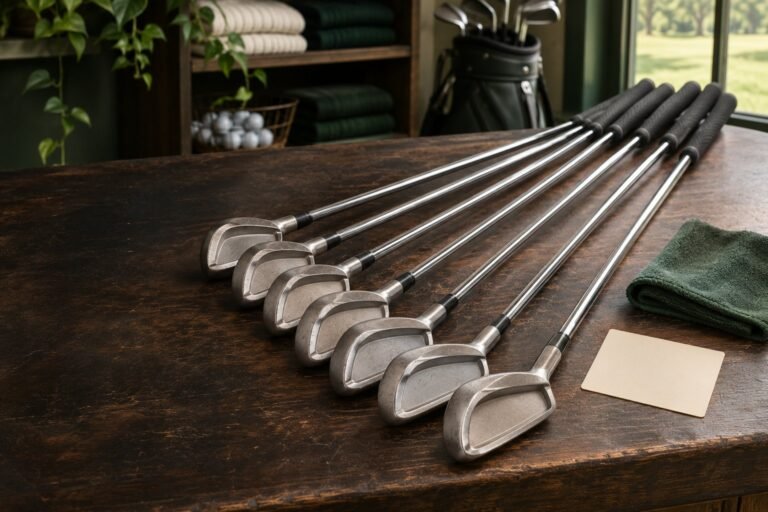
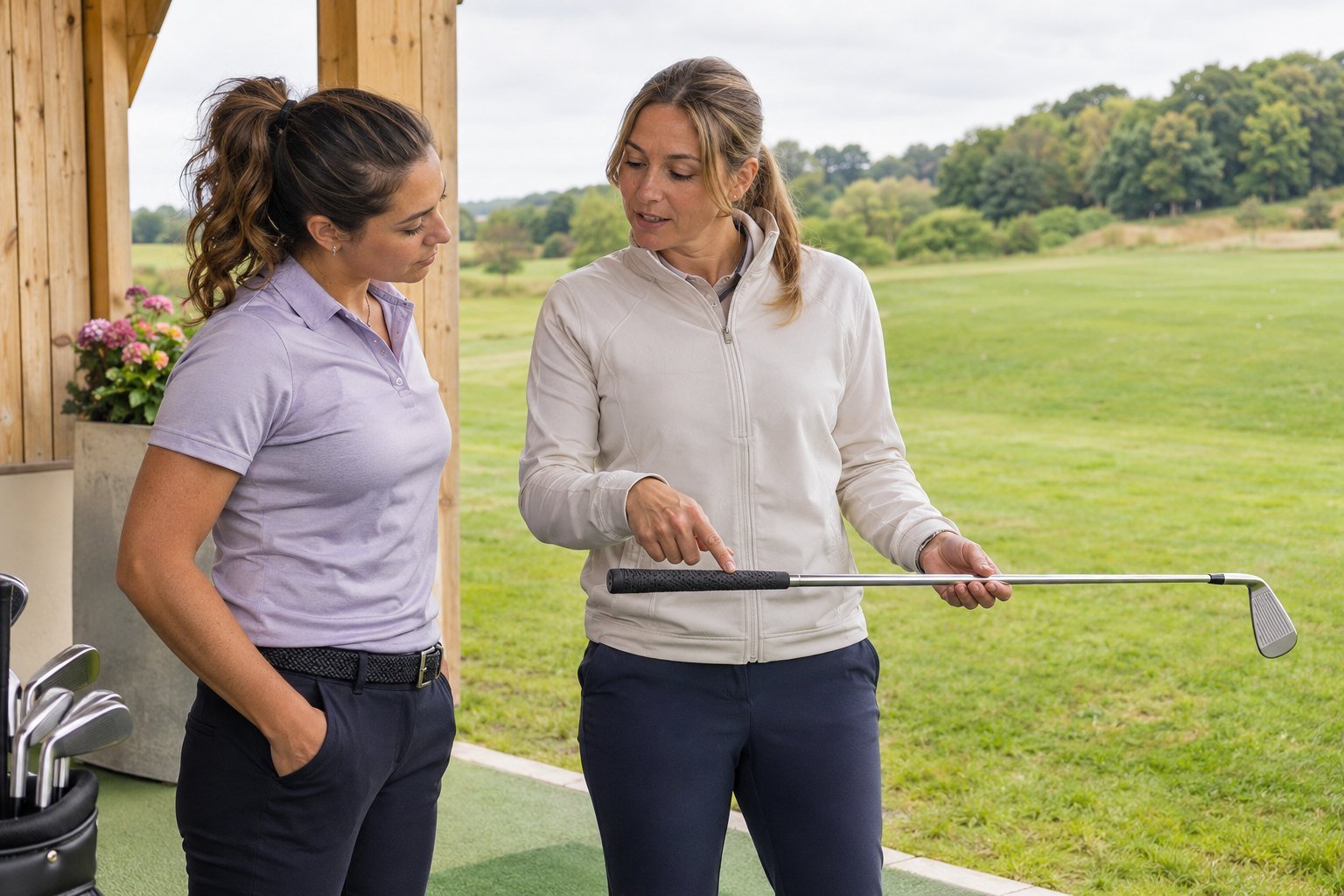
AI illustration: start with the clubs and roles the bag needs before choosing a brand.
Choosing your first set of golf irons starts with a simple question: what exactly are you buying? A six-iron set, a seven-iron set and a complete golf package can solve different problems, even when their photographs look equally convincing.
Make a list of the clubs you already have, the shots you need to cover and the money available for the whole setup. This research-led guide uses published contents and original buying worksheets; the sample builds are starting points for a discussion, not individual fitting prescriptions.
Ad – includes affiliate links. If you buy through these links, Taylor’s Trailblazing Golf may earn a commission at no extra cost to you.
Count
Expand every set description into individual clubs.
Cover
Give the longest iron and the wedges a clear job.
Confirm
Record the complete build, not just the head name.
Compare
Price the same finished bag before choosing a quote.
How to choose your first set of golf irons: read the contents
An iron set is only one part of a golf bag. It does not automatically include a driver, putter, sand wedge or bag. Read the selected configuration rather than counting heads in a promotional photograph.
| Description | Individual clubs | Count |
|---|---|---|
| 7–PW | 7, 8, 9 and pitching wedge | 4 |
| 6–PW | 6, 7, 8, 9 and pitching wedge | 5 |
| 5–PW | 5, 6, 7, 8, 9 and pitching wedge | 6 |
| 4–PW | 4, 5, 6, 7, 8, 9 and pitching wedge | 7 |
| 5–PW plus a gap wedge | Six irons above, plus one additional wedge | 7 |
For a real ordering example, GolfOnline lists Titleist T250 choices including 5–PW, 4–PW and 5–PW plus W. The last two contain seven clubs but put the extra club at opposite ends of the set. [1]
Wedge labels also need decoding. PING’s G440 range lists PW, UW and wedges marked 52 and 56; those are available models, not a promise that all are included in a retailer’s quoted set. [2]
Write the individual clubs beside the price. If a listing says only “seven irons” or “complete set”, request the itemised contents before deciding whether it fills your bag.
Give the bag jobs before giving it a club count
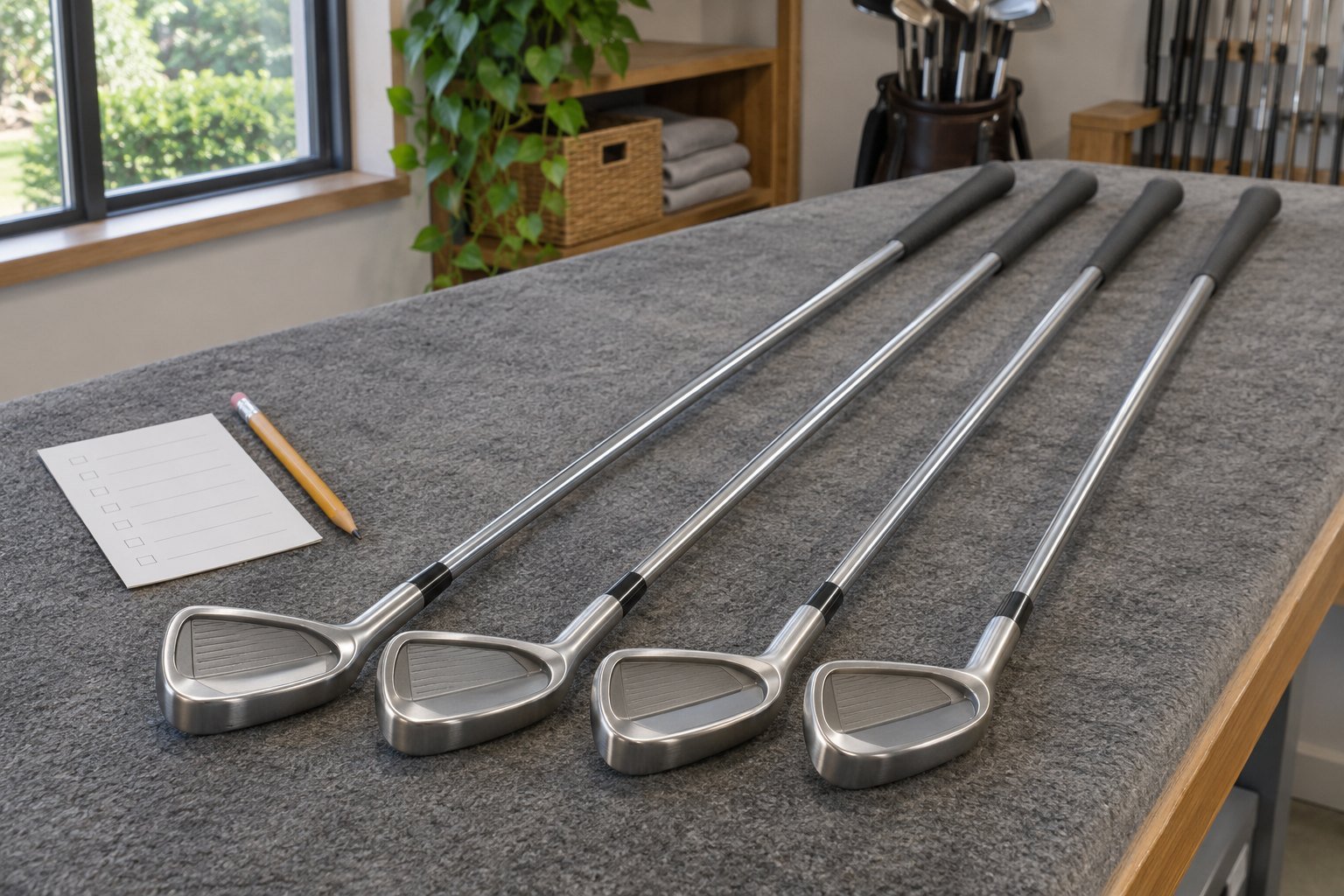
The Rules of Golf allow no more than 14 clubs, and you can start with fewer. Fourteen is a limit, not a shopping target. [3]
Use this inventory before browsing brands. Mark each role already covered, needs a trial or needs buying. A borrowed club that you must return soon belongs in the last two groups, not permanently in the first.
| Role | Question to answer |
|---|---|
| A usable tee club | What can I put in play from the tees I normally use? It need not be part of the iron purchase. |
| The shot beyond my longest useful iron | Does an existing hybrid or fairway wood cover it, or should I trial alternatives? |
| Approach irons | Which clubs produce meaningfully different, usable shots for me? |
| Short shots and bunkers | Which wedge or wedges will I practise with, and what is missing after the set’s final club? |
| Putting and carrying | Do I already have a suitable putter and a bag, and have I included their cost if not? |
The list exposes both omissions and duplication. Buying an extra long iron that repeats a hybrid’s role may be less useful than retaining money for a missing short-game club or a lesson.
Back to top ↑Three sample builds to discuss, count and adapt
These examples show how an iron purchase fits into a bag. They are deliberately smaller than the permitted maximum. The starting iron and wedge choices still depend on your shots, the specific models and the courses you play.
| Build | Irons | Other clubs | Total |
|---|---|---|---|
| Compact starting bag | 7, 8, 9, PW: 4 | One tee club, one hybrid, one suitable sand wedge, one putter: 4 | 8 |
| More approach choices | 6, 7, 8, 9, PW: 5 | One tee club, one hybrid, one gap wedge, one sand wedge, one putter: 5 | 10 |
| Expanded after a useful trial | 5, 6, 7, 8, 9, PW: 6 | One tee club, one fairway wood, one hybrid, one gap wedge, one sand wedge, one putter: 6 | 12 |
Choose the compact route when you want a manageable initial purchase and can cover your normal golf with fewer clubs. Accept that it leaves fewer full-swing distance choices; it is not a claim that four irons cover every course.
Choose more approach choices when the extra iron has a distinct job and the short end also works. Move to the expanded example only after trying the additional long clubs. Do not assume that adding both a fairway wood and hybrid automatically adds two useful distances.
For every proposed addition, finish this sentence: “I would use this instead of ___ when ___.” If you cannot, keep it on a trial list rather than adding it to the order.
Check the two ends of the iron set
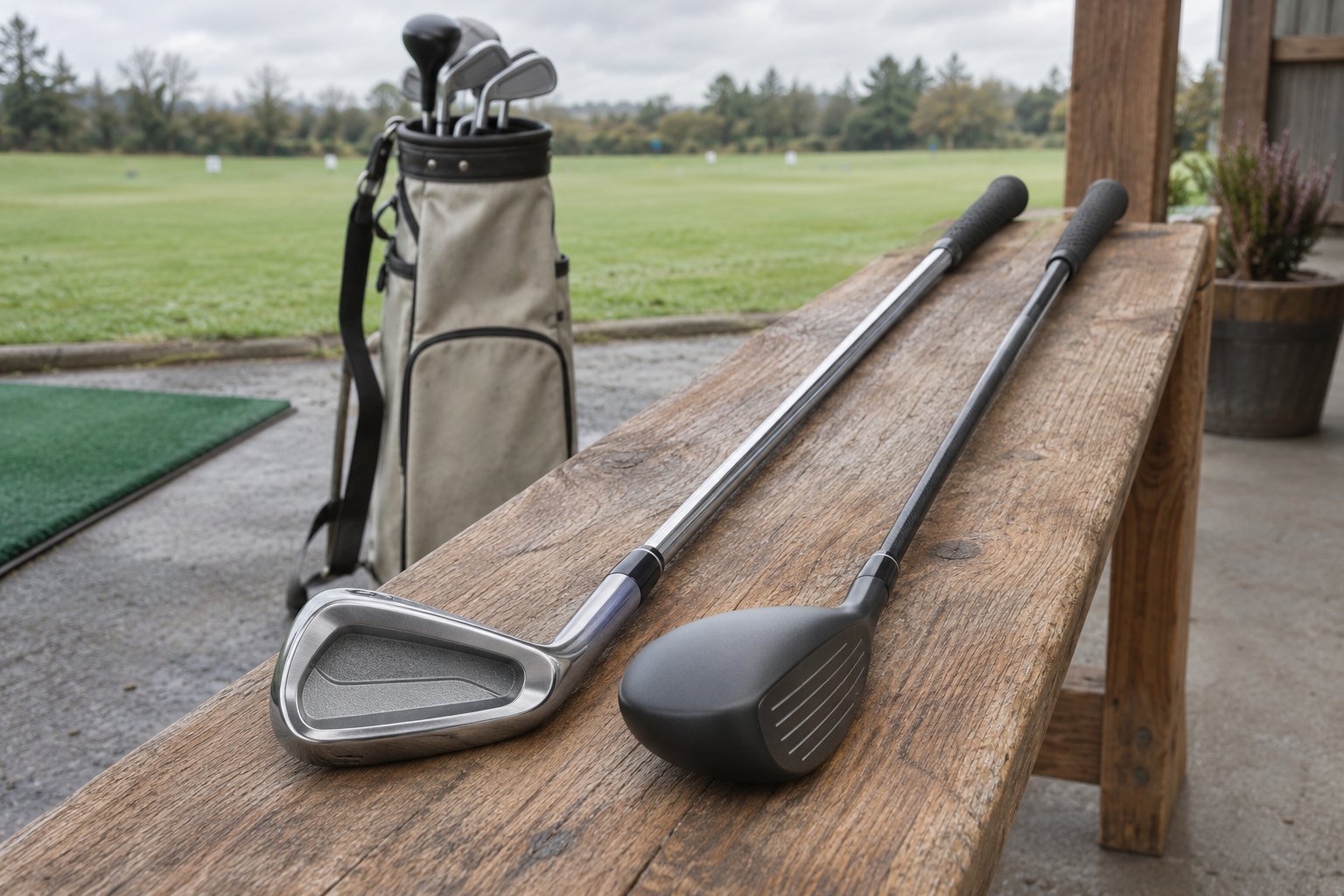
The longest iron must earn its place
A good session with one mid-iron does not answer whether you can use the longest iron in the package. Ask to try that club, or a relevant equivalent in the proposed build, from a realistic lie. Compare it with the next shorter iron and any hybrid you would retain.
Look for a useful carry difference, manageable direction and a flight you would actually choose on the course. If the longer iron adds little useful separation or is a club you would avoid, discuss starting the set later. A hybrid is an option to test, not an automatic cure.
The pitching wedge does not finish every short-game job
Check the final club’s actual specification and what follows it in your bag. PW, AW, GW and UW are labels; do not order an additional wedge solely because its letters are absent. Ask how the proposed wedge serves the shots between your irons and bunker club, and whether an existing wedge already covers them.
A set-matching wedge and a separately chosen specialist wedge are both candidates. Choose the club you can use for the intended shots, then count it once in the budget. The precise loft and carry-gap work belongs in the fitting discussion.
Back to top ↑Confirm a complete build you can use now
Being new to golf does not mean a specification check is premature. PING describes a beginner fitting that starts with basic measurements and initial specifications, then uses shots and feedback to refine the recommendation. [4]
Ask the seller or fitter to record these details on the quotation:
- Head and contents: exact model, generation, handedness and every club included.
- Shaft: exact model, flex and specified weight option. “Regular steel” is not a complete shaft identity.
- Playing length and lie: the agreed specification and what any change is relative to.
- Grip: model and finished size or build, including any charge per club.
- Trial basis: which clubs and configurations you actually tried, and anything still to confirm.
If you have been learning with borrowed or hire clubs, take their details or bring one with permission. They provide a useful reference for describing what feels manageable. You do not need to pretend your swing is settled; tell the fitter what you have practised and what remains unfamiliar.
Before booking, use the guide to golf club fitting fees to check the appointment’s scope and written outcome. For grip choices, the grip-size guide explains how a measurement can lead to a sample to try.
Choose an iron set, a package or a used set deliberately
A separate iron set makes sense when the rest of the bag is already covered or when you want to choose those clubs separately. Confirm that a shorter set is actually available and priced as such; a sample build in this guide is not a promise that every model can be ordered that way.
A complete package can make the shopping list easier to manage, but inspect its contents just as closely. The Clubhouse Golf XR Blue/Red page lists a driver, fairway wood, two hybrids, 6–9 irons, PW, AW, SW and putter: twelve clubs, plus a bag and headcovers. Its headline and one feature bullet use inconsistent piece counts, so ask for a written contents list for the selected item. [5]
A used iron set is worth considering when its condition and specification can be established. Check every club, not one representative photograph: missing irons, different shafts, changed lengths and worn grips can change the comparison. Ask for the build history and a quote for any necessary work before treating the asking price as the final cost.
To compare current configurations, browse iron-set options at Clubhouse Golf or inspect the XR package contents as an example of a whole-bag offer. Neither link is a recommendation to choose that model without a suitable trial.
Back to top ↑Compare the same finished setup
First define the clubs and specification both quotes must deliver. Add necessary extras, delivery and fitting charges; deduct only a fitting credit whose conditions you expect to meet. Put unknown beside an unconfirmed cost rather than silently treating it as zero.
| Required item | Quote A | Quote B |
|---|---|---|
| Iron purchase | £420 for 5–PW | £510 for 5–PW plus gap wedge |
| Required gap wedge | £80 | Included |
| Fitting charge, after any confirmed credit | £40 | £40 |
| Required grip work | £45 | £0: required build included |
| Delivery | £10 | £0 |
| Comparable total | £595 | £550 |
In this example, both routes must provide the same seven clubs and suitable grips; all other bag roles are already covered. Quote A starts £90 lower but finishes £45 higher. These figures demonstrate the calculation, not typical fitting or club prices.
Your version may also need a hybrid, sand wedge, putter or bag. Add those items if they are necessary to complete your chosen build. Keep optional accessories separate so you can see what it costs to play with the intended setup.
Do not justify the price by dividing it by the number of clubs alone. An unused long iron lowers the apparent cost per club without adding a useful shot. Equally, a higher-priced set is not better value merely because it offers more custom choices.

The stop-before-buying checklist
Save the selected configuration and ask for a written quotation. Before paying, answer all seven questions:
- Can I list every club included and count the set correctly?
- Do I know which existing clubs stay in the bag?
- Have I tried, or agreed how to confirm, the longest iron I intend to buy?
- Have I checked the wedge roles after the final iron?
- Does the quote identify the exact shafts, lengths, lies and grips?
- Have I included every necessary extra and any conditional fitting credit?
- Do I understand the delivery date, cancellation or return terms for this particular stock or custom order, and the route for resolving an incorrect delivery?
When the clubs arrive, match them to the order before taking them out to play: contents, handedness, visible shaft and grip identities, and any agreed specification paperwork. Raise discrepancies with the seller promptly. Keep the order and fitting record so a later addition can be specified rather than guessed.
Back to top ↑A few final questions
Should my first iron set start at 5-iron or 6-iron?
Start where the clubs become useful for you. Try the proposed longest iron against the next shorter iron and the longer club you will retain. If a 5-iron has no clear role, discuss a set starting at 6-iron and check that the saving or alternative build is actually available.
Must all the clubs in my first bag match?
The decision is whether the clubs provide useful roles and a manageable setup. A package may simplify the purchase; separate irons, wedges and longer clubs let you choose each part. Keep the complete specifications and cost clear whichever route you choose.
Should I buy irons to grow into?
Choose clubs you can use now and leave room in the budget for learning and later evidence. Progress does not require a predetermined move to a smaller head. Revisit the set when a specific club or missing shot creates a clear problem.
What to do next
A good first iron purchase is an itemised plan. You know which clubs arrive, what each adds to the bag, which build was agreed and what the finished setup costs. Choose the brand and model after those questions are clear. Leave an uncertain club on the trial list until it earns a reason to be in the bag.
Sources and further reading
Sources checked on 22 November 2026. Product descriptions and terms can change; confirm the details for the exact item before buying.
Illustrations in this article were created for Taylor’s Trailblazing Golf. Third-party photographs, where used, are credited beside the image or in the source list.